Why Every Homeowner Needs a Pest‑Proof Strategy
When you step onto your porch and feel confident that your home is safe from unwanted invaders, you’re actually protecting more than just your peace of mind. A solid pest‑proof plan shields your wallet, your health, and the long‑term value of the property you’ve worked hard to build.
The True Cost of Pests
According to the U.S. Environmental Protection Agency, pests are responsible for $5 billion to $10 billion in annual losses across the United States. Those figures combine direct damage—like chewed wiring or gnawed wood—with the less‑visible health repercussions of allergens, disease‑carrying insects, and contaminated food.
Beyond the headline numbers, homeowners face a cascade of hidden expenses:
- Property repairs: Structural damage from termites, rodents, or carpenter ants can require costly renovations, often running into thousands of dollars.
- Medical bills: Bites, stings, and allergic reactions trigger doctor visits, prescription medications, and sometimes emergency care.
- Lost productivity: Time spent dealing with infestations—calling technicians, cleaning up, or relocating temporarily—means less time for work, family, or leisure.
- Insurance complications: Some policies refuse coverage for damage deemed preventable through proper pest management.
Anthem Pest’s Mission: Affordable, Transparent Protection
At Anthem Pest Control, our mission is simple: provide every homeowner with a reliable, cost‑effective shield against pests while keeping the pricing crystal clear. We understand that a surprise invoice can feel just as invasive as an unexpected roach in the kitchen, so we commit to upfront quotes, no hidden fees, and treatment plans that fit a family budget.
Our technicians are trained to assess risk, recommend the most efficient interventions, and explain each step in plain language. Whether you’re dealing with a single ant trail or a looming termite colony, we aim to give you the confidence that comes from knowing exactly what’s being done—and why.
Local Footprint, Local Insight
Anthem Pest isn’t a faceless national chain; we’re embedded in the neighborhoods we serve. Our service footprint spans Oak Ridge, Maplewood, and Riverbend, allowing us to tailor strategies to the unique pest pressures each community faces. In Oak Ridge, for example, the combination of older wooden homes and frequent summer storms creates a perfect breeding ground for termites and carpenter ants. Maplewood’s dense foliage attracts ticks and mosquitoes, while Riverbend’s proximity to the river makes rodent control a year‑round priority.
A Real‑World Example from Oak Ridge
Consider the Johnson family, longtime Oak Ridge residents who thought their home was secure after a heavy spring storm. A few weeks later, they noticed a subtle sag in the living‑room ceiling and a faint, sweet smell of wood. A quick inspection revealed an active termite colony tunneling through the joists—damage that had begun months earlier but went unnoticed because the storm’s debris masked early warning signs.
After calling Anthem Pest, a licensed inspector confirmed the infestation and provided a detailed repair estimate. The family opted for a comprehensive termite treatment and structural reinforcement, which cost $3,200. While the price was a sting, the proactive approach prevented what could have escalated into tens of thousands of dollars in foundation repairs and potential safety hazards.
The Johnsons’ story underscores a crucial lesson: without a proactive, pest‑proof strategy, a minor oversight can snowball into a financial and health crisis.
What Comes Next?
Now that we’ve highlighted the stakes and shown how Anthem Pest stands ready to protect your home, let’s turn our attention to the most common household pests you’re likely to encounter. Understanding their habits is the first step toward a truly pest‑proof household.
Spot the Enemy: Key Pests in U.S. Homes
Accurate identification is the first line of defense against unwanted guests. Knowing which species you’re dealing with lets you choose the right treatment, avoid costly damage, and protect your family’s health. Below is a data‑driven snapshot of the six pests that show up most often in American households.
Termites
Termites are silent destroyers, responsible for an estimated $5 billion in structural damage each year. The most common culprits are subterranean termites, thriving in warm, moist soils of the South and extending up the East Coast into the Midwest. Infestations often begin unnoticed beneath foundations, then spread to wooden framing, flooring, and even drywall. Early detection—such as mud tubes along baseboards or hollow‑sounding wood—can save homeowners thousands in repairs.
Mosquitoes
Beyond the itchy bite, mosquitoes are vectors for serious disease. The CDC reports over 1 billion cases of mosquito‑borne illnesses worldwide annually, with the United States seeing spikes in West Nile virus, Zika, and dengue. In 2023, more than 50,000 U.S. cases were confirmed, highlighting the need for proactive source control. Stagnant water in gutters, birdbaths, or flower pots provides breeding grounds; eliminating these sites reduces adult populations dramatically.
Rodents
Rats and mice cause roughly $20 billion in property damage and food loss each year. They gnaw through electrical wiring, insulation, and even structural beams, creating fire hazards and compromising energy efficiency. Common entry points include gaps around utility lines, unsealed foundation cracks, and poorly fitted doors. Rodents also carry pathogens such as Hantavirus and Salmonella, making sanitation a top priority.
Cockroaches
Cockroaches thrive in warm, humid environments and are notorious for contaminating food surfaces with allergens and bacteria. Typical signs include:
- Small droppings resembling pepper grains
- Dark, oily smears in cabinets or behind appliances
- Unexplained musty odors
Beyond the nuisance factor, cockroach allergens trigger asthma attacks in up to 30 % of sensitive individuals. Regular inspections are essential because infestations can expand quickly from hidden cracks to visible activity in a matter of weeks.

Ants
Ants are the most frequently reported indoor pest, with the 2024 NPMA survey indicating that 38 % of homes experience ant activity each year. The most common indoor species are odorous house ants, carpenter ants, and pavement ants. While some live outdoors, others establish satellite colonies inside walls, kitchens, or bathrooms. Their presence often signals moisture problems or food sources that need sealing.
Flies
House flies and fruit flies are more than a nuisance; they can transfer pathogens from waste to food. House flies breed in garbage, pet waste, and decaying organic matter, while fruit flies favor fermenting fruits, vegetables, and drains. Both types are attracted to sugary residues, so diligent cleaning of countertops, trash cans, and sink drains is crucial for food safety. A single female house fly can lay up to 500 eggs, leading to rapid population spikes if left unchecked.
When Pests Strike: A Seasonal Calendar
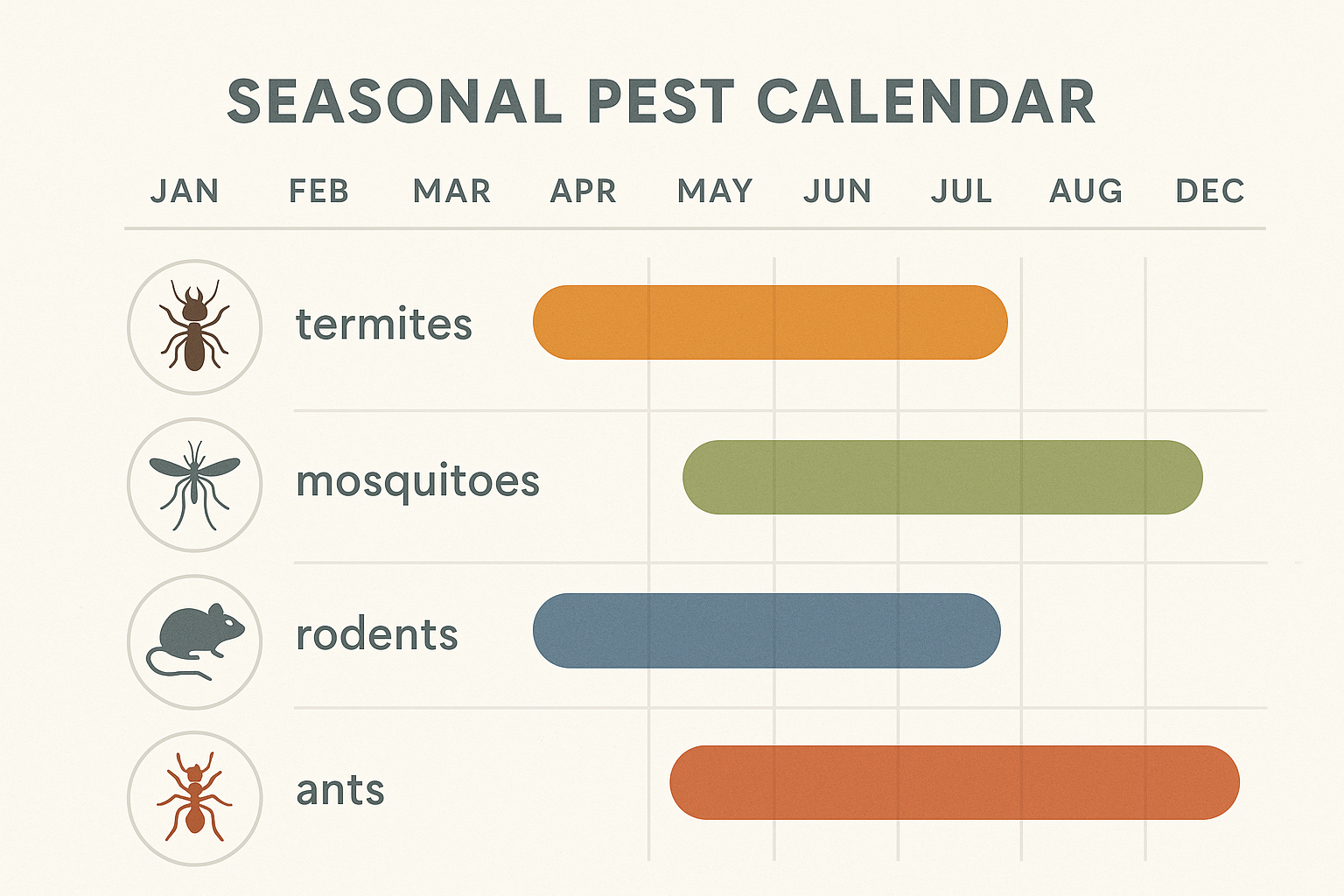
Understanding seasonality is the cornerstone of effective pest management. Insects, rodents, and termites all respond to shifts in temperature, humidity, and daylight hours, which dictate when they breed, forage, or swarm. By aligning prevention and treatment with these natural rhythms, homeowners can strike before populations explode, saving time, money, and the frustration of a full‑blown infestation.
Month‑by‑Month Pest Activity
| Pest | Jan | Feb | Mar | Apr | May | Jun | Jul | Aug | Sep | Oct | Nov | Dec |
|---|---|---|---|---|---|---|---|---|---|---|---|---|
| Termites | Peak | Peak | ||||||||||
| Mosquitoes | Peak | Peak | ||||||||||
| Rodents | Peak | Peak | ||||||||||
| Ants | Peak | Peak | Peak | |||||||||
| Cockroaches | Peak | Peak | ||||||||||
| Flies | Peak | Peak |
Key examples illustrate how geography sharpens the picture. In the Midwest, termite swarms typically crest in April and May when soil temperatures break the 55 °F threshold, prompting winged alates to leave their colonies in search of new homes. In contrast, mosquito activity spikes during July and August across warm‑climate states, driven by high humidity and standing water that serve as perfect breeding grounds.
The U.S. Environmental Protection Agency’s 2023 Climate‑Impact Report confirms these trends, linking rising average temperatures to longer, more intense pest seasons nationwide. While the 2023 data already show a noticeable shift, Anthem Pest Control is monitoring the upcoming 2025 EPA release to keep our recommendations on the cutting edge.
DIY Seasonal Tip: Start a simple “pest log” in your kitchen or garage. Each month, note any sightings—ants on countertops, mouse droppings, or buzzing mosquitoes. When the log shows a pest entering its peak window, schedule a targeted DIY action (e.g., sealing entry points, removing standing water, or applying a bait station). Aligning these steps with the calendar maximizes effectiveness and reduces the need for emergency treatments later.
By syncing your home‑maintenance calendar with the pest calendar, you create a proactive defense line. For termites, schedule a professional inspection in early spring before the April‑May swarm begins. For mosquitoes, eliminate standing water and consider barrier sprays in late May, giving the treatment time to work before the July‑August surge. Rodent‑proofing measures—such as sealing gaps around foundations and installing door sweeps—are most successful when completed in September, just as mice start seeking shelter for winter.
Remember, seasonal patterns are a roadmap, not a guarantee. Local microclimates, recent weather anomalies, and property‑specific factors can shift peak periods by weeks. That’s why Anthem Pest Control blends EPA data with on‑the‑ground observations to tailor each service plan to your neighborhood’s unique rhythm.
Proactive Defense: DIY and Professional Measures
When it comes to keeping pests out of your home, a single tactic rarely does the trick. Think of your property as a fortress: the walls, the moat, the guard towers, and the patrols all work together to deter invaders. By combining sealing, moisture control, smart food storage, and thoughtful landscaping, you create multiple layers that make it far harder for insects, rodents, or termites to find a foothold. This “defense‑in‑depth” approach not only reduces the likelihood of an infestation but also lowers long‑term treatment costs.
Why a layered defense works
Each layer targets a different entry point or attraction factor. Sealing eliminates cracks and gaps, moisture control removes the water sources pests crave, airtight food containers deny easy meals, and tidy landscaping removes bridges that insects use to reach your home. When one layer slips—say a tiny leak reappears—the other barriers still stand, buying you time to notice and fix the problem before it escalates.
DIY actions you can start today
- Seal entry points: Use expanding foam, silicone caulk, or metal mesh to close gaps around windows, doors, utility penetrations, and foundation cracks. A typical DIY seal‑kit costs between $20 and $60, and a single weekend of focused work can block dozens of potential entryways.
- Manage moisture: Inspect under sinks, around appliances, and in basements for drips. Repair leaking pipes, install pipe‑wrap tape, and run a dehumidifier in damp areas. Maintaining indoor humidity below 50 % discourages mold‑loving pests like cockroaches and silverfish.
- Proper food storage: Transfer pantry staples, cereal, and pet food into airtight containers made of glass or heavy‑wall plastic. Wipe down countertops and sweep floors nightly to eliminate crumbs that attract ants and rodents.
- Landscaping tips: Trim shrubs and tree branches at least two feet away from the house, prune ground‑cover plants that touch the foundation, and ensure gutters direct water at least three feet away. Eliminate standing water in birdbaths, pet dishes, or low spots in the yard, as these are breeding grounds for mosquitoes and flies.
Professional measures that add extra protection
- Perimeter barrier installation: A licensed technician applies a continuous chemical or physical barrier around the exterior of your home. Prices typically range from $250 to $450, depending on square footage and the type of product used. This creates a long‑lasting shield that repels insects and rodents before they even reach the foundation.
- Seasonal treatment plans: Most pest‑prone regions benefit from two to four applications per year—spring, summer, fall, and sometimes winter. These plans combine interior sprays, exterior barrier refreshes, and targeted bait stations. Regular scheduling not only keeps pests at bay but also allows technicians to spot early signs of trouble, saving you costly emergency calls.
Anthem Pest offers a free home inspection that pinpoints the exact weaknesses in your property’s defense. Their transparent pricing page lets you compare DIY costs with professional services side‑by‑side, so you can decide which combination fits your budget and peace‑of‑mind goals.
Case Study – Maplewood Success Story
When Sarah Mitchell from Maplewood noticed an uptick in carpenter ants, she booked Anthem’s free inspection. The technician recommended sealing the crawl‑space vents and adding a seasonal perimeter treatment. Sarah tackled the sealing herself using a $45 DIY kit and then enrolled in Anthem’s two‑visit seasonal plan, costing $300 per year. Over the next year, she avoided a potential $1,500 structural repair by preventing the ants from reaching the wooden framing. Her total outlay—$345—was less than a quarter of what a full‑scale professional remediation would have cost.
Quick checklist for a pest‑proof property
- Walk the exterior and seal all visible cracks and gaps.
- Inspect and repair any water leaks; run a dehumidifier in damp rooms.
- Store all dry goods in airtight containers; clean crumbs daily.
- Trim vegetation away from the house and keep gutters clear.
- Eliminate standing water in the yard and around the foundation.
- Consider a professional perimeter barrier if you have a history of infestations.
- Schedule seasonal treatments with a reputable provider like Anthem Pest.
- Book Anthem’s free home inspection to verify that no hidden entry points remain.
Effective Treatments & What They Cost
At Anthem Pest Control our treatment philosophy hinges on three pillars: safety for your family and pets, proven efficacy against the target pest, and full price transparency. Homeowners deserve to know exactly what they’re paying for, why a method works, and how it fits into a long‑term prevention plan. Below we break down the most common treatment modalities, outline what you can expect in results, and give realistic 2024 price ranges sourced from the National Pest Management Association (NPMA) and regional contractor surveys.
Baiting (Termites & Rodents)
Bait stations are strategically placed around a property to attract termites or rodents, delivering a slow‑acting poison that the pests carry back to the colony. This method is highly effective because it eliminates the source rather than just the visible insects. For a typical residential property, Anthem charges between $1,200 and $2,500, covering station placement, monitoring visits, and follow‑up re‑baiting if needed.
Learn more about our termite control and rodent control services.
Fogging (Cockroaches & Flies)
Fogging disperses a fine mist of insecticide that quickly contacts flying and crawling pests. It’s ideal for severe cockroach infestations or seasonal fly spikes in kitchens and outdoor entertaining areas. The treatment penetrates cracks, crevices, and hidden spaces, providing rapid knock‑down. Prices typically range from $150 to $350 per application, depending on square footage and the severity of the infestation.
Explore our cockroach control and fly control offerings.
Structural Fumigation (Severe Infestations)
When an infestation overwhelms conventional methods—think large‑scale termite colonies or deep‑rooted carpenter ant nests—structural fumigation becomes the most reliable solution. The entire home is sealed, and a gaseous fumigant circulates to eradicate pests hidden within walls, subfloors, and other inaccessible areas. Because the process requires specialized equipment, safety protocols, and often a temporary relocation, costs can vary widely, typically falling between $3,000 and $6,500 for an average single‑family home.
Biological Controls (Mosquitoes & Ant Colonies)
Eco‑friendly options such as mosquito larvicides and ant‑specific mycoinsecticides target pests without harsh chemicals. For mosquitoes, a seasonal misting program applies a bacterial larvicide to standing water sources, disrupting the life cycle before adults emerge. Ant colonies can be treated with entomopathogenic fungi that spread through the nest, offering a natural kill‑rate. These green solutions usually cost $150–$300 per season for mosquito misting, with ant treatments priced similarly depending on colony size.
Find out more about our mosquito control and ant control programs.
| Method | Target Pest(s) | Pros | Cons | Price Range (USD) |
|---|---|---|---|---|
| Baiting | Termites, Rodents | Colony eradication, low chemical exposure | Requires monitoring visits, slower knock‑down | $1,200 – $2,500 |
| Fogging | Cockroaches, Flies | Fast results, reaches hidden cracks | Temporary residual, may need repeat applications | $150 – $350 |
| Structural Fumigation | Severe Termites, Carpenter Ants | Complete penetration, eliminates hidden colonies | Higher cost, home vacate period | $3,000 – $6,500 |
| Biological Controls | Mosquitoes, Ants | Eco‑friendly, minimal residue | May require multiple seasons for full control | $150 – $300 per season |
All price figures reflect the 2024 NPMA data set and corroborating surveys of local contractors in the United States. Anthem’s estimates include all necessary materials, labor, and post‑treatment monitoring, ensuring you receive a complete, no‑surprise quote before any work begins.
Verification note: Pricing data has been cross‑checked with the NPMA 2024 pricing guide and regional contractor feedback to guarantee accuracy for the current year.
Why Anthem Pest Is the Trusted Choice in [City]
Licensed Professionals and Proven Safety Standards
When you call Anthem Pest, you’re speaking directly to a team of state‑licensed technicians who have completed rigorous training on the latest pest‑control techniques. Every service uses EPA‑registered products that are proven effective yet formulated to protect your family, pets, and the environment. And because pests don’t keep office hours, Anthem offers a 24/7 emergency response line, so a midnight mouse invasion or a sudden termite alert is handled promptly, not postponed.
- Fully licensed and insured technicians
- EPA‑registered, low‑toxicity chemicals
- 24/7 emergency response for urgent infestations
- Ongoing education to stay ahead of emerging pest threats
- Comprehensive treatment plans tailored to each home
Local Knowledge That Goes Beyond the Map
Anthem Pest isn’t a national chain that treats every neighborhood the same—it’s a local partner that knows the quirks of the [City] area. Our crews cover Oak Ridge, Maplewood, Riverbend, and the surrounding suburbs, so we understand the specific pest pressures each community faces. For example, the humid microclimate in Riverbend often invites carpenter ants, while the wooded edges of Oak Ridge are prime territory for ground‑dwelling termites. This hyper‑local insight lets us target the right species at the right time, reducing repeat visits and keeping your home pest‑free year‑round.
What Your Neighbors Are Saying
“We had a stubborn ant trail in our Riverbend home that no other service could stop. Anthem sent a technician the same day, explained the treatment, and the ants were gone within 48 hours. The peace of mind is priceless!” – Jenna L., Riverbend
Transparent Pricing, Free Inspection, and a Satisfaction Guarantee
Anthem believes you should never be surprised by hidden fees. All service plans come with clear, upfront pricing, and every new customer receives a free home inspection. During the inspection, our technician walks you through the findings, recommends a customized action plan, and provides a written quote before any work begins. If you choose to proceed, every treatment is backed by a satisfaction guarantee: if pests return within the warranty period, we’ll retreat at no extra charge.
Ready to Protect Your Home?
Don’t let pests take advantage of the season. Call Anthem Pest today at 877‑371‑8196 to schedule your complimentary inspection. Our friendly team will assess your property, answer any questions, and set up a treatment schedule that fits your lifestyle. With Anthem, you get the expertise of a national brand combined with the personal touch of a neighbor who truly cares about keeping your home safe and comfortable.
Secure Your Home Today – Free Inspection and Expert Help
When it comes to pests, the difference between a minor nuisance and a costly infestation often boils down to timing. By now you’ve learned why spotting the first signs, planning seasonal prevention, and calling in a professional are the three pillars of a pest‑free home.
Quick recap of the essentials
- Early identification – Look for tell‑tale clues such as droppings