Understanding Carpet Beetles and Why They Matter
What are carpet beetles?
Carpet beetles belong to the family Dermestidae, a group of small, rounded insects that have made their way into homes across the United States. The most common culprits in residential settings are the Varied Carpet Beetle (Anthrenus verbasci) and the Black Carpet Beetle (Attagenus unicolor). Though they’re tiny—usually less than a quarter‑inch long—their presence can quickly become a costly problem for homeowners.
Life cycle at a glance
The carpet beetle’s development follows a classic four‑stage cycle: egg → larva → pupa → adult. While the adult beetles are mostly harmless and often seen fluttering near light sources, it’s the larval stage that does the real damage. Larvae can linger for several months, feeding voraciously before they spin a cocoon and transform into pupae.
Understanding this timeline is crucial. A single female can lay up to 100 eggs, and under ideal indoor conditions—steady temperature, low humidity, and a steady food supply—multiple generations can overlap, creating a hidden, ongoing infestation.
What they love to eat
Carpet beetle larvae are opportunistic feeders. Their menu includes:
- Natural fibers such as wool, silk, fur, and feathers
- Stored food products like grains, dried fruit, and pet food
- Dead insects, shed skins, and even hair
Because they target anything derived from animal protein, you’ll often find damage in closets, under furniture, and in rarely disturbed corners where lint, pet hair, and dust accumulate.
How you’ll know they’re there
Carpet beetle damage can be subtle at first, but several tell‑tale signs give them away:
- Irregular holes or “chewed” patches in clothing, blankets, and upholstery
- Fine, shredded fibers that look like tiny tufts of cotton or wool
- A faint, sweet “coconut” odor that some homeowners notice near heavy infestations—this scent comes from the larvae’s secretions
- Visible larvae or pupae in seams, crevices, or inside carpet rolls
Because the larvae work hidden within the fibers, damage often goes unnoticed until a garment or rug shows a conspicuous hole.
Why carpet beetles matter to you
Beyond the obvious aesthetic loss, carpet beetles can hit your wallet hard. Replacing a damaged wool rug, a set of silk drapes, or cherished heirloom clothing can run into hundreds of dollars. Moreover, a severe infestation can compromise the integrity of insulation and carpeting, forcing premature replacement of entire rooms.
There’s also a hidden risk of secondary infestations. Larvae that feed on dead insects can attract other pests, such as stored‑product beetles, creating a cascade of problems that multiply treatment costs.
What’s next?
Now that you recognize what carpet beetles are, how they live, and why they’re a threat, the next sections will guide you through:
- Accurate identification techniques to confirm you’re dealing with carpet beetles, not moths or silverfish
- The seasonal patterns that dictate when beetles are most active in Peachtree City, Georgia
- Effective, homeowner‑friendly treatment options and when to call a professional like Anthem Pest Control for rapid, safe eradication
Spotting Carpet Beetle Infestations Early
Adult Beetles vs. Larvae
Adult carpet beetles are tiny, usually 3–4 mm long, and their bodies are a mottled blend of brown, black, and white scales. The most common species, the varied carpet beetle (Anthrenus verbasci), sports a distinctive pattern of white spots on its dark back that looks like a miniature polka‑dot shirt. These adults are active flyers and are often found near windows or light fixtures, where they hunt for nectar or pollen before wandering inside homes.
In contrast, the larvae—sometimes called “caterpillars”—are the real culprits. They lack the glossy scales of the adults and instead have a creamy‑white to light tan body covered in fine, bristly hairs. Their shape is elongated and slightly flattened, and when at rest they curl into a characteristic “C‑shaped” posture that makes them easy to spot under close inspection.
What the Larvae Look Like
The larvae’s most recognizable features are:
- Color and texture: Creamy‑white or pale amber with a dense coat of short, hair‑like setae that can feel slightly fuzzy to the touch.
- Body shape: An elongated, somewhat cylindrical form that tapers toward the head, often measuring 2–7 mm depending on age.
- Movement: They move in a slow, deliberate crawl, occasionally raising the front segments as they explore fibers.
Key Warning Signs
Even if you haven’t seen a beetle, several tell‑tale clues can alert you to an early infestation:
- Small, round holes or “punched‑out” spots in carpets, upholstery, and natural‑fiber clothing. These holes are typically 1–3 mm in diameter and appear randomly across the fabric.
- Shed skins (exuviae) that look like translucent, paper‑thin shells. Larvae molt several times, leaving these delicate remnants behind.
- Fecal pellets: tiny, dark specks that dot the surface of rugs or hidden corners. The pellets are the larvae’s waste and are often found near feeding sites.
- A faint, “coconut” or “cheesy” odor in heavily infested areas. This smell comes from the larvae’s secretions and is a reliable, though subtle, indicator of a large population.
Step‑by‑Step Home Inspection Routine
- Start at entry points. Open windows, doors, and vents are the first places adult beetles slip in. Check the frames and sills for dead adults or shed skins.
- Examine closets and storage boxes. Pull garments, blankets, and stored fabrics away from walls. Look for the C‑shaped larvae along seams, folds, and the underside of the fabric.
- Inspect under furniture. Move sofas, chairs, and beds a few inches away from the floor. Carpet beetle larvae love the darkness beneath these pieces, feeding on dust, hair, and natural fibers.
- Check vents and HVAC filters. Air ducts can transport larvae throughout the house. Remove the filter and look for tiny hairs or pellets.
- Survey carpet and rugs. Run a flashlight over the surface at a low angle. The light will highlight any small holes, shed skins, or the characteristic C‑shaped larvae hiding in the pile.
Vacuuming: Detection and Removal
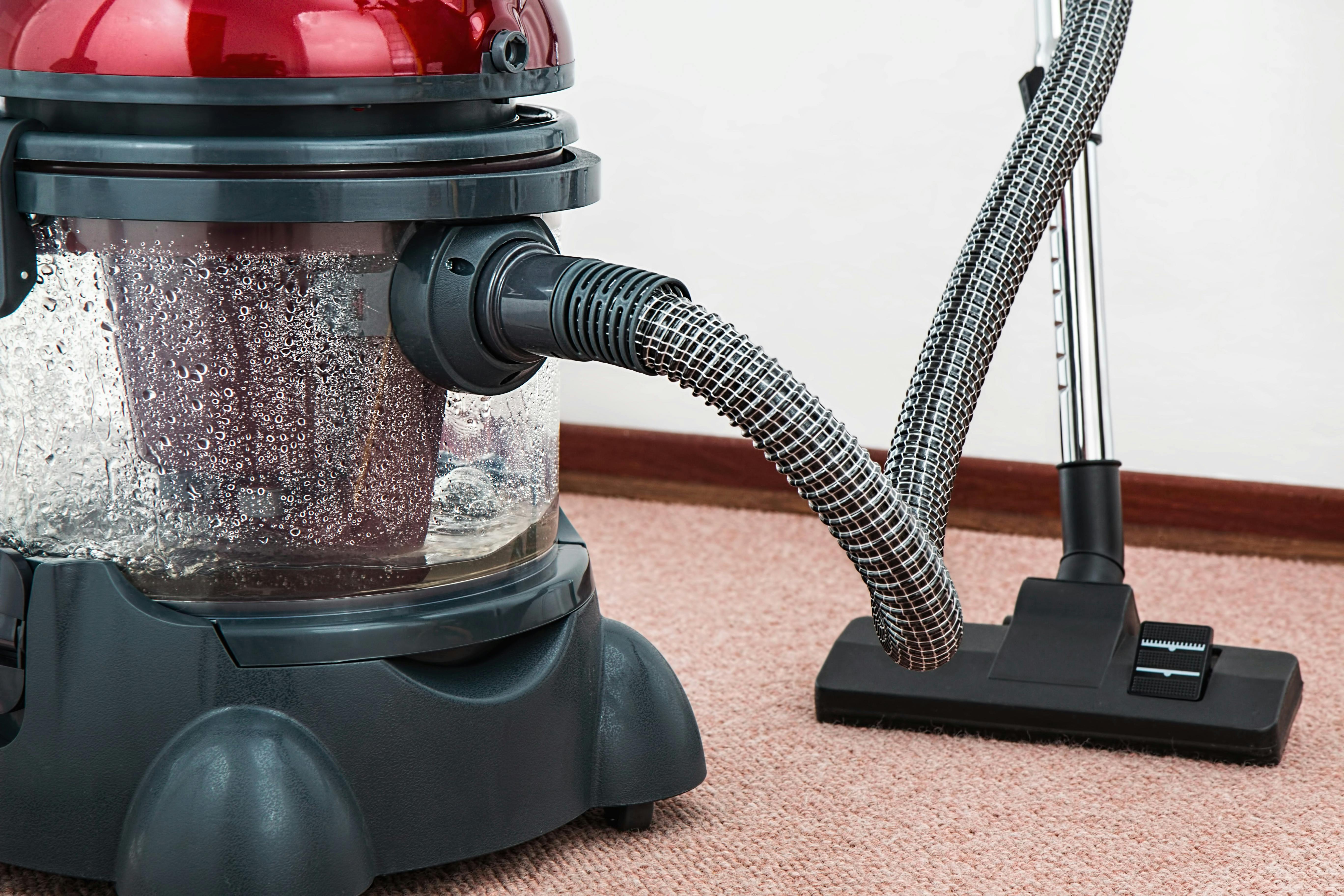
Vacuuming serves a dual purpose. First, a thorough vacuum pulls larvae, eggs, and shed skins out of carpet fibers and upholstery, giving you a physical sample to examine under a magnifying glass. Second, the suction disrupts the larvae’s feeding cycle, reducing the population before it can cause noticeable damage. Use a hose attachment to get into tight corners and the underside of furniture. After each session, empty the canister or replace the bag immediately to prevent re‑infestation.
Safety First
Carpet beetle larvae produce microscopic allergens that can trigger respiratory irritation, especially in sensitive individuals. When vacuuming dusty or heavily infested areas, wear a dust mask (N95 or higher) to avoid inhaling these particles. Gloves are also advisable if you need to handle any collected debris directly.
Seasonal Activity and Prevention Strategies
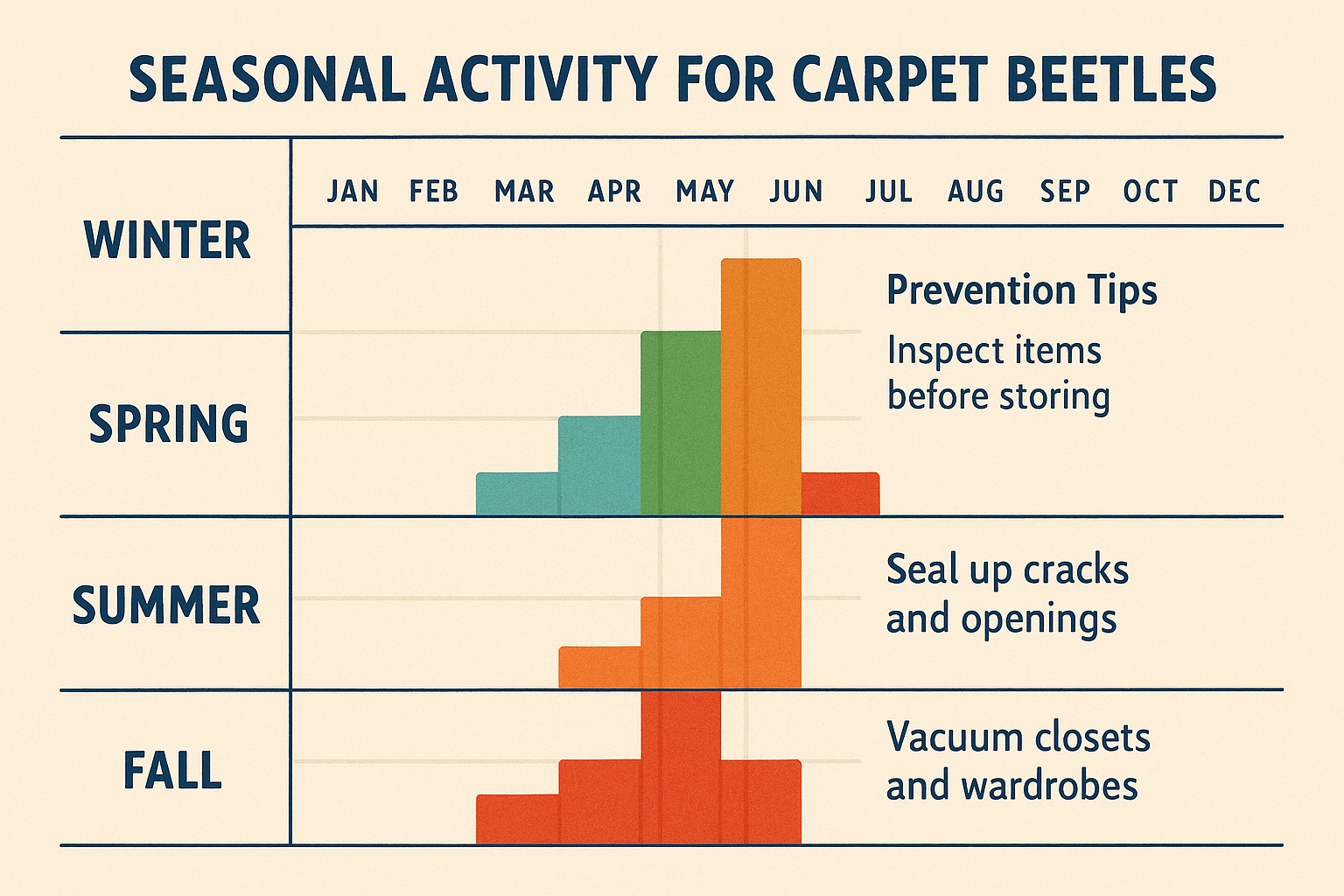
Carpet beetles in Peachtree City follow a predictable rhythm that mirrors the region’s climate. The chart above highlights three key periods:
| Month | Activity Level |
|---|---|
| January – February | Low |
| March – May | Increasing |
| June – August | Peak |
| September – October | High‑to‑moderate |
| November – December | Declining |
During late spring through early fall, warm temperatures (70‑85 °F) and relative humidity between 55 % and 70 % accelerate egg hatch and larval development. In winter, cooler indoor environments and lower humidity slow the life cycle, but beetles can remain dormant in insulated spaces, waiting for the next warm spell.
Why Indoor Climate Control Matters
Carpet beetles are opportunistic. A home that maintains a stable temperature around 75 °F and humidity below 60 % deprives larvae of the moisture they need to thrive. Simple actions—using a programmable thermostat, sealing drafts, and running a dehumidifier during damp spells—can cut the beetle’s reproductive window dramatically.
Spring & Early Summer Actions (March – June)
- Deep‑clean carpets and rugs with a HEPA‑vacuum. Move furniture, vacuum both sides, and then run the vacuum over the carpet pile slowly to capture hidden larvae and eggs.
- Rotate and vacuum stored blankets and seasonal clothing. Beetles love undisturbed fibers. Flip each item, shake it out, then vacuum before folding it back into storage.
These steps break the life cycle before larvae have a chance to mature into winged adults that can spread throughout the house.
Summer & Late Summer Actions (July – August)
- Inspect outdoor items before bringing them indoors. Garden furniture, shed tools, and patio cushions can harbor adult beetles. Give each piece a quick brush‑off and a vacuum pass before storage.
- Reduce outdoor lighting that attracts adult beetles. Replace bright white bulbs with amber or sodium‑vapor lights, and keep porch lights off when not needed. Less light means fewer beetles drawn to your home’s perimeter.
Summer is the beetle’s breeding peak, so limiting entry points and external attractants is essential.
Fall Actions (September – October)
- Store off‑season textiles in sealed plastic containers. Transfer blankets, quilts, and spare linens into airtight bins. This prevents beetles from laying eggs inside soft fibers.
- Clean pet bedding and groom pets regularly. Larvae often hitch a ride on fur or hide in pet beds. A weekly wash of bedding and a thorough brush of your dog or cat removes stray larvae before they can settle.
Fall is when beetles search for warm shelter. By sealing textiles and keeping pets clean, you deny them the perfect hiding places.
Winter Actions (November – February)
- Perform a “pre‑heat” inspection before turning up the furnace. Check under baseboards, inside closets, and around heating vents for signs of beetles or shed skins. A quick sweep with a flashlight can catch an early infestation.
- Keep indoor humidity below 60 % using dehumidifiers. Even in winter, indoor moisture can rise from cooking and showers. A modest dehumidifier set to 55 % helps keep larvae from thriving.
Winter is the beetle’s dormant phase, but a thorough inspection before heating up the house stops any hidden survivors from emerging when temperatures rise.
General Monthly Prevention Checklist
- Vacuum high‑traffic carpet areas with a HEPA‑filter vacuum.
- Inspect and shake out stored clothing, blankets, and linens.
- Check pet bedding and groom pets; wash bedding weekly.
- Seal cracks around windows, doors, and baseboards.
- Run a dehumidifier or air conditioner to keep humidity under 60 %.
- Spot‑clean any spills on upholstery promptly to avoid attracting larvae.
- Review outdoor lighting; switch to amber bulbs where possible.
- Conduct a quick visual scan of stored outdoor items before bringing them inside.
Treatment Options: DIY vs. Professional Services
DIY Approaches You Can Start Today
When carpet beetles first appear, a thorough vacuuming routine is your quickest line of defense. Use a high‑efficiency vacuum with a brush attachment, moving slowly over carpet, upholstery, and baseboards. Aim for at least once a week during an active infestation, and be sure to empty the bag or canister into a sealed trash bag outside the home to prevent larvae from escaping.
Next, treat any contaminated fabrics. Wash clothing, blankets, and removable rugs in water that reaches at least 130 °F (54 °C). The heat kills both eggs and larvae. For items that can’t be laundered, a professional dry‑cleaning service is the safest alternative.
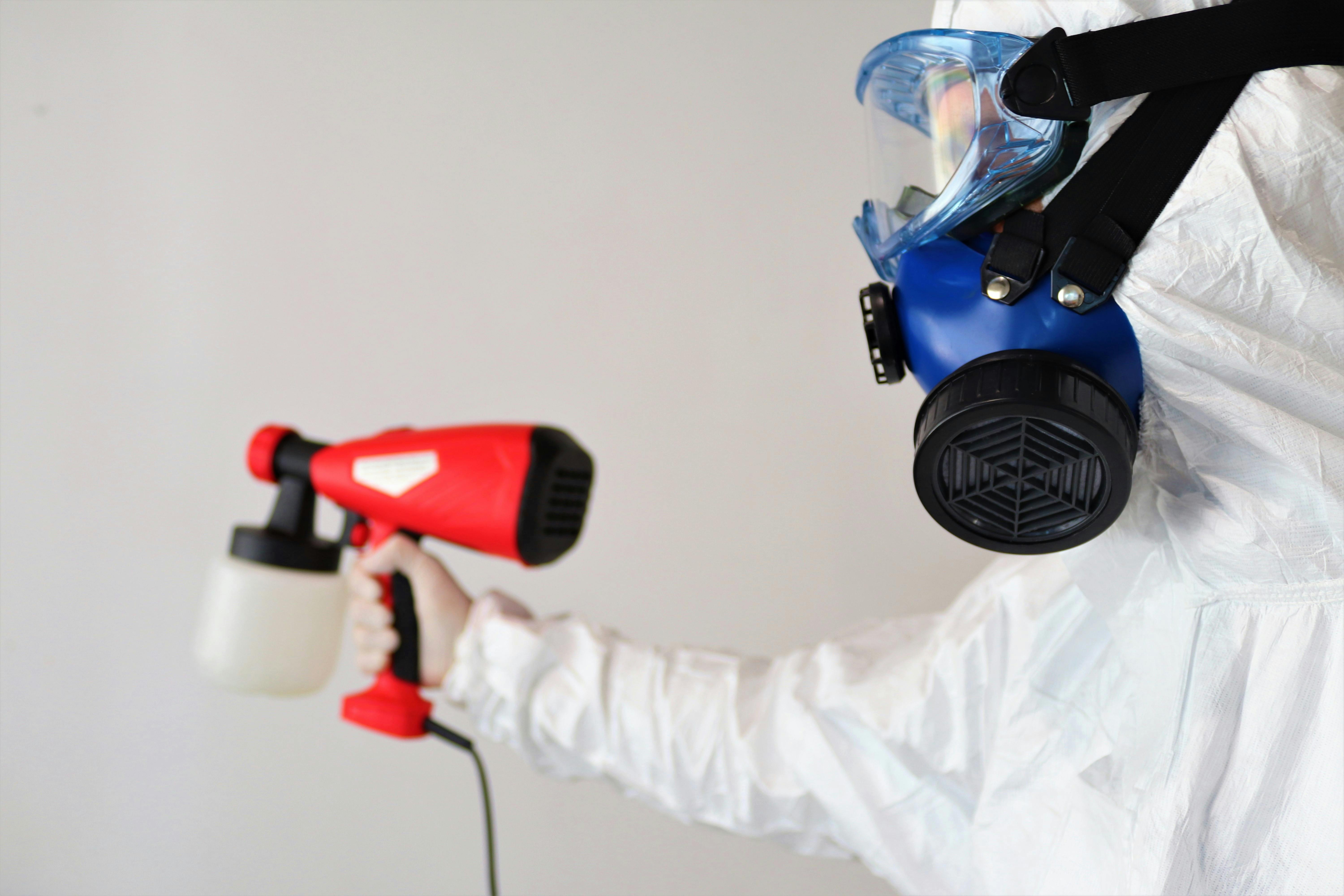
If you prefer a chemical boost, low‑toxicity insecticidal sprays—often pyrethrin‑based—can be applied to seams, crevices, and the undersides of furniture. Always follow the label and consult the EPA pesticide safety guidelines before spraying. Wear gloves, keep children and pets out of the treated area, and ventilate the room for at least 30 minutes after application.
Why DIY May Fall Short
Even the most diligent homeowner can miss hidden hotspots. Carpet beetles love wall voids, attics, and the space behind baseboards—areas a standard vacuum and spray can’t fully penetrate. Residual activity from consumer‑grade products typically lasts only a few weeks, giving the insects a chance to rebound. Without professional monitoring, you may not notice a re‑infestation until damage becomes visible again.
Professional Services: What the Experts Bring
Anthem Pest Control follows an Integrated Pest Management (IPM) protocol that blends inspection, targeted treatment, and ongoing prevention. Technicians first conduct a detailed walkthrough, identifying breeding sites that are invisible to the naked eye. Then they apply EPA‑approved residual granules or foggers designed to linger for months, delivering a consistent dose that disrupts the beetle life cycle.
For severe infestations, we offer heat treatment or controlled‑temperature chambers. Raising the ambient temperature to > 130 °F for a set period eradicates eggs, larvae, and adults without chemicals—perfect for homes with small children or sensitive pets.
Our service doesn’t stop at a single visit. Follow‑up inspections ensure the population stays suppressed, and many customers choose a warranty that covers re‑treatment within a set window, providing peace of mind and a clear cost structure.
Safety First: Protecting Your Family
Whether you’re spraying a DIY product or a technician is applying a professional formulation, safety protocols are essential. Wear long sleeves, gloves, and a mask if you’re handling chemicals. Remove children, pets, and any food‑preparation items from the treatment zone. After a professional application, keep windows open and run fans for at least an hour to clear residual vapors before re‑occupying the space.
Decision‑Making Flowchart
- Step 1 – Assess the scope: Small, isolated spots (e.g., a single rug) → try DIY vacuuming and hot‑water washing.
- Step 2 – Check for hidden activity: Visible larvae in wall voids, attic, or multiple rooms → consider professional IPM.
- Step 3 – Evaluate safety needs: Homes with infants, pets, or allergy concerns benefit from heat treatment rather than chemicals.
- Step 4 – Budget & urgency: If rapid, long‑term control is required and you have the budget, schedule a professional visit now.
- Step 5 – Follow‑up: After DIY, monitor weekly for two months. If beetles return, call Anthem Pest for a comprehensive assessment.
In short, a DIY approach works for early, low‑level sightings, but once carpet beetles establish a foothold in concealed spaces, professional intervention delivers the depth, residual protection, and safety guarantees that a homeowner alone can’t achieve. When in doubt, a quick call to Anthem Pest (877‑371‑8196) can clarify whether you need a simple spray or a full‑scale IPM plan.
Cost and Effectiveness Comparison
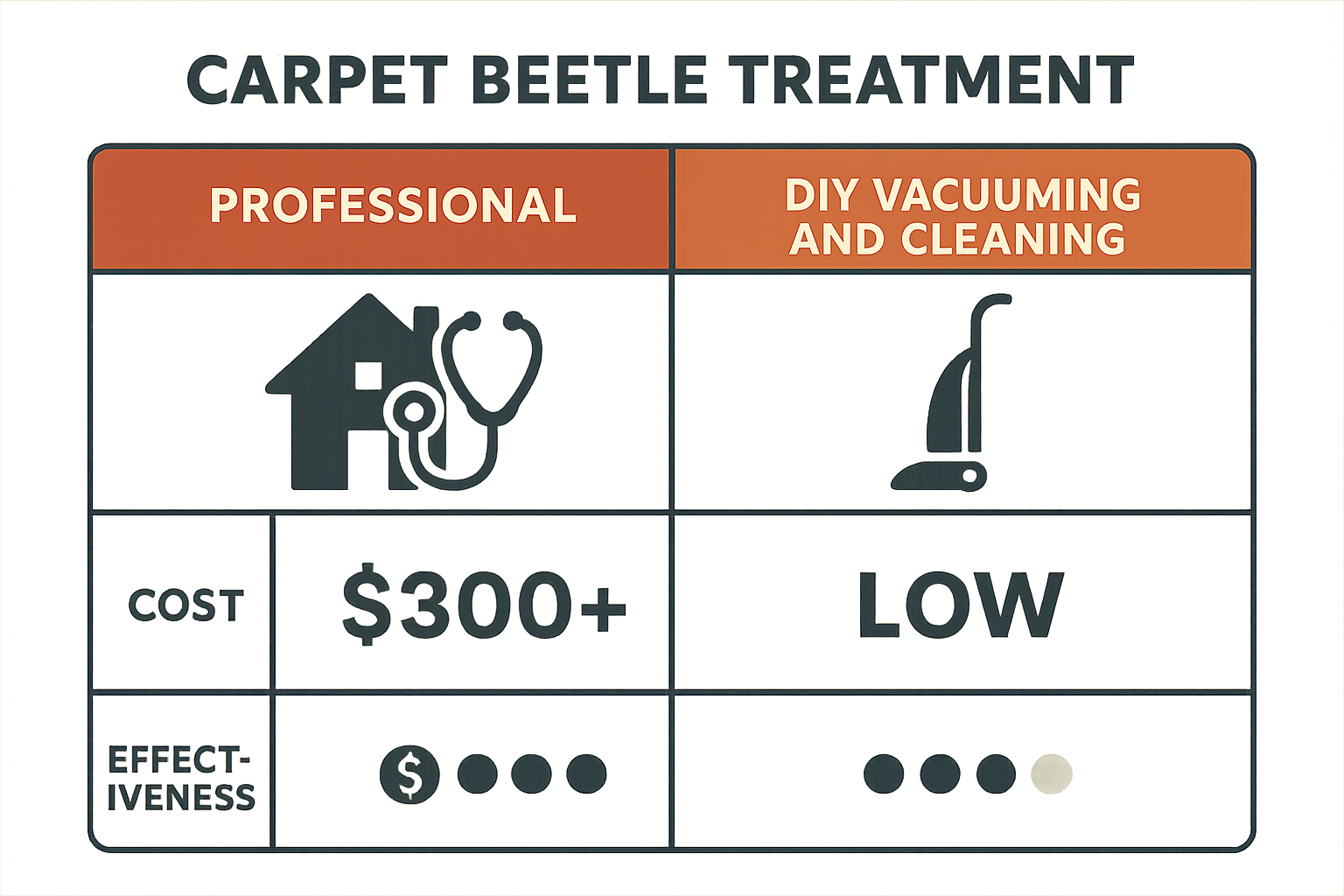
When a carpet beetle infestation pops up, the first question most homeowners ask is, “How much will it cost, and will it actually work?” Below you’ll find a side‑by‑side snapshot of the financial outlay and performance you can expect from a DIY approach versus hiring a licensed professional like Anthem Pest Control.
DIY Cost Breakdown
- Vacuum cleaner (one‑time purchase): $80–$150. A high‑efficiency model helps pull out larvae and eggs from carpets, upholstery, and cracks.
- Laundry expenses: $10–$25 per load for hot‑water washing of infested blankets, curtains, or clothing.
- Over‑the‑counter sprays: $20–$40 per bottle. Typical products contain pyrethrins or neem oil, which knock down adult beetles but often miss hidden larvae.
All told, a homeowner tackling a small, isolated problem can spend roughly $110–$215 on equipment and consumables.
Professional Cost Breakdown
- Standard treatment fee: $150–$300 per visit, depending on square footage and severity.
- Inspection add‑on: $50–$75 for a thorough walk‑through and identification of hidden hotspots.
- Follow‑up service: $80–$120 if a second visit is needed to ensure complete eradication.
Most Peachtree City residents see a total bill of $200–$395 for a full‑service package that includes EPA‑registered products, protective gear, and a guarantee.
Effectiveness Metrics
| Method | Larvae elimination | Adult control | Overall success rate |
|---|---|---|---|
| DIY (vacuum + OTC spray) | 30‑50 % | 40‑55 % | ≈45 % |
| Professional (EPA‑registered product) | 85‑95 % | 90‑98 % | ≈92 % |
Those numbers tell a clear story: a licensed technician can knock out nearly all beetle life stages in a single treatment, while a DIY effort typically removes less than half of the problem.
Long‑Term ROI: Why Effectiveness Matters
Carpet beetles don’t just eat fabric; they chew through wool, silk, and even leather. A single missed larva can hatch, reproduce, and cause months of damage. Consider the hidden costs:
- Fabric replacement: Re‑upholstering a sofa or replacing a rug can run $300–$1,200.
- Repeated treatments: A DIY “fix” often requires multiple rounds, adding $20–$40 each time.
- Time and labor: Hours spent vacuuming, laundering, and re‑inspecting add up, especially for busy homeowners.
When you factor in these downstream expenses, the higher upfront price of a professional service often pays for itself within a few months.
When DIY Makes Sense
If you spot a few adult beetles in a single closet and the infestation is confined to one piece of furniture, a targeted DIY approach can be cost‑effective. The key is to act quickly, use a high‑efficiency vacuum, and follow up with hot‑water laundering and a reputable spray.
When a Professional Is the Smarter Investment
Choose a licensed pro when you notice any of the following:
- Multiple rooms showing signs of damage.
- Heavy larval presence in carpets, under furniture, or in wall voids.
- Previous DIY attempts that haven’t halted the spread.
- Valuable textiles (e.g., heirloom quilts, designer upholstery) that need guaranteed protection.
In these scenarios, the comprehensive inspection, EPA‑approved chemicals, and warranty offered by Anthem Pest Control typically result in a lower total cost over the life of your home.
Getting Transparent Quotes & Verifying Credentials
Before you sign a contract, ask for a written estimate that breaks down:
- Base treatment fee.
- Any optional services (inspection, follow‑up, preventive monitoring).
- Product names and EPA registration numbers.
- Guarantee terms and what’s covered if beetles return.
Confirm the technician holds a Georgia pest‑control license and is insured. A reputable company like Anthem Pest will gladly provide proof of certification and references from local homeowners.
Bottom line: DIY can save you a few hundred dollars on a tiny, one‑off problem, but for anything beyond that, the superior efficacy and peace‑of‑mind that come with a professional treatment usually deliver a better return on investment.
Protect Your Home with Anthem Pest Control
Carpet beetles can turn a tidy home into a constant battle zone if they’re not caught early. That’s why spotting the first signs, applying seasonal prevention, and using a proven treatment plan are non‑negotiable steps for any homeowner who wants to protect fabrics, furniture, and family health.
Quick recap of the essentials
- Early detection: Look for shed skins, tiny larvae, and irregular holes in natural fibers before an infestation spreads.
- Seasonal prevention: Schedule inspections in spring and fall when beetles are most active, and keep storage areas clean and sealed.
- Proper treatment: Combine targeted EPA‑approved insecticides with thorough vacuuming and laundering to eliminate both adults and hidden larvae.
- Follow‑up monitoring: Regular checks ensure the problem stays solved and prevents future re‑infestations.
Why choose Anthem Pest Control?
Anthem Pest Control brings a nationwide network of certified technicians who specialize in carpet beetle management and a full suite of other household pests. Our key strengths include:
- EPA‑approved products that are effective yet safe for children, pets, and the environment.
- Transparent, upfront pricing so you never face surprise fees.
- A satisfaction guarantee that backs every service with a clear, written commitment.
- Season‑specific treatment calendars designed to hit pests at their weakest points.
Because we treat each home as a unique ecosystem, we tailor every plan to your specific layout, fabric types, and lifestyle habits. The result is a focused, efficient approach that eliminates beetles while preserving the integrity of your belongings.
Take the next step with confidence
If you’ve spotted any of the signs above—or simply want the peace of mind that comes from professional protection—our certified technicians are ready to assess your home, design a customized treatment strategy, and keep your family safe. We handle everything from the initial inspection to post‑treatment follow‑up, so you can focus on living comfortably without worrying about hidden pests.
Ready for a free, no‑obligation quote?
Give us a call at 877‑371‑8196 to schedule an on‑site inspection or request a complimentary quote. Our friendly team will walk you through the process, explain the recommended steps, and answer any questions you may have.
Visit Anthem Pest Control for more information and to explore our full range of pest‑management services.