Recognizing House Centipedes in Your Home
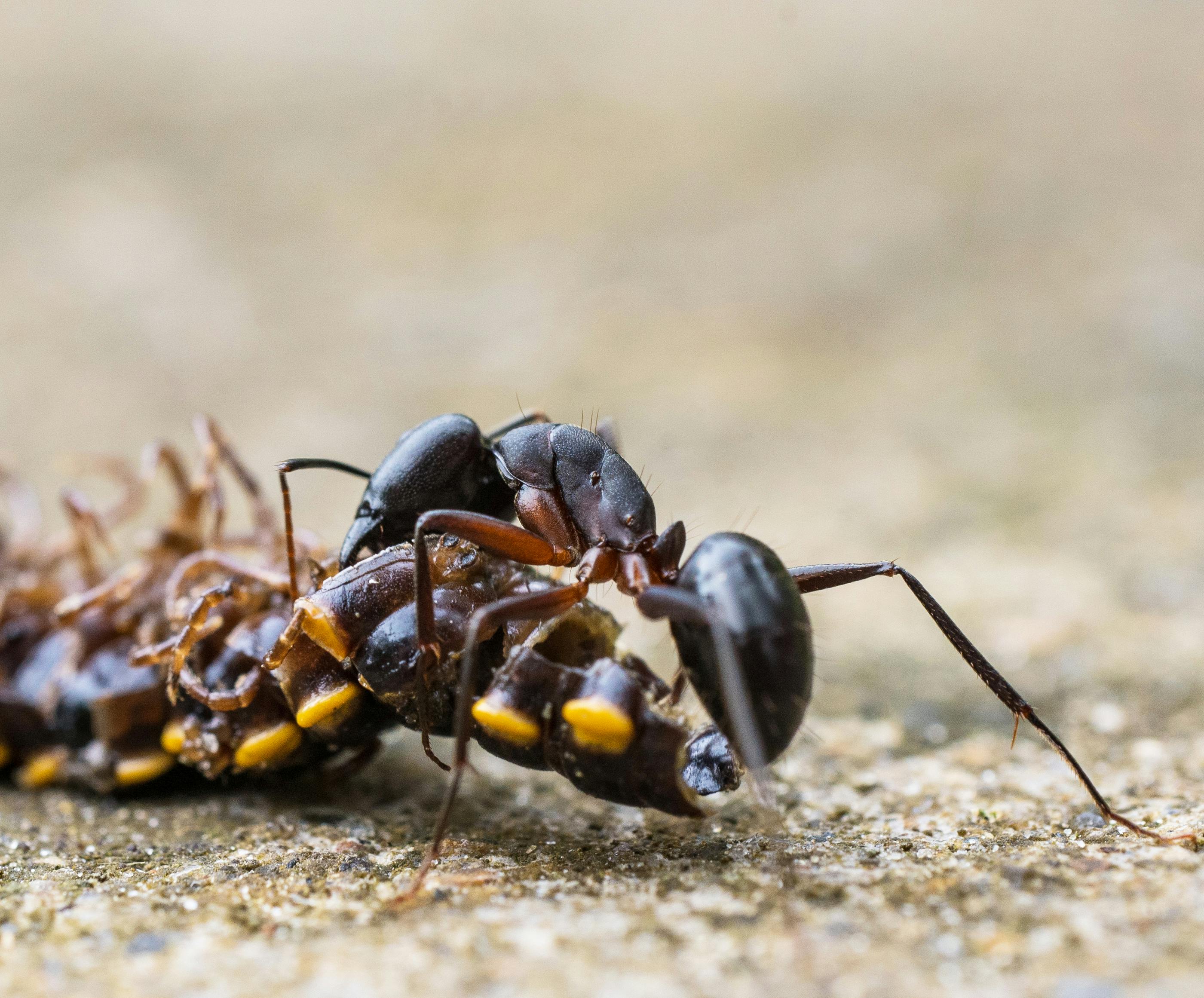
House centipedes (Scutigera coleoptrata) are the swift, many‑legged visitors many homeowners mistake for something far more sinister. They typically measure 1½ to 2 inches long, with a flattened, elongated body that tapers toward the tail. Their most striking feature is the 15 pairs of long, slender legs that fan out from the first segment, giving them a “spider‑like” silhouette while still retaining a clear insect‑like segmentation. Their coloration ranges from pale amber to light brown, often with a faint metallic sheen that catches indoor lighting.
Where They Like to Hide
These predators thrive in damp, sheltered spots where other insects— their primary food source— congregate. Common indoor haunts include bathroom corners, under sinks, basements, laundry rooms, and closets that lack proper ventilation. Moisture attracts silverfish, springtails, and other tiny arthropods, creating a miniature buffet for the centipede. Because they prefer cool, humid environments, you’ll often find them near leaky pipes, shower stalls, or beneath stacks of damp towels.
Harmless vs. Dangerous: Setting the Record Straight
Unlike venomous spiders or stinging insects, house centipedes pose no health threat to humans or pets. Their venom is designed to immobilize tiny prey, not to cause painful bites. A bite from a house centipede is rare, and when it does occur, it feels like a mild pinprick—nothing more severe than a mosquito bite. This makes them beneficial allies, as they help keep populations of other pests in check.
How to Differentiate Them from Other Pests
Confusion often arises because centipedes share habitats with ants, spiders, and even silverfish. Here are a few quick pointers:
- Leg count: Ants have 6 legs; spiders have 8; house centipedes boast 30.
- Body shape: Ants have a distinct “waist” (petiole), while centipedes have a continuous, segmented trunk.
- Movement: Centipedes dart with a rapid, jerking gait, whereas ants march in orderly lines and spiders move with deliberate, deliberate steps.
- Habitat preference: Ants are often seen on countertops and in food crumbs; spiders hide in corners or webs; centipedes linger where moisture accumulates.
Quick Visual Cue Checklist
Use this short list to confirm you’re looking at a house centipede:
- Length of 1½–2 inches, slender and flattened.
- Fifteen pairs of long, evenly spaced legs extending from the first body segment.
- Pale amber or light brown coloration with a subtle metallic sheen.
- Found in damp areas such as bathrooms, basements, or closets.
- Fast, erratic scurrying when disturbed.
If your inspection matches most of these cues, you’re likely dealing with a harmless house centipede. Recognizing the pest accurately is the first step toward deciding whether you need professional assistance or simply want to reduce moisture and limit its entry points. For homeowners in Peachtree City, Georgia, understanding these details helps you keep the balance—allowing beneficial centipedes to do their job while preventing any surprise encounters.
Why Centipedes May Be a Concern for Homeowners
What a Centipede Bite Feels Like
Most people think a centipede bite is just a minor nuisance, but the reality can be a bit more uncomfortable. A bite typically produces a sharp, stinging sensation followed by redness, swelling, and occasional itching. In some cases, the area may develop a small blister or a faint rash that lasts a few days. While centipede venom is not life‑threatening for the average adult, children, seniors, or anyone with a known allergy should seek medical attention if they experience severe pain, spreading swelling, difficulty breathing, or a fever.
Are Centipedes Truly “Helpful” Predators?
It’s easy to assume that because centipedes hunt insects, they’re an ally in the battle against pests. They do consume spiders, cockroaches, and other small arthropods, but their presence is a double‑edged sword. A single centipede can’t control a serious infestation, and an overabundance often signals underlying conditions—excess moisture, cracks, or abundant food sources—that also favor more damaging pests like termites or rodents. Relying on centipedes as a natural control method can give homeowners a false sense of security while the underlying problem worsens.
How Centipedes Multiply in Your Home
Centipedes thrive in damp, hidden spaces. Leaky pipes, poorly ventilated basements, or a consistently wet crawl space create the perfect breeding ground. Cracks in foundation walls or gaps around windows provide easy entry points, while piles of leaf litter, firewood, or even a cluttered garage supply shelter and food. When these conditions persist, you’ll notice a steady increase in sightings, especially during warm, humid evenings when the insects they prey on are most active.
Health and Safety Concerns for Families and Pets
Beyond the occasional bite, centipedes can pose indirect risks. Their rapid movements can startle children or pets, leading to accidental knocks or falls. A startled centipede may dash across a child’s hand or a pet’s fur, delivering a bite that could cause an allergic reaction. Moreover, the presence of many centipedes often indicates that other insects—some of which may carry disease—are also present, increasing the overall health risk within the home.
Warning Signs That the Problem Is Escalating
- Frequent sightings in multiple rooms, especially near bathrooms, kitchens, or basements.
- Visible droppings that look like tiny black specks or grainy residue.
- Shedding of exoskeletons (shed skins) along baseboards, behind appliances, or in closets.
- Unexplained bites on family members, particularly during the night.
- Increased moisture levels or musty odors indicating a water‑related issue.
When any of these indicators appear, it’s time to act before the centipede population reaches a level that feels unmanageable. Prompt professional assessment can pinpoint the moisture sources, seal entry points, and apply targeted treatments that protect both your family and your home’s structural integrity.
Safe and Effective Centipede Control Methods
Immediate DIY Actions
Before you reach for any product, tackle the conditions that attract centipedes. Moisture, cracks, and clutter create perfect hide‑outs, so a quick home audit can dramatically cut their numbers.
- Reduce moisture: Fix leaky pipes, use a dehumidifier in basements, and ensure gutters direct water away from the foundation.
- Seal entry points: Apply silicone caulk around windows, doors, and utility penetrations. Install door sweeps to block the gaps under exterior doors.
- Remove clutter: Store boxes, firewood, and laundry off the floor. Keep countertops clear and vacuum regularly to eliminate debris where centipedes hunt.
Non‑Chemical Treatments
If you prefer a chemical‑free approach, several low‑risk methods work well when applied correctly.
- Vacuuming: Use a hose attachment to suction visible centipedes and their egg sacs. Empty the canister into a sealed bag and discard it outside.
- Sticky traps: Place adhesive traps along baseboards, under sinks, and near known entry points. Check weekly and replace as needed.
- Diatomaceous earth (DE): Sprinkle food‑grade DE in cracks, behind appliances, and in damp corners. The microscopic silica particles abrade the insects’ exoskeletons, causing dehydration without harming pets or people.
Chemical Insecticides: What Homeowners Need to Know
When non‑chemical tactics aren’t enough, targeted insecticides become necessary. Understanding the active ingredients and safety measures helps you choose wisely.
| Active Ingredient | Mode of Action | Safety Precautions |
|---|---|---|
| Bifenthrin | Disrupts nerve transmission, causing paralysis | Wear gloves and mask; keep children and pets away for 4 hours |
| Cypermethrin | Blocks sodium channels in nerve cells | Apply in well‑ventilated areas; avoid skin contact |
| Silicon‑based aerosols (e.g., Siloxane) | Creates a physical coating that suffocates insects | Minimal toxicity but still use goggles and gloves |
Even EPA‑approved products require careful handling. Always read the label, follow the recommended dilution rates, and apply only to the areas identified during your inspection.
The Value of a Licensed Technician
A certified pest‑control professional brings three critical advantages:
- Comprehensive inspection: Technicians use flashlights, moisture meters, and knowledge of local building styles to locate hidden colonies.
- Targeted treatment: They apply the right product at the correct concentration, focusing on cracks, voids, and moisture reservoirs where centipedes thrive.
- Follow‑up plan: After the initial service, a technician schedules re‑inspections and may recommend preventative barriers to keep future invasions at bay.
Safety First: Gear and EPA‑Approved Products
Whether you’re spraying yourself or supervising a technician, personal protective equipment (PPE) is non‑negotiable. At a minimum, wear nitrile gloves, safety goggles, and a NIOSH‑approved respirator when handling liquid sprays.
All products used should be listed on the EPA Pesticides website. This ensures they meet federal safety standards and have undergone rigorous testing for human and environmental impact.
When to Call a Professional
If you notice any of the following, it’s time to pick up the phone:
- Centipedes appearing in large numbers across multiple rooms.
- Persistent moisture problems that you cannot resolve on your own.
- Repeated bites or skin irritation after handling centipedes.
- Any uncertainty about the correct application of chemical treatments.
Anthem Pest Control offers fast, transparent service for emergency centipede situations in Peachtree City. Our licensed technicians arrive prepared, assess the severity, and implement a safe, effective solution—so you can sleep soundly without unwanted guests.
Understanding Costs and Seasonal Patterns for Centipede Management
When a centipede invasion turns urgent, the first question on every homeowner’s mind is cost. At Anthem Pest Control we keep pricing transparent so you can make an informed decision without any surprise fees. Below you’ll find a clear breakdown of the typical service fees in Peachtree City, GA, and why those numbers can shift with the season, the size of your property, and the severity of the infestation.
Typical Service Fees
- Inspection: Our certified technician conducts a thorough visual assessment, identifies entry points, and maps out activity zones. This step is essential for a targeted treatment plan.
- Standard Treatment: Includes a one‑time application of EPA‑approved centipede control products, plus a follow‑up visit to confirm efficacy.
- Emergency Response: Priority scheduling within 24 hours, rapid deployment of high‑intensity treatments, and after‑hours service if needed.
| Service | Base Price | What’s Included |
|---|---|---|
| Inspection | $79 | 15‑minute on‑site assessment, detailed report |
| Standard Treatment | $199 | Full‑home spray, perimeter barrier, 30‑day warranty |
| Emergency Response | $349 | Same‑day service, intensified application, 48‑hour follow‑up |
Emergency vs. Regular Pricing
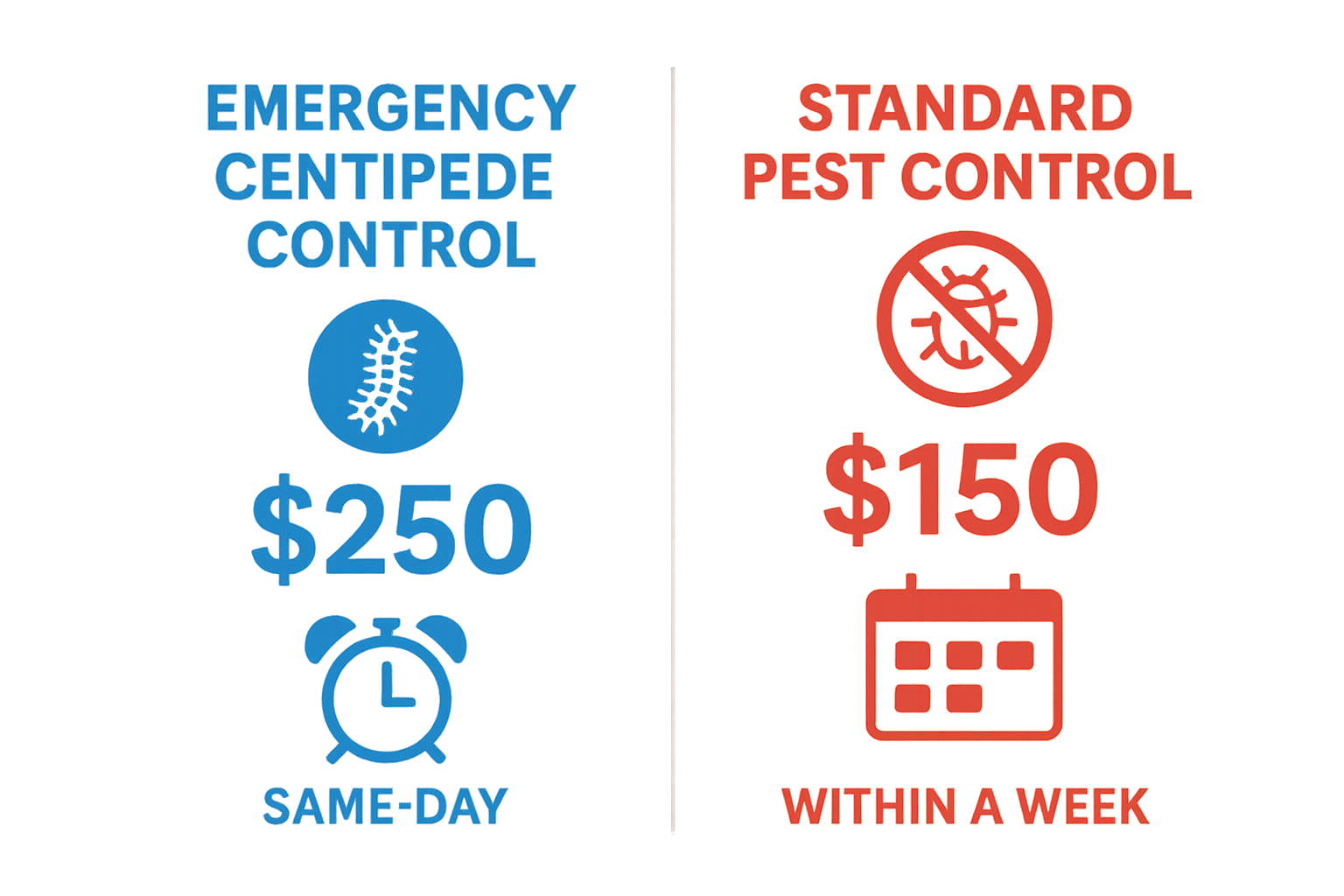
Emergency centipede control carries a premium because it requires immediate mobilization and often a higher concentration of active ingredients. The infographic below illustrates the price gap between a scheduled treatment and an urgent call‑out, helping you see where the extra cost originates.
Factors That Influence Cost
Several variables can push a quote up or down:
- Severity of Infestation: Heavy activity may require multiple treatment rounds.
- Property Size: Larger homes or extensive yards need more product and labor.
- Treatment Type: Spot‑treatment, whole‑home spray, or specialized baits each have distinct price points.
- Access Challenges: Multi‑level structures or hard‑to‑reach areas add time and equipment costs.
Seasonal Activity in Peachtree City
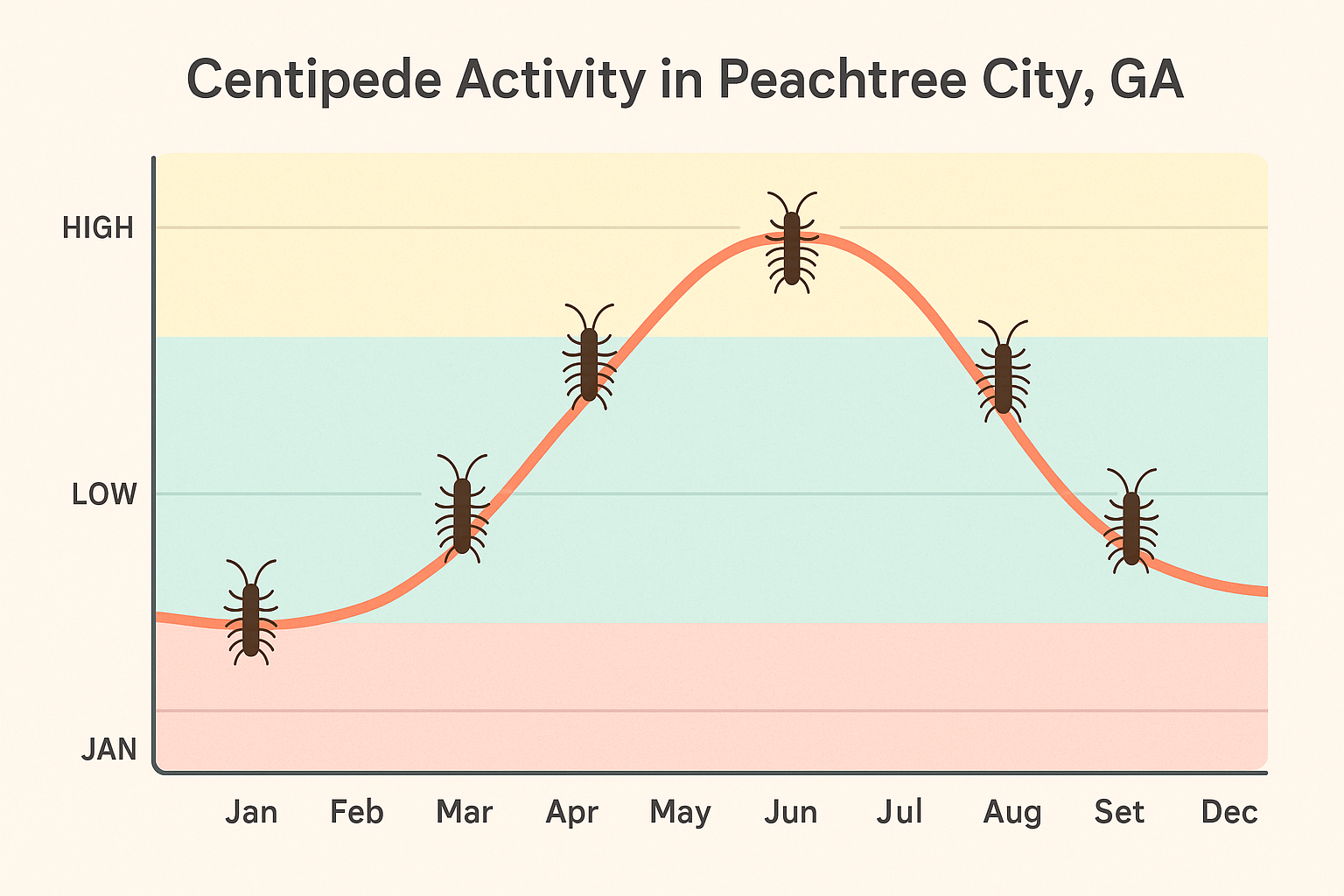
Centipedes are most active when humidity and temperature align—typically late spring through early fall. Understanding this pattern lets you schedule preventive work during low‑activity windows, saving both money and hassle.
| Month | Activity Level | Recommended Action |
|---|---|---|
| January – February | Low | Monitor only; no treatment needed |
| March – April | Moderate | Schedule preventive barrier |
| May – August | High | Peak treatment window; consider emergency plan |
| September – October | Moderate | Final preventive treatment before winter |
| November – December | Low | Review results; plan next year’s schedule |
Budgeting Tips & Off‑Peak Scheduling
Take advantage of the low‑activity months (January–February and November–December) to lock in preventive treatments at a reduced rate. Many pest‑control companies, including Anthem, offer off‑season discounts of up to 15 % when you pre‑pay for a yearly plan. Additionally, bundling centipede control with other seasonal services—such as mosquito or rodent prevention—can further stretch your budget.
Keep a simple spreadsheet: list the estimated cost of each service, note the month you plan to schedule it, and apply any seasonal discount codes you receive. This visual aid helps you avoid last‑minute emergency calls, which are typically 30–50 % more expensive.
Ready for a Customized Quote?
Every home is unique, so we tailor our pricing to your exact needs. Request a free, no‑obligation quote today and let our local experts map out a cost‑effective centipede management plan that fits your budget and timing preferences.
Protect Your Home with Professional Centipede Services
Recap of What We’ve Covered
In the earlier sections we walked through how to spot a centipede invasion, the health and structural risks they pose, and the DIY steps you can take to limit their numbers. From recognizing the tell‑tale fast‑moving legs to understanding why moisture‑rich basements and cluttered corners become their favorite hideouts, you now have a solid foundation for early detection.
We also explored the most common control options—mechanical removal, moisture management, and chemical barriers—highlighting the pros and cons of each. While these methods can buy you time, they often fall short when an infestation spikes or when the pests have already nested deep within your home’s framework.
Why Choose Anthem Pest Control?
Anthem Pest Control brings a blend of local expertise and nationwide standards to every centipede job in Peachtree City. Our technicians are EPA‑certified, meaning every product we apply meets strict safety guidelines for your family, pets, and the environment. We don’t just eliminate the visible centipedes; we target the underlying conditions that invite them back, creating a lasting barrier against future invasions.
Because we serve the Peachtree City community year‑round, we know the seasonal patterns that drive centipede activity—wet springs, humid summers, and even the occasional fall rainstorm. This local knowledge lets us time treatments for maximum impact, reducing the chance of a repeat emergency.
Transparent Pricing and Rapid Response
When a centipede sighting turns into an emergency, every minute counts. Our emergency response team can be on your doorstep within hours, armed with the right tools and a clear plan of action. Pricing is straightforward and posted up front—no hidden fees, no surprise add‑ons. You’ll receive a detailed quote before any work begins, so you know exactly what you’re paying for.
Take the First Step Toward a Centipede‑Free Home
Ready to protect your home with a professional, hassle‑free solution? Call us today for a free, no‑obligation quote and take the first step toward a centipede‑free home. Our friendly staff will schedule a thorough inspection, discuss the best treatment strategy for your situation, and answer any questions you might have.
Phone: 877‑371‑8196
Website: https://anthempest.com