Recognizing Cricket Infestations in the Home
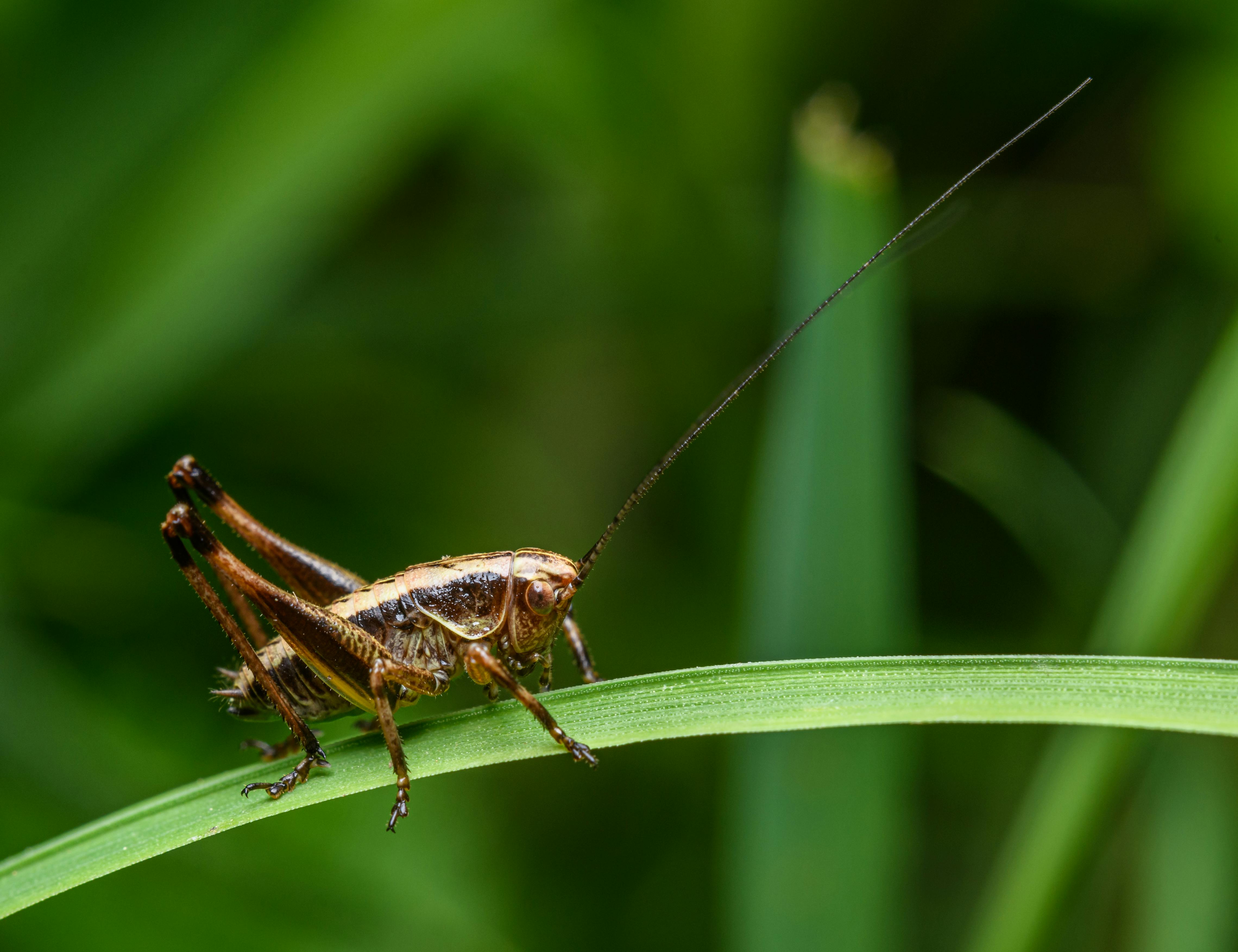
House crickets (Acheta domesticus) are the most common species you’ll encounter inside a Decatur home and are a frequent reason homeowners seek emergency cricket control Decatur services. Adults typically measure ½ to ¾ inch long, with a smooth, light-brown to reddish-brown exoskeleton that may show faint stripes on the wings. Their most distinctive trait is the nightly “chirp” – a rapid, rhythmic sound produced by rubbing the wings together. Male crickets sing to attract mates, and the volume can increase dramatically when dozens gather in a warm, humid space, often signaling the need for immediate professional intervention.
Where Crickets Slip Inside
Crickets are opportunistic hitchhikers. They exploit any small gap that leads from the yard to the interior of your house. Common entry points include:
- Cracks in foundation walls or around utility penetrations.
- Unsealed gaps around doors, windows, and garage doors.
- Open vents, especially in crawl spaces and unfinished basements.
- Dense grass or leaf litter that brushes against siding, providing a bridge.
Once inside, they favor dark, moist hideaways: under floorboards, behind baseboards, inside insulation, or tucked away in stored boxes. A cluttered basement or a damp crawl space can become a cricket “hotel” in just a few weeks.
Seeing and Hearing the Warning Signs
The first clue is often auditory. If you hear a steady chorus of chirps after sunset, especially near walls or under furniture, you likely have a resident population. Visual signs include:
- Small, dark droppings roughly the size of a pinhead, often found near food packages or pet dishes.
- Shedded wing skins (exuviae) that look like translucent, paper‑thin shells.
- Live or dead crickets gathered in corners, under appliances, or in window sills.
These indicators are easy to miss if you’re not looking, so a systematic walk‑through is essential when you suspect an infestation.
Health and Property Concerns
While crickets are not disease vectors in the same way as rodents, they can still cause trouble. Their droppings and shed skins can contaminate pantry items, especially if you store dry goods in open containers. Some homeowners experience mild allergic reactions to cricket protein, manifesting as skin irritation or respiratory discomfort. In extreme cases, a massive congregation can create a moisture‑rich environment that encourages mold growth or attracts secondary pests such as spiders and silverfish. Structural damage is rare, but a very high population can weaken insulation and accelerate wood rot in damp areas.
Quick DIY Inspection Checklist
- Listen at night: Sit quietly for 5 minutes in each room after dark; note any chirping.
- Check entry points: Examine the perimeter for cracks, gaps, and unsealed vents.
- Inspect hidden zones: Look under appliances, behind baseboards, and inside crawl‑space access panels.
- Search for droppings and skins: Use a flashlight to spot dark specks and translucent wing casings.
- Secure food storage: Ensure all pantry items are in sealed containers.
- Reduce moisture: Repair leaks, use a dehumidifier in basements, and keep grass trimmed away from the foundation.
If you tick off several items on this list, it’s time to act before the population explodes. Professional intervention can seal entry points, treat hidden nests, and provide a long‑term prevention plan tailored to Decatur’s climate.
For deeper insight into cricket biology and the health risks they pose, consult reputable resources such as the EPA’s pesticide information page and the National Pest Management Association’s cricket guide. These sites offer science‑backed data that can help you make informed decisions about treatment options.
When Crickets Become a Problem – Seasonal Peaks and Risks
Life Cycle Basics: How Temperature and Humidity Drive Numbers
Crickets are cold‑blooded insects, so their development speeds up as the air gets warmer and more humid. Eggs hatch in late spring when soil temperatures reach about 65 °F (18 °C). Nymphs molt several times over the summer, reaching adulthood in July or early August. Once they’re mature, females lay hundreds of eggs in moist soil or leaf litter, setting the stage for the next generation. If a summer is unusually hot or rainy, the cycle accelerates, and you’ll see a sudden surge of chirping adults.
What the Seasonal Activity Graph Is Telling You
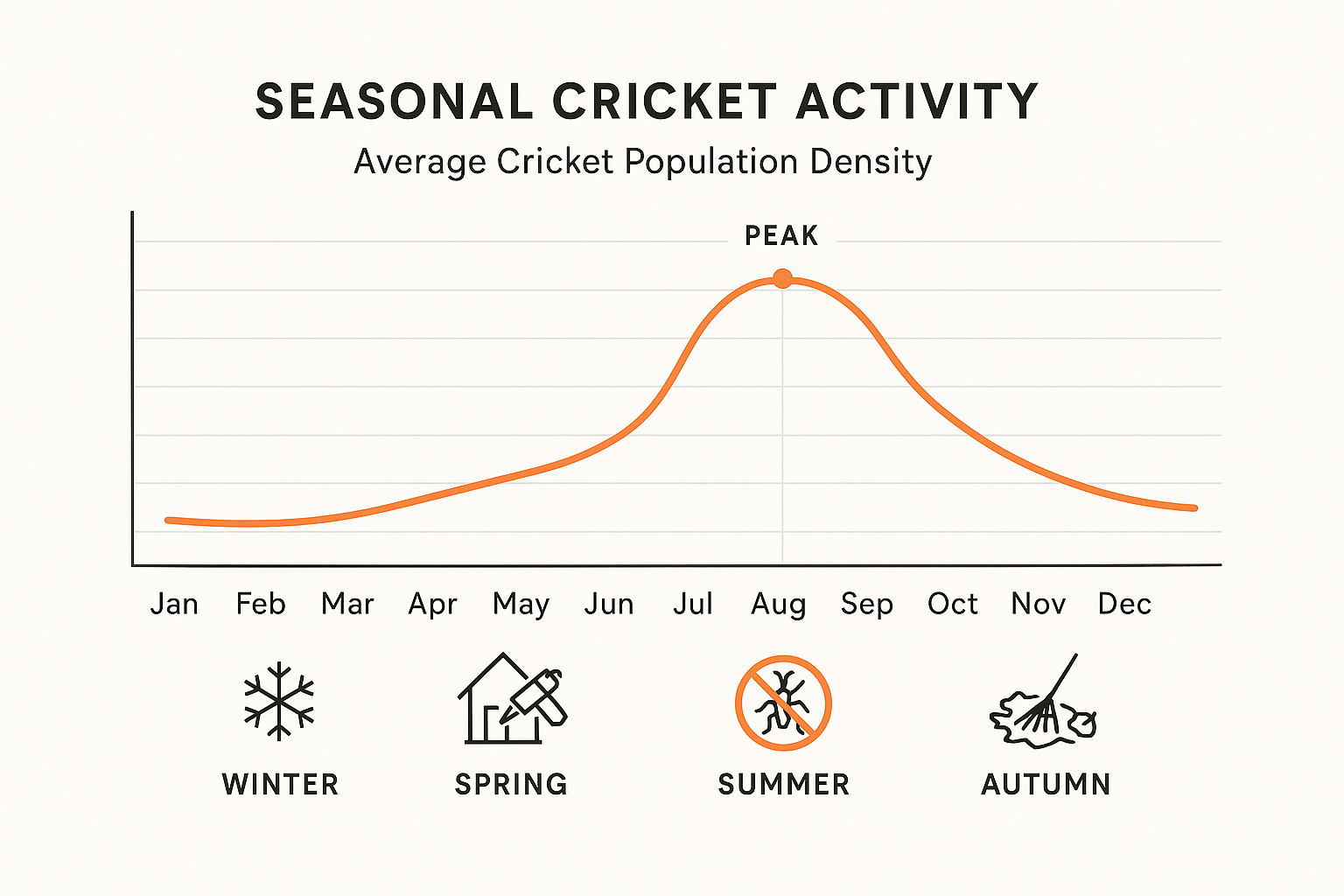
The line graph above plots average cricket captures from pitfall traps across a typical year in Decatur, a pattern often used by professionals offering emergency cricket control Decatur services to predict surge periods. Notice the sharp climb beginning in May, peaking in July–August, then tapering off as temperatures dip in September. Winter months (December–February) hover near zero activity because the insects either burrow deeper or die off. This visual cue helps homeowners time their preventive actions—or call for immediate professional help—before the population explodes.
Summer Magnetism: Why Crickets Flood Your Yard
- Outdoor lighting. Many species are positively phototactic; bright porch lights act like beacons, drawing adults that are searching for mates.
- Moisture sources. Sprinklers, leaky gutters, and damp mulch create ideal breeding grounds.
- Lush vegetation. Tall grass and dense shrubs provide shelter and food (plant sap, decaying organic matter).
Seasonal Prevention Tips Aligned with the Graph
Use the activity curve as a calendar. The earlier you act, the less you’ll hear the nightly chorus.
Summer (June‑August)
- Switch porch and patio lights to amber or sodium‑vapor bulbs, which are less attractive to crickets.
- Trim grass to a maximum of 3‑4 inches and remove weeds that hold moisture.
- Repair leaky irrigation lines and ensure gutters direct water away from foundations.
- Consider a perimeter barrier of diatomaceous earth around the home’s foundation; it stays dry and creates a physical hurdle.
Fall (September‑November)
- Seal cracks around windows, doors, and the foundation with silicone caulk to block overwintering sites.
- Remove leaf piles and compost bins that retain humidity.
- Store garden furniture and firewood off the ground to eliminate shelter.
Winter (December‑February)
- Inspect attic and crawl‑space insulation for gaps where crickets might seek warmth.
- Run a quick visual sweep of exterior walls for any new openings created by frost heave.
- Keep indoor humidity below 50 % using dehumidifiers; dry interiors are less inviting.
Trusted Guidance and Further Reading
For broader insect‑safety recommendations, the Centers for Disease Control and Prevention (CDC) provides a helpful fact sheet on household pests and health risks. Visit the CDC insect safety page for science‑backed practices that complement the seasonal steps outlined above.
By syncing your home‑maintenance calendar with the natural rise and fall of cricket activity, you can keep the chirping at bay and protect your Decatur residence from the nuisance—and potential damage—that a booming cricket population can bring.
Safe and Effective Cricket Control Methods
Step‑by‑step inspection
Before you reach for any product, start with a thorough inspection. Walk each room, shine a flashlight into corners, and look for the tell‑tale silvery chirps. Identify nests by spotting the small, ear‑shaped mud tubes or clusters of eggs tucked behind baseboards, under appliances, or in garden mulch. Note any damage to wallpaper, wood trim, or indoor plants, because that will guide your treatment plan.
Exclusion techniques
Crickets are master escape artists, slipping through the tiniest gaps. Seal all exterior cracks with silicone caulk, and install door sweeps on entry doors. Repair torn window screens and replace weather‑stripping around doors. Inside, keep vegetation trimmed at least 12 inches from the foundation; overgrown shrubs act as bridges for crickets to jump onto your porch and into the house.
Chemical treatments
When an infestation is beyond DIY sealing, EPA‑registered insecticides become a reliable option. Choose a product labeled for “cricket control” and follow the label’s dosage instructions to the letter. Apply the spray to baseboards, under sinks, and around entry points during the evening when crickets are most active. A second, “follow‑up” application after 7‑10 days ensures any newly hatched insects are caught before they mature.
Non‑chemical alternatives
- Heat treatment: Raising the temperature in a confined area to 120°F for 30 minutes kills crickets without chemicals.
- Ultrasonic devices: Emit high‑frequency sound waves that disturb cricket mating calls; effectiveness varies, so use as a supplemental measure.
- Targeted smoke applications: Professional smoke machines fill voids with a fine, pesticide‑free smoke that suffocates hidden insects.

Why a licensed specialist matters
A certified technician brings two critical advantages. First, they are trained to calibrate smoke machines so the fog reaches every crack without over‑saturating surfaces. Second, they stay current with Decatur, GA pest‑control ordinances, which require licensed applicators to record pesticide usage, maintain safety data sheets, and follow strict disposal protocols. This documentation protects you from liability and ensures compliance with local regulations.
Safety considerations for DIY and professional work
Whether you’re spraying a foam sealant or a pesticide, wear long sleeves, nitrile gloves, and safety glasses. Work in a well‑ventilated area; open windows and run fans to disperse fumes. Keep pets and children out of the treatment zone for at least 2 hours, or longer if the product label advises. Finally, always store chemicals in their original containers, out of reach, and dispose of empty cans according to EPA guidelines.
Local licensing example – Decatur, GA
Decatur’s municipal code requires all pest‑control businesses to hold a Georgia State Pest Control License and to register with the city’s Department of Public Health. The ordinance mandates annual continuing‑education courses on safe pesticide application and obliges technicians to post a visible “Pesticide Use Notice” in any home they treat. Choosing a provider that adheres to these rules guarantees you’re getting a service that meets the highest safety standards.
Putting it all together
Start with a meticulous inspection, seal every entry point, and trim surrounding vegetation. If crickets persist, decide between EPA‑registered sprays, heat, ultrasonic devices, or professional smoke treatment. Remember, the safest and most effective route often involves a licensed specialist who can blend exclusion, chemical, and non‑chemical tactics while staying fully compliant with Decatur’s pest‑control regulations. With the right approach, you’ll silence those night‑time chirps and protect your home for seasons to come.
Pricing and Service Options for Emergency Cricket Control
When crickets invade your yard or home, every minute counts—especially when emergency cricket control Decatur homeowners rely on is needed. A rapid response not only curbs the noise and mess but also prevents the insects from laying eggs that could turn a small problem into a full-blown infestation. That’s why Anthem Pest Control offers clear, tiered pricing that matches the urgency of your situation.
Service Tier Overview
We’ve structured our emergency cricket control into three straightforward packages—Basic, Standard, and Premium. Each tier is designed to give you the right balance of speed, coverage, and ongoing protection.
- Basic – $149‑$199 per treatment
- Typical response time: Within 24 hours
- Coverage: Up to 1,500 sq ft of indoor/outdoor space
- Included treatments: One‑time inspection, targeted chemical spray, and a single follow‑up call
- Standard – $219‑$279 per treatment
- Typical response time: Within 12 hours
- Coverage: Up to 3,000 sq ft
- Included treatments: Comprehensive inspection, dual‑application chemicals (indoor & perimeter), and two in‑home follow‑up visits
- Premium – $329‑$399 per treatment
- Typical response time: Within 6 hours
- Coverage: Up to 5,000 sq ft plus surrounding landscape
- Included treatments: Full‑property inspection, advanced eco‑friendly formulation, three follow‑up visits, and a 12‑month warranty on cricket activity
Pricing Comparison Chart
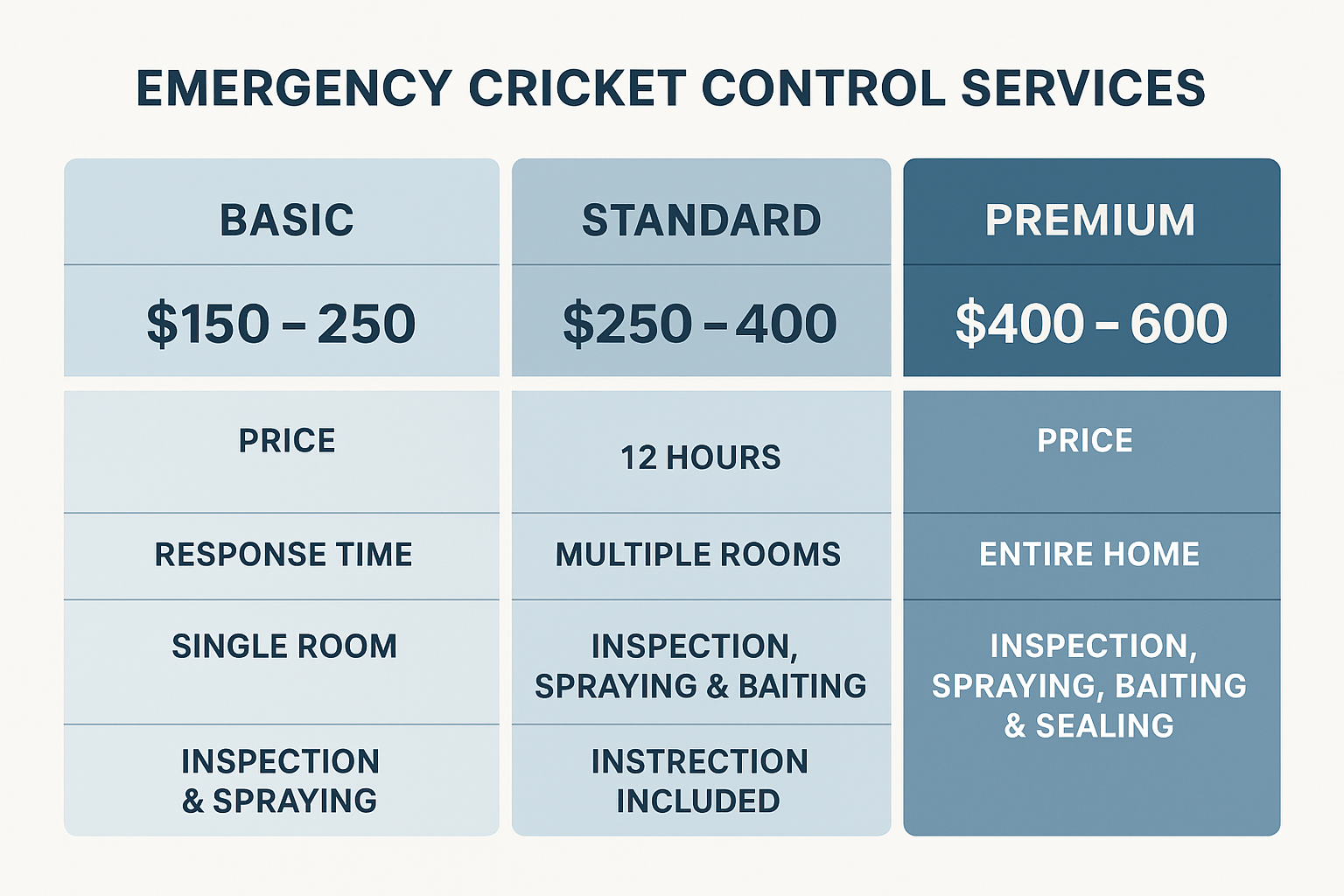
The chart above breaks down each tier side‑by‑side. Start by locating the column that matches your desired response time—faster service commands a higher price but reduces the window for crickets to reproduce. Next, compare coverage areas to ensure the selected tier protects your entire property. Finally, look at the “Included Treatments” row; the Premium tier adds a warranty and extra follow‑ups, which can save you money if crickets return later in the season.
Value Considerations
Choosing the right tier isn’t just about the upfront cost. Think about how often you’ll need follow‑up visits, whether a warranty gives you peace of mind, and if optional add‑ons—such as nightly perimeter misting or a one‑year pest‑monitoring plan—fit your budget. For most homeowners, the Standard tier strikes a sweet spot: quick enough to stop breeding, broad enough coverage, and includes two follow‑ups that often eliminate the need for future emergency calls.
Anthem Pest Control’s Pricing Promise
Transparency is the cornerstone of our service. All prices are posted up front, and we never tack on hidden fees after the job is done. You can request a free, no‑obligation quote online or by calling 877‑371‑8196. Our technicians will walk you through the estimate, explain each line item, and help you decide which tier aligns with your urgency and budget.
Quick FAQ – Billing, Insurance, and Guarantees
- Do you require a deposit? No. We bill after the service is completed, and you can pay by credit card, check, or online portal.
- Is my home covered by insurance? All of our emergency treatments are performed by fully licensed and insured technicians, protecting both you and our staff.
- What if crickets return after treatment? The Premium tier includes a 12‑month guarantee. For Basic and Standard, we offer a discounted re‑treatment within 30 days.
- Can I upgrade my tier later? Absolutely. If you start with Basic and realize you need broader coverage, we’ll adjust the plan and billing on the spot.
Protect Your Home Today with Anthem Pest Control
Crickets may seem harmless, but when temperatures rise in Decatur they multiply quickly, turning a simple chirp into a full‑blown infestation. Warm, humid evenings create the perfect breeding ground, and unchecked colonies can seep into wall voids, crawl spaces, and even your kitchen pantry. Beyond the noise, large numbers of crickets can damage insulation, contaminate food, and attract secondary pests such as spiders and rodents. Leaving the problem untreated means you’re inviting a seasonal nuisance that can become a year‑round headache.
Why Choose a Licensed, Experienced Provider?
- Safe, EPA‑approved treatments that protect your family, pets, and the environment.
- Guaranteed results backed by a professional warranty, so you won’t see the same crickets return.
- Transparent pricing with no hidden fees—what you’re quoted is what you pay.
- Local expertise in Decatur’s unique climate, ensuring the most effective application timing.
Our EPA‑registered formulas are designed to target crickets without harming beneficial insects or indoor air quality. Plus, every treatment comes with a satisfaction guarantee—if crickets return within 30 days, we’ll retreat at no extra cost.
If you’ve started hearing the tell‑tale chirping at night or have spotted cricket droppings, it’s time to act. Our trained technicians conduct a thorough inspection, identify entry points, and apply a targeted treatment that eliminates the insects while preserving the integrity of your home’s structure. We work quickly, respect your property, and leave no residue on living spaces.
Don’t let a seasonal surge become a permanent problem. Call Anthem Pest Control today at 877‑371‑8196 for a free, no‑obligation quote. Our friendly team will schedule a same‑day inspection, explain the process, and provide a clear, upfront estimate—so you can make an informed decision without pressure.
Ready to silence the chorus and protect your home? Visit Anthem Pest Control website to learn more about our emergency cricket control Decatur services and book your appointment online. You can also schedule a quick call through our online contact form for immediate assistance.