Understanding Fruit Flies and Their Impact on Homeowners
Fruit flies belong to the family Drosophilidae, a group of tiny insects that most homeowners first notice hovering around ripe bananas or fermenting soda—often the earliest sign that fruit fly control Suwanee homeowners need should begin immediately. In the United States, the two species you’ll encounter most often are the common fruit fly (Drosophila melanogaster) and the vinegar fly (Drosophila suzukii). Both are less than a quarter-inch long, have red eyes, and reproduce at a speed that can turn a quiet kitchen into a buzzing hotspot in just a few days.
These pests thrive in the very places we keep food and waste. Typical habitats inside a home include:
- Kitchen trash cans and recycling bins that hold sugary residues.
- Over‑ripe or rotting fruit left on countertops, tables, or in fruit bowls.
- Moisture‑rich drains, especially under sinks where food particles accumulate.
- Compost piles and outdoor garbage containers that remain damp and warm.
Beyond the annoyance of watching them zip around, fruit flies pose genuine health concerns. Their rapid breeding cycle—one female can lay up to 500 eggs in a single batch—means populations explode before most homeowners realize there’s a problem. As they move from decaying matter to food surfaces, they can transfer bacteria such as Escherichia coli and Salmonella, contaminating meals and increasing the risk of food‑borne illness. The psychological impact is also notable; a constant swarm can create a feeling of uncleanliness and stress, especially for families with young children or seniors who are more sensitive to indoor pests.
Suwanee, Georgia’s climate amplifies these issues. The region’s warm temperatures and high humidity create an ideal breeding environment for fruit flies year‑round. Moisture in the air shortens the egg‑to‑adult development time, while the extended growing season provides a steady supply of natural food sources. Even a brief lapse in kitchen sanitation can trigger a rapid infestation that spreads to neighboring homes, making early detection and swift action essential.
For homeowners who want a deeper dive into safe management practices, the U.S. Environmental Protection Agency (EPA) offers comprehensive guidance on food‑handling, waste disposal, and non‑chemical control methods. Following EPA recommendations alongside professional services from a trusted provider like Anthem Pest Control ensures you address both the immediate nuisance and the underlying conditions that allow fruit flies to thrive.
Spotting Fruit Flies Early – Identification Guide
Fruit flies may seem harmless, but a small infestation can quickly turn your kitchen into a breeding ground for bacteria. Catching them before they multiply saves you time, money, and the frustration of a full‑scale emergency call. Below is a quick‑read guide that lets you spot the tell‑tale signs the moment they appear.
Physical characteristics you can’t miss
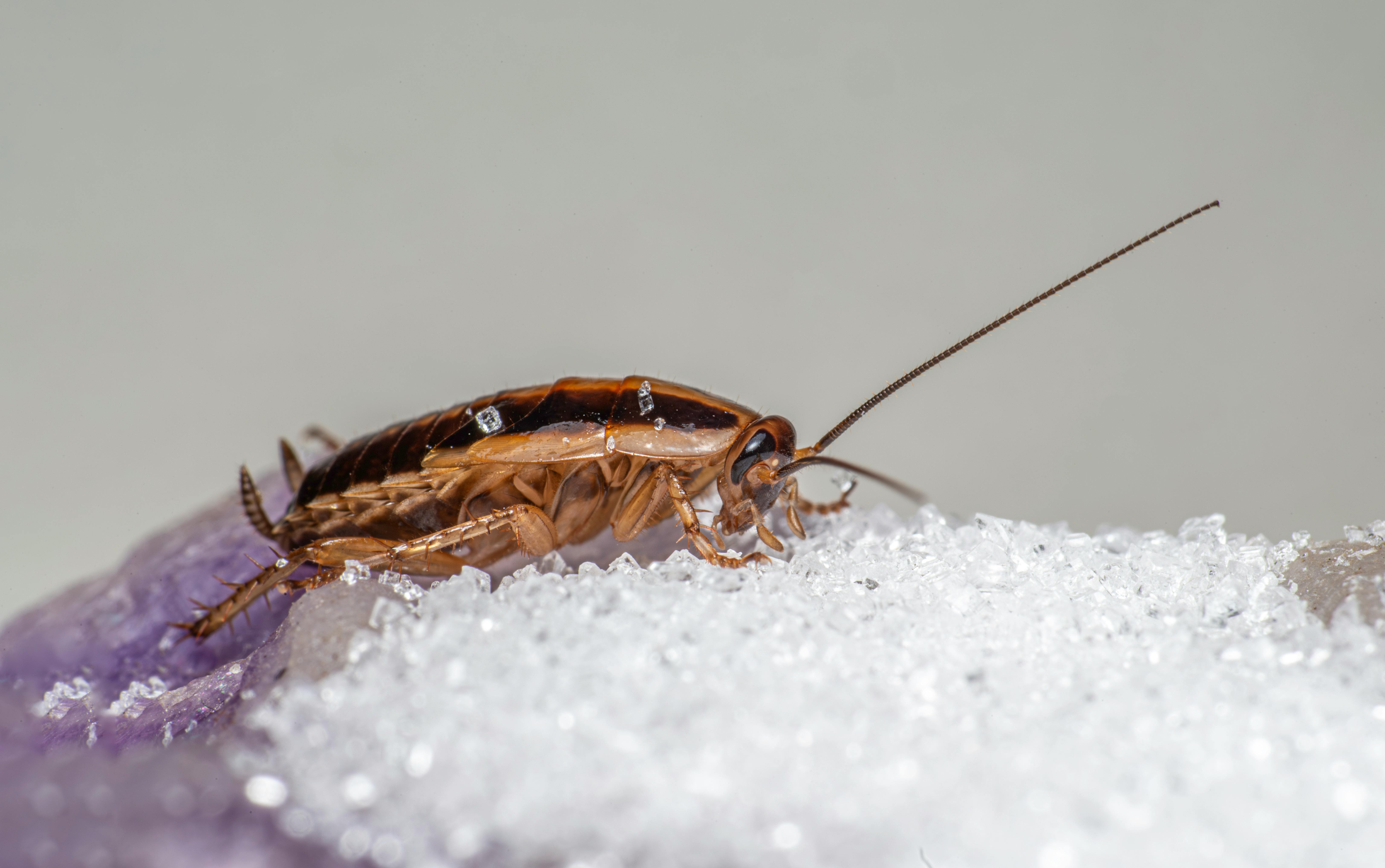
Adult fruit flies measure just 1‑4 mm—about the size of a grain of sand. Their bodies are a uniform tan‑brown, and the most striking feature is their bright red eyes, which stand out against the muted body color. The wings bear a faint, mottled pattern that looks like a tiny fingerprint when the fly is at rest. These traits together create a silhouette that is instantly recognizable to a trained eye.
How they differ from look‑alikes
Fungus gnats are similar in size but have a darker, almost black body and lack the vivid red eyes. Houseflies, on the other hand, are much larger (6‑12 mm), have clear veins on their wings, and sport a more robust, gray‑striped thorax. If you see a fly hovering near a fruit bowl that is tiny, tan‑brown, and sports red eyes, you’re most likely dealing with a fruit fly.
Where they first show up
Fruit flies love moist, sugary environments. The most common hotspots in a Suwanee home are:
- Ripe or over‑ripe fruit left out on countertops or in fruit bowls.
- Sink drains and garbage disposals where food particles accumulate.
- Compost bins, trash cans, and recycling containers that aren’t sealed tightly.
These areas provide the perfect combination of moisture and fermenting material for larvae to develop.
Signs of activity you shouldn’t ignore
A faint, high‑pitched “buzz” near ripening produce is often the first audible clue. Look for tiny specks of dark feces on the edges of fruit, around the drain, or on nearby countertops—these are the droppings of adult flies. You may also notice a faint, yeasty odor as the larvae feed on fermenting sugars.
DIY inspection checklist
Follow this step‑by‑step routine once a week, especially during peak summer months:
- Inspect all fruit bowls and countertop surfaces for visible flies or larvae.
- Check sink drains: pour a cup of warm water down each drain and observe for emerging flies within a few minutes.
- Examine garbage disposals and trash cans for moisture buildup or food residues.
- Look for tiny fecal spots on surfaces near fruit or drains.
- Listen for a soft buzzing sound near ripening produce; use a flashlight to spot flies in low light.
- Record findings in a notebook to track patterns and identify hotspots.
If you tick any of these boxes, it’s time to act before the population explodes.
For a deeper dive into fruit‑fly biology, control methods, and safety guidelines, consult the EPA’s fruit‑fly fact sheet. This resource offers science‑backed recommendations that complement the quick checks outlined above.
Seasonal Fruit Fly Activity in Suwanee, GA
Climate Overview
Suwanee’s humid subtropical climate creates a perfect backdrop for fruit flies, which is why proactive fruit fly control Suwanee homeowners rely on is so important. Average high temperatures climb from the mid-60s °F (≈18 °C) in January to a sizzling 88 °F (≈31 °C) in July, while humidity hovers around 70 % during the warm months and dips to about 55 % in winter. These warm, moist conditions accelerate insect metabolism, making the late spring and summer months the most fertile ground for rapid fruit fly reproduction.
Life Cycle and Temperature
A fruit fly’s life cycle—from egg to adult—can be completed in as little as seven days when temperatures sit between 80 °F and 90 °F (27‑32 °C). At lower temperatures, development slows dramatically, extending the cycle to three weeks or more. Because Suwanee’s summer temperatures regularly sit in that optimal range, a single female can lay up to 500 eggs, leading to exponential population growth if unchecked.
Seasonal Activity Chart
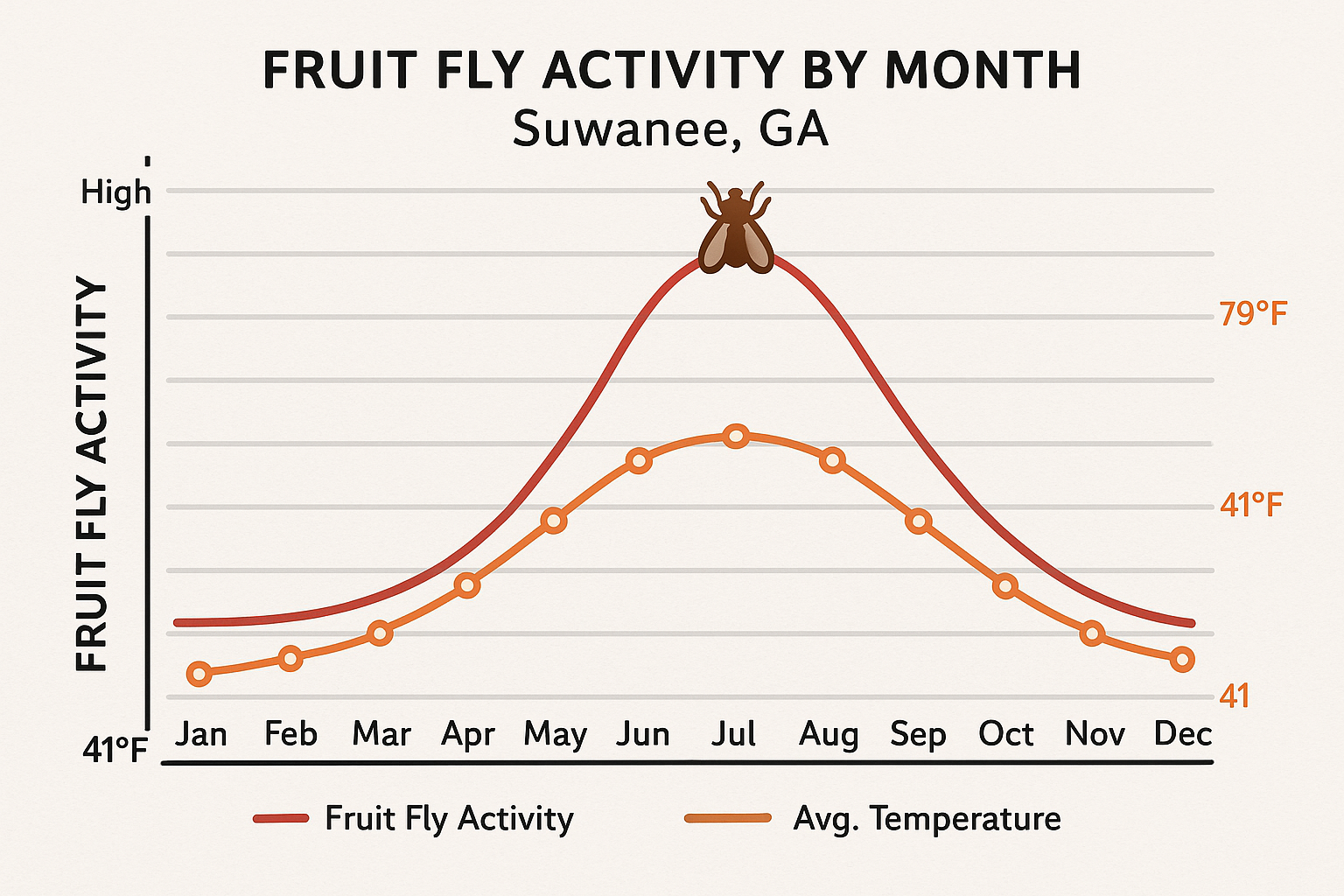
The line graph above visualizes typical fruit fly activity in Suwanee. Notice the sharp rise beginning in May, peaking in July and August, then tapering off as temperatures dip in October. Homeowners should treat May‑September as high‑risk months, with July and August demanding the most vigilant monitoring.
Tips for Heightened Vigilance
- Inspect outdoor fruit trees weekly. Remove overripe fruit and prune damaged limbs where flies love to lay eggs.
- Secure compost bins. Keep lids tightly sealed and turn compost regularly to discourage fly breeding.
- Use fruit fly traps. Simple vinegar‑based traps placed near fruit‑bearing plants can catch adults before they reproduce.
- Maintain clean gutters. Stagnant water and debris create micro‑habitats that support larval development.
Influence on Professional Service Scheduling
Understanding these seasonal trends helps homeowners plan pest‑control appointments at the optimal time. Anthem Pest Control recommends scheduling a preventative treatment in early May, just before the activity curve begins its ascent. A follow‑up service in late August can curb any lingering populations before the cooler months set in, ensuring your yard stays fruit‑fly free year‑round.
Proactive Prevention Measures for a Fruit‑Fly‑Free Home
Kitchen hygiene that blocks the entry point
Fruit flies love the sweet scent of ripe produce, so the kitchen is their favorite hangout. Store fresh fruit in the refrigerator or in sealed containers, and keep whole fruits on a countertop no longer than a couple of days. Empty the trash can daily, especially after meals, and line it with a bag that closes tightly. Finally, give drains a monthly flush with boiling water or an enzymatic cleaner to dissolve organic buildup that serves as a breeding ground.
Exterior upkeep to keep flies from sneaking in
Outside the house, the battle starts with the yard. Cover compost piles with a breathable tarp and turn the material regularly to discourage flies from laying eggs. Seal gaps around doors, windows, and utility openings with weather‑stripping or caulk—these tiny cracks are highways for insects. If you have fruit‑bearing trees, prune away over‑ripe or fallen fruit promptly, because a rotting apple on the ground is a five‑star buffet for fruit flies.
Natural repellents you can mix at home
When you prefer a chemical‑free approach, a few simple DIY solutions work wonders. Fill a shallow dish with apple cider vinegar, add a drop of dish soap, and place it where flies gather; the vinegar lures them in while the soap breaks the surface tension, trapping them. For a spray, combine water with a few drops of eucalyptus or peppermint essential oil and mist countertops, windowsills, and doorways. Both oils emit scents that fruit flies find repellent, creating an invisible barrier.
Regular inspection during peak months and after gatherings
Fruit flies are most active from late spring through early fall, and they love the chaos of outdoor barbecues or garden parties. Schedule a quick visual sweep of your kitchen, pantry, and garbage areas at least once a week during these months. Look for tiny, speck‑sized flies hovering near fruit bowls, drains, or the rim of your sink. A brief check after any outdoor gathering can catch a stray fly before it establishes a colony inside.
When DIY methods fall short, know it’s time to call a professional
If you notice a persistent swarm despite clean surfaces, traps that stay empty, and regular inspections, the infestation may have moved beyond the reach of home remedies. Signs that professional help is needed include fruit flies breeding in hidden cracks, a sudden increase in numbers after rain, or repeated sightings in multiple rooms. At that point, a licensed technician can locate the source, apply targeted treatments, and offer a customized prevention plan—something Anthem Pest Control specializes in for Suwanee homeowners.
Treatment Options and Emergency Fruit Fly Control

DIY Chemical Options
Homeowners who need a quick fix can reach for low‑toxicity aerosols or residual sprays specifically labeled for fruit flies. These products work best when applied directly to breeding sites—around trash cans, fruit bowls, and sink drains. Always read the label, wear protective gloves, and ventilate the area during and after application. Remember, a small amount of spray is usually sufficient; over‑application can create unnecessary health risks without improving results.
Biological Controls
For a more eco‑friendly approach, consider beneficial nematodes and specially designed traps. Nematodes are microscopic worms that seek out fly larvae in moist environments, such as kitchen drains or compost bins, and release bacteria that kill the larvae from the inside. Pair them with attractant traps—often a vinegar‑based bait in a sealed container—to capture adult flies before they reproduce. These methods require patience but can dramatically reduce populations without chemicals.
Professional Treatments
When the infestation spreads beyond the kitchen, licensed technicians bring tools that homeowners simply don’t have. Fogging machines disperse a fine mist of EPA‑approved insecticide, reaching hidden cracks and crevices where flies hide. Perimeter spraying creates a protective barrier around doors, windows, and exterior walls, preventing new insects from entering. Inside, technicians may apply targeted residual sprays to walls, baseboards, and light fixtures—areas where flies often rest.
How Emergency Response Differs
An emergency call triggers rapid deployment, often within a few hours. Professionals prioritize the most active breeding zones, using diagnostic tools to locate hidden larvae in drains, garbage disposals, and even indoor plant soil. After the initial treatment, most companies, including Anthem Pest Control, schedule guaranteed follow‑up visits to verify that the population is fully suppressed and to address any rebound.
Benefits of Hiring a Certified Pest‑Control Provider
- Expertise: Technicians are trained to identify fruit fly species, understand their life cycle, and select the most effective treatment.
- EPA‑Approved Products: Commercial formulations are stronger, longer‑lasting, and tested for safety when used correctly.
- Warranty Coverage: Many providers offer service guarantees—if flies return, they’ll re‑treat at no extra cost.
- Safety Assurance: Professionals follow strict safety protocols, protecting children, pets, and indoor air quality.
Choosing the right treatment depends on the severity of the outbreak and your comfort level with chemicals. DIY options are useful for early, low‑level sightings, while biological controls provide a sustainable, low‑impact solution. For full‑blown emergencies, a licensed pest‑control company delivers speed, potency, and peace of mind—ensuring fruit flies are eliminated quickly and stay gone.
Pricing Tiers for Emergency Fruit Fly Control
When fruit flies turn your kitchen into a buzzing mess, you need a solution that matches the urgency of the problem and your budget—especially when reliable fruit fly control Suwanee homeowners depend on is required. At Anthem Pest Control, we offer three clear-cut packages—Basic, Standard, and Premium—so you know exactly what you’re paying for and why.
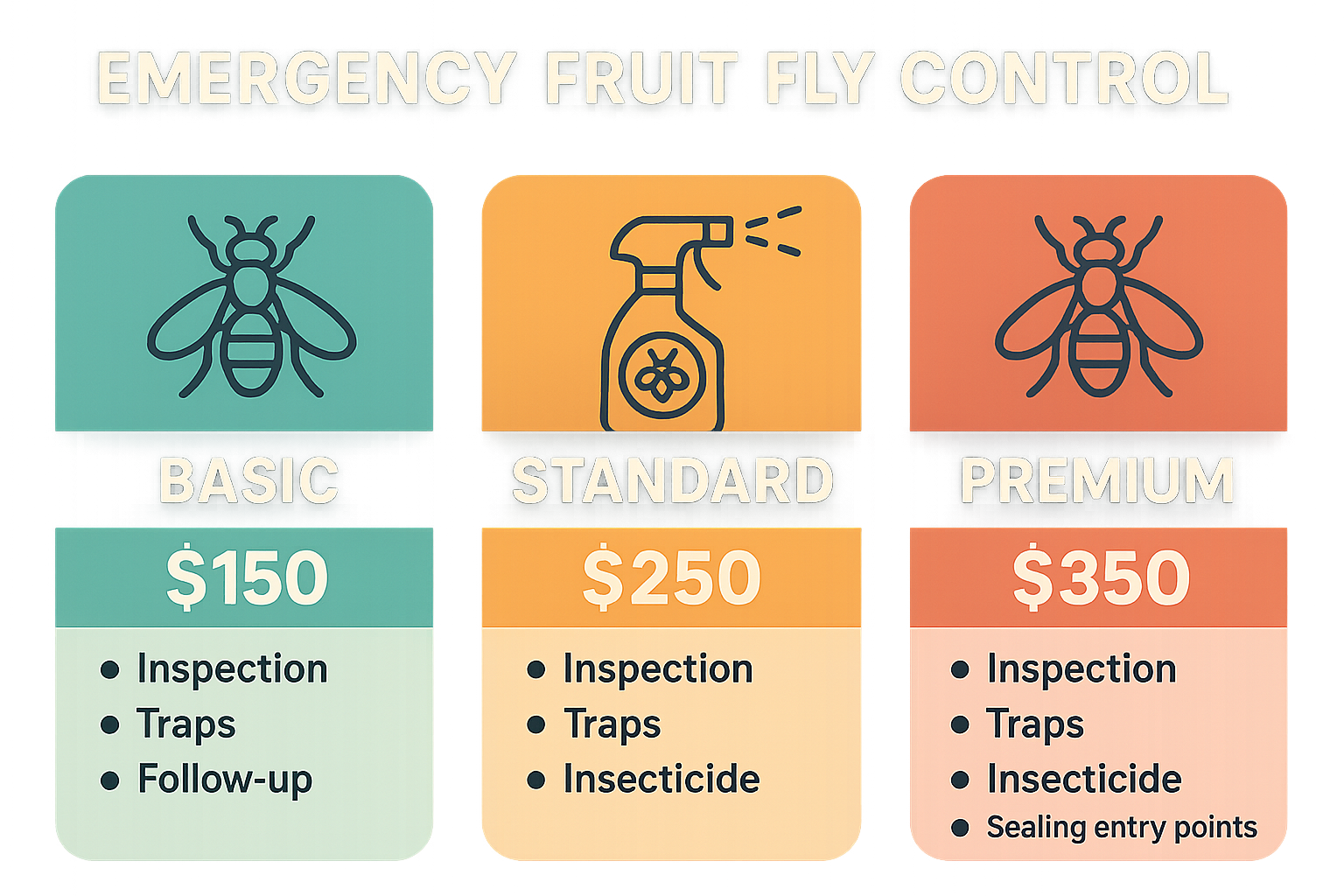
| Tier | Price Range | Visits | Treatment Types | Follow‑up & Guarantee |
|---|---|---|---|---|
| Basic | $120 – $150 | 1 | Targeted spray + bait stations | 7‑day re‑inspection, 30‑day guarantee |
| Standard | $180 – $220 | 2 | Spray, bait stations, and larval trap | 14‑day re‑inspection, 60‑day guarantee |
| Premium | $250 – $300 | 3+ | Full‑coverage spray, bait, larval trap, and heat‑map analysis | Monthly checks for 90 days, 90‑day guarantee |
What each tier really includes
- Basic: One on‑site visit where we locate the breeding hotspot, apply a fast‑acting spray, and set up bait stations. A brief follow‑up ensures the flies are gone.
- Standard: Two visits spaced three days apart, adding a larval trap to break the life cycle. You also receive a 14‑day post‑treatment inspection and a longer guarantee.
- Premium: Three or more visits, a detailed heat‑map analysis to pinpoint hidden sources, seasonal monitoring for the next three months, and priority scheduling for any future emergencies.
Value‑added features in the higher tiers
The Premium package isn’t just more visits—it brings data‑driven tools like heat‑map mapping, which visualizes fly activity across your home. Seasonal monitoring means we’ll check your property each month during peak fruit‑fly periods, catching any resurgence before it becomes a problem. Plus, Premium customers jump to the front of the line for emergency calls, reducing wait time dramatically.
Choosing the right tier for you
Start by assessing the severity of the infestation. A single kitchen infestation often resolves with the Basic plan, especially if you act quickly. If you notice flies in multiple rooms or near outdoor trash areas, the Standard tier adds the extra trap and longer guarantee you need. For large households, frequent outdoor entertaining, or a history of recurring fruit‑fly issues, the Premium tier offers peace of mind through proactive monitoring and the fastest response times.
Why Choose Anthem Pest Control for Fruit Fly Management
Nationwide Reach, Local Commitment
Anthem Pest Control operates across the United States, giving homeowners in Suwanee, GA the confidence of a national network backed by local expertise. All of our technicians are EPA‑registered, ensuring every treatment meets strict safety and efficacy standards. Transparent pricing means you know exactly what you’ll pay before any work begins—no hidden fees, no surprise charges.
Specialized Fruit Fly Knowledge
Fruit flies may seem harmless, but in a kitchen they multiply fast and can contaminate food. Our team undergoes dedicated training to identify the specific species common to Georgia, understand their seasonal life cycles, and pinpoint the exact entry points in your home. This focused expertise allows us to act quickly, especially during peak summer months when infestations spike.
Rapid Emergency Response
When a fruit fly outbreak hits, timing is everything. Anthem offers a 24‑hour emergency response window, dispatching a certified technician to your doorstep within hours. We assess the situation, set up targeted traps, and apply a targeted treatment plan that eliminates the adults and disrupts the breeding cycle before the problem spreads.
Safe, Environmentally Responsible Solutions
Our commitment to safety extends to the products we use. We select low‑toxicity, EPA‑approved formulations that protect your family, pets, and the surrounding environment while delivering rapid knock‑down of fruit flies. Integrated Pest Management (IPM) principles guide every decision, combining chemical treatments with sanitation tips and exclusion methods for lasting results.
What Homeowners Are Saying
“I called Anthem after spotting fruit flies in my kitchen, and they were at my door the same day. The technician explained the source, treated the area, and gave me a simple cleaning checklist. The flies disappeared within 24 hours, and I finally felt at peace again.” — Emily R., Suwanee, GA
Guarantees and Free On‑Site Inspection
We stand behind our work with a 100 % satisfaction guarantee: if fruit flies return within 30 days, we’ll retreat at no extra cost. To make the decision risk‑free, we also offer a complimentary on‑site inspection. Our expert will walk you through the findings, recommend a customized plan, and provide a clear, upfront quote.
Choosing Anthem Pest Control means partnering with a trusted, nationwide leader that treats every fruit fly problem with the urgency, expertise, and care your home deserves.
Take Action with Anthem Pest Control Today
By now you know how to spot fruit flies, understand why they surge in Suwanee’s warm months, and have a toolbox of prevention steps—from airtight storage to proper waste management. You also learned when it’s time to call a professional: persistent sightings, breeding hotspots, or any sign the nuisance is spreading.
- Identification: Tiny, tan‑brown flies hovering near ripe fruit, drains, and garbage.
- Seasonal risk: Peak activity in late spring through early fall, especially after heavy rains.
- Prevention: Clean up spills, cover produce, fix leaky pipes, and use traps.
- Professional treatment: Targeted sprays, bait stations, and structural inspections performed by certified technicians.
Acting now stops a minor annoyance from turning into a full‑blown infestation that can compromise food safety and comfort in your home. The longer fruit flies linger, the more they reproduce, and the harder—and more expensive—the eradication becomes. A swift response locks down breeding sites before the population explodes.
Anthem Pest Control is ready to help Suwanee homeowners with a rapid, no‑obligation quote and emergency service that fits our local climate. Our certified technicians use safe, EPA‑approved products that protect your family and pets while eliminating fruit flies at the source.
If you’re ready to reclaim your home from fruit flies, call Anthem Pest Control at 877-371-8196 for a free quote and expert fruit fly control Suwanee homeowners can rely on. Our team is standing by to deliver safe, effective, and affordable solutions tailored to Suwanee’s climate. Visit Anthem Pest Control today and take the first step toward a pest-free home.