Understanding Pantry Moths and Their Impact

What are pantry moths?
Pantry moths are small, nocturnal insects that love the quiet corners of your kitchen and often trigger the need for emergency moth control Decatur homeowners depend on. The two most common culprits in U.S. homes are the Indian meal moth (Plodia interpunctella) and the Mediterranean flour moth (Ephestia kuehniella). Both species share a similar life cycle: an adult female lays up to 400 eggs on or near food sources, the eggs hatch into creamy-white larvae that spin silken tunnels, then they pupate inside those tunnels before emerging as winged adults ready to reproduce.
How you’ll know they’re there
Infestations rarely stay hidden for long. Look for these tell‑tale signs:
- Fine, web‑like strands coating the tops of cereal boxes, flour bags, or pet food.
- Silvery or creamy larvae moving within the food or crawling along the pantry shelves.
- Small, fluttering moths (about ½‑inch wingspan) that appear near stored items, especially after lights are turned off.
- Unexplained holes in grain kernels or clumped, dusty flour.
Economic loss and property damage
A single pantry moth can ruin an entire bag of flour, costing homeowners anywhere from $5 to $30 per incident. Multiply that by the dozens of products that can become contaminated, and the expense quickly climbs into the hundreds of dollars. Beyond food, these moths also target dry fabrics such as wool blankets, stored clothing, and even upholstery, leaving behind irregular holes and a web of silken threads that weaken fibers over time.
Health concerns you shouldn’t ignore
While pantry moths are not direct disease vectors, the damage they cause creates health risks. The silken webs and droppings can trigger allergic reactions in sensitive individuals, leading to sneezing, itching, or asthma flare‑ups. Moreover, the larvae’s feeding activity contaminates food with bacteria and fungi, increasing the chance of foodborne illness. The CDC warns that consuming infested products can result in gastrointestinal distress, and the EPA notes that improper storage conditions that attract moths also foster mold growth, compounding indoor air‑quality issues.
How often do pantry moths become emergencies?
Although many infestations are caught early, a surprising number escalate into emergency calls for professional pest control. Recent surveys show that:
| Year | Percentage of homes reporting an emergency | Average time to professional intervention (days) |
|---|---|---|
| 2022 | 7.4 % | 3.2 |
| 2023 | 8.1 % | 2.9 |
These figures illustrate that roughly one in twelve households faces a pantry moth problem that requires immediate, professional attention. Delays can turn a manageable situation into a full‑scale loss of food and a potential health hazard.
Why swift control matters
Understanding the biology, signs, and risks associated with pantry moths sets the stage for decisive action. The faster you identify an infestation, the less food you lose, the lower the chance of structural damage, and the safer your family’s health remains. In the next sections, we’ll walk you through the most effective, EPA‑approved treatment options that Anthem Pest Control uses to eradicate these pests and protect your pantry for good.
When Moths Become an Emergency: Signs You Need Immediate Help
Most homeowners can keep a few stray moths at bay with a vacuum, a light trap, or a DIY spray. The moment the situation shifts from “a few visitors” to “a full‑blown invasion,” the tools you have on the shelf start to lose their punch. Recognizing that tipping point early can save you weeks of frustration, costly damage, and even health risks.
Thresholds that turn a nuisance into an emergency
- More than 10 adult moths spotted in a single room within 24 hours.
- Widespread larval webs covering walls, ceilings, or stored fabrics—especially when the webs stretch across multiple rooms.
- Visible feeding damage on clothing, upholstery, or pantry items that exceeds a few isolated spots.
- Repeated sightings despite regular vacuuming or over‑the‑counter treatments.
When any of these indicators appear, you’ve crossed from a manageable problem into an emergency that demands professional intervention.
Why rapid breeding outpaces DIY methods
Moth life cycles are astonishingly swift. Under ideal temperature and humidity, a single female can lay up to 200 eggs, and those eggs hatch in as little as 3‑5 days. Within a week, the larvae begin feeding, spinning silk tunnels, and producing the characteristic webbing that signals a severe infestation. By the time you notice a handful of adults, the next generation is already chewing through fabrics and pantry goods, rendering most household sprays ineffective.
Health warnings from the CDC
The Centers for Disease Control and Prevention (CDC) flags heavy moth infestations as a potential allergen source. Moth scales, shed hairs, and fragmented webs can become airborne, triggering:
- Respiratory irritation and asthma flare‑ups.
- Skin rashes or contact dermatitis in sensitive individuals.
- Exacerbated allergy symptoms for those already prone to hay fever.
If you or a family member begins to experience unexplained coughing, wheezing, or itchy skin after a moth surge, treat it as a health emergency and seek professional pest control promptly.
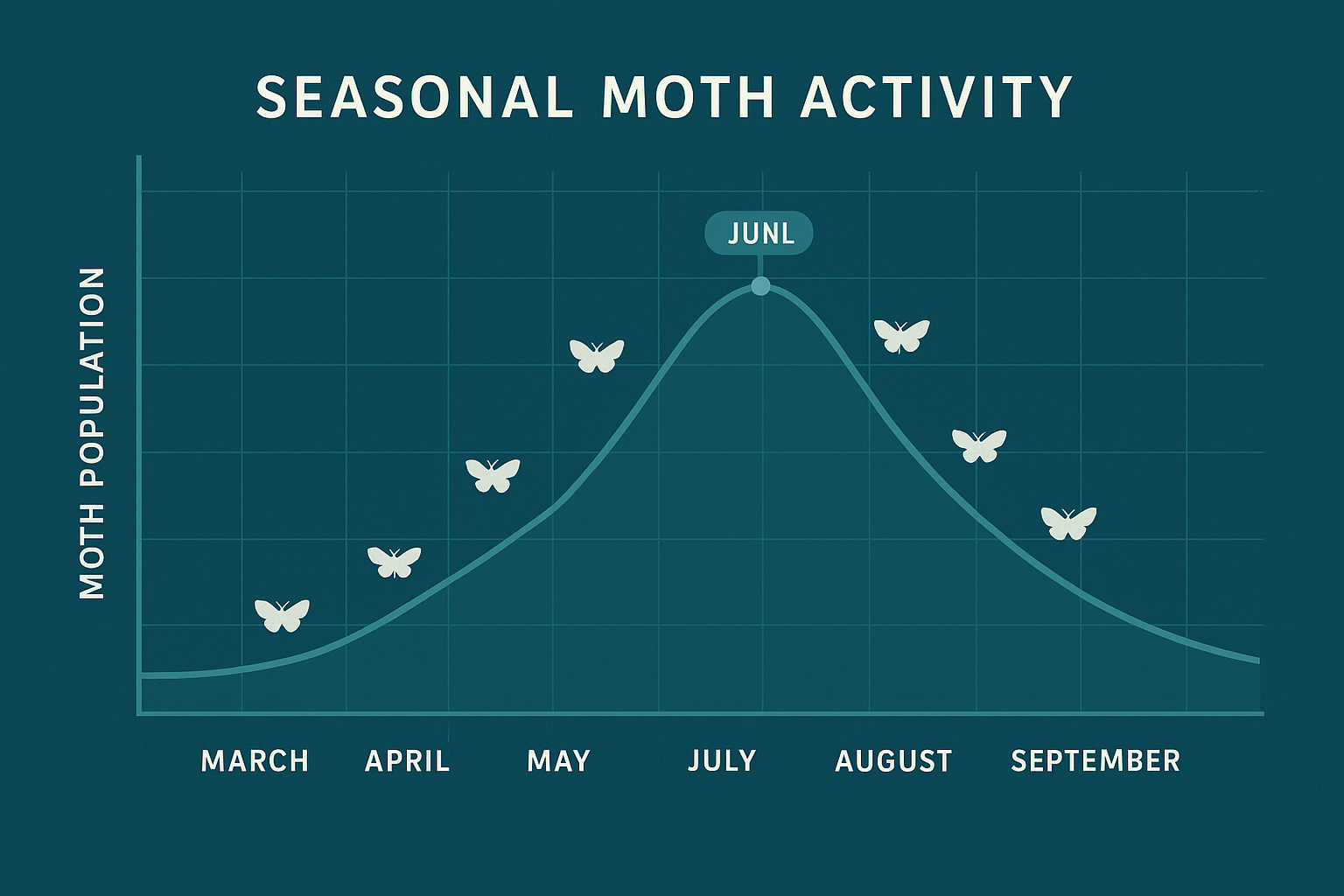
Seasonal activity chart – when moths are most aggressive
| Month | Typical Activity Level | Recommended Action |
|---|---|---|
| March | Low‑moderate | Inspect stored fabrics; schedule preventive treatment. |
| April | Moderate | Set up light traps; monitor for larvae. |
| May | High | Professional inspection; treat early infestations. |
| June | High | Continue monitoring; address any webbing immediately. |
| July | Peak | Emergency response if thresholds are exceeded. |
| August | Peak | Maintain traps; consider full‑home treatment. |
| September | High | Start pre‑emptive fall treatment. |
| October | Moderate | Final inspection before winter dormancy. |
These months are when moths reproduce fastest, so waiting until you see a full web can cost you days of escalating damage and may require emergency moth control Decatur homeowners often try to avoid. A pre-emptive check in early spring or a targeted treatment in late summer often prevents the emergency scenario altogether.
The hidden cost of delayed treatment
Every day you postpone professional help, the infestation compounds. The average homeowner who waits until damage is visible can see treatment costs rise by 30‑50 % compared to an early emergency call. That increase reflects additional labor, stronger chemicals, and the need to replace damaged textiles or pantry goods. Moreover, the longer the webbing remains, the higher the chance of allergic reactions, which can lead to medical expenses and lost workdays.
In short, once you cross the thresholds listed above, treat the situation as an emergency. Acting fast protects your home, your health, and your wallet.
Treatment Options: DIY vs Professional Emergency Services

Common DIY Tools You’ll Find at Home
When a moth infestation pops up, many homeowners reach for the first thing they have on hand. The most popular do‑it‑yourself (DIY) options include:
- Pheromone traps: Sticky cards that lure adult moths with a scent that mimics mating pheromones. They’re cheap and easy to set up in closets, pantries, and storage areas.
- Pantry cleaning: Removing all food items, vacuuming shelves, and washing containers with hot, soapy water. This eliminates larvae and eggs hidden in crumbs.
- Food‑grade diatomaceous earth (DE): A fine, silica‑based powder that dehydrates insects on contact. Sprinkling DE around baseboards, pantry corners, and entry points can provide a low‑toxicity barrier.
Why DIY Isn’t Always Enough
While these tools can reduce a mild problem, they have notable shortcomings. First, incomplete coverage is common—moths can hide in wall voids, under appliances, or inside insulation where traps and powders never reach. Second, chemical safety concerns arise when homeowners misuse sprays or powders, especially around children, pets, or food preparation surfaces. Even food‑grade DE can become airborne and irritate lungs if over‑applied.
Most importantly, DIY methods rarely address the root cause: a breeding source that remains undetected. Without professional inspection, you might spend hours cleaning only to watch the infestation rebound.
Professional Emergency Treatment Methods
Licensed technicians bring a toolbox that goes far beyond what’s available at the local hardware store. Typical emergency services include:
- Targeted bait stations: Concealed devices that contain a slow‑acting, EPA‑approved insecticide. Moths feed on the bait, carry the toxin back to the nest, and eliminate hidden larvae.
- Residual sprays: Formulated to remain active for weeks on surfaces where moths travel, providing ongoing protection after the initial visit.
- Heat treatment: Raising interior temperatures to 120‑130°F for several hours kills all life stages of moths without chemicals—ideal for homes with infants or pets.
- Whole‑home fogging: A fine mist of EPA‑registered product that penetrates cracks, crevices, and upholstery, delivering rapid knock‑down of adult moths during an emergency flare‑up.
Safety Advantages of Licensed Technicians
Professional pest control companies, like Anthem Pest Control, follow strict safety protocols. Technicians wear protective gear, use calibrated applicators, and apply only products that meet EPA guidelines for indoor use. These products are tested for efficacy and low toxicity when used as directed, dramatically reducing the risk of accidental exposure compared with over‑the‑counter sprays.
Moreover, licensed applicators receive ongoing training on proper ventilation, re‑entry times, and disposal of leftover chemicals—details most DIYers overlook.
When to Choose DIY vs. Professional Help
Consider a DIY approach if you notice a very small number of moths, the infestation is confined to a single pantry, and you have no children, pets, or food‑sensitive individuals nearby. In this scenario, pheromone traps and a thorough cleaning can buy you time while you schedule a professional assessment.
Opt for emergency professional services when you encounter any of the following:
- Multiple rooms or closets show signs of damage.
- Live larvae or webbing are found in hidden spaces (e.g., wall cavities, HVAC ducts).
- Previous DIY attempts have failed to curb the problem.
- You need rapid, guaranteed results to protect valuable clothing, fabrics, or stored food.
- There are children, pets, or seniors in the home who require the highest safety standards.
In a true emergency—such as a sudden surge of moths threatening an entire wardrobe or pantry—calling a certified provider ensures the infestation is contained quickly, safely, and thoroughly.
Pricing and Service Tiers for Emergency Moth Control
When a moth infestation turns urgent, knowing exactly what you’re paying for can save both time and money. For emergency moth control Decatur homeowners rely on, Anthem Pest Control offers three clearly defined service tiers—Basic, Standard, and Premium—so you can match the level of treatment to the severity of the problem and your budget.
Basic Tier
The Basic tier is designed for homeowners who spot a small, localized outbreak and need a quick, cost‑effective fix. It includes a thorough visual inspection, one targeted treatment using a fast‑acting spray, and a single follow‑up visit within seven days to verify that the moths are gone. A 30‑day warranty covers any re‑infestation that occurs from the same source.
Standard Tier
For moderate infestations that have spread to multiple rooms, the Standard tier adds depth and durability. You receive a detailed inspection with moisture and food‑source assessment, two treatments spaced three days apart, and two follow‑up visits (one at day 7 and another at day 30). This tier also includes a 60‑day warranty and optional pheromone traps to monitor future activity.
Premium Tier
The Premium tier is the most comprehensive option, ideal for severe or recurring moth problems. It starts with a full‑home inspection using infrared cameras to locate hidden larvae, followed by three treatments that combine spray, dust, and a low‑toxicity fogger for hard‑to‑reach areas. You also get unlimited follow‑up visits for the first 90 days, a 90‑day warranty, and a customized prevention plan that includes sealing entry points and seasonal maintenance.
Response times differ by tier because the level of preparation varies. The Basic tier guarantees a same‑day response if you call before 2 p.m.; the Standard tier promises a 24‑hour arrival window; and the Premium tier ensures a technician is on your doorstep within 48 hours, allowing us to schedule the more extensive equipment and safety checks required.
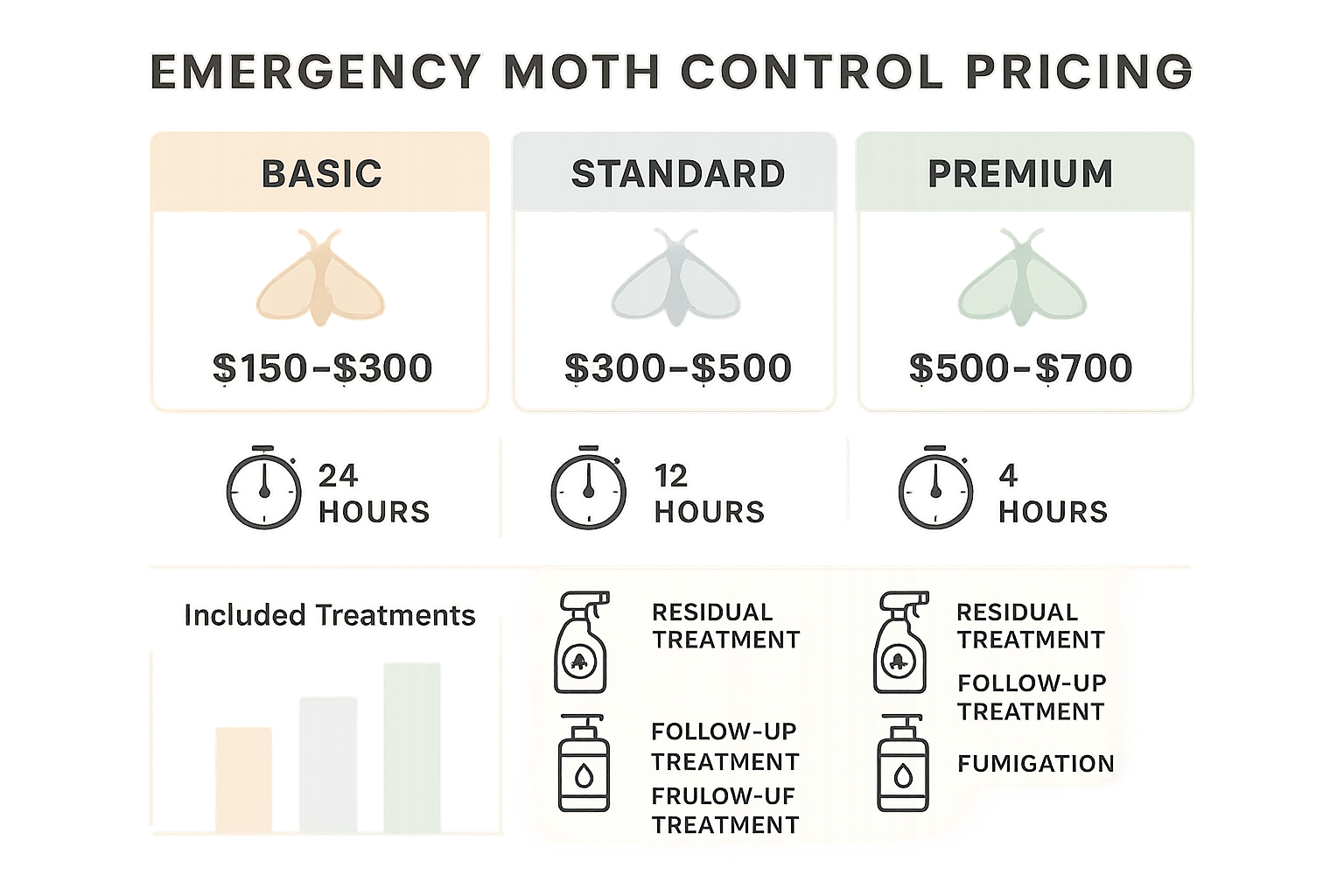
| Tier | Included Services | Treatments | Follow‑up Visits | Warranty | Typical Response Time | Price Range (USD) |
|---|---|---|---|---|---|---|
| Basic | Inspection, 1 spray treatment, 30‑day warranty | 1 | 1 (within 7 days) | 30 days | Same‑day | $150‑$250 |
| Standard | Inspection, 2 treatments, pheromone traps, 60‑day warranty | 2 | 2 (day 7 & day 30) | 60 days | Within 24 hours | $300‑$450 |
| Premium | Full‑home infrared inspection, 3 combined treatments, unlimited follow‑ups, custom prevention plan, 90‑day warranty | 3 | Unlimited (first 90 days) | 90 days | Within 48 hours | $600‑$850 |
All prices are quoted up‑front, and there are no hidden fees. We also accept major credit cards and offer financing options for larger Premium projects.
Choosing the right tier starts with assessing infestation severity. If you’ve only seen a few adult moths near a pantry, the Basic tier often resolves the issue without unnecessary expense. When larvae are discovered in multiple closets or you notice damage to fabrics, the Standard tier provides the extra treatments and monitoring tools needed to halt spread. For extensive damage, repeated sightings, or a history of moth problems, the Premium tier offers the most thorough eradication and a proactive plan to keep future generations at bay.
Budget also plays a role. Homeowners on a tight budget can start with Basic and upgrade later if follow‑up visits reveal lingering activity. Because each tier includes a warranty, you’re protected from hidden costs should the infestation return within the covered period. Ultimately, the goal is a swift, lasting solution—pick the tier that aligns with the urgency of your situation, and let Anthem’s certified technicians handle the rest.
Prevention Strategies to Keep Moths Away Year‑Round
1. Conduct Regular Pantry Audits
Make a habit of scanning your pantry at least once a month. Pull out every package, check the expiration date, and discard anything past its prime—moths love stale, sugary, or oily foods. Transfer bulk items such as flour, rice, cereal, and pet food into airtight containers made of glass, metal, or heavy‑wall plastic; the tighter the seal, the fewer crumbs and odors that attract adult moths looking for a place to lay eggs.
2. Adopt a Consistent Sanitation Routine
Even the smallest spill can become a moth magnet. After each grocery run, wipe down shelves with a mild detergent solution, then follow with a clean water rinse. Use a handheld vacuum or a brush attachment to clean the corners, cracks, and the undersides of shelves where tiny larvae might hide. If you notice a buildup of flour dust or cereal crumbs, vacuum it immediately—this removes both food sources and any stray eggs that may have been deposited.
3. Seal Entry Points
Most pantry moths slip in through tiny gaps around doors, windows, and utility openings. Inspect the perimeter of your kitchen for damaged screens, gaps around pipe penetrations, and uneven caulking. Apply a high‑quality silicone caulk to any cracks you find, and replace torn screens with new mesh. For added protection, consider installing door sweeps on exterior doors; a solid seal keeps not only moths but other pests out of the home.
4. Seasonal Deep‑Cleaning and Professional Checks
The months of March through October mark the peak activity period for pantry moths in Georgia. Before this window opens, schedule a deep clean of your entire kitchen: empty every cabinet, scrub interior surfaces, and discard any forgotten food items. After the deep clean, replace shelf liners with washable, non‑porous material that can be laundered or replaced each season.
Even with diligent DIY efforts, a professional inspection can catch hidden infestations before they spread. Anthem Pest Control recommends an annual walkthrough in early spring and a follow‑up in late summer. Our technicians use low‑impact monitoring tools to detect early signs of moth activity, allowing you to intervene before a full‑blown infestation takes hold.
5. Natural Repellents as Supplemental Barriers
While not a standalone solution, natural repellents can add an extra layer of defense. Tuck a few bay leaves, dried lavender sachets, or cedar blocks into the corners of pantry shelves; the strong aroma confuses adult moths and deters them from lingering long enough to lay eggs. Replace these items every six weeks to maintain potency.
For homeowners who prefer a chemical‑free approach, a light spray of diluted essential oil (e.g., peppermint or eucalyptus) on the interior of containers can create an inhospitable environment for both moths and their larvae. Remember, these measures work best when combined with the airtight storage and sanitation practices outlined above.
6. Trusted Resources for Ongoing Guidance
Staying informed is half the battle. The National Pest Management Association (NPMA) offers a comprehensive set of best‑practice tips for pantry pest prevention, including printable checklists and seasonal calendars. Visit their Pantry Moth Prevention Guide to keep your home’s defense plan up to date.
By integrating regular audits, rigorous cleaning, sealing, seasonal deep‑cleaning, natural barriers, and professional oversight, you create a multi‑layered shield that keeps moths at bay year‑round. Consistency is key—once these habits become part of your routine, you’ll notice fewer unwanted visitors and a pantry that stays fresh, safe, and moth‑free.
Secure Your Home with Anthem Pest Control
Pantry moths may seem harmless, but a single female can lay up to 200 eggs, and within weeks those eggs hatch into larvae that chew through stored grains, spices, and even pet food. The result is contaminated pantry items, unpleasant odors, and a rapid infestation that spreads to every corner of your kitchen if left unchecked.
Because moths reproduce quickly, the longer you wait, the deeper they embed themselves in your pantry and the harder they become to eradicate. Swift intervention stops the life cycle, protects your family’s food supply, and prevents costly re‑treatments that can disrupt daily life. Early detection also saves you money, as a small spot treatment costs a fraction of a full‑scale eradication.
What sets Anthem Pest Control apart
- Licensed technicians who diagnose and treat moth problems with state‑certified expertise.
- EPA‑approved treatments that target larvae and adult moths without compromising indoor air quality.
- Transparent pricing tiers so you know exactly what each service includes before any work begins.
- Same‑day service options for emergencies, ensuring the infestation is contained before it spreads.
Families with young children or pets can breathe easy knowing Anthem’s formulations meet strict safety standards. The products are low‑odor, residue‑free, and applied only to affected areas, so you won’t have to empty your cabinets or worry about harmful chemicals lingering on food surfaces. Additionally, we provide guidance on proper storage practices to keep your pantry moth‑free long after the treatment.
Don’t let a minor sighting turn into a full‑blown pantry invasion. Call Anthem Pest Control now for a free, no‑obligation quote, and we’ll schedule a same‑day inspection that fits your busy calendar. Our technicians arrive fully equipped, conduct a thorough inspection, and customize a treatment plan that eliminates current moths while preventing future outbreaks.
Phone: 877‑371‑8196
Website: Anthem Pest Control
Our friendly team is ready to answer any questions you have about moth control, pricing, or scheduling.
If you suspect a moth emergency or simply want peace of mind, contact Anthem Pest Control today at 877-371-8196 for a free quote. Our certified team specializes in emergency moth control Decatur homeowners trust, delivering fast, effective protection for your home at an affordable price.