Understanding Household Moths and Their Risks
Pantry Moths (Indian Meal Moth)
Pantry moths, most commonly the Indian meal moth (Plodia interpunctella), are the sneakiest invaders of kitchen cupboards and a frequent issue addressed through moth control Suwanee homeowners seek. Adult moths are small—about ½ inch long—with a distinctive reddish-brown forewing and a pale, silver-gray hindwing. They are attracted to stored grains, cereals, nuts, dried fruit, and even pet food. Once a female lays her eggs near a food source, the larvae hatch and begin feeding, leaving behind webby tunnels and tiny, grain-sized holes.
Clothing Moths (Webbing and Carpet Moth)
Clothing moths, chiefly the webbing moth (Tineola bisselliella) and carpet moth (Trichophaga tapetzella), target natural fibers such as wool, silk, cashmere, and even fur. Unlike pantry moths, they are not attracted to food; instead, the adult females seek out dark, undisturbed closets, drawers, or storage boxes where fibers are protected from light. Their larvae spin silken tunnels as they chew through fabric, creating irregular holes that can quickly become unsightly.
Life Cycle Basics: Why the Larval Stage Matters
All household moths share a four‑stage life cycle: egg, larva, pupa, and adult. The adult stage is mostly a brief mating flight—often lasting only a few days—so the real damage occurs during the larval phase. Larvae are the voracious eaters; a single pantry moth larva can consume an entire box of flour, while a clothing moth larva can hollow out a sweater in weeks. Understanding that the larvae hide within food or fibers explains why infestations often go unnoticed until the damage is already done.
Typical Entry Points
Pantry moths usually slip in on contaminated food packages, especially bulk items with torn packaging or compromised seals. They can also enter through open pantry doors, cracks around windows, or even hitch a ride on grocery bags. Clothing moths exploit gaps in window screens, cracks in baseboards, or poorly sealed storage containers. Seasonal changes—like bringing in summer clothing or storing holiday treats—create perfect opportunities for both species to establish a foothold.
Health and Property Concerns
Beyond the obvious aesthetic damage, pantry moths pose a food safety risk. Their larvae contaminate dry goods with fecal matter, webbing, and shed skins, which can trigger allergic reactions or gastrointestinal upset if ingested. Clothing moths, while not a direct health hazard, can cause costly fabric loss and diminish the value of heirloom garments. In severe cases, the webbing can create a breeding ground for mold, further compromising indoor air quality.
Quick Fact Box: Key Differences Between Pantry and Clothing Moths
| Characteristic | Pantry Moth (Indian Meal) | Clothing Moth (Webbing/Carpet) |
|---|---|---|
| Preferred Habitat | Stored dry foods, grain bins, pet food | Wool, silk, fur, carpets, blankets |
| Typical Damage | Webbed tunnels, grain‑sized holes, food contamination | Irregular holes in fabric, silken tunnels |
| Common Entry Points | Open food packages, pantry cracks, windows | Closet cracks, poorly sealed storage, window screens |
| Health Impact | Allergic reactions, gastrointestinal upset | Fabric loss, potential mold growth |
Recognizing these differences equips homeowners to spot an infestation early, before larvae cause irreversible damage. In the next sections we’ll walk through practical identification tips and the most effective treatment options for both pantry and clothing moths.
Spotting Moth Infestations in the Kitchen and Pantry

Visual clues you can’t ignore
Pantry moths are masters of disguise, but they leave unmistakable traces. Look for fine, silvery webbing draped across the tops of cereal boxes, flour bags, or the corners of your pantry shelves. These silky tunnels are the moths’ highways, allowing larvae to move unseen while they feed. You may also spot tiny, fluttering moths—often no larger than a fingernail—resting in clusters near stored grains. Their presence, even in small numbers, signals that an infestation has already taken root.
What the larvae look like
The real damage comes from the larvae, which resemble small, creamy‑white caterpillars about a quarter of an inch long. They hide within the food itself, making them easy to miss unless you examine the product closely. Common hotspots include flour, rice, pasta, cereal, nuts, and dried fruit. If you notice a powdery residue or a faint, sweet odor, you’re likely looking at a growing larval population.
Step‑by‑step pantry inspection
- Empty the pantry. Remove every item, placing them on a clean countertop or table.
- Check packaging. Examine each bag, box, or can for webbing, holes, or clusters of moths.
- Inspect the contents. Open packages and look for larvae, webbing, or clumped grains. Tap containers lightly; a sudden flutter may reveal hidden moths.
- Survey the shelves. Run a flashlight along the edges and underside of each shelf to catch any stray webbing or larvae that have escaped the food.
- Document findings. Note any compromised items so you can prioritize removal and prevent re‑infestation.
Smart storage habits that starve moths
Prevention starts with how you store food. Transfer bulk items from their original, often loosely sealed packaging into airtight containers made of glass, heavy‑wall plastic, or metal. These barriers block the moths’ ability to lay eggs and keep larvae from escaping. Rotate your pantry stock regularly—use the “first‑in, first‑out” method—to ensure older products don’t sit long enough for eggs to hatch. Finally, keep the pantry cool and dry; moths thrive in warm, humid environments, so a temperature below 70°F (21°C) and low humidity can dramatically slow their life cycle.
What to do the moment you find them
- Isolate the area. Close the pantry door and seal any cracks or gaps with tape to contain the infestation.
- Discard contaminated food. Throw away any product that shows signs of webbing, larvae, or adult moths. Do not attempt to salvage it.
- Deep clean the space. Vacuum shelves, paying special attention to corners and crevices. Immediately empty the vacuum canister into a sealed bag and discard it.
- Sanitize. Wash shelves with hot, soapy water followed by a solution of one part white vinegar to three parts water. Allow everything to dry completely before restocking.
- Re‑stock wisely. Return only items in airtight containers and consider using pheromone traps to monitor any residual activity.
By mastering these visual cues, inspection routines, and storage strategies, you’ll catch a pantry moth problem before it spreads to the rest of your home. If the infestation persists despite your best efforts, a professional service like Anthem Pest Control can provide targeted treatments that eliminate the moths and safeguard your kitchen for the long term.
Detecting Moth Damage in Bedrooms and Closets

Typical damage patterns on wool, silk, and cashmere
Clothing moth larvae are tiny, but the holes they leave behind are unmistakable and a common issue addressed through moth control Suwanee homeowners seek for fabric protection. On wool, silk, or cashmere you’ll often see small, irregular holes that look like a pin-prick or a bite-size puncture. The surrounding fibers may appear fuzzier or frayed, especially along seams and hems where the larvae feed most aggressively. Over time, repeated feeding creates a “Swiss-cheese” effect—multiple holes close together that weaken the garment’s structure. Cashmere scarves are especially vulnerable because the fibers are both fine and loosely woven, allowing larvae to tunnel with minimal resistance.
Silken cocoons and “webbing” in drawers, closets, and under rugs
Besides holes, moths leave a second, often overlooked clue: silken cocoons. These are tiny, papery tubes about the size of a grain of rice, usually tucked into the folds of a sweater, hidden in the corners of a drawer, or draped over the underside of a rug. You may also spot fine webbing—a delicate, lace‑like network that the larvae spin to protect themselves while they feed. If you find any of these silken structures, it’s a clear sign that a moth infestation is active, not just a one‑time incident.
How to conduct a thorough closet audit
A systematic audit helps you catch early damage before it spreads. Follow these steps:
- Empty the closet. Lay each item on a clean surface to inspect every seam, cuff, and underlining.
- Check seams and underlinings. Run your fingers along the inside of cuffs, collars, and hems—look for tiny holes or a fuzzy texture.
- Examine stored blankets and throws. Fold them flat and feel for irregularities; moths love the loose fibers of wool blankets.
- Inspect drawers and shelves. Pull out all boxes, shoes, and accessories. Shine a flashlight into corners to spot cocoons or webbing.
- Vacuum the entire area. Use a hose attachment to pull up any hidden larvae, eggs, or debris, then immediately empty the vacuum canister into a sealed bag.
Tips for protecting garments
Prevention is often more effective—and cheaper—than treatment. Incorporate these homeowner‑friendly habits:
- Cedar blocks or hangers. Cedar’s natural oils repel moths. Replace blocks every two years to maintain potency.
- Lavender sachets. Dried lavender releases a scent that moths dislike. Swap sachets seasonally to keep the aroma fresh.
- Regular vacuuming. A weekly vacuum of closets and carpeted bedroom floors removes stray eggs and larvae before they hatch.
- Freezing items. For pieces you can’t clean immediately, seal them in a plastic bag and freeze at 0°F (‑18°C) for at least 72 hours. The extreme cold kills all life stages of the moth.
- Proper storage. Use airtight garment bags for off‑season items. Avoid plastic bags that trap moisture; instead, opt for breathable cotton covers inside sealed containers.
When to call a professional versus DIY treatment
If your audit reveals only a few isolated holes and a handful of cocoons, a DIY approach—vacuuming, freezing, and natural repellents—may suffice. However, consider contacting Anthem Pest Control for moth control Suwanee homeowners trust when you notice any of the following:
- Damage spreads across multiple garments or carpeted areas within a short period.
- Repeated attempts at DIY treatments fail to halt new holes.
- Infestation extends beyond the bedroom into other rooms, such as the living room rug or hallway carpet.
- You have valuable heirloom pieces (e.g., antique silk scarves) that require specialized handling.
Professional technicians can perform a targeted integrated pest management plan, which includes pheromone traps, safe residual insecticides, and a follow‑up schedule to ensure the moth population is fully eradicated. Their expertise also helps you protect your home’s fabric investments while keeping treatment methods safe for children and pets.
How Much Does Moth Control Cost? Pricing Explained
Service Options You’ll Encounter
When you call a professional like Anthem Pest, the first step is usually an inspection only visit. Technicians assess the type of moth, locate breeding sites, and estimate the scope of the problem. From there you can choose a one‑time treatment that targets the current infestation, or you can opt for an ongoing monitoring plan that includes quarterly visits, trap maintenance, and seasonal adjustments. Each option is designed to match a different level of urgency and budget, giving homeowners flexibility before any chemicals are applied.
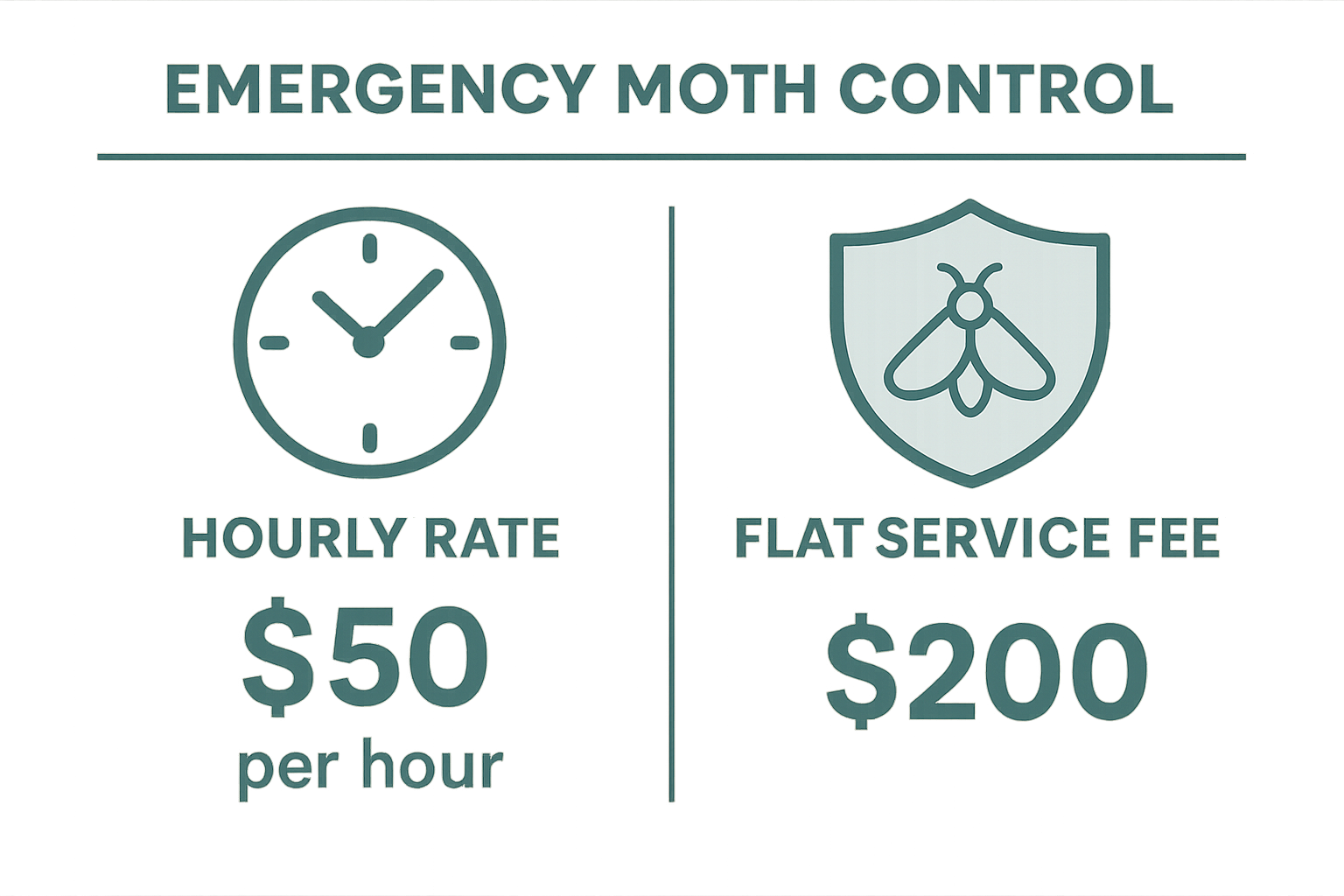
Hourly Rates vs. Flat‑Fee Packages
Some companies bill by the hour, charging anywhere from $75 to $120 per technician hour. This model works well for small, isolated issues where the work can be completed quickly. The upside is you only pay for the time actually spent on your home. Flat-fee packages, on the other hand, bundle inspection, treatment, and follow-up into a single price—often ranging from $250 to $600 for a typical single-family residence, which is common for comprehensive moth control Suwanee homeowners choose. Flat fees provide price certainty and are easier to budget, especially when you need comprehensive coverage that includes pheromone traps and preventive measures.
What’s Included in a Standard Treatment
A standard moth‑control service from Anthem Pest generally includes four key components:
- Thorough inspection: Identification of species, hotspots, and potential re‑entry points.
- Pheromone traps: Strategically placed to lure adult moths and break the breeding cycle.
- Targeted insecticide application: Low‑toxicity products applied to closets, attics, and other vulnerable areas.
- Follow‑up visit: A post‑treatment check to ensure the population is suppressed and traps are still effective.
All of these steps are designed to eradicate the current infestation while preventing future outbreaks, and they are typically reflected in the quoted price.
Key Factors That Influence the Price
- Infestation severity: A light spotting of moths costs far less than a full‑scale outbreak across multiple rooms.
- Square footage: Larger homes require more traps, more product, and more technician time.
- Treatment type: Organic or low‑odor formulations may carry a premium compared to standard insecticides.
- Geographic location: Service rates in Suwanee, GA reflect local labor costs, travel distance, and regional pest pressure.
Typical Pricing Snapshot
| Service Model | What’s Included | Typical Cost |
|---|---|---|
| Inspection Only | 15‑minute visual assessment, written report | $80‑$120 |
| One‑Time Treatment | Inspection, pheromone traps, targeted insecticide, 24‑hr follow‑up | $250‑$400 |
| Ongoing Monitoring (Quarterly) | Four inspections, trap replacement, preventative spray each visit | $500‑$650 per year |
| Hourly Service | Custom work billed by the hour | $75‑$120 per hour |
For a more detailed breakdown of costs specific to Suwanee, GA, you can consult the Anthem Pest moth control cost guide. This resource updates pricing trends monthly, helping you compare local rates and choose the plan that fits both your budget and your urgency.
When Are Moths Most Active? Seasonal Trends
Understanding when moths are most active lets you time inspections and treatments for maximum impact. In Suwanee, Georgia’s humid subtropical climate, the indoor moth population follows a predictable yearly rhythm that mirrors outdoor temperature and humidity swings. By syncing your pantry clean‑outs and clothing checks with these peaks, you can cut the breeding cycle short and keep your home moth‑free.
Life Cycle Speeds Up in Warm Weather
Household moths—primarily the pantry moth (Plodia interpunctella) and the carpet moth (Trichophaga tapetzella)—thrive on heat. When indoor temperatures climb above 70°F (21°C), the eggs hatch faster, larvae develop in days instead of weeks, and adults emerge more frequently. Warmth also shortens the pupal stage, allowing several generations to overlap in a single summer. This acceleration means that a small infestation in May can explode into a full‑blown problem by July if left unchecked.
Month‑by‑Month Activity Snapshot
The chart below visualizes typical moth activity levels across the calendar year. The darker bars represent the peak breeding window, while lighter shades indicate slower development periods.
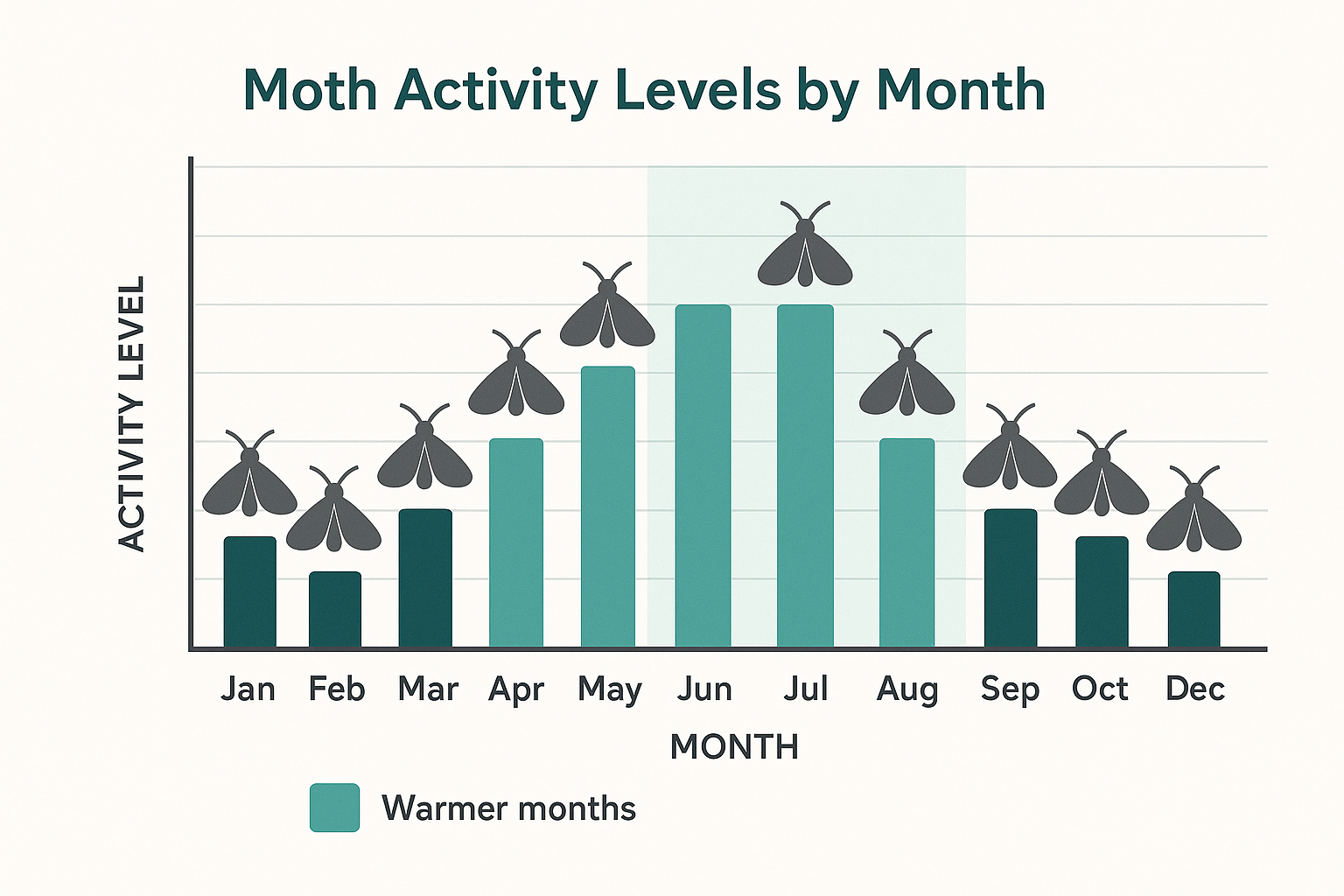
| Month | Activity Level | Key Notes |
|---|---|---|
| January | 1 | Cold indoor temps; most adults dormant. |
| February | 1 | Early heating keeps activity minimal. |
| March | 2 | Gradual warming; first larval growth spikes. |
| April | 3 | Temperatures steady; multiple generations begin. |
| May | 4 | Pantry infestations often become visible. |
| June | 5 | Peak activity—rapid egg laying and larval feeding. |
| July | 5 | Continued high reproduction; humidity at its highest. |
| August | 4 | Activity starts to taper as temperatures dip. |
| September | 3 | Cooler nights slow development. |
| October | 2 | Most larvae enter diapause; adults seek shelter. |
| November | 1 | Indoor heating reduces breeding cycles. |
| December | 1 | Low activity; focus shifts to stored clothing. |
Humidity, Food Storage, and Their Role
High summer humidity softens food residues, making them more attractive to pantry moth larvae. Moisture also encourages mold growth, which can serve as an additional food source for some species. In the cooler months, moths migrate toward dry, insulated spaces—think closets, blankets, and stored winter coats. Your storage habits, therefore, amplify or dampen the seasonal surge. Sealing grain containers, using airtight bins, and rotating pantry stock every few weeks cut the food supply that fuels rapid summer growth.
Seasonal Inspection Checklist
- Pre‑summer pantry clean‑out (late April): Remove all dry goods, vacuum shelves, and discard any items showing webbing or larvae.
- Mid‑summer spot checks (July): Look for small, silvery moths near food packages and inspect corners of closets for cocoons.
- Post‑holiday clothing review (early January): Shake out winter garments, wash or dry‑clean items that have sat untouched for months, and store them in sealed garment bags.
- Quarterly humidity audit: Use a hygrometer; keep indoor humidity below 60 % with dehumidifiers or proper ventilation.
- Professional treatment timing: Schedule a preventative spray in early May and a follow‑up in September to hit both peak and declining phases.
By aligning your inspection routine with these seasonal patterns, you stay one step ahead of moths before they become a full‑scale infestation. If you spot early signs or need a targeted treatment plan, Anthem Pest Control’s local experts are ready to help—fast, safe, and at transparent pricing.
Protect Your Home with Professional Moth Control
Before you call in the pros, remember the simple steps that helped you pinpoint the problem in the first place—steps that often guide effective moth control Suwanee homeowners depend on. For pantry moths, you likely noticed tiny, fluttering adults near grain containers, silvery webs tucked into flour bags, or clusters of caterpillar-like larvae crawling on the surface of dry goods. Closet moths, on the other hand, reveal themselves through tiny holes in wool, silk, or cashmere fabrics, as well as fine, powdery cocoons tucked into seams and corners of your wardrobe. Spotting these signs early gives you a clear picture of where the infestation is thriving and where treatment must focus.
When it comes to budgeting, transparency is non‑negotiable. Our pricing structure is straightforward: a flat rate for the initial inspection, a clear estimate for the treatment plan, and no hidden fees once the work begins. Seasonal timing also matters—moth activity spikes in the cooler months when indoor heating draws insects inside, and again in late summer when adults emerge to lay eggs. Acting promptly during these windows maximizes the impact of any intervention and can save you money in the long run.
Why Choose Anthem Pest Control?
- Licensed Technicians: Every technician on our team holds state‑required licenses and completes ongoing training to stay ahead of the latest moth‑control techniques.
- EPA‑Approved Products: We use only chemicals that meet strict Environmental Protection Agency standards, ensuring safety for your family, pets, and the surrounding environment.
- Guaranteed Results: If moths return after our certified treatment, we’ll revisit your home at no extra charge until the problem is fully resolved.
- Transparent Pricing: From the first phone call to the final invoice, you’ll know exactly what you’re paying for—no surprise line items, no guesswork.
Our approach blends thorough inspection, targeted treatment, and preventive measures. After we confirm the species and extent of the infestation, we apply a customized solution that attacks both adult moths and their hidden larvae. We also advise on proper food storage, wardrobe cleaning, and seasonal maintenance to keep future invasions at bay.
Ready for a Moth‑Free Home?
Take the next step toward peace of mind today. Schedule a free, no‑obligation quote with Anthem Pest Control, and let our certified experts handle the problem safely and efficiently. Our team will visit at a time that fits your schedule, walk you through the entire process, and provide a written plan that outlines every action you can expect.
Call now at 877-371-8196 or visit our website to request your free quote for moth control Suwanee homeowners trust. Let us protect your pantry, your closet, and your peace of mind—because a home without moths is a home that stays comfortable, clean, and safe.