Identifying the Brown Marmorated Stink Bug
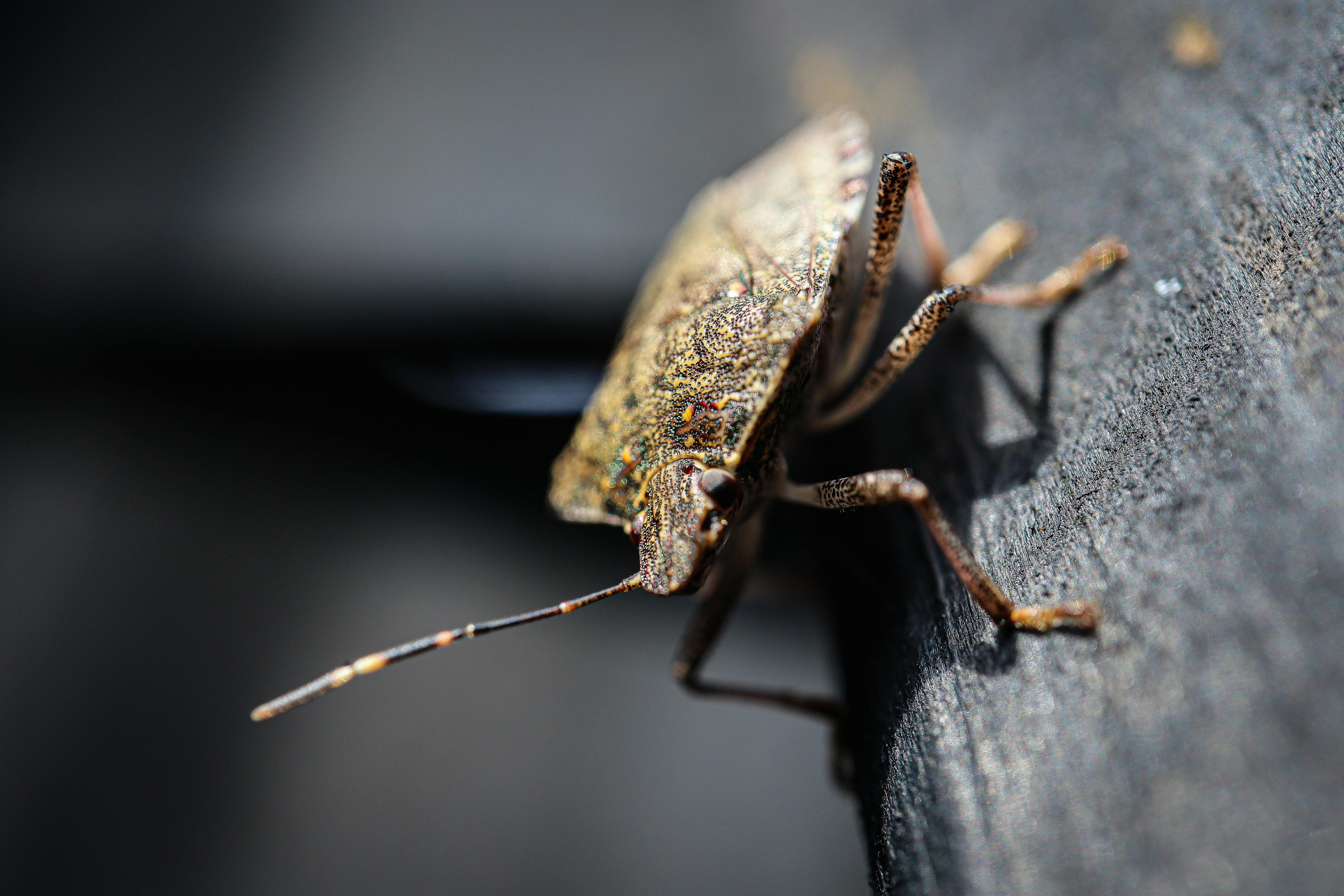
The brown marmorated stink bug (Halyomorpha halys) is an invasive shield-shaped insect that has become a common unwelcome guest in Georgia homes, often prompting the need for stink bug control Suwanee homeowners rely on when infestations arise. Originating in East Asia, it arrived in the United States in the late 1990s and has since spread across the Midwest and Southeast. Its rapid expansion is driven by a broad diet—fruit, vegetables, ornamental plants, and even indoor fabrics—plus a knack for seeking shelter in warm, dry spaces during the cooler months.
Key visual identifiers
Spotting a BMSB early makes control far easier. Look for these hallmark features:
- Shield‑shaped body that tapers slightly toward the rear.
- Uniform brown coloration with a faint, glossy sheen.
- A distinct white “antenna‑like” band that runs across the dorsal surface, just behind the head.
- Adults measure ½ to ¾ inch (12–19 mm) in length—roughly the size of a small grape.
How it differs from look‑alikes
Many homeowners mistake BMSBs for harmless relatives or entirely different insects. Here’s a quick comparison:
| Insect | Body Shape | Coloration | Distinct Markings |
|---|---|---|---|
| Brown Marmorated Stink Bug | Shield‑shaped | Uniform brown | White dorsal band |
| Native Stink Bug (Acrosternum hilare) | Shield‑shaped | Brown with darker mottling | No white band; often has darker spots |
| Lady Beetle | Rounded, dome‑like | Bright red or orange | Black spots; no white band |
Typical entry points and hiding spots
Once the outdoor temperature drops below 55 °F, BMSBs start scouting for warm refuges. The most common ways they slip inside include:
- Cracks in eaves and soffits where siding meets the roof.
- Worn or torn window screens that no longer form a tight seal.
- Gaps around vent pipes, dryer exhausts, and utility openings.
- Open doorways and garage doors left ajar during evening hours.
Inside, they favor concealed areas such as attic corners, behind baseboards, and inside wall voids. Because they are attracted to light, you’ll often find them gathering on sunny windowsills during the day and retreating to dark crevices at night.
For a more detailed, science‑backed guide to identification, consult the EPA’s stink bug management page. Knowing exactly what you’re dealing with is the first step toward a swift, effective solution—something Anthem Pest Control can help you achieve with safe, locally‑tailored treatments.
Seasonal Activity of BMSB in Georgia
The brown marmorated stink bug (BMSB) follows a classic hemimetabolous life cycle: eggs are laid in late spring, hatch into nymphs that pass through five instars, and finally mature into winged adults by midsummer. Temperature is the primary driver—warmer days accelerate development, while cooler nights slow it. In Georgia’s climate, eggs can hatch within 7‑10 days once temperatures consistently exceed 68°F (20°C), and nymphs reach adulthood in roughly 30‑45 days under similar conditions.
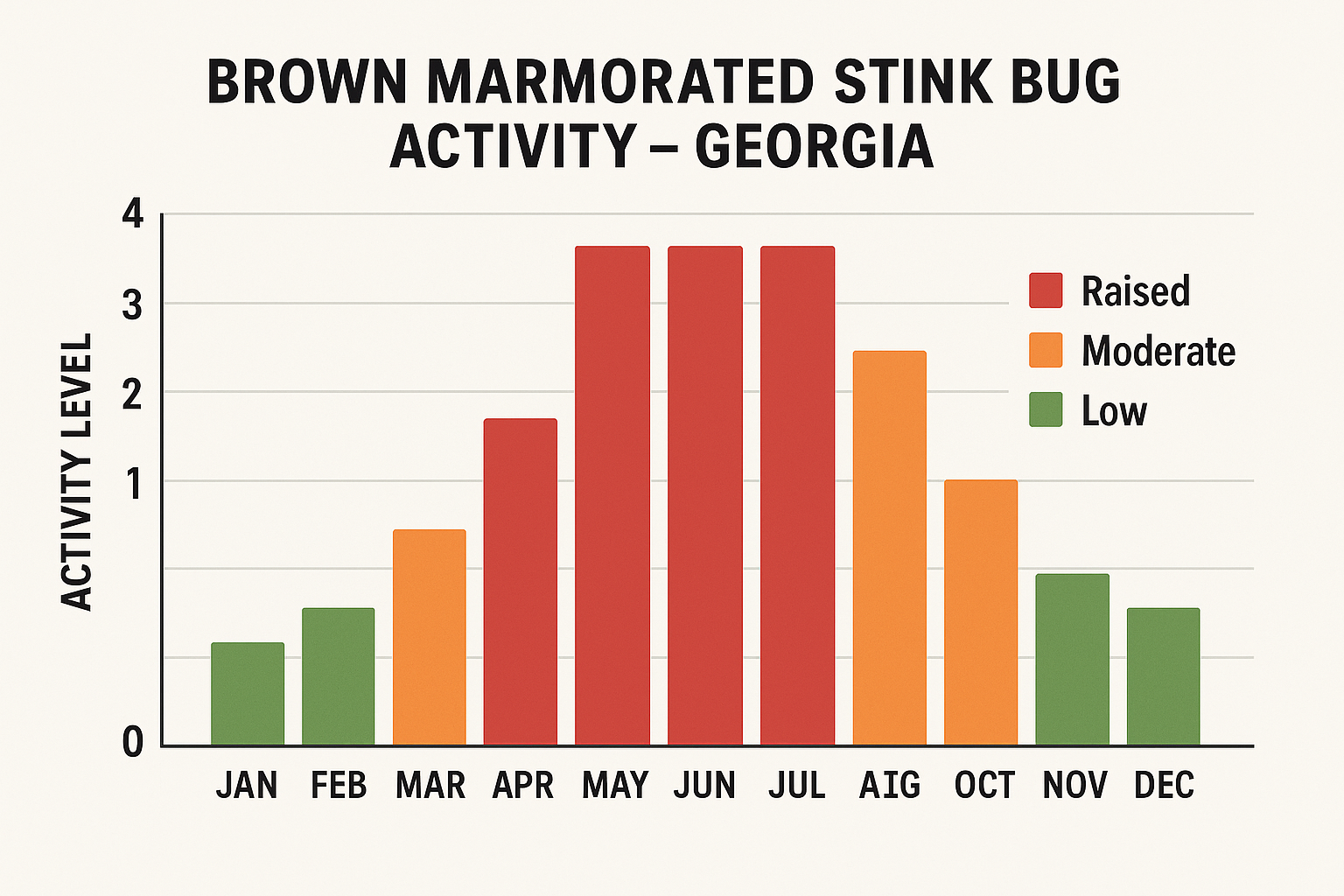
| Month | Activity Level |
|---|---|
| January | None (overwintering) |
| February | None (overwintering) |
| March | Low (egg laying begins) |
| April | Low‑Moderate (first nymphs appear) |
| May | Moderate (nymphs expanding) |
| June | High (peak nymph activity) |
| July | High (adults emerging) |
| August | High (adults at peak) |
| September | High‑Moderate (adults seeking shelter) |
| October | Moderate (overwintering begins) |
| November | Low (most bugs in shelters) |
| December | None (overwintering) |
The high-risk window in Georgia stretches from late July through early October, a time when stink bug control Suwanee homeowners often need becomes most critical. During this period, mature adults are actively searching for warm, protected overwintering sites—think attic corners, wall voids, and even indoor light fixtures. That’s why you’ll start seeing them congregating around porch lights and window sills as the evenings grow cooler.
Georgia‑specific factors that amplify infestations
Georgia’s humid subtropical climate creates an ideal backdrop for BMSB. Consistently mild winters mean many bugs survive the season in hidden shelters, while the long, warm growing season provides abundant food sources such as fruit trees, soybeans, and ornamental shrubs common in suburban landscaping. Urban environments, with their extensive mulch beds and decorative plantings, also offer shelter and moisture, encouraging larger local populations.
Early‑detection tips for homeowners
- Inspect outdoor lighting fixtures after dusk—adults often gather around bright bulbs.
- Check porch railings, window sills, and eaves for clusters of nymphs or adults during June‑July.
- Look for the distinctive “shield‑shaped” bugs in garden beds, especially near fruiting plants.
- Set up sticky traps near entry points; a sudden increase in captures signals an upcoming invasion.
Staying ahead of the BMSB curve means monitoring these early signs before the late‑summer surge. For detailed regional data and additional scouting recommendations, see the University of Georgia Extension guide: UGA Extension – Brown Marmorated Stink Bug. Armed with this seasonal roadmap, you can schedule preventive treatments with Anthem Pest Control at the optimal time, keeping your home bug‑free when the bugs are most motivated to move in.
Treatment Options and How They Work
Mechanical Removal
When brown marmorated stink bugs (BMSB) are just skittering around the kitchen or hiding in a few cracks, a hands‑on approach can be surprisingly effective. Vacuuming with a shop‑vac equipped with a HEPA filter captures bugs without spreading their odor. After vacuuming, immediately seal any gaps you find—window frames, baseboard cracks, and utility openings.
- Pros: Immediate results, no chemicals, inexpensive.
- Cons: Labor‑intensive, limited to low‑level infestations, won’t prevent new entries.
Chemical Treatments
For moderate to heavy infestations, targeted chemicals become necessary. The three most common applications are:
- Perimeter sprays: Applied around the exterior foundation, these create a protective “chemical moat.” EPA‑approved active ingredients such as bifenthrin or permethrin are typical choices.
- Indoor residual sprays: Light misting of cracks, crevices, and wall voids where bugs hide. Products containing cypermethrin or deltamethrin provide several weeks of residual activity.
- Baits: Gel or granular formulations placed near entry points lure bugs, delivering a slow‑acting toxin that spreads through the population.
Safety considerations: Always follow label directions, wear gloves, and keep children and pets out of treated zones until the spray dries. Choose EPA‑registered products to ensure compliance with local regulations.
Physical Barriers
Excluding bugs before they get inside is a cornerstone of long‑term control. Simple upgrades can make a huge difference:
- Install door sweeps on all exterior doors.
- Repair torn window screens and add fine mesh over attic vents.
- Seal utility penetrations with silicone or expanding foam.
These barriers don’t kill bugs, but they dramatically reduce the number that can even attempt to enter your home.
Integrated Pest Management (IPM)
IPM blends monitoring, exclusion, and judicious chemical use into a cohesive plan. Start with sticky traps to gauge population levels, then seal identified entry points, and finally apply a perimeter spray only where needed. This layered strategy minimizes pesticide use while keeping BMSB numbers under control.
Professional Treatment Overview

Licensed technicians often employ thermal or smoke‑machine treatments. By heating walls or blowing insecticidal smoke into voids, they reach hidden colonies that DIY methods miss. These methods are fast, leave no residue, and are especially useful in multi‑unit buildings.
When to Call a Licensed Pest Professional
If you notice any of the following, it’s time to pick up the phone:
- Large numbers of bugs aggregating in one area.
- Repeated entries despite sealing attempts.
- Stink bug infestations in kitchens, pantries, or bedrooms.
- Allergic reactions or heightened sensitivity to the bugs’ odor.
A professional can assess structural vulnerabilities, apply EPA‑approved treatments safely, and set up a monitoring schedule to keep future invasions at bay.
For a deeper dive into best practices, consult the National Pest Management Association’s Stink Bug Guide. It offers detailed recommendations that align with the IPM principles outlined above.
Emergency Stink Bug Treatment Pricing Tiers
When a sudden swarm of brown-marmorated stink bugs (BMSB) overwhelms your home, you need a fast, reliable response—especially for stink bug control Suwanee homeowners often require during peak activity. Rapid influxes can lead to structural damage—bugs hide in wall voids, crawl spaces, and attics, releasing odoriferous chemicals that seep into insulation and wood. That’s why an emergency treatment, delivered within a tight service window, can protect both your comfort and your property.
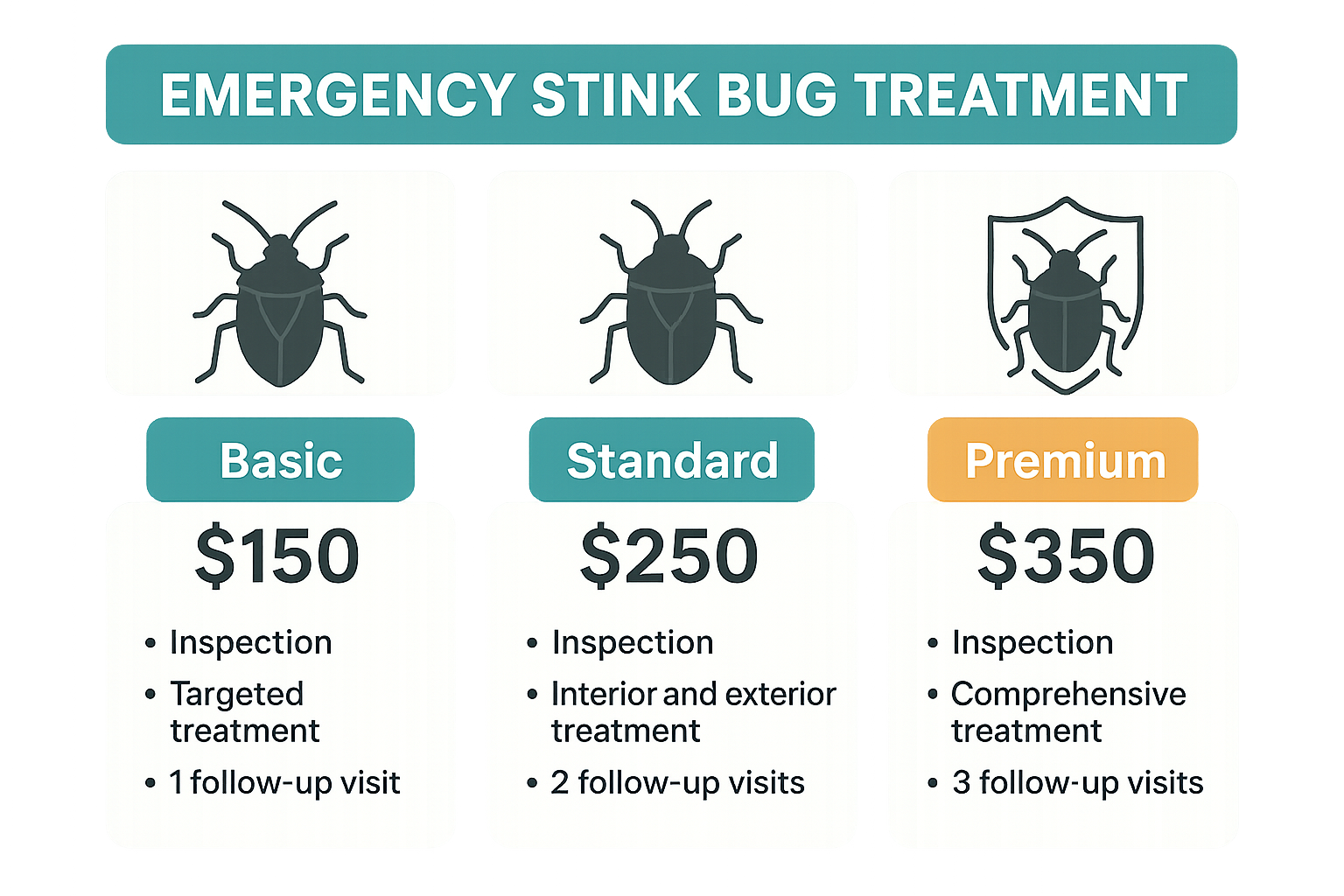
Tier 1 – Basic
The Basic tier is designed for homeowners who need immediate perimeter protection without the extras. It includes:
- Core perimeter spray around the home’s exterior foundation.
- Sealing of obvious entry points (gaps, cracks, and vent openings).
- A guaranteed 1‑hour service window to ensure rapid response.
Price range: $149 – $199.
Tier 2 – Standard
Standard builds on the Basic package by adding interior defenses and a follow‑up visit to confirm the bugs are gone.
- All Basic services.
- Indoor residual spray targeting common hiding spots such as baseboards, cabinets, and light fixtures.
- One complimentary follow‑up visit within 7 days to re‑treat any lingering activity.
Price range: $229 – $279.
Tier 3 – Premium
Premium is the all‑inclusive solution for severe infestations or for homeowners who want peace of mind all season long.
- All Standard services.
- Comprehensive full‑home inspection to locate hidden colonies.
- Seasonal monitoring for up to 6 months, with quarterly check‑ins.
- Our “Bug‑Free Guarantee”: if stink bugs reappear within the guarantee period, we’ll retreat at no extra charge.
Price range: $349 – $429.
How to Choose the Right Tier
Start by assessing the severity of the infestation. If you notice only a few bugs near doors and windows, the Basic tier may be sufficient. For moderate activity—bugs inside walls, kitchens, or bedrooms—Standard provides the extra indoor coverage you need. When you’re dealing with a full‑blown invasion, or you simply want long‑term protection, the Premium tier eliminates guesswork and offers a guarantee that backs our work.
Beyond the bug count, consider your schedule and budget. The 1‑hour window in the Basic tier is perfect for busy households that need swift action, while the follow‑up visit in Standard adds a safety net without a huge price jump. Premium’s seasonal monitoring is ideal for families with children or pets who want to avoid any chemical exposure after the initial treatment.
At Anthem Pest Control, we pride ourselves on transparent pricing and a no‑hidden‑fee policy. Every tier’s price range is posted up front, and we’ll walk you through exactly what’s included before any work begins. Call us at 877‑371‑8196 or visit anthempest.com to schedule your emergency treatment and pick the tier that fits your home’s needs.
Protect Your Home with Anthem Pest Control
By now you’ve learned how to spot the invasive brown marmorated stink bug, why late summer and early fall are the highest‑risk months, and which treatment routes—chemical sprays, perimeter barriers, or targeted indoor applications—are most effective. Recognizing the bug early and acting before they seek shelter inside your walls can mean the difference between a single‑night nuisance and a full‑blown infestation.
Remember, adult stink bugs are easy to spot—shield‑shaped, brown‑gray bodies with a distinctive odor when crushed. They become most active in late summer, seeking warm shelter inside walls, attics, and crawl spaces. Treating early with a perimeter spray or indoor fogger stops the invasion before it multiplies.
Why call a professional? A licensed technician brings three critical advantages:
- Rapid response: crews are dispatched within hours, so you won’t wait weeks for relief.
- EPA‑approved products: we use chemicals that are proven safe for families, pets, and the environment while delivering lethal results against BMSB.
- Long‑term prevention: integrated pest‑management plans include sealing entry points and seasonal monitoring to keep bugs out year after year.
Anthem Pest Control combines local know‑how with a nationwide service network. Our technicians have treated thousands of stink‑bug hotspots across the Southeast, and we back every job with a transparent, affordable pricing model. Safety is never an afterthought; all solutions meet strict EPA standards, and we tailor each program to your home’s unique layout and budget.
Ready to protect your home before the next wave arrives? Schedule a free, no-obligation inspection today and get expert stink bug control Suwanee homeowners can rely on. For severe outbreaks, we offer a 24-hour emergency response so you can regain peace of mind fast. Call us now at 877-371-8196 or visit Anthem Pest Control to book your appointment.