Recognizing Termites and Early Warning Signs
Common Termite Species in U.S. Homes
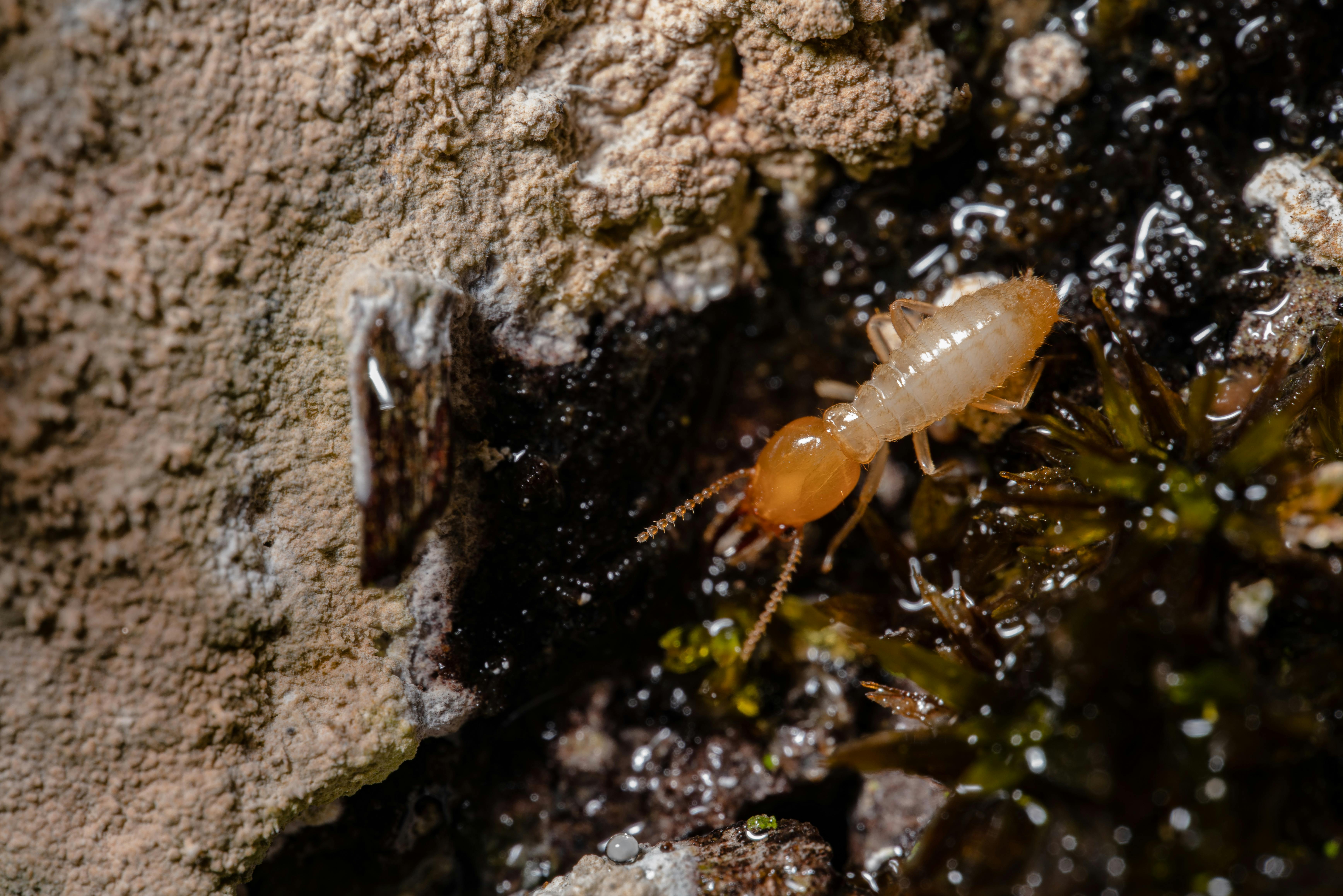
In the United States three termite types cause the bulk of residential damage: subterranean, drywood, and dampwood. Subterranean termites live in the soil and travel to the structure through hidden mud tubes. Drywood termites, as the name suggests, thrive inside dry, seasoned wood and rarely need direct soil contact. Dampwood termites prefer moist, decaying wood and are most common in areas with high humidity or water intrusion. Knowing which species is most likely in your Druid Hills home helps you focus your inspection on the right clues and determine when emergency termite control Druid Hills homeowners rely on is necessary.
Visual Cues That Say “Termites Are Here”
Termites rarely announce their presence, but they leave unmistakable footprints. Look for these tell‑tale signs:
- Mud tubes – Pencil‑thin, tunnel‑like structures on foundations, crawl‑space walls, or concrete slabs. They are the highways termites use to travel between soil and wood.
- Discarded wings – After a swarm, winged termites shed their delicate wings, leaving small, translucent piles near lights, windows, or doorways.
- Hollow‑sounding wood – Tap a wooden joist or beam; a dull, resonant thud often means the interior has been eaten away, leaving a honey‑comb void.
- “Kick‑out” holes – Tiny, circular exit holes (about ¼ inch in diameter) appear where termites push out frass (wood‑shavings) and debris.
DIY Inspection Checklist
Before you call a professional, a quick walk‑through can reveal early activity. Follow this simple routine:
- Basements and crawl spaces – Shine a flashlight along foundation walls. Trace any mud tubes back to their source. Check for damp spots that could attract dampwood termites.
- Exterior walls – Examine the lower 12 inches of siding and brick for mud tubes or mud‑lined cracks. Pay special attention to areas where utilities penetrate the wall.
- Wooden furniture and trim – Tap dressers, cabinets, and baseboards. Listen for a hollow tone and inspect for surface damage or tiny holes.
- Window sills and door frames – Swarm‑season (spring/summer) often leaves wing clusters near bright lights. Gather any piles and compare them to the wing‑shed pattern shown in the EPA guide.
- Inspect for moisture – Leaky pipes, roof leaks, or poor drainage create the perfect environment for dampwood termites. Fix any water issues immediately.
If you spot any of the visual cues above, document the location with photos and note the date. This information speeds up a professional’s assessment and can be crucial for insurance claims.
Why Swarms Matter
Winged termites—known as alates—emerge in massive swarms when a colony is ready to reproduce. A swarm is the first visible sign that a hidden colony is thriving inside your walls. Catching a swarm early gives you a narrow window to intervene before thousands of new workers begin chewing through structural wood. Even a small cluster of discarded wings is a red flag; it means a mature colony is already established.
For a deeper dive into species identification and the science behind termite behavior, the EPA termite control guide offers authoritative, up‑to‑date information.
By learning the species that target Georgia homes, recognizing the visual clues they leave behind, and performing a quick DIY inspection, you empower yourself to act before costly damage sets in. When in doubt, reach out to a local expert—Anthem Pest Control is ready to verify your findings and provide a safe, effective treatment plan tailored to Druid Hills homes.
Property Damage and Health Concerns from Termites
How Termites Undermine Your Home’s Structure
Termites are tiny, but they feed on one of the most abundant building materials on Earth—cellulose. Every wooden beam, joist, and support column in a typical Druid Hills home contains cellulose, making it an inviting buffet for these insects. As a colony expands, workers gnaw away at the interior of the wood while leaving a thin, often invisible veneer on the surface. Over weeks or months, this hidden erosion can weaken load‑bearing members, causing sagging floors, warped doors, and in extreme cases, a partial collapse of the roof or foundation.
What Untreated Infestations Cost You
Most homeowners discover termite damage only after the problem has progressed. Repair expenses vary widely, but industry data show a clear range:
- Minor localized damage: $2,000 – $5,000 for wood replacement and finishing.
- Extensive structural compromise: exceeding $10,000 when multiple joists, support columns, or the subfloor need replacement.
These figures do not include the indirect costs of lost time, temporary housing, or the emotional stress of watching your home’s integrity deteriorate.
Secondary Issues: Moisture, Mold, and Indoor Air Quality
Termite tunnels act like tiny plumbing systems, allowing moisture to accumulate in wood that should stay dry. Persistent dampness creates the perfect breeding ground for mold and mildew. Once mold spores become airborne, they can infiltrate HVAC ducts, carpet fibers, and even settle on furniture, degrading indoor air quality. Homeowners often report a musty odor or visible staining before realizing the underlying cause is termite‑induced moisture.
Health Implications for You and Your Family
While termites themselves do not bite or transmit disease, the by‑products of their activity can trigger health problems:
- Allergic reactions: Dust from dead termites and shed exoskeletons can irritate sensitive skin and eyes.
- Asthma triggers: Mold spores and fine wood particles act as respiratory irritants, worsening asthma symptoms.
- Indoor air contaminants: The CDC notes that termite infestations can contribute to elevated levels of indoor allergens and microbial growth, which may exacerbate chronic respiratory conditions. (CDC termite facts)
Economic Impact on Resale Value and Insurance
Potential buyers are wary of homes with a history of termite damage. Even a disclosed, fully repaired infestation can reduce market value by 5‑10 % because the perceived risk of future problems remains. Moreover, many insurance policies either exclude termite damage or offer limited coverage, leaving homeowners to shoulder the bulk of repair costs out of pocket. Proactive termite monitoring and swift treatment not only protect your structure but also preserve your property’s equity and make it more attractive to lenders and buyers.
Why Timely Intervention Is Critical
Because termites work silently and invisibly, waiting until you see obvious damage is a costly gamble. Early detection—through regular inspections, wood‑moisture monitoring, and professional treatment—halts the colony before it can compromise structural members or create the moisture conditions that lead to mold. Acting now safeguards your home’s safety, protects your family’s health, and shields your financial investment.
When Are Termites Most Active in Georgia?
Termites in Georgia don’t operate on a random schedule; they follow the rhythm of temperature and humidity. As the soil warms and the air holds more moisture, colonies become more eager to forage, swarm, and expand. The chart below translates those environmental cues into a simple, season-by-season guide so you can plan inspections and treatments when emergency termite control Druid Hills homeowners may need fast action most.
Temperature drives their metabolism: every degree above 55 °F (13 °C) speeds up feeding, while humidity above 60 % keeps the soil moist enough for tunnels to stay open.
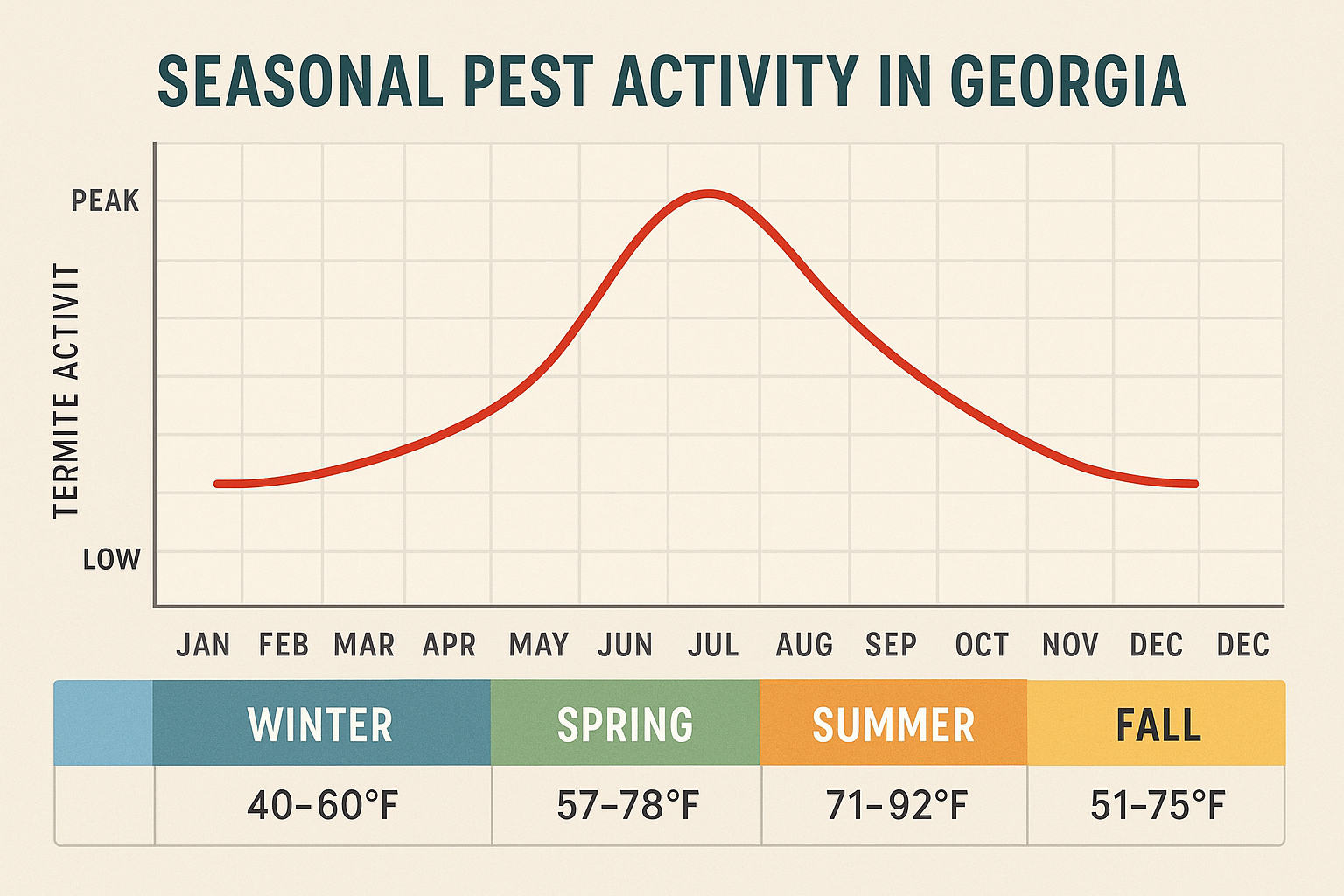
The table below pairs average monthly high temperatures with the typical termite activity level, giving you a snapshot of when colonies are most hungry.
| Month | Avg High (°F) | Activity Level |
|---|---|---|
| January | 50 | Low |
| February | 55 | Low |
| March | 62 | Medium |
| April | 70 | High |
| May | 78 | High |
| June | 85 | High |
| July | 88 | High |
| August | 86 | High |
| September | 80 | Medium |
| October | 71 | Medium |
| November | 61 | Low |
| December | 53 | Low |
Spring (March – May)
When daytime highs climb above 65 °F (18 °C) and the soil reaches a comfortable warmth, winged termites—known as alates—take to the air in massive swarms. This is the most visible sign of an active colony, and it’s also the period when new colonies are founded. Moisture from spring rains fuels the soil, encouraging termites to search for new wood sources. Because new colonies need a few weeks to mature, spotting a swarm in early March gives you a window to intervene before the infestation spreads.
Summer (June – August)
Summer is the growth engine for established colonies. Consistently warm temperatures (70‑90 °F or 21‑32 °C) and frequent humidity create ideal foraging conditions. Subterranean termites extend their tunnels deeper and farther, while dry‑wood termites become more aggressive in attacking exposed timber. This is the time you’ll see the highest rate of wood damage if left unchecked. Leaky irrigation lines or poor drainage create the damp soil termites love, so fixing water issues can cut summer foraging dramatically.
Fall (September – November)
As temperatures dip below 70 °F, termite activity slows but does not stop. Colonies continue to feed on wood, especially in shaded or insulated areas that retain heat. Moisture levels remain sufficient for foraging, so damage can still accumulate, albeit at a slower pace. Fall is a good window for treatment because the colonies are less aggressive yet still active enough for chemicals to spread. Even as activity tapers, termites will still gnaw at any untreated wood that stays warm, such as interior framing near heated rooms.
Winter (December – February)
Cold air drives most above‑ground activity underground. Subterranean termites stay active within the soil, protected from freezing, while dry‑wood termites become dormant in the wood they’ve already infested. You won’t see swarms, but the colonies are still alive and can rebound quickly when spring returns. If you have a heated crawl space, the warm micro‑climate can keep dry‑wood termites active year‑round, so insulation checks are wise.
Practical tip: Schedule a professional inspection in late February or early March—just before the first spring swarms. Catching a colony at the edge of its seasonal surge gives pest‑control technicians the best chance to apply termiticides that will travel throughout the network before the insects disperse.
By aligning your prevention plan with Georgia’s termite calendar, you protect your home when the pests are most vulnerable and avoid costly repairs later in the year.
Treatment Options, Professional Services, and Pricing
Chemical Barrier Treatments
Liquid termiticides are applied in a continuous trench around your home’s foundation, creating an invisible shield that repels foraging termites. The barrier remains effective for 3‑5 years, after which a re‑application is recommended to maintain protection. This method works best for subterranean species that travel through soil.
Baiting Systems
Cellulose bait stations are placed strategically around the property and contain slow‑acting insect growth regulators. Workers monitor the stations monthly, replacing any that show activity. Over time, the colony’s foragers spread the active ingredient, leading to a gradual collapse of the population without extensive chemical exposure.
Fumigation (Tenting)
For severe dry‑wood infestations—especially in older homes—tenting the entire structure with a sulfuryl fluoride gas can eradicate hidden colonies in a single treatment. While highly effective, fumigation requires evacuation, professional setup, and a post‑treatment airing period, making it a more involved and costly option.
Integrated Pest Management (IPM)
IPM blends thorough inspection, moisture control, and targeted treatments to keep termites at bay. By eliminating wood-to-soil contact, fixing leaks, and using the least toxic products necessary, homeowners enjoy long‑term protection while minimizing environmental impact.

Benefits of Professional Service
- Licensed technicians trained to identify species, damage levels, and optimal treatment zones.
- EPA‑registered products ensure compliance with safety standards and local building codes.
- Warranty protection—most plans cover re‑treatment if activity recurs within the guarantee period.
- Documentation for insurance or home resale, showing the property has been professionally protected.
Pricing Comparison
Understanding cost structures helps you choose the right plan for your budget and urgency. Below is a side-by-side view of an emergency call-out versus a quarterly preventive plan, so you can decide when emergency termite control Druid Hills homeowners depend on makes the most financial sense.

| Feature | Emergency Call‑Out | Quarterly Preventive Plan |
|---|---|---|
| Response Time | 24‑48 hrs | Within 5‑7 days (scheduled) |
| Initial Inspection | Included | Included each visit |
| Treatment Type | Fast‑acting barrier or spot fumigation | Barrier + quarterly bait checks |
| Follow‑Up Visits | One follow‑up within 30 days | Three follow‑ups per year |
| Cost per Service | $450‑$750 (depends on severity) | $120‑$180 per quarter |
| Warranty | 30‑day re‑treatment guarantee | Annual warranty covering re‑treatment |
What’s Included in Each Package
Emergency package guarantees a rapid 24‑48 hour arrival, a full property inspection, targeted chemical or fumigation treatment, and a post‑treatment follow‑up to verify elimination. The premium price reflects the on‑call labor and the need for immediate, intensive action.
Quarterly preventive plan spreads the cost across four visits. Each visit includes a comprehensive inspection, barrier reinforcement, bait station checks, and moisture‑control advice. This steady approach reduces the likelihood of a full‑scale infestation, saving you money in the long run.
Industry Standards
All methods referenced adhere to definitions set forth by the National Pest Management Association (NPMA termite glossary). By following these standards, Anthem Pest ensures that every treatment is both effective and compliant with best‑practice guidelines.
Protect Your Home with Anthem Pest Control
Why Early Detection and Timing Matter
Termites work silently, and a small colony can cause thousands of dollars in damage before you even notice a sign. Catching an infestation early—especially during the spring and early summer when colonies are most active—gives you a decisive advantage. Professional treatment at the right moment not only eliminates the current threat but also prevents future colonies from establishing deep roots in your foundation.
What Sets Anthem Apart
Anthem Pest Control brings a nationwide network of certified technicians to Druid Hills, backed by EPA‑approved products that are both effective and safe for families and pets. Our pricing is transparent: you’ll receive a detailed estimate before any work begins, and every service is backed by a satisfaction guarantee. Whether you need a one‑time eradication or an ongoing prevention plan, Anthem’s expertise ensures a tailored solution that meets local climate challenges and building codes.
Take the First Step Today
We invite you to schedule a complimentary inspection. During the visit, our specialists will assess the extent of any termite activity, identify vulnerable entry points, and develop a personalized treatment plan that fits your budget and timeline. The inspection is free, and there’s no obligation to proceed—just a clear picture of what your home needs to stay protected.
Ready to safeguard your home? Call us today at 877-371-8196 for a free, no-obligation quote and let our certified technicians handle the rest. You can also learn more about our services and request an inspection online for emergency termite control Druid Hills homeowners can trust at Anthem Pest Control.