What Are Carpet Beetles and Why They Matter
Carpet beetles belong to the family Dermestidae and are among the most common household insects in the United States. The species you’ll most often encounter in a Decatur home are the varied carpet beetle (Anthrenus verbasci), the black carpet beetle (Attagenus unicolor), and the common furniture beetle (*Anthrenus scrophulariae). Though adult beetles look harmless—small, rounded, and often spotted—their larvae are the real trouble-makers, often prompting homeowners to contact a carpet beetle exterminator Decatur residents trust when damage begins to appear.
Life Cycle at a Glance
Carpet beetles progress through four stages: egg, larva, pupa, and adult. Females lay 30‑70 eggs in dark, undisturbed areas such as closets, under baseboards, or inside upholstered furniture. Within a week the eggs hatch, and the larvae begin feeding. This larval phase can last from a few months to two years, depending on temperature and food availability. Once the larvae are fully grown, they spin a cocoon, pupate, and emerge as adult beetles ready to mate and start the cycle again.
Why the Larvae Matter
The larvae have strong chewing mouthparts that target natural fibers—wool, silk, cotton, fur, and even feathers. Typical damage includes:
- Small, irregular holes in carpets, blankets, and clothing.
- Staining from shed larval skins and excrement.
- Moisture buildup that can encourage secondary mold growth.
Health Considerations
While carpet beetles don’t bite or transmit disease, their shed skins and droppings can become airborne allergens. For sensitive individuals this can trigger skin irritation, asthma flare‑ups, or general declines in indoor air quality. The U.S. Environmental Protection Agency notes that pest infestations, including carpet beetles, can compromise IAQ and exacerbate respiratory issues (EPA).
How Common Are They?
Nationwide surveys estimate that up to 30 % of homes experience a carpet beetle problem at some point. In the Southeast, numbers peak in late spring and early summer when warm, humid conditions accelerate larval development. Recognizing the signs early can save you time, money, and cherished belongings.
Spotting a Carpet Beetle Infestation
Common Hiding Places
Carpet beetles love the quiet corners of a home. You’ll often find them tucked under furniture legs, skirting along baseboards, or nesting in the folds of closet shelves—areas a carpet beetle exterminator Decatur professionals routinely inspect. Upholstered cushions, especially those with loose seams, provide a perfect sanctuary where larvae can feed unnoticed.
Physical Clues
During a routine sweep, keep an eye out for tiny shed skins—the exuviae left behind as larvae grow. These look like translucent, papery shells about 2‑3 mm long. You may also spot fecal pellets, which appear as fine, pepper‑like specks on fabrics or carpet fibers. Both indicators suggest an active beetle presence.
Damage Patterns
Unlike moths, carpet beetles create irregular holes that can range from a pinpoint to a half‑inch wide. Look for threadbare spots on wool rugs, silk curtains, or cotton bedding. The damage often follows a patchy pattern rather than neat rows, reflecting the larvae’s wandering feeding habit.
How to Confirm Presence
Set out a few sticky traps near suspected areas. Check them after 24‑48 hours; captured adults will confirm the infestation. For a quick DIY check, turn off the lights and shine a flashlight along baseboards at night—any moving beetles will reflect the beam, making them easy to spot.
Real‑World Example

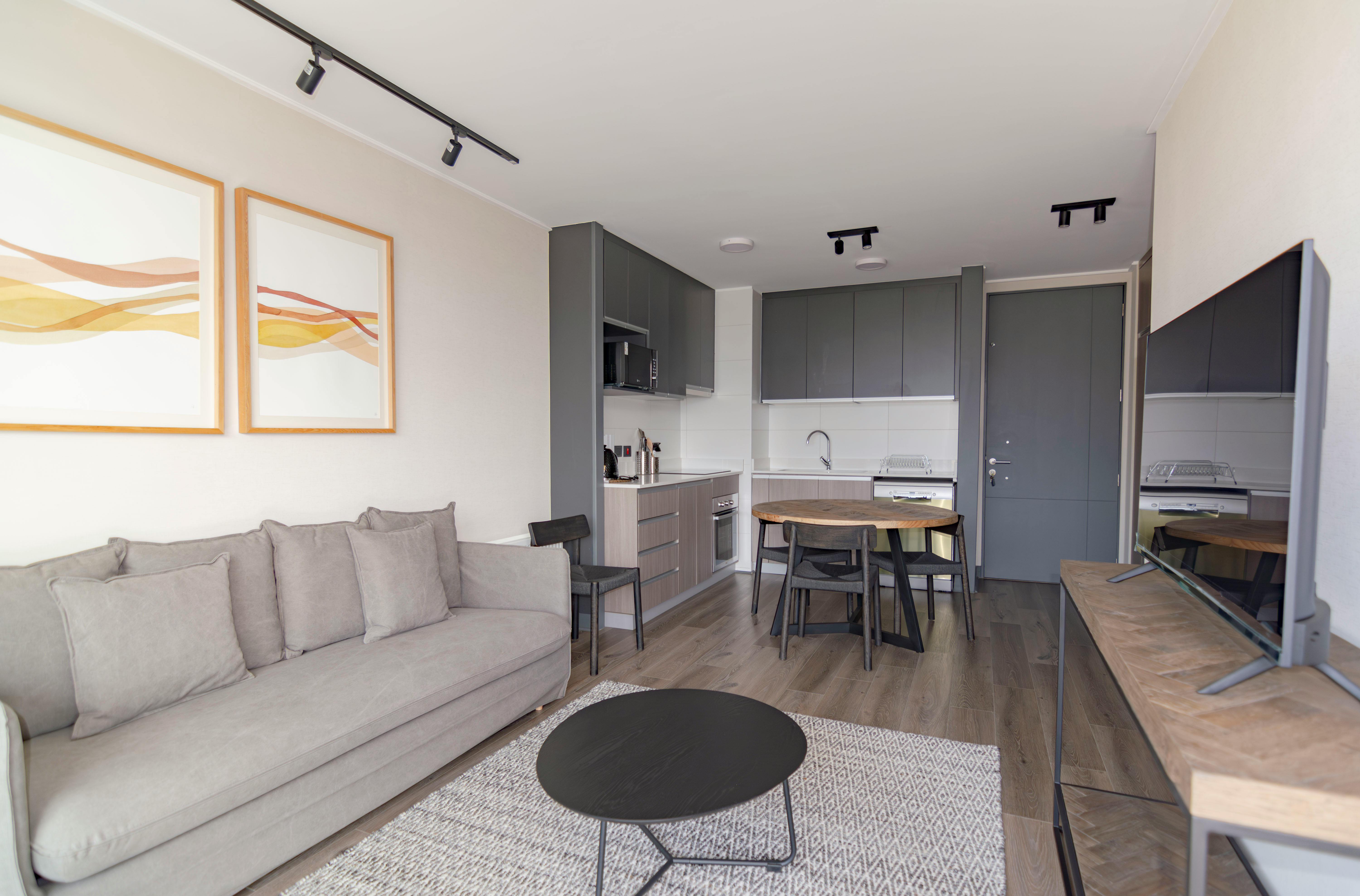
Imagine a sleek, modern living room with a soft, beige rug and a plush sofa. A homeowner notices a few peppery specks on the rug and a tiny hole near the sofa cushion seam. After placing sticky traps under the coffee table, several adult beetles are caught the next morning—confirming the infestation before it spreads to curtains or bedding.
For a broader guide on identifying household pests, consult the CDC’s pest identification page. Recognizing these signs early lets Anthem Pest Control intervene quickly, protecting your home and peace of mind.
When Are Carpet Beetles Most Active?
Carpet beetles follow a predictable four-season rhythm that aligns with temperature and food availability. Understanding this cycle lets you schedule inspections and treatments when the insects are most vulnerable, helping a carpet beetle exterminator Decatur homeowners trust address the problem efficiently and save time and money.
Winter: Adult beetles seek the warmth of homes, slipping into cracks, closets, and attics. While they’re present, larval feeding slows dramatically because the cold limits growth. This is a good window for thorough vacuuming and sealing entry points before the population builds.
Spring: As temperatures rise, adults become more active and begin laying eggs. The increase in humidity creates ideal conditions for the tiny larvae to hatch and start feeding on natural fibers, pet hair, and dead insects.
Summer: This season marks the peak of larval activity. Rapid development and voracious feeding can cause noticeable damage within weeks. Because larvae are hidden in carpets, upholstery, and stored items, infestations often go unnoticed until the damage is evident.
Fall: Larvae finish their growth cycle and prepare for overwintering. Adults emerge to find new shelter, repeating the cycle. Monitoring in autumn helps catch the last wave of adults before they hide for winter.
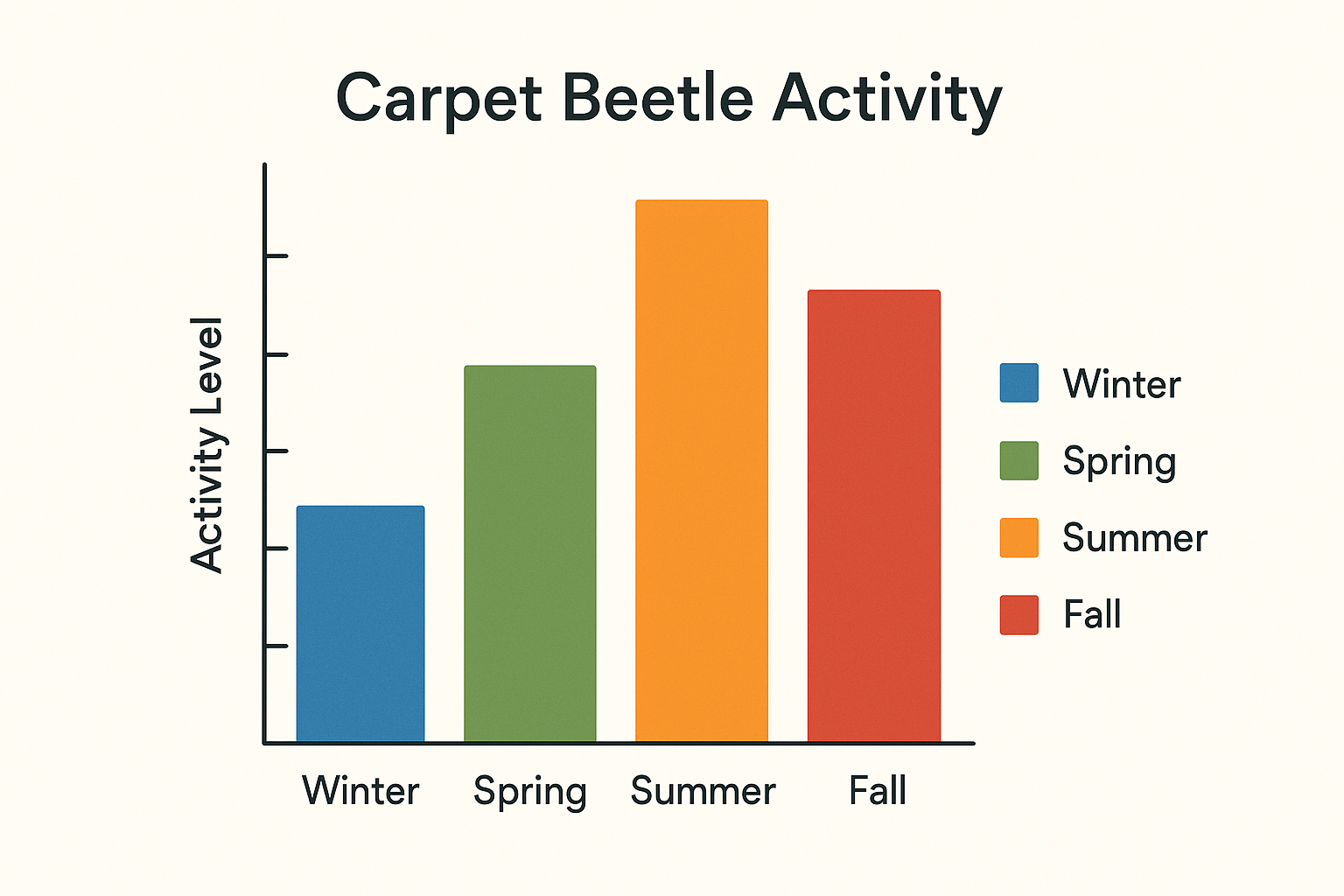
The bar chart above visualizes the seasonal peaks: a modest rise in winter, a sharp climb in spring, the highest bar in summer, and a tapering off in fall. Use this visual cue to prioritize inspections during the summer surge and early spring egg‑laying period.
Seasonal Monitoring Tips
- Increase trap checks weekly during summer when larvae are most active.
- Perform a thorough vacuum of carpets, under furniture, and in closets in early spring.
- Seal cracks and install door sweeps in fall to block adult entry.
- Schedule a professional inspection before winter to address any hidden larvae.
Preventing Carpet Beetle Problems in Your Home
Carpet beetles thrive in hidden dust and natural fibers, so a proactive routine can keep them out before they turn a tidy house into a feeding ground. The steps below are DIY‑friendly, low‑cost, and fit easily into a busy homeowner’s schedule.
1. Adopt a regular cleaning rhythm
Vacuum carpets, rugs, and upholstery at least once a week, paying special attention to seams, under furniture, and baseboards where larvae love to hide. After each pass, immediately seal the vacuum bag or canister in a trash bag and discard it outside the home. This prevents any captured beetles or eggs from re‑infesting the space.
2. Store natural‑fiber items correctly
Wool blankets, silk curtains, and cotton throws should live in airtight plastic containers or zip‑lock bags. Adding a cedar block or a few mothballs (used sparingly and away from children or pets) creates an environment that repels beetles without damaging the fabric.
3. Reduce outdoor attractants
Keep firewood, mulch, and compost piles at least three feet away from the foundation. Trim shrubs, vines, and low‑lying branches that touch the house, as they provide a bridge for adult beetles to reach indoor entry points.
4. Seal potential entryways
Inspect the exterior for cracks around windows, doors, and the foundation. Apply a quality caulk to seal gaps, install door sweeps on all exterior doors, and repair torn window screens. Even a tiny opening can become a highway for beetles seeking shelter.
5. Use low‑toxicity repellents and monitors
Sticky pheromone traps placed near closets, under furniture, and around entry points catch wandering adults. Natural repellents such as lavender sachets or citrus‑based sprays can be applied to storage areas for an added layer of defense without harsh chemicals.
Visualizing a beetle‑proof home
Imagine a living room where the rug is vacuumed weekly, the sofa cushions are lifted for a quick clean, and a cedar chest holds seasonal blankets in sealed bags. Outside, the firewood sits on a raised platform, and the garden’s edge is neatly trimmed. With door sweeps in place and a few discreet traps on the floor, the home looks unchanged—but it’s now a hostile environment for carpet beetles.
Treatment Options and Pricing Comparison
DIY Options: What’s on the Shelf
Many homeowners start with over-the-counter sprays or dusts that claim to kill carpet beetles on contact. While these products can reduce a light infestation, they often miss hidden larvae in wall voids, insulation, or under floorboards—areas a carpet beetle exterminator Decatur professionals are trained to treat. Heat treatment—renting a portable heater and raising room temperature above 120°F—can eradicate eggs and larvae, but the process is time-consuming, energy-intensive, and risky without proper monitoring. In short, DIY methods may provide temporary relief but rarely eliminate the problem at its source.
Professional Treatments: Tiered Solutions
Basic Plan – Targeted spot treatments applied to known hotspots, followed by one scheduled revisit to ensure any missed beetles are captured.
Standard Plan – Whole‑home application of EPA‑approved insecticide, a perimeter barrier to prevent re‑entry, and a 2‑year guarantee that covers re‑treatment if beetles return.
Premium Plan – An integrated pest‑management (IPM) approach that combines chemical treatment, monitoring devices, quarterly inspections, and priority scheduling for any future outbreaks.
Why Choose a Professional Service?
- EPA‑approved products: Formulations are vetted for efficacy and safety.
- Child and pet safety: Technicians follow strict application protocols to minimize exposure.
- Warranty coverage: Guarantees protect your investment and reduce the need for repeat visits.
Pricing Snapshot
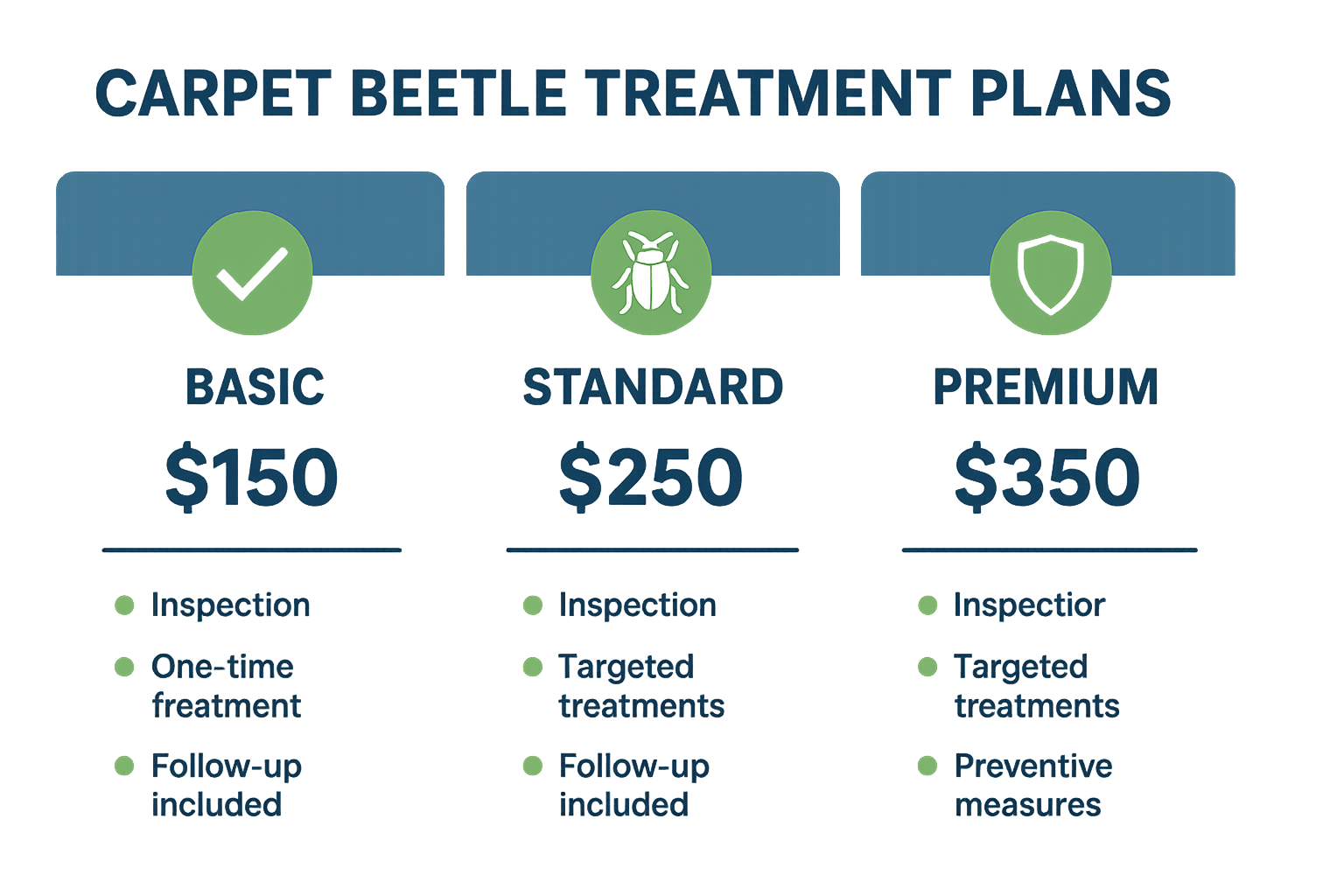
| Plan | Included Services | Price | Guarantee |
|---|---|---|---|
| Basic | Spot treatment + 1 follow‑up visit | $99 | 90‑day re‑treatment |
| Standard | Whole‑home spray, perimeter barrier | $179 | 2‑year re‑treatment |
| Premium | IPM program, quarterly inspections, priority scheduling | $259 | Lifetime warranty on beetle control |
Choosing the Right Plan
If you’ve only spotted a few beetles in a single room, the Basic plan may be enough, especially when paired with diligent cleaning. For moderate infestations—multiple rooms or evidence of larvae in upholstery—the Standard plan offers comprehensive coverage and peace of mind. Homeowners with recurring issues, pets, children, or a desire to prevent future problems should consider the Premium IPM package, which balances effectiveness with ongoing monitoring.
For a deeper dive into carpet beetle biology and treatment nuances, consult the NPMAPest guide. Choosing the right tier now saves you time, stress, and extra expense later.
Protect Your Home with Anthem Pest Control
Let’s quickly revisit what you’ve learned: correctly identifying carpet beetle damage, recognizing that spring‑to‑summer is the peak activity window, applying simple preventative steps, and knowing the most effective treatment methods. Keeping these points top of mind helps you stay one step ahead of an infestation.
When it comes to carpet beetle management, Anthem Pest Control brings decades of experience and a nationwide network of licensed technicians. Whether you’re in Decatur, GA, or any other U.S. city, our locally trained crews understand the regional quirks that affect pest behavior, ensuring a tailored approach that works where you live.
We pride ourselves on transparent pricing—no hidden fees, just a clear quote up front. All of our treatments use EPA‑registered products that are both safe for families and highly effective against beetles at every life stage. Plus, our satisfaction guarantee means we won’t rest until your home is beetle‑free and you’re completely happy with the results.
Ready to act? A prompt response is the best defense against a growing carpet beetle population. Schedule a complimentary inspection today, and we’ll craft a personalized treatment plan that fits your schedule and budget. Taking the first step now prevents costly damage later.
Call us at 877-371-8196 or visit Anthem Pest Control to request your free quote from a trusted carpet beetle exterminator Decatur homeowners rely on. Our friendly team is standing by to protect your home.