Recognizing Crickets in Your Decentur Home
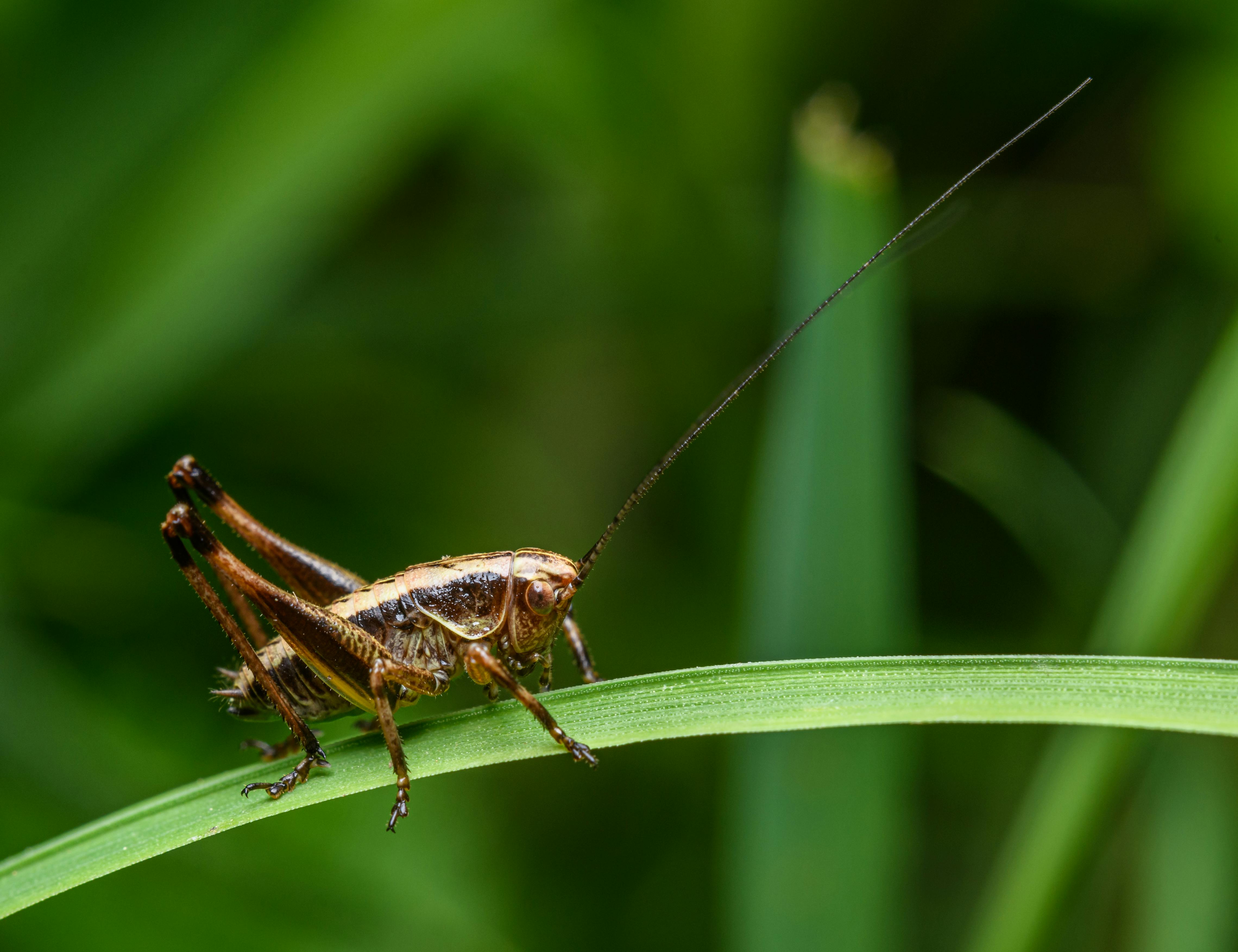
When a faint “chirp” echoes from the corners of your kitchen or the basement feels a little cooler than usual, you’re likely dealing with the common house cricket (Acheta domesticus). Though these insects are harmless in the wild, an indoor infestation can quickly turn into a noisy, unsightly problem for any Decatur homeowner—often prompting a call to a cricket exterminator Decatur residents trust.
What a House Cricket Looks Like
The house cricket is a modest‑sized orthopteran, typically measuring between ½ and ¾ inch long. Its body is a uniform light‑brown to tan color, sometimes with faint darker markings on the thorax. The most distinctive physical traits include:
- Size: ½‑¾ inches (12‑19 mm) when fully grown.
- Coloration: Light brown to tan, occasionally with a subtle reddish hue.
- Wings: Long, narrow forewings that lie flat over the abdomen; hind wings are folded underneath and are capable of short, rapid flights.
- Legs: Strong hind legs built for jumping, with spiny tibiae that can produce a faint “scratching” sound when they move.
- Chirping: A steady, rhythmic “crick‑crick‑crick” produced by males rubbing their forewings together (stridulation). This sound is most audible at night.
Crickets vs. Look‑Alike Insects
It’s easy to mistake crickets for their cousins—katydids and grasshoppers—especially when the lights are dim. Here’s a quick comparison to keep you from calling the wrong pest:
| Feature | House Cricket | Katydid | Grasshopper |
|---|---|---|---|
| Body Size | ½‑¾ in | 1‑2 in (often larger) | 1‑2 in (robust) |
| Color | Uniform light brown | Green or brown with leaf‑like wings | Green, brown, or gray |
| Wings | Narrow forewings, short hind wings | Broad, leaf‑shaped wings | Strong, fully developed hind wings |
| Sound | Steady chirp (male only) | Soft, high‑pitched “tik‑tik” | Often silent; some species squeak |
Where Crickets Set Up Camp Indoors
House crickets are attracted to warm, moist environments that mimic the outdoors. In Decatur homes, you’ll most often find them in:
- Kitchens: Around pantry shelves, behind appliances, or near food crumbs.
- Basements: Especially in corners with concrete walls that retain humidity.
- Closets and Storage Areas: Dark, undisturbed spaces provide perfect hiding spots.
- Moisture Sources: Under sinks, near leaky pipes, or in laundry rooms where water evaporates slowly.
Why Early Recognition Matters
Spotting a cricket early can save you from three common headaches:
- Food Contamination: Crickets wander through pantry items, leaving droppings and potentially spreading bacteria.
- Noise Disturbance: The male’s nightly chirp can disrupt sleep, especially during warm summer evenings.
- Escalating Infestations: A handful of crickets can quickly multiply, especially if moisture and food sources remain unchecked.
Knowing the signs—size, coloration, wing shape, and that unmistakable chirp—lets you act before the problem spreads. If you need a deeper dive into cricket biology or want to confirm an identification, Anthem Pest Control’s resource library offers reliable, science‑based information.
When Crickets Are Most Active in Decatur, GA
Decatur’s humid subtropical climate is a perfect playground for crickets. When daytime temperatures climb above 70°F (21°C) and night‑time humidity stays above 60%, these nocturnal insects emerge in force. The combination of warm days and moist evenings speeds up their metabolism, triggers mating calls, and fuels rapid breeding cycles.
Seasonal Activity at a Glance
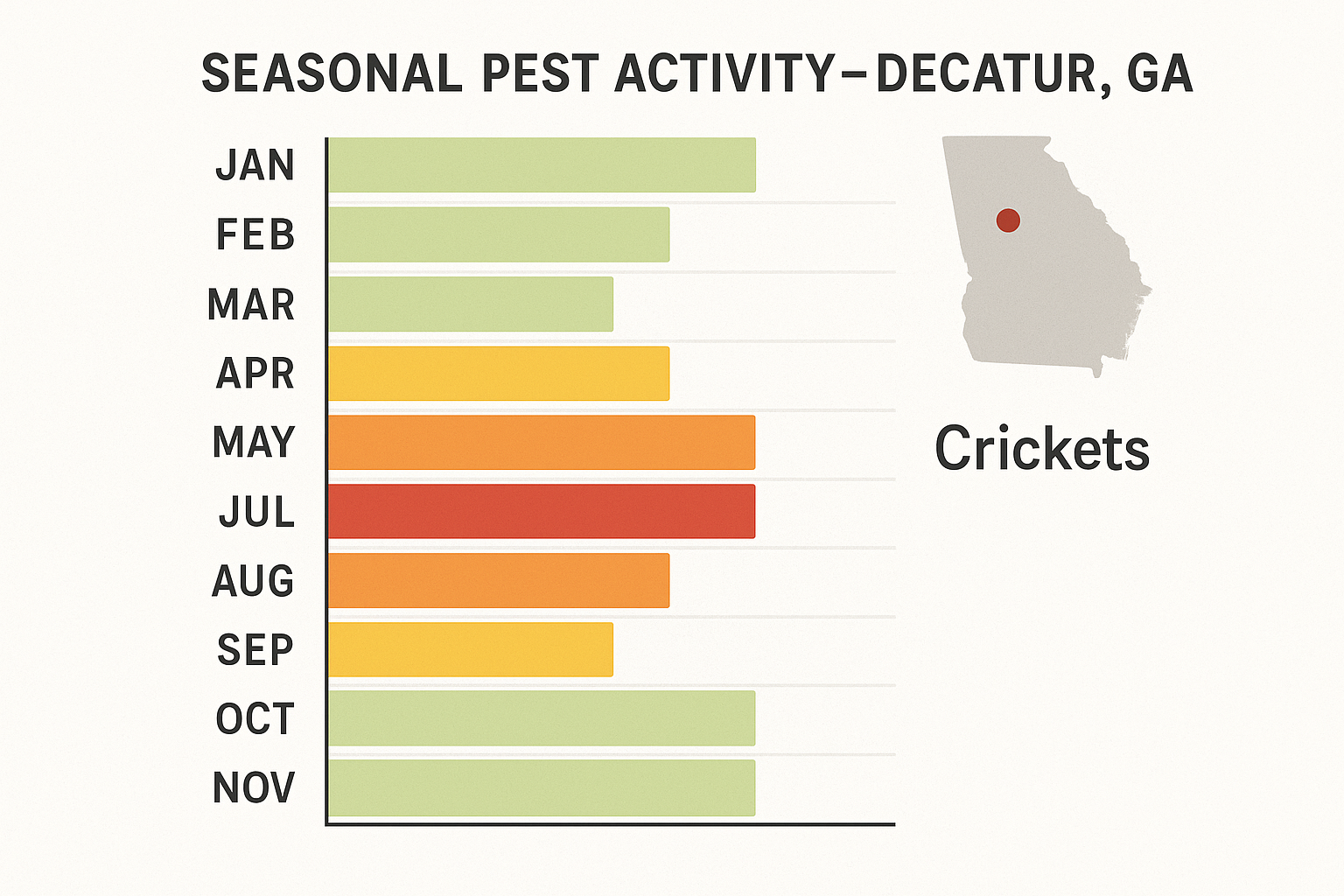
The chart below shows the typical monthly activity levels for house crickets in Decatur. Notice the sharp rise from late spring, a sustained “high” period through the summer, and a gradual decline as cooler weather sets in.
Monthly Activity Summary
| Month | Activity Level |
|---|---|
| January | Low |
| February | Low |
| March | Moderate |
| April | Moderate |
| May | High |
| June | High |
| July | High |
| August | High |
| September | High |
| October | Moderate |
| November | Low |
| December | Low |
From Outdoor Breeding to Indoor Invasions
Crickets lay hundreds of eggs in moist soil, leaf litter, or under garden debris. As the eggs hatch, nymphs feed on vegetation and continue to grow throughout the summer. When the population reaches its peak, hungry adults seek shelter from predators and the heat—often slipping through tiny cracks around doors, windows, and utility openings. That’s why a sudden indoor chorus usually follows a heavy summer breeding season.
Seasonal Prevention Tips
- Seal entry points early: Inspect and caulk gaps around windows, doors, and foundation walls before June.
- Trim outdoor lighting: Bright porch lights attract crickets; switch to amber bulbs or use motion‑sensor fixtures.
- Manage yard debris: Remove piles of leaves, grass clippings, and wood chips that serve as breeding sites.
- Maintain proper drainage: Ensure gutters and downspouts direct water away from the home’s foundation to reduce moisture buildup.
Why Early Detection Matters
Spotting the first chirps in June gives you a window to act before numbers explode. A quick inspection and targeted treatment can stop an infestation before it spreads to walls, insulation, and stored food. Delaying action often means larger, more costly treatments later in the season.
By understanding Decatur’s cricket calendar and taking proactive steps during the low‑risk months, you protect your home from the noisy, crunchy surprise of a summer invasion.
Effective Treatment Options for Cricket Infestations
Integrated Pest Management (IPM) – The Foundation
At Anthem Pest Control, we start every cricket program with Integrated Pest Management, a science-based approach that blends prevention, monitoring, and targeted treatment—an approach every reliable cricket exterminator Decatur homeowners trust should follow. IPM begins by identifying where crickets are entering, what attracts them, and how the local environment supports their life cycle. By addressing the root causes—excess moisture, food debris, and structural gaps—we reduce the need for chemicals and create a long-lasting barrier against future invasions.
Chemical Treatments
When crickets have already established a population, low‑toxicity chemical options can provide rapid knock‑down while keeping family and pets safe.
- Low‑toxicity sprays: Applied directly to baseboards, cracks, and outdoor perimeters, these aerosols contain insect growth regulators (IGRs) that stop nymphs from maturing.
- Baits: Gel or granular baits placed near entry points attract adult crickets; once they feed, the active ingredient spreads through the colony.
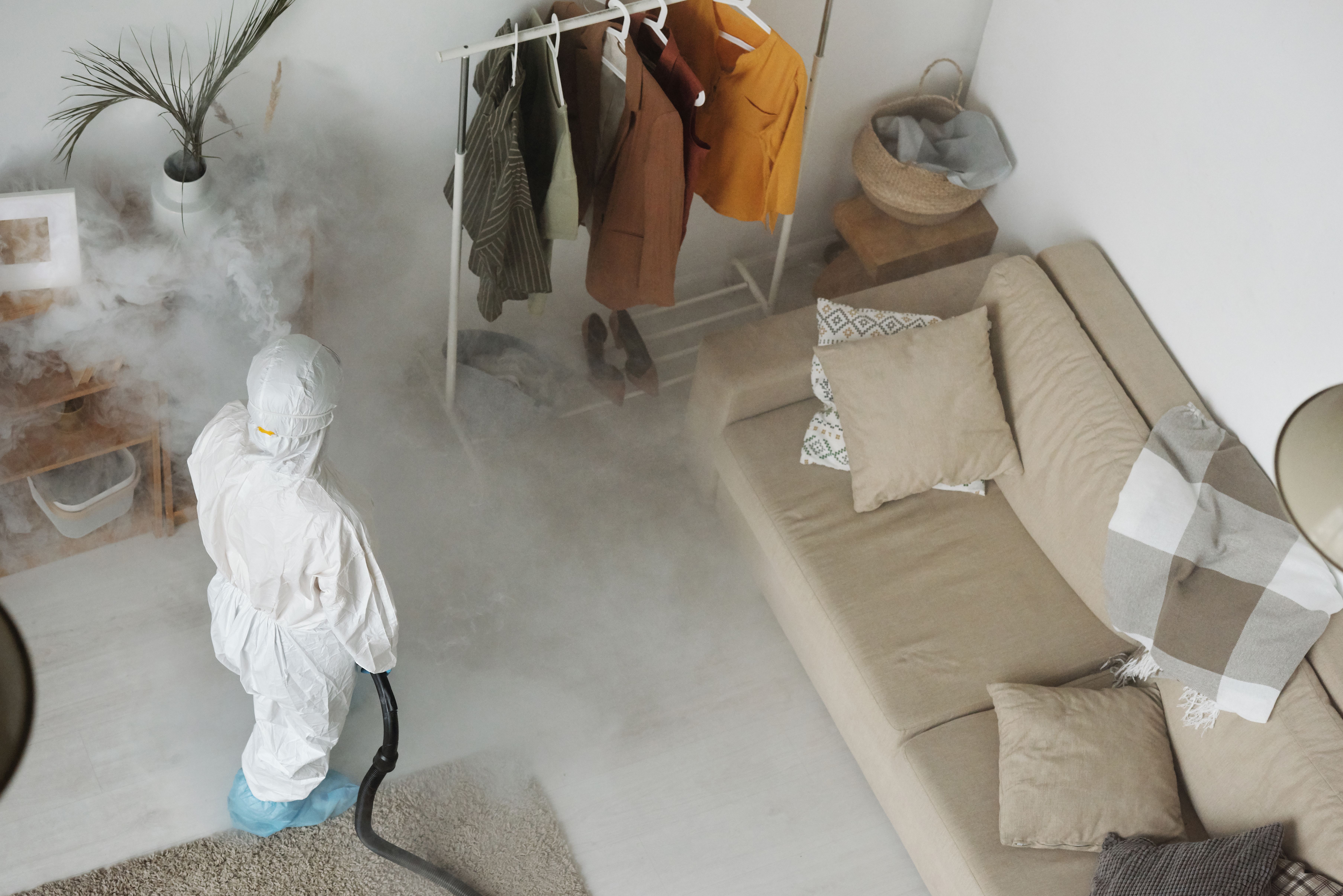
- Residual foggers: In severe indoor outbreaks, a licensed technician may use a fogger that leaves a thin, lasting film on surfaces, preventing re‑infestation for weeks.
These treatments are best used after a thorough inspection, ensuring the product is applied only where crickets are active and where human exposure is minimal.
Non‑Chemical Options
Many homeowners prefer methods that avoid any chemicals. Non‑chemical tactics work best when paired with IPM principles.
- Vacuum removal: A strong shop‑vac can instantly capture adult crickets hiding in wall voids or under furniture. Dispose of the bag immediately to prevent escape.
- Sticky traps: Placed along baseboards and near lights, these traps monitor activity and reduce numbers without leaving residues.
- Exclusion techniques: Installing door sweeps, sealing window screens, and caulking foundation cracks block the primary entry routes crickets use to get inside.
Regularly cleaning kitchen crumbs, fixing leaky gutters, and reducing outdoor lighting also diminish the attractants that draw crickets to a home.
Professional Fumigation
In rare cases—such as multi‑unit buildings or heavily infested attics—fumigation becomes necessary. A licensed technician will seal the structure, introduce a controlled amount of fumigant, and maintain a safe exposure period before ventilating the space.
Safety is paramount: the area must be cleared of occupants and pets, and the technician follows strict EPA guidelines for exposure limits. Fumigation is typically reserved for situations where conventional sprays and exclusions have failed to achieve control.
DIY vs. Professional Treatment
DIY pros: Lower upfront cost, immediate action, and the satisfaction of handling a small problem yourself.
DIY cons: Limited access to professional‑grade products, difficulty locating hidden entry points, and a higher chance of incomplete eradication.
Professional pros: Certified technicians have access to EPA‑approved formulations, advanced equipment, and the expertise to design a customized IPM plan.
Professional cons: Higher price tag and the need to schedule service. However, the long‑term savings from preventing repeat infestations often outweigh the initial expense.
Why a Certified Technician Matters
A certified Anthem Pest technician brings more than a spray can. They conduct a detailed inspection, identify the species, and recommend the most effective blend of chemical and non‑chemical tactics. After treatment, they perform follow‑up visits to ensure the cricket population stays suppressed and to adjust exclusion measures as needed. Trusting a professional not only protects your family’s health but also guarantees that every ounce of product is applied safely and legally, delivering the quick relief homeowners in Decatur, GA expect.
How Much Does Cricket Removal Cost in December?
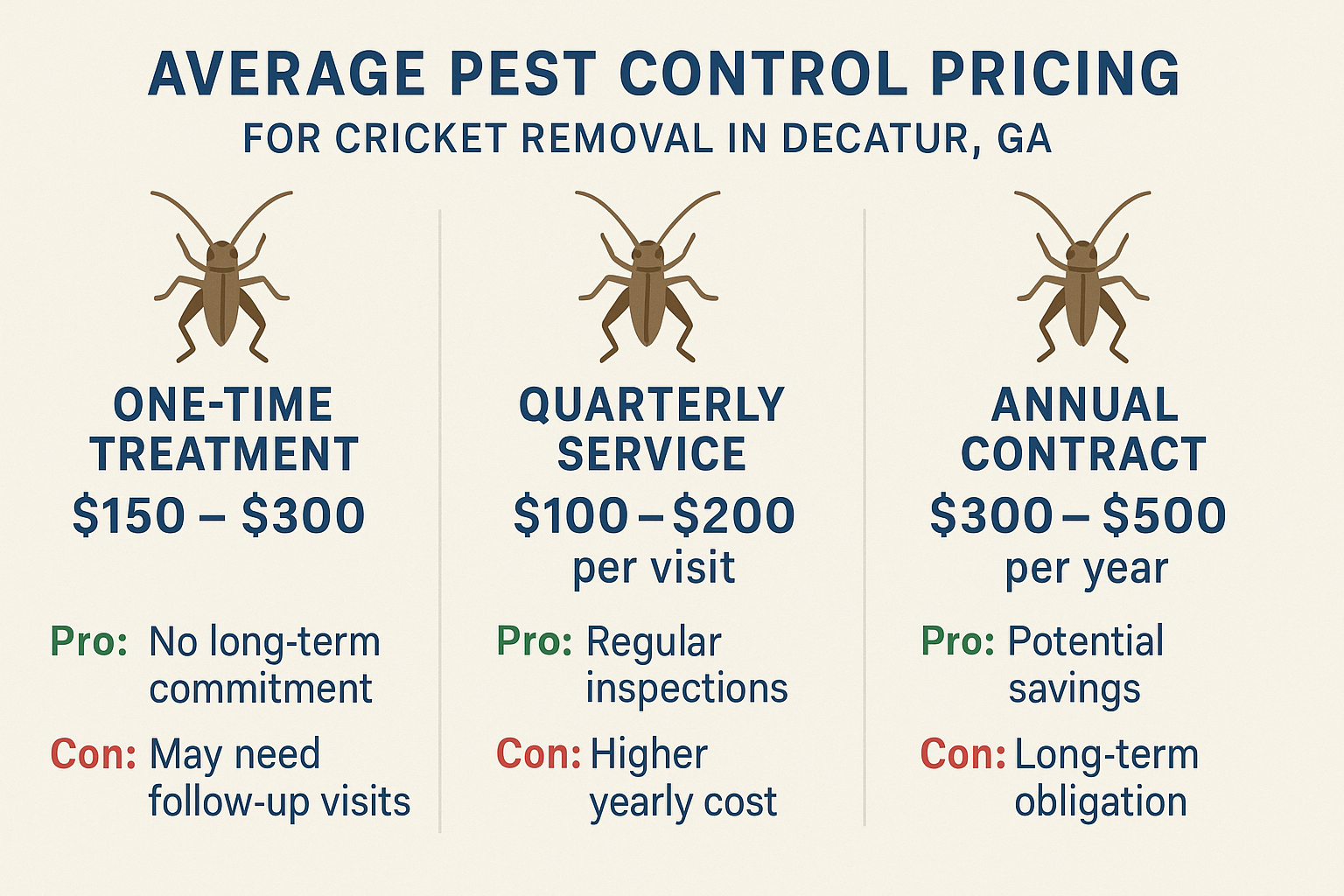
When you’re dealing with a chirping invasion, the first question on every homeowner’s mind is the price tag. In Decatur, a cricket exterminator Decatur homeowners rely on will typically offer three pricing models that suit different budgets and comfort levels. Understanding what each model includes—and what you’re actually paying for—helps you avoid surprise fees and choose the best value for your home.
1. One‑Time Treatment
- Price range: $120 – $250 per visit, depending on property size and infestation level.
- What’s included: A thorough inspection, targeted pesticide application, and a single follow‑up check within 7‑10 days.
- Pros: Ideal for a quick fix after a sudden outbreak; no long‑term commitment.
- Cons: Protection is short‑lived—crickets can return if the underlying attractants aren’t addressed.
2. Quarterly Service
- Price range: $300 – $450 per year (four visits).
- What’s included: Seasonal inspections, preventive treatments each quarter, and two complimentary follow‑ups per year.
- Pros: Balances cost and ongoing protection; helps keep the cricket population in check throughout the year.
- Cons: Requires a modest commitment and may feel unnecessary if you only experience occasional spikes.
3. Annual Contract
- Price range: $500 – $750 per year, often with a discounted rate for multi‑year agreements.
- What’s included: Unlimited inspections, regular treatments, emergency call‑outs, and a detailed prevention plan tailored to your home.
- Pros: Best long‑term savings, priority scheduling, and comprehensive protection against not just crickets but other seasonal pests.
- Cons: Higher upfront cost and a binding contract—though most customers find the peace of mind worth it.
Factors That Can Shift the Cost
Even within these pricing tiers, several variables influence the final amount:
- Infestation severity: A light presence may need only a single spray, while a heavy infestation could require multiple applications.
- Property size: Larger homes or those with extensive landscaping demand more product and labor.
- Special treatments: If you need eco‑friendly options, interior‑only applications, or extra barrier treatments around entry points, expect a modest surcharge.
Getting a Free Quote—What to Prepare
Anthem Pest makes the quoting process straightforward. Have these details on hand to speed things up:
- Square footage of the home and any outbuildings.
- Known entry points (cracks, gaps, door sweeps).
- Recent sightings or hot spots where crickets are most active.
- Any previous pest‑control treatments you’ve tried.
Simply call 877‑371‑8196 or visit anthempest.com to request your no‑obligation quote.
Compare, Choose, Save
Take at least two estimates and line them up side by side. Look beyond the headline price—consider what’s included, the frequency of visits, and the long‑term savings of a preventive plan. A modest annual contract often pays for itself by avoiding repeated one‑time treatments and protecting your home from future invasions.
Protect Your Home from Crickets Today
Crickets may seem harmless, but the signs they leave behind—loud night chirping, small winged insects near lights, and occasional damage to fabric or plants—are clear warnings that an infestation could be forming. In Decatur, GA, the peak risk months run from late spring through early fall, when warm nights encourage rapid breeding. If you’ve spotted any of these indicators, you’re already ahead of the curve.
Quick Recap
- Identification signs: audible chirping after dusk, tiny crickets in kitchens or basements, and occasional chewing on soft materials.
- Seasonal risk periods: May – September, with a spike in July and August when temperatures stay above 70°F.
- Effective treatment methods: targeted indoor sprays, perimeter barrier applications, and professional heat or vacuum removal for severe cases.
Early detection combined with professional intervention stops a small problem from becoming a costly, full‑scale invasion. The longer crickets linger, the more they reproduce, and the harder—and more expensive—it becomes to eradicate them. Acting promptly not only protects your home’s comfort but also saves you money in the long run.
Anthem Pest Control brings years of local expertise to every cricket removal job. Our technicians know the Decatur climate, understand cricket behavior, and use safe, EPA‑approved products that target the pests while protecting your family and pets. Beyond crickets, we offer comprehensive pest‑management plans that keep ants, roaches, rodents, and other unwanted guests at bay.
If you suspect crickets have taken up residence or simply want a preventative strategy, we’re happy to provide a free, no‑obligation quote. Give us a call at 877‑371‑8196 or visit our website for more details.
Ready for peace of mind? Visit Anthem Pest Control today and let our experts safeguard your home with a trusted cricket exterminator Decatur homeowners rely on.