Why Crickets Matter in Peachtree City
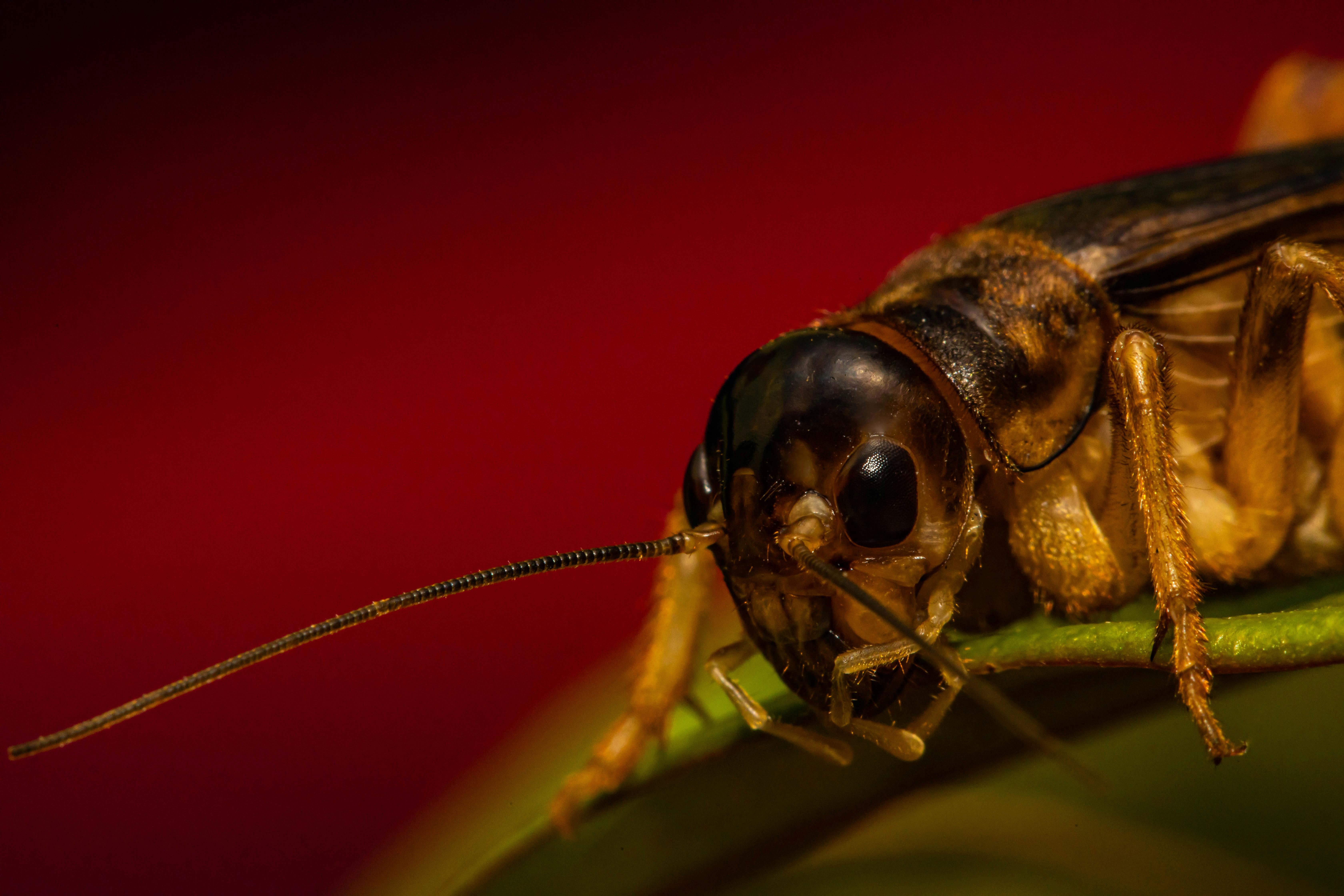
In Peachtree City, GA, crickets are more than just a summer soundtrack. The warm, humid climate creates an ideal breeding ground for several common species, most notably the House Cricket (Acheta domesticus) and the Field Cricket (Gryllus pennsylvanicus). Both thrive in lawns, garden beds, and even the occasional crawl space, making them a frequent visitor in residential yards.
Typical signs of a cricket infestation
- Persistent chirping after dusk – the males sing to attract mates, and a chorus can be heard from the porch to the bedroom.
- Chewed foliage or wilting garden plants – crickets feed on tender leaves, seedlings, and even fruit.
- Indoor sightings – while they prefer outdoors, crickets often wander inside through open doors or gaps in screens.
These signs are not just annoyances; they can affect your comfort and property value. The nightly chorus can disrupt sleep, especially for light sleepers, and the noise often masks other household sounds that signal a problem. In gardens, heavy feeding can lead to noticeable crop loss, forcing homeowners to replace plants or spend extra on fertilizer. Although rare, some individuals experience allergic reactions to cricket exoskeleton fragments that become airborne during cleaning.
Local prevalence at a glance
| Year | Reported Cases* | Peak Month |
|---|---|---|
| 2022 | 112 | July |
| 2023 | 138 | June |
| 2024 (Jan‑Aug) | 95 | July |
*Data compiled from local pest‑service call logs and neighborhood watch reports.
These numbers illustrate a clear trend: cricket activity spikes during the hot, humid months, and the upward trajectory over recent years suggests that climate variability is extending their breeding season. For homeowners, this means the window of nuisance can start earlier and last longer than in the past.
Understanding when crickets are most active is the first step toward an effective, cost‑focused control plan. By aligning treatment with the insects’ life cycle—targeting nymphs before they mature—you can reduce the need for repeated applications and keep your home quiet and safe. In the next section, we’ll explore how seasonal patterns guide the timing of professional extermination, ensuring you get the most bang for your buck.
Seasonal Cricket Activity in Peachtree City
Crickets follow a simple yet temperature‑driven life cycle: egg, nymph, and adult. Females lay eggs in moist soil or leaf litter during the warmer months, and the embryos develop faster when daily highs stay above 65 °F. Once the eggs hatch, tiny nymphs emerge; they look like miniature adults but lack fully formed wings. Nymphs molt several times, and each molt speeds up as the weather warms. When temperatures dip below 55 °F, development slows dramatically, and many nymphs seek shelter in the soil until spring.
What the seasonal chart tells you
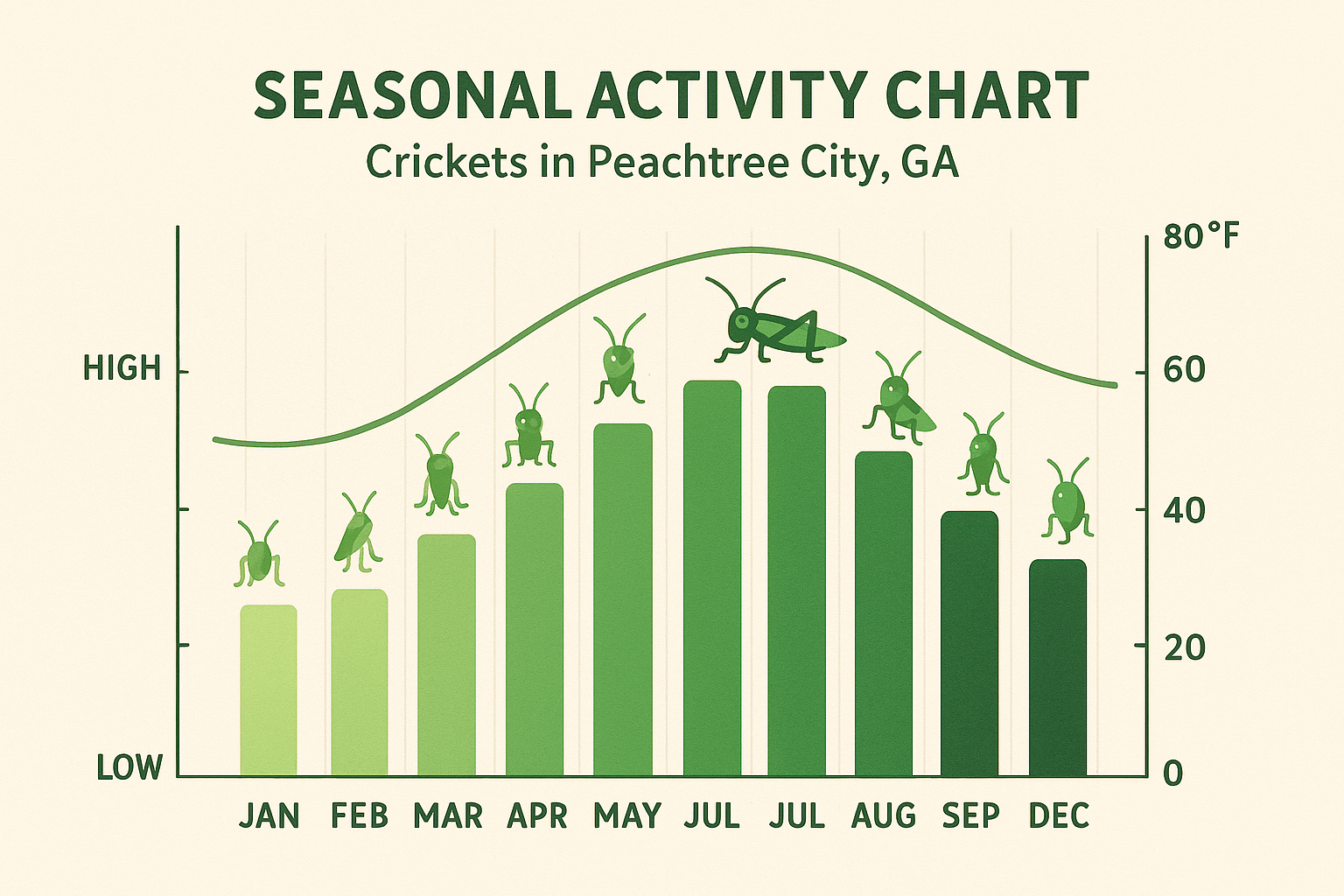
The chart above maps cricket activity from January to December, highlighting three key periods:
- Late winter (January‑February): Activity is minimal; eggs are dormant.
- Spring surge (March‑May): Nymphs emerge, and chirping begins to rise.
- Summer peak (June‑August): Adults are abundant, and chirping reaches its highest levels.
- Fall decline (September‑October): Adults start to die off, but late‑season nymphs may still be present.
- Winter lull (November‑December): Most crickets are hidden as eggs, awaiting warmer soil.
Temperature and chirping: the direct link
Cricket chirping is essentially a temperature gauge. For every 10 °F increase in ambient temperature, chirp frequency rises by roughly 100 chirps per minute. In Peachtree City, average monthly highs climb from the mid‑50s in January to the high 80s in July. This temperature rise explains why you’ll hear a constant chorus in July and August, while the evenings of December are eerily quiet.
When to start monitoring
Homeowners should begin visual inspections in early March, once soil temperatures consistently hit 60 °F. Look for small, pale nymphs in garden beds, under mulch, and around foundation cracks. Setting up a simple “chirp trap” – a shallow dish of water with a light source nearby – can help you detect early adult activity by the faint sounds they produce at night.
Best timing for treatment
Early‑season intervention—typically mid‑March to early April—offers the most cost‑effective control. Treating at this stage targets nymphs before they mature, reducing the total number of adults that will later populate your home. If you wait until the summer peak, you’ll need multiple applications to keep up with the rapidly reproducing population, which drives up labor and chemical costs.
For a proactive approach, schedule a professional inspection just before the spring surge. Anthem Pest Control can apply a low‑toxicity perimeter treatment that curtails nymph emergence and creates a barrier that adult crickets struggle to cross. Pair this with simple homeowner actions—tightening screens, sealing foundation cracks, and reducing outdoor lighting at night—and you’ll keep the chirping to a pleasant background hum rather than a full‑blown infestation.
Key takeaways for homeowners
- Monitor soil temperature; start scouting when it reaches 60 °F.
- Expect peak chirping in June‑August; plan treatments before this window.
- Early‑season (March‑April) treatment reduces overall control costs.
- Combine professional perimeter sprays with DIY exclusion methods for lasting relief.
How Crickets Damage Homes and Gardens
Ornamental Plants and Vegetable Gardens
Crickets may look harmless, but they’re voracious leaf‑chewers. In a backyard garden, a single adult can strip the tender foliage of petunias, marigolds, or basil in just a few days. Seedlings are especially vulnerable; a cricket’s mandibles can decimate a whole row of tomato or pepper plants before you even notice the loss. The resulting gaps in foliage reduce photosynthesis, stunt growth, and ultimately lower the yield you expect from your garden.
Potential Structural Concerns
While most people associate crickets with lawns, they also love warm, hidden spaces inside a home. Vents, crawl spaces, and attic insulation provide the perfect refuge. As they move through these areas, crickets can shred insulation fibers and create tiny pathways for moisture to accumulate. Over time, this compromises the R‑value of your insulation, forcing your HVAC system to work harder and raising energy bills.
Noise Pollution and Sleep Disruption
The characteristic chirp of a male cricket is a summer soundtrack for many, but when the chorus moves indoors, it becomes a nightly nuisance. Continuous chirping can raise stress levels and interrupt deep sleep cycles. For homeowners who value quiet evenings, the sudden intrusion of cricket song through walls or ceiling tiles can be enough to justify a professional treatment—especially for light‑sleepers or families with young children.
Health Considerations
Cricket exoskeletons contain chitin, a protein that can trigger allergic reactions in sensitive individuals. Dust from shed skins settles on countertops, bedding, and pet fur, acting as an invisible irritant. Moreover, crickets often attract secondary pests such as spiders and centipedes, which seek them out for food. This cascade effect can turn a simple cricket problem into a broader pest management challenge.
Cost Implications of Untreated Infestations
Ignoring a cricket surge can quickly become expensive. Lost garden yield translates to higher grocery bills, while damaged insulation leads to increased heating and cooling costs. Add the time and money spent on extra cleaning to remove shed exoskeletons and the price of a professional extermination becomes a clear investment. Early intervention by Anthem Pest Control not only protects your plants and home structure but also saves you from hidden, long‑term expenses.
Treatment Options and Pricing for Cricket Control
Crickets may sound charming on a summer night, but a full‑house infestation quickly turns into noisy, unsanitary chaos. Knowing which treatment method works best—and how much it costs—helps you act fast and protect your family’s comfort.
Common Treatment Methods
Perimeter Sprays
Technicians apply a residual insecticide around the outside foundation, doors, windows, and any cracks where crickets enter. The spray creates a chemical barrier that kills insects on contact.
- Pros: Long‑lasting protection (4‑6 weeks), covers large exterior area, minimal indoor disruption.
- Cons: Requires professional equipment for even coverage, potential concerns for pets or children if not allowed to dry.
Indoor Fogging
A fine mist is released inside the home, reaching cracks, baseboards, and hidden voids where crickets hide. Foggers are especially useful for severe indoor populations.
- Pros: Rapid knock‑down of active crickets, penetrates hard‑to‑reach spots.
- Cons: Requires occupants to vacate the home for several hours, may need repeat applications for lasting control.
Bait Stations
Non‑repellent baits are placed in strategic locations; crickets ingest the toxin and carry it back to the colony, weakening the population over time.
- Pros: Low toxicity to humans and pets, discreet, works continuously for weeks.
- Cons: Slower results (usually 1‑2 weeks), effectiveness depends on cricket traffic patterns.
Smoke Treatments
Specialized smoke generators release a fine, insect‑killing smoke that suffocates crickets on contact. This method is popular for quick, localized eradication.
- Pros: Immediate results, no chemicals left on surfaces, ideal for small rooms or attics.
- Cons: Limited coverage area, may require multiple sessions for whole‑home control.
Anthem Pest Control’s Fast Cricket Exterminator Program
Anthem combines the most reliable methods—typically a perimeter spray followed by indoor fogging—to create a layered defense. Homeowners choose from three transparent plans:
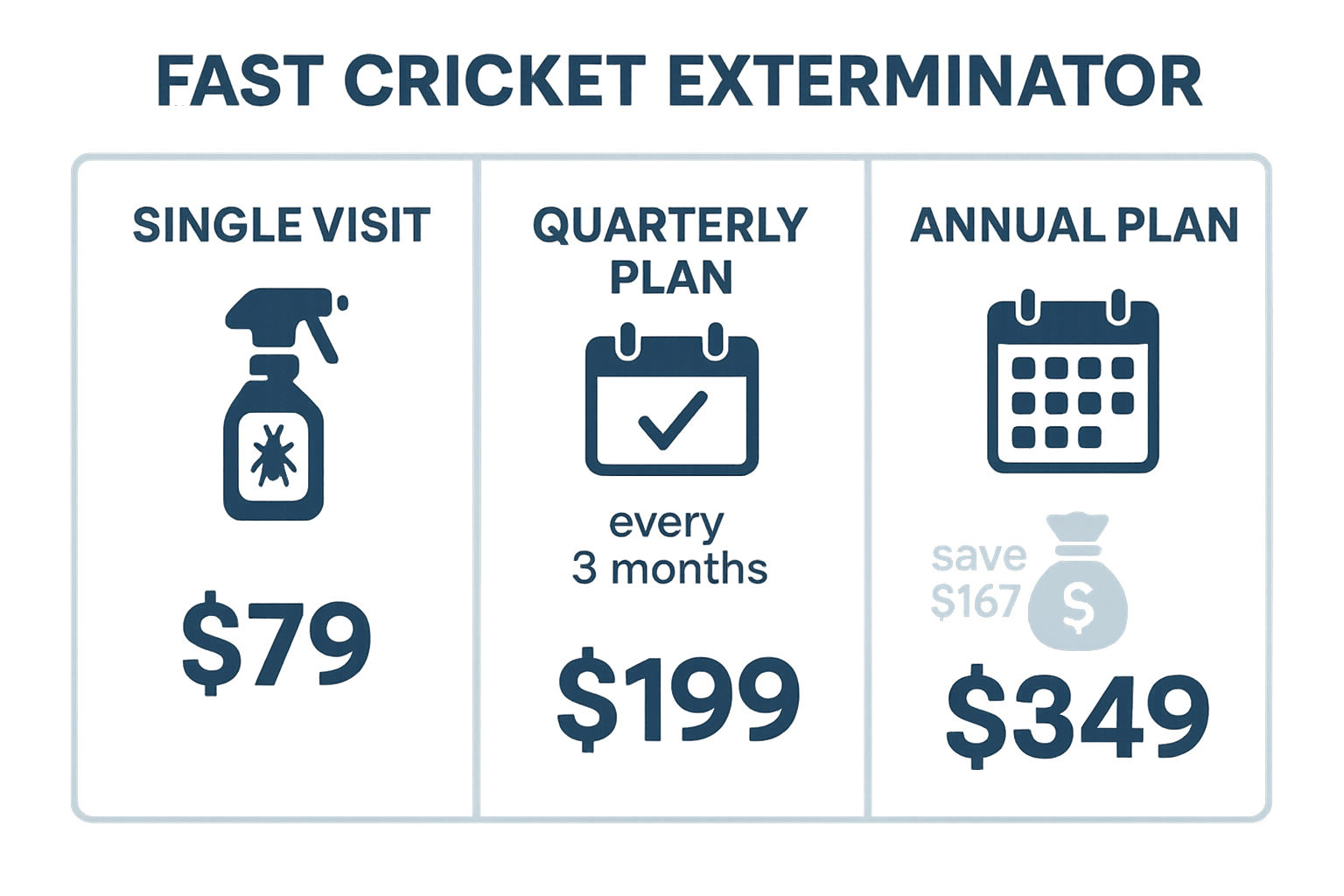
| Plan | Price | Coverage | Typical Savings |
|---|---|---|---|
| Single Visit | $79 | One‑time treatment | – |
| Quarterly Plan | $199 | Four visits per year | Save $117 vs. four single visits |
| Annual Plan | $349 | Eight visits per year (quarterly + bi‑annual boost) | Save $283 vs. eight single visits |
All products used meet state regulations and break down quickly, so you won’t notice lingering odors or residues. Anthem also offers a 100% satisfaction guarantee, giving you peace of mind after each visit.
All plans include a safety‑tested residual spray, indoor fogging, and a set of bait stations. Technicians wear EPA‑approved gear, and each product is chosen for minimal risk to children and pets.
Choosing the Right Plan
If you spot a few crickets in the kitchen, the Single Visit often suffices—especially when combined with proper sealing of entry points. For moderate infestations that reappear after a month, the Quarterly Plan offers scheduled follow‑ups that keep the barrier intact. Homeowners facing chronic, multi‑family invasions should consider the Annual Plan, which adds a mid‑year “boost” treatment and guarantees year‑round protection.
Budget‑conscious families can verify Anthem’s rates against the publicly listed cost guide here. Matching the plan to your infestation severity ensures you pay only for the service you truly need while enjoying fast, lasting relief.
Get Professional Cricket Control in Peachtree City Today

Crickets may seem harmless, but an unchecked infestation can quickly turn your quiet home into a noisy, uncomfortable space. Their constant chirping disrupts sleep, while the waste they leave attracts mold and pests that threaten indoor air quality. Acting fast protects your family’s health, preserves the comfort of your living areas, and safeguards property value before the problem spreads.
At Anthem Pest Control, we combine local knowledge with industry‑leading training to deliver results you can trust. Our technicians use EPA‑approved, low‑toxicity treatments that target crickets at every life stage while keeping pets and children safe. Transparent pricing means you’ll know exactly what you’re paying for—no hidden fees, just a clear, affordable plan tailored to your home’s layout and severity of the infestation.
Ready for a solution that works without the guesswork? Request a free, no‑obligation quote today, and we’ll design a customized cricket‑control strategy just for you. Our friendly team will walk you through the process, answer any questions, and schedule a prompt visit at a time that fits your busy schedule.
For reliable, affordable cricket control in Peachtree City, trust Anthem Pest Control. Call us today at 877‑371‑8196 for a free quote, or learn more at Anthem Pest Control. We’re here to restore peace and quiet to your home—no pressure, just professional service.