Recognizing Gnats in Your Home
When you notice a faint, whirring buzz around your kitchen or bathroom, chances are you’re dealing with gnats—not flies, not mosquitoes, but the tiny, often unnoticed insects that thrive in moist indoor environments. In Suwanee, GA, the most common indoor gnats are fungus gnats, drain flies (sometimes called moth flies), and household fruit flies. Understanding which species you’re facing is the first step toward effective control.
What Exactly Are Gnats?
Gnats are small, soft‑bodied flies that belong to several families of the order Diptera. Unlike house flies, they rarely bite; instead, they’re drawn to moisture, organic matter, and decaying plant material. In the Atlanta‑Suwanee area, the three species you’ll encounter most often are:
- Fungus gnats – usually found near houseplants, their larvae feed on fungal growth in potting soil.
- Drain flies (moth flies) – love the slimy biofilm that lines drains, toilets, and other damp surfaces.
- Fruit flies – attracted to ripe or rotting fruit, sugary spills, and compost bins.
Visual Cues: Size, Shape, and Flight
All three look similar at first glance, but a few key details help you tell them apart:
- Size: Most indoor gnats measure 1.5–4 mm in length – barely the size of a grain of rice.
- Wing shape: Fungus gnats have clear, delicate wings that are slightly longer than their bodies. Drain flies sport a fuzzy, moth‑like wing edge, giving them a “furry” appearance.
- Flight pattern: Gnats often flutter in erratic, short bursts close to the source of moisture, whereas fruit flies may dart more directly toward food sources.
- Color: Expect a muted tan or gray hue for fungus gnats, a darker, almost black tone for drain flies, and a light tan for fruit flies.
Where Gnats Like to Gather
Knowing their favorite hangouts lets you pinpoint problem spots fast. In a typical Suwanee home, gnats congregate in:
- Wet soil of indoor houseplants – especially over‑watered ones.
- Bathroom and kitchen drains – any standing water or organic buildup.
- Garbage cans, compost bins, and recycling areas with sugary residues.
- Fruit bowls, open jars of jam, or any exposed food left on countertops.
Early Warning Signs
Before an infestation becomes obvious, look for subtle clues:
- Small, intermittent swarms near a sink or plant pot.
- Sticky traps catching tiny, delicate insects that are hard to see with the naked eye.
- Increased activity around moisture sources during warm, humid days.
Quick Tip: Place a white sheet of paper or a yellow sticky trap near suspect areas for 24‑48 hours. If you see a cluster of tiny insects on the surface, you’ve confirmed a gnat presence and can move on to targeted treatment.
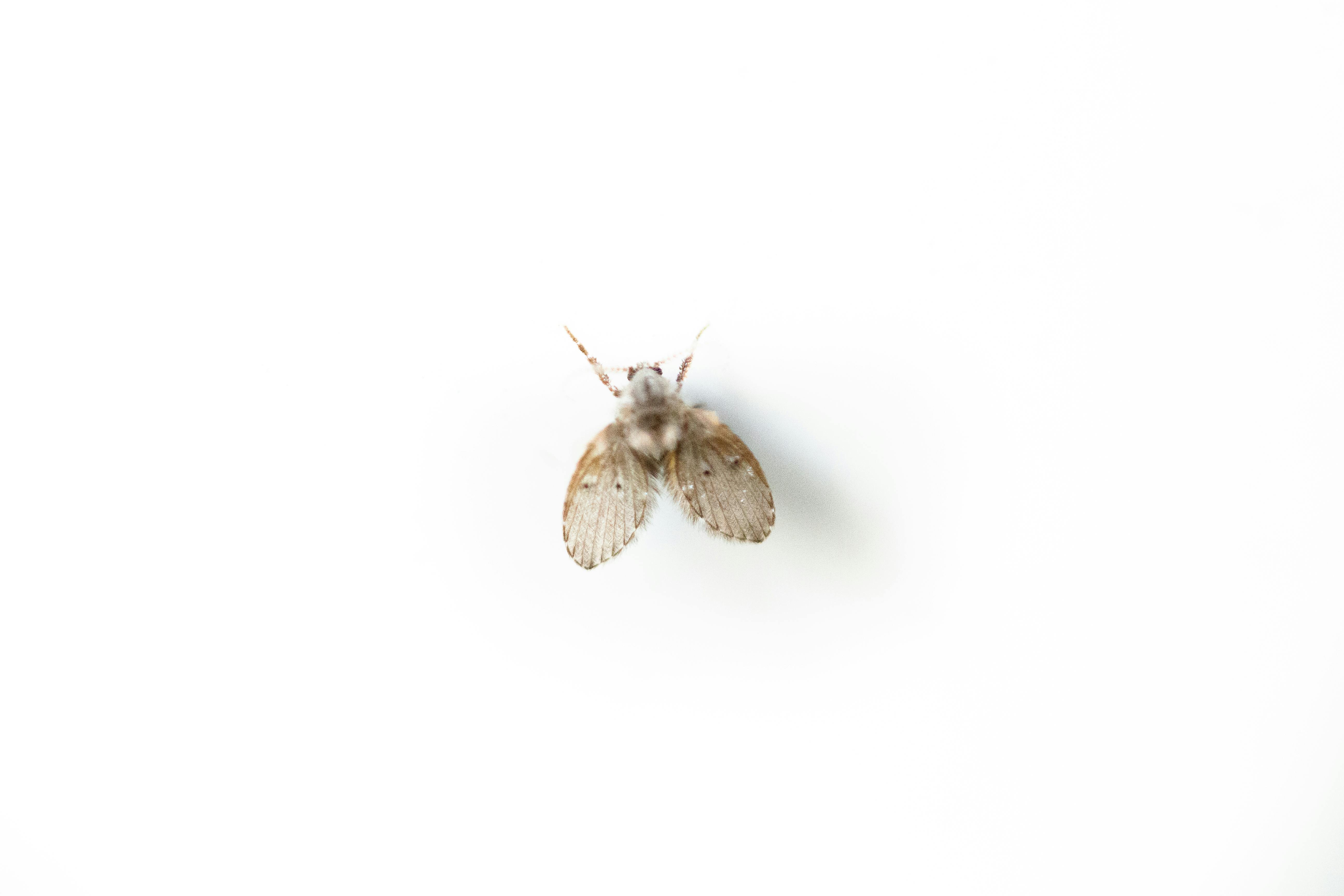
Identifying gnats early saves you time, money, and the frustration of watching them multiply. Once you’ve matched the visual cues to the habitats listed above, you’ll be ready to choose the right control method—whether it’s a simple DIY fix or a professional service from Anthem Pest Control.
Why Gnats Are More Than a Nuisance
Health concerns that go beyond an itchy annoyance
Most homeowners think of gnats as merely a buzzing nuisance, but the reality is far more serious. When gnats congregate on kitchen counters, bathroom sinks, or pet dishes, they can transfer bacteria from waste to food‑preparation surfaces. For people with sensitivities, even brief exposure can trigger allergic reactions such as sneezing, watery eyes, or skin irritation. More concerning, the fine particles that gnats carry act as asthma triggers, especially in homes where ventilation is limited. The cumulative effect of these irritants can exacerbate chronic respiratory conditions and turn a minor irritation into a health risk.
Gnats as a catalyst for other pests
Gnats don’t exist in isolation. Their presence creates a micro‑ecosystem that attracts predators looking for an easy meal. Spiders, for example, will spin webs near light fixtures and windows where gnats gather, increasing the chance of unwanted arachnid encounters. Likewise, predatory insects such as lady beetles and certain wasps may infiltrate your home in pursuit of gnat larvae. This cascade effect means that an unchecked gnat problem can quickly evolve into a broader pest infestation, amplifying both discomfort and the cost of treatment.
Damage to houseplants and indoor greenery
Fungus gnats are especially problematic for indoor gardeners. Their larvae live in the top layer of potting soil, feeding on fungal mycelium and, when food is scarce, on the delicate roots of houseplants. Over time, root damage manifests as wilting, yellowing leaves, and stunted growth. In severe cases, the plant may die entirely, forcing homeowners to replace cherished foliage and incur additional expenses. The visual decline also reduces indoor air‑quality benefits that healthy plants provide.
EPA guidelines on indoor pesticide use
When gnats become a health threat, many homeowners consider chemical control. The U.S. Environmental Protection Agency (EPA) advises that any indoor pesticide application should follow strict safety protocols: use products labeled for indoor use, apply only the recommended amount, ensure proper ventilation, and keep children and pets away during and after treatment. Following these guidelines not only protects your family but also maximizes the effectiveness of the treatment.
Myth‑busting: “Gnats don’t bite” – the truth
It’s a common belief that gnats are harmless because they don’t bite like mosquitoes. While most adult gnats are non‑biting, some species—particularly “biting midges” often mistaken for gnats—can deliver a painful, itchy bite. Even non‑biting gnats can cause discomfort through their sheer numbers, contaminating food and surfaces. Ignoring the problem because “they don’t bite” can let the hidden health and structural risks grow unchecked.
Understanding these hidden dangers underscores why prompt, professional gnat control matters. At Anthem Pest Control, we combine EPA‑compliant treatments with targeted prevention strategies to protect both your health and your home’s integrity.
Effective Treatment Options for Gnats
Gnats may seem harmless, but a swarm around your kitchen sink or potted plants can quickly become a nuisance. Homeowners often start with DIY tricks, yet many discover that lasting relief usually requires a professional’s touch. Below, we break down the most common do‑it‑yourself methods, their limitations, and why a licensed technician from Anthem Pest Control can deliver faster, safer, and more permanent results.
DIY Approaches You Can Try Today
- Apple‑cider vinegar traps: Fill a shallow dish with apple‑cider vinegar, add a few drops of dish soap, and cover it with plastic wrap pierced with tiny holes. Gnats are attracted to the scent, become trapped, and eventually die.
- Soil drying for fungus gnats: Reduce watering frequency and allow the top inch of potting soil to dry out. Fungus gnats thrive in moist media, so drying the soil starves their larvae.
- Drain cleaners: Pour a mixture of boiling water and a non‑caustic drain cleaner down kitchen or bathroom drains where adult gnats often emerge. This helps eliminate breeding sites hidden in organic buildup.
- Essential‑oil sprays: Combine water, a few teaspoons of neem oil or peppermint oil, and a splash of vinegar in a spray bottle. Lightly mist houseplants and window sills to repel adult gnats.
While these tactics can reduce numbers temporarily, they rarely address the root cause. Moisture‑rich environments, hidden organic debris, and structural gaps often remain untreated, leading to rapid re‑infestation.
Why DIY Solutions Fall Short
DIY methods typically provide short‑term relief. They target adult gnats but seldom eradicate larvae deep in soil, wall voids, or drainage systems. Moreover, over‑reliance on vinegar traps or essential oils can create a false sense of security, allowing populations to rebound once the homemade bait loses potency. Homeowners also risk using harsh chemicals—like strong drain cleaners—without proper ventilation or protective gear, which can damage finishes and pose health hazards.
Professional Solutions: Fogging, ULV Misting, and Targeted Sprays
Anthem Pest Control’s licensed technicians bring a suite of advanced treatments that go beyond surface‑level fixes:
- Indoor fogging: A fine mist of EPA‑registered insecticide is dispersed throughout affected rooms, reaching cracks, crevices, and hidden breeding sites that sprays miss.
- Ultra‑low volume (ULV) misting: This technology delivers a concentrated mist that settles quickly, providing rapid knock‑down of adult gnats while minimizing residue.
- Targeted spray zones: Technicians identify high‑risk areas—such as under sinks, around potted plants, and in vent openings—and apply a precise, residual spray that continues to work for weeks.
- Specialized baits: Gel or granule baits placed in drain lines or soil attract larvae, disrupting the life cycle from the inside out.
Safety First: What Our Technicians Do Differently
Every Anthem technician follows strict safety protocols:
- Wearing protective gloves, goggles, and respirators to avoid exposure.
- Using only EPA‑registered products formulated for indoor use, ensuring low toxicity to humans and pets.
- Conducting a thorough site assessment to map out entry points, moisture sources, and infestation hotspots before any product is applied.
- Providing homeowners with clear post‑treatment instructions, including ventilation guidelines and any necessary follow‑up actions.
Cost‑Benefit Snapshot: Professional Fogging vs. Repeated DIY
| Option | Typical Cost per Treatment | Pros | Cons |
|---|---|---|---|
| DIY (traps, sprays, soil drying) | $0–$30 (materials) | Low upfront cost; easy to implement | Short‑term relief; high re‑infestation risk; labor‑intensive |
| Professional fogging (Anthem Pest) | $120–$180 per visit | Deep penetration, EPA‑registered chemicals, guaranteed coverage, faster results | Higher upfront cost, requires scheduling |
When you factor in the time spent mixing traps, re‑applying sprays, and dealing with recurring bites, the professional route often proves more economical in the long run. A single fogging session can eliminate an entire colony, preventing future damage and the hidden costs of repeated DIY purchases.
What to Expect During a Professional Site Assessment
Our technicians start by inspecting moisture sources, checking drains, and examining indoor plants. Using a flashlight and a moisture meter, they pinpoint larval habitats that are invisible to the naked eye. Once the problem zones are mapped, they recommend a tailored treatment plan—typically combining fogging with targeted baits—to ensure both adult gnats and their larvae are eradicated.

Choosing a professional service doesn’t just mean a quicker fix; it means a safer, more thorough approach that protects your family’s health and your home’s integrity. If gnats are turning your living spaces into a buzzing nightmare, let Anthem Pest Control handle the problem so you can enjoy a gnat‑free home with confidence.
How Much Does Gnat Extermination Cost in Suwanee?
When gnats start buzzing around your kitchen or patio, you want a clear price before signing up. At Anthem Pest Control we keep our quotes transparent, so you know exactly what you’re paying for and why. Below is a quick rundown of the most common service packages, typical price ranges in Suwanee, and the factors that can shift the cost.
Typical Service Packages
- Single‑Visit Fogging – One‑time treatment that targets adult gnats and larvae in the immediate area.
- Quarterly Maintenance – Four visits per year, each with fogging plus a preventive barrier to keep new gnats from taking hold.
- Full‑Home Treatment – Comprehensive approach that includes indoor fogging, outdoor perimeter spraying, and a 12‑month warranty with two follow‑up inspections.
Average Price Ranges in Suwanee, GA
Based on recent service calls, homeowners in Suwanee can expect the following price bands:
| Package | Price Range (USD) | What’s Included |
|---|---|---|
| Single‑Visit Fogging | $120 – $180 | Inspection, one fogging session, post‑treatment report |
| Quarterly Maintenance | $380 – $460 | Four fogging visits, seasonal barrier, written warranty |
| Full‑Home Treatment | $620 – $750 | Indoor & outdoor treatment, two follow‑up inspections, 12‑month guarantee |
Suwanee vs. Neighboring Cities
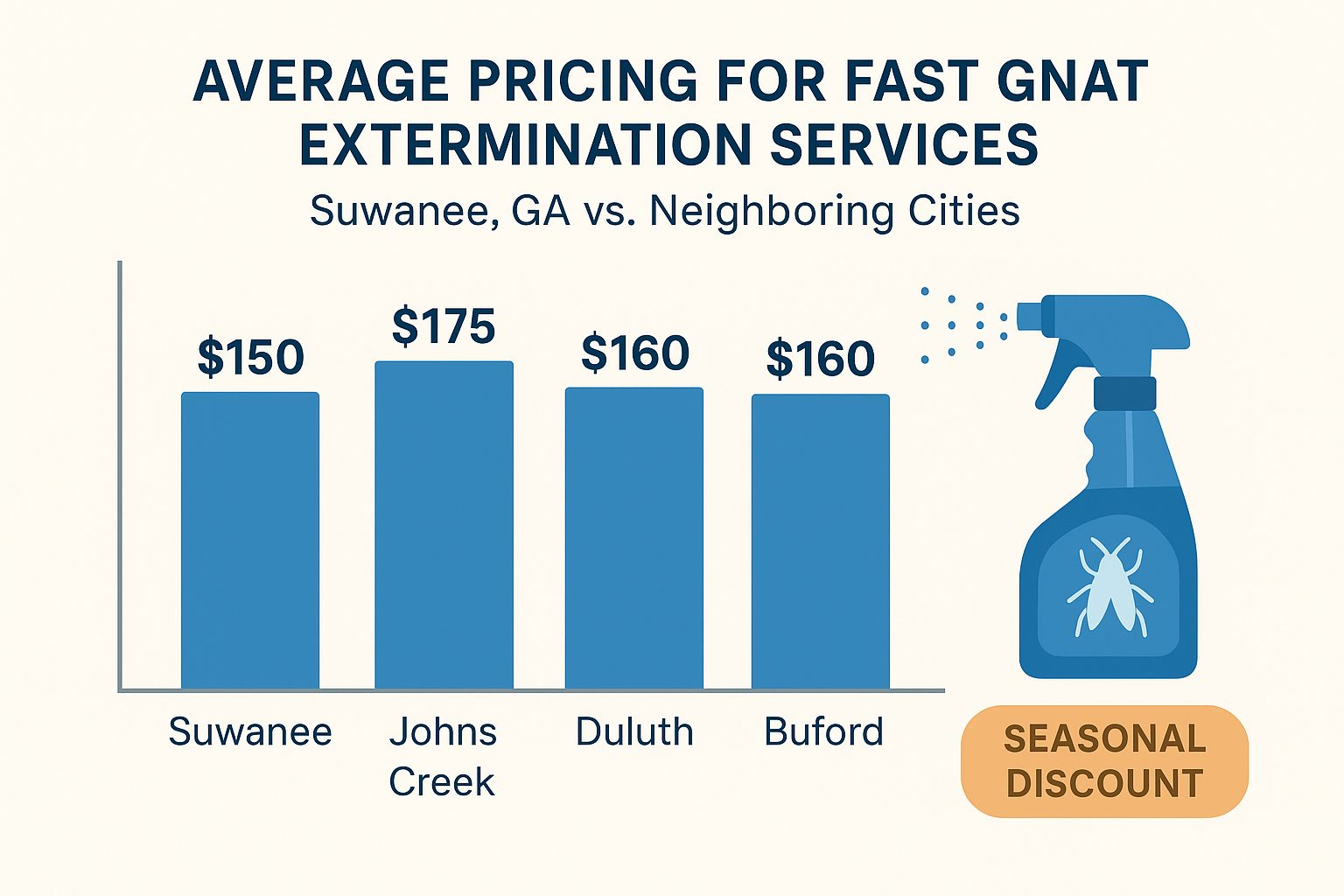
The chart above shows that Suwanee’s rates are generally 5‑10 % lower than Duluth and Norcross, while Lawrenceville sits in the same price band. The slight differences reflect local demand, travel distance for technicians, and municipal regulations.
Seasonal Discounts & Promotional Offers
Gnats are most active during the spring surge and the early fall prep period. To encourage early action, we often run:
- Spring Surge Discount: 10 % off any package booked before May 15.
- Fall Prep Offer: Free follow‑up inspection with a full‑home treatment scheduled for September.
- Referral Bonus: $25 credit for each neighbor you refer who signs up for a quarterly plan.
What’s Included in the Quoted Price?
Every written quote from Anthem Pest Control covers:
- Professional on‑site inspection and identification of gnat hotspots.
- All chemicals, equipment, and labor needed for the selected package.
- Post‑treatment cleanup and a detailed report outlining what was done.
- One or two follow‑up visits (depending on the package) to ensure the problem is fully resolved.
- Warranty protection that includes a free re‑treatment if gnats return within the guarantee period.
Tips for Getting an Accurate Estimate
- Ask for a written quote: It should break down labor, products, and any taxes.
- Clarify hidden fees: Inquire about travel surcharges, disposal fees, or extra visits beyond the agreed package.
- Provide details up front: Square footage, indoor/outdoor treatment areas, and any previous pest control history help us price correctly.
- Confirm warranty terms: Knowing the length and coverage prevents surprise costs later.
By understanding the package options, typical price ranges, and the elements that affect cost, you can make an informed decision and keep your home gnat‑free without any unpleasant surprises.
When Is the Best Time to Treat Gnats in Suwanee?
Climate Overview: Why Temperature and Humidity Matter
Suwanee sits in a humid subtropical zone, where average highs climb from the mid‑50s °F in January to the high 80s °F by July. Gnats thrive when temperatures stay above 68 °F and relative humidity exceeds 60 %. Those conditions accelerate their egg‑to‑adult cycle, turning a quiet summer night into a buzzing nuisance within weeks.
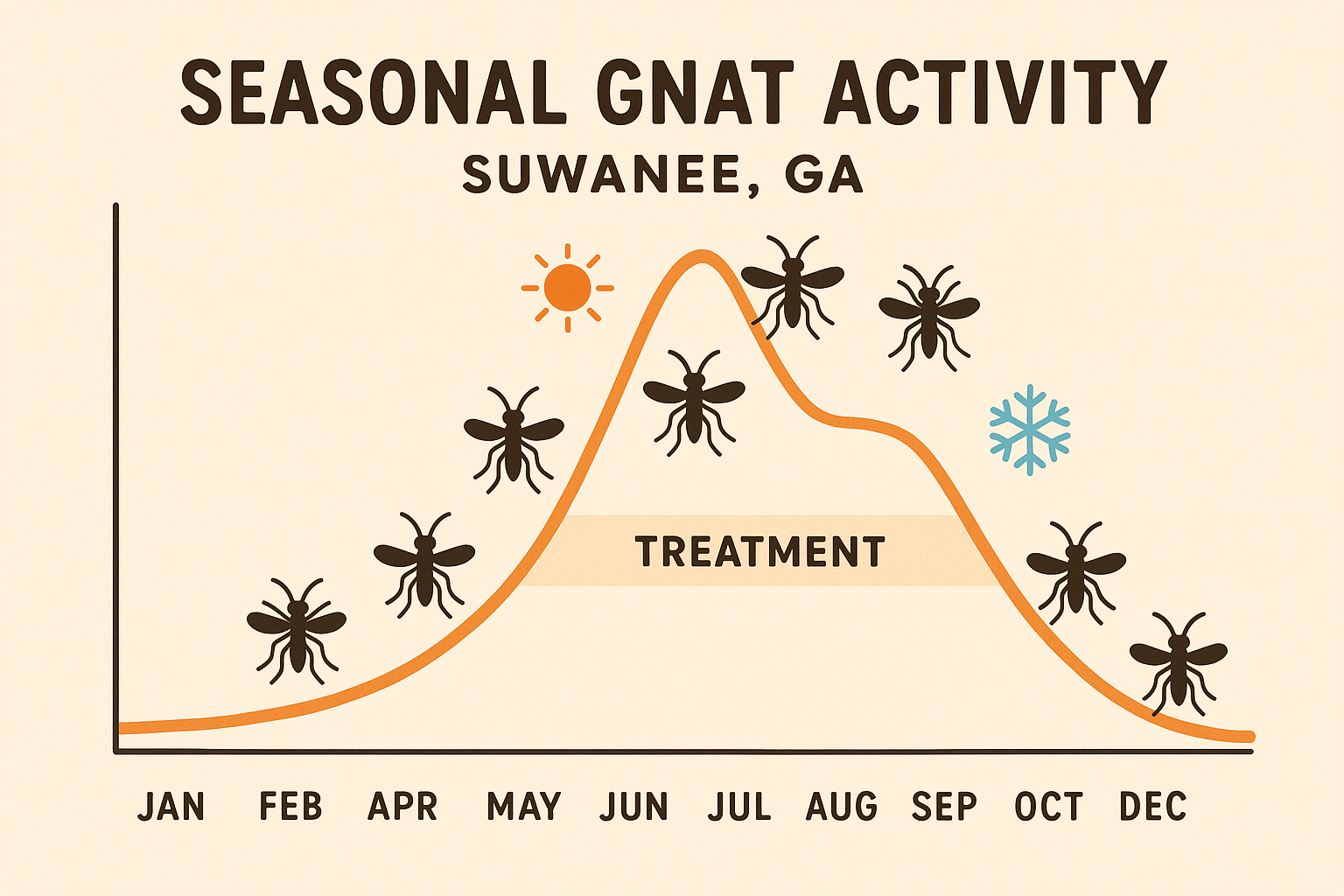
Seasonal Activity Chart
| Month | Activity Level |
|---|---|
| January – February | Low |
| March – April | Moderate |
| May – August | High |
| September – October | Moderate |
| November – December | Low |
Recommended Treatment Timing
To stay ahead of the swarm, plan your interventions around the peak window (late spring through early fall):
- Early May – Apply a pre‑emptive perimeter spray while the first gnat generations are emerging.
- Mid‑July – Conduct a follow‑up treatment to knock down the midsummer surge that coincides with the hottest, most humid weeks.
- Late September – Finish with a touch‑up before temperatures dip, preventing a late‑season rebound.
Rainfall Patterns and Indoor Gnat Spikes
Heavy rains in June and July often push gnats indoors as they seek dry breeding sites. After a rainstorm, expect a 2‑3 day lag before indoor trap counts rise. Scheduling a supplemental indoor fogging session 48 hours after a significant rain event can dramatically reduce the next wave.
How Homeowners Can Monitor Activity
Simple DIY checks keep you informed:
- Place a small dish of apple cider vinegar with a drop of dish soap near windows; count trapped gnats every 24 hours.
- Inspect indoor plants, especially over‑watered soil, for larvae or adult activity.
- Note any sudden increases after rain or after local outdoor festivals—those are key indicators that a treatment is due.
Aligning Treatment with Local Events
Suwanee hosts several outdoor gatherings—think the Suwanee Summer Festival in early June and the Fall Harvest Fair in late September. These events draw crowds, food, and extra moisture, creating perfect breeding grounds. Schedule your professional spray one week before each event and a follow‑up within 48 hours after the crowd disperses. That timing stops gnats from hitching a ride back into homes.
By syncing your pest‑control plan with Suwanee’s climate rhythms, rainfall trends, and community calendar, you’ll keep gnats at bay while enjoying a comfortable, bite‑free home all year long.
Choose a Trusted Partner for Gnat Control
What to Look for in a Pest‑Control Provider
First and foremost, verify that the company holds a valid state license and that its technicians are certified to apply EPA‑registered products. A licensed operator not only meets legal requirements but also demonstrates a commitment to ongoing training and industry best practices. Equally important is proof of insurance, which protects you from liability should an accident occur during treatment.
Safety and Product Transparency
Ask for a list of the chemicals or bio‑based solutions the technician plans to use. Reputable firms will only deploy EPA‑approved products that are proven effective against gnats while posing minimal risk to children, pets, and the surrounding environment. Transparent pricing sheets should detail the cost of each application, any necessary follow‑up visits, and potential additional fees.
Why Local Knowledge Matters in Suwanee
Gnat populations in Suwanee are influenced by the area’s humid summers, nearby wetlands, and the prevalence of ornamental water features. A provider that understands these micro‑climates can pinpoint breeding hotspots—like shaded garden beds or clogged gutters—and tailor a treatment plan that targets the source rather than just the symptoms. This localized approach reduces the likelihood of recurring infestations.
Essential Questions for Your Initial Consultation
- What treatment methods do you recommend for indoor vs. outdoor gnats?
- How many visits are included in the initial package, and what does the follow‑up schedule look like?
- Do you offer a warranty or guarantee, and what does it cover?
- Can you provide references or recent customer reviews from Suwanee homeowners?
- What safety precautions will be taken to protect my family and pets?
How Anthem Pest Control Meets the Standards
Anthem Pest Control employs fully licensed technicians who specialize in safe application of EPA‑registered gnat solutions. Every quote is presented up front, with no hidden fees, and includes a detailed follow‑up plan that typically involves a second visit to ensure the colony is fully eradicated. Our team’s deep familiarity with Suwanee’s climate allows us to anticipate seasonal gnat spikes and act before they become a nuisance.
Quick Comparison Checklist
| Criteria | Provider A | Provider B | Anthem Pest Control |
|---|---|---|---|
| State license & certified techs | ✔ | ||
| EPA‑registered products | ✔ | ||
| Liability insurance | ✔ | ||
| Transparent pricing | ✔ | ||
| Local Suwanee expertise | ✔ | ||
| Follow‑up visits & warranty | ✔ | ||
| Positive customer reviews | ✔ |
Final Thought for Homeowners
Choosing a partner who checks every box—licensing, safety, local knowledge, clear communication—means you’ll spend less time swatting gnats and more time enjoying a comfortable home. Use the checklist above to compare quotes side‑by‑side, and you’ll quickly see why Anthem Pest Control stands out as the trusted choice for Suwanee residents.
Protect Your Home with Anthem Pest Control Today
Early identification, precise timing, and professional treatment are the three pillars that keep gnats from turning your home into a summer nightmare. Spotting the first signs, acting before the infestation spreads, and trusting a licensed technician ensures the problem is eliminated quickly and safely.
- Early detection: Spotting gnats before they multiply saves time and money.
- Proper timing: Treating at the right life‑stage stops the cycle dead‑in‑the‑water.
- Professional treatment: Certified technicians apply targeted solutions safely for your family.
At Anthem Pest Control, we stand behind safe, effective, and affordable solutions. Our certified teams use low‑impact products that protect your family and pets while eradicating gnats at the source. Transparent pricing means you know exactly what you’re paying for—no hidden fees.
Ready for a free, no‑obligation inspection? Give us a call at 877‑371‑8196 or request a quote online. One of our specialists will assess your situation, recommend the best treatment plan, and provide a personalized price—without any pressure.
Don’t let gnats linger. A quick call or online request can secure your home’s comfort and health today.