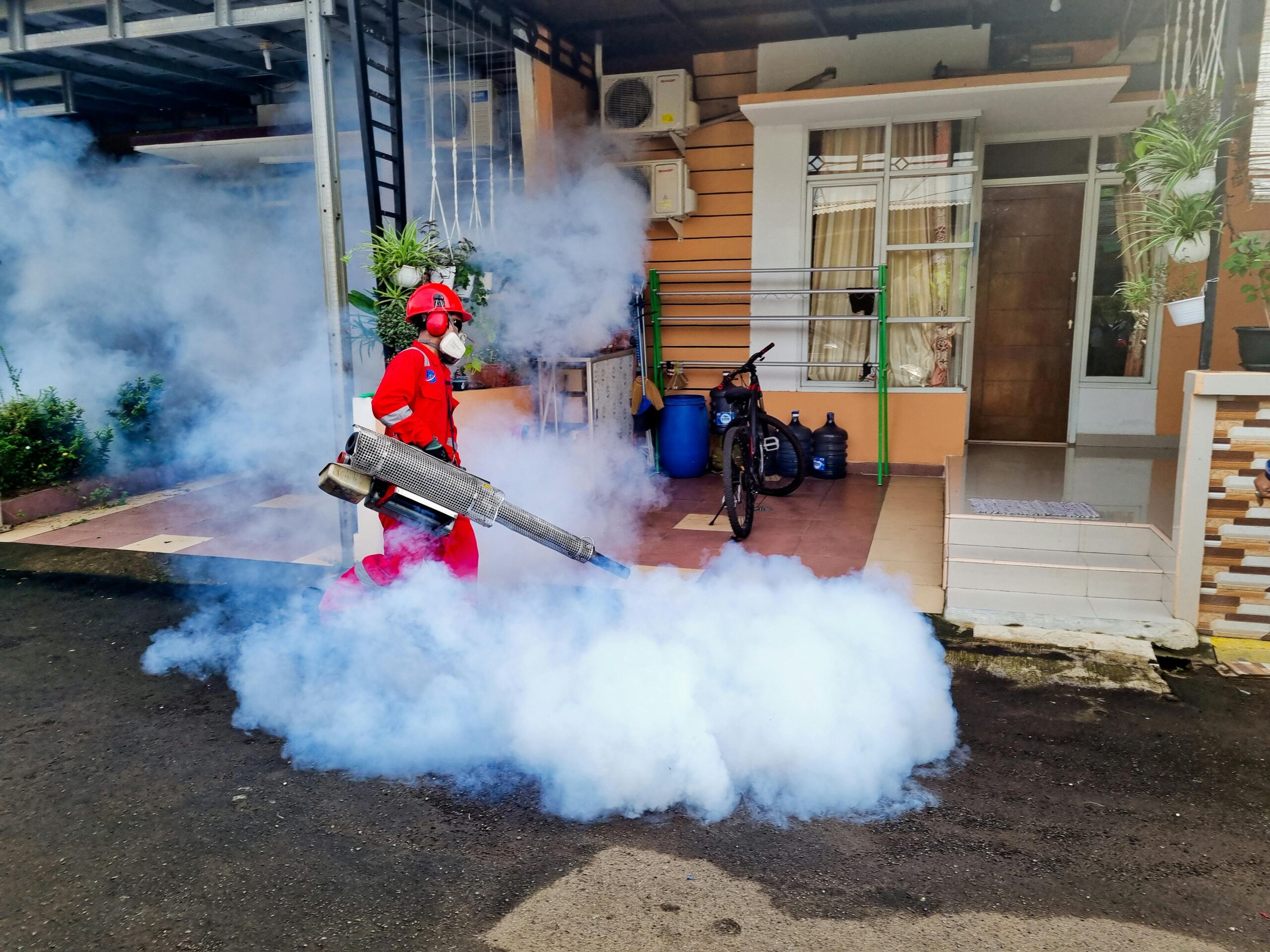
Understanding Moth Infestations in Suwanee, GA

When you spot a tiny fluttering insect or find shredded fabric in a drawer, homeowners searching for a moth exterminator Suwanee are likely dealing with one of the three moth species that most often invade Georgia homes. The most common culprits are the webbing clothes moth (Tineola bisselliella), the pantry moth—also called the Indian meal moth (Plodia interpunctella)—and the carpet moth (Trichophaga tapetzella). Each prefers a different food source, but all share a love for the warm, humid environment that characterizes the Suwanee area.
Why Georgia’s Climate Is a Moth Magnet
Georgia’s humid subtropical climate means mild winters, hot summers, and year‑round moisture. Those conditions keep indoor humidity levels between 50 % and 70 %, which is ideal for moth eggs to hatch and larvae to thrive. Seasonal patterns also play a role: the spring “spike” in temperature triggers a surge in adult moth activity, while the rainy summer months provide the moisture larvae need to digest organic fibers and stored grains.
Moth Life Cycle and the Real Damage Makers
A moth’s life cycle consists of four stages: egg, larva, pupa, and adult. While the adult’s fluttering wings are what you notice, it’s the larval stage that does the heavy lifting—literally. Larvae feed on keratin in clothing, keratin‑rich carpet fibers, or the dried grains and nuts that line pantry shelves. As they chew, they leave behind irregular holes, silky tunnels, and a web of fine silk that can quickly turn a tidy closet into a shredded mess.
Quick Statistics on Moth Complaints
According to the U.S. Environmental Protection Agency (EPA), Georgia logged 3,200 moth‑related service calls in 2022. The Atlanta metropolitan area—of which Suwanee is a part—accounted for roughly 45 % of those calls, translating to about 1,440 complaints in a single year. Those numbers illustrate how prevalent moth problems are in our region and why early detection matters.
Homeowner Concerns: Damage, Loss, and Aesthetics
For a homeowner, a moth infestation isn’t just an inconvenience; it’s a multi‑faceted threat. Clothing and carpet damage can cost hundreds of dollars in replacement or repair. Pantry moths contaminate food stores, leading to waste and the need to discard entire batches of grains, cereals, or spices. Visually, the webbing and frass (insect droppings) left behind create an unsightly appearance that can undermine the comfort of any room.
Understanding which species you’re dealing with, how the local climate fuels their growth, and where the damage originates empowers you to act before the problem spirals. In the next sections we’ll walk through the tell‑tale signs of each moth type and outline the most effective treatment options that Anthem Pest Control offers to keep Suwanee homes moth‑free.
Spotting Moth Damage Inside Your Home

Before moths turn your wardrobe or pantry into a feeding ground, they leave unmistakable clues. Knowing what to look for lets you act fast—often before a full‑blown infestation takes hold. Below, we break down the visual cues you’ll find on clothing, in the kitchen, and on soft furnishings, plus a room‑by‑room inspection checklist you can run in under an hour.
Key warning signs on clothing and fabrics
- Silky tunnels or webbing—tiny, silvery threads along seams or inside cuffs signal larvae moving between food sources.
- Irregular holes—round or oval holes that appear suddenly, especially on wool, cashmere, or stored blankets.
- Fuzzy cocoons—often tucked into folds, these look like cotton balls and are the pupal stage of the moth.
Indicators in the kitchen pantry
- Webbed corners of grain boxes, cereal bags, or flour containers; the silk is usually fine and may be hard to see without a flashlight.
- Clumped or discolored grains—moths excrete frass (tiny pellets) that cause flour or rice to stick together.
- Live larvae in flour—tiny, cream‑colored caterpillars that move when the bag is disturbed.
Carpet and upholstery clues
- Small cocoons hidden in carpet fibers or under couch cushions; they often look like tiny beads.
- Shed skins—transparent, papery exuviae that drop as larvae molt.
- Localized discoloration—areas of fading or yellowing where moths have fed on natural fibers.
Step‑by‑step inspection checklist
- Gather a flashlight and a magnifying glass. Moth webbing is often only visible under direct light.
- Closet sweep: Pull garments off hangers, examine seams, and shake out each item. Look for tunnels, holes, and cocoons.
- Pantry probe: Open every grain, cereal, and flour package. Tap containers gently; any movement may indicate larvae.
- Upholstery check: Vacuum carpet edges and lift couch cushions. Spot any silvery threads or tiny beads.
- Record findings: Note the location, type of damage, and any live insects. This information speeds up professional treatment.
- Seal and isolate: Place infested items in sealed plastic bags to prevent spread while you arrange for extermination.
How to differentiate moth damage from other pests
| Pest | Typical Damage | Distinctive Signs |
|---|---|---|
| Clothes moths | Irregular holes, silky tunnels, cocoons | Silvery webbing; larvae are creamy, hairless |
| Carpet beetles | Small, round holes; shed skins | Adult beetles are visible; damage often at edges |
| Silverfish | Irregular, ragged holes; yellowish stains | Fast, fish‑like movement; prefers damp areas |
While carpet beetles also chew fabrics, they leave behind tiny, oval beetle shells rather than the silky tunnels moths produce. Silverfish favor humid corners and create a distinctive, fishy odor—something you won’t notice with moths.
Trusted reference for identification
The U.S. Environmental Protection Agency offers a comprehensive guide to identifying household pests. Use it alongside this checklist to confirm you’re dealing with moths and not a look‑alike invader.
Spotting the first sign early gives Anthem Pest Control the best chance to intervene quickly, protect your belongings, and keep your home moth‑free.
DIY vs. Professional Moth Control – Cost and Effectiveness
When moths start nibbling at your closet or pantry, the first instinct is often to grab a store-bought kit and tackle the problem yourself. While a DIY approach can feel empowering, homeowners considering a moth exterminator Suwanee should weigh the real costs and success rates against what a licensed professional like Anthem Pest Control brings to the table.
Typical DIY Moth‑Control Products
Home‑center aisles and online retailers stock three main categories of moth‑control solutions:
- Pheromone traps: Sticky cards that lure male moths, disrupting breeding cycles.
- Insecticide sprays: Broad‑spectrum chemicals designed to kill larvae and adult moths on contact.
- Cedar products: Natural repellents such as cedar blocks, chips, or oils that claim to deter moths through scent.
Pros and Cons of DIY
Upfront cost is the most obvious advantage. A pack of pheromone traps can be purchased for $10–$20, while a spray bottle typically runs $12–$25. Cedar accessories sit in the $5–$15 range. For homeowners comparing DIY costs versus hiring a moth exterminator Suwanee, the total outlay for a modest DIY campaign often stays under $50.
However, the labor and safety considerations quickly offset that low price tag. You’ll need to:
- Identify all infested zones, which can be time‑consuming and easy to miss.
- Handle chemicals safely, using gloves and proper ventilation.
- Replace traps or re‑apply sprays every few weeks, especially during peak moth season.
Because DIY methods target only the visible symptoms, success rates hover around 40‑60 %. Incomplete coverage often leads to a resurgence, forcing you back to the store for more products.
What Anthem Pest Control Offers
Our professional service starts with a thorough inspection by a certified technician. We locate hidden larvae, assess the extent of damage, and identify the specific moth species. From there, we apply a targeted treatment that may include:
- Low‑toxicity, EPA‑approved insecticides applied to seams, cracks, and storage areas.
- Specialized pheromone dispensers placed strategically for maximum disruption.
- Protective barriers around closets and pantry shelves to prevent re‑infestation.
All treatments are followed by a post‑service monitoring visit to ensure the population is eliminated and to answer any homeowner questions.
Cost Comparison
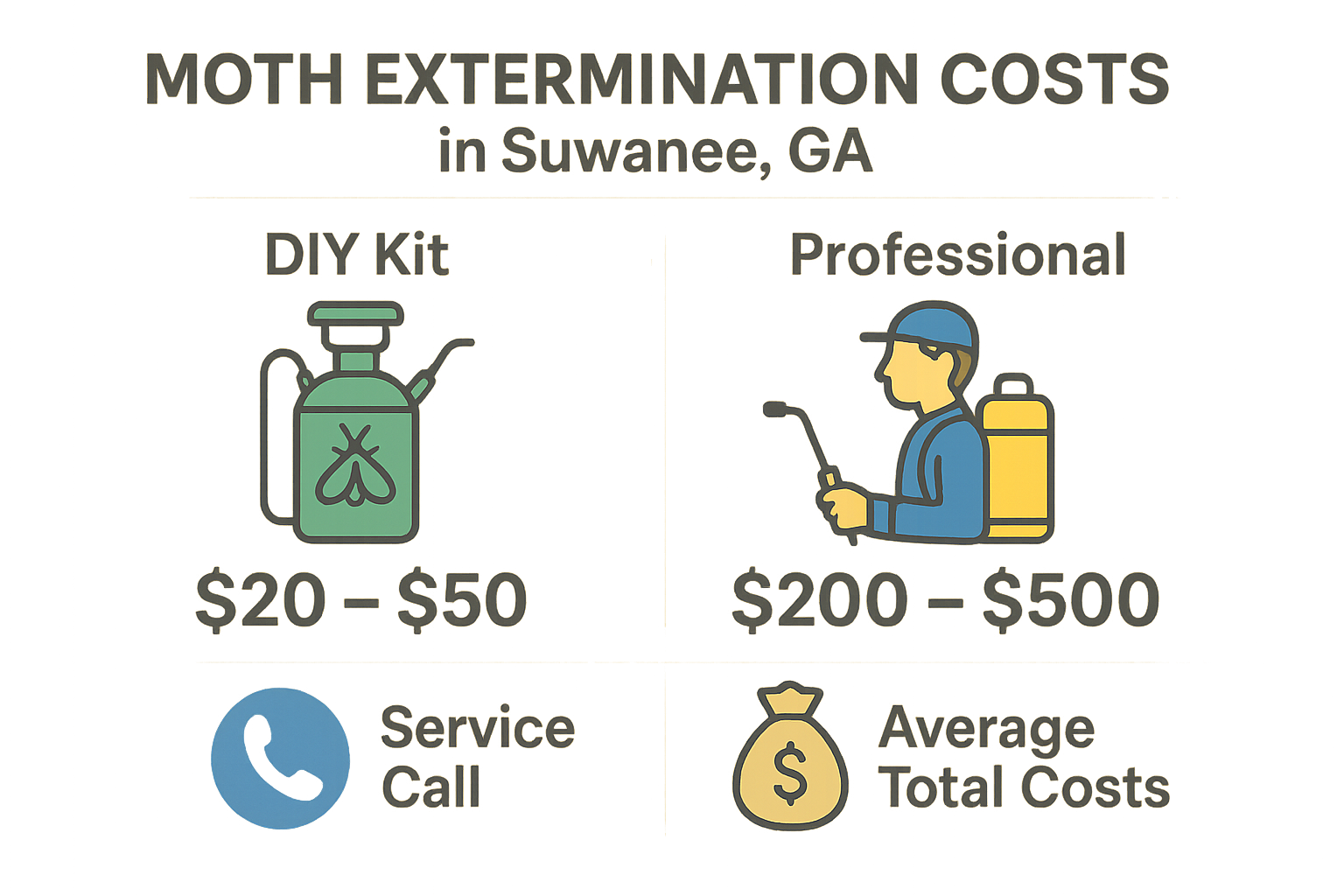
| Option | Typical Cost Range | What’s Included |
|---|---|---|
| DIY Kit | $30 – $80 | Pheromone traps, one‑time spray, cedar products; no follow‑up |
| Professional Service | $180 – $350 | Full inspection, targeted treatment, safety equipment, 1‑month monitoring visit, guaranteed results |
While the professional price appears higher, it bundles the expertise, equipment, and follow‑up that DIY kits lack. The hidden costs of a DIY approach—repeat purchases, wasted time, and potential damage to clothing or food storage—can quickly push the total expense beyond the initial estimate.
When to Upgrade from DIY to Professional
Consider calling Anthem Pest Control if you notice any of the following:
- Severe infestation: Large numbers of larvae or adult moths in multiple rooms.
- Repeated DIY failures: You’ve tried traps and sprays for several weeks with no improvement.
- Health concerns: Young children, pets, or household members with respiratory sensitivities.
- Valuable fabrics or food stores: When moth damage could cost hundreds of dollars in replacement items.
Choosing a professional service doesn’t just eliminate the pests—it also protects your home’s integrity and your peace of mind. With Anthem Pest Control, homeowners working with a trusted moth exterminator Suwanee receive a transparent price, a clear treatment plan, and the confidence that comes from a guaranteed, long-lasting solution.
Seasonal Timing and Prevention Strategies for Georgia Moths
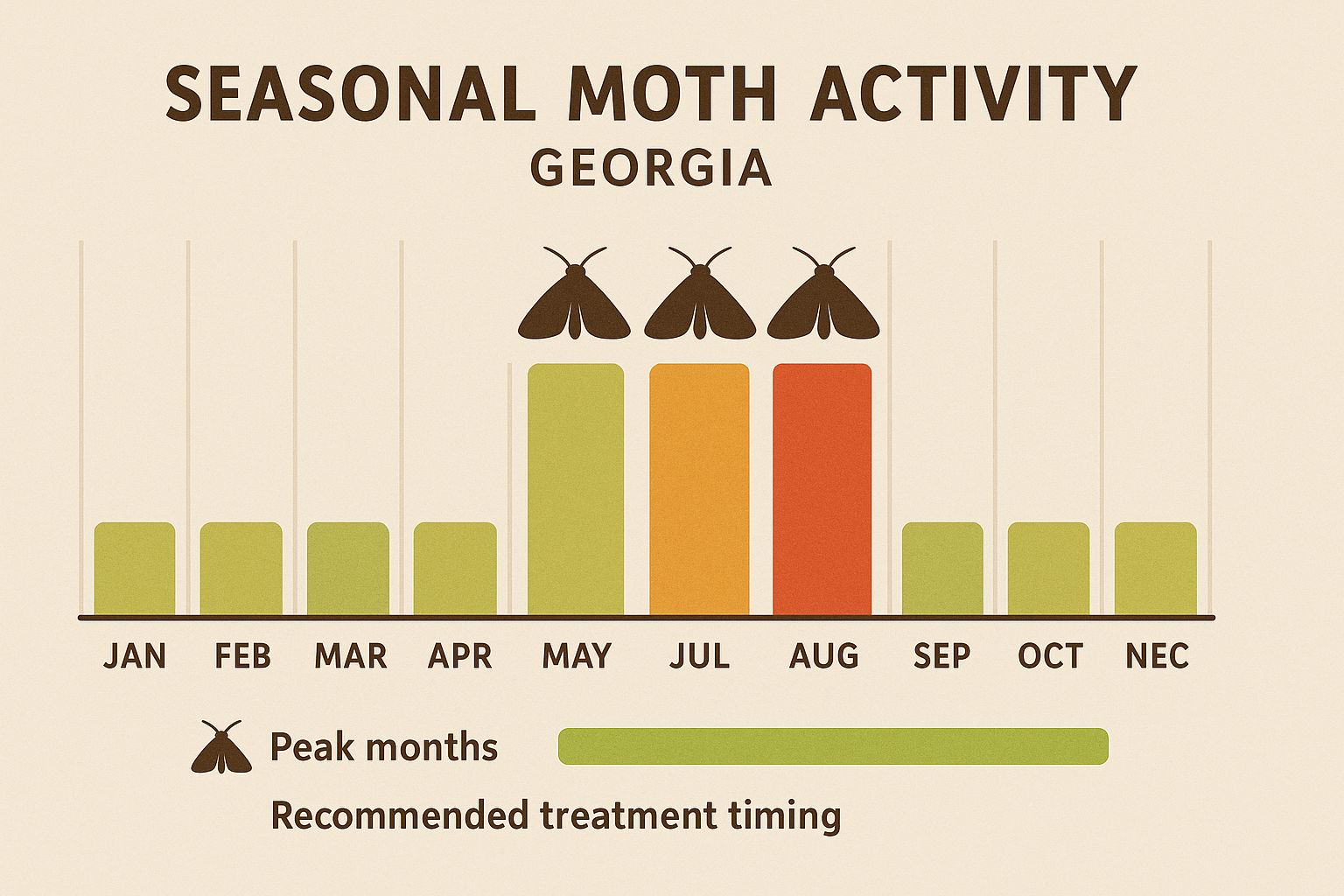
Georgia Moth Activity Calendar
| Month | Activity Level | Common Species |
|---|---|---|
| January | Low | Clothes moth (Tineola bisselliella) |
| February | Low | Clothes moth |
| March | Moderate | Carpet moth (Trichophaga tapetzella) |
| April | Moderate | Carpet moth |
| May | High | Clothes & carpet moths, pantry moths (Plodia interpunctella) |
| June | High | All three major groups |
| July | High | Pantry moths dominate |
| August | High | Pantry & clothes moths |
| September | High | Pantry moths, early carpet moth activity |
| October | Moderate | Carpet moths, lingering pantry moths |
| November | Low | Clothes moths start overwintering |
| December | Low | Clothes moths |
Why Late Summer to Early Fall Is the Critical Window
In Georgia, moths reach peak reproductive activity from late July through early September. Warm nights and abundant food sources—dry fabrics, stored grains, and outdoor debris—allow larvae to develop rapidly. Treating during this window hits the population before it spreads to hidden corners of the home. Waiting until winter means you’re battling mature larvae that are already entrenched, making eradication more costly and less effective.
Year‑Round Preventive Actions
- Store textiles properly. Keep off‑season clothing in sealed plastic containers rather than cardboard boxes.
- Maintain a clean pantry. Transfer grains, cereals, and flour into airtight glass or metal jars; discard any product that shows webbing or larvae.
- Vacuum regularly. Focus on baseboards, under furniture, and closets where moth eggs may be deposited.
- Seal entry points. Use caulk around windows, doors, and utility openings to block adult moths from entering.
- Control humidity. Dehumidifiers or proper ventilation keep indoor moisture low, discouraging moth development.
Preparing Your Home for a Professional Visit
- Remove clutter from closets, attics, and basements—especially piles of old linens, blankets, or cardboard.
- Wash all washable fabrics (clothing, bedding, curtains) on the hottest cycle safe for the material; dry them on high heat to kill hidden larvae.
- Empty pantry shelves and wipe them down; place any remaining food in sealed containers before the technician arrives.
- Clear pathways around exterior doors and windows so the applicator can treat cracks and gaps without obstruction.
Post‑Treatment Maintenance Tips
- Keep closets organized and avoid over‑stuffing; use moth‑proof garment bags for delicate items.
- Inspect new purchases (clothing, rugs, food) before bringing them inside; a quick shake‑out or freeze can prevent accidental introductions.
- Schedule a brief quarterly vacuum of high‑risk areas and replace vacuum bags or clean canisters promptly.
- Re‑apply a light, homeowner‑safe deterrent spray (such as cedar oil or lavender sachets) in closets during the off‑season to maintain a hostile environment for adult moths.
Local Expertise: How Anthem Pest Control Times Treatments for Suwanee
Anthem Pest Control tailors its moth‑control calendar to Suwanee’s micro‑climate, which tends to stay a few degrees warmer than surrounding counties. Our technicians monitor local temperature trends and humidity readings, adjusting treatment dates by up to two weeks to align with the exact moment moth populations surge. By syncing the service window with Suwanee’s specific weather patterns, we ensure that the active ingredients hit the larvae at their most vulnerable stage, delivering faster relief and longer‑lasting protection for your home.
Protect Your Home Today with Anthem Pest Control
Spotting a moth problem early can save you a lot of hassle and expense. For homeowners considering a moth exterminator Suwanee, the most common warning signs include:
- Silky webs or tunnels in closets, pantry shelves, or along baseboards.
- Clusters of tiny, brown‑gray larvae feeding on natural fibers such as wool, silk, or stored grains.
- Small, irregular holes in clothing, curtains, or upholstery.
- Unusual, musty odors emanating from hidden corners or storage areas.
When you notice any of these clues, prompt action prevents a minor nuisance from turning into a full‑blown infestation that can damage fabrics, food supplies, and even the structural integrity of your home.
Why Choose Anthem Pest Control?
Anthem brings a blend of expertise and local insight that makes moth control both effective and worry‑free:
- Certified Technicians: Our team holds state‑approved certifications and stays current on the latest treatment protocols.
- EPA‑Approved Products: We use only solutions that are proven safe for families, pets, and the environment while delivering rapid results.
- Transparent Pricing: No hidden fees—just clear, upfront quotes so you know exactly what you’re paying for.
- Local Knowledge of Suwanee: We understand the specific moth species that thrive in the Suwanee climate and tailor our approach accordingly.
Ready to take the next step? Request a free, no‑obligation quote and let us schedule a thorough inspection at a time that fits your busy schedule. Our friendly staff will walk you through the process, answer any questions, and outline a customized prevention plan.
Give us a call today at 877‑371‑8196 or visit anthempest.com to submit your request online. Whether you need a quick treatment or a long‑term protection strategy, we’re here to help.
Choosing Anthem means you can relax knowing your home is shielded from moth damage now and in the future. With a trusted moth exterminator Suwanee, enjoy the peace of mind that comes from a professionally protected household—so you can focus on the things that truly matter.