Mouse Problems in Suwanee, GA – An Overview

Suwanee’s blend of mature neighborhoods, well‑kept lawns, and newer subdivisions creates an inviting backdrop for both families and, unfortunately, rodents. The city’s tree‑lined streets, abundant mulch beds, and proximity to the Chattahoochee River provide shelter, food sources, and easy travel corridors for mice seeking a warm, dry place to nest.
Local data from the Gwinnett County Extension Service shows that mouse sightings spike during the cooler months, with an estimated 12‑15 % of households reporting activity at least once a year. Neighbors often report seeing droppings in attics, gnawed wiring near garages, and the occasional nocturnal scuttle across kitchen counters. These observations line up with statewide trends that identify the suburban corridor around Suwanee as a hotspot for house‑mouse (Mus musculus) populations.
Why a Mouse Infestation Matters
Beyond the obvious nuisance, a mouse problem can quickly become a serious threat to your home and health. Mice chew through insulation, drywall, and even electrical wiring, increasing the risk of short‑circuits or fire hazards. Their constant gnawing can compromise structural integrity, especially in crawl spaces and attics where they build hidden nests.
From a health perspective, mice are carriers of pathogens such as Hantavirus, Salmonella, and Leptospirosis. Their urine, droppings, and shed hair can contaminate food surfaces, leading to food‑borne illnesses. Even the fine particles from their dander become airborne, potentially triggering allergic reactions or asthma attacks for sensitive family members.
Spotting the Early Warning Signs
Before the infestation grows out of control, homeowners can look for subtle clues: fresh droppings (about the size of a grain of rice) along baseboards, a faint musky odor, or small gnaw marks on pantry packaging. You may also notice shredded paper or fabric near hidden corners—mice use these materials to line their nests. Recognizing these early indicators allows you to act quickly, reducing damage and limiting health risks.
Understanding the local conditions that invite mice into Suwanee homes sets the stage for effective prevention and treatment. In the next section, we’ll walk you through the most reliable signs that a mouse problem has already taken root, so you can decide when it’s time to call a professional exterminator.
Spotting the Signs – How to Identify a Mouse Infestation
Detecting a mouse problem early can save you time, money, and stress. Mice multiply quickly, and the longer they’re hidden, the more damage they can cause to wiring, insulation, and food supplies. By learning the tell‑tale signs, you’ll know exactly when to call a professional like Anthem Pest Control before the situation spirals out of control.
Physical evidence you can’t ignore
Mouse droppings are the most common clue. Look for small, dark, rice‑shaped pellets about a half‑inch long, often found along baseboards, behind appliances, or in pantry corners. Gnaw marks tell a similar story—teeth leave clean, parallel cuts on wood, plastic, and even drywall. Nests made of shredded paper, fabric, or insulation appear as compact, irregular piles in hidden spots such as attics, crawl spaces, or behind furniture. Finally, urine stains may leave a faint, oily sheen that darkens when exposed to light; they also emit a characteristic ammonia odor.
Listen for the nighttime orchestra
Even if you haven’t seen a mouse, you might hear one. Scratching, scurrying, or faint squeaks are most audible after dark when mice are most active. These sounds often echo from walls, ceilings, or under floorboards. If you notice intermittent rustling that seems to move from room to room, it’s a strong indicator that a small colony is on the move.
What you’ll actually see
Live sightings are obvious, but many homeowners miss the subtle footprints left in dusty areas. Look for tiny, five‑toed tracks that measure about a quarter of an inch across. Tracks are especially clear on smooth surfaces like windowsills, countertops, or the tops of cabinets. You may also spot a mouse darting from a wall void to a kitchen counter—these brief encounters are often the first visual confirmation of an infestation.
Seasonal spikes that raise the alarm
Mouse activity peaks in the cooler months when they seek warmth and shelter inside homes. Late summer and early fall also see an increase as juveniles leave the nest to establish new territories. Recognizing these seasonal patterns helps you prioritize inspections and treatments. (A detailed seasonal activity chart will be linked later in the article for quick reference.)
DIY inspection checklist
- Inspect all food storage areas for droppings, gnaw marks, or torn packaging.
- Check behind appliances, under sinks, and inside cabinets for nests or shredded material.
- Run a flashlight along baseboards, walls, and ceiling corners to spot droppings or urine stains.
- Listen for scurrying sounds after dark; note the location and frequency.
- Dust a white sheet of paper in dusty corners; examine for tiny footprints the next morning.
- Look for entry points—gaps around pipes, vents, or foundation cracks larger than ¼ inch.
Professional Treatment Options for Suwanee Homeowners
When mice infiltrate a Suwanee home, a quick fix rarely solves the problem long term. Professional pest control firms, like Anthem Pest Control, rely on an Integrated Pest Management (IPM) framework that blends prevention, monitoring, and targeted treatment. This science‑based approach keeps families safe, reduces chemical use, and delivers lasting results—something most DIY kits can’t guarantee.
Integrated Pest Management: The Foundation
IPM starts with a thorough inspection. Certified technicians identify mouse activity hotspots, map entry points, and assess conditions that attract rodents, such as food debris or excess moisture. From there, they develop a customized plan that prioritizes non‑chemical measures, only introducing baits or traps where they’ll be most effective. By treating the problem holistically, IPM minimizes the chance of a reinfestation.
Baiting and Trapping Strategies Used by Pros
Professional baiting goes beyond the cheap snap traps you find at a hardware store. Technicians deploy:
- Tamper‑resistant bait stations that protect children and pets while delivering a measured dose of anticoagulant or bromethalin.
- Multi‑catch live traps placed along walls and near known runways, allowing for humane removal and precise location tracking.
- Electronic monitoring devices that log each capture, giving the pest manager real‑time data to adjust placement.
These tools are positioned based on the inspection’s findings, ensuring that every mouse has to cross a lethal or capture zone before reaching food sources.
Exclusion Techniques: Sealing the Home
Even the best bait won’t work if new mice can slip in through a crack. Exclusion is the most powerful long‑term defense, and it includes:
- Sealing foundation gaps with steel‑wool and caulk.
- Installing door sweeps on exterior doors to block the sub‑inch openings mice love.
- Fitting vent covers and chimney caps with mesh screens that resist gnawing.
- Repairing damaged screens, siding, and utility penetrations.
Each seal is inspected for durability, because a single overlooked gap can undo weeks of treatment.
Fumigation and Smoke Treatments for Severe Infestations
When a colony has multiplied beyond the point where baiting and traps can keep pace, professionals may recommend fumigation or smoke treatments. These methods flood an enclosed space with a fast‑acting gas—usually sulfuryl fluoride or a carbon dioxide‑based formulation—that penetrates hidden nests.
Safety is paramount. Technicians follow strict protocols:
- All occupants, pets, and plants are removed from the home.
- Doors and windows are sealed, and ventilation is controlled to prevent gas escape.
- Certified applicators wear protective gear and monitor gas levels continuously.
- After treatment, the home is ventilated and cleared only after a certified clearance test confirms that residue levels are safe.
While more expensive than routine baiting, fumigation can eradicate a deep‑seated infestation in a single, controlled operation.
Why Hire Certified Technicians?
Choosing a licensed professional brings several tangible benefits:
- Experience and training: Technicians stay current on state regulations, product registrations, and the latest rodent‑behavior research.
- Liability protection: Certified companies carry insurance that covers accidental damage or exposure, giving homeowners peace of mind.
- Guarantee and follow‑up: Most providers, including Anthem Pest Control, offer a service guarantee—if mice return within a set period, they’ll re‑treat at no extra cost.
- Regulatory compliance: Proper disposal of dead rodents and contaminated bait stations follows local health codes, something DIY attempts often overlook.
For an independent review of professional mouse extermination standards, see the detailed service overview from Anthem Pest Mouse Extermination Services.
By trusting a certified team, Suwanee homeowners can enjoy a mouse‑free home without compromising safety or peace of mind.

Pricing Tiers for Mouse Extermination in Suwanee
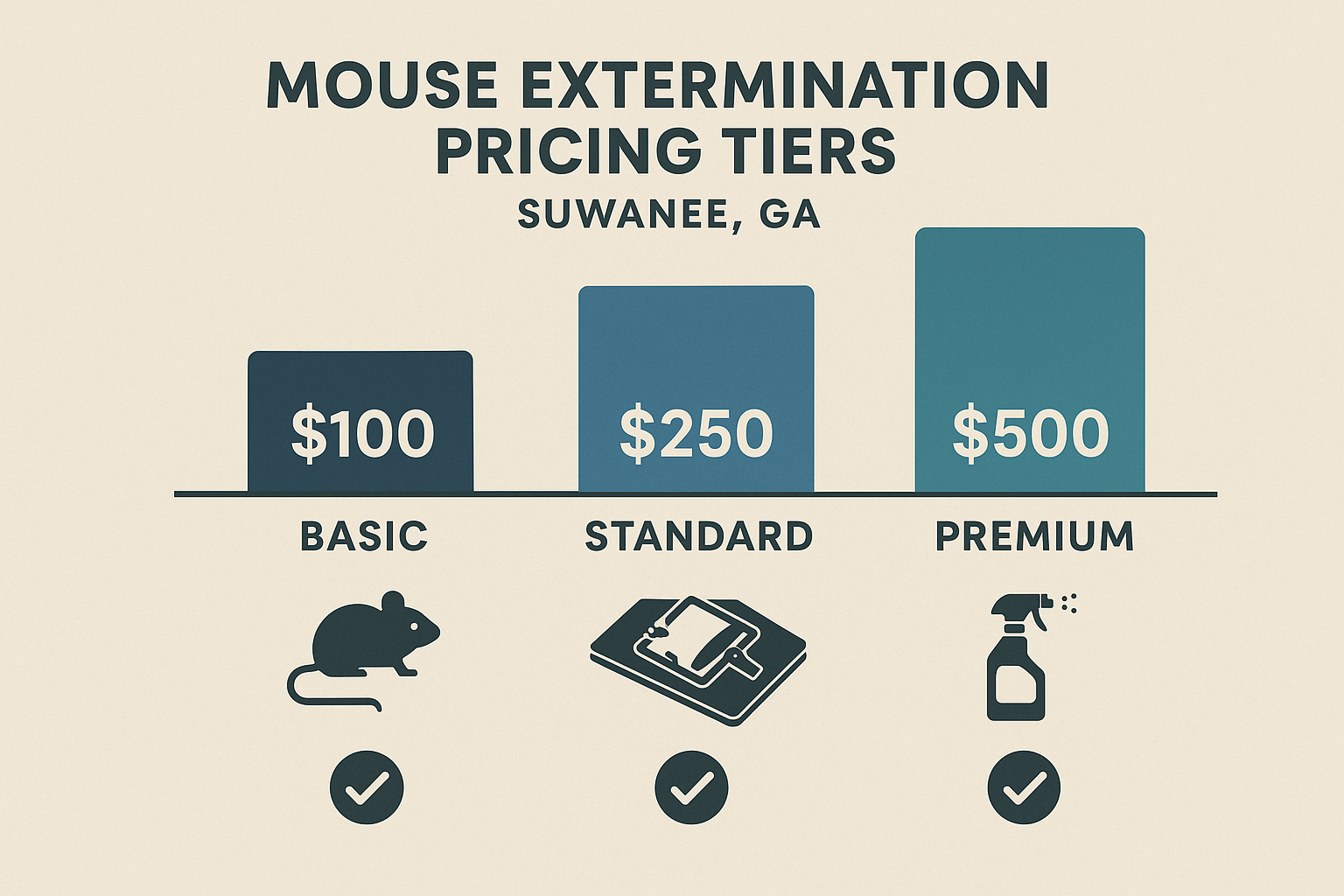
At Anthem Pest Control we believe you should know exactly what you’re paying for before any work begins. That’s why we offer three straightforward service packages—Basic, Standard, and Premium—each designed to match a different level of protection and budget.
Basic Tier
- Comprehensive visual inspection of your home’s interior and exterior.
- Single‑application bait or trap placement targeting active mouse pathways.
- One‑time follow‑up visit within 14 days to verify initial results.
Price starts at $149 for a typical single‑family residence. This tier is perfect for homeowners who have just spotted the first signs of activity and need a quick, affordable knock‑down.
We back the Basic Tier with a 30‑day satisfaction guarantee—if you still see mouse activity after the follow‑up, we’ll return at no extra charge.
Standard Tier
- All items in the Basic Tier, plus a detailed rodent‑proofing assessment.
- Installation of multiple bait stations and snap traps strategically placed.
- Two follow‑up visits over a 30‑day period to ensure complete eradication.
The Standard package is priced at $229. While the upfront cost is higher, the added inspection and extra visits often prevent a repeat infestation, saving you the expense of future emergency calls.
With this tier you receive a 90‑day warranty on mouse activity; any re‑infestation within that window is treated free of charge.
Premium Tier
- Everything in the Standard Tier, plus full‑home sealing of entry points using EPA‑approved materials.
- Advanced monitoring devices that alert you to new activity via our online portal.
- Three follow‑up visits spread over 60 days, plus a complimentary seasonal check‑up.
Investing in the Premium Tier costs $349. Although it’s the highest price point, most homeowners find it the most cost‑effective long‑term solution because it eliminates the need for repeated treatments and protects your home year‑round.
This tier includes a lifetime guarantee on the sealing work and a free revisit policy for any mouse sightings within a full year.
Choosing the right tier depends on how quickly you want the problem resolved and how much you’d like to prevent future invasions. All three plans come with transparent, upfront pricing and no hidden fees.
Ready to see which package fits your home? Contact us for a free, no‑obligation quote and let our local Suwanee experts tailor a solution that meets your budget and peace‑of‑mind needs.
Seasonal Activity & Prevention Tips for Suwanee Residents
Seasonal Activity Overview
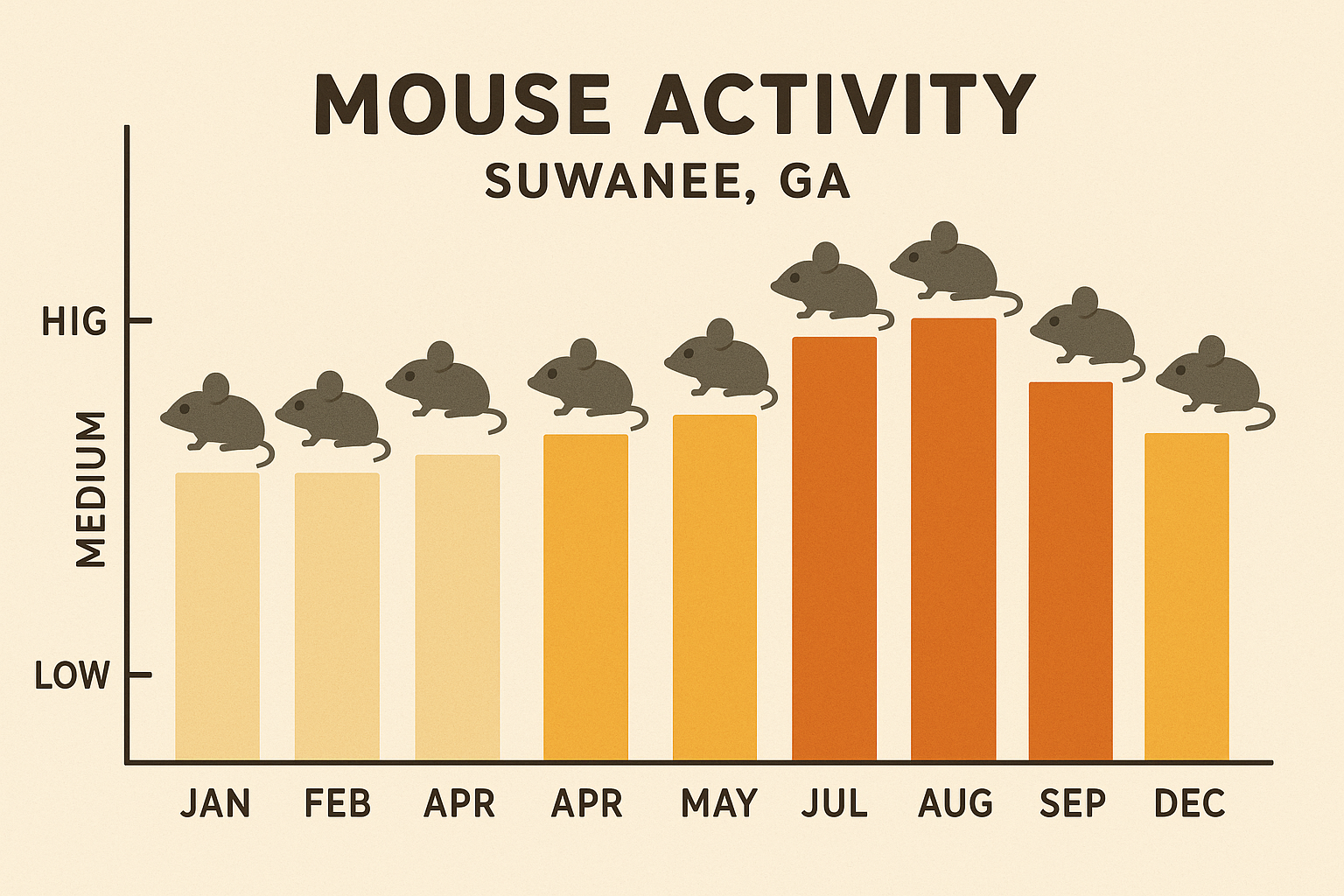
In Suwanee, mouse movements follow a predictable rhythm tied to temperature and food availability. The chart above shows the typical activity level for each month. Expect a noticeable rise from late July through October, peaking in September. Activity eases in early winter (November‑December) but never disappears entirely—mice remain vigilant for any chance to slip inside.
| Month | Activity Level |
|---|---|
| January | Low |
| February | Low |
| March | Moderate |
| April | Moderate |
| May | Moderate |
| June | Moderate |
| July | High |
| August | High |
| September | High |
| October | High |
| November | Moderate |
| December | Moderate |
Why Mice Seek Shelter in Cold Weather
As temperatures dip, outdoor food sources shrink and the ground freezes, prompting mice to look for warm, dry refuges. Cracks around windows, gaps under doors, and unsealed utility openings become attractive entry points. Once inside, a single mouse can quickly establish a nest, and the scent of one invites others. Understanding this behavior helps you block the most likely pathways before the chill sets in.
Month‑by‑Month Prevention Checklist
- January–February: Inspect attic insulation for gnaw marks, seal any gaps around vent pipes, and store pantry items in airtight containers.
- March–April: Trim tree branches away from the roof, clear leaf litter from the foundation, and repair any cracked mortar in exterior walls.
- May–June: Move firewood at least three feet from the house, keep compost bins sealed, and check garage doors for worn weather‑stripping.
- July–October (Peak Season): Conduct a thorough walkthrough of potential entry points, set up snap traps or bait stations in high‑traffic zones, and maintain a clean yard free of fallen fruit or birdseed.
- November–December: Perform a final seal‑up of all exterior cracks, replace worn door sweeps, and schedule a pre‑winter inspection with a professional.
Early Intervention Matters
Waiting until you see droppings or hear scurrying can let a small problem become a full‑blown infestation. By acting before the summer surge, you reduce the number of mice that can establish a nest, lower the risk of property damage, and avoid costly emergency treatments later in the year.
When to Call a Professional
If you notice any signs of activity—chewed wires, gnaw marks, or unexplained noises—schedule a pre‑season inspection with Anthem Pest Control. Our technicians know the local landscape, can identify hidden entry points, and will set up a customized prevention plan that aligns with Suwanee’s seasonal patterns. A quick call to 877‑371‑8196 can keep your home mouse‑free all year long.
Secure Your Home Today with Anthem Pest Control
Living in Suwanee means enjoying beautiful neighborhoods, but it also brings the inevitable challenge of rodent intrusions. Professional mouse control isn’t a luxury—it’s a necessity for protecting your home’s structure, safeguarding your family’s health, and preventing costly damage to insulation, wiring, and food supplies.
Why Professional Mouse Control Matters in Suwanee
- Mice gnaw through electrical wires, increasing fire risk.
- Their droppings carry diseases such as Hantavirus and salmonella.
- Infestations spread quickly in the humid Georgia climate, especially during spring and fall.
- DIY methods often miss hidden entry points, leading to recurring problems.
Anthem Pest Control: Your Local Advantage
Anthem’s technicians are trained right here in the Suwanee area, so they know the common entry routes, seasonal patterns, and the most effective treatment methods for Georgia homes. Our pricing is transparent—no hidden fees, just a clear breakdown of services you’ll receive.
We stand behind every job with a satisfaction guarantee. If mice return within the warranty period, we’ll revisit your property at no extra cost, ensuring you receive lasting relief.
Take the First Step—Free Inspection & Quote
Ready to stop the squeaks and scurrying? Call us today for a complimentary, no‑obligation inspection. Our certified technicians will assess your property, identify vulnerable spots, and craft a personalized plan that fits your budget.
Call now: 877‑371‑8196. Whether you prefer a quick phone chat or want to explore our services online, we’re here to answer every question.
Secure your home with confidence—visit Anthem Pest Control to learn more and schedule your free quote.