Why Stink Bugs Matter for Peachtree City Homeowners

When you hear a faint, unpleasant odor drifting from a crack in the wall or notice tiny, shield‑shaped insects gathering on your porch lights, you’re likely dealing with the brown marmorated stink bug (Halyomorpha halys). First detected in the southeastern United States a decade ago, this invasive pest has quickly become a common nuisance in Peachtree City and the surrounding region. Understanding why these bugs matter is the first step toward protecting your home, your garden, and your wallet.
Invasion of the Brown Marmorated Stink Bug
The brown marmorated stink bug is native to East Asia and arrived in the United States via international trade. Since its accidental introduction, it has spread across 44 states, thriving in the warm, humid climate of Georgia. Adults are about ½ inch long, with a distinctive mottled brown‑gray coloration and a “shield” shape that makes them easy to spot once you know what to look for.
Why Stink Bugs Are a Nuisance in Georgia
- Crop damage: In the summer, these bugs feed on a wide variety of fruits, vegetables, and ornamental plants, piercing the tissue with their needle‑like mouthparts. The result is distorted growth, blemished produce, and in severe cases, total loss of a harvest.
- Indoor odor: When they feel threatened—often when they wander inside through tiny gaps—they release a potent, sulfur‑like smell. The odor can linger on fabrics, furniture, and even walls, making a clean home feel uninviting.
- Structural concerns: Large numbers of stink bugs can accumulate in wall voids, attics, and under eaves. Their presence can attract moisture, encourage mold growth, and, over time, compromise the integrity of insulation and drywall.
Economic Impact on Homeowners and Local Agriculture
Beyond the immediate annoyance, stink bugs have a measurable financial toll. A recent Anthem Pest article estimates that a typical homeowner in Peachtree City may spend $150–$300 annually on control measures, repairs, and lost produce. For local farmers, the cost skyrockets, with some crops experiencing up to a 30 % reduction in yield during peak infestation periods. These figures underscore why proactive management is not just a comfort—it’s an economic necessity.
What You’ll Learn Next
Now that you know the stakes, the next sections will walk you through practical steps: how to accurately identify stink bugs, the seasonal patterns that dictate when they’re most active, the most effective treatment options, and transparent cost considerations so you can make an informed decision for your home.
Spotting Stink Bugs and Recognizing Early Warning Signs
What a Stink Bug Looks Like
Stink bugs are easy to identify once you know what to look for. An adult typically measures ½ to ¾ inch long and has a distinctive shield‑shaped back that tapers toward the rear. Their coloration ranges from bright green to a muted brown, often with a mottled pattern that helps them blend into foliage. The edges of the shield are usually lined with a thin, dark border, and the underside is a lighter, creamy hue. When you see a small, oval “shield” perched on a leaf or window sill, you’re likely looking at a stink bug.
Where They Slip In
Stink bugs are opportunistic hitchhikers. They love to squeeze through the tiniest gaps around doors, windows, and utility penetrations. Check the following entry points during a quick visual sweep:
- Door frames – especially the space between the door slab and the frame.
- Window screens – look for torn mesh or loose sections.
- Exterior vents, dryer exhausts, and chimney flues – even a ¼‑inch opening can be a highway.
- Cracks around siding, foundation, and roof eaves.
Use a flashlight to peer into dark corners and a thin piece of cardboard to feel for gaps you can’t see.
Behavioral Clues to Watch For
Stink bugs are drawn to warmth and sunlight. In the spring and early summer they’ll congregate on sunny walls, window sills, and the warm side of your home’s exterior. When disturbed, they release a pungent odor from a scent gland located on the underside of their thorax—hence the name “stink bug.” If you accidentally brush one off a surface and notice a sharp, cilantro‑like smell, that’s a dead giveaway.
Homeowner Warning Signs
Even before you see the insects themselves, a few tell‑tale signs can alert you to an emerging problem:
- Foul odor: A lingering, unpleasant scent near windows or doors often means a bug has been crushed or is feeling threatened.
- Visible clusters: Stink bugs tend to gather in groups. Spotting a handful of them on a light fixture or indoor plant is a red flag.
- Damage to outdoor plants: While they don’t usually cause catastrophic loss, heavy feeding can leave tiny, water‑soaked spots on leaves, especially on tomatoes, beans, and peppers.
If you notice any of these indicators, it’s time to act before the population balloons and spreads to other rooms.
Quick DIY Inspection Checklist
Grab a pen and a flashlight, then walk through your home using this short checklist. It takes less than ten minutes and can save you a costly treatment later.
- Inspect all exterior doors and windows for gaps larger than ¼ inch.
- Examine screen mesh for tears; repair or replace as needed.
- Check utility openings (vent pipes, dryer exhaust, cable lines) for sealant or mesh covers.
- Look for clusters of bugs on sunny walls, light fixtures, and indoor plants.
- Smell for the characteristic odor near entry points—if it’s present, note the location.
- Survey garden beds for small, water‑soaked lesions on leaves, especially on fruit‑bearing plants.
- Record any findings in a simple log (date, location, number of bugs) to track the severity over time.
Completing this walk‑through once a month during the peak season (late spring through early fall) gives you a clear picture of where stink bugs are trying to get in and whether a professional intervention, like the services offered by Anthem Pest Control, might be warranted.
Seasonal Stink Bug Activity in Georgia
Understanding when stink bugs are most active in Peachtree City is the first step toward keeping them out of your home. Their life cycle is tightly linked to temperature and rainfall, so the calendar can be a reliable guide for inspections and treatments.
Life Cycle Basics and Weather Drivers
Stink bugs spend the winter as adults hidden in leaf litter, under bark, or inside wall voids. When daytime temperatures consistently reach the mid‑60s °F (≈18 °C) and nighttime lows stay above 50 °F (≈10 °C), they emerge to mate and lay eggs. Warm, dry weeks accelerate egg development, while heavy rain can drown nymphs or force adults back into shelter. In Georgia’s climate, this means a rapid ramp‑up from early spring through late summer, followed by a sharp decline as cooler weather returns in the fall.
Seasonal Activity Chart (March – October)
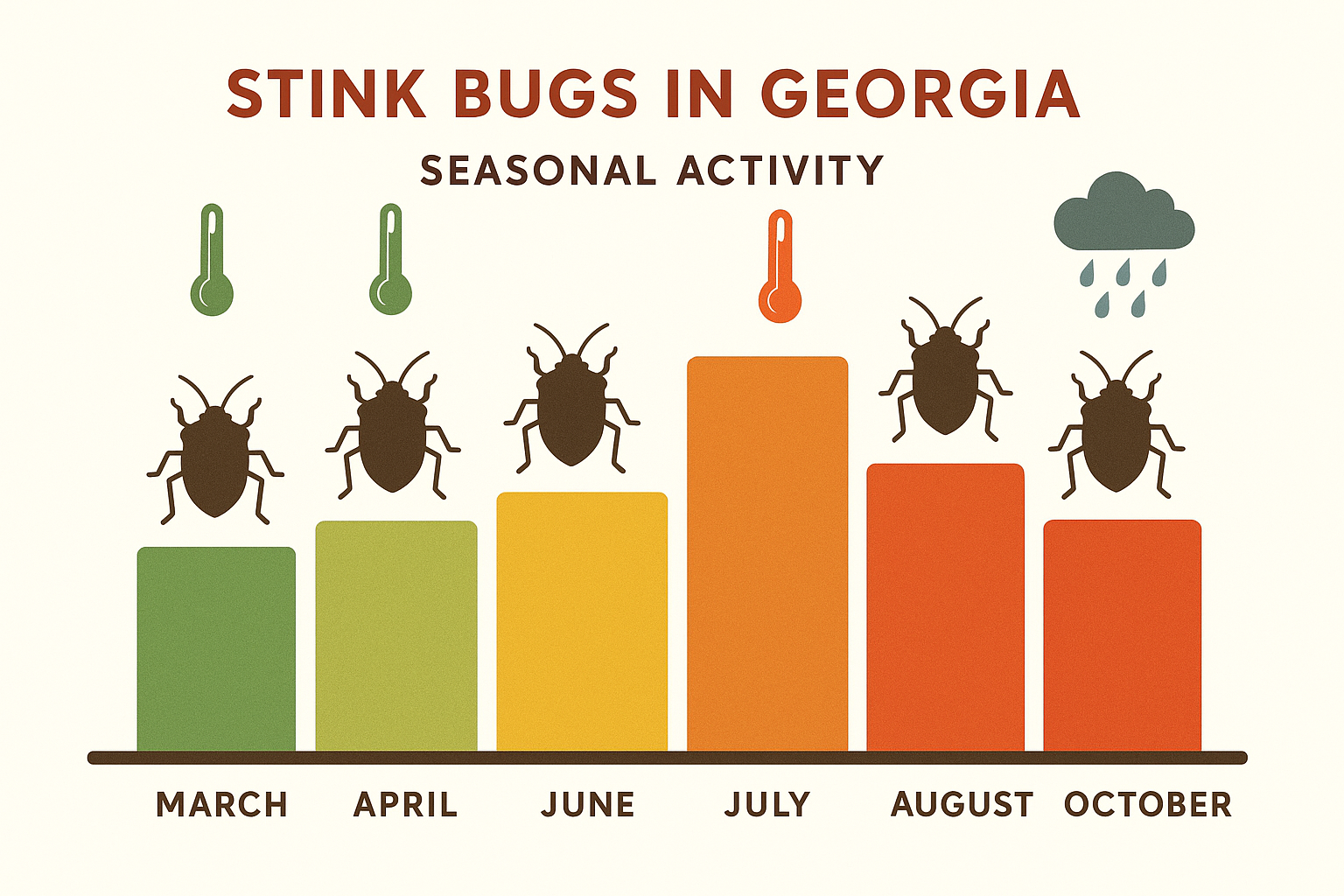
The chart above visualizes average stink bug captures from March through October in the Peachtree City area. Notice the gentle rise in March‑April, a steep climb through June, and the highest peaks in July, August, and early September. Activity then tapers off as temperatures dip in October.
Interpreting the Data: High‑Risk vs. Low‑Risk Windows
| Month | Activity Level | Key Weather Cue |
|---|---|---|
| March | Low | Daytime temps 60‑65 °F |
| April | Low‑Moderate | Consistent 65‑70 °F |
| May | Moderate | Warm, dry spells |
| June | High | Frequent 75‑85 °F days |
| July | Peak | Heat wave + low rain |
| August | Peak | Continued heat, occasional storms |
| September | High | Warm nights, early cooling |
| October | Low‑Moderate | Night temps < 60 °F |
From the table and chart, the **late summer window (July – early September)** is the period of highest risk. Stink bugs are actively seeking entry points, and indoor infestations can snowball quickly. Conversely, **March–April and October** provide low‑risk windows when populations are still building or beginning to retreat.
When to Schedule Professional Inspections
- Pre‑summer check (late April to early May): A thorough exterior inspection lets us seal cracks, treat vulnerable zones, and set up perimeter barriers before the bugs start mass‑migrating.
- Mid‑summer follow‑up (late July): If you notice a few bugs already inside, a targeted interior treatment can stop an infestation before it spreads.
- Early fall sweep (early September): A final inspection catches any late‑season stragglers and prepares your home for the cooler months when bugs seek shelter indoors.
Booking these appointments during the low‑risk windows maximizes the effectiveness of our treatments and minimizes the number of chemicals needed—saving you money and keeping your family safe.
Quick Weather‑Based Tip
Stink bug activity spikes after a stretch of warm, dry days followed by a light rain. Keep an eye on the local forecast: if you see three consecutive days above 80 °F with low humidity, plan a visual inspection within the next 48 hours. A simple “look‑under‑sinks, check window screens” sweep can catch early entrants before they multiply.
By syncing your pest‑management calendar with Georgia’s seasonal patterns, you stay one step ahead of the stink bugs and protect your home with confidence.
Treatment Options, Pricing, and What to Expect
Overview of Treatment Methods
When stink bugs invade a Peachtree City home, the most reliable way to reclaim your space is a targeted, science‑backed treatment plan. Anthem Pest Control typically employs three core methods:
- Exterior barrier sprays: A perimeter coating that creates a chemical shield around the home’s foundation, windows, and doors.
- Indoor crack‑and‑crevice applications: Low‑volume, high‑precision sprays placed in wall voids, baseboards, and other entry points where bugs hide.
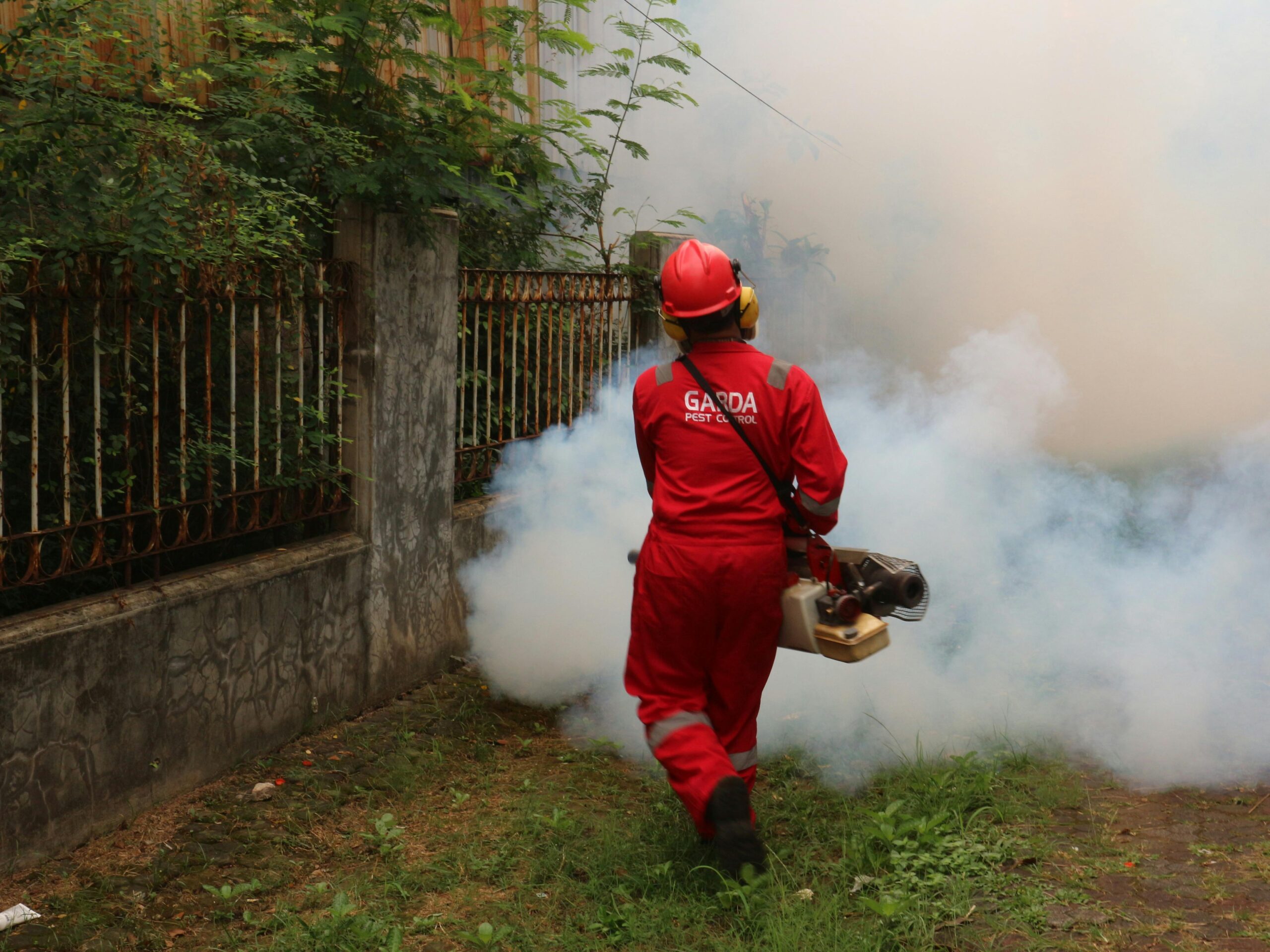
- Smoke fogging (thermal fogging): A quick‑acting mist that penetrates hard‑to‑reach spaces, delivering a burst of insecticide that kills active stink bugs on contact.
Benefits and Drawbacks of Each Method
| Method | Coverage | Speed of Action | Safety Considerations |
|---|---|---|---|
| Exterior barrier spray | Broad, protects all exterior entry points | Works over several days as bugs encounter the barrier | Low toxicity; safe for pets once dried (2‑4 hrs) |
| Indoor crack‑and‑crevice | Focused on hidden indoor routes | Immediate knock‑down inside treated zones | Requires brief ventilation; no pets or children in treated rooms for 30 min |
| Smoke fogging | Penetrates tight spaces, closets, and attics | Instant kill within minutes of fog dispersal | Higher concentration; occupants must vacate the home for 1‑2 hrs |
Fast Stink Bug Extermination Service
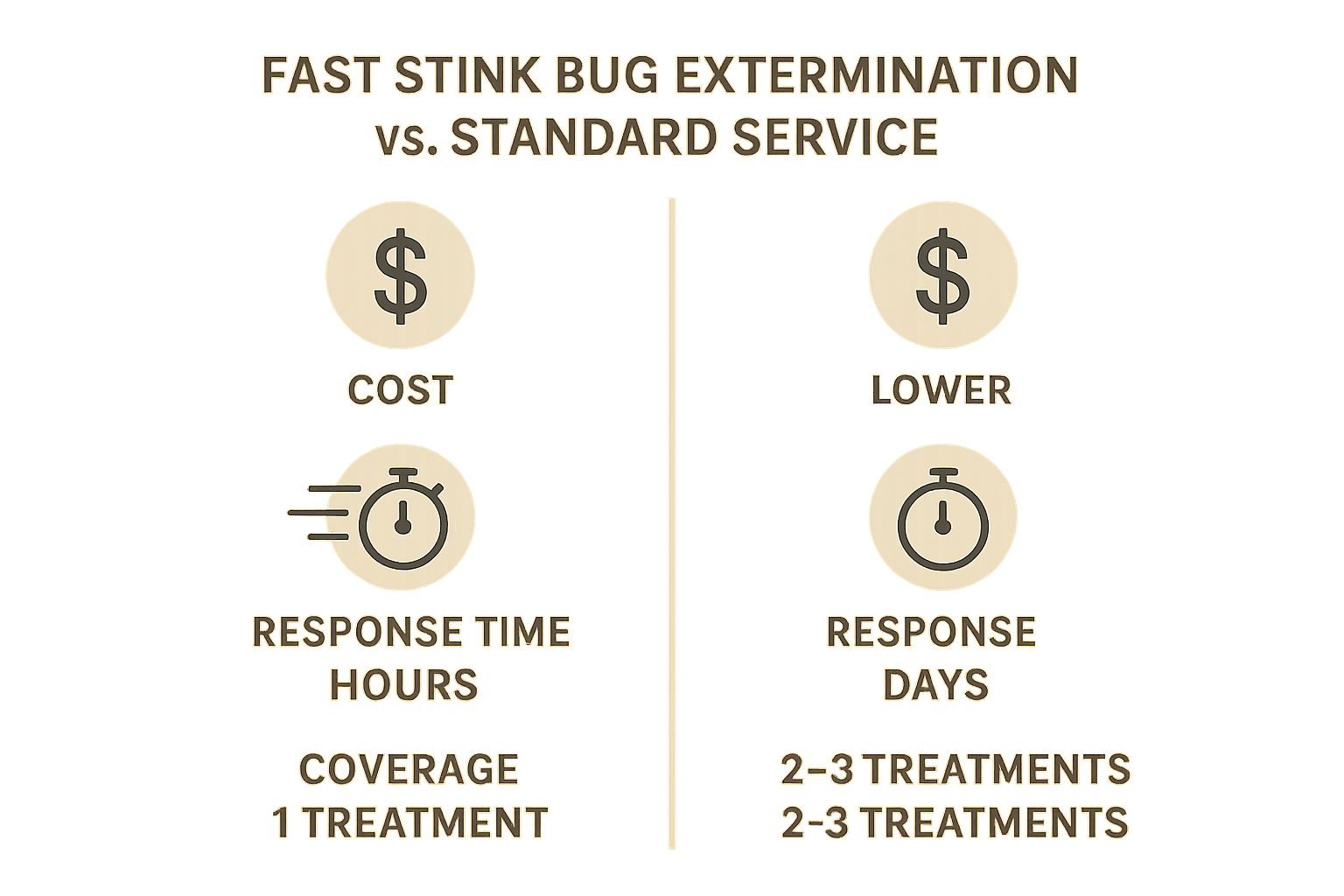
Our premium “Fast Track” service is built for homeowners who need relief yesterday. By combining a high‑coverage exterior barrier with an intensive indoor fogging session, we achieve:
- Same‑day response—often within 4 hours of your call.
- Up to 30 % more coverage than a standard treatment, thanks of a dual‑application approach.
- Rapid knock‑down of active bugs, followed by a residual barrier that protects for 8‑10 weeks.
This accelerated option carries a modest premium, but it eliminates the waiting period that lets a stink‑bug infestation grow.
Pricing Comparison
| Service | Cost (per home) | Response Time | Coverage Level |
|---|---|---|---|
| Standard Treatment | $149 | 48‑72 hrs | Standard (exterior barrier + one indoor application) |
| Fast Track (Same‑Day) | $199 | Same day (≤4 hrs) | High (exterior barrier + indoor fogging + extra crack‑and‑crevice) |
What Homeowners Can Expect During a Treatment Visit
- Pre‑visit preparation: Close windows and doors, remove pets from treatment zones, and clear clutter around baseboards.
- Technician safety gear: Our crew wears gloves, goggles, and N‑95‑rated respirators to protect themselves and your family.
- Application process: We start with the exterior barrier, then move indoors for crack‑and‑crevice sprays, and finish with fogging if you’ve chosen the fast service.
- Post‑treatment monitoring: A follow‑up call 7 days later confirms results; a complimentary re‑check is offered if activity persists.
Frequently Asked Questions
- Do treatments affect pets? All products used are EPA‑approved for residential use. Once the exterior spray is dry (2‑4 hrs) and indoor areas are ventilated (30 min), pets can safely return.
- How long does protection last? The residual barrier remains effective for 8‑10 weeks, covering the peak stink‑bug season in Georgia.
- Is a follow‑up visit needed? Most fast‑track jobs are a one‑time fix. If we detect residual activity during the 7‑day check, a complimentary touch‑up is scheduled at no extra charge.
Protect Your Home with Anthem Pest Control

Stink bugs become a noticeable nuisance each fall as they seek shelter inside walls, attics, and kitchen cabinets. Their arrival signals a seasonal threat: once they’re inside, they multiply quickly, emit an unpleasant odor, and can damage fruiting plants and ornamental gardens. Early detection—spotting the first few insects or noticing a faint smell—prevents a small problem from turning into a full‑blown infestation.
Anthem Pest Control’s Peachtree City team specializes in fast, safe, and affordable stink‑bug elimination. Our certified technicians use targeted treatments that neutralize bugs without compromising the health of your family or pets. Because we focus on the unique climate and construction styles of Peachtree City, we know exactly where these pests hide and how to reach them efficiently.
What sets Anthem apart?
- Transparent, upfront pricing—no hidden fees.
- Same‑day response options for urgent situations.
- A 100 % satisfaction guarantee that backs every service.
We understand that homeowners want confidence, not pressure. That’s why we invite you to request a free, no‑obligation quote to assess your home’s specific needs. Our friendly staff will walk you through the findings, explain the recommended treatment plan, and answer any questions you may have.
Ready to protect your home before the next wave of stink bugs arrives? Call us today at 877‑371‑8196 or visit Anthem Pest Control to schedule your complimentary assessment. Quick, professional help is just a phone call away—let’s keep your home comfortable and bug‑free all year long.