What Homeowners Need to Know About Termites
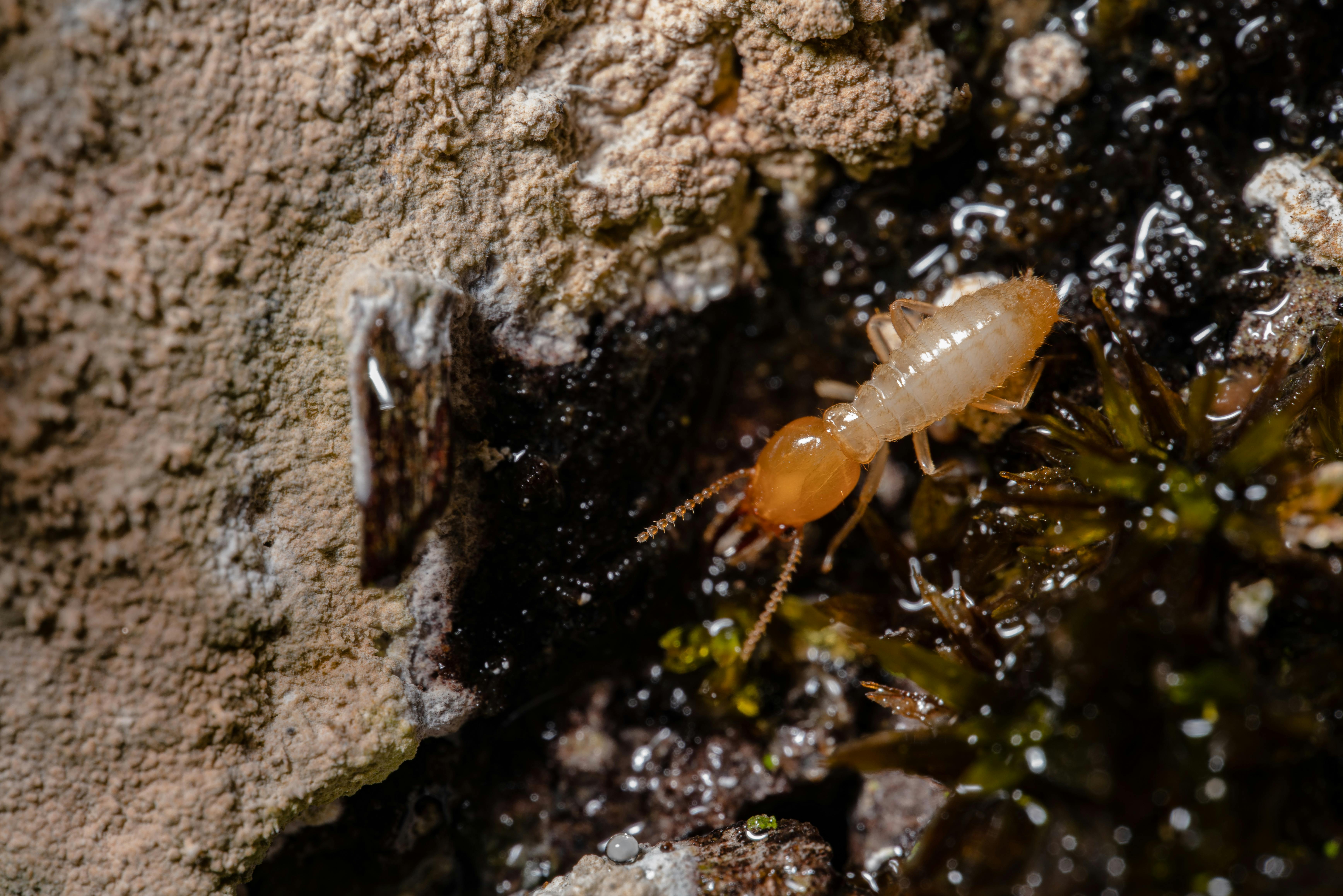
Fast Termite Exterminator Druid Hills services are essential because termites are small, soft-bodied insects that live in colonies and feed on cellulose—the main component of wood, paper, and even some fabrics. In the United States, three species dominate the damage landscape: subterranean termites, which build mud tubes from the soil to reach wood; drywood termites, which live entirely inside the wood they consume; and dampwood termites, which prefer moist, decaying timber. While each species has its quirks, all share one unsettling trait: they work silently, often going unnoticed until structural damage is already severe.
Why Termites Are a Financial Threat
The U.S. Environmental Protection Agency (EPA) estimates that termites cause more than $5 billion in property damage each year, outpacing all other wood‑eating pests combined. The United States Department of Agriculture (USDA) reports that roughly 1 in 5 homes will experience a termite infestation at some point. Those numbers translate into costly repairs, higher insurance premiums, and a dip in home resale value. For a typical suburban house, remediation can range from a few thousand dollars for localized treatment to upwards of $10,000 for extensive structural repairs.
Termites vs. Other Wood‑Eating Pests
Fast Termite Exterminator Druid Hills professionals often explain that carpenter ants, powderpost beetles, and wood-boring beetles may chew through wood, but they do not actually consume it. Instead, these pests excavate galleries to create nesting chambers, leaving much of the wood’s structural integrity intact. Termites, by contrast, digest cellulose, turning solid timber into a honey-colored, paper-like material that rapidly loses strength. This key difference is why termite damage often goes unnoticed for months, while ant or beetle infestations usually reveal visible holes or frass much sooner.
Life Cycle That Keeps Them Hidden
A termite colony begins with a winged reproductive pair—known as alates—that swarm in spring or early summer. After shedding their wings, the pair establishes a new nest and starts laying eggs. From egg to worker, soldier, or reproductive, the development can take several weeks to months, depending on temperature and moisture. Because the majority of the colony consists of workers hidden deep within soil, wood, or masonry, the early stages produce little surface evidence. By the time the colony expands enough to cause noticeable damage, thousands of workers may already be feeding unnoticed.
Warning Signs Homeowners Should Watch For
- Mud tubes: Pencil‑thin, earthen tunnels on foundation walls, crawl spaces, or wooden siding.
- Discarded wings: Small, translucent wings that look like a “sack of water” near windows or light fixtures after a swarm.
- Wood hollowing: Wood that sounds hollow when tapped or shows a soft, crumbling interior when probed.
- Clicking sounds: A faint, rhythmic tapping heard in walls or floors, especially at night when termites are most active.
- Frass: Drywood termites excrete tiny, pellet‑shaped droppings that resemble sand or sawdust.
Spotting any of these clues early can save homeowners a fortune and protect the structural health of their property. In the sections that follow, we’ll explore how seasonal weather patterns influence termite activity, compare the most effective treatment options, and break down pricing so you know exactly what to expect from a fast, reliable exterminator in Druid Hills, GA.
When Are Termites Most Active?
Fast Termite Exterminator Druid Hills experts note that, according to the National Pest Management Association (NPMA), termites reach their highest foraging intensity during the warm months of spring and summer. In most parts of the United States, activity peaks from April through August, with a noticeable slowdown as temperatures drop in late fall and winter. This seasonal surge is why the NPMA advises homeowners to schedule inspections before the first major spring rain and follow up with treatment during peak summer heat, when termites are most exposed.
What Drives Termite Foraging?
Termites are ectothermic insects, meaning their metabolism is directly tied to the environment. Three key factors dictate when they venture out of the soil and into the structure of your home:
- Temperature: Most species become active when ground temperatures consistently stay above 55°F (13°C). Warmth accelerates their digestion of cellulose, prompting larger foraging parties.
- Humidity: High relative humidity (above 70%) prevents desiccation during surface travel. Moist air also keeps the wood they feed on from drying out, making it more palatable.
- Soil Moisture: Saturated soils create a humid tunnel network that termites can navigate safely. After a rainstorm, moisture seeps into the ground, prompting colonies to expand their search for food sources.
Seasonal Activity Chart
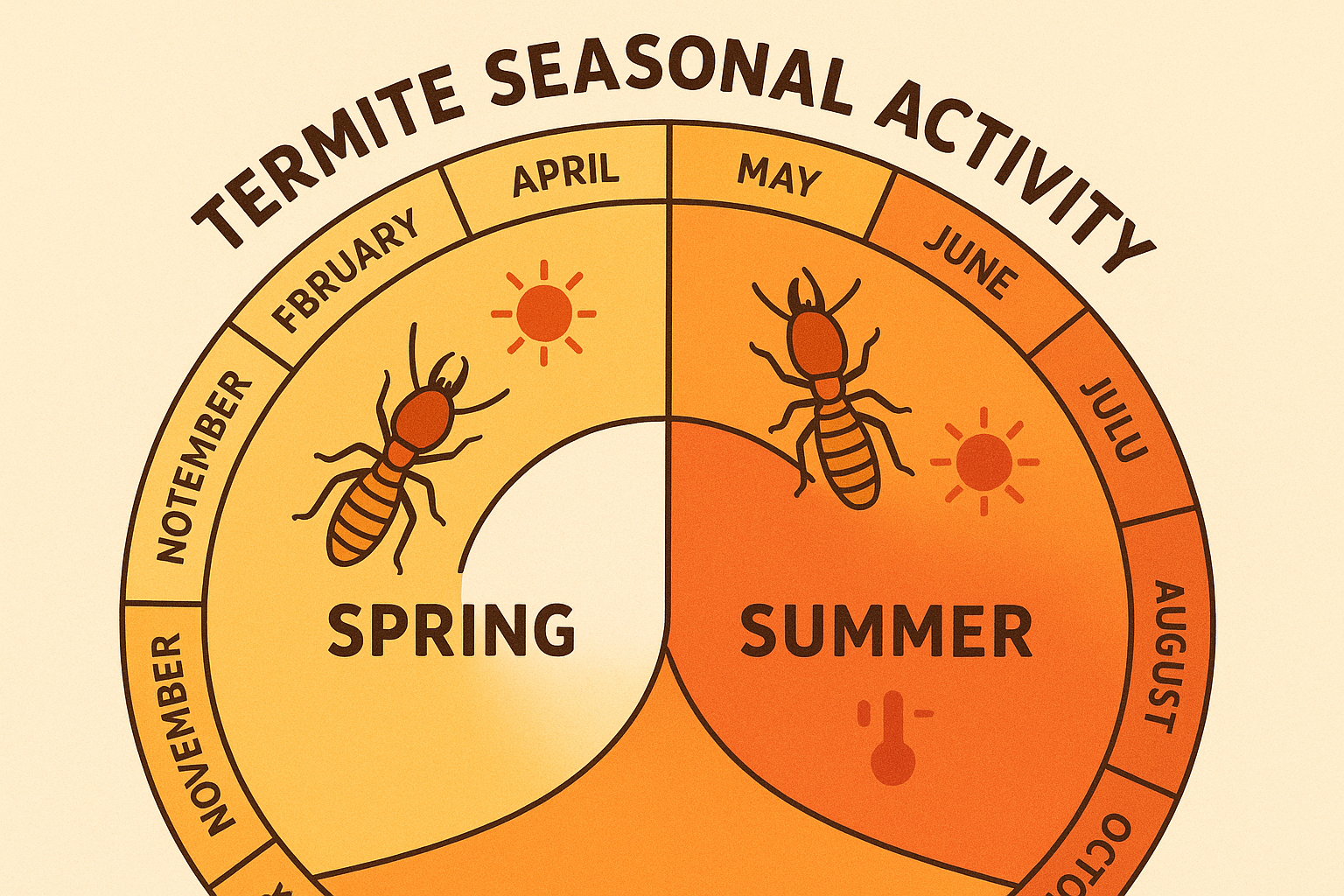
| Month | Risk Level | Typical Weather Influence |
|---|---|---|
| January | Low | Cold, dry ground limits foraging. |
| February | Low | Still chilly; occasional rain does little. |
| March | Moderate | Temperatures rise; early rains increase soil moisture. |
| April | High | Warm days and frequent showers boost activity. |
| May | High | Consistently warm and humid—peak foraging season. |
| June | High | Summer heat and high humidity keep termites busy. |
| July | High | Peak summer conditions; termites are most aggressive. |
| August | High | Still hot and moist, though occasional droughts may lower activity. |
| September | Moderate | Temperatures begin to drop; humidity stays relatively high. |
| October | Low | Cooler, drier weather curtails foraging. |
| November | Low | Cold front arrives; termites retreat underground. |
| December | Low | Winter dormancy dominates. |
Regional Variations
While the chart above reflects typical patterns for Druid Hills, GA, termites in warmer southern states can start foraging as early as February. Conversely, in northern regions the active window may not open until late April. Coastal areas with higher humidity often see a prolonged “high” period, whereas inland locations might experience a sharper peak followed by a rapid decline once summer humidity drops.
Seasonal Inspection Checklist
- Check foundation walls for mud tubes or frass (termite droppings).
- Inspect wooden sill plates, joists, and deck posts for soft spots or hollow sounds.
- Look for water‑damaging conditions: leaky gutters, cracked pipe joints, or standing soil against the foundation.
- Verify that ventilation in crawl spaces is adequate; stagnant air encourages moisture buildup.
- Schedule a professional termite audit before the first major spring rain and repeat after the peak summer months.
Proven Termite Treatment Methods
Termites can quickly compromise the structural integrity of a Druid Hills home, so homeowners need a solution that works fast and stays effective. The three primary professional approaches—liquid termiticides, bait stations, and structural fumigation—each target the pest in a distinct way. Understanding the science, benefits, and what to expect during application helps you choose the best fit for your budget and lifestyle.
1. Liquid Termiticides (Soil Barrier)
Liquid termiticides are injected into the soil around a foundation, forming a chemical shield that termites cannot cross without dying. Modern EPA‑registered products (e.g., fipronil, imidacloprid) remain active for up to ten years, killing foraging workers and any colony members that attempt to tunnel through the treated zone.
- Pros: Long‑lasting protection, works on hidden colonies, minimal visual impact.
- Cons: Requires drilling or excavation, higher upfront cost, potential concerns for pets or children if not applied correctly.
2. Bait Stations (Foraging Disruption)
Bait stations are placed along termite foraging paths. Each station contains a cellulose core laced with a slow‑acting insecticide. Workers feed on the bait, share the toxin with the colony, and eventually collapse the queen’s reproductive capacity. The surrounding environment stays largely untouched.
- Pros: Low environmental footprint, can be monitored and adjusted, less invasive than soil treatments.
- Cons: Takes weeks to months to achieve full control, effectiveness depends on termite activity, may need multiple stations for larger properties.
3. Structural Fumigation (Whole‑Structure Eradication)
Fumigation seals the entire home inside a gas‑tight tarp and releases sulfuryl fluoride vapor. The gas penetrates wood, furniture, and concealed voids, killing termites at every life stage within a few hours. After thorough ventilation, the house is safe to re‑enter.
- Pros: Immediate, 100 % eradication of active colonies, no residue left behind.
- Cons: Highly invasive, occupants must vacate for 24–48 hours, highest cost of the three methods, must be performed by a licensed fumigator.
| Method | Longevity | Invasiveness | Typical Cost | Environmental Impact |
|---|---|---|---|---|
| Liquid Termiticides | 5‑10 years | Moderate (soil drilling) | $$ | Low‑moderate (EPA‑registered) |
| Bait Stations | 2‑5 years (with monitoring) | Low (no excavation) | $ | Very low |
| Structural Fumigation | Single event (no residual) | High (home vacated, tarp) | $$$ | Moderate (controlled gas release) |
Typical Professional Application
A certified Anthem Pest technician follows a precise, step‑by‑step protocol to ensure safety and effectiveness:
- Pre‑inspection using moisture meters and infrared cameras to locate active galleries.
- Preparation: Move furniture away from walls; keep pets and children out of the work area.
- Barrier installation (liquid termiticide): Drill holes every 2‑3 feet around the foundation and inject the product under pressure.
- Bait placement (if using stations): Install 1‑3 stations at perimeter and known pathways, then log them into our monitoring system.
- Fumigation (if required): Seal the home with a heavy‑duty tarp, release the gas, and set the exposure timer.
- Final walk‑through: Remove coverings, restore furniture placement, and provide a written warranty.

Safety Considerations
All products we use are EPA‑registered and applied strictly according to label directions. Technicians wear protective gear, and we advise homeowners to keep children and pets out of the treated area until the product has settled—typically a few hours for liquids and a full day after fumigation. Proper ventilation and post‑treatment testing are standard parts of our service.
When to Combine Methods
Many Druid Hills homes benefit from a hybrid approach. Pairing a liquid barrier with bait stations stops new foragers from entering while silently eliminating any colony that has already breached the perimeter. Our team evaluates infestation level, property layout, and homeowner preferences before recommending a combined plan.
Choosing the right method—or combination—delivers fast relief today and lasting peace of mind for years to come. Anthem Pest is ready to walk you through the options, answer safety questions, and schedule a treatment that fits your timeline and budget.
Comparing the Cost of Termite Control Options
Understanding how much you’ll spend on termite control is as important as choosing the right treatment. Below is a quick‑look infographic that visualizes the typical price ranges for the three most common methods: liquid termiticides, bait stations, and whole‑home fumigation.
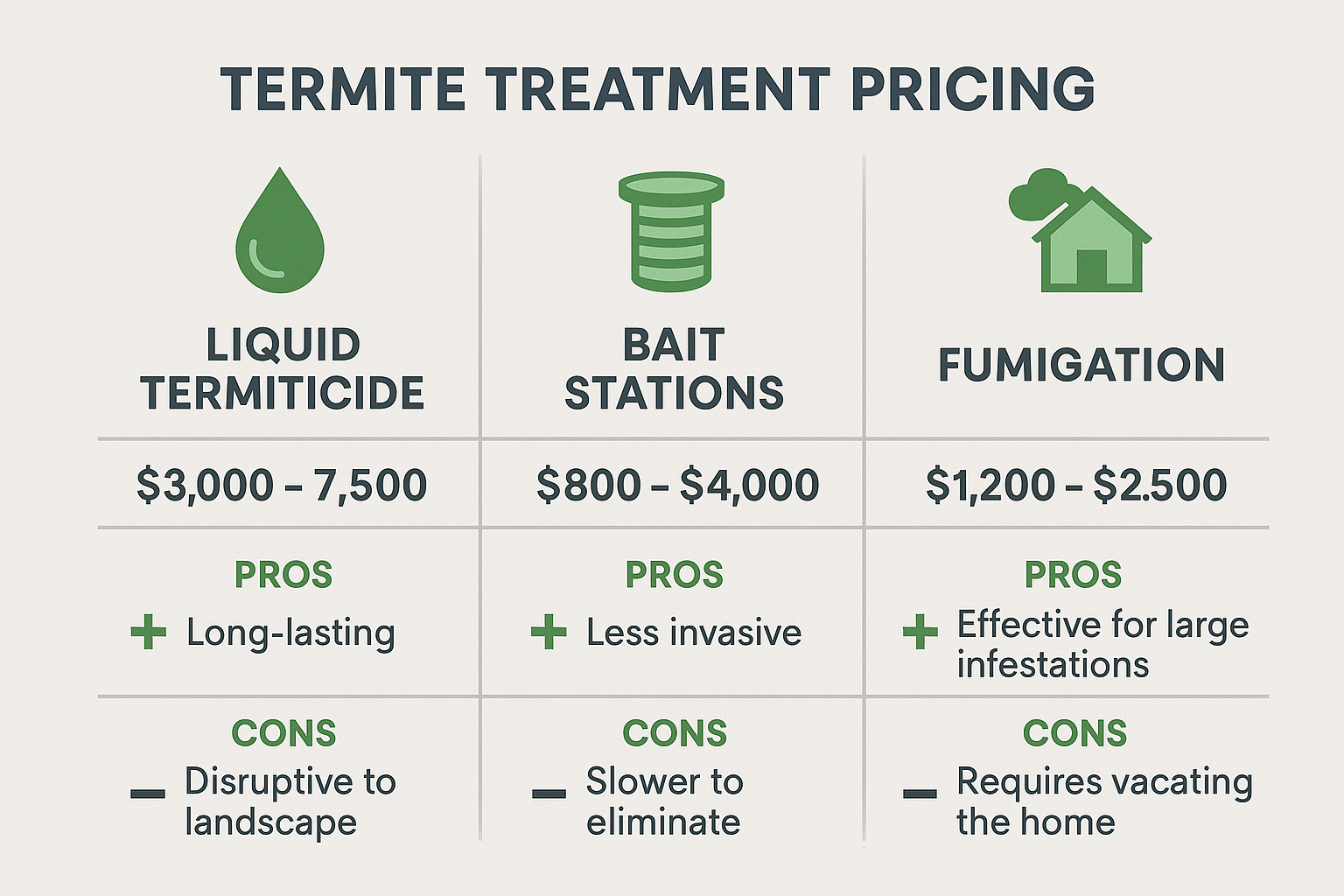
Typical Price Brackets
When you ask a pest professional for a quote, you’ll usually see numbers that fall within these bands:
| Method | Typical Cost | What’s Included |
|---|---|---|
| Liquid Termiticide (Barrier) | $1,200 – $2,500 | Application of EPA‑approved chemicals around foundation, one‑year warranty |
| Bait Station System | $1,500 – $3,000 | Installation of 3‑5 stations, monitoring visits, 2‑year warranty |
| Whole‑Home Fumigation | $4,000 – $8,000 | Tent enclosure, gas treatment, post‑fumigation inspection, 5‑year warranty |
Hidden Costs You Should Expect
Beyond the headline price, most homeowners encounter additional expenses:
- Follow‑up inspections: Many providers charge $75‑$150 per visit after the initial treatment to confirm eradication.
- Warranty extensions: Extending a warranty from the standard one‑year to three years can add $200‑$400.
- Repairing damaged wood: Termite damage isn’t fixed by chemicals alone; replacing compromised framing can run $500‑$2,000 depending on severity.
Factors That Influence Pricing
Every home is unique, and several variables shift the final number:
- Home size: Larger square footage means more product and more labor hours.
- Infestation severity: A light, localized problem costs less than a full‑scale colony spread throughout the structure.
- Regional labor rates: Druid Hills’ proximity to Atlanta can affect technician wages, which in turn impacts the overall quote.
Tips for Evaluating Quotes
When you receive estimates, compare them using these checkpoints:
- Look for a clear itemization—each service, material, and labor line should be listed separately.
- Check the warranty length and what it actually covers; longer warranties often signal confidence in the product.
- Confirm that all chemicals are EPA‑approved and that the provider follows state‑mandated safety protocols.
- Ask whether follow‑up visits and monitoring are included or billed separately.
Take the Next Step
Budgeting for termite control doesn’t have to be a guessing game. Request a free, no‑obligation estimate from Anthem Pest Control. Our technicians will assess your property, walk you through the price breakdown, and help you choose the most cost‑effective solution for lasting protection.
Protect Your Home with Professional Termite Services
Why Early Detection and Seasonal Timing Matter
Termites work silently, often going unnoticed until structural damage is evident. Catching an infestation during the early spring or late summer—when colonies are most active—gives you a critical window to intervene before they spread to foundations, joists, and walls. Early detection not only reduces treatment costs but also protects the resale value of your home.
Choosing the Right Treatment Method
Every termite problem is unique. Subterranean colonies may require a soil‑borne barrier, while dry‑wood termites are best managed with localized foam or dust applications. A professional assessment matches the species, infestation size, and property layout to the most effective, least invasive solution, ensuring long‑lasting results.
The Advantage of a Licensed, EPA‑Compliant Professional
Only a licensed technician who follows EPA guidelines can guarantee that the chemicals used are both safe for your family and potent against termites. Licensed pros are trained to handle hazardous materials, apply them at the correct concentrations, and follow strict disposal protocols. This expertise eliminates the guesswork that DIY products often bring and prevents accidental exposure or ineffective treatment.
What Sets Anthem Pest Control Apart
- Nationwide Coverage: Whether you own a single‑family home in Druid Hills or a multi‑unit building elsewhere, Anthem has the infrastructure to respond quickly.
- Transparent Pricing: No hidden fees—our detailed quote outlines every step, so you know exactly what you’re paying for.
- Safe & Effective Solutions: We use EPA‑approved products that target termites while minimizing risk to pets, children, and the environment.
- Free Quote Guarantee: Contact us for a no‑obligation inspection and receive a written estimate at no cost.
When you choose Anthem Pest Control, you’re not just hiring a service; you’re gaining a partner in home protection. Our certified technicians arrive on schedule, conduct a thorough inspection, and explain the recommended treatment in plain language. We understand that homeowners want peace of mind, and our rapid response team is dedicated to delivering it—often within 24 hours of your call.
Ready to safeguard your home? Call us today at 877‑371‑8196 to schedule a free, no‑obligation termite inspection. You can also visit our website for more details and to request your free quote online. Let Anthem Pest Control give you the confidence that your home is protected—today and for years to come.