Why Ticks Are a Growing Concern for Decatur Homeowners
Decatur’s lush, tree-lined neighborhoods are a perfect backdrop for a growing cast of tick species, which is why many homeowners are now searching for a reliable tick exterminator Decatur residents can trust. In Georgia, you’ll most often encounter the Lone Star tick (Amblyomma americanum) and the blacklegged tick, also known as the deer tick (Ixodes scapularis). Both insects have expanded their range northward and westward over the past decade, driven by milder winters and suburban development that creates new corridors for wildlife. The result is a steady rise in tick activity, with more infestations appearing in backyards, parks, and even city streets where they were once rare—making professional tick control increasingly essential.
The health stakes are equally alarming. According to the Centers for Disease Control and Prevention (CDC), tick‑borne illnesses account for over 75% of all reported vector‑borne diseases in the United States. In the Southeast, where the climate favors tick survival, Lyme disease, ehrlichiosis, and the emerging Alpha‑gal syndrome have all risen sharply. The table below summarizes recent surveillance data for the region:
| Disease | Reported Cases |
|---|---|
| Lyme disease | 1,850 |
| Ehrlichiosis | 2,410 |
| Alpha‑gal syndrome | 1,200 |
| Rocky Mountain spotted fever | 620 |
Why does this matter to the average Decatur homeowner? Your yard is more than a decorative space—it’s a habitat that attracts deer, raccoons, and even the occasional stray cat. These animals carry adult ticks, which then drop off onto grass, shrubs, or the very soil where children play and pets roam. Outdoor hobbies that are popular in the area—hiking the nearby trails, weekend barbecues, or simply gardening—increase the chance of a tick hitching a ride on a sock or a dog’s fur. Once attached, a tick can remain unnoticed for days while it feeds, delivering pathogens directly into the bloodstream.
Understanding the problem is the first step toward protection. In the sections that follow you’ll learn how to:
- Identify the most common tick species in Decatur and recognize their distinct markings.
- Track seasonal activity patterns so you know when the risk peaks (typically early spring through late fall).
- Choose effective treatment options, from DIY yard sprays to professional extermination services.
- Factor in cost considerations, including preventive treatments that save money by avoiding medical bills.
By grasping the scope of the tick threat, you can make informed decisions about safeguarding your family, pets, and property. The next parts of this guide will break down each of these topics in plain language, giving you the confidence to act before a tiny bite becomes a big problem.
Spotting the Enemy – Tick Identification Basics
Tick Anatomy 101
Even a quick glance can reveal a tick’s tell‑tale features if you know what to look for. The head houses the mouthparts—two sharp chelicerae for cutting skin and a barbed hypostome that anchors the tick while it feeds. Directly behind the head is the scutum, a hard plate covering the dorsal surface of adult females; males have a softer, partial scutum that allows their abdomen to expand when engorged. Eight sturdy legs extend from the ventral side, each ending in tiny claws that grip hair, fur, or fabric.
Size changes dramatically through the four life stages. Eggs are invisible to the naked eye. Larvae (often called “seed ticks”) are about 0.5 mm—roughly the size of a pinhead. Nymphs grow to 1–2 mm, appearing as a speck on a leaf. Adult females can swell to 3–5 mm when unfed and exceed 10 mm after a blood meal, resembling a small grain of rice. Recognizing these size cues helps you determine how long a tick may have been attached.
Black‑Legged Tick (Ixodes scapularis) Close‑up

The black‑legged tick, also known as the deer tick, is the primary carrier of Lyme disease in Georgia. Under a magnifying glass you’ll notice a dark, almost black scutum on the back of unfed adults, contrasted with a lighter, reddish‑brown abdomen that expands after feeding. The legs are noticeably longer than those of other regional ticks, giving the creature a “spindly” silhouette. Pay attention to the tiny, oval‑shaped anal groove that runs anterior to the anus—a key identifier that separates true ticks from spider‑like insects.
Georgia’s Common Ticks vs. Harmless Bugs
Homeowners often mistake harmless insects for ticks, especially in the summer months. Here’s a quick comparison:
- Black‑legged tick: Small, flat, dark scutum; eight legs; mouthparts visible from the front.
- Lone‑star tick (Amblyomma americanum): White “star” spot on the back of adult females; larger (up to 6 mm); reddish‑brown body.
- Spiders: Two body segments (cephalothorax and abdomen) with eight legs, but lack a scutum and mouthparts designed for piercing skin.
- Fleas: Jumping insects with laterally compressed bodies; no scutum; usually found moving quickly rather than clinging.
When you see a tiny, flattened creature attached to a pet’s fur or a leaf, pause and check for the scutum and the characteristic mouthparts. If those are missing, you’re likely looking at a harmless bug.
Collecting a Tick Safely
Accurate identification often requires a physical specimen. Follow these steps to avoid contaminating the tick or exposing yourself to pathogens:
- Wear disposable gloves or use a tissue to prevent direct skin contact.
- Grasp the tick as close to the skin as possible with fine‑pointed tweezers.
- Pull upward with steady, even pressure—avoid twisting, which can leave mouthparts embedded.
- Place the tick in a sealed plastic bag or a small vials with a drop of alcohol (if you plan to send it to a lab).
- Label the container with the date, location, and host (human, dog, etc.) before storing it in a cool, dark place.
Never crush the tick, and wash your hands thoroughly after handling the container.
Why Accurate ID Matters
Misidentifying a tick can have serious health consequences. If you assume a harmless insect is a tick, you might ignore a bite that actually harbors Babesia, Rocky Mountain spotted fever, or the dreaded Borrelia burgdorferi (Lyme disease). Delayed treatment increases the risk of chronic joint pain, neurological issues, or heart complications.
Conversely, treating a non‑tick insect as a tick can lead to unnecessary pesticide applications, waste of money, and exposure to chemicals that homeowners don’t need. Accurate identification enables targeted treatment—whether that means a quick over‑the‑counter topical remedy or a professional extermination plan from Anthem Pest Control.
In short, spotting the enemy early, knowing its anatomy, and safely collecting a sample empower you to act swiftly. The next time you find a tiny, eight‑legged visitor on a leaf or your dog’s coat, you’ll have the visual cues and confidence to decide whether it’s a harmless critter or a tick that needs professional attention.
When Are Ticks Most Active in Decorum?
Ticks move through four stages—egg, larva, nymph, and adult—each requiring a blood meal to advance. In Decatur’s humid climate, the tiny larvae hatch in early spring, attach to rodents, and quickly mature into nymphs that can bite humans.
Temperature and moisture are the twin engines of tick activity. When daily highs linger between 55°F and 85°F and humidity stays above 60 %, ticks become restless, climbing onto vegetation to quest for a host. A sudden dry spell or a cold snap forces them back into the leaf litter, slowing the cycle.
Seasonal Activity at a Glance
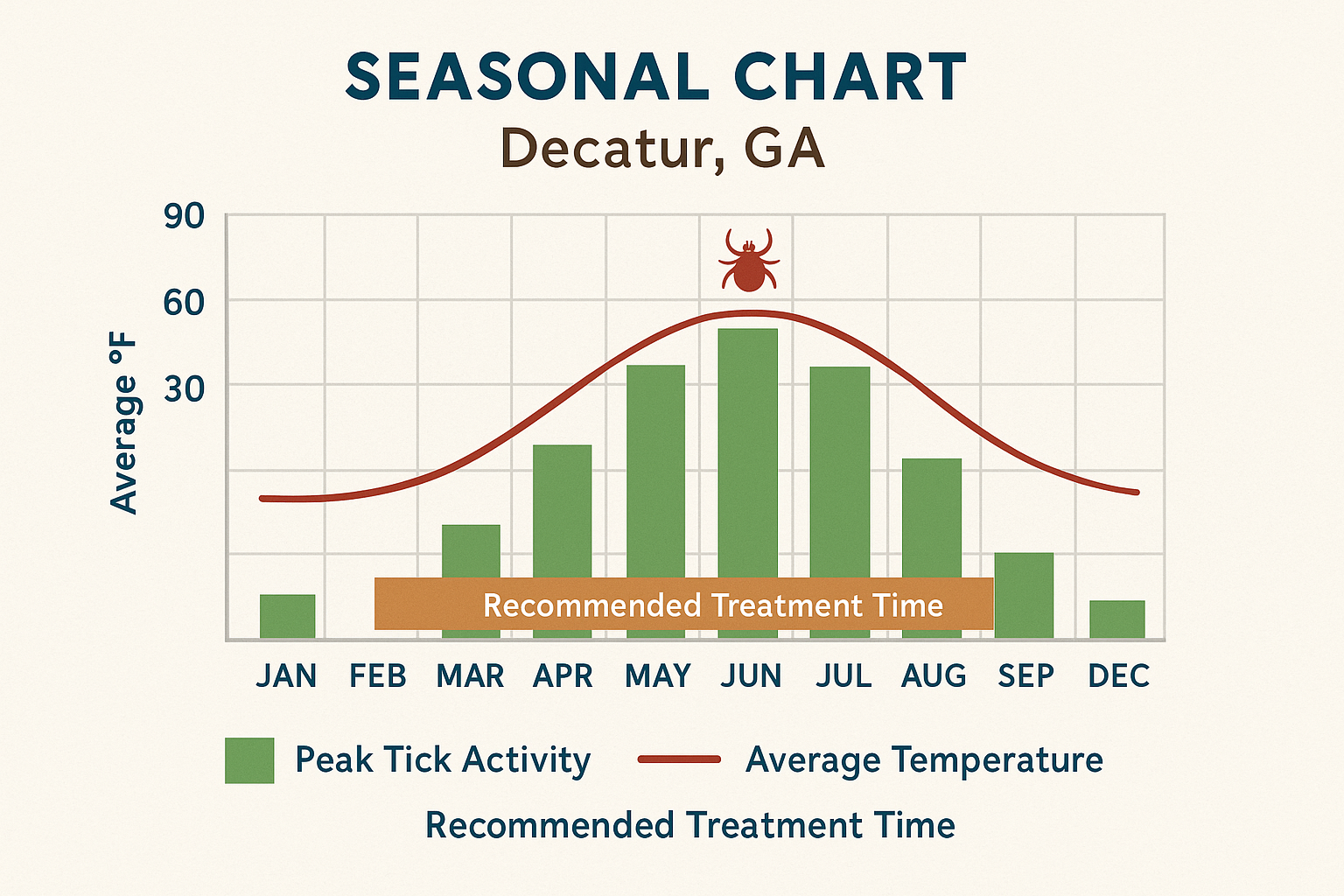
The chart above breaks down tick behavior month by month, helping homeowners understand when a tick exterminator Decatur professionals recommend becomes most important. Peak activity occurs from late April through early September, with July and August showing the highest average temperatures (around 88°F) and humidity levels. Our recommended treatment windows line up with the start of each stage: early-spring larval control (March–April), midsummer nymph suppression (June–July), and a fall adult retreat (late September), ensuring tick populations are addressed before they can spread.
Decatur’s calendar offers clues for heightened risk. The Decatur Arts Festival in May draws crowds to grassy parks, while high‑school baseball season (April‑June) places families on fields where nymphs hunt. Even the Fourth of July fireworks bring neighbors outdoors, increasing exposure during the tick’s busiest period.
Quick “Tick Patrol” Checklist for High‑Risk Weeks
- Inspect pets daily; use a tick‑preventive collar or topical treatment.
- Walk yard perimeters and trim tall grass to 3 inches or less.
- Check yourself and children for attached ticks after any outdoor activity.
- Place tick traps near shaded, humid zones for early detection.
- Schedule a professional perimeter spray within 7 days of spotting the first nymph.
By syncing these simple patrol steps with the seasonal peaks shown in the chart, homeowners can cut tick encounters before they become a health concern. Keeping a calendar of local events and the corresponding treatment window ensures you’re always one step ahead of the pests.
Treatment Options – DIY vs. Professional Tick Control
DIY Tick‑Control Methods You’ll Find Around the Yard
Many homeowners start with the tools they already have. Common do‑it‑yourself approaches include:
- Tick tubes – cardboard tubes filled with permethrin‑treated cotton that mice carry into their nests.
- Backyard sprays – over‑the‑counter insecticides applied to grass, shrubs, and leaf litter.
- Regular mowing – keeping grass under 3 inches to reduce the humid micro‑environment ticks love.
- Personal repellents – DEET, picaridin, or oil of lemon eucalyptus applied to skin and clothing.
- Landscape modifications – removing leaf piles, trimming tree branches, and creating a gravel or mulch barrier around the home.
Why DIY Often Falls Short
While these tactics can lower tick numbers temporarily, they rarely achieve the consistent, long‑term coverage needed for a safe yard. Over‑the‑counter sprays may not penetrate the soil where tick larvae develop, leading to patchy results. Resistance can develop when the same active ingredient is used repeatedly, and many products lack EPA registration for the specific tick species prevalent in Decatur. Moreover, homeowners must follow strict label directions; a missed step can render the treatment ineffective or create health hazards for pets and children.
Professional Tick Management: What Sets It Apart
Licensed pest‑control companies bring a science‑backed, integrated approach. Core services typically include:
- Perimeter treatments – calibrated applications of EPA‑registered acaricides along property edges, foundations, and high‑traffic zones.
- Targeted sprays – spot treatments on known hot spots such as shaded brush, woodpiles, and animal habitats.
- Integrated Pest Management (IPM) – a blend of chemical, cultural, and biological tactics, often incorporating nematodes or fungal pathogens that specifically attack tick larvae.
- Follow‑up monitoring – periodic inspections and re‑applications based on tick activity data and seasonal trends.

What to Expect During a Technician Visit
When a certified Anthem Pest technician arrives, you’ll first see a thorough walk‑through. They’ll identify micro‑habitats where ticks thrive—under decks, along fence lines, and in dense shrubbery. Wearing EPA‑approved protective gear, the technician mixes the appropriate acaricide and applies it with a low‑drift sprayer, ensuring even coverage without overspray onto neighboring properties. The process typically takes 30‑45 minutes for an average suburban lot, and the technician will leave a concise report outlining treated zones, product names, and any recommended landscape adjustments.
Safety First: EPA Regulations and Licensed Applicators
All professional tick products must be registered with the U.S. Environmental Protection Agency (EPA). This registration guarantees that the pesticide has undergone rigorous testing for efficacy, human health, and environmental impact. Licensed applicators are trained to read and follow label instructions, calculate exact dosages, and apply chemicals in a way that minimizes runoff and protects beneficial insects. Homeowners who attempt DIY applications without this expertise risk violating EPA regulations, exposing family members to harmful residues, and potentially voiding homeowner’s insurance coverage.
DIY vs. Professional – Quick Comparison
| Factor | DIY Approach | Professional Service |
|---|---|---|
| Effectiveness | Variable; often limited to surface treatment. | Consistent, penetrates soil and hidden habitats. |
| Safety | Risk of misapplication; limited EPA‑registered options. | Licensed applicators follow EPA guidelines; protective gear used. |
| Environmental Impact | Potential overuse of broad‑spectrum chemicals. | IPM reduces chemical load; uses targeted, low‑toxicity products. |
| Time & Effort | Requires regular re‑application and monitoring. | One‑time service with scheduled follow‑ups; saves homeowner time. |
| Cost | Lower upfront cost but may add up over seasons. | Transparent pricing; often more cost‑effective long term. |
Cost Comparison – DIY Methods vs. Professional Services
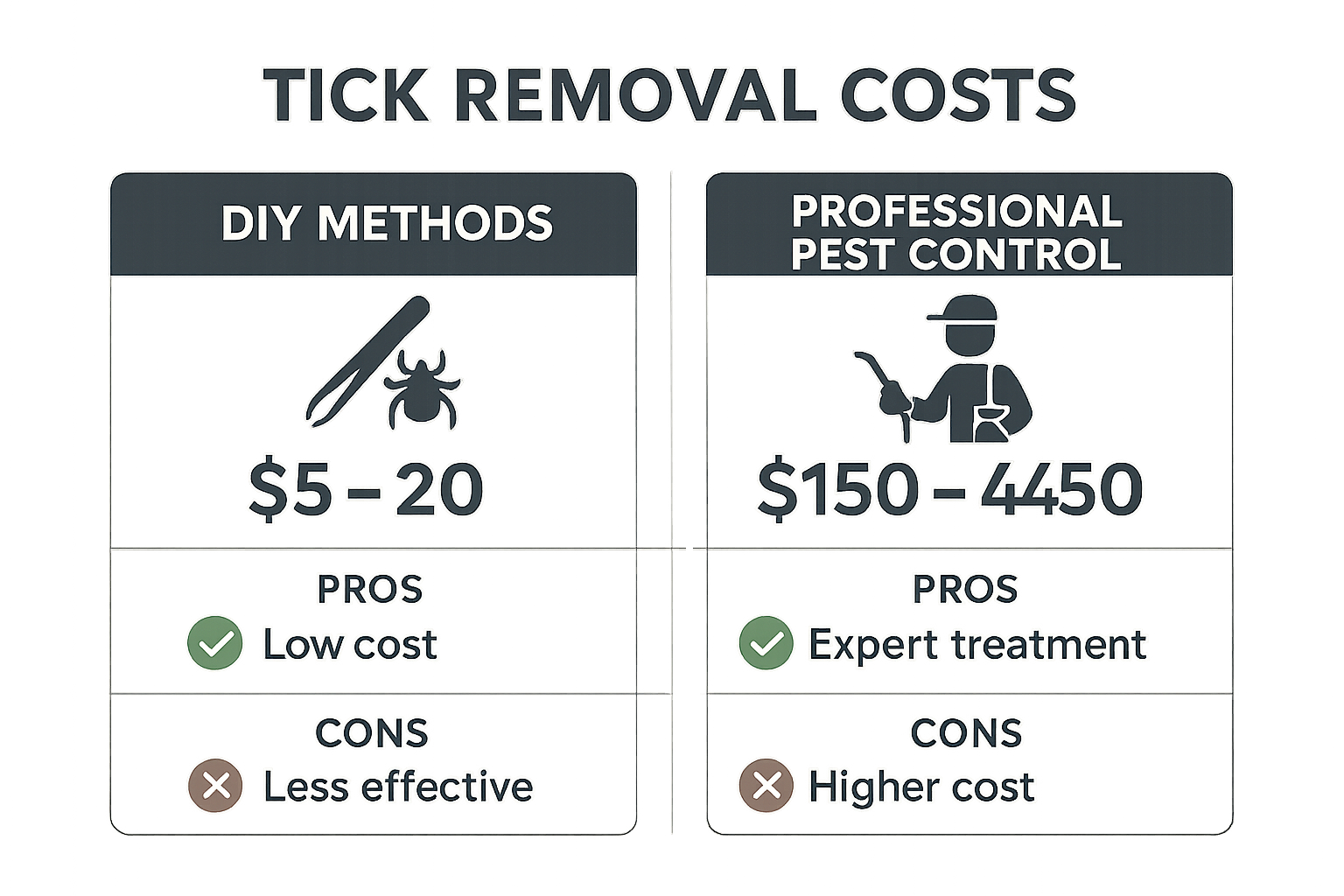
When you spot ticks around your Decatur home, the first question is usually “how much will it cost to get rid of them?” This is where choosing a tick exterminator Decatur homeowners trust can make a clear difference. Understanding the true expense of each option helps you avoid surprise bills later. A typical DIY kit—whether it’s a pack of tick tubes or an over-the-counter spray—will set you back between $30 and $50 for tubes and $20 to $40 for a single spray can. By contrast, a professional service from Anthem Pest Control averages $150 to $300 per treatment, covering the entire property and a follow-up inspection.
DIY Methods – Pros & Cons
- Effectiveness: Can reduce tick numbers temporarily, but coverage is often spotty.
- Time Commitment: You must apply products yourself, re‑apply after rain, and monitor results weekly.
- Long‑Term Results: Without a comprehensive plan, ticks can rebound within weeks.
- Upfront Cost: Lower initial outlay, which feels budget‑friendly.
- Hidden Costs: Re‑purchasing supplies, potential medical expenses if a bite transmits disease, and the value of your own time.
Professional Services – Pros & Cons
- Effectiveness: Trained technicians use EPA‑approved products and target tick habitats that DIY products miss.
- Time Commitment: One scheduled visit, with the company handling all prep and cleanup.
- Long‑Term Results: Integrated pest‑management plans often include seasonal follow‑ups, keeping tick populations suppressed year‑round.
- Upfront Cost: Higher initial price, but it covers labor, equipment, and a guarantee of service.
- Transparency: Anthem Pest Control provides a detailed quote before any work begins, so you know exactly what you’re paying for.
DIY enthusiasts often overlook hidden expenses. A single spray may need re‑application after heavy rain, and tick tubes require replacement every few months. More importantly, a tick bite can lead to medical treatment that far exceeds the cost of a professional extermination. These indirect costs can quickly turn a “cheap” DIY approach into a pricey mistake.
Anthem Pest Control’s pricing model is built on clarity. Homeowners receive a free on‑site quote that outlines every step—from initial inspection to post‑treatment monitoring—so there are no surprise fees. This transparent approach aligns with the National Pest Management Association (NPMA) guidelines for best practices, ensuring you get safe, effective, and accountable tick control.
Protect Your Home Today with Anthem Pest Control
By now you know how to spot a tick, understand the seasonal peaks in Decatur, GA, and recognize why a DIY spray often falls short. Ticks hide in grass, leaf litter, and even inside your home’s cracks, making thorough, professional treatment essential.
Why Professional Tick Control Beats DIY
- Comprehensive identification: Our technicians confirm the exact species and life stage, ensuring the right product is applied.
- Season‑specific timing: We treat at the optimal moment—early spring and late summer—when ticks are most vulnerable.
- Safety first: EPA‑approved chemicals are applied with calibrated equipment, protecting children, pets, and the environment.
- Long‑lasting results: A single professional service can suppress tick populations for months, whereas over‑the‑counter sprays often require frequent re‑applications.
These advantages translate into fewer bites, lower disease risk, and peace of mind for you and your family.
Anthem Pest Control: Your Tick‑Free Partner
Anthem Pest Control brings more than a toolbox to your doorstep. With a nationwide network of licensed technicians, we combine local knowledge of Georgia’s tick hotspots with cutting‑edge, low‑toxicity formulations. Our transparent pricing means you know exactly what you’re paying for—no hidden fees, no surprise add‑ons.
We’ve helped thousands of homeowners across the country protect their yards, decks, and interiors from ticks and other pests. Our commitment to affordability doesn’t compromise safety; every treatment follows strict industry standards and is backed by a satisfaction guarantee.
Take the Next Step—It’s Easy and Free
Ready to turn the tide on ticks? Schedule a free, no‑obligation quote today. One of our friendly representatives will assess your property, discuss the best plan for your budget, and answer any questions you have.
Call us now at 877‑371‑8196 or visit our website to request your quote. Our online form is quick, and you’ll receive a personalized estimate within 24 hours.
Don’t let ticks linger another season. Protect your home, protect your health, and enjoy the outdoors without worry.
Our team is ready to answer your call any day of the week, ensuring you never wait long for protection from a trusted tick exterminator Decatur homeowners can count on.