
What Millipedes Are and Why They Matter
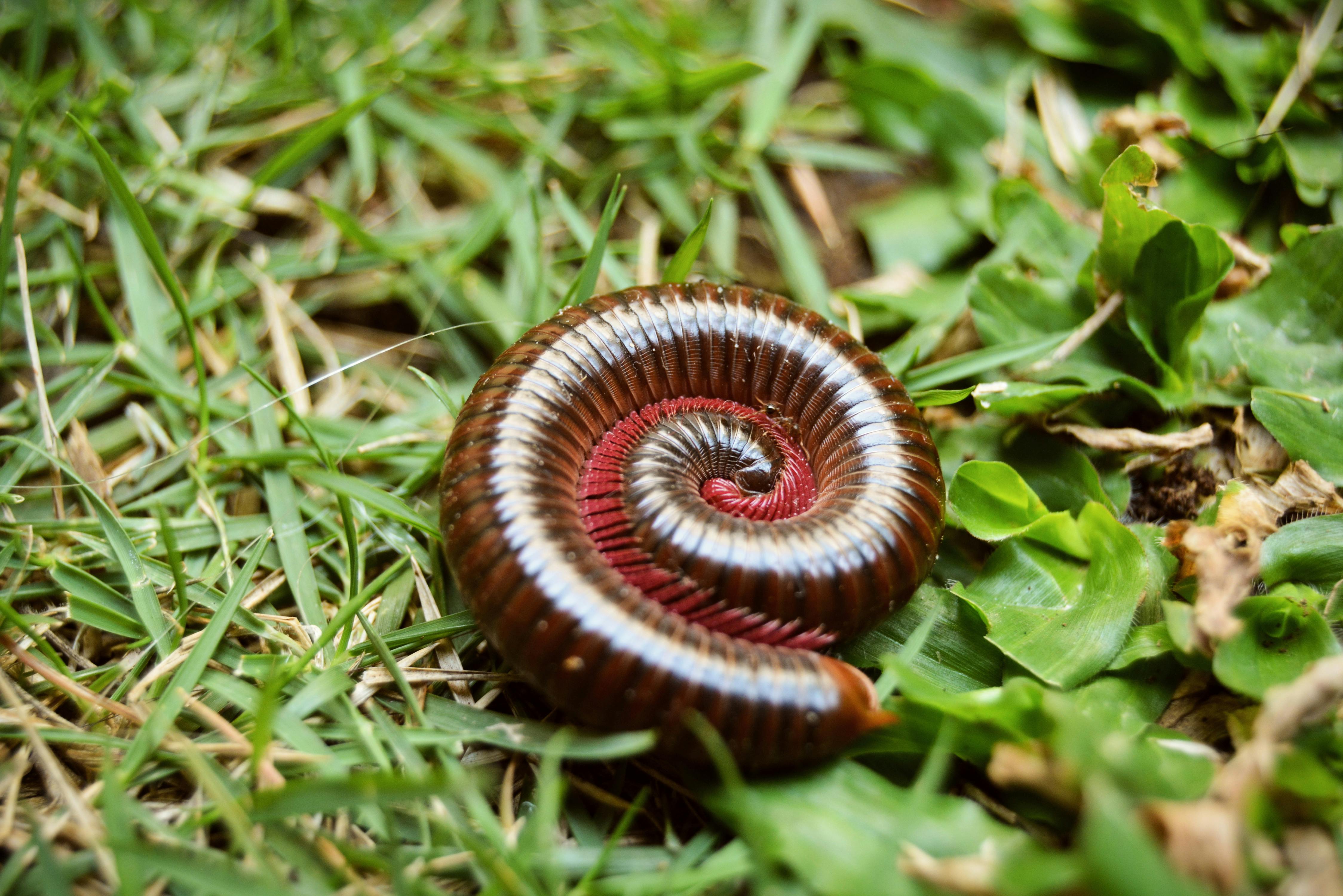
When you lift a garden mulch pile or turn over leaf litter, you might spot a slow-moving, many-legged creature curling up in a tight spiral. That’s a millipede—a harmless but often misunderstood resident of Georgia’s yards and basements. For homeowners considering whether to contact a millipede exterminator Peachtree City, understanding what millipedes are, how they differ from other “creepy-crawlies,” and why they sometimes become a nuisance can help determine whether a professional inspection is worth the call.
Definition and Taxonomy
Millipedes belong to the class Diplopoda, a group of arthropods distinguished by their elongated bodies and the presence of two pairs of legs on each body segment (technically called diplosegments). The name “millipede” comes from the Latin for “thousand feet,” though most species carry far fewer—usually between 30 and 400 legs. Their evolutionary lineage stretches back over 400 million years, making them one of the oldest terrestrial animals on the planet.
Physical Characteristics
A typical millipede has a cylindrical, segmented body that can range from a half‑inch to over four inches in length, depending on the species. Each segment is smooth or slightly ridged, and the creature sports two pairs of short, sturdy legs per segment, giving it a steady, lumbering gait. Coloration varies from pale tan and brown to deep black or even bright orange, often matching the soil or leaf litter where they hide. Unlike insects, millipedes lack wings and have a single pair of antennae at the front of their heads.
Common Species in Georgia and the Southeast
Homeowners in Peachtree City are most likely to encounter three species:
- Southern Giant Millipede (Narceus americanus) – up to 4 inches long, dark brown to black, commonly found under mulch and in compost.
- Polydesmid Millipede (Polydesmus angustus) – smaller (about 1 inch), grayish‑brown, often gathers in damp basements.
- Flat‑backed Millipede (Brachycybe lecontii) – recognizably flattened, bright orange‑red, prefers decaying wood in forested areas.
These species thrive in the warm, humid climate of the Southeast, especially after heavy rains that push them out of the soil and into more visible locations.
How to Tell Millipedes Apart from Similar Pests
Millipedes are frequently confused with centipedes and woodlice, but a few key differences make identification easy. Centipedes (class Chilopoda) have one pair of legs per segment, a flatter body, and a predatory bite—so they move faster and look more aggressive. Woodlice (or pill bugs) are crustaceans; they have seven pairs of legs total, a segmented, armor‑like exoskeleton, and can roll into a ball. Millipedes, by contrast, are slower, have two leg pairs per segment, and curl into a tight spiral when disturbed.
Why Millipedes Can Become a Nuisance
Under normal circumstances millipedes do no harm to structures or people. However, when environmental conditions drive large numbers into your yard—think after a week of rain—their sheer volume can become a problem. They may congregate in mulch beds, garden paths, or even inside crawl spaces, leaving behind a silvery‑gray trail of excrement that can discolor stone or concrete. While they rarely chew on live plants, they do feed on decaying organic matter, and in massive numbers they can strip mulch of its protective layer, leaving seedlings exposed to sun and drought. The “creepy‑crawl” factor also matters: many homeowners feel uneasy seeing dozens of wriggling bodies, especially around children or pets.
Health Impact on Homeowners
For most people, millipedes are harmless. They do not bite, sting, or transmit diseases. The primary health concern is a mild skin irritation that can occur if a millipede’s defensive secretions—often a liquid containing benzoquinones—come into contact with sensitive skin. This reaction is similar to a mild allergic response: redness, itching, and occasional swelling that typically fades within a day. People with known sensitivities should wear gloves when handling mulch or cleaning up large congregations, but the risk remains low compared to pests like spiders or ticks.
How Moisture and Weather Attract Millipedes to Your Home
Millipedes are not the creepy‑crawlies you’d find scurrying across a dry sidewalk. Their natural kingdom is a world of perpetual dampness – the soft, decomposing leaf litter beneath towering oaks, the dark mulch beds that line garden paths, the rich compost piles where kitchen scraps turn to soil, and the rotting wood that shelters countless forest insects. In these micro‑habitats, moisture is more than a comfort; it’s a lifeline.
Unlike insects that breathe through spiracles, millipedes respire directly through their thin, permeable skin. This makes them exquisitely sensitive to humidity levels. A drop in ambient moisture can cause their skin to dry out, leading to fatal dehydration. Consequently, they thrive in environments where the air stays above 70 % relative humidity, and they actively seek out any source of dampness to keep their bodies supple and their metabolic processes humming.
When Georgia’s rainy season rolls in, the ground becomes a saturated sponge. Heavy downpours flood leaf litter, saturate mulch, and turn compost heaps into soggy mush. The excess water forces millipedes to abandon their outdoor refuges in search of drier shelter. Your home, with its climate‑controlled interior and dry crawl spaces, suddenly looks like a safe oasis. A single storm can trigger a wave of movement, pushing thousands of millipedes toward the nearest opening.
Typical entry points
- Foundation cracks – even hair‑thin fissures let moisture‑laden critters slip inside.
- Door sweeps – worn or missing sweeps create a gap for both water and insects.
- Window gaps – poorly sealed windows act as miniature rain tunnels.
- Drainage pipes – vent pipes and sewer lines often have loose fittings that millipedes can crawl through.
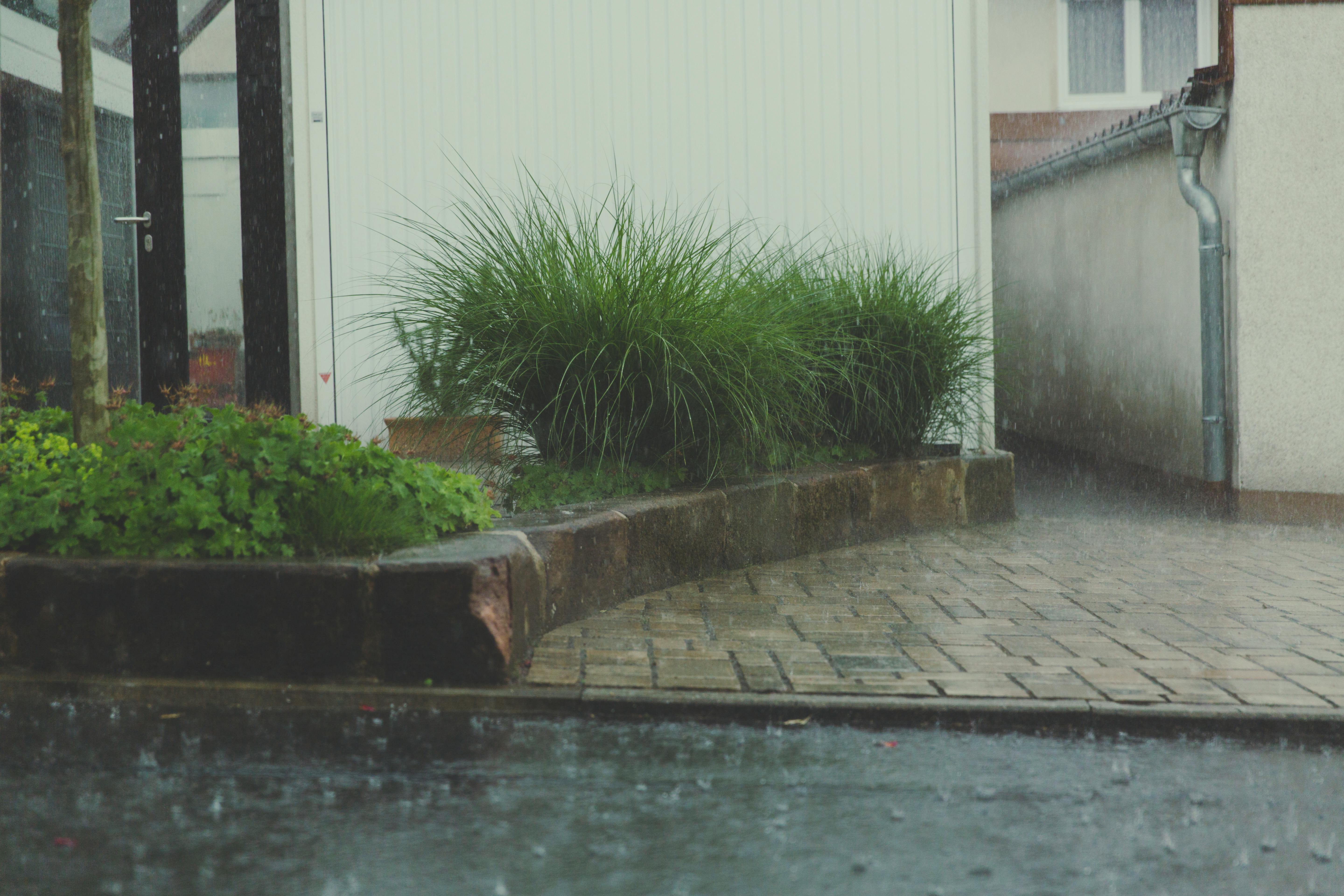
The above image illustrates a typical scenario: a rain‑soaked courtyard where water pools around pavers and seeps into nearby soil. As the ground stays wet, millipedes emerge from the leaf litter, wander toward the house, and exploit any of the entry points listed above. Homeowners often notice them clustering near doorways or along baseboards the morning after a heavy storm.
Georgia’s climate amplifies this problem. The state experiences a pronounced wet season from late spring through early fall, with average monthly rainfall exceeding 5 inches during June and July. Data from the National Weather Service shows that spikes in precipitation are directly correlated with increased indoor millipede sightings. In Peachtree City, a single 2‑inch rain event can raise the number of millipedes found inside a home by up to 300 % compared with a dry week.
Understanding the moisture‑driven behavior of millipedes helps you anticipate when they’re most likely to appear. By inspecting and sealing foundation cracks, maintaining functional door sweeps, and ensuring that drainage systems are properly capped, you can reduce the pathways that moisture‑seeking millipedes use to infiltrate your home. Proactive measures taken before the next storm can keep your living spaces dry—and millipede‑free.
Seasonal Activity of Millipedes in Georgia
Understanding when millipedes are most active is the first step to keeping them out of your home. For homeowners working with a millipede exterminator Peachtree City, it helps to know that in Georgia their life cycle—egg, juvenile, and adult—spins in lockstep with temperature and humidity. Warm, moist conditions accelerate development, while cold or dry spells put the insects into a dormant state. By matching your treatment plan to these natural rhythms, you can stop a small problem from becoming a full-blown invasion.
Life Cycle Basics
Female millipedes lay clusters of eggs in moist soil or leaf litter each spring. After a few weeks, the eggs hatch into tiny, translucent juveniles that resemble miniature adults but lack the full complement of body segments. These juveniles molt several times over the summer, growing larger and adding segments with each molt. By late summer, most have reached adulthood and are ready to mate, laying the next generation of eggs before the first frost.
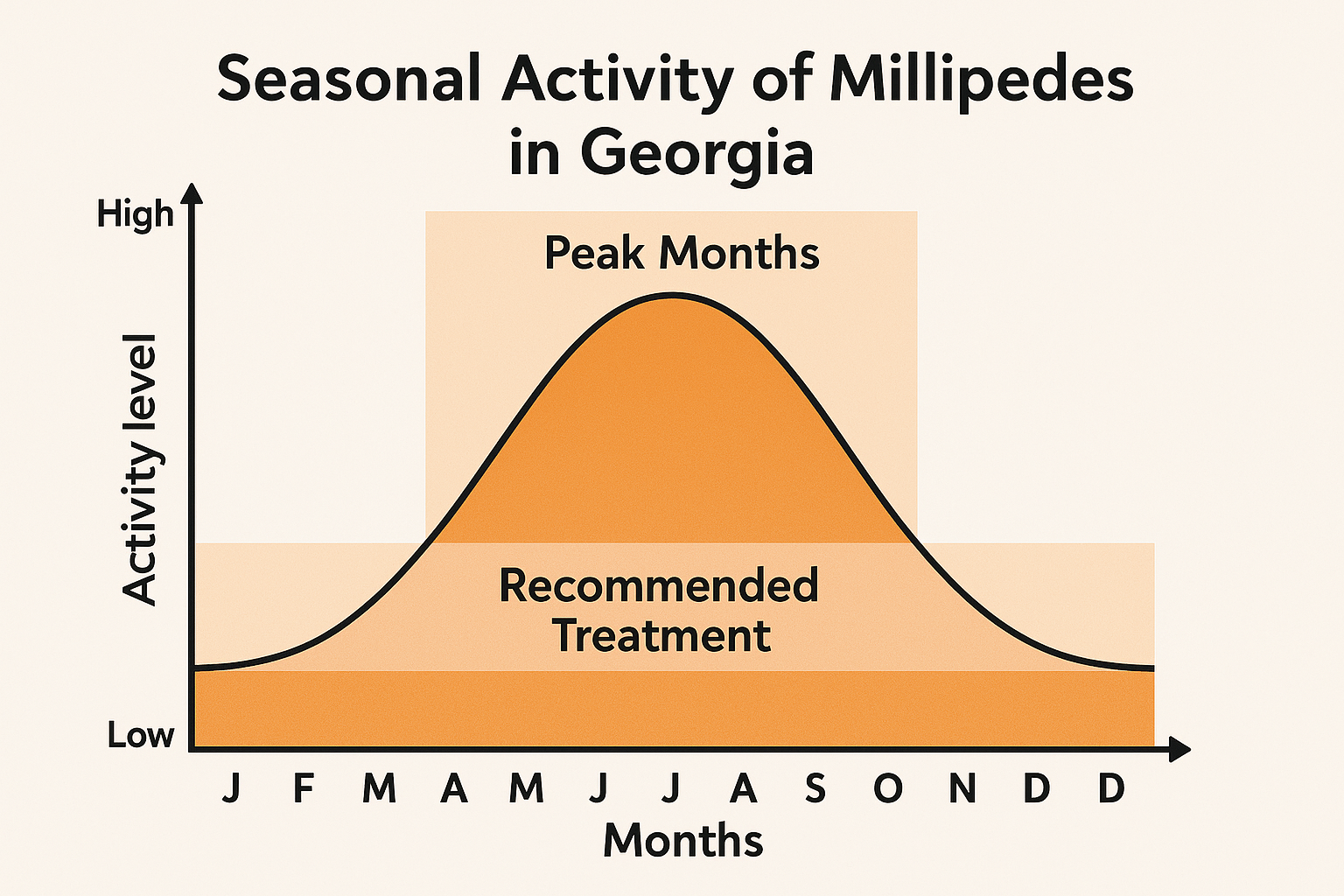
Peak Activity Months (May – September)
Georgia’s climate creates a perfect summer playground for millipedes. From May through September, daytime highs regularly sit between 75°F and 90°F, and nightly humidity often climbs above 70%. These conditions trigger a surge in surface activity as adults search for food and mates. Homeowners typically notice the most sightings during late spring rains and the humid days of midsummer. This is the window when outdoor populations explode and the risk of indoor entry spikes.
Low‑Activity Periods (Winter)
When temperatures dip below 50°F, millipedes retreat underground or into insulated wall voids. Their metabolic rate slows dramatically, so you’ll see fewer crawling creatures on your porch or foundation. However, if your home is heated, the warm interior can become a refuge, allowing a few survivors to linger in basements, crawl spaces, or damp corners. While infestations are less common in winter, a hidden pocket can serve as the seed for next spring’s outbreak.
Weather Triggers That Spark Surges
Georgia’s summer thunderstorms are more than just a spectacular light show—they’re a millipede rallying call. Heavy rain saturates the soil, forcing millipedes to the surface in search of drier refuge. A sudden downpour followed by a humid night often leads to a noticeable spike in sightings the next morning. Similarly, prolonged periods of rain in early spring can accelerate egg hatch rates, giving you a head start on the season’s first wave.
Seasonal Activity Chart
| Month | Activity Level | Recommended Action |
|---|---|---|
| January | Very Low | Inspect crawl spaces for overwintering pockets |
| February | Low | Seal cracks; schedule a pre‑season inspection |
| March | Moderate | Apply barrier treatments around foundation |
| April | Moderate‑High | Complete perimeter treatment before heavy rains |
| May | High | Monitor for indoor entry; treat interior moisture sources |
| June | High | Repeat perimeter treatment after major thunderstorms |
| July | High | Maintain dry indoor environments; consider spot‑treatments |
| August | High | Final interior inspection before fall cooling |
| September | Moderate‑High | Apply late‑season barrier to reduce fall breeding |
| October | Moderate | Check for residual moisture; clear leaf litter from foundation |
| November | Low | Seal any newly discovered entry points |
| December | Very Low | Perform a year‑end audit of treatment effectiveness |
Practical Timing Tip
Schedule a professional inspection in early March—before the first major rainstorms hit. This timing lets Anthem Pest Control apply a preventive barrier when millipedes are still dormant, cutting off their path into your home before the May‑September surge begins. A pre‑emptive approach not only reduces the number of chemicals needed later but also saves you from dealing with a full‑scale infestation during the hottest months.
Treatment Options: DIY Kits vs Professional Services
What most homeowners try first
When a millipede invasion shows up around your porch or garden, the instinct is to grab a can from the hardware aisle and start spraying. The most common DIY tools include:
- Perimeter sprays – aerosol or pump‑spray formulations that you apply around doors, windows, and foundation cracks.
- Boric acid dust – a fine powder that adheres to the insects’ exoskeletons and disrupts their digestive system.
- Diatomaceous earth (DE) – a natural, abrasive silica dust that punctures the millipede’s waxy cuticle, causing dehydration.
- Bait stations – containers filled with attractants mixed with a slow‑acting toxin, designed to lure millipedes away from your home.
Why DIY can feel appealing
There are a few clear advantages that make the do‑it‑yourself route attractive for many homeowners:
- Lower upfront cost – A single can of spray or a bag of DE usually runs under $30, letting you address a small problem without a service call fee.
- Immediate availability – You can pick up the product at the local store and start treatment within minutes, which is reassuring when you see a cluster of millipedes on your deck.
- Control over application – You decide where and how much product to use, tailoring it to the exact spots you’ve spotted.
Where DIY falls short
Despite the initial convenience, DIY methods have notable limitations that can turn a short‑term fix into a long‑term headache:
- Inconsistent coverage – Sprays and dusts often miss hidden cracks, soil pockets, or the underside of mulch where millipedes thrive.
- Repeated applications – Because the products wear off with rain or foot traffic, you may need to reapply every few weeks, driving up the total cost and effort.
- Safety concerns – Many over‑the‑counter insecticides contain chemicals that can irritate pets, children, or even the applicator if not used with proper protective gear.
- Limited diagnostic insight – DIY kits treat symptoms, not the underlying cause. You might miss structural entry points or moisture issues that fuel millipede populations.
What a professional service brings
When you call a licensed provider like Anthem Pest Control or a trusted millipede exterminator Peachtree City, the process is more systematic:
- Comprehensive inspection – Trained technicians examine your home’s exterior, foundation, landscaping, and interior moisture sources to locate the exact entry routes.
- Targeted soil treatments – Using EPA‑approved, low‑toxicity granules, we treat the soil around your foundation where millipedes congregate, creating a barrier that lasts months.
- Barrier applications – Professional-grade sprays are applied to cracks, vents, and other vulnerable points, ensuring a uniform shield that DIY cans can’t achieve.
- Follow‑up visits – Most service plans include a second‑look appointment to verify that the population is suppressed and to address any new activity.
Benefits of hiring the pros
- Guaranteed coverage – Our technicians use calibrated equipment and proven formulas that reach hidden zones, reducing the chance of missed spots.
- Expertise in entry‑point identification – We pinpoint structural gaps, drainage problems, or landscaping features that attract millipedes, then recommend corrective actions.
- Low‑toxicity, EPA‑approved products – Our solutions are selected for effectiveness while minimizing risk to humans, pets, and beneficial insects.
- Warranty options – Many of our plans come with a satisfaction guarantee, giving you peace of mind that the problem won’t return without additional support.
DIY vs. Professional: When to choose each
DIY may be enough when you notice only a few isolated millipedes on a patio or in a garden bed, and there are no signs of a larger colony. In these cases, a targeted dust or a small bait station can quickly reduce the nuisance without the need for a service call.
Professional help is recommended if you encounter any of the following:
- Frequent sightings across multiple rooms or outdoor areas.
- Large, dense clusters of millipedes emerging from the soil.
- Recurring problems after previous DIY attempts.
- Presence of children, pets, or elderly residents who could be sensitive to over‑the‑counter chemicals.
- Visible moisture problems, such as standing water near the foundation, that create an ideal breeding ground.
In these scenarios, the comprehensive approach of a professional service not only eradicates the current infestation but also addresses the environmental factors that allow millipedes to thrive.
Bottom line for the Peachtree City homeowner
If you’re dealing with a one‑off sighting, a DIY kit can be a cost‑effective stopgap. However, once the problem expands beyond a handful of insects, or if you value a long‑lasting, health‑conscious solution, calling Anthem Pest Control ensures that the millipedes are eliminated safely and thoroughly—so you can enjoy your yard without the creepy crawl‑in crowd.
Cost Comparison for Millipede Extermination in Peachtree City, GA
DIY Millipede Extermination Costs
For homeowners who prefer a hands-on approach, the market offers several over-the-counter kits. In Peachtree City, a typical DIY package ranges from $15 to $45. For those comparing DIY costs before hiring a millipede exterminator Peachtree City, each kit usually treats between 500 and 1,000 sq ft, which is enough for a single garage, a small yard, or a portion of a larger lawn. Because you’ll be applying the product yourself, the upfront expense stays low, but you’ll need to repeat the treatment every 3–4 months to keep millipedes at bay.
Professional Treatment Costs in Peachtree City
When you call a licensed provider like Anthem Pest Control, the price reflects both the product strength and the expertise that comes with it. Most residential treatments fall between $120 and $250 per visit, depending on the size of the property and the severity of the infestation. Many local companies offer discounts for annual service plans, reducing the per‑visit cost to roughly $100–$180 when you commit to two or more treatments per year.
Effectiveness & Treatment Frequency
Industry data shows a clear gap in success rates. DIY solutions typically achieve 40 %–60 % reduction in millipede activity, while professional services boast an 85 %–95 % success rate. The higher efficacy means you’ll generally need fewer follow‑ups: most pros recommend 1–2 treatments per year, timed for the spring and fall peaks, whereas DIY users must reapply every quarter.
| Option | Price per Treatment | Coverage Area | Frequency | Effectiveness |
|---|---|---|---|---|
| DIY Kit | $15–$45 | 500–1,000 sq ft | Every 3–4 months | 40 %–60 % |
| Professional Service | $120–$250 (≈$100–$180 with plan) | Whole home & yard | 1–2 times per year | 85 %–95 % |
Hidden Costs to Consider
Beyond the headline price, there are a few “gotchas” that can affect your bottom line:
- Labor & equipment: Professional technicians bring specialized sprayers and protective gear, which are factored into the service fee. DIY kits require you to purchase a sprayer or use household items, adding $10–$30 to the total.
- Follow‑up visits: If the first treatment doesn’t fully eradicate the problem, many companies include a complimentary follow‑up within 30 days, while DIY users must purchase another kit.
- Potential re‑infestation: Millipedes can rebound quickly after a missed season. The cost of a second professional visit can climb to $150–$300, whereas a homeowner might spend another $20–$40 on a replacement kit.
Visual Comparison
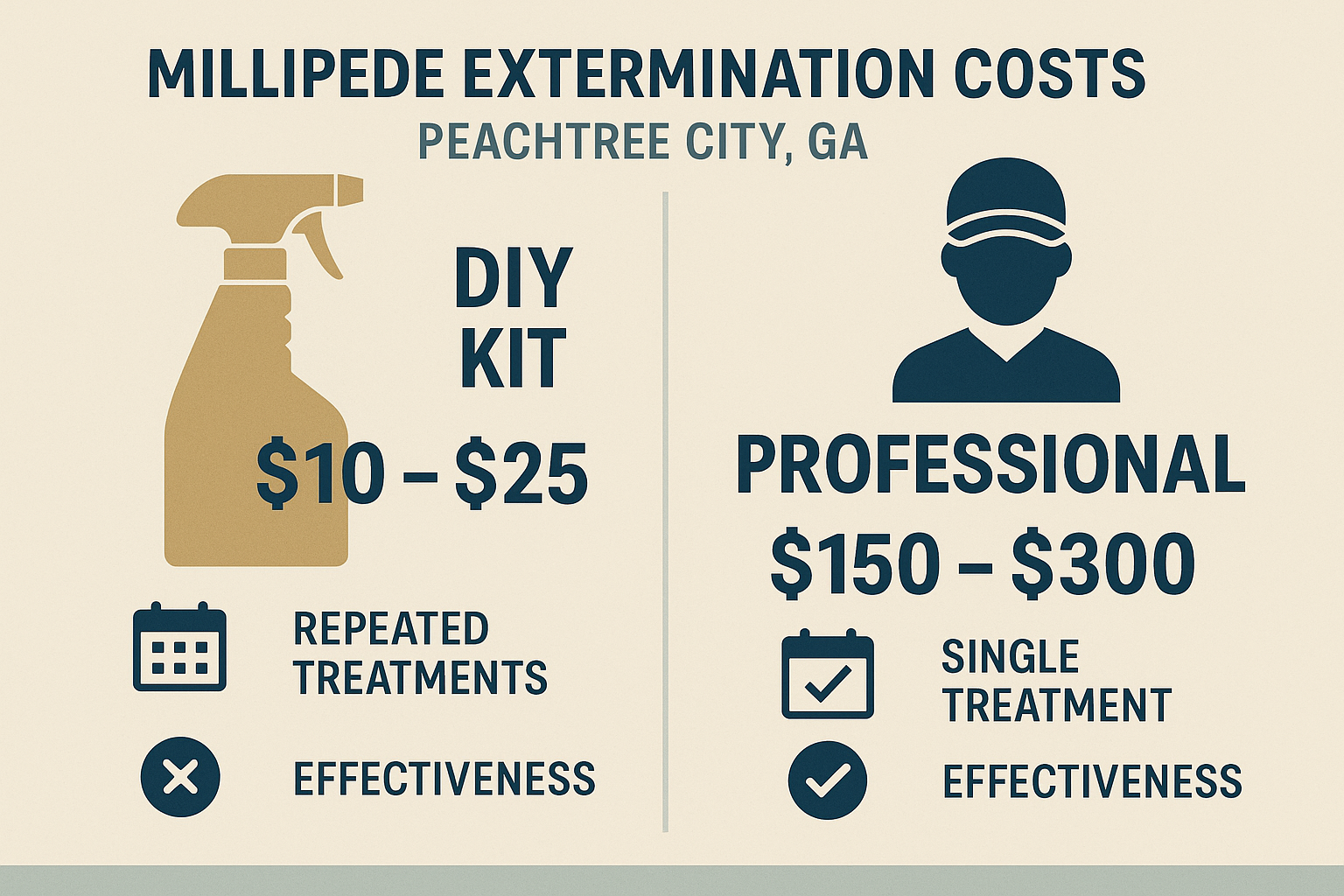
In short, DIY kits are budget‑friendly but require frequent reapplications and deliver modest control. Professional treatments carry a higher upfront cost but usually pay off with superior efficacy, fewer visits, and peace of mind that your home stays millipede‑free year after year.
Prevention Tips to Keep Millipedes Out of Your Property
Landscape Adjustments
Millipedes love cool, damp hiding spots. The easiest way to make your yard less inviting is to move organic mulch and leaf piles at least three feet away from the foundation. If you prefer a mulched look, choose coarse bark rather than fine wood chips; the larger pieces dry faster and give millipedes fewer places to burrow.
Drainage Improvements
Standing water is a magnet for millipedes. Start by fixing leaky gutters and downspouts so water is directed away from the house. Installing a French drain along the perimeter or in low‑lying garden beds can channel moisture underground and keep the soil around your foundation dry. Finally, check the grading of your lawn—ideally the ground should slope away from the home by at least a one‑inch drop per foot.
Seal Entry Points
Even the tiniest crack can become a highway for millipedes. Walk the exterior of your home with a flashlight and caulk any gaps you find in the foundation, around utility penetrations, and near pipe sleeves. Install door sweeps on all exterior doors and replace or repair window screens that have tears. These simple barriers stop millipedes before they can slip inside.
Reduce Organic Debris
Rotting wood, garden clippings, and uncovered compost are perfect food sources. Keep garden beds tidy by removing dead foliage weekly, and store firewood at least two feet off the ground on a rack. If you compost, use a sealed container with a tight‑fitting lid to keep millipedes—and other pests—out of the mix.
Natural Repellents
For homeowners who prefer chemical‑free solutions, sprinkle diatomaceous earth around the house perimeter, especially near doorways and low‑lying walls. The microscopic sharp edges dehydrate any millipede that crawls over it. Planting herbs such as lavender and rosemary creates a scent barrier that many millipedes find unpleasant, adding both beauty and protection to your garden.
Seasonal Maintenance Checklist
| Season | Key Tasks |
|---|---|
| Early Spring (Pre‑peak) | Inspect foundation for cracks, clear mulch away from walls, test drainage. |
| Late Spring (Post‑rain) | Remove wet leaf piles, re‑apply diatomaceous earth, check gutters. |
| Summer | Maintain dry perimeter, trim back vegetation, replace door sweeps if worn. |
| Fall | Final yard sweep, store firewood off the ground, seal compost bins. |
Why a Professional Inspection Still Matters
Even the most diligent homeowner can miss hidden moisture sources or tiny foundation fissures that invite millipedes. A qualified Anthem Pest Control technician can perform a thorough inspection, using moisture meters and infrared cameras to locate problem areas you can’t see. They’ll also recommend targeted treatments—such as perimeter sprays or barrier installations—that complement your DIY prevention efforts and keep the infestation from returning.
By combining smart landscaping, proper drainage, diligent sealing, and natural repellents, you create multiple layers of defense that make your property unattractive to millipedes. Pair these habits with an annual professional inspection, and you’ll enjoy a millipede‑free home all year long.
Get Professional Help from Anthem Pest Control
Millipedes may seem harmless, but when they swarm onto sidewalks, crawl into basements, or find their way into your home, they quickly become a nuisance. For homeowners considering a millipede exterminator Peachtree City, their sheer numbers can overwhelm outdoor lighting, create unsightly clusters on patios, and, in severe cases, trigger allergic reactions for sensitive occupants. While DIY sprays and home remedies can knock back a few stragglers, they rarely address the underlying entry points or the soil-borne populations that keep the infestation alive.
Professional treatment offers three decisive advantages over a DIY approach: comprehensive inspection, targeted application of EPA‑approved products, and a long‑term barrier that prevents re‑invasion. Certified technicians use calibrated equipment to locate hidden colonies, then apply treatments that are both effective and safe for children, pets, and the environment. The result is a lasting reduction in millipede activity, not just a temporary patch.
Why Choose Anthem Pest Control?
Anthem Pest Control brings nationwide experience to every Peachtree City home. Our team consists of fully licensed technicians who stay current on the latest integrated pest‑management practices. We rely on EPA‑approved chemicals that are proven to eradicate millipedes while minimizing residual impact. Transparent pricing means you know exactly what you’re paying for—no hidden fees, no surprise add‑ons.
Targeted Millipede Services
- Soil Barrier Treatment: A perimeter application that creates an invisible shield beneath your foundation, stopping millipedes before they can climb onto your home.
- Indoor Perimeter Treatment: Focused sprays around doors, windows, and utility entries to block interior migration.
- Follow‑Up Monitoring: Scheduled visits to assess effectiveness and re‑treat if necessary, ensuring long‑term protection.
We understand that every property is unique, which is why we offer a free, no‑obligation inspection. Our specialists will walk your yard, evaluate soil conditions, and discuss the best strategy for your specific situation—all at zero cost to you.
Choosing Anthem means gaining peace of mind. You’ll enjoy a home free from millipede invasions, protected by a plan that adapts to seasonal changes and new pest pressures. Our commitment is simple: keep your family safe, your home comfortable, and your budget intact.
Ready to take the next step? For trusted millipede exterminator Peachtree City, call us today at 877-371-8196 or visit Anthem Pest Control for a free quote and schedule your inspection.