Introducing Carpet Beetles and Why Homeowners Should Care
Carpet beetles belong to the family Dermestidae, a group of small, rounded insects that thrive on protein-rich debris and often lead homeowners to search for a carpet beetle exterminator near me Suwanee when infestations appear indoors. In U.S. homes, you’ll most often encounter three species: the Varied Carpet Beetle (Anthrenus verbasci), the Black Carpet Beetle (Attagenus unicolor), and the Furniture Carpet Beetle (Anthrenus flavipes). Adults range from 2 to 5 mm, sport mottled colors, and are active flyers during the warmer months.
These beetles don’t magically appear inside your living room; they hitch a ride on everyday items. Open windows and doors, especially in late spring, provide a direct entry point. More often, they arrive hidden in clothing, luggage, pet bedding, and even fresh groceries. Once inside, the adult beetles seek out dark, undisturbed corners where they can lay eggs near a food source for their larvae.
It’s easy to confuse carpet beetles with other household pests, but a few key differences help you tell them apart:
- Carpet beetles vs. moths: Moths have slender bodies and feathery antennae, while carpet beetles are more compact and club‑shaped. Moth larvae feed mainly on natural fibers, whereas carpet beetle larvae also consume dead insects, hair, and food crumbs.
- Carpet beetles vs. termites: Termites are wood‑eating and work in large colonies, creating visible mud tubes. Carpet beetles target fabrics and organic debris, leaving irregular patches of damage rather than structural weakening.
- Carpet beetles vs. cockroaches: Cockroaches are larger, have longer legs, and are often seen scurrying at night. Carpet beetles are much smaller, slower, and usually go unnoticed until damage appears.
The damage they cause can be surprising. Carpet beetle larvae, sometimes called “woolly bears,” chew through carpets, upholstery, curtains, blankets, and stored clothing. Their feeding creates tiny holes, fuzzed‑out spots, and a gradual thinning of fabric that can ruin cherished heirlooms or costly furniture. Because the larvae hide in seams and under padding, the destruction often goes unnoticed until it’s extensive.
Understanding this threat sets the stage for the rest of the guide. Here’s how the article will walk you through everything you need to know:
- Identification: Spotting adults and larvae, recognizing tell‑tale signs.
- Damage assessment: What to look for in carpets, upholstery, and stored items.
- Life cycle: Egg, larva, pupa, adult—timelines that dictate treatment windows.
- Seasonal activity: When beetles are most active in Suwanee, GA.
- Treatment options: Professional extermination methods, DIY steps, and safe chemicals.
- Pricing overview: Typical costs for inspection, treatment, and follow‑up.
- Prevention strategies: Cleaning habits, storage tips, and home sealing.
- Next steps: How to contact a local carpet beetle exterminator and what to expect during a service call.
All information presented is backed by reputable sources. For pest biology and health impact, see the U.S. Environmental Protection Agency (EPA), the Centers for Disease Control and Prevention (CDC), and the National Pest Management Association (NPMA). Armed with this knowledge, you’ll be ready to protect your home before carpet beetles turn a cozy space into a costly repair job.
Spotting Carpet Beetle Damage in Your Home
Carpet beetles are tiny, but the damage they leave behind is anything but subtle. As a homeowner, the first line of defense is learning to read the warning signs before an infestation spreads. Below, we break down exactly what to look for on carpets, upholstery, clothing, and stored items.
Irregular Holes and Threadbare Patches
One of the most recognizable clues is a pattern of irregular holes that appear as if a small animal has nibbled at the surface. Unlike the neat, round holes left by rodents, carpet beetle damage is jagged and uneven, often creating threadbare patches where the fibers have been stripped away.
Larvae Feeding on Natural Fibers
Carpet beetle larvae thrive on protein‑rich natural fibers—think wool, silk, cotton, and even leather. As they chew, they remove the tiny “fuzz” that gives carpet its plush feel, leaving behind a smooth, almost shiny spot. Over time, the affected area becomes noticeably thinner and more prone to wear.
Damage on Upholstery, Clothing, and Stored Items
The same feeding behavior shows up on sofas, armchairs, drapes, blankets, and even seasonal clothing stored in closets. You might notice tiny, crescent‑shaped holes along the seams of a favorite sweater or a ragged edge on a curtain panel. Stored items, especially those tucked away in basements or attics, are prime targets because they’re undisturbed for months.

Step‑by‑Step Visual Inspection Checklist
Use this quick checklist during your next routine walk‑through. Grab a flashlight and a magnifying glass for the best results.
- Scan high‑traffic carpet areas. Look for unevenly spaced holes or patches that feel thinner to the touch.
- Run your hand over upholstery. Any spot that feels smoother than the surrounding fabric could be a feeding site.
- Inspect seams and folds. Larvae love the hidden creases of blankets, curtains, and clothing.
- Check under furniture. Dust and debris can hide both larvae and their waste.
- Examine stored boxes. Open seasonal storage containers and feel each item for loss of fuzz.
- Look for shed skins. The larvae molt several times; their translucent skins are a dead giveaway.
- Spot fecal pellets. Tiny, pepper‑like droppings often accumulate near feeding zones.
Secondary Signs: Shed Skins, Fecal Pellets, and Adult Beetles
Even if the damage isn’t obvious, you may still catch secondary evidence. Shed skins appear as delicate, papery shells that cling to carpet edges or furniture legs. Fecal pellets look like fine, dark specks—often mistaken for dust but actually the larvae’s waste. Finally, keep an eye on windows and light fixtures; adult carpet beetles are attracted to light and may flutter in during dusk, providing a visual cue that an infestation is present.
Spotting these signs early can save you time, money, and the frustration of extensive repairs. If you identify any of the above indicators, it’s wise to contact a local professional—like Anthem Pest Control—to assess the situation and recommend a targeted treatment plan.
Carpet Beetle Life Cycle and Seasonal Activity
Four Developmental Stages
Carpet beetles move through egg, larva, pupa, and adult phases before completing their life cycle. The adult female lays tiny, oval eggs (about 0.5 mm) in cracks, near food sources, or on stored fabrics. Once hatched, the larvae—often called caterpillars—begin the destructive work that homeowners notice. After feeding and growing, the larvae spin a silken cocoon, become pupae, and finally emerge as winged adults ready to reproduce.
Duration of Each Stage Indoors
Inside a typical Suwanee home—maintained at 70‑75 °F (21‑24 °C) with 45‑55 % relative humidity—the stages progress as follows:
- Egg: 1‑2 weeks before hatching.
- Larva: 3‑6 months, though it can extend to a year if food is scarce.
- Pupa: 1‑2 weeks inside a protective cocoon.
- Adult: 2‑4 weeks of active mating and egg‑laying; adults may live up to 2 months.
These timelines shrink in warmer, more humid conditions, accelerating the entire cycle and increasing the risk of rapid infestations.
Why Larvae Cause Damage
The larval stage is the only phase that feeds on organic materials such as wool, silk, feathers, and pet hair. Larvae hide in dark, undisturbed spots—under baseboards, inside closets, behind wall hangings, or within HVAC ducts—where they remain out of sight while chewing fibers into a fine, powdery mess. Because they stay concealed, a small population can cause extensive damage before a homeowner even notices the tell‑tale holes or shed skins.
Seasonal Activity Overview
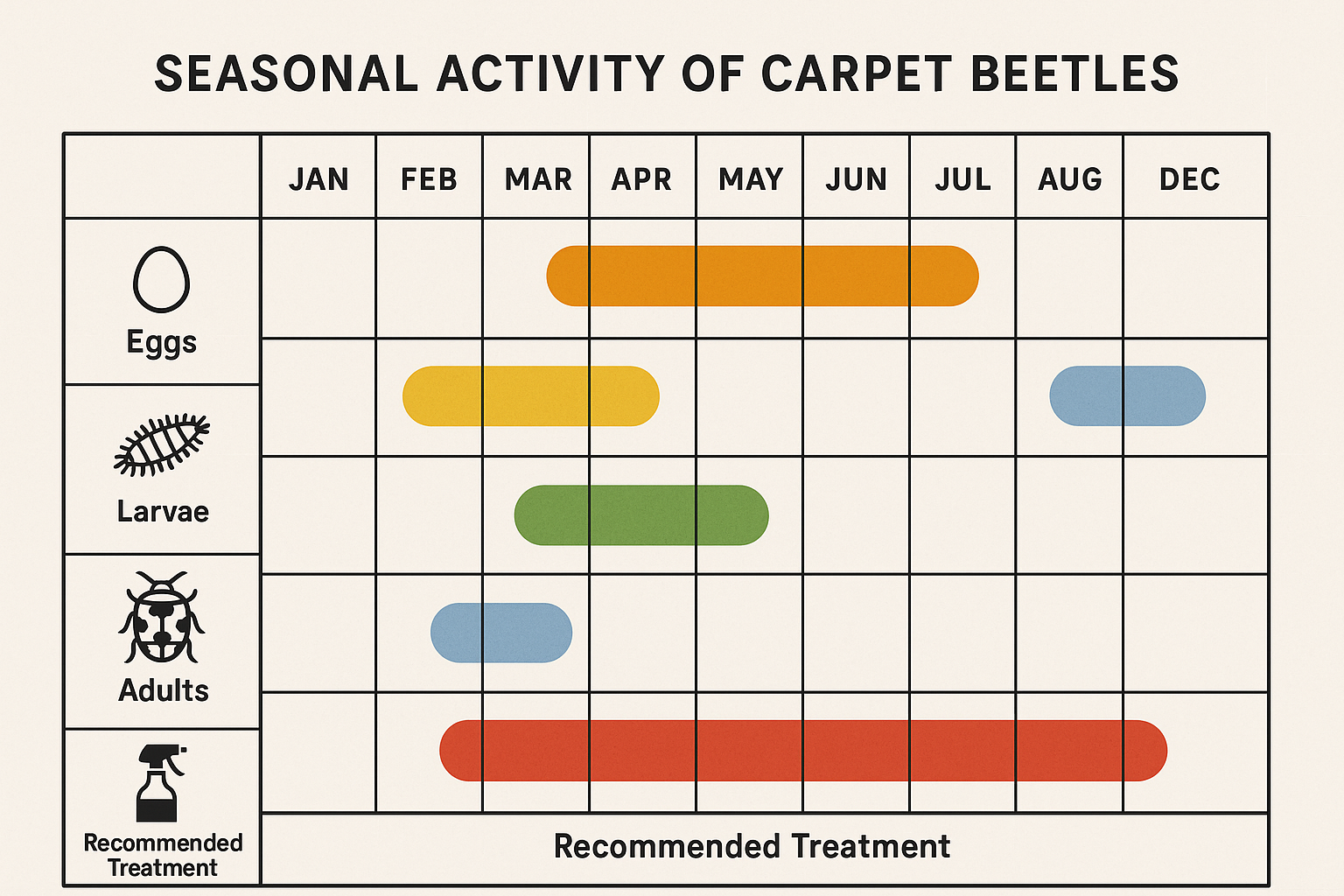
The chart above maps carpet beetle activity across the calendar year—timing that often prompts homeowners to search for a carpet beetle exterminator near me Suwanee as infestations become more noticeable. Egg-laying peaks in late spring (April–May), larval growth accelerates through summer, and adult emergence spikes again in early fall. Winter months see a slowdown, but indoor climates keep the insects active year-round, especially in heated homes.
Spring & Early Summer: Critical Treatment Window
Spring is the most opportune time to intervene because adult beetles are actively seeking mates and laying new eggs. Treating during April and May interrupts the cycle before larvae have a chance to proliferate. Early summer (June‑July) is equally important; larvae are at their most voracious stage, and a targeted treatment can prevent them from maturing into the next generation of adults. Delaying until fall often means battling a larger, more entrenched infestation.
Monitoring Tips for High‑Risk Months
Staying ahead of carpet beetles requires regular checks during the peak months:
- Place sticky traps near baseboards, closets, and under furniture; replace them every 2‑3 weeks.
- Conduct visual inspections of dark, undisturbed areas—look for shed larval skins, fecal pellets, or tiny holes in fabrics.
- Vacuum carpets, upholstery, and floor cracks thoroughly; dispose of the bag outside the home to remove hidden larvae.
- Consider a pre‑emptive spray in closets and storage boxes if you notice early signs in March or April.
By combining vigilant monitoring with timely professional treatment, you can break the carpet beetle life cycle before it inflicts costly damage on your home’s fabrics and furnishings.
Professional Treatment Options for Carpet Beetles
When carpet beetles take up residence in your home, the temptation to reach for a store‑bought spray or a DIY cleaning regimen is strong. Unfortunately, most do‑it‑yourself attempts miss hidden hotspots, fail to address resistant beetle populations, and often leave you with a lingering infestation that resurfaces weeks later. A certified technician brings the expertise, equipment, and EPA‑approved products needed for thorough, lasting control.

Why DIY Methods Frequently Fall Short
Home remedies typically target adult beetles on visible surfaces, but carpet beetles spend most of their life cycle hidden in carpet fibers, upholstery, and insulation. Incomplete coverage means larvae continue feeding on natural fibers, while adult beetles can develop resistance to over‑the‑counter chemicals. Without professional-grade equipment, it’s nearly impossible to achieve the uniform penetration and residual protection that a licensed pest control service provides.
Common Professional Treatments
- Targeted insecticide sprays: Technicians apply low‑odor, EPA‑registered formulations directly to baseboards, closets, and other entry points. These products are designed to kill both adults and larvae while leaving a residual barrier that remains effective for months.
- Fumigation or whole‑home vapor treatments: For severe infestations, a sealed‑room or whole‑house vapor can penetrate deep into wall voids and attic spaces where beetles hide. The process is carefully monitored to ensure safety and complete eradication.
- Heat treatment for delicate items: Wool blankets, silk drapes, and other heat‑sensitive textiles are exposed to controlled temperatures (typically 120‑130°F) that are lethal to beetle eggs and larvae but safe for the fabrics themselves.
- Integrated Pest Management (IPM): A balanced approach that blends chemical applications with non‑chemical tactics—such as vacuuming, de‑cluttering, and moisture control—reduces reliance on pesticides and helps prevent future outbreaks.
Safety Protocols You Can Trust
Professional pest technicians follow strict safety guidelines to protect your family and pets. Prior to any application, they assess ventilation needs, advise on temporary relocation of vulnerable occupants, and use products that meet EPA safety standards. Low‑odor sprays minimize indoor air impact, while fumigation and vapor treatments are scheduled when the home can be safely vacated and re‑ventilated under expert supervision.
The Role of a Certified Technician
A certified technician doesn’t just spray and leave. They conduct a detailed inspection to locate breeding sites, identify the species, and determine the infestation’s severity. This knowledge guides the selection of the most effective treatment—whether it’s a spot spray for a localized problem or a whole‑home vapor for an entrenched outbreak.
Post‑Treatment Follow‑Up and Warranty Options
Reputable companies like Anthem Pest Control include a series of post‑treatment inspections to verify that the beetle population has been eliminated. These follow‑ups typically occur at 2‑week and 6‑week intervals, allowing technicians to address any residual activity before it escalates. Many providers also offer warranty packages that cover re‑treatment at no additional cost if beetles return within a specified period, giving homeowners peace of mind and a clear path to long‑term protection.
Choosing a professional service ensures that every nook and cranny— from the hidden seams of your carpet to the insulated attic—receives the attention it needs. With EPA‑approved products, rigorous safety measures, and the expertise of a certified technician, you can finally rid your Suwanee home of carpet beetles and safeguard your fabrics for years to come.
Pricing Comparison for Carpet Beetle Extermination in Suwanee, GA
When a carpet beetle infestation shows up, the first question most homeowners ask is, “How much will it cost?” At Anthem Pest Control, we believe transparent pricing builds trust—especially for those searching for a carpet beetle exterminator near me Suwanee—so we break down the numbers you’ll see on a typical quote. In Suwanee, GA, prices are shaped by the size of your home, the severity of the problem, and the type of service you choose. Understanding these variables helps you compare local rates with neighboring towns and plan a realistic budget for a pest-free home.
Typical Pricing Structures
Most pest‑control companies in the Atlanta metro area use one of three pricing models. Choose the one that matches your home’s layout and your comfort level with upfront costs.
- Per‑room pricing: Ideal for smaller homes or targeted treatments. Expect $80‑$150 per bedroom, living area, or closet that requires direct attention.
- Whole‑home flat rate: A single fee that covers every square foot, usually ranging from $250‑$450 for an average 1,800‑sq‑ft residence.
- Per‑square‑foot pricing: Used by larger properties; rates hover between $0.12‑$0.20 per sq‑ft, allowing you to scale the cost directly with your home’s size.
Service Categories
Anthem Pest offers three core service tiers, each with its own price band.
- Inspection only: A thorough walkthrough and report, typically $70‑$100. This option gives you a clear picture of infestation severity before committing to treatment.
- Single‑treatment application: One‑time eradication using EPA‑approved products, priced between $180‑$300 for a standard home.
- Ongoing maintenance plans: Quarterly or bi‑annual visits that include monitoring, preventive sprays, and a discount on additional treatments. Plans start at $120 per visit, or $450‑$600 annually.
Pricing Infographic
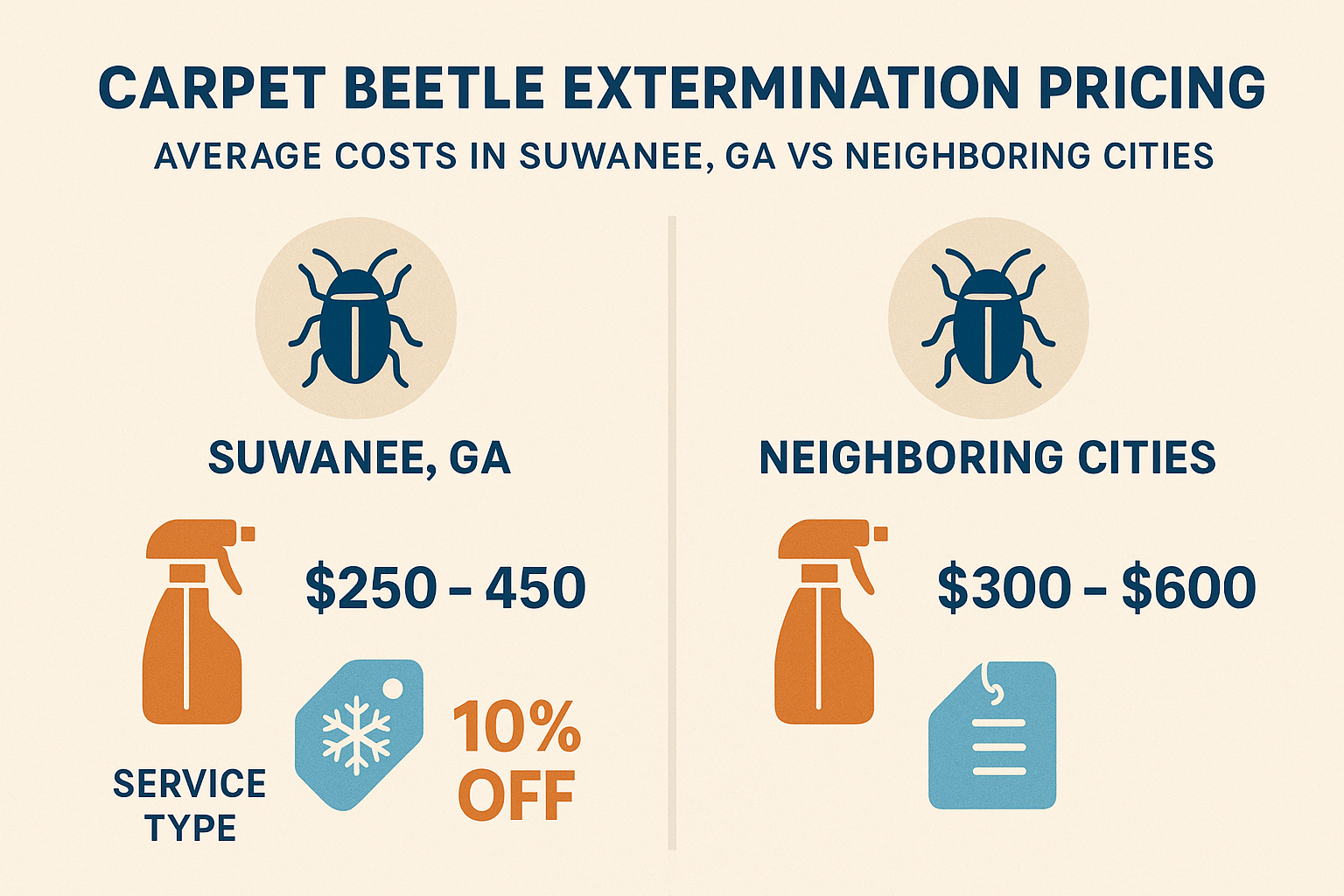
The infographic above visualizes three key points:
- Average cost range for a full‑home treatment in Suwanee: $250‑$450.
- How Suwanee’s rates stack up against Duluth, Norcross, and Alpharetta.
- Seasonal discounts, such as a 15% spring special and off‑peak rates in winter.
| City | Inspection Only | Single Treatment | Maintenance Plan (Annual) |
|---|---|---|---|
| Suwanee | $90 | $260 | $520 |
| Duluth | $95 | $280 | $560 |
| Norcross | $100 | $300 | $600 |
| Alpharetta | $105 | $320 | $640 |
What Drives the Cost?
Several factors can push a quote above the baseline numbers shown above:
- Infestation severity: Heavy, multi‑room infestations may require extra applications or specialized products.
- Home size: Larger square footage or multi‑level homes increase labor time and product usage.
- Treatment type: Organic or low‑toxicity options often carry a premium, while heat‑treatment for delicate fabrics can add $100‑$150.
- Follow‑up visits: If the first treatment doesn’t fully resolve the problem, a second visit is typically billed at 75% of the original treatment cost.
Budget‑Friendly Tips for Homeowners
- Ask for a detailed written quote that lists each service, product, and labor hour. Hidden fees disappear when everything is itemized.
- Verify the company’s state licensing and insurance. A licensed provider protects you from liability and guarantees proper pesticide handling.
- Consider bundled pest‑control packages. Combining carpet beetle treatment with routine ant or rodent prevention often nets a 10‑15% discount.
- Schedule your service during seasonal promotions. Spring specials and winter off‑peak rates can shave $30‑$70 off a standard treatment.
- Maintain a clean environment between visits—regular vacuuming, proper food storage, and sealing cracks reduce re‑infestation risk, extending the life of your investment.
By knowing the typical pricing structures, comparing Suwanee’s rates to nearby cities, and applying these budgeting strategies, you can confidently choose a carpet beetle exterminator who delivers effective results without breaking the bank.
DIY Prevention Tips and When to Call a Pro
Carpet beetles are tiny, but they can cause big damage if they’re allowed to set up shop in your home. The good news is that most infestations can be kept at bay with a few disciplined habits and simple home‑maintenance steps. Below are the everyday actions that cost little to your wallet but add a solid layer of protection against these hidden pests.
Daily habits that make a difference
- Vacuum high‑traffic areas – Walkways, stairways, and under furniture should be vacuumed at least once a week. Use the hose attachment to reach baseboards and the underside of cushions where adult beetles love to hide.
- Wash fabrics in hot water – Towels, blankets, and any clothing you store seasonally should be laundered in water at 130 °F (54 °C) or hotter. The heat kills both eggs and larvae that may be clinging to fibers.
- Seal seasonal items – Store sweaters, quilts, and extra linens in airtight plastic containers or heavy‑duty vacuum‑seal bags. Even a simple zip‑top bag can block beetles from reaching a food source.
Home maintenance that blocks entry points
- Inspect the exterior for cracks and gaps around windows, foundation, and siding; caulk or use expanding foam to seal them.
- Install door sweeps on all exterior doors to prevent insects from crawling under the threshold.
- Make sure window screens are intact and free of tears; replace any damaged screens promptly.
Environmental controls to keep beetles uncomfortable
- Maintain indoor humidity below 50 %. Carpet beetles thrive in moist environments, especially in basements and attics.
- Place a dehumidifier in damp spaces and empty it regularly. A dry environment discourages both adult beetles and their larvae.
- Improve airflow by using fans or opening vents, which helps dry out hidden niches where larvae might develop.
Natural repellents – a supplemental layer
- Cedar blocks or cedar‑infused sachets can emit a scent that beetles find mildly repellent, but they won’t eliminate an established infestation.
- Essential‑oil sprays (lavender, eucalyptus, or tea tree) can be mixed with water and sprayed on closets and storage boxes. Remember, these are only deterrents and work best when combined with the other preventive steps.
- Because natural repellents have limited efficacy, treat them as a “nice‑to‑have” rather than a primary defense.
Checklist: When DIY isn’t enough
Use the following quick‑scan checklist to decide if it’s time to bring in a professional:
- Visible damage exceeds 10 sq ft of carpet, upholstery, or stored fabrics.
- Repeated sightings of adult beetles or larvae over a period of two weeks despite regular cleaning.
- Larvae discovered in hidden locations such as behind wall panels, under floorboards, or inside HVAC ducts.
- Infestation spreads to multiple rooms or levels of the house.
- Any signs of secondary damage, like feathered or furry debris that resembles “cocoons,” indicating a mature population.
If you check more than one box, the infestation has likely passed the DIY threshold. At this point, continuing to rely on vacuuming and natural repellents will only prolong the problem and increase repair costs.
Why a professional inspection matters
Anthem Pest Control’s certified technicians can perform a thorough inspection, pinpoint hidden breeding sites, and apply targeted treatments that reach deep into wall voids, attics, and carpet padding—areas that most homeowners can’t access safely. Even a single red flag—like larvae in a concealed crawl space—warrants a professional look‑over to prevent structural damage and costly fabric replacement.
In short, start with the low‑cost habits listed above, keep an eye on the checklist, and don’t hesitate to schedule a professional inspection if any of the warning signs appear. A timely call to Anthem Pest Control can stop a small problem from becoming a major headache, protecting both your home and your peace of mind.
Protect Your Home with Anthem Pest Control
Early detection, proper seasonal timing, and professional treatment are the three pillars of a successful carpet beetle defense. Spotting the tell‑tale signs—tiny holes in fabrics, shed skins, or a faint, “coconut” odor—before the population explodes can save you time, money, and cherished belongings. Acting during the spring and early summer, when beetles are most active, gives any treatment the best chance to eradicate the infestation before it spreads.
Why Anthem Pest Control Stands Apart
Anthem Pest Control brings a decade‑plus track record of carpet beetle eradication to Suwanee and the surrounding areas. Our certified technicians know exactly where these pests hide—underneath baseboards, inside insulation, and within stored fabrics—so they can target the problem at its source. We rely exclusively on EPA‑approved, low‑toxicity products that protect your family, pets, and the environment while delivering rapid results.
- Local expertise: Our technicians live and work in the community, so they understand the unique challenges of Georgia homes.
- Transparent pricing: You’ll receive a detailed, no‑hidden‑fees quote before any work begins.
- Satisfaction guarantee: If beetles return within the warranty period, we’ll re‑treat at no extra cost.
- Safe solutions: All treatments meet or exceed EPA safety standards.
Take the First Step—Free, No‑Obligation Quote
We know you want confidence before committing. That’s why Anthem offers a complimentary, no‑obligation quote tailored to your home’s layout and infestation level. Our team will walk you through the assessment, explain every treatment option, and answer any questions you may have about safety or effectiveness.
Ready to protect your carpets, clothing, and upholstery from hidden beetle damage? Give us a call today at 877‑371‑8196 or drop us an email at info@anthempest.com. Our friendly staff will schedule a prompt inspection at a time that fits your busy life.
Don’t let carpet beetles take hold—let Anthem Pest Control safeguard your home with proven, affordable solutions from a trusted carpet beetle exterminator near me Suwanee homeowners rely on. Visit our website now to request your free quote and learn more about our comprehensive pest-management services.