Understanding Cockroach Risks in Your Home
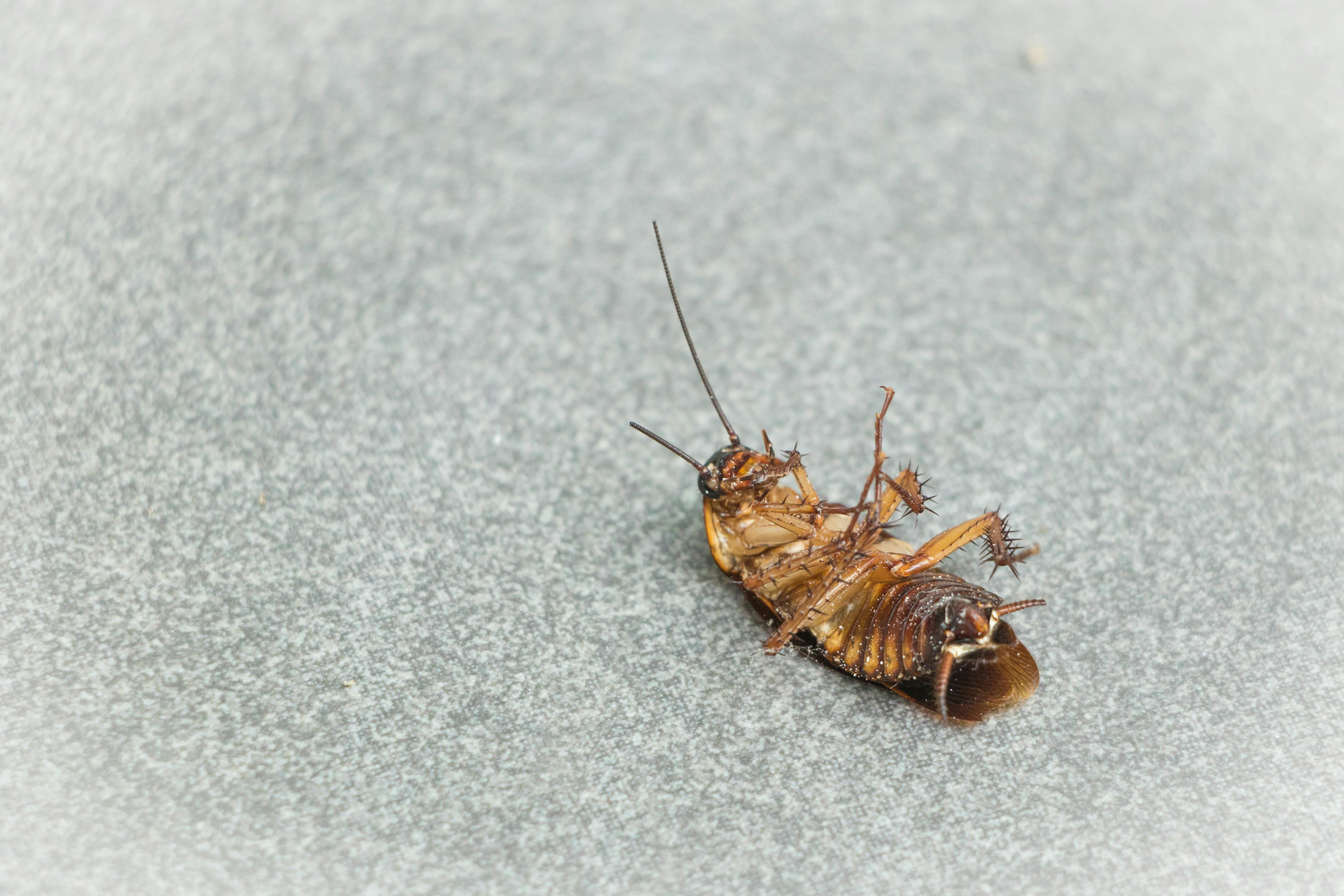
Most homeowners in the United States encounter at least one of three common species: the German cockroach, the American cockroach, and the Oriental (or water) cockroach. German roaches are the smallest and love warm, humid kitchens, while the larger American roach prefers basements and crawl spaces. The Oriental variety is often found near plumbing fixtures. Knowing which species you’re dealing with helps you anticipate where they’ll hide, how quickly they can multiply, and when contacting a professional cockroach exterminator Suwanee GA homeowners trust becomes necessary.
Beyond being a nuisance, cockroaches pose genuine health threats. Their bodies, saliva, and droppings contain potent allergens that can trigger asthma attacks and allergic reactions, especially in children and the elderly. According to the EPA, repeated exposure to these allergens can worsen respiratory conditions. Moreover, cockroaches are mechanical vectors for bacteria such as E. coli and Salmonella, increasing the risk of food‑borne illness, a fact highlighted by the CDC.
These insects also create a ripple effect for other pests. Their discarded shells and waste provide a ready food source for ants, beetles, and even rodents. In the process, they can damage wood, fabric, and wallpaper with their chewing mouthparts, leading to costly repairs if left unchecked.
Entry points are often deceptively simple: gaps around pipes, cracks in foundation walls, and unscreened vents. Kitchens, bathrooms, and basements become cockroach hot spots because they offer abundant moisture, food crumbs, and shelter. Even a tiny ¼‑inch opening can serve as a highway for a thriving colony.
Early detection is the most cost‑effective defense. Spotting the tell‑tale signs—such as a faint, oily odor, droppings that look like coffee grounds, or a sudden increase in nighttime activity—allows you to intervene before the infestation spreads. Prompt professional assessment, like the services offered by Anthem Pest Control, can halt population growth and keep treatment expenses manageable.
Spotting Cockroach Activity Early
Detecting a cockroach problem before it explodes into a full‑blown infestation saves you time, stress, and money. The key is to recognize the subtle clues that most homeowners overlook. Below, we break down the visual and olfactory hints, the hidden hotspots where roaches love to hide, and a quick‑do‑it‑yourself inspection checklist you can run through this weekend.
Visual signs you can’t ignore
- Live sightings: Spotting a cockroach scurrying across the floor or kitchen counter, especially at night, is the most obvious red flag.
- Droppings: Small, dark specks that look like coffee grounds often appear near food sources, under sinks, or along baseboards.
- Egg casings (oothecae): These brown, capsule‑shaped shells contain 30‑40 eggs and are usually tucked in cracks, behind appliances, or inside pantry boxes.
- Shed skins: As roaches molt, they leave behind translucent exoskeletons—another sign of a growing colony.
Odor clues
Even if you don’t see any insects, a faint, musty, oily smell can signal a hidden infestation. This scent often lingers in cabinets, pantry shelves, or behind the refrigerator where roaches feed on crumbs and grease. Trust your nose—if a kitchen area smells “off,” it’s worth a closer look.
Hidden hotspots to investigate
Cockroaches are masters of concealment. Common hide‑outs include:
- Under and behind appliances (refrigerator, stove, dishwasher)
- Inside wall voids and behind baseboards
- Inside cabinets, especially near food packaging or spills
- Bathroom corners, under sinks, and around plumbing fixtures
DIY inspection checklist
Grab a flashlight, a small mirror, and a disposable bag, then move through your home using this simple checklist:
- Rooms to scan: Kitchen, pantry, bathroom, laundry room, and any storage closets.
- Best time of day: Early morning or late evening when roaches are most active.
- Tools needed: Flashlight, mirror, disposable gloves, and a notepad for observations.
- Steps:
- Turn on the flashlight and inspect the undersides of appliances.
- Use the mirror to peek behind cabinets and into wall cracks.
- Look for the visual signs listed above and note any odors.
- Collect droppings or egg casings in the bag for identification.
When to call a professional
If you find more than a handful of droppings, any egg casings, or you’ve spotted live roaches in multiple rooms, it’s time to call Anthem Pest Control. DIY methods may reduce a few stragglers, but a trained technician can locate the colony’s core, apply targeted treatments, and set up preventive measures that keep roaches from returning. Likewise, if you’re uncomfortable handling the inspection tools or the problem seems to be spreading quickly, professional help is the safest route.
Early detection paired with prompt action—whether DIY or professional—keeps your home cockroach‑free and your peace of mind intact.
Seasonal Cockroach Trends in Suwanee, GA

Suwanee sits in the heart of Georgia’s humid subtropical zone, where average summer highs hover around 90°F (32°C) and winter lows rarely dip below 30°F (−1°C). The region receives roughly 45 inches of rain each year, with the wettest months falling in late spring and early summer. Warm temperatures combined with high humidity create the perfect breeding ground for cockroaches, especially the American and German species that most often invade homes—a key reason many residents rely on a professional cockroach exterminator Suwanee GA homeowners trust.
Reading the Seasonal Activity Chart
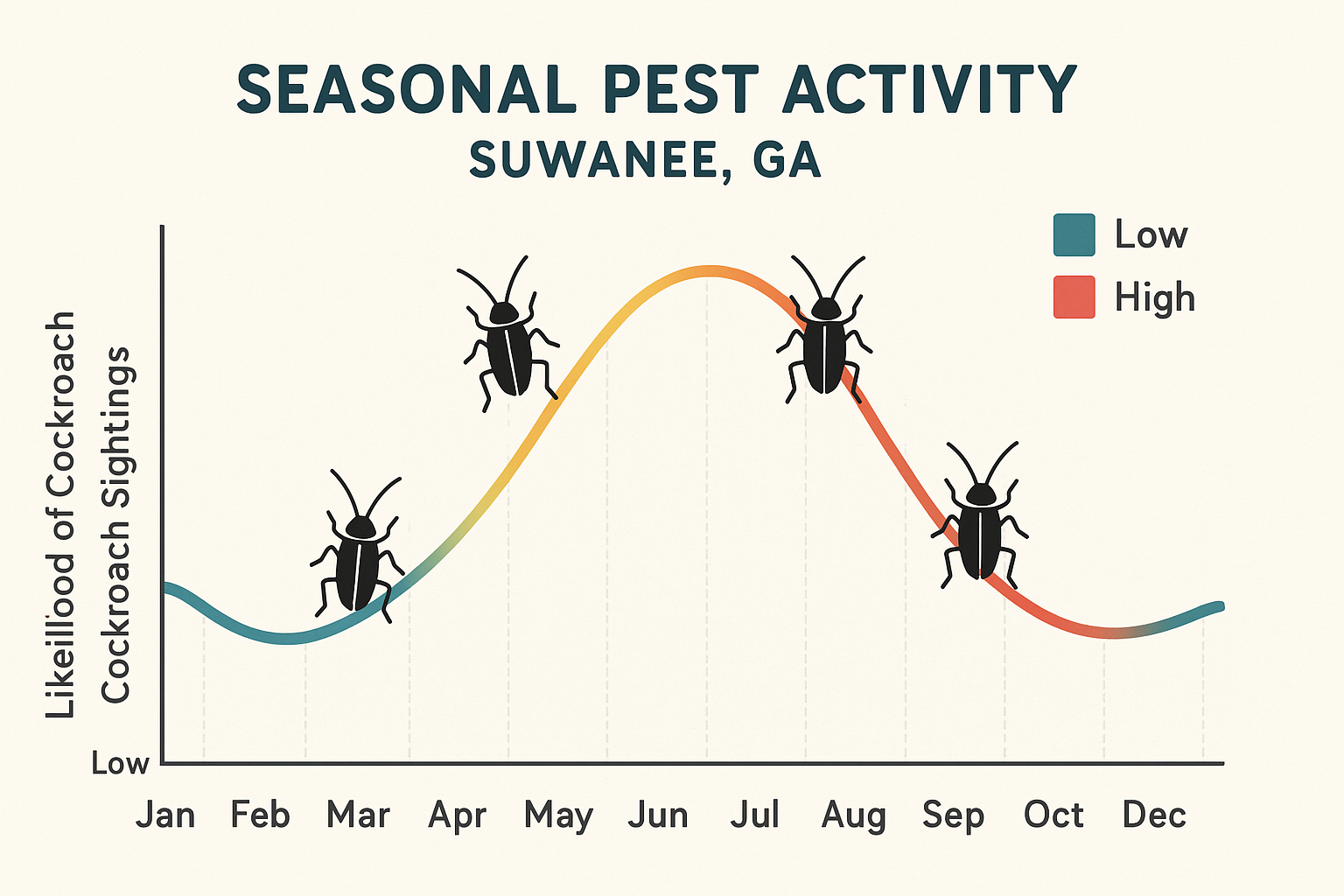
The chart below summarizes typical indoor cockroach activity in Suwanee. Notice the sharp rise from May through August, a modest dip in September, and a secondary bump in October before activity dwindles during the colder months.
| Month | Activity Level |
|---|---|
| January | Low |
| February | Low |
| March | Moderate |
| April | Moderate |
| May | High |
| June | High |
| July | Peak |
| August | Peak |
| September | Moderate |
| October | Moderate |
| November | Low |
| December | Low |
Why Temperature, Humidity, and Rainfall Matter
Cockroaches are ectothermic; they rely on ambient heat to speed up metabolism and reproduction. When daytime highs consistently exceed 80°F (27°C), a female can lay up to 30 eggs every few weeks. Humidity is equally critical—cockroaches lose water through their exoskeleton, so they gravitate toward damp cracks, leaky pipes, and condensation‑prone areas. Heavy rain in May and June often forces outdoor colonies to seek shelter indoors, amplifying the spike shown in the chart.
Seasonal Preventive Actions
- Before summer (April‑early May): Seal gaps around windows, doors, and utility penetrations. Install door sweeps and repair cracked foundation joints.
- Early summer (June‑July): Conduct a deep kitchen clean—wipe down countertops, vacuum pantry shelves, and empty standing water from pet dishes.
- Late summer/early fall (August‑September): Reduce indoor humidity with dehumidifiers and ensure proper ventilation in basements and crawl spaces.
- Before winter (October‑November): Perform a final inspection of screens, vent covers, and exterior lighting that can attract insects, then schedule a professional perimeter treatment.
Timing Your Treatment for Maximum Impact
Aligning professional extermination with the high‑risk window (May‑August) gives the best chance to break the breeding cycle before populations explode. A pre‑emptive perimeter spray in early May, followed by a targeted indoor bait application in late June, typically reduces activity by 80‑90% for the remainder of the season. Homeowners who wait until September often find the infestation already entrenched, requiring more intensive (and costly) follow‑up visits.
Choosing the Right Treatment and Cost Comparison
DIY Options: Sprays, Traps, and Gel Baits
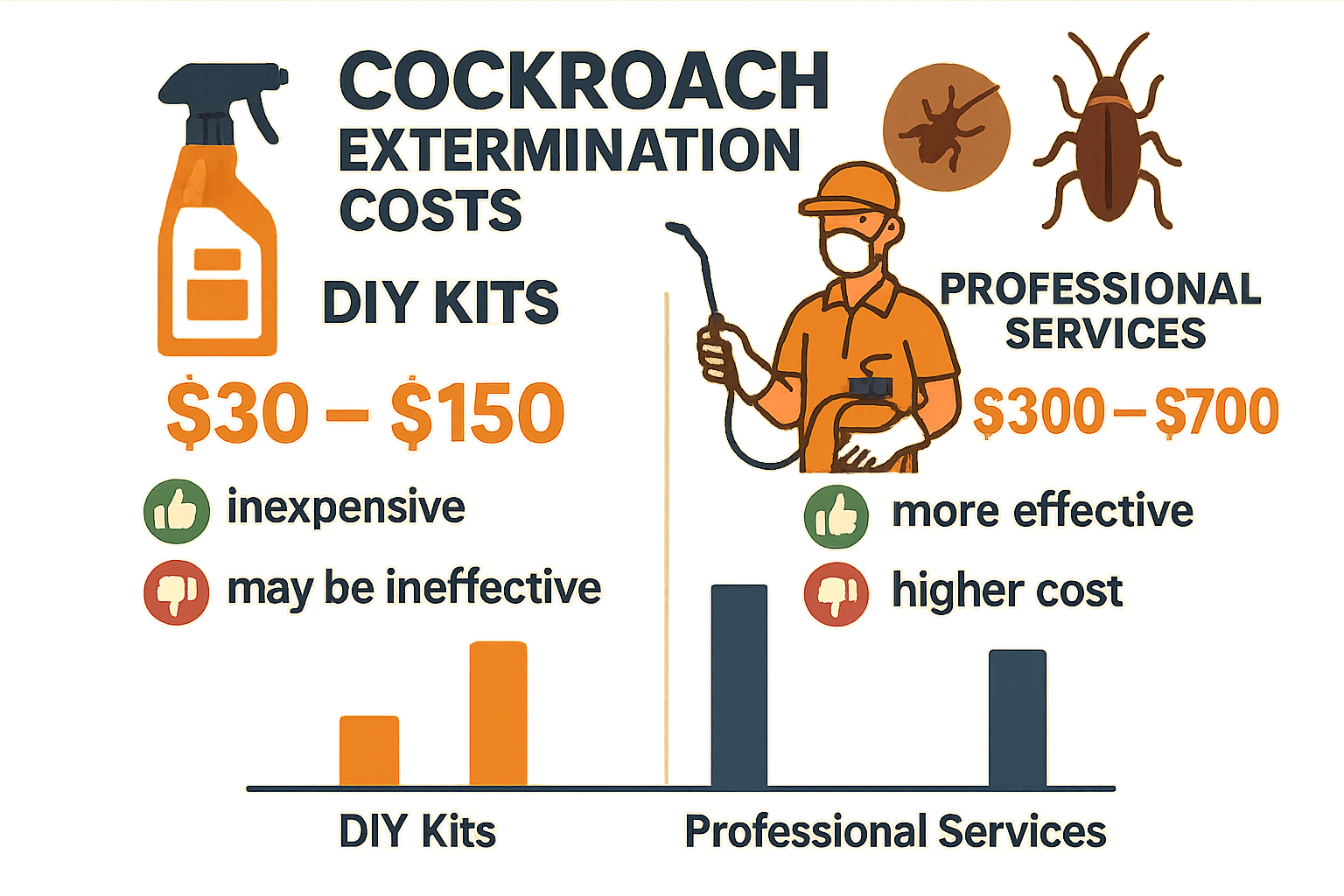
When you spot a few roaches scurrying across the kitchen floor, reaching for an over-the-counter spray or a sticky trap can feel like the quickest fix. DIY kits typically include aerosol sprays, glue boards, and gel baits, all priced between $20 and $80. They’re easy to apply and give you immediate control over a light-level infestation. However, the chemicals in most consumer products are formulated for short-term knock-down rather than lasting eradication, and they often lack the residual activity needed for larger homes—which is why many homeowners eventually turn to a professional cockroach exterminator Suwanee GA residents depend on for long-term control.
Professional Services: Inspection, Customized Plans, and Follow‑Ups
Anthem Pest Control starts every job with a thorough inspection to identify entry points, nesting sites, and the species involved. From there we design a tailored treatment plan—whether it’s a targeted spray, a baiting program, or a heat treatment—and schedule follow‑up visits to ensure the roaches stay gone. Pricing for professional services ranges from $150 to $500+, depending on the scope of work (see the NPMA 2024 report for industry benchmarks).
Pros and Cons at a Glance
| Treatment Type | Effectiveness | Safety | Time Commitment | Long‑Term Control |
|---|---|---|---|---|
| DIY Sprays | Low‑to‑moderate | Variable (often higher toxicity) | Minutes to apply | Poor |
| Professional Sprays | High | Professional‑grade, lower risk to occupants | 1‑2 hours (including prep) | Good (residual formulation) |
| Bait Stations (DIY or Pro) | Moderate‑to‑high | Low toxicity, safe around pets | Setup in 30 min, monitor weekly | Excellent when placed correctly |
| Heat Treatment (Pro) | Very high (100% mortality) | Chemical‑free, safe for occupants | Full‑day service | Excellent for severe infestations |
Infographic: Cost vs. Outcome
The accompanying infographic visualizes how each treatment stacks up in terms of upfront cost and expected result. It’s a quick reference you can hang on the fridge while you decide whether a $30 spray bottle or a $350 heat treatment better fits your budget and urgency.
Factors Influencing Price
Several variables drive the final bill: the severity of the infestation, the square footage of your home, and the type of treatment you choose. A modest kitchen problem may only need a few bait stations, while a multi‑unit building often requires a full‑scale heat treatment and repeated follow‑ups. Property size matters because larger spaces need more product and labor, and severe infestations demand more intensive, sometimes multiple, applications.
Why Professional Treatment Often Wins
Licensed technicians bring two critical advantages: precise identification of the cockroach species and access to EPA‑approved pesticides that are both potent and safe when applied correctly. Professionals also know how to integrate structural repairs—sealing cracks, fixing leaks—to remove the conditions that attract roaches in the first place. The result is a higher success rate, fewer repeat visits, and peace of mind that your family and pets are protected from unnecessary chemical exposure.
Protect Your Home with Anthem Pest Control
Early detection, proper seasonal timing, and the right treatment choice are the three pillars of a successful cockroach battle. Spotting droppings, egg casings, or a sudden increase in activity lets you act before an infestation spreads. In warm months—especially late spring through early fall—cockroaches reproduce fastest, so scheduling treatment at the peak of their activity maximizes results. Whether you need a one‑time baiting, a full‑service spray, or an integrated pest‑management plan, the correct approach hinges on the severity of the problem and the layout of your home. By catching the problem early, you avoid costly repeat treatments and protect your food storage areas from contamination.
Why Choose Anthem Pest Control?
Anthem brings nationwide experience to your doorstep while treating every job as a local one. Our certified technicians are trained in the latest, EPA‑approved methods that eliminate roaches safely for children and pets. We combine proven chemical controls with targeted baits and thorough sanitation advice, delivering a solution that is both effective and affordable.
- Transparent pricing: No hidden fees; you receive a detailed quote before any work begins.
- Locally trained technicians: Each crew knows the specific pest pressures in Suwanee, GA, and tailors treatment accordingly.
- Satisfaction guarantee: If roaches return within the warranty period, we’ll re‑treat at no extra cost.
Ready to protect your kitchen, bathroom, and living spaces? Schedule a free, no‑obligation inspection today. Our team will assess the situation, recommend the most efficient plan, and provide a clear, upfront quote.
Call now at 877-371-8196 or visit Anthem Pest Control to book your free inspection. If you’re searching for a reliable cockroach exterminator Suwanee GA, let us handle the pests so you can enjoy a clean, healthy home with complete peace of mind.