Understanding Gnats and Their Impact in Roswell, GA
What Exactly Is a Gnat?
When most people hear “gnat,” they picture a tiny, buzzing nuisance that swarms around lights. In reality, “gnat” is an umbrella term that covers several distinct groups of tiny flies, most notably black flies, fungus gnats, and biting midges. Black flies (Simuliidae) thrive near streams and love to bite exposed skin. Fungus gnats (Sciaridae) are the pale, delicate insects you often see hovering over houseplants; their larvae feed on decaying organic matter in potting soil. Biting midges (Culicoides), sometimes called “no‑see‑ums,” are almost invisible to the naked eye but can leave irritating welts. Although they share a similar size and flight pattern with mosquitoes, gnats differ in life cycle, breeding habits, and the type of irritation they cause. Mosquitoes lay eggs in standing water and are primary vectors for diseases like West Nile virus, whereas most gnats are more of a localized annoyance and a potential plant pathogen carrier.
Why Gnats Matter to Roswell Homeowners
Roswell’s vibrant outdoor lifestyle—barbecues, patio evenings, and community festivals—creates perfect conditions for gnats to gather. A swarm hovering around a backyard dinner can quickly turn a pleasant gathering into an uncomfortable one, as gnats are attracted to carbon dioxide, sweat, and even the sweet scent of flower nectar. Inside the home, fungus gnats can appear in kitchens and bathrooms where houseplants sit, turning a simple indoor garden into a miniature infestation. Their presence isn’t just a visual irritation; constant buzzing can disrupt sleep, concentration, and the overall enjoyment of indoor spaces.
Health Considerations You Should Know
While gnats are not the primary disease vectors that mosquitoes are, they can still pose health risks. Biting midges and black flies inject saliva when they feed, which may trigger allergic reactions ranging from mild itching to more severe swelling in sensitive individuals. In rare cases, repeated bites can lead to secondary bacterial infections if the skin is scratched open. Fungus gnats, on the other hand, don’t bite humans but can spread fungal pathogens to indoor plants, weakening your garden and potentially leading to mold growth in damp areas of the home. For homeowners with children, pets, or elderly family members, these indirect effects are worth taking seriously.
The Roswell Climate: A Gnat‑Friendly Environment
Roswell sits in a humid subtropical climate zone, characterized by hot, moist summers and mild, damp winters. This combination of warmth and humidity provides an ideal breeding ground for all three gnat types. Summer rains create temporary pools and moist soil where black flies lay their eggs, while the consistent indoor humidity supports fungus gnat larvae in potting mixes. Even during the cooler months, the occasional warm spell can spark a sudden surge in gnat activity, especially after heavy rainstorms that leave standing water in low‑lying yards.
Seasonal Activity Patterns and When to Be Vigilant
Understanding the seasonal rhythm of gnats helps you stay one step ahead. In Roswell, the peak season for black flies and biting midges runs from late spring through early fall, with the highest numbers typically appearing after a week of steady rain followed by warm temperatures. Fungus gnats, however, can be a year‑round concern inside the home, spiking whenever indoor plants receive excessive watering or when ventilation is poor. By recognizing these patterns, you can schedule preventative measures—such as improving drainage, reducing over‑watering, and installing window screens—before gnats become a full‑blown problem.
Now that you know what gnats are, why they’re a nuisance, and how Roswell’s climate fuels their numbers, the next step is to explore the specific seasonal trends that dictate when treatment is most effective. Staying informed empowers you to protect your home, your family, and your outdoor enjoyment from these tiny but persistent pests.
Seasonal Peaks – When Gnats Are Most Active in Roswell
Gnats follow a rapid, four‑stage life cycle—egg, larva, pupa, and adult—that is tightly linked to Roswell’s temperature and moisture patterns. Warm days speed up development, while damp conditions give larvae the water they need to thrive. In the spring, a sudden rise in temperature after a rainy spell can trigger a burst of egg‑laying, whereas the hot, humid summer months often produce the highest adult populations. When the weather cools in the fall, development slows, and many gnats enter a dormant pupal stage until the next warm spell.
Reading the Seasonal Activity Chart
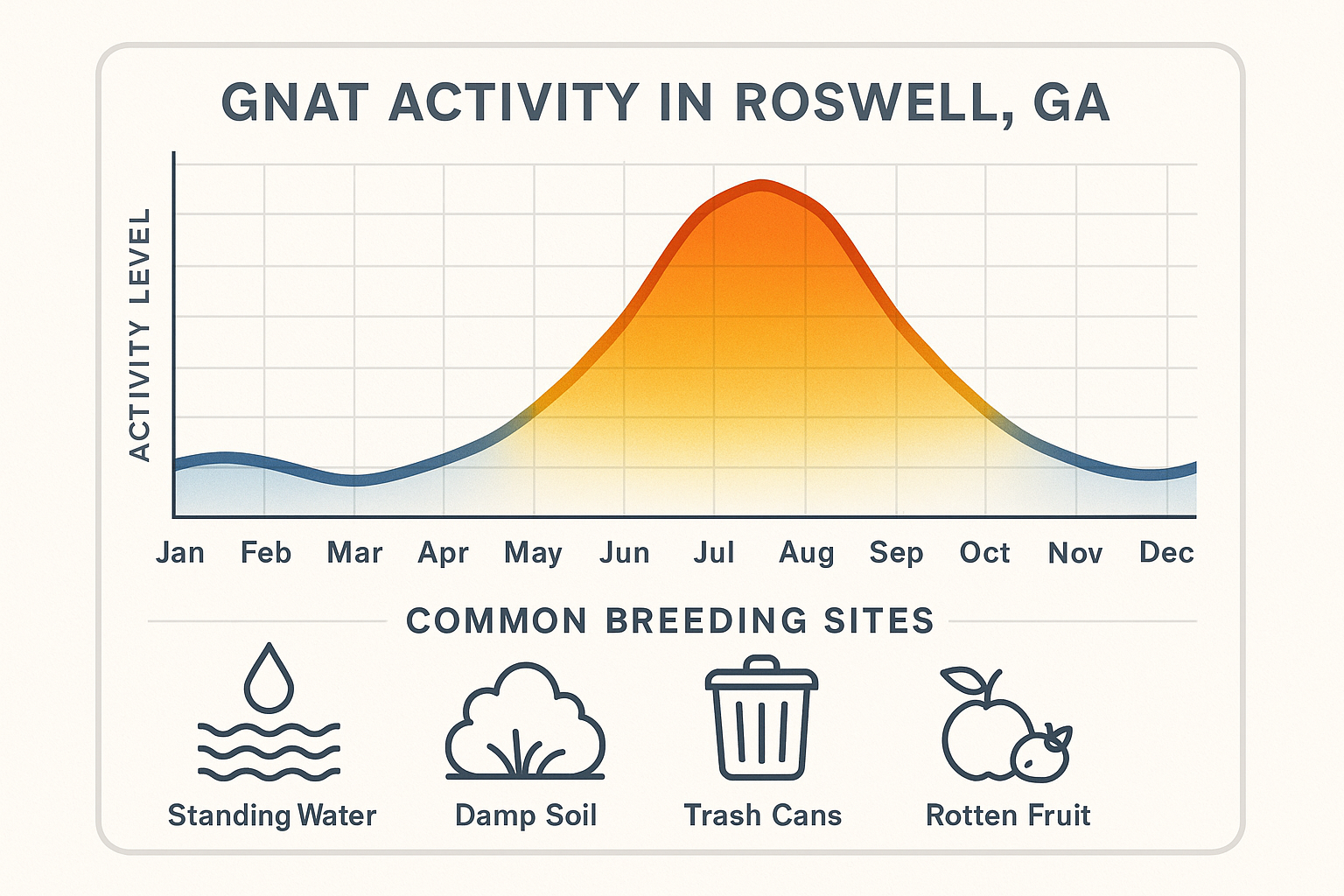
The chart above maps average gnat activity from January through December. Notice the modest rise in March, when the first eggs hatch after winter rains. Activity climbs sharply in May and peaks in July—these months combine high heat with abundant standing water, creating ideal breeding conditions. After August, numbers taper off but remain noticeable through October, especially around compost piles and damp mulch.
Typical Breeding Sites by Month
- March‑April: Birdbaths, rain barrels, and any recent puddles from spring showers.
- May‑July: Over‑watered lawns, soggy garden soil, and poorly drained flower beds.
- August‑September: Mulch that stays moist, shaded garden borders, and leaky irrigation lines.
- October‑November: Compost heaps, fallen leaf piles, and any leftover organic debris that retains moisture.
Seasonal Prevention Tips for Homeowners
- Early Spring: Empty and refill birdbaths daily, clean gutters to prevent water accumulation, and fix any leaking outdoor faucets.
- Summer: Reduce lawn watering to early morning, ensure soil drains well, and keep garden mulch a few inches away from the house foundation.
- Fall: Turn compost piles regularly, cover them with a lid or tarp, and rake leaves away from siding and decks.
- Year‑Round: Store firewood off the ground, keep trash cans sealed, and inspect patio furniture for hidden water traps.
For a data‑driven view of local pest trends, you can consult the Roswell branch of Orkin. Their seasonal reports confirm the same peaks we see here and provide additional guidance on timing professional treatments: Orkin Roswell pest control.
Spotting Gnats – Identification and Warning Signs
Gnats are tiny, delicate flies that often slip by unnoticed—until they start buzzing around your lights or nesting in your houseplants. In Roswell, the most common culprits are fungus gnats and midges. Both measure roughly 2–4 mm in length, have slender bodies, and sport clear, veined wings that beat in a rapid, hovering pattern.
What Roswell’s Gnats Look Like
Fungus gnats have a mosquito‑like silhouette but are far smaller, with a dark, almost black head and a slightly brownish thorax. Their wings are narrow and almost transparent, giving them a faint “silhouette” against a light source. Midges, on the other hand, tend to have a more robust, slightly hump‑backed shape and may show a faint tint of orange on the abdomen.

Where Gnats Like to Hang Out
Inside your home, gnats gravitate toward moist environments. Expect to find them in kitchens near sinks, bathrooms around showers, and basements where humidity lingers. Outdoor hotspots include the edges of ponds, rain barrels, and any garden area with over‑watered soil or compost piles.
Warning Signs of an Infestation
- Clusters of tiny flies hovering around indoor lights, especially at dusk.
- Swarms forming near doors or windows as they chase daylight.
- Visible larvae—white, thread‑like maggots—inside potting soil or in the top layer of mulch.
- Increased activity around houseplants, especially those kept in damp soil.
If you notice any of these clues, you’re likely dealing with more than a stray visitor. Gnats reproduce quickly; a handful of adults can lay hundreds of eggs in a single week.
Quick Homeowner Checklist
- Inspect lights: Turn off all interior lights for a few minutes, then turn them back on. If tiny flies form a cloud around the bulbs, gnats are present.
- Check moisture: Feel the soil of houseplants and the floors of bathrooms/kitchens. Wet spots that stay damp for days are prime breeding grounds.
- Search for larvae: Gently dig a centimeter into potting mix. White, worm‑like larvae indicate a fungus gnat problem.
- Observe flight patterns: Gnats hover in place and make erratic, darting movements, unlike the straight flight of fruit flies.
- Count sightings: If you see more than a few gnats within a 24‑hour period, it’s time to act.
Running through this checklist will give you a clear picture of whether you’re facing a minor nuisance or a full‑blown infestation that warrants professional attention.
Why Early Detection Matters
Gnats thrive in the same damp conditions that promote mold and mildew, which can affect indoor air quality. Moreover, a growing gnat population can attract other pests, such as spiders, that feed on them. By spotting the warning signs early, you can implement simple fixes—like reducing excess moisture and using sticky traps—before the problem escalates to a point where a licensed exterminator, like Anthem Pest Control, is needed.
Effective Gnat Control – DIY and Professional Options
DIY Prevention: Stop Gnats Before They Arrive
Gnats love wet, stagnant places. Begin by removing standing water from birdbaths, pet dishes, clogged gutters, and the house’s foundation. Check that potting soil drains freely—if it stays soggy after a finger press, improve drainage or replace the mix. Install a fan on patios or decks; moving air makes it hard for adults to hover. Finish with natural repellents—citronella candles, a neem‑oil spray, or diluted eucalyptus—around doors and windows. These steps are inexpensive, eco‑friendly, and often keep gnats from crossing the threshold.
Home Remedies for Indoor Gnats
If gnats slip inside, a few household tricks can trap or kill them without chemicals. A simple apple‑cider vinegar trap uses a 1:1 vinegar‑water mix, a drop of dish soap, and a piece of fruit to lure adults; the soap breaks surface tension so they drown. Place sticky cards near windowsills or sinks to catch flyers on a non‑toxic adhesive. For soil‑breeding gnats, let potting mix dry completely for several days, then dust a thin layer of horticultural sand to block egg‑laying.
When DIY Falls Short
DIY works for light infestations, but it has limits. During hot, humid summer weeks, gnat numbers can sky‑rocket in 24–48 hours. Hidden sources such as underground drainage or a nearby compost pile often require equipment and EPA‑registered chemicals that homeowners don’t have. Recognizing a rapid surge or persistent indoor swarms signals it’s time to call a professional before weeks of ineffective home remedies are wasted.
Professional Treatment Options
Licensed technicians bring targeted, EPA‑approved products that attack both adults and larvae:
- Adulticides: Fast‑acting sprays or foggers applied to perimeter zones, door frames, and outdoor gathering spots.
- Larvicide drenches: Soil‑applied granules or liquids that kill larvae before they emerge.
- Misting systems: Automated units releasing a fine insecticide mist on a set schedule for season‑long protection.
- Barrier sprays: Long‑lasting perimeter treatments that create a chemical shield around the home.
Safety First: What to Watch Out For
Even the safest pesticides require precautions. Professionals wear gloves, goggles, and respirators to avoid skin contact and inhalation. Homeowners should keep children, pets, and food preparation areas clear until the product dries or the re‑entry time listed on the label expires. Choosing a company with licensed, insured technicians ensures applications follow state regulations, reducing the risk of accidental exposure.
Cost‑Effectiveness: DIY vs. Professional Services
Comparing cost, effectiveness, and upkeep helps you decide where to invest.
| Method | Approx. Cost per Treatment | Effectiveness | Maintenance Frequency | Ideal Use Case |
|---|---|---|---|---|
| DIY prevention (drainage, fans, repellents) | $0–$30 (materials) | Low‑to‑moderate | Seasonal, ongoing | Low‑level activity, budget‑conscious homeowners |
| Home traps (vinegar, sticky cards) | $5–$15 (supplies) | Moderate for indoor adults | Weekly replacement | Indoor hotspots, small rooms |
| Professional adulticide & larvicide | $120–$250 per service | High (90%+ reduction) | Every 4–6 weeks in season | Heavy infestations, peak summer, or DIY failure |
| Misting or barrier‑spray program | $300–$500 annual contract | Very high, continuous protection | Quarterly visits | Properties with recurring problems or nearby breeding sites |
For most Roswell homeowners, a hybrid approach works best: start with low‑cost DIY steps, monitor results, and call a professional like Anthem Pest Control before the population spikes. A single expert visit can reset the infestation, after which routine DIY maintenance keeps gnats at bay without breaking the bank.
Comparing Professional Gnat‑Control Services in Roswell
Overview of the Three Leading Providers
When it comes to gnat infestations in Roswell, homeowners typically consider three names: Orkin, Mosquito Squad, and Arrow Exterminators. All three boast a statewide presence, licensed technicians, and a track record of handling flying‑insect problems. However, their pricing structures, treatment schedules, and product certifications differ enough to merit a side‑by‑side look. Below you’ll find the essential data points that matter most when deciding which company to invite into your yard.
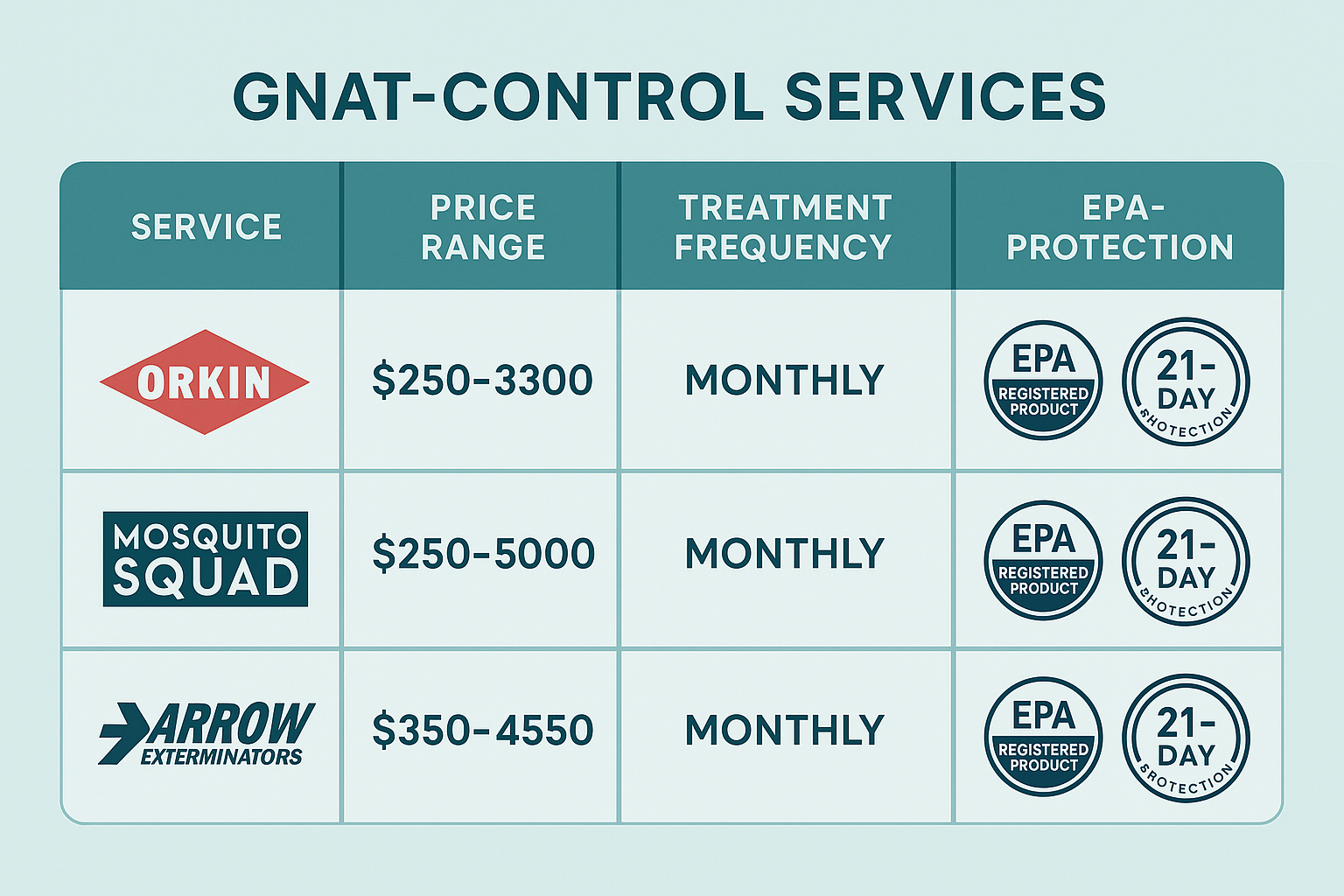
Pros and Cons of Each Provider
Orkin
- Pros: Nationwide brand reputation, thorough initial inspection, and a 30‑day money‑back guarantee if gnats persist.
- Cons: Higher price bracket ($180‑$250 per treatment) and a minimum contract of twelve months, which can feel restrictive for occasional users.
- Customer sentiment: Reviewers praise the professionalism of technicians but note occasional delays in follow‑up visits.
Mosquito Squad
- Pros: Competitive pricing ($130‑$190), flexible quarterly or seasonal plans, and a strong emphasis on eco‑friendly, EPA‑registered sprays.
- Cons: Limited local office in Roswell, meaning service calls sometimes route through nearby Marietta, extending response times.
- Customer sentiment: Homeowners love the “21‑day protection badge” that guarantees residual effect, yet some mention that the treatment frequency feels too sparse for heavy gnat seasons.
Arrow Exterminators
- Pros: Mid‑range price ($150‑$210), monthly treatment option ideal for high‑humidity periods, and a clear warranty outlining re‑treatment at no extra cost.
- Cons: Fewer online reviews, making it harder to gauge long‑term satisfaction; occasional reports of technicians using over‑the‑counter products rather than certified EPA formulas.
- Customer sentiment: Clients appreciate the personalized service and quick scheduling, but they request more transparency about the exact chemicals used.
Key Questions to Ask a Pest‑Control Technician
- What specific EPA‑registered products will be applied, and are they safe for pets and children?
- Can you provide a written warranty that details re‑treatment policies and any guarantees of residual protection?
- How often do you recommend treatments for my property’s micro‑climate (e.g., near water features or dense landscaping)?
- Do you offer a customized plan that targets only gnats, or will the service be bundled with other insects?
- What is the protocol for follow‑up visits if gnats reappear after the initial treatment?
- Are there any preparation steps I need to take before the technician arrives (e.g., removing standing water, trimming vegetation)?
Quick‑Reference Comparison Table
| Provider | Price Range (Standard Package) | Recommended Frequency | EPA‑Registered Product Icon | 21‑Day Protection Badge |
|---|---|---|---|---|
| Orkin | $180 – $250 | Monthly or Quarterly | ✔️ | ✔️ |
| Mosquito Squad | $130 – $190 | Quarterly or Seasonal | ✔️ | ✔️ |
| Arrow Exterminators | $150 – $210 | Monthly or Quarterly | ⚠️ (Varies by technician) | ✔️ |
Protect Your Home – Choose Anthem Pest Control Today

Early detection, seasonal awareness, and professional treatment form the trifecta of lasting gnat control. Spotting the first signs—tiny swarms near standing water or a faint, sweet odor—lets you act before an infestation spreads to kitchens, patios, and bedrooms. Knowing that gnats thrive in warm, humid months helps you time inspections and interventions for maximum impact.
When you partner with Anthem Pest Control, you gain more than a service; you gain a safety net. Our EPA‑registered products are rigorously tested for human and pet safety, so you can breathe easy while we eliminate the pests. Transparent pricing means you’ll never encounter hidden fees, and our nationwide experience blends seamlessly with local knowledge of Roswell’s climate and common entry points.
Why Anthem Stands Out in Roswell
- Safe, effective solutions: We use only products that meet federal safety standards.
- Clear, upfront costs: No surprise charges—just a straightforward quote.
- Local expertise, national backing: Decades of work across the U.S. give us the tools to tackle any pest, while our Roswell team understands the unique challenges of Georgia’s seasons.
Ready to protect your family, property, and peace of mind? We’re offering a free, no‑obligation quote tailored to your home’s specific situation. Our technicians will assess entry points, moisture sources, and any existing infestations before recommending a customized plan.
Give us a call at 877‑371‑8196 or visit our website at https://anthempest.com to schedule your free assessment. Our friendly staff will find a convenient time that fits your busy schedule, ensuring you can enjoy a gnat‑free summer without delay.
Don’t let gnats ruin outdoor evenings or compromise indoor comfort. Acting now means you’ll lock out these tiny invaders before they multiply, safeguarding your family’s health and preserving the beauty of your home’s landscaping. Let Anthem Pest Control handle the hard work so you can focus on what matters most—relaxing in a pest‑free environment.
Visit Anthem Pest Control