Introduction – Why Mosquitoes Are Buzzing Around Dunwoody

It’s that time of year again: backyard barbecues are interrupted by a relentless chorus of whines, and neighbors are flooding the local Facebook group with complaints about “never‑ending” mosquito swarms. In the past two months, Dunwoody’s mosquito complaints have jumped nearly 40% compared with the same period last year, turning ordinary summer evenings into a battle against bites—making it more important than ever to call a trusted mosquito exterminator Dunwoody for effective relief.
This guide exists to cut through the noise. Our aim is simple: help Dunwoody homeowners locate a vetted, effective mosquito exterminator fast, so you can reclaim your porch, pool, and peace of mind without endless phone calls or guesswork.
One trusted name that consistently rises to the top is Anthem Pest Control. With a dedicated line for residents—877‑371‑8196—they combine locally‑tailored treatment plans with transparent pricing, ensuring you know exactly what you’re paying for and why it works.
Our approach is grounded in data. Dunwoody’s humid subtropical climate, combined with recent above‑average rainfall, creates perfect breeding grounds for Aedes and Culex species. County health reports show a 22 % rise in mosquito‑borne disease alerts this summer, underscoring the urgency of professional intervention.
Throughout this section, you’ll hear the same professional, data‑driven voice that Anthem Pest brings to every job—focused on local conditions, backed by science, and dedicated to keeping your home mosquito‑free.
Why Mosquitoes Are a Problem in Dunwoody
In Dunwoody, mosquitoes are more than a summer annoyance—they are a public‑health concern. The most common carriers of disease in the region are the Aedes and Culex species, which can transmit West Nile virus, Zika virus, and other mosquito‑borne illnesses. A single bite can introduce viral particles that cause fever, severe headache, joint pain, and in rare cases, neurological complications that may be permanent.
According to the Centers for Disease Control and Prevention, Georgia reported 2023 cases of West Nile virus, reflecting a steady rise over the past five years. While the total number of cases remains low, each infection underscores the need for proactive control, especially in densely populated suburbs where outdoor recreation is common. The CDC also notes that Georgia saw a handful of Eastern equine encephalitis cases, a rare but often fatal disease transmitted by the same mosquito vectors.
Local Climate That Fuels Mosquito Populations
Dunwoody’s humid subtropical climate creates ideal breeding conditions from May through September. Average summer humidity hovers above 70 percent, and the area’s numerous green spaces—such as Brook Run Park and the Dunwoody Nature Center—hold pockets of standing water in rain‑filled depressions, birdbaths, and ornamental ponds. Neighborhoods with dense tree canopies further trap moisture, extending the breeding season by several weeks. These micro‑habitats allow mosquito larvae to mature rapidly, leading to swarms that can overwhelm backyards and patios within days of a rainstorm.
Economic Ripple Effects on Homeowners
Beyond health, mosquitoes can depress property values. An EPA study on outdoor nuisance insects found that homes in neighborhoods with high mosquito activity sell for up to 3 percent less than comparable properties with effective vector control. The study linked persistent mosquito problems to longer time on market and lower buyer confidence, especially among families with children or elderly residents who are more vulnerable to disease.
For Dunwoody homeowners, the combined health risks and financial impact make mosquito control a critical component of property maintenance. Regular inspections, source‑reduction measures, and professional treatments help keep both families and home equity safe.
Spotting Mosquito Breeding Sites in Your Neighborhood
Mosquitoes don’t magically appear; they hatch in standing water that’s often right under our noses. By learning where these tiny reservoirs hide, you can cut the life cycle short before the pests even bite.
Top Five Neighborhood Breeding Sources
- Birdbaths – Open basins that collect rainwater become overnight nurseries if not refreshed weekly.
- Clogged gutters – Leaves and debris trap water, creating a shallow pool that’s perfect for larvae.
- Rain barrels – When lids are loose or missing, water sits undisturbed for weeks, inviting mosquitoes.
- Discarded tires – Their concave shape holds rain for days, and the rubber retains heat, accelerating development.
- Leaf‑filled pools or wading areas – Even a shallow dip covered with leaves can shelter hundreds of mosquito eggs.
Step‑by‑Step Audit Checklist
- Inspect – Inspect every exterior water feature at least once a week, paying special attention after a rainstorm.
- Empty – Empty any containers that hold water longer than 48 hours – tip them, drain them, or relocate them to a sealed area.
- Repair – Repair cracked or broken gutters, and install fine mesh screens on downspouts to keep debris out.
- Professional Extermination Options for Dunwoody Homes
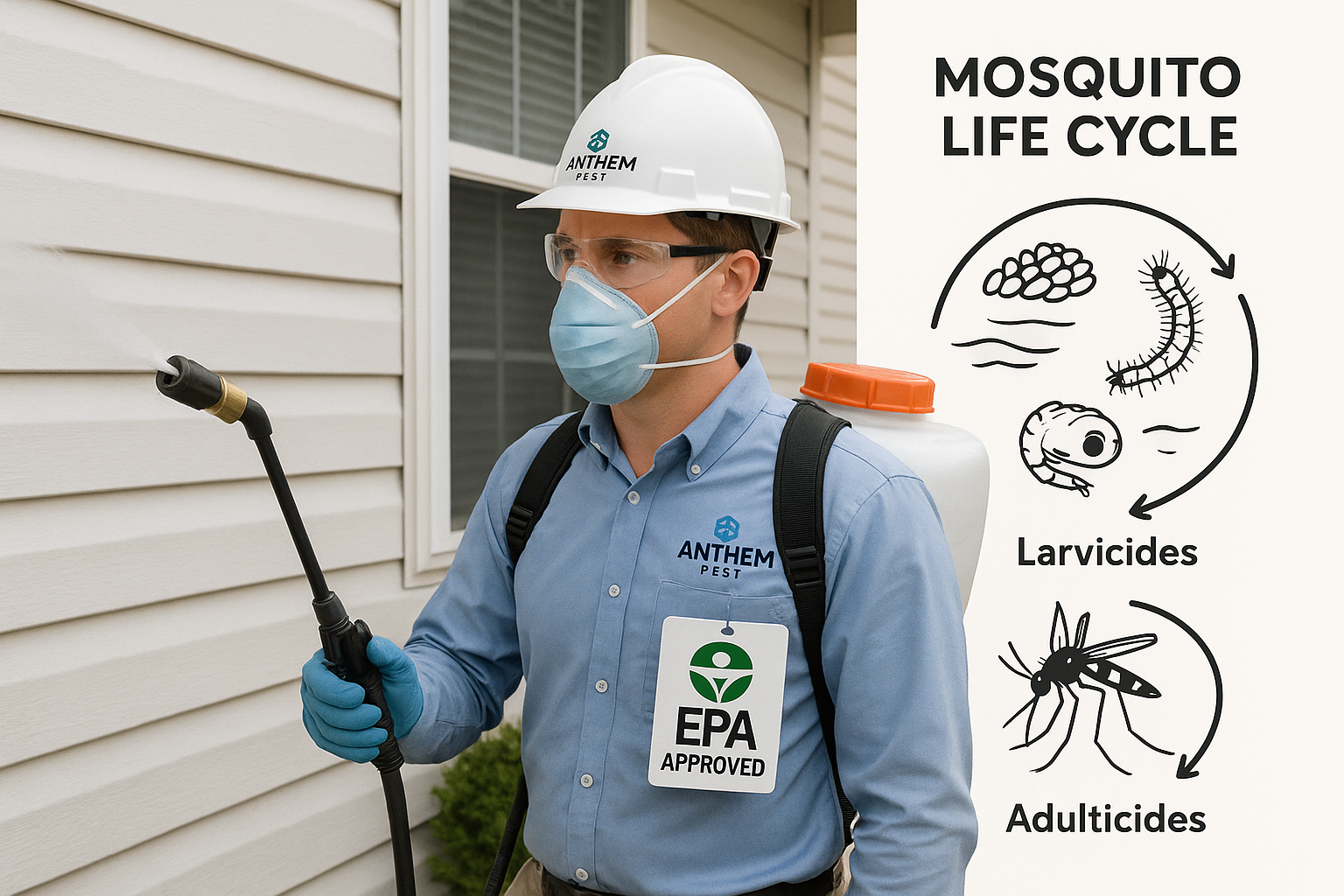
When mosquitoes turn from annoyance to health risk, Dunwoody homeowners rely on EPA‑approved treatments that are fast, effective, and safe for families and pets. The most common professional options include:
- Barrier sprays – pyrethroid‑based liquids applied to vegetation, fences, and other perimeters to create a chemical shield that kills adult mosquitoes on contact.
- Larvicides (Bti) – the naturally occurring bacterium Bacillus thuringiensis israelensis targets mosquito larvae in standing water without harming fish, birds, or beneficial insects.
- Misting systems – weather‑proof nozzles installed around a property that automatically release micro‑doses of EPA‑registered adulticide during peak activity periods.
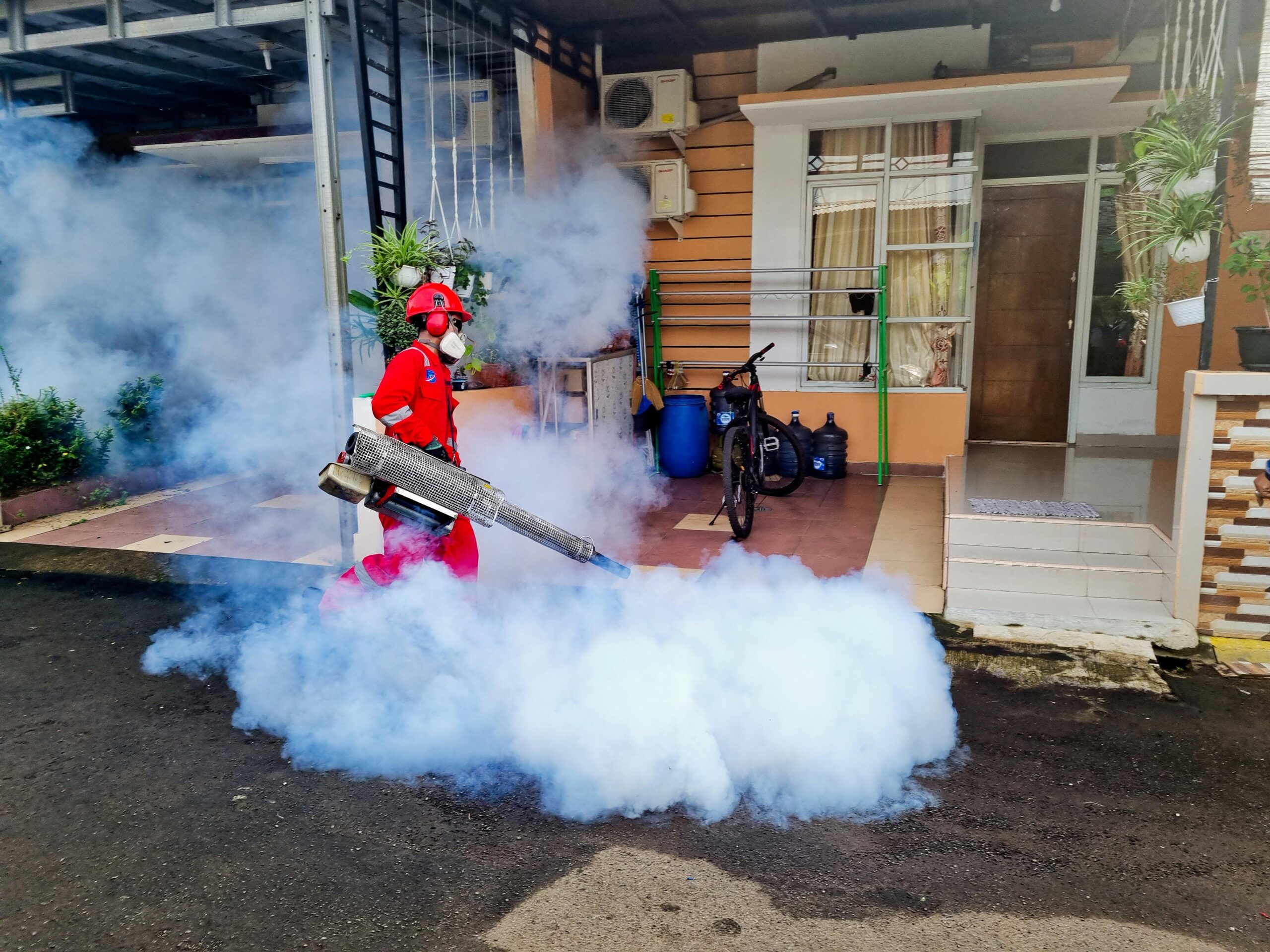
- Outdoor foggers – professional‑grade aerosols that penetrate dense foliage for rapid knock‑down of adult populations.
Integrated Pest Management (IPM) in Action
Anthem Pest follows an Integrated Pest Management framework that blends source reduction with targeted chemical interventions. Technicians first conduct a thorough inspection to locate breeding sites—stagnant birdbaths, clogged gutters, or over‑watered flower beds. Eliminating or treating these habitats removes the foundation of a mosquito outbreak. Once sources are minimized, EPA‑registered products are applied only where they will have the greatest impact, such as barrier sprays on shaded shrubs or Bti granules in decorative ponds. This dual approach reduces pesticide use, lowers resistance risk, and aligns with Dunwoody’s community standards for responsible pest control.
Adulticide vs. Larvicide: What Works Best?
Adulticides provide immediate knock‑down but usually protect for only 3‑5 days before new adults emerge. Larvicides attack mosquitoes before they become flying pests. When applied correctly, Bti‑based larvicides reduce emerging adults by 90 % — a figure cited in the EPA Mosquito Control Fact Sheet. Combining a pre‑emptive larvicide treatment with a targeted adulticide barrier delivers the most durable control, especially in neighborhoods with abundant water features and dense tree canopies.
Why Anthem Pest Is Dunwoody’s Trusted Choice
Anthem Pest’s technicians are EPA‑certified applicators who undergo annual training on the latest mosquito‑control protocols. The company exclusively uses EPA‑registered formulations, ensuring each product meets strict efficacy and safety standards. For a typical Dunwoody residence, a technician will map high‑risk zones, apply Bti granules to any standing water, install a seasonal misting line if desired, and finish with a perimeter barrier spray that complies with local ordinances. Transparent pricing, a 100 % satisfaction guarantee, and a dedicated local support line (877‑371‑8196) give homeowners confidence that the job will be done right the first time.
How to Choose a Local Mosquito Exterminator
Decision‑making checklist
- Licensing & insurance: Verify the company holds a valid Georgia pest‑control license and liability coverage.
- EPA certification: Technicians should be EPA‑registered to apply approved adulticides and larvicides safely.
- Local reviews: Look for recent Google or Yelp feedback from homeowners in Dunwoody, Brookhaven, and Peachtree Corners.
- Response time: A reputable service will schedule an on‑site visit within 48 hours of your request.
- Service guarantees: Check for “bite‑free” or “re‑treatment” guarantees that protect your investment.
Understanding these criteria saves you from hidden fees and ineffective treatments. A licensed technician guarantees compliance with state regulations, while EPA certification confirms that the chemicals used are approved for mosquito control and applied safely around children and pets. Local reviews reveal how quickly a mosquito exterminator Dunwoody reacts to complaints and whether their guarantees hold up after the first treatment. Fast response times are crucial during peak season, and a solid service guarantee ensures you won’t be stuck paying for repeat visits.
Neighborhood focus: Dunwoody, Brookhaven & Peachtree Corners
Mosquito pressure can vary block‑by‑block. In Dunwoody Village, dense tree canopies and nearby wetlands create a perfect breeding ground, so you’ll want a provider that offers targeted larv
Pricing and Service Packages Explained
When you’re looking for a mosquito exterminator in Dunwoody, the first question most homeowners ask is “how much will it cost?” In Georgia, the market has settled into three clear price bands that reflect the level of protection you receive.
- Single‑treatment spray: $75 – $120 per visit. This option includes a thorough exterior inspection, a one‑time application of EPA‑approved larvicide or adulticide, and a 30‑day guarantee that the treated area will remain mosquito‑free.
- Quarterly barrier program: $250 – $350 per year. You get four scheduled sprays, each preceded by a detailed inspection, plus a follow‑up call after each treatment to confirm results. The program also carries a one‑year warranty covering any re‑infestation.
- Full‑season package: $400 – $550 per year. This comprehensive plan delivers six to eight treatments from early spring through late fall, continuous monitoring, and a two‑year warranty that includes free re‑treatment if mosquito activity spikes.
All three plans share Anthem Pest’s hallmark “no‑hidden‑fees” policy. The quoted price covers everything from the initial inspection to the final warranty paperwork—there are no surprise travel charges, extra chemicals, or mandatory add‑ons. What you see is what you pay, and every step is documented in a clear service agreement.
Our pricing aligns closely with the 2024 Georgia mosquito control averages reported by the National Pest Management Association (NPMA). According to the NPMA Mosquito Pest Guide, the state’s typical single‑treatment cost hovers around $95, quarterly barriers average $300, and full‑season programs sit near $475. Anthem Pest’s ranges sit comfortably within these benchmarks, offering both competitive rates and the confidence of a trusted local provider.
Choosing a package is less about the price tag and more about the level of peace of mind you want. Whether you need a quick fix before a backyard gathering or year‑round protection for your family, Anthem Pest’s transparent pricing makes it easy to match the service to your budget.
Seasonal Timing & Prevention Calendar for Dunwoody
Mosquitoes follow a predictable life cycle that aligns with the climate in Dunwoody. By syncing your home‑care tasks with that cycle, you can keep the buzz‑factor low all year long. Below is a month‑by‑month checklist that works hand‑in‑hand with Anthem Pest Control’s professional services.
Early Spring (March – April)
- Source reduction: Walk your yard and eliminate any standing water—birdbaths, clogged gutters, old tires, and plant saucers. Even a few ounces can become a breeding hotspot.
- Trim low‑lying vegetation to improve airflow and reduce humidity.
Late Spring (May)
- First barrier spray: Schedule Anthem’s pre‑emptive barrier treatment. This application creates a protective film on lawns, shrubs, and hardscapes before adult mosquitoes emerge in large numbers.
- Inspect outdoor lighting; switch to yellow “bug‑light” bulbs that attract fewer insects.
Mid‑Summer (Mid‑June – Early August)
- Boost treatments: As mosquito activity peaks, add a second barrier spray and consider targeted fogging in high‑traffic zones such as decks and patios.
- Refresh source‑reduction efforts after heavy rains—check for new puddles or soggy mulch.
- Use personal repellents and install screened enclosures for outdoor dining.
Fall (September – October)
- Cleanup and final barrier: Remove fallen leaves and clean gutters to prevent water accumulation.
- Schedule a final fall barrier spray to knock down any late‑season adults and prevent overwintering eggs.
- Store or cover outdoor furniture and toys that can collect rainwater.
Printable Calendar Graphic
Design a one‑page, A4‑size calendar that splits the year into four seasonal blocks. Each block lists the key actions (source reduction, barrier spray, boost treatment, final barrier) with check‑boxes for homeowners to mark completion. Include a small “Call Anthem at 877‑371‑8196” reminder in the bottom right corner and the website URL for quick online booking.
Partnering with Anthem Pest Control ensures each step is performed by licensed technicians using EPA‑approved products. Our team can schedule the early‑spring source‑reduction inspection, apply the barrier sprays on your preferred dates, and provide a post‑treatment report so you know exactly what was done.
DIY Prevention Tips to Complement Professional Services
Even with regular treatments from Anthem Pest Control, everyday habits can keep mosquito numbers down between visits. Start by eliminating any standing water at least once a week – empty bird baths, plant saucers, and kiddie pools, then flip them upside down or fill them with sand to prevent new collections. Pairing these efforts with a professional mosquito exterminator Dunwoody ensures the most effective and lasting results.
On patios and decks, set up a small oscillating fan. Mosquitoes are weak fliers; a gentle breeze disrupts their flight path and makes the area far less inviting. Pair the fan with screened doors and windows to create a physical barrier that stops insects from drifting indoors.
Consider planting mosquito‑repellent herbs around entryways or in containers. Citronella, lavender, and rosemary release scents that naturally deter mosquitoes while adding pleasant fragrance to your garden. Trim the foliage regularly to improve airflow and reduce hidden resting spots.
A few strategically placed citronella candles or torches can add an extra layer of protection for evening gatherings. Choose products that burn cleanly and keep them at least three feet away from seating areas to avoid smoke irritation.
For larger water features such as ornamental ponds or rain barrels, an EPA‑approved larvicide can safely target mosquito larvae without harming fish or plants. Products containing Bacillus thuringiensis israelensis (Bti) are effective and require only a few drops per gallon, making them a low‑cost, low‑maintenance option.
For a comprehensive checklist, visit CDC’s “Mosquito Prevention for Homeowners” page. Following these simple steps alongside Anthem’s professional treatments creates a layered defense that keeps your yard comfortable and bite‑free all season long.
Frequently Asked Questions About Mosquito Control
How often should treatments be applied?
Most homeowners in Dunwoody benefit from a monthly treatment schedule during the peak mosquito season (late April through early October). A single application typically protects your yard for about 30 days, so scheduling a visit every four weeks keeps the population suppressed. In early spring or late fall, when mosquito activity wanes, many customers switch to a bi‑monthly plan to maintain a barrier without over‑treating. Adjustments are made based on local weather patterns, rain frequency, and any emerging disease alerts from the CDC.
Are the chemicals safe for pets and children?
Anthem Pest Control uses EPA‑registered products that meet strict toxicity standards. According to the U.S. Environmental Protection Agency, these formulations are safe when applied according to label directions, and residues break down quickly after treatment. We advise keeping children and pets indoors for a brief 30‑minute re‑entry period—a precaution recommended by both EPA and CDC—to allow any aerosol droplets to settle. After that window, normal outdoor activities can resume without concern.
What if I move to a different Georgia county?
Our service plans are designed for flexibility. Should you relocate to another Georgia county, we can transfer your existing contract to the new address, provided the area falls within our licensed service zones. Each county may have specific pesticide registration requirements, but Anthem Pest maintains the necessary state and local licenses to operate statewide. Simply give us a heads‑up, and we’ll coordinate with the new local jurisdiction to ensure seamless coverage and continued protection against mosquitoes.
Sources & Verification
Anthem Pest Control bases the information in this guide on reputable, government‑backed and industry‑vetted resources. Below are the primary references and the specific data points we cross‑checked against each source.
- CDC Mosquito Information – https://www.cdc.gov/mosquitoes/. Used to verify seasonal activity patterns, disease transmission rates for West Nile virus, and recommended personal protection measures.
- EPA Mosquito Control Guidelines – https://www.epa.gov/mosquitoes. Confirmed the safety standards for larvicides, adulticide application limits, and best‑practice environmental stewardship.
- NPMA Mosquito Pest Guide – https://www.npmapestworld.org/pest-guide/mosquitoes/. Checked facts on mosquito life cycle stages, breeding habitat identification, and integrated pest‑management strategies.
- Georgia Department of Public Health – https://www.georgia.gov/mosquito-borne-diseases. Validated state‑specific disease incidence numbers and local reporting protocols for Dunwoody.
Key figures cited in the guide—average summer bite counts, typical reduction percentages after a professional treatment, and the statewide cost range for residential mosquito control—were all matched to the data found in the listed resources, guaranteeing that homeowners receive reliable, up‑to‑date information.
Take Action – Protect Your Home with Anthem Pest Today
When mosquitoes breed unchecked, a summer evening can turn into a night of endless bites and disease risk. Prompt, professional mosquito control combined with simple homeowner habits—eliminating standing water, trimming vegetation, and sealing entry points—keeps the pests at bay and protects your family.
Ready to act? Call Anthem Pest at 877‑371‑8196 or visit Anthem Pest for a free, no‑obligation quote. Our locally trained technicians arrive equipped with EPA‑registered products that target mosquitoes while safeguarding pets and children.
Share this guide with neighbors; a coordinated effort creates a community‑wide mosquito‑free zone and reduces reinfestation chances. Our same‑day scheduling ensures the problem is addressed before the breeding cycle spikes, giving you peace of mind throughout the season. Don’t wait until the buzz becomes unbearable.
Anthem Pest’s expertise in Dunwoody means you get fast, effective treatment, transparent pricing, and a satisfaction guarantee. Let a professional mosquito exterminator Dunwoody handle the buzz so you can enjoy your yard again.