
Recognizing Pantry Moths in Your Home
Pantry moths are tiny, but their presence can turn a well-stocked kitchen into a costly clean-up project—often leading homeowners to search for a moth exterminator near me Suwanee. In U.S. households, the two species you’ll encounter most often are the Indian meal moth (Plodia interpunctella) and the Mediterranean flour moth (Ephestia kuehniella). Both thrive on stored grains, cereals, nuts, and pet foods, and they share enough visual traits that a quick look-up can save you hours of guesswork.

Physical Description – What to Look For
- Size: Adults range from 0.5 to 0.8 inches (12‑20 mm) when wings are fully spread.
- Wing patterns: Indian meal moths display a striking two‑tone wing—golden‑brown forewings with a coppery band and a dark, almost black, wavy line near the tip. Mediterranean flour moths are a more uniform reddish‑brown, with subtle speckles.
- Coloration: Both species have a slender, tan‑to‑gray body, but the Indian meal moth’s head and thorax are lighter, giving it a “blush” appearance.
Typical Habitats – Where They Set Up Shop
These moths prefer dry, low‑moisture environments where food is stored but not sealed. Common hotspots include:
- Pantry shelves holding cereal, flour, rice, or dried fruit.
- Grain bins and bulk storage containers.
- Pet food dishes and unopened bags of kibble.
- Spice racks and even decorative jars that aren’t airtight.
Life Cycle Basics – Why the Larvae Matter Most
The pantry moth life cycle consists of four stages: egg, larva, cocoon (pupal), and adult. A female can lay up to 400 eggs, scattering them on food surfaces. Within a week the eggs hatch into larvae, which are the real culprits. These creamy‑white caterpillars tunnel into grains, creating silk‑lined tunnels that look like fine “spider‑web” residue. After feeding for 2‑6 weeks, they spin a cocoon and emerge as adult moths ready to reproduce.
Key Warning Signs – Spotting an Infestation Early
Early detection hinges on recognizing a few tell‑tale clues:
- Fine, silvery webbing along the tops of flour bags or inside cereal boxes.
- Visible larvae—small, cream‑colored with a brown head—crawling on food surfaces.
- Small, fluttering moths near the pantry doorway, especially at night when lights are on.
- Accumulation of “spider‑web” residue on the undersides of containers or shelf corners.
Health Implications – More Than a Nuisance
While pantry moths don’t bite or spread disease directly, they can introduce allergens and compromise food safety. The larvae’s silk and droppings may trigger respiratory irritation for sensitive individuals, and the contamination of food can lead to mold growth. The CDC warns that moth allergens can exacerbate asthma and allergic reactions, especially in homes with children or seniors.
Identifying these signs quickly lets you act before the infestation spreads. If you spot any of the above indicators, it’s time to isolate the affected items, clean the pantry thoroughly, and consider a professional treatment from Anthem Pest Control to protect your home and health.
How Pantry Moth Infestations Develop and What They Mean for Your Health

What Attracts Moths to Your Pantry
Pantry moths, especially the Indian meal moth (Plodia interpunctella), are drawn to warm, humid environments where food is readily available. A pantry that sits near a kitchen wall, receives sunlight, or lacks proper ventilation can become a cozy breeding ground. Improper food storage—such as leaving cereal bags open, storing grain products in paper packaging, or neglecting to seal cracked pantry doors—creates easy entry points for adult moths and their egg‑laying females. Once inside, they lay dozens of eggs on the surface of grains, nuts, and dried fruit, setting the stage for a rapid population explosion.
Seasonal Peaks and Why Summer/Autumn See Higher Activity
Temperature and humidity are the primary drivers of moth activity. In the summer months, indoor temperatures often climb above 75°F (24°C), accelerating the moth life cycle from egg to adult in as little as three weeks. Autumn brings a slight dip in temperature that slows the cycle just enough for moths to seek shelter inside homes before the first frost. This seasonal swing explains why homeowners notice a surge in pantry moth sightings during late summer and early fall, making it a critical window for preventive action.
Food Quality at Risk
When larvae hatch, they tunnel through the food, leaving behind a trail of silk, droppings, and frass. Consuming even a small amount of contaminated product can introduce unwanted particles into meals. The damage isn’t just cosmetic; larvae can digest nutrients, leaving the remaining food nutritionally depleted and prone to spoilage. In severe cases, entire bags of flour or rice may become unusable, forcing homeowners to discard weeks’ worth of groceries.
Health Implications
Beyond the obvious loss of food, pantry moths pose hidden health risks. Their droppings and shed skins become airborne dust that can trigger allergic reactions, especially in sensitive individuals. For asthma sufferers, inhaling these microscopic particles can exacerbate symptoms, leading to coughing, wheezing, or shortness of breath. The EPA pesticide safety guidelines advise caution when using chemical treatments in food‑storage areas, underscoring the importance of non‑chemical prevention and early detection.
Economic Impact
The immediate cost of a pantry moth outbreak is the waste of spoiled food—often hundreds of dollars over a single season. Add to that the potential need for professional extermination, which can range from $150 to $300 for a targeted treatment, plus any follow‑up visits to ensure the problem is fully eradicated. For homeowners on a tight budget, these hidden expenses quickly add up, making proactive measures far more cost‑effective than reactive clean‑ups.
Spotting an Infestation Early
Early detection is the most reliable defense against a full‑blown infestation. Follow these simple inspection habits:
- Conduct a visual pantry sweep at least once a month, looking for webbing, larvae, or tiny moths fluttering near food packages.
- Check unopened boxes and bags for tiny holes or silk threads before bringing them into the pantry.
- Transfer dry goods into airtight, glass or heavy‑plastic containers; this not only blocks moth entry but also contains any existing larvae.
- Seal cracks around pantry doors and windows with weather‑stripping or caulk to eliminate entry points.
- Maintain a humidity level below 60% by using a dehumidifier or proper ventilation, especially during humid summer months.
By understanding the conditions that lure pantry moths, recognizing the seasonal patterns that boost their numbers, and acting quickly when signs appear, homeowners can protect both their food supply and their health. When an infestation does slip through these defenses, a professional service like Anthem Pest Control can provide safe, EPA‑compliant treatments that eliminate the problem without compromising the integrity of your kitchen.
Effective Treatment Options for Pantry Moth Control
Immediate DIY Actions
When you first spot adult moths or discover webbing in your pantry, act fast:
- Discard infested items: Seal any food that shows signs of damage in a plastic bag and place it directly in an outdoor trash bin.
- Vacuum shelves thoroughly: Use the hose attachment to remove larvae, eggs, and webs from corners, crevices, and the undersides of shelves. Immediately empty the vacuum canister into a sealed bag.
- Wash containers with hot, soapy water: Remove all jars, cans, and bins, then scrub them in water at least 140°F (60°C) with dish soap. Rinse, dry, and inspect before returning items to the pantry.
Non‑Chemical Preventive Measures
After the initial cleanup, keep moths out for good with these low‑maintenance strategies:
- Airtight storage: Transfer dry goods into food‑grade plastic containers with tight‑locking lids. Glass jars with rubber seals work equally well.
- Bay leaves or dried herbs: Placing a few bay leaves, cloves, or dried lavender on pantry shelves creates an odor that repels adult moths without affecting food flavor.
- Cedar chips or blocks: Cedar releases natural oils that deter insects. Rotate the chips every few months to maintain potency.
Chemical Options
If the infestation persists, consider EPA‑approved products. Always read the label and follow ventilation guidelines.
- Moth traps: Pheromone‑baited sticky traps capture male moths, disrupting breeding cycles. Place one trap per 50‑square‑feet and replace it every 30 days.
- Residual sprays: Apply a thin coat of a registered insecticide to shelf edges, cracks, and baseboards. Allow the spray to dry completely before restocking food.
- Fumigation basics: For severe cases, a short‑term fumigation using a product like sulfuryl fluoride can penetrate hidden spaces. This method should only be performed by a licensed professional, as improper use poses health risks.
For detailed guidance on safe pesticide use, consult the EPA’s pesticide resource page.
Professional Services
A certified pest‑control technician brings three key advantages:
- Comprehensive inspection: Technicians use specialized tools to locate hidden larvae, eggs, and adult moths that DIY methods often miss.
- Targeted application: Professionals apply residual products precisely where they’re needed, reducing the amount of chemical used while maximizing coverage.
- Follow‑up monitoring: Most service plans include a post‑treatment visit to verify that the population is eliminated and to adjust preventive measures if necessary.
Benefits of Hiring Experts
Choosing a reputable company like Anthem Pest Control ensures you’re covered on multiple fronts. Licensed technicians are trained to comply with EPA regulations, which minimizes health risks for you and your family. Their expertise guarantees that every nook—from ceiling corners to pantry back panels—is treated, offering a level of confidence that DIY solutions alone can’t match. Additionally, professional plans often come with a warranty, so you won’t be left scrambling if moths return.
Pricing and Seasonal Guide for Pantry Moth Extermination
Overview of Typical Pricing Structures
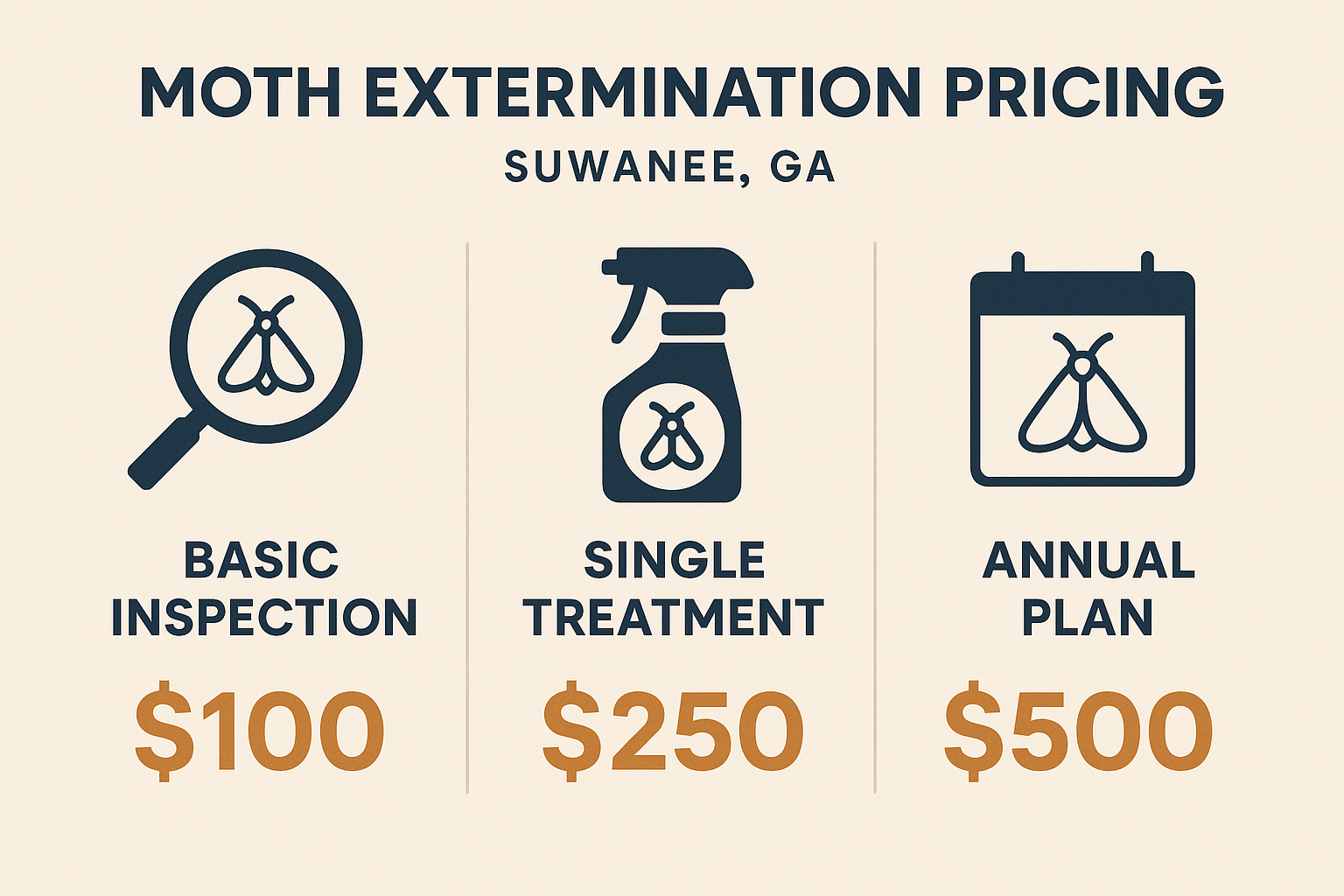
When you call a local exterminator in Suwanee, GA, you’ll usually encounter three pricing tiers:
- Basic Inspection – A technician visits, identifies the species, and outlines a treatment plan. This service often costs between $80‑$120.
- Single Treatment – One‑time application of a targeted, food‑grade pesticide plus a thorough pantry clean‑out. Prices range from $150‑$250, depending on square footage and infestation level.
- Annual Maintenance Plan – Quarterly inspections, two follow‑up treatments, and a warranty that covers re‑infestations for a full year. Homeowners typically pay $350‑$500 for this all‑inclusive package.
What Each Tier Includes
| Tier | What’s Included | Visit Frequency | Warranty / Follow‑up |
|---|---|---|---|
| Basic Inspection | Species ID, damage assessment, treatment recommendation | One visit | None |
| Single Treatment | Pesticide application, pantry cleaning guidance, trap placement | One visit (optional 2‑week follow‑up) | 30‑day guarantee |
| Annual Plan | Quarterly inspections, two full treatments, pantry sanitation kit, emergency call‑out | Four visits per year | One‑year re‑infestation warranty |
Seasonal Activity Chart
Pantry moths are most active when indoor humidity rises and food stores are abundant, which is why many homeowners begin searching for a moth exterminator near me Suwanee during peak seasons. The chart below shows the peak months and the optimal windows for treatment.
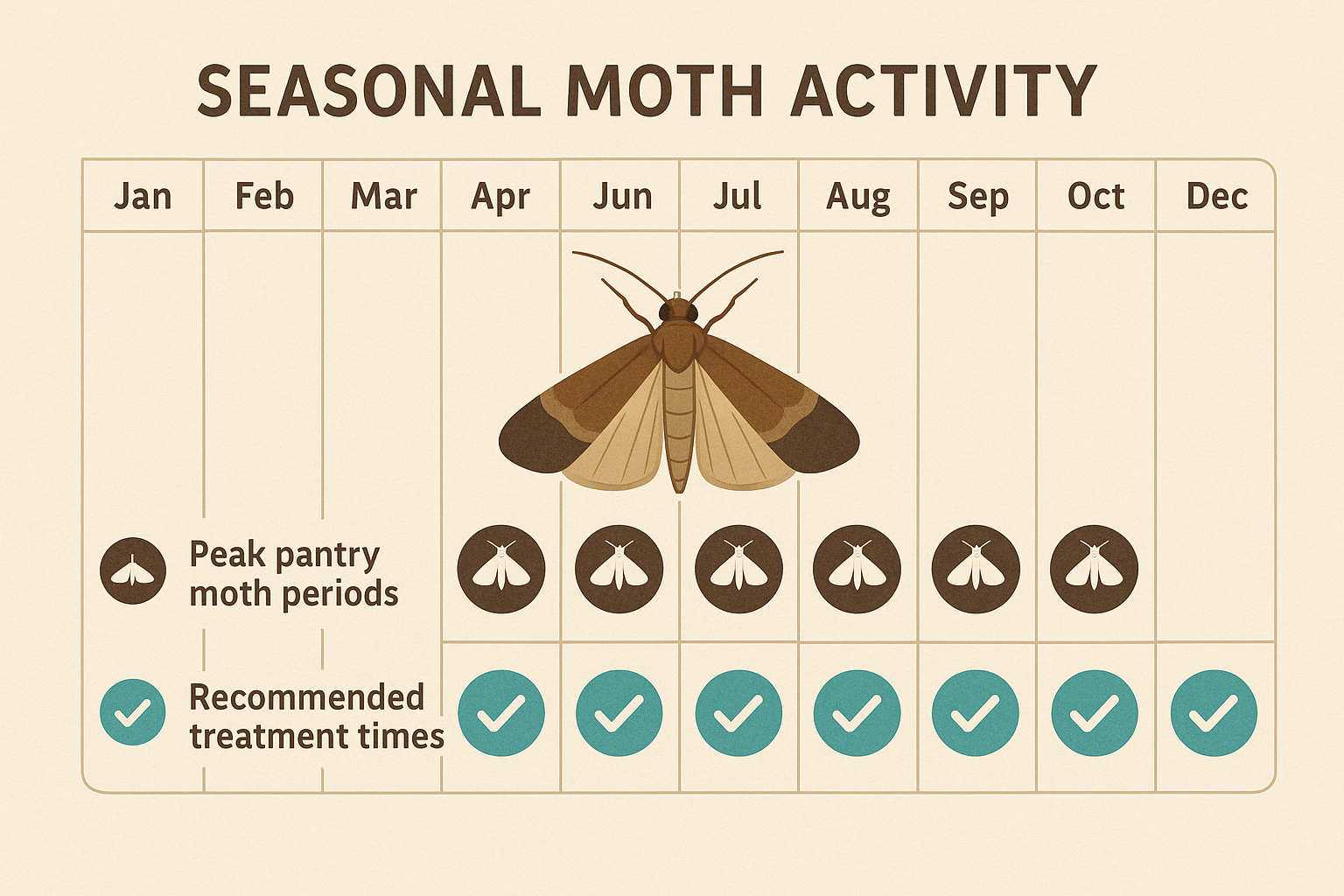
In Suwanee, the highest activity typically occurs from May through September. Treating early—late April or early May—can stop a population before it explodes, while a second touch‑up in August helps eradicate any late‑season survivors.
Advice on Budgeting for Your Situation
If you’ve only spotted a few adult moths or a small amount of webbing, a single treatment may be sufficient. The cost‑effective approach is to combine the pesticide application with a thorough pantry purge (discarding open packages, vacuuming shelves, and storing food in airtight containers).
For larger infestations—multiple species, extensive webbing, or recurring sightings—investing in an annual maintenance plan saves money in the long run. The plan spreads the expense over four visits and protects you against unexpected re‑infestations, which can otherwise cost $200‑$400 per emergency call.
Homeowners on a tighter budget can still benefit from a basic inspection plus a DIY follow‑up using pantry traps and food‑grade diatomaceous earth. This hybrid method typically stays under $150, but it lacks the warranty and professional guarantee that an annual plan provides.
Industry Data Backing Our Prices
According to the National Pest Management Association (NPMA) industry data, average pantry moth treatment costs have risen 8 % over the past three years, largely due to increased demand for food‑grade, low‑toxicity products. Anthem Pest Control aligns its pricing with these national trends while offering transparent, flat‑rate quotes for Suwanee homeowners.
Protect Your Kitchen with Professional Help Today
You’ve likely spotted the tell‑tale signs of pantry moths: silky webbing in the corners of your pantry, tiny larvae crawling along flour bags, and the occasional flutter of adult moths near food storage. These clues aren’t just unsightly—they signal a health risk. Moth larvae can contaminate dry goods with droppings, urine, and shed skins, turning everyday staples into potential allergens and bacterial breeding grounds. The standard DIY steps—discarding infested items, vacuuming, and freezing—are a good start, but they often miss hidden eggs and larvae nestled deep within cracks and crevices.
Acting early with a professional service can stop the infestation before it spreads to your entire kitchen, preserving both your food supply and your family’s well‑being. A prompt, expert intervention prevents costly food loss, eliminates the need for repeated clean‑outs, and reduces the chance of secondary health issues such as respiratory irritation or food poisoning. The sooner a trained technician treats the problem, the less chance the moths have to reproduce and migrate to other rooms.
Anthem Pest Control brings years of focused experience to pantry moth eradication. Our technicians use targeted, low‑toxicity pesticides that are safe around food preparation areas and pets, applying them precisely where moths hide—behind cabinets, under shelving, and inside wall voids. We combine chemical treatment with thorough sanitation recommendations, ensuring you know how to store food properly to keep future invasions at bay. Transparency is a core value; you’ll receive a detailed, upfront quote with no hidden fees, and a clear timeline for each step of the process.
Ready to safeguard your kitchen? If you’re searching for a moth exterminator near me Suwanee, call us today at 877-371-8196 to schedule a free, no-obligation inspection. Our friendly team will assess the situation, outline a customized treatment plan, and provide a written estimate—all at no cost to you. There’s no commitment required, just expert advice and a clear path toward a moth-free pantry.