Finding a Rat Exterminator in Dunwoody – Why It Matters

It’s late, the house is quiet, and you’re about to drift off when a sudden, frantic scurrying echoes through the walls of your Dunwoody home. If you’re searching for a rat exterminator Dunwoody, the sound isn’t a house-settling creak—it’s the unmistakable patter of rats moving behind baseboards, in attics, or inside wall cavities. For any homeowner, that moment instantly shifts from curiosity to concern.
Rats multiply quickly, and every night they remain undetected they chew on insulation, wiring, and even structural wood. That gnawing can lead to costly repairs, fire hazards, and, more importantly, a host of health risks—from Hantavirus to salmonella. The longer the infestation lingers, the deeper the damage and the higher the stress on you and your family. Rapid action isn’t just advisable; it’s essential to protect your home’s integrity and your loved ones’ well‑being.
This guide is designed to cut through the confusion and point you straight to a vetted, 24/7 rat exterminator serving the Dunwoody area. We’ll walk you through what to look for in a local service, how to verify licensing and insurance, and why a round‑the‑clock response matters when you hear those nocturnal noises. By the end, you’ll have a clear, step‑by‑step plan to secure professional help without the guesswork.
One of those trusted professionals is Anthem Pest Control. With a dedicated office in Dunwoody, Anthem offers local expertise combined with a nationwide reputation for safe, effective, and affordable pest solutions. Their 24‑hour support line (877‑371‑8196) means you can report a rat sighting at any hour, and a licensed technician will be dispatched promptly. Whether you need an emergency treatment or a long‑term prevention strategy, Anthem’s team is ready to protect your home, giving you peace of mind while you sleep.
Understanding Rat Infestations in Dunwoody
Common Rat Species in Metro Atlanta
Homeowners in Dunwoody most often encounter two rodent culprits: the Norway rat (Rattus norvegicus) and the Roof rat (Rattus rattus). The Norway rat, sometimes called the brown rat, is a hefty, stocky rodent that prefers ground‑level habitats such as basements, crawl spaces, and sewer lines. It thrives in cluttered trash areas and can chew through concrete, wood, and plastic to reach food or shelter. The Roof rat, also known as the black rat, is slimmer, more agile, and loves to climb. It nests high up in attics, roof voids, and dense foliage, often entering homes through tiny gaps in eaves or vents.
What the Numbers Say
According to the CDC’s 2024 report, Fulton County recorded 2,150 rodent‑related complaints, representing a 12 % increase over the 2023 total. The Georgia Department of Public Health (DPH) flagged this rise as the steepest among all metropolitan areas in the state, attributing it to a combination of weather patterns and expanding residential development. For a detailed breakdown, see the CDC’s rodent facts page: CDC Rodent Facts.
Why Dunwoody Is a Rat‑Friendly Environment
Dunwoody’s climate and landscape create an almost perfect buffet for both Norway and Roof rats. The region’s humid subtropical weather provides year‑round moisture, which keeps basements and underground utilities damp—ideal for Norway rats seeking cool, moist burrows. Mature oak, pine, and maple trees line many neighborhoods, offering Roof rats abundant canopy cover and natural pathways to climb from the street into attics.
Housing density adds another layer of attraction. Newer subdivisions sit close to older, tree‑lined streets, creating a patchwork of food sources—bird feeders, pet food left outdoors, and improperly sealed garbage cans. The mix of single‑family homes, townhouses, and apartment complexes means there are countless entry points, from foundation cracks to roof vents, that rats can exploit.
- High humidity keeps underground habitats moist.
- Dense canopy from mature trees provides climbing routes.
- Close‑quarter housing increases the number of potential entry points.
- Abundant outdoor food sources fuel population growth.
Identifying Signs of Rat Activity
Rats are stealthy, but they leave a trail of evidence that even a busy homeowner can spot. Knowing what to look for lets you act before the problem spreads to walls, wiring, or stored food. Below is a quick‑reference checklist you can print and hang in the garage or pantry.
Quick‑Check Checklist
- Droppings: Small, dark, rice‑shaped pellets often found along baseboards, in cabinets, or near food packages.
- Gnaw marks: Fresh, clean cuts on wood, plastic, or insulation; look for parallel lines on beams.
- Runways: Smoothed pathways along walls, behind appliances, or in attics where rats travel back and forth.
- Noisy walls: Scratching, scurrying, or squeaking sounds, especially at night when rats are most active.
- Strong urine odor: A sharp, ammonia‑like smell that intensifies in confined spaces such as crawl spaces or attics.
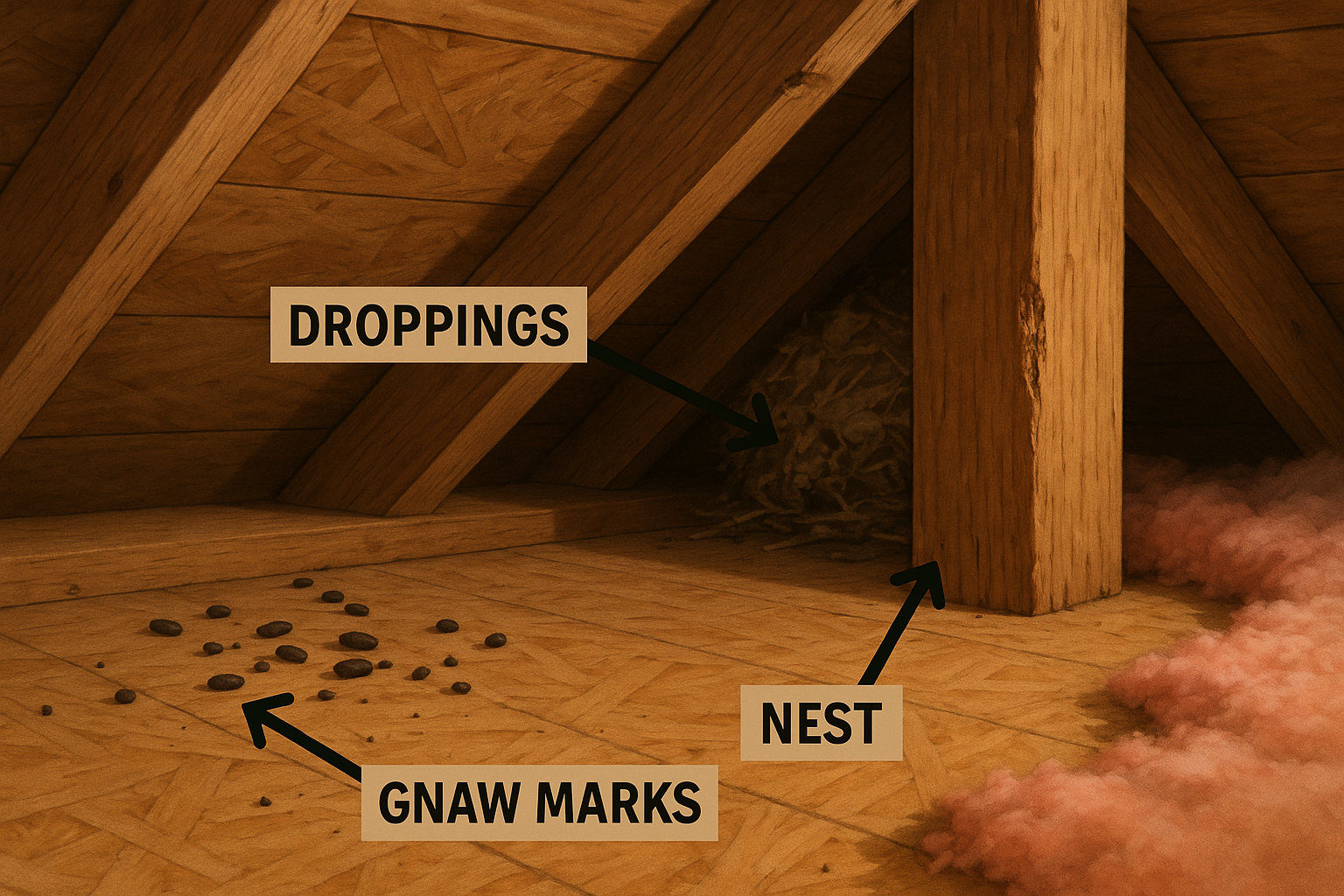
Figure 2 illustrates a typical attic scenario. Notice the clustered droppings along the joist seams—rats tend to deposit feces where they pause to gnaw or change direction. The pattern forms a faint line that becomes darker toward the nest entrance, giving you a visual cue that the infestation is active and not just a one‑time sighting.
Consider the case of a single‑family home on Peachtree Parkway. The homeowners first noticed a faint, musky odor in the upstairs hallway. After a brief visual inspection, they spotted fresh gnaw marks on the attic hatch and a thin runway of droppings along the rafters, exactly as shown in the illustration. A professional inspection by Anthem Pest Control revealed a concealed nest tucked behind insulation, housing a family of five Norway rats. Prompt removal and sealing of entry points prevented structural damage and saved the family from costly repairs.
Keep this checklist handy, compare any findings with the attic illustration, and call Anthem Pest Control at 877‑371‑8196 if you suspect an infestation. Early detection is the most affordable defense against a rat problem.
Health Risks and Legal Concerns
Rats may seem like a nuisance, but they carry pathogens that can turn a simple sighting into a serious health emergency. The CDC’s 2023 rat‑borne disease facts sheet lists hantavirus, leptospirosis and salmonella as the three most common infections transmitted by urban rodents. Hantavirus spreads through inhalation of dried urine or feces and can cause severe respiratory distress, while leptospirosis enters the body through cuts or mucous membranes, leading to fever, muscle pain, and in rare cases, kidney failure. Salmonella, often linked to contaminated food or surfaces, produces gastrointestinal upset that can be especially dangerous for children and the elderly.
Georgia’s health code reinforces the urgency of these threats. Under Title 31, Chapter 5, Article 2, landlords are required to address rodent infestations within 48 hours of a tenant’s written complaint. Failure to act not only endangers occupants but also exposes property owners to potential violations and fines from the Department of Community Health. Prompt remediation is therefore both a public‑health imperative and a legal obligation for rental properties.
“Untreated rat infestations can lower property values by up to 15%.” – Local Real‑Estate Market Report, 2024
This depreciation isn’t just a financial footnote; it reflects buyer perception of ongoing health risks and the cost of future mitigation. Homeowners who act quickly can protect both their family’s wellbeing and their investment.
For a comprehensive, science‑backed approach to rodent control, consult the EPA’s rodent‑control guidelines. They outline safe bait placement, sanitation practices, and integrated pest‑management strategies that align with Anthem Pest Control’s commitment to effective, low‑impact solutions.
Choosing a licensed professional like Anthem Pest Control ensures that treatment follows both CDC recommendations and Georgia’s code. Certified technicians use EPA‑approved baits, seal entry points, and provide documentation that satisfies rental‑property inspections, giving homeowners peace of mind and legal protection.
Choosing a Local Rat Exterminator
When a rat infestation threatens your home, choosing a rat exterminator Dunwoody homeowners trust can mean the difference between a quick, clean fix and months of sleepless nights. Because every pest-control company isn’t created equal, it helps to have a clear decision-making framework before you pick up the phone. Below is a concise checklist that puts the most critical criteria front-and-center.
What to Look for: A Quick Checklist
- Proper licensing and insurance – Verify that the company holds a state‑issued pest‑control license and carries liability insurance to protect you in the unlikely event of property damage.
- Local customer reviews – Real‑world feedback from neighbors in Dunwoody gives you insight into reliability, professionalism, and results.
- Rapid response time – Rats reproduce fast; a company that can schedule an inspection within 24‑48 hours reduces the chance of a small problem turning into a full‑blown invasion.
- Integrated Pest Management (IPM) approach – Look for providers who combine inspection, exclusion, sanitation advice, and targeted treatment rather than relying solely on chemicals.
- Transparent pricing – A detailed quote that breaks down labor, materials, and any follow‑up visits helps you avoid surprise fees later.
Why Anthem Pest Stands Out in Dunwoody
Anthem Pest Control checks every box on the list, and then some. The company is fully licensed by the Georgia Department of Agriculture and carries comprehensive general liability insurance, giving you peace of mind from day one. Their technicians are trained in the latest Integrated Pest Management techniques, meaning they prioritize exclusion and habitat modification before resorting to chemical treatments.
Speed is a hallmark of Anthem’s service. In Dunwoody, they promise a same‑day or next‑day inspection for rat reports, ensuring that rodents are intercepted before they establish permanent pathways. Their local footprint is evident—Anthem has been serving the Atlanta metro area for over a decade, with a dedicated team that knows the unique construction styles and seasonal pest patterns of the region.
Community trust is reflected in a stellar 5‑star Google rating from Dunwoody homeowners. Reviewers repeatedly mention punctuality, thoroughness, and courteous communication. Transparent pricing is built into every estimate, and the company offers a satisfaction guarantee that includes a follow‑up visit at no extra charge if rats reappear within 30 days.
“I called Anthem Pest after spotting droppings in my garage. The technician arrived the next morning, explained exactly how the rats were getting in, and sealed every entry point before treating the interior. The whole process felt professional and honest—no hidden fees, just a rat‑free home. I’d recommend them to any neighbor in Dunwoody.”
— Jane D., Dunwoody homeowner
What to Expect from Professional Treatment
When you call Anthem Pest Control, the first thing you’ll notice is a clear, organized process designed to eliminate rats quickly while keeping your family and pets safe. Our certified technicians follow a proven four‑step workflow that aligns with EPA rodent‑control standards. We also provide a written treatment plan so you know exactly what actions are taken and when.
Step 1: Initial Inspection
The technician arrives in a marked vehicle, dons protective gear, and conducts a thorough walkthrough of your property. Using flashlights, moisture meters and visual cues, they locate active runways, gnaw marks, and nesting sites. This inspection creates a precise map for bait placement and exclusion work.
Step 2: Targeted Bait Placement
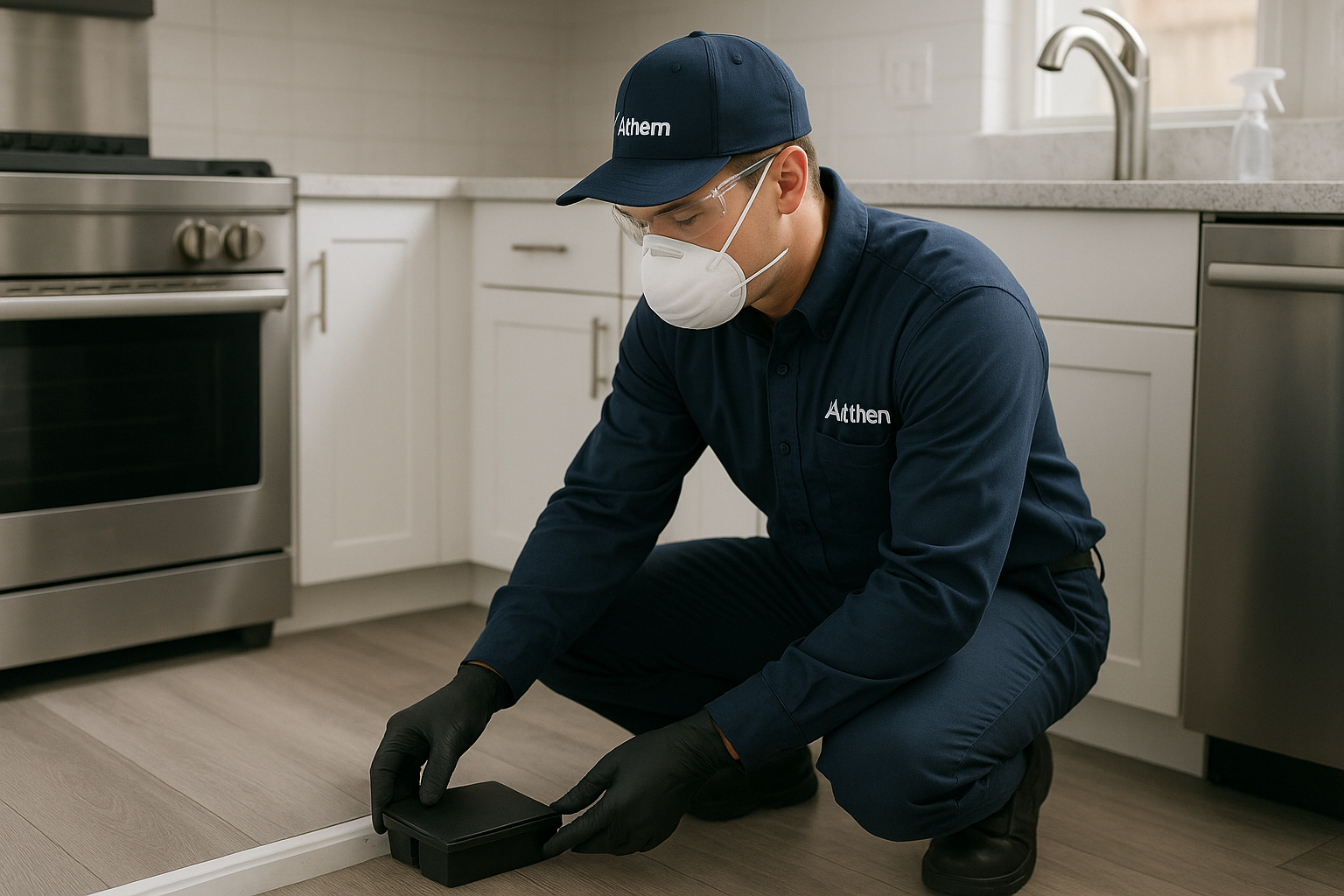
After the inspection, low‑dose bromadiolone bait—an EPA‑approved anticoagulant—is placed in tamper‑resistant stations. The formulation meets the EPA’s rodent‑control product standards for toxicity, degradation, and non‑target safety. Stations are positioned along walls, near suspected entry points, and in concealed outdoor areas.
Step 3: Sealing Entry Points
With bait in place, the technician moves to exclusion. All gaps larger than ¼ inch—such as vent openings, foundation cracks, and utility penetrations—are sealed using steel wool, caulk, or metal flashing. This step cuts off new access while the bait works on any remaining rodents.
Step 4: Follow‑up Visit
Two to three days later, a second visit confirms bait consumption and checks for new activity. If necessary, additional stations are added and any missed entry points are reinforced. The follow‑up ensures the infestation is fully resolved before the technician departs.
Throughout the process, technicians wear disposable gloves, N‑95 respirators, and eye protection, adhering strictly to EPA guidelines for handling anticoagulant baits. All equipment is calibrated, and waste is disposed of according to local environmental regulations, giving you peace of mind that the treatment is both effective and responsible. Our technicians are trained annually on the latest EPA updates, ensuring every job meets the highest compliance standards.
Pricing and Cost Transparency
Homeowners in Dunwoody who call a professional for rat removal can expect a fairly narrow band of prices in 2024. According to the National Pest Management Association (NPMA) 2024 rodent-control survey, the average inspection fee ranges from $150 to $300, while a full-service treatment typically falls between $250 and $500. These figures reflect the cost of a qualified technician, the materials needed to eliminate a colony, and the follow-up work that guarantees long-term results from a trusted rat exterminator Dunwoody.
Each line‑item in the quote serves a purpose. The inspection fee covers a thorough visual assessment, identification of entry points, and a detailed report that outlines the infestation level. Bait stations, which are placed strategically inside and outside the home, are included in the treatment price and are pre‑loaded with EPA‑approved rodenticide. Labor accounts for the time spent setting traps, sealing gaps, and calibrating monitoring devices. A standard warranty—often 30 days for a one‑time treatment or up to a year for ongoing service—means any new activity is addressed at no extra charge. Finally, a post‑treatment follow‑up visit confirms that the bait stations remain active and that no new activity has surfaced.
Anthem Pest Control stands out by turning that price range into a single, upfront figure. When you call, the technician conducts the inspection, then presents a written quote that lists every component—inspection, bait placement, labor, warranty, and any scheduled follow‑ups—before any work begins. There are no surprise service calls, no hidden material fees, and no after‑the‑fact price hikes. This no‑hidden‑fees guarantee is built into every contract, giving homeowners the confidence to approve the work knowing exactly what they will pay.
For a broader view of regional pricing trends, you can explore the full NPMA rodent‑control statistics report here: NPMA Rodent Control Statistics. Comparing those averages with Anthem’s transparent quote helps you verify that you are receiving a fair market rate without any hidden add‑ons. Feel confident that your budget stays predictable and protected.
Prevention Tips for Homeowners
After a professional rat treatment, the most reliable way to keep rodents from returning is to eliminate every invitation they might find around your home. Small gaps, easy access points, and abundant food sources are the three things rats look for, and a few simple habits can shut those doors permanently.
Key preventive measures
- Seal gaps ≤ ¼ inch. Inspect the exterior for cracks around windows, doors, utility penetrations, and the foundation. Use steel wool, caulk, or expanding foam to close openings that are smaller than a quarter‑inch—rats can squeeze through even tighter spaces.
- Trim tree branches away from the roof. Overhanging limbs act as natural bridges for rats to climb onto eaves, soffits, and vents. Keep branches at least three feet below the roofline and prune any foliage that touches the siding.
- Store trash in sealed containers. Outdoor garbage cans should have tight‑fitting lids and be emptied regularly. Consider using rat‑proof bins with lockable lids, and keep compost piles at least three feet from the house.
In addition to these actions, schedule a quick visual inspection each month. Look for new holes, gnaw marks, or droppings, especially around utility lines and garage doors. Promptly repairing any fresh damage prevents rats from establishing a new entry point.
Seasonal awareness is crucial. During the fall, rats actively search for warm shelter before winter sets in. Use this period for a thorough clean‑up: remove leaf piles, clear debris from crawl spaces, and store firewood off the ground and away from the house. A tidy perimeter eliminates the hidden nests that attract rodents.
For a handy reference, download our printable checklist and keep it on your fridge or in your home office. It outlines each step, the tools you’ll need, and a suggested timeline for the year.
Seasonal Considerations in Georgia
Georgia’s warm, humid climate creates a perfect backdrop for rodents, but it also dictates when they’re most active. In Fulton County, you’ll notice two clear peaks: early spring and mid‑to‑late fall. As temperatures climb above 50°F (10°C) in March and April, rats emerge from their winter nests to hunt for food and new shelter. The same pattern repeats in September and October when the heat of summer wanes and the cooler evenings make for comfortable foraging conditions. During these windows, the combination of abundant outdoor harvests and the desire to secure a safe den drives a noticeable surge in rodent sightings.
Why Spring and Fall Matter
- Breeding season: Female rats can produce up to five litters a year, and the spring spike often marks the start of a new reproductive cycle.
- Food availability: Freshly sprouted gardens, fallen leaves, and discarded yard waste provide easy meals, encouraging colonies to expand.
- Habitat transition: As foliage thins in fall, rats search for indoor shelter, increasing the likelihood of them entering homes.
Optimal Inspection Timing
To stay ahead of the infestation curve, schedule a professional inspection before the rainy season hits—ideally in late May or early June. The June‑July downpours can drive rats deeper into structures seeking dry refuge, making later treatments less effective. An early assessment allows Anthem Pest Control to identify entry points, set up preventive barriers, and apply targeted control measures before the moisture‑induced surge.
For a visual reference of rodent activity trends, consult the Georgia Extension rodent‑seasonality chart. Understanding these patterns empowers you to act proactively, keeping your Dunwoody home rat‑free year‑round.
Frequently Asked Questions
How long does treatment take?
At Anthem Pest Control a typical rat‑extermination process begins with a 30‑ to 60‑minute inspection to locate entry points, nesting sites, and food sources. Once the plan is set, a technician usually needs 1‑2 hours to place traps, bait stations, and seal obvious gaps. Most homeowners see a noticeable drop in activity within 48 hours, but we schedule a follow‑up visit 7‑14 days later to verify results and address any lingering issues. Larger properties, severe infestations, or seasonal weather conditions can extend the timeline, but we always keep you informed.
Are pets safe during and after treatment?
Yes. We use EPA‑approved rodent baits and traps that are specifically formulated to minimize risk to non‑target animals. During application, we advise keeping dogs and cats away from treated areas for at least a few hours—often the time it takes for the technician to finish placement and secure bait stations. After the bait is set, the low‑toxicity formulation remains safe for pets as long as they do not ingest the bait directly. We also offer pet‑friendly exclusion methods, such as sealing entry points, which eliminate the need for chemicals altogether.
Can I handle a rat problem myself?
DIY solutions can be tempting, but they come with trade‑offs. Consider the following:
- Pros: Lower upfront cost; immediate action if you spot a rat.
- Cons: Incomplete coverage often misses hidden nests; improper bait placement can pose health risks to children and pets; EPA and CDC guidelines stress that professional assessment reduces the chance of re‑infestation.
- Long‑term effectiveness: Professionals combine trapping, baiting, and structural exclusion, which DIY kits rarely address.
For most homeowners, the safest and most reliable route is to call a licensed exterminator like Anthem Pest Control. Our technicians follow EPA‑registered protocols, guarantee compliance with CDC recommendations, and provide a clear, transparent pricing structure.
Take Action – Secure a Rat‑Free Home Today
We’ve walked through the whole process, so here’s a quick reminder of the five essential steps to a rat‑free home:
- Identify the signs. Look for droppings, gnaw marks, gnaw‑scented urine, and noisy activity at night.
- Verify the risk. Assess how quickly a small infestation can grow into a health and structural hazard.
- Choose a qualified exterminator. Pick a licensed professional with proven experience in rodent control.
- Undergo professional treatment. Allow certified technicians to set traps, bait stations, and seal entry points.
- Implement prevention. Keep food sealed, eliminate clutter, and maintain regular inspections.
Ready to put those steps into action? Call Anthem Pest today at 877‑371‑8196 for a free, no‑obligation quote. Our local teams know Dunwoody’s unique rodent hotspots, and we’re on call 24 / 7 to answer emergencies.
What sets us apart is transparent pricing—no hidden fees, just a clear estimate before any work begins. Whether you need an immediate eradication or a long‑term prevention plan, we tailor solutions to fit your budget and schedule.
Visit our website for more details, customer testimonials, and to schedule online with a trusted rat exterminator Dunwoody homeowners rely on. Let’s make your home safe, clean, and rat-free—together.