Spotting Common Household Spiders and Understanding Their Risks
Knowing which spider you’re sharing your home with isn’t just a curiosity—it’s a practical step toward keeping your family safe, especially if you’re considering a spider exterminator near me Suwanee. Some eight-legged visitors are harmless, while others can deliver bites that require medical attention. Accurate identification helps you decide whether a simple clean-up will do, or if it’s time to call a professional exterminator.
Common Indoor Spiders in Georgia Homes
Georgia’s warm climate creates a welcoming environment for several spider species that often wander indoors. Below are the three you’re most likely to encounter, along with the visual cues that set them apart.
- Southern House Spider (Kukulcania hibernalis) – Usually brown to dark‑gray with a velvety sheen. Its body is elongated, and the legs are banded with lighter shades. These spiders spin irregular, sheet‑like webs in corners, basements, and closets.
- Brown Recluse (Loxosceles reclusa) – Small (about ¼‑½ inches), light‑tan with a characteristic dark violin‑shaped marking on the cephalothorax. They prefer undisturbed places like attics, closets, and wood piles.
- Black Widow (Latrodectus mactans) – Glossy black females with a bright red hourglass on the underside of the abdomen. Males are smaller and less striking. Black widows favor dark, dry spots such as garages, sheds, and crawl spaces, and they build messy, irregular webs.
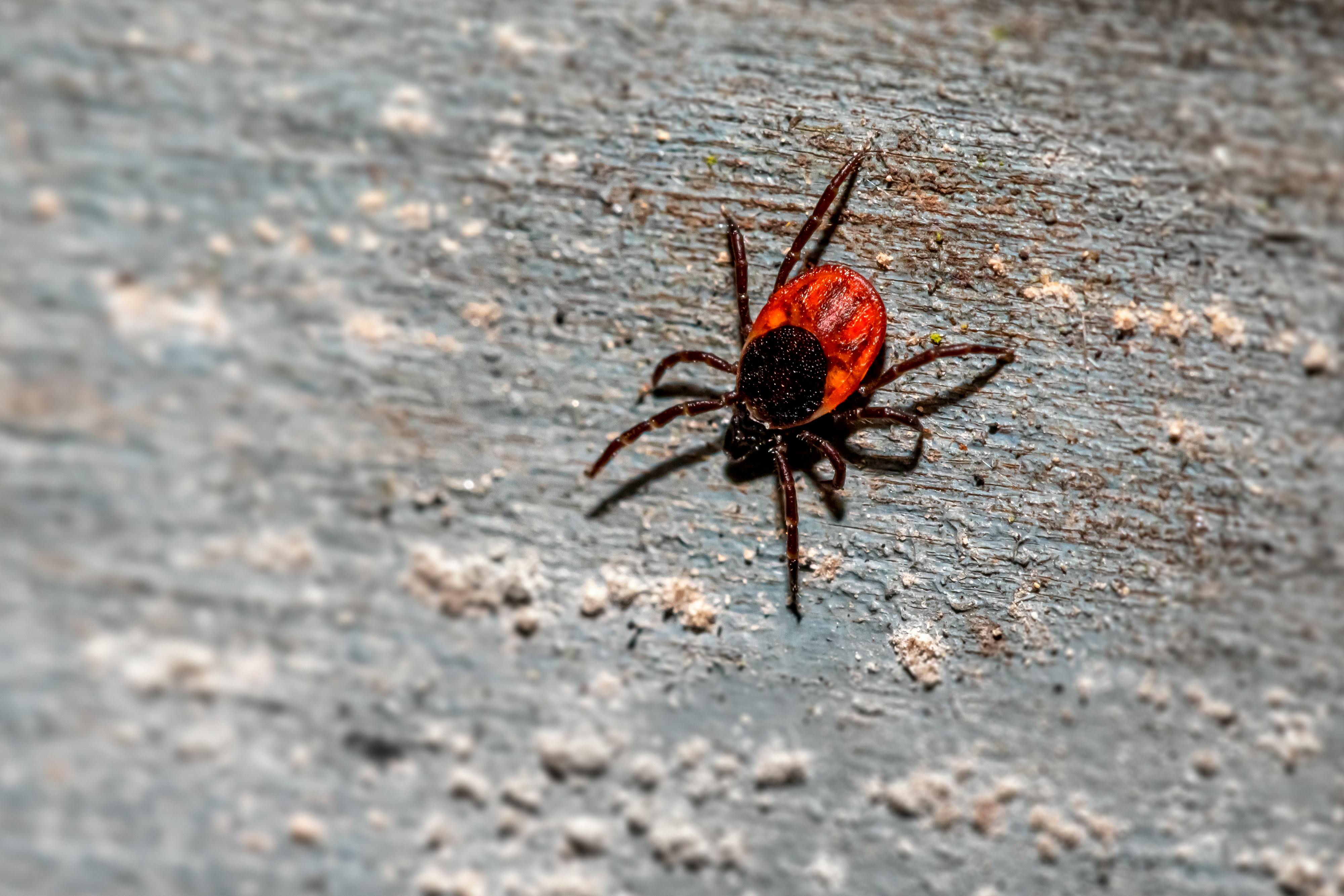
Using the Macro Photo to Compare Size, Color, and Web Type
The macro image above is a handy reference point. When you spot a spider, pause and compare three key features:
- Size – Hold a ruler or a common object (like a coin) next to the spider. The Southern House Spider can reach up to 1 inch when legs are spread, while the Brown Recluse stays under half an inch.
- Color patterns – Look for the violin marking of the Recluse or the red hourglass of the Widow. The Southern House Spider’s uniform brown‑gray tone lacks distinct markings.
- Web structure – Sheet‑like webs signal a Southern House Spider; tangled, irregular webs often belong to a Black Widow; and a lack of web may indicate a Brown Recluse, which prefers to hide in crevices.
Bite Symptoms, Allergic Reactions, and When to Seek Medical Help
Most household spiders deliver a bite that feels like a mild pinch or a mosquito bite. However, the following signs suggest a more serious reaction:
- Intense pain or a burning sensation that spreads beyond the bite site.
- Redness that expands rapidly, forming a necrotic “bullseye” – typical of Brown Recluse venom.
- Muscle cramps, sweating, nausea, or difficulty breathing – possible indicators of a Black Widow bite.
- Any swelling, hives, or shortness of breath in someone with known insect allergies.
If you notice any of these symptoms, especially systemic effects like fever or severe pain, call your doctor or head to the nearest emergency department immediately. Even a seemingly harmless bite can become problematic for children, seniors, or immunocompromised individuals.
Quick Checklist: Does This Spider Require Professional Help?
- Is the spider a known venomous species (Brown Recluse or Black Widow)?
- Do you see a large number of spiders or webs in hidden areas (attic, crawl space, garage)?
- Has the spider been inside frequently, indicating a possible infestation?
- Are you experiencing bites with worsening symptoms or allergic reactions?
- Do you have pets, children, or elderly residents who are more vulnerable?
If you answered “yes” to any of these questions, it’s time to let the experts handle it. Anthem Pest Control offers safe, targeted treatments that eliminate the problem while protecting your home’s occupants and pets. Give us a call at 877‑371‑8196 or visit anthempest.com to schedule a professional inspection.
When Georgia Spiders Are Most Active – A Seasonal Guide
Georgia’s humid subtropical climate creates a perfect backdrop for spider activity year-round, which is why many homeowners eventually search for a spider exterminator near me Suwanee. Warm springs, hot summers, and mild winters mean that these eight-legged neighbors can thrive in both outdoor gardens and indoor corners. Understanding how temperature, rainfall, and daylight shift through the seasons helps you predict when spiders are most likely to build, hunt, mate, or seek shelter inside your home.
Peak Months for Georgia’s Common Species
- Spring (March – May): Orb weavers and garden spiders spin new, expansive webs to catch the surge of flying insects that emerge after winter. This is the busiest time for web‑building species.
- Summer (June – August): Wolf spiders and jumping spiders abandon permanent webs and become active hunters, roaming lawns and basements in search of prey.
- Fall (September – November): Many species, including the brown recluse and cellar spider, focus on mating. You’ll notice increased sightings near windows and doorways as adults search for partners.
- Winter (December – February): While outdoor activity drops, indoor‑adapted spiders such as the common house spider seek the warmth of heated homes, often clustering in attics, closets, and crawl spaces.
How Indoor Heating and Humidity Influence Year‑Round Presence
Even when outdoor temperatures dip, indoor environments can sustain spider populations. Central heating raises indoor temps to 68‑72°F (20‑22°C), while humidifiers or bathroom steam maintain the moisture spiders love. These conditions allow web‑builders and hunters to remain active throughout the colder months, especially in basements, garages, and poorly sealed rooms. Reducing indoor humidity with dehumidifiers and sealing cracks can dramatically cut the chances of a winter infestation.
Scheduling Inspections Before High‑Risk Periods
To stay ahead of spider surges, plan professional inspections during the shoulder seasons:
- Early Spring (late February‑early March): A pre‑web inspection catches overwintering spiders before they spin new webs.
- Late Summer (late August‑early September): Target hunting species that have been roaming your yard and foundation.
- Early Fall (mid‑October): Address mating activity and seal entry points before adults disperse.
Each visit includes a thorough perimeter check, interior crack sealing, and tailored treatment recommendations that align with the upcoming activity peak.
Seasonal Activity Chart
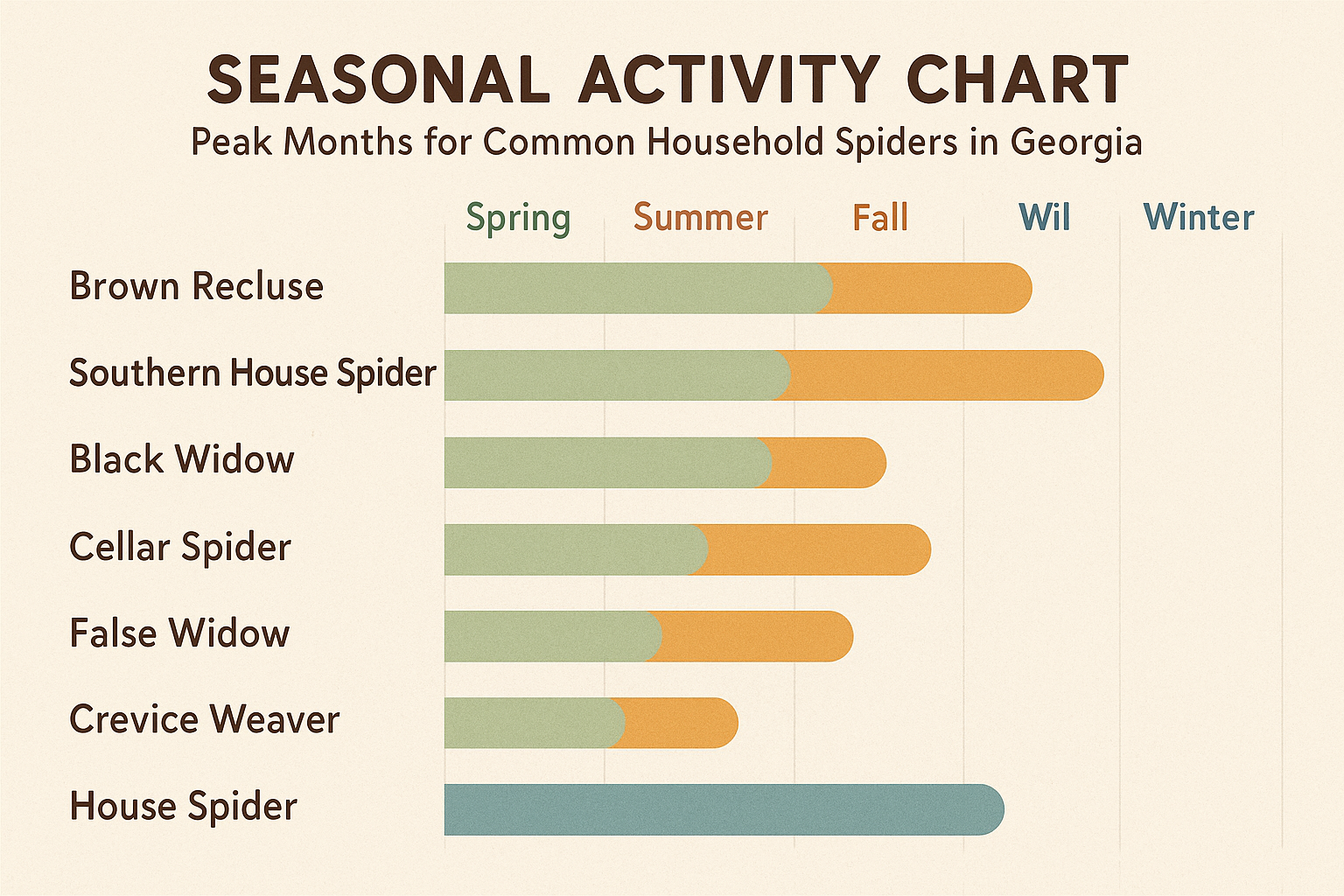
| Month | Web‑Building Species | Hunting Species | Mating Activity | Indoor Shelter Seekers |
|---|---|---|---|---|
| January | Low | Low | Low | High |
| February | Low | Low | Low | High |
| March | Increasing | Low | Low | Medium |
| April | High | Medium | Low | Medium |
| May | Peak | Medium | Low | Medium |
| June | Medium | High | Low | Low |
| July | Medium | Peak | Low | Low |
| August | Medium | High | Low | Low |
| September | Low | Medium | Medium | Low |
| October | Low | Low | Peak | Low |
| November | Low | Low | High | Medium |
| December | Low | Low | Low | High |
By aligning inspections and treatments with this seasonal roadmap, you can keep spider populations under control before they become a nuisance. If you notice increased activity during any of these peak periods, give Anthem Pest Control a call at 877‑371‑8196 or visit anthempest.com to schedule a targeted spider management plan tailored to your Suwanee home.
Effective Spider Control Methods and Safety Considerations
Integrated Pest Management (IPM) – a balanced framework
Anthem Pest Control follows an Integrated Pest Management (IPM) strategy that blends prevention, monitoring, and targeted treatment. The goal is to keep spider populations below nuisance levels while minimizing chemical exposure. By inspecting entry points, identifying species, and assessing infestation severity, we can choose the most efficient tools for each home.
Chemical options – targeting every life stage
When spiders demand a faster knock‑down, certified technicians turn to three main chemical categories:
- Residual sprays – Formulated to cling to walls, baseboards, and other surfaces for weeks, these sprays kill wandering adults and newly hatched spiderlings that cross the treated area.
- Dusts – Fine silica‑based or diatomaceous earth powders settle into cracks and voids where spiders hide. The abrasive particles damage the exoskeleton, leading to dehydration and death, especially effective against egg sacs tucked into tight spaces.
- Fumigation – In severe infestations, a low‑pressure fogger releases a vapor that penetrates hard‑to‑reach voids. The vapor attacks spiders at all stages, from egg to adult, before it condenses and settles.
Each product is EPA‑registered, meaning it has passed rigorous safety and efficacy tests before it can be applied in a residential setting.
Non‑chemical alternatives – low‑impact tools
Many homeowners prefer methods that leave no residue. Non‑chemical tactics work best when paired with good housekeeping and structural maintenance:
- Sticky traps – Placed along walls, under furniture, and near doorways, these traps capture wandering spiders, providing both control and valuable data about species activity.
- Vacuum removal – A high‑efficiency vacuum can instantly eliminate spiders and their webs. Empty the bag into a sealed container and discard it outdoors to prevent re‑release.
- Structural sealing – Caulking cracks, installing door sweeps, and repairing window screens block the pathways spiders use to enter the home.
- Outdoor lighting adjustments – Switching to yellow‑tinted or LED bulbs reduces the attraction of flying insects, which in turn deprives spiders of a food source near the foundation.
Typical indoor spray application – what a certified technician does
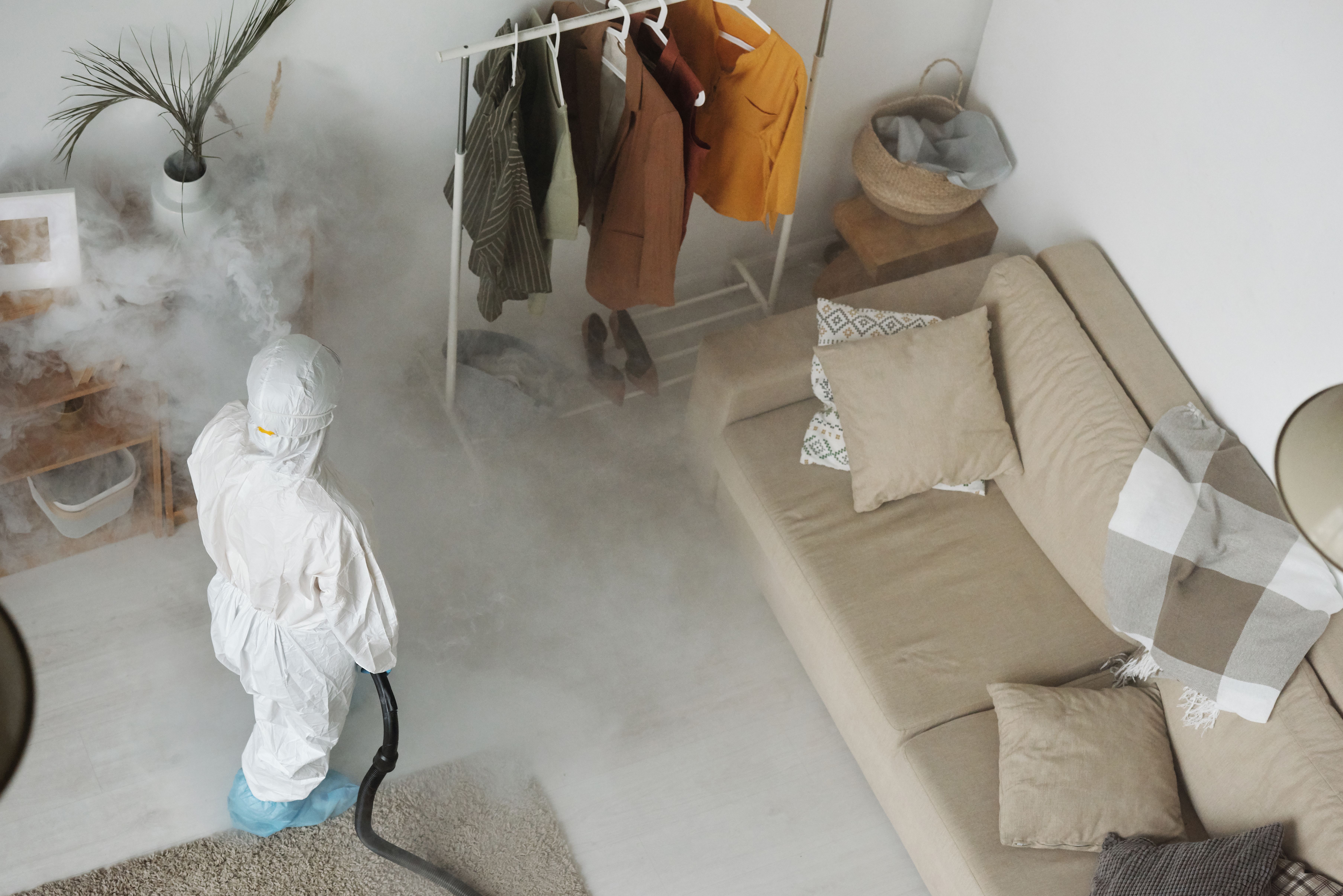
- Pre‑treatment briefing – The technician reviews the inspection report, confirms the target species, and discusses any homeowner concerns, such as pets or sensitive family members.
- Protective preparation – All occupants and pets are asked to vacate the treated rooms. The technician dons gloves, a respirator, and eye protection to ensure personal safety.
- Surface cleaning – Loose webs and debris are removed with a damp cloth, allowing the spray to contact the substrate directly.
- Application of residual spray – Using a calibrated pump, the technician applies a thin, even coat along baseboards, behind appliances, under furniture, and in any crevices where spiders hide.
- Spot treatment of cracks – A dust formulation is puffed into narrow gaps that the spray cannot reach, sealing those hiding spots.
- Ventilation and drying – Windows are opened for 15‑20 minutes to clear any airborne particles. The treated area is left undisturbed until the surface feels dry to the touch.
- Post‑treatment walkthrough – The technician explains re‑entry timing, offers a written safety sheet, and schedules a follow‑up inspection if needed.
Safety protocols for people and pets
Every application follows strict safety guidelines. Technicians wear EPA‑approved personal protective equipment (PPE) and use only products that meet the agency’s pesticide registration standards (EPA source). After spraying, rooms are ventilated to disperse any lingering vapors. Homeowners are instructed to keep children and pets out of treated spaces for at least two hours, or longer if a fogger was used. All leftover containers are sealed and stored out of reach, and any spills are promptly cleaned with a damp cloth and disposed of according to local regulations.
How Anthem Pest Control customizes each treatment
Anthem doesn’t rely on a one‑size‑fits‑all formula. Our certified specialists first identify the spider species—whether it’s a harmless house spider, a more aggressive brown recluse, or a web‑building orb weaver. The infestation level dictates the intensity of the program: a light‑touch IPM plan for occasional sightings, a full‑scale residual spray plus dust for active nests, or a targeted fumigation for severe, multi‑room invasions. Homeowner preferences also shape the approach; many clients request a “green” option that emphasizes traps and sealing, while others opt for the quickest chemical knock‑down. By blending data‑driven decisions with transparent pricing, Anthem delivers a solution that protects both the home and the family.
Understanding the Cost of Spider Extermination in Suwanee, GA
When you’re facing a spider invasion, the first question on most homeowners’ minds is “How much will it cost?” In Suwanee, GA, pricing isn’t a one-size-fits-all number, which is why many people start searching for a spider exterminator near me Suwanee to get accurate local pricing. It varies based on the unique characteristics of your property and the level of treatment you need. Knowing the variables helps you set a realistic budget and avoid surprise charges later on.
Key Factors That Influence the Price
- Property size: Larger homes or extensive outdoor spaces require more product and longer labor hours, which raises the per‑visit rate.
- Infestation severity: A light, occasional sighting costs far less than a full‑blown infestation that has spread throughout walls, attics, and crawl spaces.
- Treatment type: Traditional spray, residual barrier, or eco‑friendly options each carry different material costs.
- Frequency of visits: One‑time treatments are billed per service, while recurring plans spread the cost across multiple visits and often include discounts.
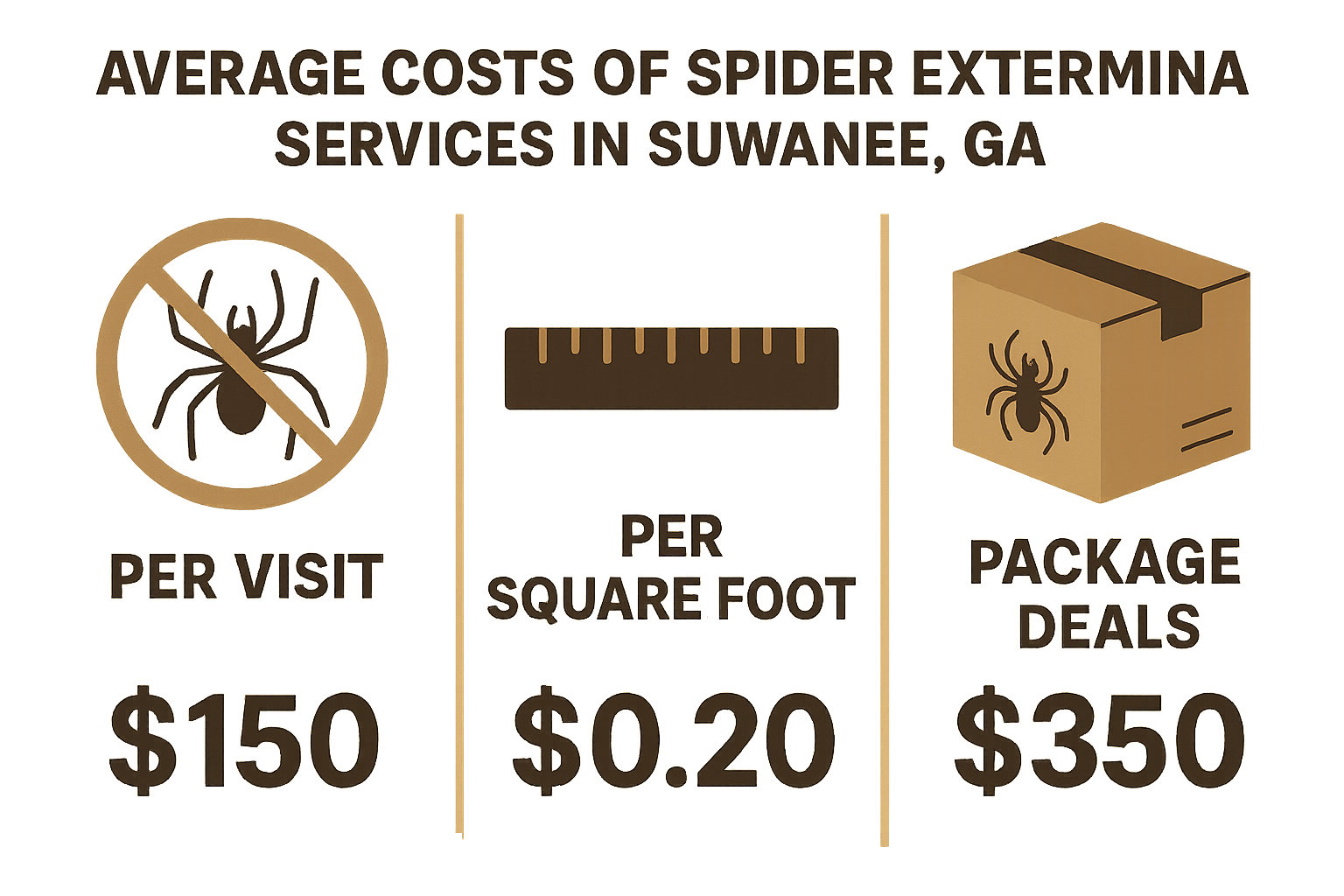
Pricing Infographic
The graphic below breaks down the most common pricing structures you’ll encounter in Suwanee. It shows per‑visit rates, per‑square‑foot calculations, and popular package deals that combine initial treatment with scheduled follow‑ups.
One‑Time Treatment vs. Annual Protection Plans
One‑time treatment is ideal if you’ve just spotted a few spiders and want an immediate knock‑down. The advantage is a single, predictable charge, but the protection may wane after a few weeks, especially during warm months when spiders breed quickly.
Annual protection plans spread the cost over twelve months and typically include 2‑4 visits per year, a free follow‑up if spiders return, and a guaranteed reduction in activity. While the upfront price looks higher, the per‑visit cost often drops by 15‑25 % and you gain peace of mind knowing your home stays consistently defended.
Tips for Evaluating Quotes
- Look for a clear guarantee—many companies promise a “no‑spider re‑infestation” policy within a set time frame.
- Check if follow‑up visits are included or billed separately; hidden fees can quickly inflate the total.
- Ask whether the quote covers both indoor and outdoor treatment; spiders often migrate between the two.
- Verify the technician’s certification and the safety of the chemicals used, especially if you have pets or children.
Anthem Pest Control’s Transparent Pricing Model
Anthem Pest Control stands out in Suwanee by offering a straightforward, itemized quote that matches the factors outlined above. Their pricing sheet lists a base rate per square foot, adds a flat fee for severe infestations, and clearly shows the discount applied to annual plans. On top of that, Anthem includes a free initial inspection—no obligation, no hidden costs—so you know exactly what you’re paying for before any work begins.
By understanding these pricing components, you can compare providers confidently, choose the plan that fits your lifestyle, and keep your home spider‑free without breaking the bank.
Protect Your Home from Spiders with Anthem Pest Control
Living in Suwanee means sharing space with a variety of spiders, some of which can bite or create unsightly webs. By now you should recognize the tell‑tale signs—irregular webbing, shed skins, or a sudden rise in spider activity during the warm months—and know when the seasonal surge typically begins.
Quick recap of what you’ve learned
- Identification signs: webs, egg sacs, and shed skins that reveal a colony.
- Seasonal timing: spiders move indoors from late spring to early fall.
- Treatment options: indoor sprays, perimeter barriers, and low‑toxicity dusts.
- Cost considerations: one‑time treatments $120‑$250; yearly plans spread cost.
When you act quickly and let a licensed professional handle the job, you reduce the risk of painful bites, property damage, and a re‑infestation. Technicians know where spiders hide—behind baseboards, in crawl spaces, and inside walls—so they can apply the right product the first time.
Anthem Pest Control blends science‑backed methods with a strong safety focus. All treatments are EPA‑registered, low‑odor, and safe for children and pets while eradicating the pests you fear. Because we prioritize prevention as much as eradication, you’ll notice fewer spider sightings season after season.
If you’re ready for peace of mind, simply request a complimentary inspection. Our team will assess your home, discuss the most effective approach for your situation, and provide a personalized quote—no hidden fees, no pressure.
Give us a call today at 877-371-8196 or click the link below to schedule your free evaluation. If you’re looking for a reliable spider exterminator near me Suwanee, our friendly specialists are standing by to answer your questions and set up a service window that fits your busy schedule.