Recognizing Brown Marmorated Stink Bugs and Their Impact

What is the brown marmorated stink bug?
The brown marmorated stink bug (Halyomorpha halys) is an invasive, shield-shaped insect native to East Asia. It arrived in the United States in the late 1990s and has since spread across the Midwest and Southeast, including Georgia, where many homeowners now seek help from a professional stink bug exterminator Peachtree City residents can trust. Its rapid expansion is driven by a lack of natural predators and its ability to thrive in both rural and suburban environments.
How to spot one
Identifying a brown marmorated stink bug is easier than you might think. An adult measures roughly ½ inch (about 12 mm) in length and has a distinctive, roughly triangular “shield” shape. The dorsal surface is mottled brown‑gray with a characteristic dark “V” marking that runs from the head toward the abdomen. When the bug feels threatened, it releases a pungent, almond‑like odor that can linger for minutes.
Where they hang out outside
In Peachtree City, BMSBs favor the canopy of hardwood trees, ornamental shrubs, and garden plants such as tomatoes, peppers, and beans. In late summer they often congregate under eaves, rooflines, and siding, seeking warm, sheltered spots for overwintering. This habit brings them into close proximity with homes, especially those with mature landscaping.
Typical indoor entry points
Once temperatures drop, the bugs look for cracks and gaps to slip inside. Common pathways include:
- Unsealed gaps around windows and doors
- Openings around utility lines, plumbing stacks, and electrical conduits
- Vents and attic fans that lack fine mesh screens
- Damaged or missing weather‑stripping
Even a tiny 1/8‑inch opening can admit a swarm of these insects, so a thorough inspection of the building envelope is essential.
Signs you already have an infestation
Homeowners often notice a combination of visual and olfactory clues:
- Clusters of dead bugs in sunny windowsills or near light fixtures
- A lingering, unpleasant odor when the insects are disturbed
- Shed exoskeletons (the pale, empty shells left after molting)
- Visible feeding damage—tiny, brownish spots or “stippling” on fruit, vegetables, and ornamental foliage
Because the bugs tend to gather in groups, a few sightings usually signal a larger, hidden population.
Economic and aesthetic damage
For the home gardener, BMSBs can dramatically reduce yields. Their piercing‑sucking mouthparts inject enzymes that cause fruit to become deformed, discolored, or even drop prematurely. A single plant can lose up to 30 % of its harvest if left unchecked.
Inside the house, the bugs leave behind a faint, oily residue that can stain windows, walls, and ceiling fans. While the stains are not permanent, they create an unsightly appearance that many homeowners find unacceptable. Beyond the visual nuisance, the constant presence of a smelly pest can erode the comfort of a living space, leading to psychological annoyance and reduced enjoyment of the home.
Health considerations
Brown marmorated stink bugs are not known to transmit diseases to humans or pets. However, the defensive odor contains compounds that may trigger allergic reactions in sensitive individuals—symptoms can include watery eyes, nasal irritation, or skin itching. For households with asthma or severe allergies, the presence of BMSBs can exacerbate existing conditions.
Why early detection matters
Spotting these insects before they establish a breeding population can save homeowners time, money, and stress. Professional pest control services, like those offered by Anthem Pest Control, can conduct a detailed inspection, seal entry points, and apply targeted treatments that protect both the exterior and interior of your home while minimizing chemical exposure.
Seasonal Activity Patterns of Stink Bugs in Georgia
The Brown-marmorated stink bug (BMSB) follows a predictable yearly rhythm in the Peach State, which is why a trusted stink bug exterminator Peachtree City homeowners rely on can plan treatments effectively. Understanding each stage—overwintering, spring emergence, mating, nymph development, and fall migration—helps you schedule inspections and treatments when they’ll do the most good.
Life‑Cycle Overview
In Georgia, adult stink bugs seek protected shelters (often under leaf litter, in tree bark, or inside attics) to survive the winter months. As temperatures climb above 55 °F in early April, the insects awaken, begin mating, and females lay clusters of eggs on the undersides of leaves. Those eggs hatch into nymphs that progress through five instars, feeding voraciously on fruit, vegetables, and ornamental plants. Warm, humid summer days accelerate growth, so by late July the majority of the population has reached adulthood. When autumn temperatures dip below 65 °F, adults abandon the fields and return to their overwintering hideaways, completing the cycle.
Seasonal Activity Chart
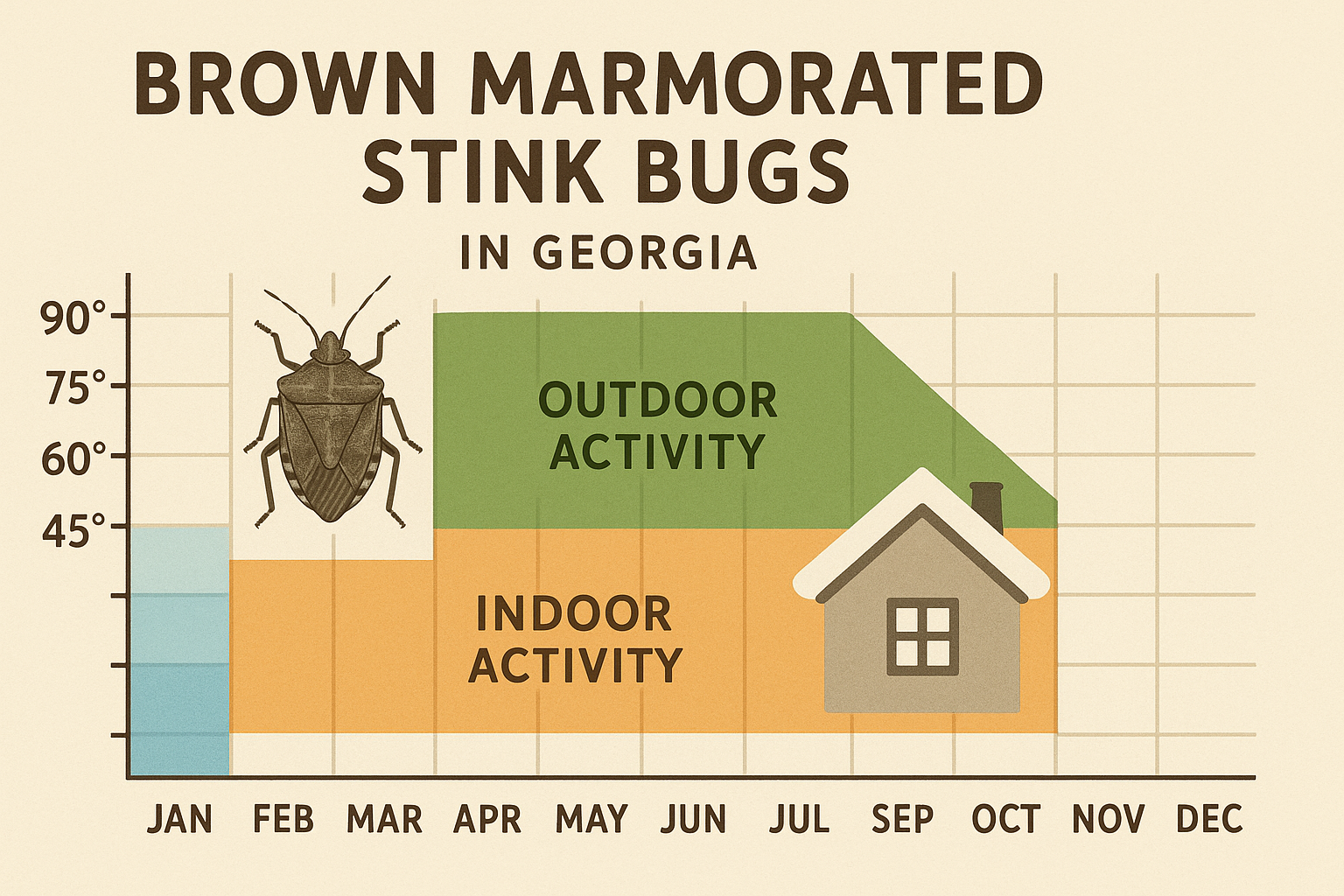
| Month | Average Temp (°F) | Activity Level |
|---|---|---|
| April | 65 | Low‑moderate (emergence & mating) |
| May | 72 | Moderate (egg laying) |
| June | 78 | High (early nymph growth) |
| July | 85 | High (peak nymph feeding) |
| August | 84 | High (late‑instar nymphs, new adults) |
| September | 78 | Moderate (adults preparing for migration) |
Indoor vs. Outdoor Activity
When daytime highs dip below 55 °F, stink bugs start scouting for warm refuges inside homes—attics, wall voids, and even kitchen cabinets. Outdoor feeding, however, hits its stride in midsummer when plants are lush and temperatures sit between 75 °F and 90 °F. This split means you’ll often see a surge of indoor sightings in early fall, even as outdoor populations begin to decline.
How Georgia’s Climate Shapes Populations
Georgia’s long, humid summers create a perfect incubator for nymph development. Each degree above 70 °F can shave a few days off the nymphal stage, allowing multiple generations to emerge before autumn. Consequently, late‑summer inspections frequently reveal the largest infestations of the year, especially in fruit‑bearing yards and vegetable gardens.
Timing Recommendations for Homeowners
- Early Spring (late March–early April): Walk the property’s perimeter, seal cracks, and remove debris where adults might overwinter.
- Mid‑Spring (mid‑April to early May): Schedule a professional exterior treatment—pre‑emptive barrier sprays work best before the first egg masses appear.
- Early Summer (June): Apply a second perimeter treatment if the first was delayed; this targets the rapidly growing nymphs before they become adults.
- Late Summer (late August–early September): Conduct an indoor follow‑up treatment to catch bugs seeking shelter as temperatures start to fall.
Seasonal Demand and Pricing
Because the late‑summer window sees the highest stink‑bug activity, many pest‑control companies experience a spike in service requests. This increased demand can tighten scheduling slots and, in some cases, raise prices for urgent appointments. Planning ahead—booking your spring perimeter treatment and your late‑summer indoor service early—helps lock in Anthem Pest Control’s transparent, affordable rates and guarantees a technician is available when you need it most.
How Professional Inspections Detect Stink Bug Infestations
When a licensed pest-control technician steps onto your property, they bring more than just a spray can. A certified professional from Anthem Pest Control—your local stink bug exterminator Peachtree City homeowners trust—has undergone rigorous training to identify the subtle signs of a stink-bug invasion before it becomes a full-blown nuisance. Their expertise allows them to pinpoint hidden colonies, map entry routes, and recommend a treatment plan that protects every corner of your home.

Safety Gear and Equipment
A technician’s safety kit is designed to keep both the worker and your family protected during the inspection. The essential items include:
- Protective vest and gloves: Prevents direct contact with bugs, chemicals, or sharp debris.
- Infrared camera: Detects temperature differences that reveal hidden bug clusters behind insulation or within wall cavities.
- Inspection clipboard: Holds checklists, maps, and a tablet for real‑time photo documentation.
Exterior Assessment
The first sweep focuses on the building envelope. The technician examines rooflines, siding seams, window frames, and any utility penetrations such as vent pipes or electrical conduits. These are the most common entry points for stink bugs seeking shelter. By tapping lightly on siding and listening for hollow sounds, they can locate voids where insects may be nesting. Any clusters found are marked for immediate attention.
Infrared Camera Spotting
Stink bugs often hide behind insulation or inside wall cavities where the eye can’t see them. The infrared camera reveals warm spots caused by the bugs’ metabolic heat. When the technician scans a wall, a cluster appears as a distinct hotspot on the screen. This technology allows for precise identification of “hot zones” without tearing down drywall, saving you time and repair costs.
Interior Walkthrough
Inside the home, the technician conducts a systematic walk through the attic, basement, and kitchen cabinets—areas that provide the dark, humid conditions stink bugs love. They look for live insects, shed skins, and the characteristic musty odor that signals a growing population. Special attention is given to pantry shelves and fruit storage, where bugs often congregate in search of food.
Documentation and Reporting
Every observation is recorded on the inspection clipboard and backed up with high‑resolution photos. The final report includes:
- A detailed map of entry points and infestation hotspots.
- Annotated photographs showing bug clusters and damage.
- Recommended treatment zones, each paired with a tailored pesticide application or exclusion method.
This comprehensive dossier equips homeowners with a clear action plan and serves as a baseline for future monitoring.
Benefits of Professional Detection vs. DIY Checks
- Higher accuracy: Trained eyes and infrared tools catch hidden colonies that a casual visual scan misses.
- Reduced missed hotspots: Systematic mapping ensures no entry point is overlooked, cutting down on repeat infestations.
- Tailored treatment plans: Professionals match the pesticide type, dosage, and application method to the specific infestation level and home layout.
- Compliance with EPA guidelines: Technicians follow the latest EPA recommendations for stink‑bug identification and reporting, ensuring safe and effective control.
For homeowners who prefer to stay informed, the EPA offers a concise guide on stink‑bug identification and reporting. Review it here: EPA Stink Bug Guidance. By leveraging a professional inspection, you gain peace of mind, a clear roadmap for treatment, and the confidence that your home is protected against future invasions.
Stink Bug Extermination Options and Pricing Tiers
DIY Approaches
Many homeowners start with over‑the‑counter solutions because they seem quick and cheap. Common DIY tools include:
- Residual spray cans – Aerosol insecticides that you spray around doors, windows, and baseboards.
- Bug‑zappers – Light‑based devices that attract and electrocute flying insects.
- Sealing entry points – Caulking cracks, installing door sweeps, and repairing screen mesh.
While these methods can reduce a few stray bugs, they have clear trade‑offs. The cost is low (often under $50 for a can of spray), but the chemicals are short‑acting, and the coverage is spotty. Bug‑zappers, for instance, tend to kill harmless insects while doing little for stink bugs that hide in wall voids. Sealing gaps helps, but without chemical barriers stink bugs will simply find new routes. In short, DIY is a good first line of defense but rarely eliminates an established infestation.
Professional Treatment Methods
When stink bugs become a persistent nuisance, a licensed stink bug exterminator Peachtree City homeowners rely on brings tools and formulations that reach where DIY cannot. The most effective professional strategies include:
- Exterior perimeter treatments – Low‑toxicity insecticides are applied to foundations, siding, and surrounding vegetation, creating a protective barrier before bugs even enter the home.
- Interior residual sprays – Targeted applications in wall voids, ceiling fans, and light fixtures where stink bugs congregate during the cooler months.
- Spot‑treatment with handheld foggers – Concentrated bursts for high‑density clusters, such as a kitchen cabinet or attic nook.
- Integrated Pest Management (IPM) – Ongoing monitoring, exclusion tactics, and scheduled follow‑up visits that adapt to seasonal activity and reduce reliance on chemicals.
Anthem Pest Control Service Tiers
Anthem structures its stink‑bug programs into three clear tiers, each designed to match a homeowner’s level of risk and budget.
| Tier | Key Features | Price Range |
|---|---|---|
| Basic | Single‑visit exterior spray + entry‑point sealing | $120 – $180 |
| Standard | All Basic services + interior residual treatment + one follow‑up visit | $220 – $280 |
| Premium | Standard package + seasonal monitoring, infrared inspections, guaranteed‑free‑re‑treatment clause | $350 – $420 |

Seasonal Alignment of Service Tiers
Stink bugs are most active in late summer and early fall, seeking shelter indoors as temperatures dip. The Basic tier works well for homes that see only a few stray bugs each season. If you notice clusters forming in attic spaces or near light fixtures, the Standard tier adds interior coverage and a follow‑up to catch late‑season arrivals. For properties that experience repeated fall invasions—or for families with children and pets who need the extra peace of mind—the Premium tier’s monitoring and infrared inspections ensure that hidden hotspots are identified before they become a problem.
Pricing Comparison with Local Competitors
Transparency is a core part of Anthem’s approach. Below is a side‑by‑side look at how Anthem’s tiers stack up against the primary local competitor, Peachtree Pest Control.
| Provider | Service Tier | Includes | Price Range |
|---|---|---|---|
| Anthem Pest Control | Basic | Exterior spray + entry sealing | $120 – $180 |
| Anthem Pest Control | Standard | Basic + interior residual + 1 follow‑up | $220 – $280 |
| Anthem Pest Control | Premium | Standard + monitoring, infrared, re‑treatment guarantee | $350 – $420 |
| Peachtree Pest Control | Standard Stink‑Bug Package | Exterior & interior treatment, 1 follow‑up | $250 – $300 |
Why Choose a Professional Service?
Beyond the obvious cost differences, professional exterminators bring EPA‑approved products that penetrate deep into wall voids and foundation cracks—areas DIY sprays never reach. Trained technicians can identify the exact species, assess infestation density, and tailor an IPM plan that minimizes chemical use while maximizing results. Most importantly, Anthem backs its Premium tier with a guaranteed‑free‑re‑treatment clause, meaning you won’t pay twice for the same problem. For homeowners who value a long‑term, hassle‑free solution, the expertise, accountability, and comprehensive coverage of a licensed professional far outweigh the short‑term savings of a do‑it‑yourself approach.
Take Action Against Stink Bugs with Anthem Pest Control
Quick recap: identification, timing, and early inspection
Stink bugs are the unmistakable, shield‑shaped intruders that emit a foul odor when crushed. They appear in late summer, hide in wall voids, attics, and around window frames, and quickly multiply if left unchecked. Spotting the characteristic brown‑gray bodies, the distinct “V” on their backs, and the tell‑tale smell are the first steps. Because their populations surge as temperatures drop, an early, professional inspection in late summer or early fall is the most effective way to stay ahead of an infestation.
Why Anthem Pest Control is the right partner
Anthem’s licensed technicians bring more than a toolbox—they bring a proven process backed by EPA-approved treatments from a trusted stink bug exterminator Peachtree City homeowners rely on. Our team follows a transparent, tiered-pricing model so you know exactly what you’re paying for:
- Basic Spot‑Treat: Targeted application for isolated sightings.
- Standard Seasonal Plan: Comprehensive coverage of interior and exterior entry points, plus a follow‑up visit.
- Premium Protection Package: Full‑home treatment, year‑round monitoring, and a guaranteed bug‑free warranty.
Each tier is designed to match the severity of your stink‑bug problem while keeping costs predictable and fair.
Safety for families and pets, plus unbeatable convenience
Our formulations meet strict EPA safety standards, meaning they’re safe for children, pets, and the environment when applied by certified professionals. We understand a homeowner’s schedule is busy, so we offer both single‑visit eradication and scheduled seasonal plans that fit around your life. No need to rearrange your calendar for multiple trips—our technicians complete a thorough treatment in one efficient visit, then return only if you request a follow‑up.
Schedule your free, no‑obligation quote today
Ready to protect your home without breaking the bank? Give us a call at 877‑371‑8196 or head to our website for instant online scheduling. Our friendly staff will ask a few quick questions about the size of your property and the level of activity you’ve observed, then craft a personalized quote that reflects your exact needs.
Our promise, in plain language
Whether you’re dealing with a few stray bugs or a full‑blown invasion, our team is ready to protect your home with the right solution—without breaking the bank. We combine local expertise, transparent pricing, and a commitment to safety, so you can breathe easy knowing the stink bugs are gone for good.