Understanding the Spider Situation in Decatur, GA
Why Decatur’s Climate Welcomes Spiders
Decatur sits in the humid subtropical zone of Georgia, meaning warm summers, mild winters, and plenty of rainfall. Those conditions create an ideal buffet for insects—flies, mosquitoes, and beetles—all of which are the primary food source for spiders. The combination of year‑round moisture and abundant prey allows many spider species to thrive both indoors and out, turning a typical backyard into a bustling arachnid neighborhood.
Harmless House Spiders vs. Potentially Dangerous Species
Not every eight‑legged visitor is a cause for alarm. The majority you’ll encounter are harmless “house spiders” such as the American house spider (Parasteatoda tepidariorum) or the common cellar spider. They rarely bite, and when they do, the reaction is usually no worse than a bee sting. The real concern in Decatur are the few medically significant species—primarily the southern black widow (Latrodectus mactans) and the brown recluse (Loxosceles reclusa). These spiders are less common, but their bites can trigger severe pain, muscle cramps, or necrotic skin lesions, making early identification crucial.
How Often Do Homeowners Run Into Spiders?
Local pest‑monitoring data and homeowner surveys suggest that roughly 70 % of Decatur residents have spotted a spider web inside their home at least once a year. Bite reports are far lower—about 2‑3 incidents per 1,000 households annually—but the fear of a hidden bite often amplifies the perceived risk. In the summer months, when outdoor lighting attracts insects, indoor sightings spike by up to 40 % compared with the cooler months.
The Ripple Effect of Ignoring a Spider Problem
Leaving a spider infestation unchecked can erode more than just your peace of mind. Uncontrolled populations increase the likelihood of encountering a venomous species, especially in cluttered basements or attics where dark‑loving spiders hide. Over time, webs can damage delicate items, stain fabrics, and even attract other pests like ants that feed on trapped insects. From a health standpoint, a bite from a black widow or brown recluse may require medical attention, driving up unexpected costs and causing unnecessary stress for families.
What’s Next? Identifying the Common Culprits
Now that you understand why spiders are so prevalent in Decatur and what the stakes are, the next step is to learn how to recognize the most common species you’re likely to see around your home. Knowing the visual cues—size, coloration, web shape—helps you decide whether a simple clean‑up will suffice or if professional intervention is the safest route. In the following section, we’ll break down each of those familiar spiders and explain how Anthem Pest Control can tailor a treatment plan that protects both your family and your property.
Common Spider Species and How to Spot Them
American House Spider (Parasteatoda tepidariorum)
This little workhorse is the most frequently encountered spider inside homes across Decatur. Adults measure ½‑inch (12‑15 mm) when the legs are fully spread, with a mottled brown‑gray abdomen speckled with darker markings. They spin irregular, tangled cobwebs in corners, behind furniture, and in ceiling cracks. You’ll often find them in basements, closets, and attics where they hunt flies and moths. The bite is harmless—comparable to a mild bee sting—so a quick visual check of the web pattern and size usually confirms its identity.
Brown Recluse (Loxosceles reclusa)
Recognizable by its violin‑shaped marking on the dorsal cephalothorax, the brown recluse measures about ¼‑½ inch (6‑12 mm) with a uniformly light‑brown body and long, slender legs. Unlike many spiders, it prefers flat, undisturbed surfaces: the backs of closets, under sofas, and in woodpiles or crawl spaces. Its web is a loose, sheet‑like silk covering only a small area. Although bites are rare, they can cause necrotic lesions and require medical attention. Spotting the distinctive “violin” pattern and its preference for hidden indoor niches helps you identify it before it feels threatened.
Black Widow (Latrodectus mactans)
The black widow is instantly recognizable by its glossy black body, typically ½‑inch long, and the iconic bright red hourglass on the underside of the abdomen. Females are larger and more dangerous than males, which are smaller and less aggressive. These spiders favor dark, secluded spots—garage corners, woodpiles, under eaves, and outdoor sheds. Their webs are irregular, sticky, and often draped across low vegetation or in basements. A bite can cause severe muscle cramps, nausea, and sweating; prompt medical care is advised. The stark hourglass mark is the fastest visual cue for homeowners.
Cellar Spider (Pholcidae family)
Also called “daddy‑long‑legs,” cellar spiders have extremely long, thin legs attached to a small, oval, light‑tan body about ¼‑inch (6‑8 mm) in length. They spin loose, tangled webs in high, undisturbed corners of basements, crawl spaces, and attics. You’ll often see them dangling from the web’s center, moving slowly to catch other insects. They are harmless to humans and actually help reduce other pest populations. The combination of delicate legs and messy, sheet‑like webs makes them easy to differentiate from more dangerous species.
Garden Orb Weaver (Araneus diadematus)
When you spot a classic round, wheel‑shaped web in a garden or on a porch, you’re likely looking at a garden orb weaver. Adults range from ½‑to‑¾ inch (12‑19 mm) with a bulbous abdomen often marked by a white cross‑like pattern. Their coloration varies from brown to orange, sometimes with speckles. They build vertical, sticky spiral webs between shrubs, fences, and eaves, usually outdoors. Their bite is comparable to a mild bee sting and rarely requires treatment. The distinctive cross pattern and the large, circular web are quick identifiers for the casual observer.
Quick Visual Cues for DIY Identification
- Body size and shape: Small, rounded (American house) vs. elongated with a violin mark (brown recluse).
- Color patterns: Glossy black with red hourglass (black widow) vs. light‑tan with long legs (cellar spider).
- Web type: Tangle‑web in corners (house, cellar) vs. irregular sheet (recluse) vs. classic orb (garden orb weaver).
- Location: Dark indoor hideaways (recluse, widow) vs. outdoor vegetation (orb weaver) vs. high basements (cellar spider).
By matching these visual cues—size, coloration, web architecture, and typical hiding spots—you can confidently identify the most common spiders in Decatur, GA. When in doubt, especially with brown recluse or black widow sightings, it’s safest to call a professional exterminator to assess the situation and recommend appropriate treatment.
Seasonal Patterns of Spider Activity in Decatur
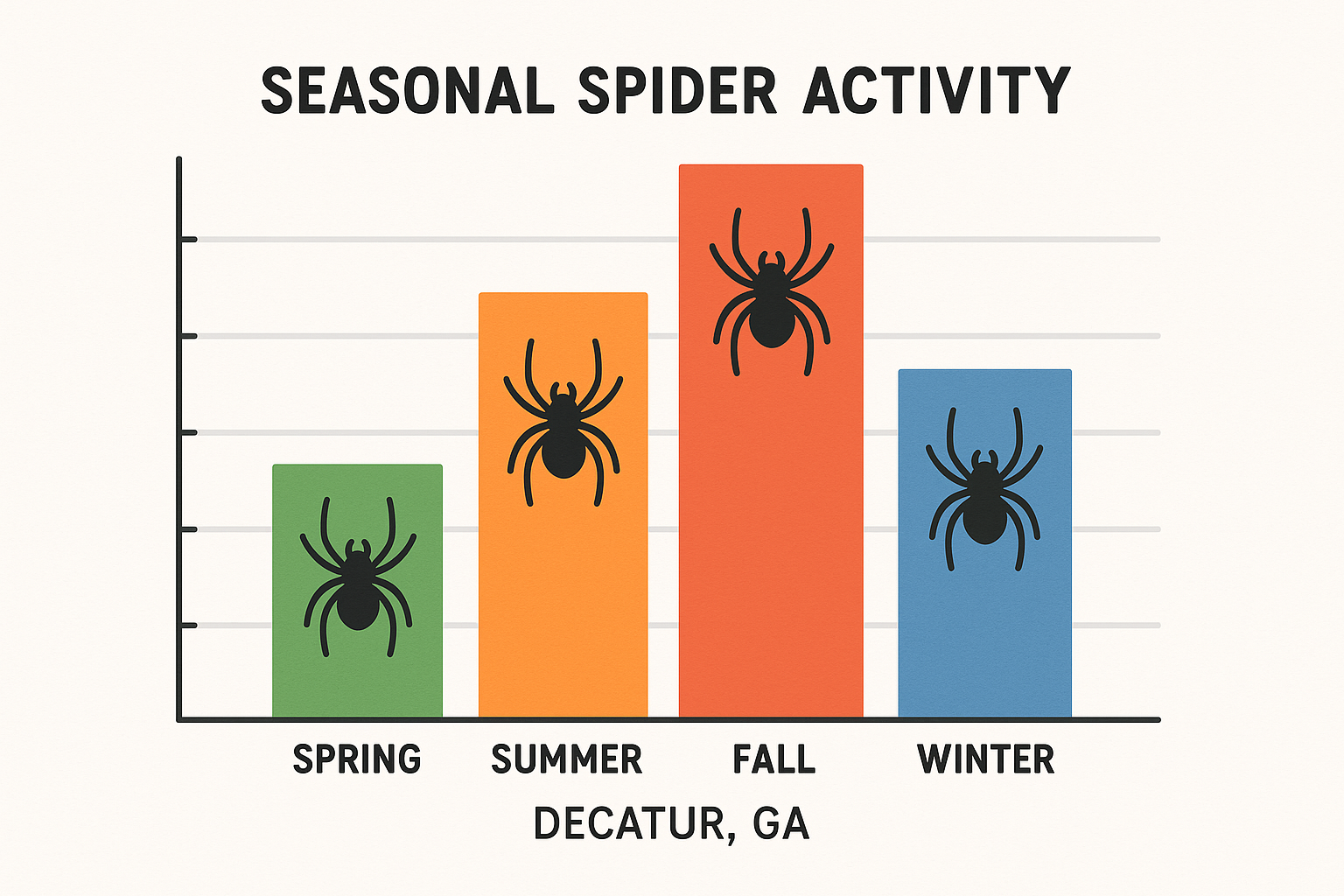
Spiders in Decatur follow a predictable rhythm that mirrors the city’s temperature and humidity swings. Most species hatch in the spring when nights become milder, grow through the warm months, and either die off or seek shelter as winter sets in. Moisture‑rich environments—think early‑season rain or the humidity that builds after a summer thunderstorm—speed up molting and egg‑sac development. Understanding this life‑cycle helps you time inspections and treatments for maximum impact.
Spring Surge (March – May)
As soil warms and rainfall rises, spider egg sacs hatch in large numbers. Look for thin, silken webs in corners of basements, garage doors, and outdoor sheds. Female spiders often linger near their egg sacs, so you may notice clusters of small, light‑colored bodies.
- What to look for: New, messy webs near entry points; small spiderlings (2–4 mm) on windowsills.
- Preventive steps: Seal cracks around foundations, trim vegetation away from the house, and reduce outdoor lighting that attracts insects (spider food).
- Timing for treatment: Schedule a professional inspection in early April, before the population peaks. Early intervention stops the breeding cycle and reduces summer infestations.
Summer Peak (June – August)
Warm nights and high humidity create ideal hunting grounds. Adult spiders, especially orb weavers and cellar spiders, become more visible as they build larger, more organized webs inside living spaces.
- What to look for: Large, circular webs in corners of rooms, especially near light fixtures; increased spider sightings on walls and ceilings.
- Preventive steps: Use dehumidifiers in basements, keep indoor plants watered sparingly, and vacuum webs regularly.
- Timing for treatment: Mid‑summer is the best window for a full‑service treatment, targeting both adult spiders and any remaining egg sacs before they hatch again in the fall.
Fall Decline (September – November)
As temperatures dip, many spiders seek shelter indoors to overwinter. You may notice a shift from outdoor webs to indoor corners, especially in heated areas.
- What to look for: Sparse webs in attics, closets, and under eaves; solitary adult spiders preparing for dormancy.
- Preventive steps: Perform a thorough sweep of crawl spaces, store outdoor furniture away from walls, and replace weather‑stripping that may have loosened.
- Timing for treatment: A targeted “pre‑winter” service in late September helps trap spiders before they embed themselves in wall voids.
Winter Dormancy (December – February)
Most species enter a state of reduced activity, clustering in insulated voids such as wall cavities, attic insulation, and HVAC ducts. Visible activity drops dramatically, but hidden populations can survive for months.
- What to look for: Few to no webs, but occasional sightings of larger, sluggish spiders near heating vents.
- Preventive steps: Keep gutters clear to prevent moisture buildup, and run a short “maintenance” spray around exterior entry points during warm winter days.
- Timing for treatment: If you notice persistent indoor activity, a low‑toxicity, winter‑safe treatment can be applied without disturbing heating systems.
Linking Outdoor Events to Indoor Migrations
Decatur homeowners often plant gardens in early spring and harvest in late summer. Freshly disturbed soil and mulch create perfect hiding spots for spider egg sacs, which later migrate indoors as the garden matures and humidity rises. Similarly, seasonal yard clean‑ups in the fall can push spiders toward the house while they search for shelter. Aligning your pest‑control schedule with these outdoor activities—such as a post‑planting inspection in May or a post‑harvest check in October—greatly reduces the chance of indoor invasions.
Warning Signs of a Spider Infestation
1. Webbing that seems to multiply overnight
Spiders are master architects, and their webs are the first clue most homeowners notice. If you start seeing dense, tangled sheets in corners, along ceiling edges, or in undisturbed spots like under furniture, it’s a red flag. These webs aren’t just decorative—they’re hunting grounds. A sudden increase usually means the local spider population is breeding and expanding.
2. Unusual spider sightings
Seeing a lone spider in the bathroom is normal. But when you begin spotting large numbers in the same room, especially during the evening or night, the situation is escalating. Nocturnal activity is typical for many species, and a spike in night‑time sightings often signals that the insects they prey on are also thriving, creating a perfect food chain for spiders.
3. Bite reports or unexplained skin irritations
Most spiders are harmless, yet a few species can bite when they feel threatened. If family members, especially children, report sudden, sharp pains followed by red, itchy welts, treat it as a potential spider bite until a professional can confirm the cause. Even non‑venomous bites can cause irritation, so any unexplained skin reactions should be logged and investigated.
4. Egg sacs hidden in crevices
Female spiders protect their future generations in silk‑lined egg sacs. These sacs are often tucked away in dark, undisturbed places—behind baseboards, inside wall voids, or under insulation. Finding even a single sac means there’s a breeding population nearby, and more will appear if the conditions stay favorable.
5. Structural clues that attract spiders
Spiders love environments that offer shelter and moisture. Look for:
- Cracks and gaps in walls, foundations, or window frames that provide entry points.
- Excessive humidity in basements, crawl spaces, or bathrooms, which draws insects that spiders feed on.
- Cluttered storage areas where webs can go unnoticed for weeks.
Addressing these structural issues cuts off the spider’s safe havens and reduces the likelihood of an infestation taking hold.
6. When DIY monitoring isn’t enough
Many homeowners start with simple measures: vacuuming webs, sealing obvious cracks, and using over‑the‑counter sprays. These steps work for a few isolated spiders, but they fall short when the signs above appear together. If you notice two or more of the following, it’s time to call a professional:
- Webbing covering multiple rooms or large surface areas.
- Frequent nighttime sightings across the house.
- Confirmed bites or persistent skin irritations.
- Egg sacs discovered in hidden locations.
- Visible moisture problems or structural gaps that you can’t fully seal yourself.
At this point, a licensed pest control provider—like Anthem Pest Control—can conduct a thorough inspection, identify the species involved, and implement a targeted treatment plan that protects both your home and your family.
Quick checklist for homeowners
- Inspect corners, ceilings, and undisturbed spaces weekly for new webbing.
- Record any spider sightings, noting time of day and location.
- Document bite incidents and associated symptoms.
- Search hidden crevices for egg sacs—especially behind baseboards and under furniture.
- Seal cracks, improve ventilation, and reduce indoor humidity.
- When three or more warning signs appear, schedule a professional assessment.
Treatment Options and What to Expect
At Anthem Pest Control we follow an Integrated Pest Management (IPM) philosophy that blends prevention, monitoring, and targeted treatments. IPM means we first assess the extent of the spider activity, identify entry points, and then choose the least invasive method that will still deliver lasting results. By combining chemical and non‑chemical tactics, we protect your family and pets while keeping those eight‑legged intruders at bay.

Chemical Perimeter Treatments
Our exterior barrier spray creates a protective moat around your home, preventing spiders from crossing into living spaces. The formulation typically contains low‑toxicity pyrethroids such as bifenthrin or permethrin, which disrupt the spider’s nervous system on contact. These ingredients are applied at a calibrated rate to ensure effectiveness while adhering to EPA safety standards.
We take several precautions to keep everyone safe: all chemicals are applied when occupants are indoors, we use targeted drips rather than broad overspray, and we provide a clear post‑treatment waiting period—usually 30 minutes—before you re‑enter the treated zones. The barrier remains active for 4‑6 weeks, after which a follow‑up visit restores the shield.
Interior Fogging and Spot‑Treatments
For spiders already inside, we employ either a quick‑acting fogger or precise spot‑treatments. Fogging disperses a fine mist that reaches hidden cracks, ceiling corners, and attic spaces where webs often originate. Spot‑treatments target visible webs, spider eggs, and nests with a handheld applicator, allowing us to concentrate the product where it’s needed most.
During the service you’ll notice a light, citrus‑scented vapor that dissipates within minutes. Our technicians wear protective gear, and we advise keeping children and pets away from the treated rooms for at least 15 minutes to ensure any residual spray dries completely.
Non‑Chemical Options
Not every homeowner wants chemicals, and IPM gives you alternatives that work hand‑in‑hand with our treatments. Vacuuming removes adult spiders and egg sacs instantly—just be sure to dispose of the bag in an outdoor trash bin. Sticky traps placed along baseboards and window sills catch wandering spiders and give us valuable data on activity patterns.
Structural sealing is another powerful tool. We locate gaps around doors, windows, utility penetrations, and foundation cracks, then apply weather‑resistant caulk or expandable foam. By denying spiders entry points, you reduce the need for repeated chemical applications and create a long‑term barrier against future infestations.
Follow‑Up Visits and Monitoring
Spider populations can rebound if left unchecked, so we schedule follow‑up visits every 30‑45 days during the peak season (late spring through early fall). Each visit includes a thorough inspection, trap checks, and spot‑treatment of any new activity. Our technicians also provide you with a simple log sheet so you can track sightings and understand the effectiveness of each intervention.
Monitoring isn’t just about applying more product; it’s about fine‑tuning the IPM plan. If we notice a shift in spider species or a surge in indoor activity, we adjust our strategy—perhaps adding more sticky traps or reinforcing sealing work—to stay one step ahead.
Why Choose a Licensed Technician Over DIY?
DIY sprays may promise quick fixes, but they often lack the potency, proper coverage, and safety data required for lasting control. Licensed Anthem technicians carry professional‑grade products that are calibrated for your specific home layout, and they’re trained to apply them safely and legally.
Beyond the chemistry, a trained professional brings expertise in spider behavior, identification of hidden nests, and the ability to integrate non‑chemical measures seamlessly. The result is a comprehensive, cost‑effective plan that protects your home year after year—something a single over‑the‑counter can’t match.
Pricing Overview for Spider Extermination in Decatur
Understanding how much spider control costs in Decatur helps you plan a budget that protects your home without surprise fees. Below we break down the most common pricing structures, what you can expect at each service level, and the key variables that can shift the final number on your invoice.
One‑Time Treatment vs. Monthly Protection Plans
Most pest‑control companies, including Anthem Pest Control, offer two primary models:
- One‑time treatment: A single visit that targets the current spider infestation. Ideal for homeowners who have spotted a few spiders and want immediate relief.
- Monthly protection plan: Ongoing visits (usually every 30 days) that apply residual insecticide and monitor for new activity. This model is best for larger properties, recurring infestations, or families wanting long‑term peace of mind.
The one‑time option typically carries a lower upfront cost, while the monthly plan spreads expenses over the year and often includes additional services such as ant control or seasonal pest checks.
Price Tiers from the Infographic

| Tier | Price Range (USD) | What’s Included |
|---|---|---|
| Basic | $99 – $149 | One‑time interior spray, inspection of high‑risk zones, and a follow‑up call. |
| Standard | $179 – $229 | All Basic services plus perimeter treatment, spider‑specific bait, and a 30‑day warranty. |
| Premium | $279 – $349 | All Standard services, quarterly visits for a year, bundled ant control, and priority scheduling. |
These tiers are averages based on Anthem Pest’s recent Decatur projects; actual quotes may vary slightly depending on your home’s specifics.
Factors That Influence Cost
Several variables can push a price up or down:
- Home size: Larger square footage requires more product and longer technician time.
- Infestation severity: A light sighting may fit a Basic plan, while a full‑blown web network across multiple rooms often needs Standard or Premium coverage.
- Seasonal discounts: Early spring and late fall promotions can shave 10‑20 % off the listed rates.
- Access challenges: Multi‑story homes, attics, or crawl spaces may incur a small access surcharge.
Value of Bundled Services
Spiders rarely travel alone. Homeowners frequently notice ants, roaches, or even wasps alongside spider activity. Anthem Pest offers bundled packages that combine spider control with another pest service—usually at a 15 % discount compared to purchasing each treatment separately. Seasonal pest packages, which cover common summer insects and winter invaders, also provide a cost‑effective way to keep your entire home pest‑free year‑round.
How to Request a Free Quote
Getting an accurate estimate is simple:
- Visit Anthem Pest’s website and click “Free Quote.”
- Enter your Decatur address, home size (square footage or number of bedrooms), and a brief description of the spider problem.
- Have your phone number ready—technicians often follow up with a quick call to clarify details before finalizing the quote.
- Ask about any current promotions or bundled‑service discounts that could lower the price.
Having this information at hand not only speeds up the quoting process but also ensures you receive a transparent, no‑hidden‑fee estimate tailored to your specific situation.
Why Choose Anthem Pest Control for Spider Management
Nationwide Strength, Georgia‑Focused Training
Anthem Pest Control operates in every corner of the United States, giving us the logistical muscle of a large organization while still delivering the personal touch of a local business. In Decatur, our technicians undergo a Georgia‑specific training program that covers the state’s unique spider species, seasonal activity patterns, and neighborhood construction styles. This dual advantage means you get the latest, research‑backed treatment protocols combined with a deep understanding of the homes and yards in your community.
Safety First: EPA‑Approved, Pet‑Friendly Products
When a spider infestation threatens your home, the last thing you want to worry about is the safety of your family or pets. Anthem exclusively uses products that have earned EPA approval for effectiveness and low toxicity. Our application methods are designed to minimize residue on surfaces where children play and pets lounge, and we offer pet‑friendly treatment windows that let you keep your furry companions inside while we work. In short, you get a spider‑free home without compromising health.
Transparent Pricing – No Hidden Fees
Homeowners in Decatur appreciate clear, upfront costs, and Anthem delivers exactly that. Our pricing structure is published on the website, and every quote includes a detailed breakdown of labor, chemicals, and any optional add‑ons. There are no surprise surcharges after the job is done—what you see is what you pay. This transparency builds trust and lets you budget confidently for both one‑time spider eradication and ongoing preventative plans.
Proven Customer Satisfaction
Anthem’s commitment to service is reflected in our numbers: a 96% satisfaction rating across the Southeast, with an average response time of under 24 hours for emergency spider calls. Homeowners frequently cite our courteous technicians and thorough follow‑up inspections as reasons they stay loyal. As one Decatur resident put it:
“The Anthem team arrived on schedule, explained every step, and my house has been spider‑free for months. I felt safe knowing they used pet‑friendly products. I’ll never call anyone else.”
These real‑world experiences reinforce why Anthem is the go‑to choice for spider management in our area.
Rapid Response When You Need It Most
Spiders can appear overnight, especially after a rainstorm or during the warmer months. Anthem’s local dispatch center monitors service requests around the clock, ensuring that a qualified technician can be on your doorstep within a single business day—often sooner. Our technicians arrive equipped with the right tools and a clear plan, so you don’t waste time waiting for a generic, delayed service.
Complementary Services That Strengthen Spider Prevention
Spider problems rarely exist in isolation. Cracks in foundations, standing water, and rodent activity all create inviting habitats for spiders. Anthem offers a suite of additional pest‑control solutions that work hand‑in‑hand with spider treatment:
- Termite inspections and barriers – Seal wood damage that can attract insects, which in turn lure spiders.
- Mosquito control – Reduce standing water that serves as a breeding ground for both mosquitoes and the insects spiders prey on.
- Rodent exclusion – Block entry points that rodents use, cutting off a major food source for many spider species.
By bundling these services, you create a comprehensive shield around your home, making it less appealing to spiders and the pests they feed on. Anthem’s integrated approach means fewer repeat visits and a healthier, more comfortable living environment for you and your family.
Take Action – Get Professional Spider Control Today
Spiders may seem harmless, but when they multiply inside your Decatur home they can quickly become a health and safety concern. Prompt treatment stops venomous bites, reduces allergic reactions to spider silk, and prevents the unsettling sight of webs in kitchens, bedrooms, and bathrooms. The longer you wait, the more time these eight‑legged intruders have to establish hidden nests, making eradication harder and more costly.
Beyond the immediate health risks, uncontrolled spider populations can damage your property. Some species, like the brown recluse, create irregular, yellow‑tailed webs that attract dust and insects, while others leave behind shed skins that stain walls and furniture. Over time, these signs erode the comfort of your living space and can even affect the resale value of your home.
That’s why partnering with a local specialist who understands Decatur’s climate and spider species is essential. Anthem Pest Control brings over a decade of experience to every job, using EPA‑approved products that are safe for children and pets while delivering fast, lasting results. Our technicians are trained to identify the exact spider type, target its breeding sites, and implement a customized plan that fits your budget.
- Local knowledge: We know which spiders are most common in Decatur and the best times of year to treat them.
- Transparent pricing: No hidden fees—just a clear, affordable quote before any work begins.
- Safety first: Low‑toxicity solutions protect your family, pets, and the environment.
- Guaranteed satisfaction: We stand behind our work with follow‑up visits if spiders reappear.
Our commitment doesn’t end after the first treatment. We follow up with a satisfaction check and offer a maintenance plan that keeps spiders at bay year‑round, using environmentally responsible products that protect your garden and local wildlife.
Ready to reclaim your home from unwanted webs? A quick phone call or a few clicks online can set you on the path to a spider‑free household. Our free, no‑obligation quote includes a thorough onsite inspection, so you’ll know exactly what’s happening and how we’ll fix it—without any surprise costs.
Give us a call today at 877‑371‑8196 or visit Anthem Pest Control to schedule your inspection. Our friendly Decatur team is standing by to answer questions, discuss treatment options, and book a convenient time that works for you.
Take the first step toward peace of mind; we’ll handle the spiders while you enjoy a safer, cleaner home.