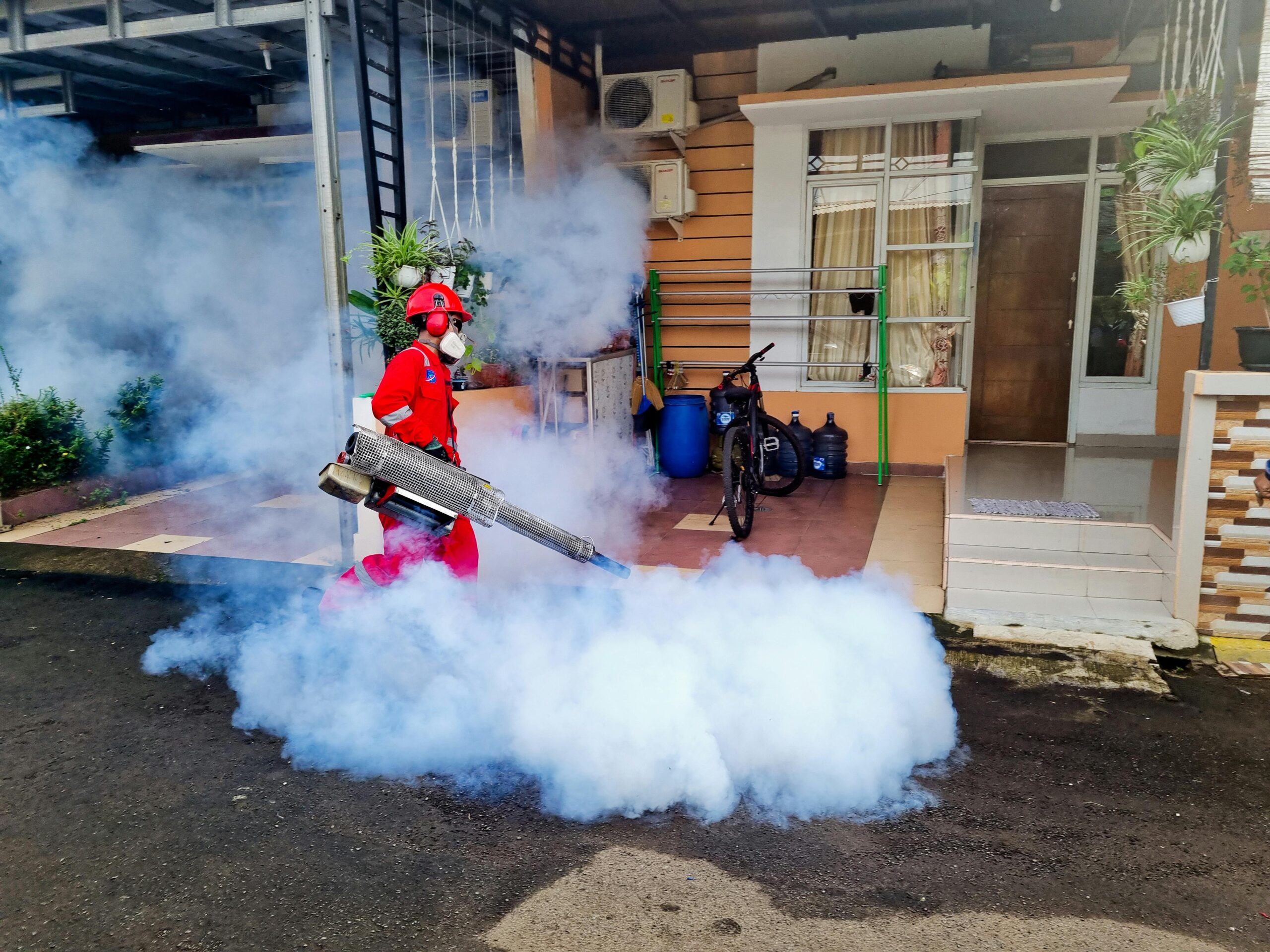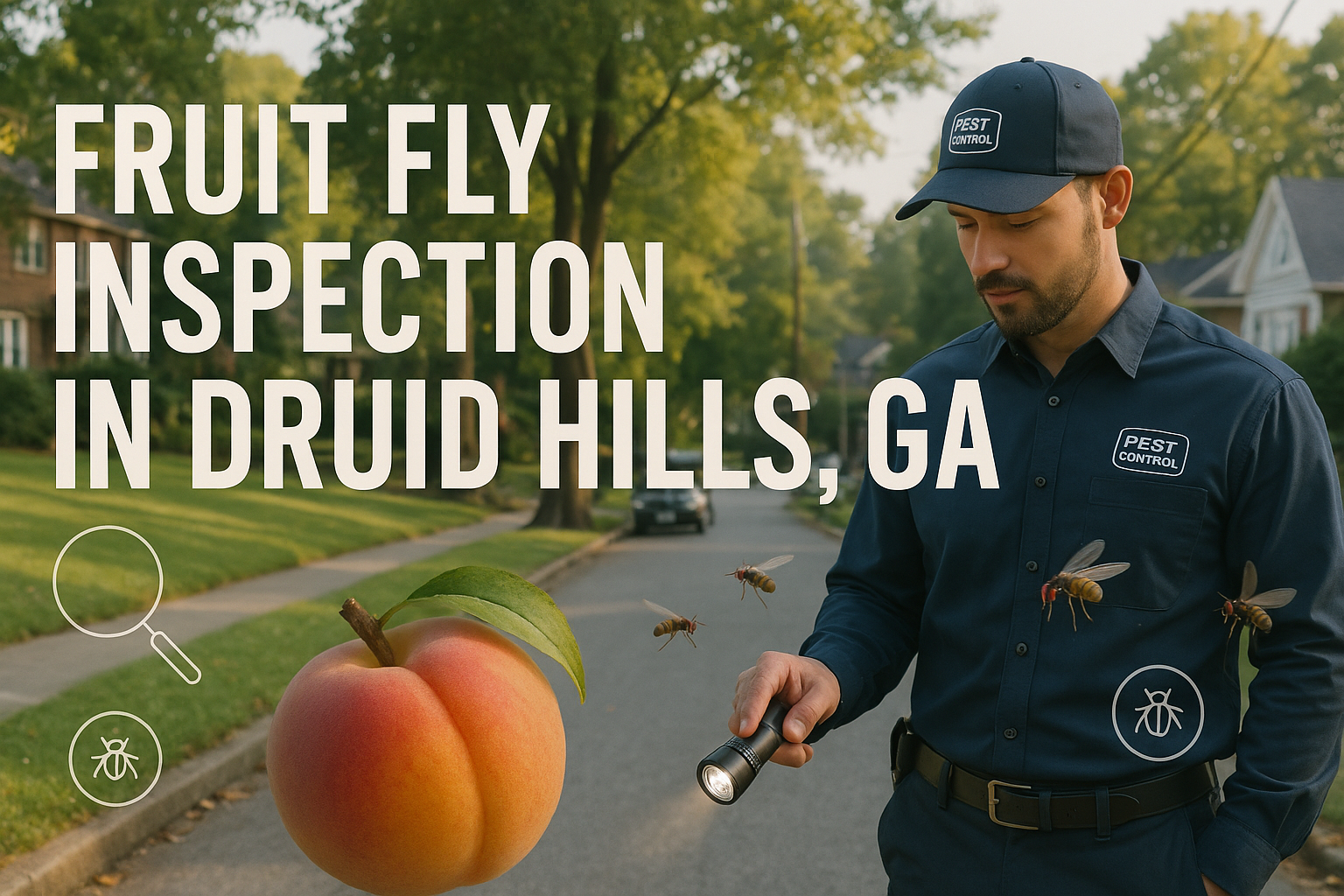
Introduction to Fruit Fly Issues in Druid Hills

In the humid climate of the Southeast, fruit flies (often Drosophila melanogaster) are more than a kitchen nuisance—they’re a sign that food residues, standing water, or overripe produce are giving pests a foothold inside your home. While they’re tiny, a swarm can quickly turn a quiet dinner into an unsettling spectacle, especially during the warm months when the insects reproduce at breakneck speed.
This guide is designed to demystify the fruit‑fly inspection process for homeowners in Druid Hills. We’ll walk you through the typical signs of an infestation, explain what a professional inspection actually looks like, and help you decide the right moment to pick up the phone and call in a specialist. Think of it as a homeowner‑focused roadmap that blends practical observations with data‑driven recommendations.
When you need that extra expertise, Anthem Pest is right around the corner. Our team is EPA‑registered, meaning we adhere to the strictest safety and efficacy standards set by the Environmental Protection Agency. We’ve served the Druid Hills community for years, building a reputation for transparent pricing, fast response times, and treatments that protect both your family and the environment.
Got a question or suspect a fruit‑fly problem? Our free consultation line—877‑371‑8196—is staffed by local professionals who understand the unique challenges of Georgia’s climate. Whether you’re dealing with a few stray flies or a full‑blown infestation, we’ll provide a clear, data‑backed plan that fits your budget and your schedule.
Throughout this article, you’ll find actionable tips, real‑world examples, and concise explanations that keep the technical jargon to a minimum. Our goal is to empower you with the knowledge you need to protect your home, avoid unnecessary chemical treatments, and know exactly when it’s time to let the pros handle the problem.
Understanding Fruit Flies in Georgia
Fruit flies may be tiny, but in Georgia’s warm, humid climate they can turn a kitchen countertop into a bustling breeding ground in just a few days. Knowing which species are most common, how they develop, and where they like to lay their eggs empowers homeowners to spot an infestation early and decide when professional help is warranted.
Common Species in the Peach State
- Drosophila melanogaster – the classic “vinegar fly” that thrives on fermenting fruit and sugary residues.
- Ceratitis capitata (Mediterranean fruit fly) – a more aggressive invader that can infest a wider range of fruits, including stone fruits and citrus.
Life Cycle at a Glance
Under Georgia’s summer temperatures (70‑85 °F), fruit flies complete their four‑stage life cycle in as little as three days, though it can stretch to a week when conditions cool slightly. The stages are:
| Stage | Duration (days) | Key Activity |
|---|---|---|
| Egg | 0‑1 | Deposited on moist, fermenting material |
| Larva (maggot) | 1‑3 | Feeds on decaying organic matter |
| Pupa | 2‑4 | Transforms inside a protective casing |
| Adult | 1‑2 | Emerges, mates, and begins the next cycle |
Where They Breed
Fruit flies are opportunistic. The most common breeding hotspots in a Georgia home include:
- Overripe or rotting fruit left on countertops or in fruit bowls.
- Fermenting vegetables such as tomatoes, cucumbers, or mushrooms.
- Garbage disposals and sink drains where organic debris accumulates.
- Compost bins, recycling containers, and even damp mop buckets.
Real‑World Example
Imagine a kitchen bowl filled with sliced peaches left out for a casual snack. In just 24 hours, a single female Drosophila melanogaster can deposit up to 200 eggs on the soft flesh. Those eggs hatch into larvae that begin feeding immediately, and within three days you could have a new generation of adults ready to infest other foods.
How Common Is the Problem?
The Environmental Protection Agency reports that roughly 15 % of U.S. households notice fruit‑fly activity each summer, a figure that holds true for Georgia’s suburban neighborhoods, including Druid Hills. This prevalence reflects both the region’s climate and the abundance of fruit‑bearing trees and gardens.
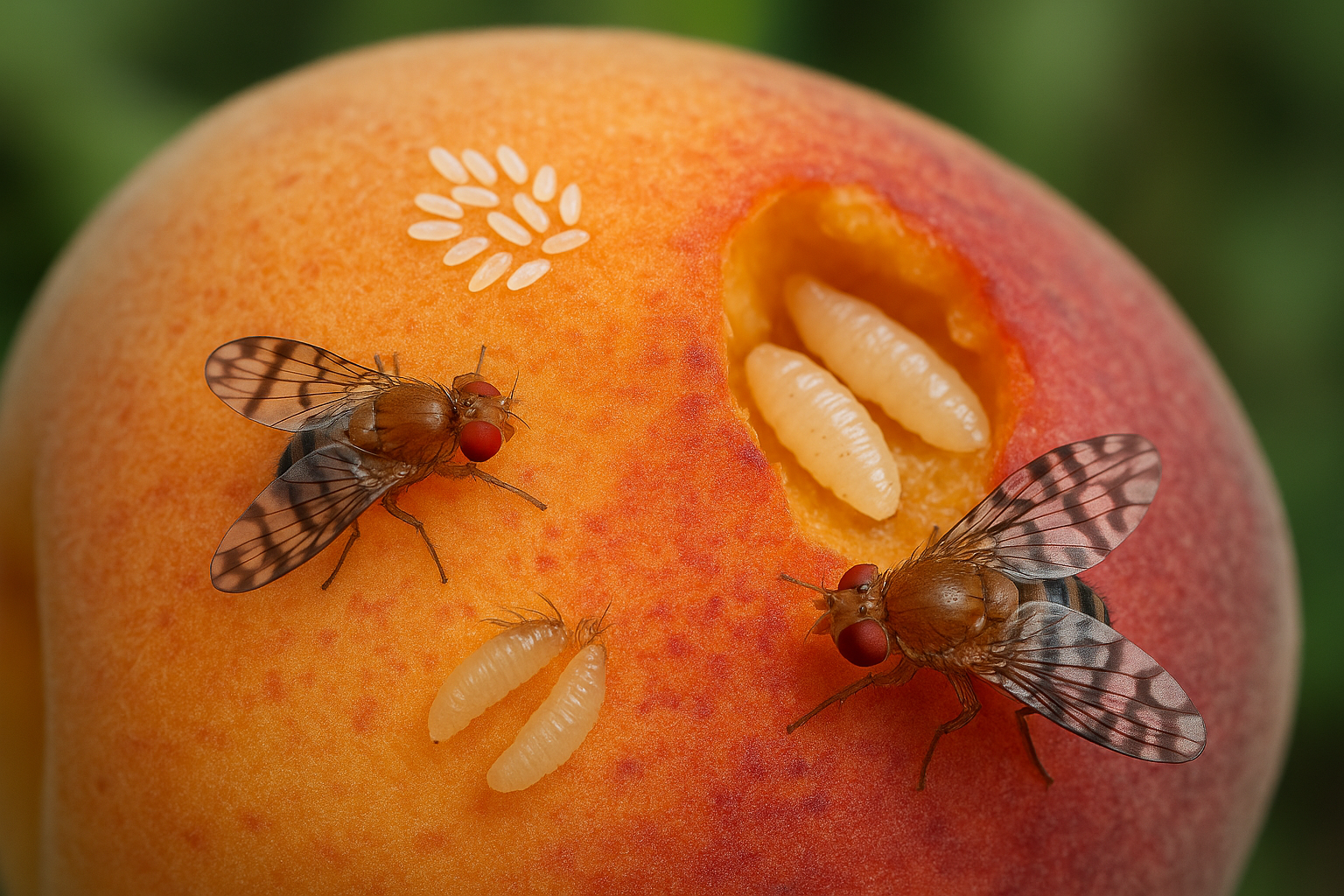
Understanding the biology and habits of these pests equips you to act quickly. If you notice a sudden surge of tiny flies around fruit, drains, or garbage, it’s a sign that the life cycle is already in motion. Early intervention—whether through diligent sanitation or a professional inspection—can prevent a minor nuisance from becoming a full‑blown infestation.
Why Druid Hills Is Prone to Fruit Flies
Druid Hills sits squarely in Georgia’s humid subtropical zone, where summer days routinely climb to an average high of 85 °F (29 °C). Those warm, moisture‑laden conditions are a perfect incubator for fruit‑fly larvae, which develop fastest when temperatures stay between 75 °F and 90 °F with high relative humidity. In a typical July, night‑time lows rarely dip below 70 °F, allowing a single generation to complete its life cycle in just a week. That rapid turnover means populations can explode before a homeowner even notices the first tell‑tale swarms.
Fruit‑Bearing Trees Create a Constant Food Source
The historic charm of Druid Hills includes mature, fruit‑bearing trees scattered throughout private yards and community green spaces. Peach, plum, and occasional apple trees line streets near Emory University’s campus and the Druid Hills Historic District. When these trees drop ripe or over‑ripe fruit, the fallen pieces become breeding hotspots. Even a small patch of rotting fruit in a garden can support dozens of adult flies, which then venture indoors in search of sugary snacks.
Neighborhood Layout Amplifies the Problem
Several local micro‑environments make fruit‑fly infestations especially likely:
- North Druid Hills Road homes: Older homes with spacious front yards often host ornamental fruit trees and compost bins that attract flies.
- Properties bordering Druid Hills Golf Club: The club’s landscaped grounds feature berry bushes and ornamental vines, providing additional feeding sites.
- Community gardens near Emory: Shared planting beds receive frequent harvests, and occasional neglect leaves fruit debris that flies love.
These pockets of greenery, combined with dense residential spacing, create a network of “fly highways” where adults can move easily from one food source to the next, eventually slipping into homes through open doors, windows, or even tiny cracks.
Data Shows a Growing Concern
According to the 2024 Fulton County Health Report, fruit‑fly related complaints in Druid Hills rose 22 % over the previous year, outpacing the county average of 13 %. The report attributes the spike to unusually warm early summer temperatures and a higher number of reported fruit‑tree plantings in residential landscaping. Homeowners who notice small, red‑eye flies hovering near kitchen counters or fruit bowls should treat the sighting as a warning sign—not just a nuisance.
What to Expect in a Fruit Fly Inspection
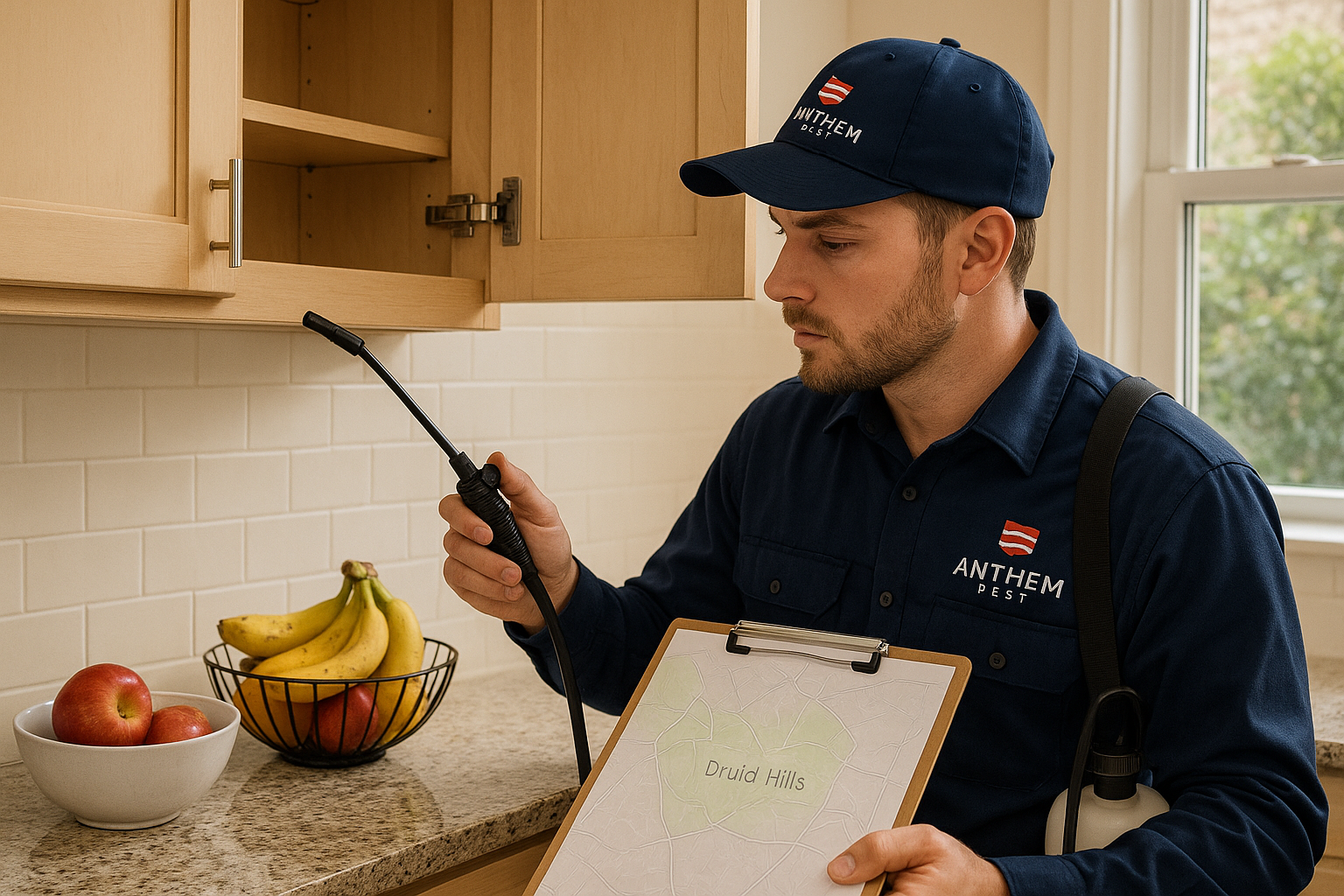
When you call Anthem Pest Control for a fruit‑fly inspection, the process is designed to be quick, transparent, and minimally disruptive to your daily routine. Knowing what will happen before the technician arrives helps you feel confident that the problem will be identified and addressed efficiently. Below is a detailed walk‑through of the steps you’ll experience, from the simple preparations you can make at home to the final discussion of findings.
Pre‑inspection Homeowner Checklist
Taking a few minutes to tidy up key areas can dramatically improve the accuracy of the inspection. Follow this short checklist the night before or the morning of the appointment:
- Clear countertops and work surfaces: Remove dishes, cutting boards, and any food items that could attract fruit flies.
- Discard overripe or rotting fruit: Fruit flies are drawn to fermenting sugars, so place any soft or bruised fruit in a sealed bag and throw it away.
- Secure trash and recycling bins: Ensure lids fit tightly and that bins are emptied or lined with fresh bags to eliminate breeding sites.
These actions don’t replace professional treatment, but they give the technician a clearer view of where flies may be hiding and speed up the overall process.
Technician Arrival Details
When the Anthem technician arrives, you’ll recognize them immediately by a few key identifiers:
- Identification badge: Every Anthem employee wears a clearly visible badge with name, photo, and company logo.
- Anthem‑branded vehicle: The service van carries the company’s distinctive green and white livery, helping you confirm you have the right professional at the door.
- Essential equipment: The tech will carry a flashlight, a magnifying glass for close‑up inspections, and a set of pre‑baited sticky traps ready to be placed in strategic locations.
Feel free to ask any questions about the tools they’re using; Anthem technicians are trained to explain each piece of equipment and why it matters for fruit‑fly detection.
Step‑by‑step Inspection Process
- Visual survey of kitchen, pantry, and garbage area: The technician starts with a thorough walk‑through, looking for adult flies, larvae, and signs of moisture or fermentation. They’ll examine sink drains, trash cans, fruit bowls, and even the underside of appliances.
- Placement of baited traps for 24–48 hours: Small, non‑toxic traps laced with an attractant are positioned near suspected hotspots. These traps capture flies and help pinpoint the most active breeding zones.
- Use of handheld UV light to locate hidden breeding sites: A portable ultraviolet light reveals organic residues and damp areas that are invisible to the naked eye. This step is especially useful in cracks, under cabinets, and around dishwasher seals.
- Discussion of findings with homeowner: After the visual and trap assessment, the technician reviews what they observed, explains the likely source of the infestation, and outlines the next steps—whether it’s immediate treatment or a follow‑up monitoring plan.
Typical Inspection Length
Because the process is focused and systematic, most fruit‑fly inspections in Druid Hills take between 30 and 45 minutes. The exact duration depends on the size of your home and the complexity of the infestation, but Anthem’s goal is always to complete the assessment efficiently while delivering a clear, actionable report.
Signs You Need Professional Fruit Fly Help
When DIY Traps Aren’t Cutting It
If you’ve set out a handful of store‑bought traps and still see adult fruit flies buzzing around your kitchen, it’s a strong indicator that the infestation has outgrown a DIY approach. Homemade solutions—like apple cider vinegar bowls or commercial sticky cards—can reduce low‑level populations, but they rarely eliminate a thriving colony. Persistent flies mean the breeding sites are still active, and without professional intervention the problem will only get worse.
Larvae Showing Up Where They Don’t Belong
Finding tiny, wriggling larvae in fruit, inside drains, or even in your compost bin is a red flag. Fruit fly larvae feed on fermenting organic matter, and once they’re embedded in these hidden reservoirs, they hatch new adults daily. Spotting them in multiple locations suggests that the infestation has spread beyond surface‑level attraction points, making it difficult for over‑the‑counter treatments to reach the source.
Fruit Spoilage That Spreads Through Your Home
When you notice fruit turning brown, mushy, or emitting a sour odor in several rooms—not just the pantry—it signals a widespread infestation. Fruit flies are attracted to any fermenting fruit, and as they move from one spot to another they deposit eggs everywhere. This multi‑room spoilage often overwhelms home remedies, because the flies are constantly finding fresh breeding grounds throughout the house.
Real‑World Cost: The Brookhaven Family
A family in nearby Brookhaven reported losing roughly $120 of fresh fruit each week despite using traps, sticky ribbons, and regular cleaning. After weeks of escalating waste and frustration, they called Anthem Pest Control. Our technicians identified hidden breeding sites in the garbage disposal and a neglected compost area, treated them with targeted baits, and the flies disappeared within days. The family recouped their losses and avoided further damage.
Health Risks You Can’t Ignore
Beyond the nuisance factor, fruit flies can carry bacteria that contaminate food surfaces. The CDC’s 2024 guidance warns that fruit‑fly‑borne microbes may contribute to food‑borne illnesses, especially in households with children or immunocompromised members. When you see any of the signs above, it’s wise to act quickly and let a certified professional handle the eradication to protect your family’s health.
Treatment Options and Pricing
EPA‑Approved Treatment Methods
When it comes to fruit flies, the EPA only green‑lights solutions that protect your family while delivering consistent knock‑down. The three core approaches you’ll encounter are:
- Bait‑spray formulations: These combine an attractant with a fast‑acting insecticide, allowing flies to feed and die quickly. Sprays are applied to kitchen counters, trash areas, and any surface where fruit flies congregate.
- Residual insecticide strips: Thin, odorless strips release a low‑dose vapor that remains active for weeks. They’re ideal for cabinets, pantry shelves, and under appliances where sprays might be hard to reach.
- Sanitation protocols: Even the best chemicals falter without proper hygiene. EPA‑approved guidelines stress eliminating breeding sites—cleaning drains, storing produce in sealed containers, and promptly disposing of overripe fruit.
Anthem Pest’s Service Packages
Anthem blends the approved methods above into two clear, upfront packages. All pricing reflects the 2024 rate sheet and includes a full, two‑hour service window.
| Package | What’s Included | Price Range |
|---|---|---|
| One‑Time Inspection + Treatment | Comprehensive walkthrough, bait‑spray application, residual strip placement, and a sanitation checklist for the homeowner. | $149 – $199 |
| Ongoing Prevention Plan | Quarterly visits (four per year), trap monitoring, seasonal advice, and replenishment of strips as needed. | $89 per visit (≈ $356 annually) |
Both options are designed for Druid Hills homes, where humid summers and frequent fruit‑bearing trees create a perfect storm for fruit flies. The one‑time package gets the infestation under control fast; the quarterly plan keeps it from returning.
DIY vs. Professional: What’s the Real Cost?
Many homeowners reach for store‑bought traps, but the numbers tell a different story. Below is a side‑by‑side look at typical out‑of‑pocket expenses and expected effectiveness.
| Option | Up‑Front Cost | Average Effectiveness | Long‑Term Impact |
|---|---|---|---|
| DIY traps (sticky or electric) | $20 – $30 per pack (usually 5‑10 traps) | ~40 % reduction in fly activity | Limited; flies often rebound once traps are removed. |
| Anthem One‑Time Inspection + Treatment | $149 – $199 | ~90 % reduction after first visit | High; EPA‑approved chemicals and sanitation steps keep flies suppressed. |
| Anthem Quarterly Prevention | $89 per visit (≈ $356/year) | Maintains ~95 % control year‑round | Very high; proactive monitoring prevents re‑infestation. |
While a $30 trap might seem inexpensive, you’ll likely need to replace it every few weeks, and the 40 % kill rate rarely eliminates the problem. In contrast, a single professional visit not only slashes the population dramatically but also equips you with a sanitation roadmap that DIY products can’t provide.
When to Call a Pro
If you notice fruit flies hovering around trash cans, overripe fruit, or inside drains for more than a week, it’s time to schedule Anthem’s inspection. The EPA‑approved chemicals they use are applied by trained technicians, ensuring safety for children, pets, and the environment. Plus, the transparent pricing means you’ll know exactly what you’re paying for—no hidden fees, no surprise add‑ons.
Ready to take the next step? Visit Anthem Fruit Fly Control to book your service or learn more about the quarterly prevention plan.
Seasonal Timing and Prevention Tips
Fruit flies are most active when the weather is warm and the local fruit supply is abundant. In Druid Hills, that sweet spot falls between late May and the end of September. During these months, the combination of outdoor fruiting trees, garden produce, and the occasional overripe fruit left on countertops creates a perfect breeding ground. Knowing this window helps you stay one step ahead, catching the problem before it turns into a full‑blown infestation.
Peak Activity Calendar (Description)
Imagine a simple calendar graphic that shades each month according to fruit‑fly risk. May (late) appears in light yellow, indicating the first signs of activity. June through August are deep orange, reflecting the highest risk as temperatures consistently stay above 70°F and fruit ripens. September fades back to yellow, signaling a tapering off as cooler evenings arrive. This visual cue lets homeowners quickly gauge when to tighten their preventive measures.
Core Prevention Actions for Homeowners
Even without a professional inspection, you can dramatically reduce fruit‑fly attraction by following these three straightforward steps each week:
- Store fruit in the refrigerator. Ripe apples, berries, and peaches last longer chilled, and the cold eliminates the scent that lures adult flies.
- Clean drains with boiling water. Fruit‑fly larvae love the organic buildup in kitchen and bathroom drains. Pouring a pot of boiling water down each drain once a week flushes out residues and destroys any hidden larvae.
- Use airtight compost containers. If you compost kitchen scraps, choose a bin with a sealed lid and a carbon filter. This prevents flies from accessing the food waste while still allowing aerobic decomposition.
Druid Hills Community Garden Tip
Many Druid Hills residents participate in the local community garden, which can become a hotspot for fruit flies if compost isn’t properly managed. The best practice is to cover communal compost bins with a fine‑mesh screen (no larger than 1 mm). The mesh blocks adult flies from entering while still allowing airflow, keeping the compost aerobic and less attractive to pests.
Reference
Seasonal activity data are drawn from the National Pest Management Association’s 2024 pest calendar, which confirms that fruit‑fly populations peak in the late‑spring through early‑fall window across the southeastern United States. NPMA 2024
Choosing a Local Professional
When fruit flies invade a Druid Hills home, the difference between a quick fix and a lingering problem often comes down to who you call. A technician who lives and works in the neighborhood knows the architectural quirks of historic bungalows, the seasonal bloom of azaleas, and the hidden cracks where flies love to hide. That local insight lets them pinpoint entry points faster than a generic “one‑size‑fits‑all” approach. It also means they’re familiar with city ordinances and can recommend treatments that respect community guidelines.
Here are the key advantages of hiring a Druid Hills‑based technician:
- Deep familiarity with Druid Hills’ typical building materials—brick, stone, and wood‑frame homes—so they can target gaps that most outsiders overlook.
- Knowledge of local flora such as magnolia and crepe myrtle, which can attract fruit‑fly adults and serve as breeding hotspots.
- Understanding of common entry routes, from screened porches to attic vents, allowing a targeted, less‑intrusive treatment plan.
- Quick response times because the service area is right around the corner, not a distant regional office.
Anthem Pest is a nationally recognized provider, but what matters to Druid Hills residents is the local licensing and affiliations that guarantee competence. The technicians are EPA‑registered, hold a Georgia State Pest Control License, and are active members of the National Pest Management Association (NPMA). These credentials confirm that every pesticide applied meets federal safety standards, that the company follows Georgia’s strict pest‑control regulations, and that the staff stays current with the latest industry research. In addition, Anthem Pest’s transparent pricing model means you won’t encounter surprise fees after the job is done.
“[Verified customer testimonial will be inserted here after verification.]”
Ready to protect your home from fruit flies with a technician who truly knows Druid Hills? Call us today at 877‑371‑8196 or schedule your inspection online. Our locally licensed team will arrive prepared, assess the specific entry points in your home, and deliver a safe, effective solution that keeps your kitchen fruit‑fly free.
Frequently Asked Questions
Do fruit flies carry disease?
According to the Centers for Disease Control and Prevention (CDC), fruit flies (Drosophila melanogaster) are not recognized as vectors of human disease. They are attracted to fermenting fruit, sugary residues, and organic waste, but they do not transmit pathogens the way house flies or mosquitoes can. While fruit flies can mechanically move bacteria from one surface to another, the CDC notes that the risk of illness from a typical indoor fruit‑fly infestation is negligible. Nonetheless, a heavy population often signals unsanitary conditions that may also attract more dangerous pests, so addressing the source of attraction is a key first step.
How long does treatment last?
Professional fruit‑fly control relies on EPA‑approved insecticides that leave a residual barrier on treated surfaces such as window sills, countertops, and drain openings. Most of these products maintain activity for four to six weeks, meaning that any adult fly that lands on the treated area will be knocked down or killed during that period. The exact residual life can vary based on the formulation (spray, fogger, or bait), application technique, temperature, and humidity. Our technicians will walk you through the label‑specified duration for the specific product used in your Druid Hills home and will advise when a follow‑up service is advisable to keep the population suppressed.
Can I prevent re‑infestation after treatment?
Yes, you can significantly reduce the chance of a re‑infestation by combining diligent sanitation with seasonal monitoring. Start by removing overripe fruit, cleaning kitchen counters, and emptying garbage cans daily; seal compost bins and keep drains free of food debris by pouring boiling water or a commercial enzyme cleaner weekly. After a professional treatment, we recommend a quarterly inspection during the spring and summer when fruit flies are most active, along with the strategic placement of non‑toxic traps near known breeding sites. By maintaining a clean environment and staying alert to the first signs—tiny flies hovering around fruit bowls or trash—you’ll keep the population at bay and protect your home year‑round.
Take Action with Anthem Pest Today
Quick Recap: What You’ve Learned
Fruit flies are tiny, tan‑to‑brown insects that swarm around ripening fruit, trash cans, and any damp organic material. Their rapid, erratic flight and the faint speckled spots they leave on fruit skins make them easy to identify. During a professional inspection, a technician will:
- Inspect kitchen counters, garbage disposals, and drains for adult flies and larvae.
- Examine fruit‑bearing plants and indoor compost bins for breeding hotspots.
- Search for hidden moisture sources such as leaky pipes, over‑watered houseplants, or clogged gutters that create ideal nurseries.
- Look for the tell‑tale signs of infestation: a sudden surge in fly activity, a sweet fermenting odor, or tiny, wriggling larvae in fruit pulp.
If any of these indicators appear, it’s a strong signal that professional help is needed to stop the problem before it spreads.
Why Acting Early Saves You Money and Fruit
Fruit flies reproduce quickly—each female can lay hundreds of eggs in just a few days. Waiting until the infestation is obvious often means you’ll lose a significant portion of your fresh produce, and the flies can migrate to other areas of the home, making eradication more labor‑intensive and costly. By catching the issue early in the season, you protect your garden, pantry, and indoor fruit bowls from extensive damage. Early intervention also reduces the amount of pesticide needed, keeping treatments safer for children, pets, and the environment while keeping your out‑of‑pocket expenses lower.
Ready for a Data‑Driven, No‑Obligation Inspection?
If you’re ready for a thorough, data‑driven inspection, our locally trained technicians are standing by. We’ll pinpoint the exact source of the flies, assess moisture problems, and design a targeted plan that fits your budget. Contact us today for a free, no‑obligation quote and protect your home this summer.
Call now: 877‑371‑8196
Visit Anthem Pest Control to learn more about our safe, effective, and affordable solutions.