Recognizing Stink Bugs in Your Home
Stink bugs have become a familiar nuisance for many Canton homeowners, especially during the warm months when they seek shelter from the heat—often prompting questions about stink bug control cost Canton residents may face. The most common culprit is the brown marmorated stink bug (Halyomorpha halys), an invasive species that arrived from East Asia and quickly spread across the southeastern United States. In Georgia, you may also encounter native varieties such as the green stink bug (Acrosternum hilare), but the brown marmorated form is the one that typically triggers the biggest headaches.
Physical Characteristics
Identifying a stink bug is easier than you might think. Adults measure roughly ½ to ¾ inch (12‑19 mm) in length and sport a distinctive “shield” shape—think of a tiny, flattened kite. Their coloration ranges from light brown to a darker, mahogany hue, often with subtle white or yellowish markings along the edges of the wings. When you disturb them, they release a pungent, sulfur‑like odor that can linger for minutes; this defensive spray is the origin of their common name.

Typical Entry Points
Stink bugs are opportunistic invaders. They locate the easiest routes into your home—usually windows, doors, and any cracks or gaps in the building envelope. Kitchen windows are a magnet because sunlight draws the insects like a beacon, and the warm, humid air near cooking areas mimics the outdoor environment they prefer. Even tiny gaps around utility penetrations, siding seams, or attic vents can serve as highways for these bugs.
Early Warning Signs
Before you see a full‑blown infestation, you’ll notice subtle clues:
- Small clusters of bugs gathering on interior walls, especially near light fixtures.
- Swarms around outdoor lights that spill through open doors or windows.
- Individual stink bugs perched on ceiling fans, vents, or the tops of cabinets.
These early sightings are a clear signal that the insects have found a comfortable entry point and are beginning to explore your living space.
Why Homeowners Should Care
Beyond the unpleasant odor, stink bugs can cause several practical problems:
- Food contamination: As they crawl over countertops, fruits, and pantry items, they leave behind scent glands and excrement that can spoil produce and affect the taste of cooked meals.
- Structural concerns: While stink bugs don’t chew wood or chew through insulation, large numbers can create moisture pockets and attract secondary pests that do cause damage.
- Psychological discomfort: The sight of dozens of shield‑shaped insects in a kitchen or bedroom can be unsettling, especially for families with children or pets who may be startled by the sudden appearance.
Addressing the issue early not only protects your food and home but also prevents the stress that comes with a full‑scale infestation.
For a deeper dive into stink bug biology and why certain pesticide choices matter, the EPA on pesticide considerations for stink bugs provides reliable, science‑backed guidance.
Seasonal Patterns of Stink Bug Activity in Georgia
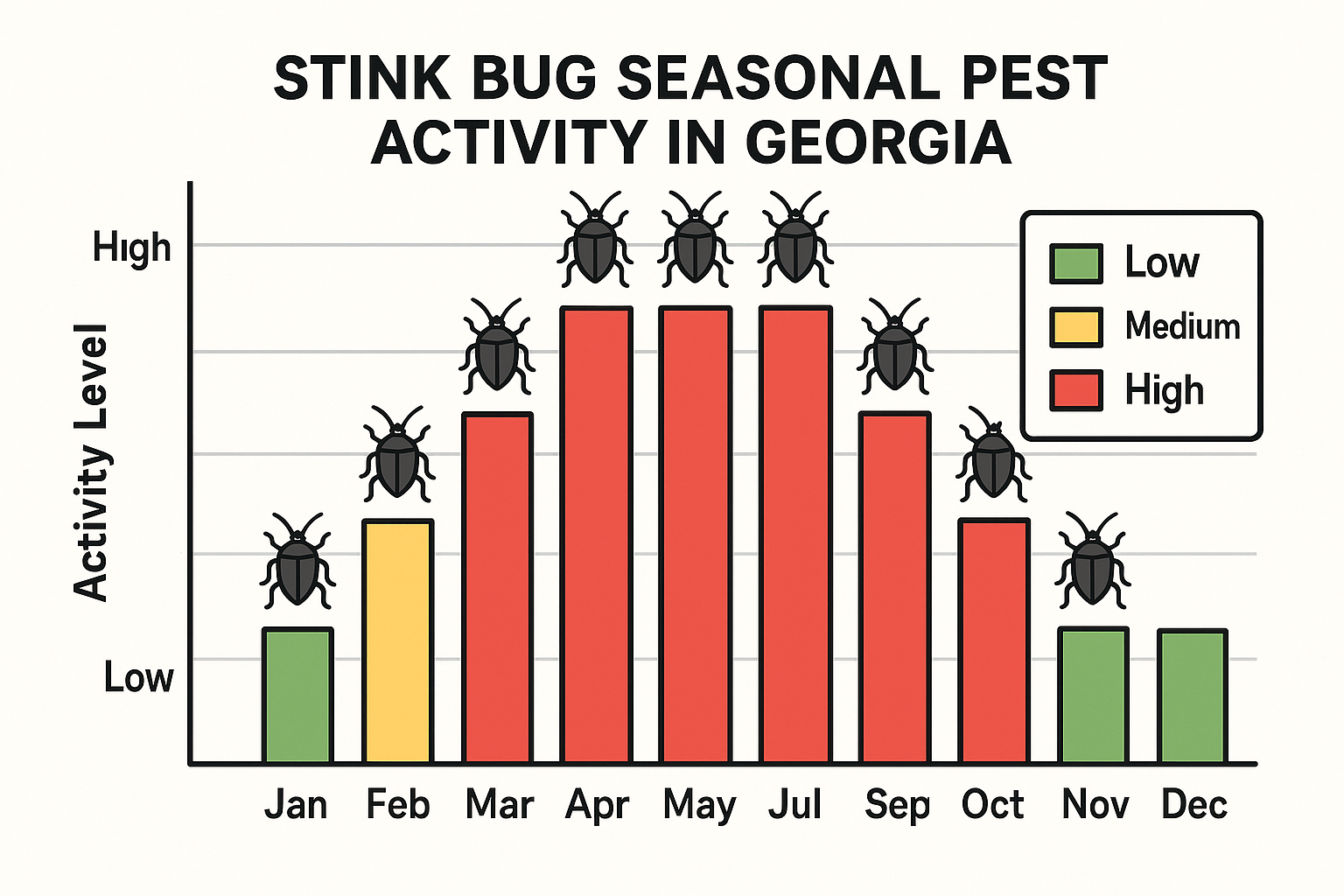
Georgia’s humid subtropical climate creates a perfect backdrop for the brown marmorated stink bug (Halyomorpha halys). Warm, moist summers accelerate development, while mild winters allow many adults to survive the cold. Because temperature and humidity directly influence their life cycle, you’ll see predictable spikes in activity that line up with the state’s seasonal weather patterns—often affecting overall stink bug control cost Canton homeowners experience throughout the year.
Four Seasonal Phases
Overwintering (December–February) – Adult stink bugs seek shelter in protected cracks, under eaves, or inside wall voids. The cooler months slow their metabolism, but the insects remain alive, clustering in groups to retain heat. This is the time they are most hidden, so you won’t notice them outside, but interior inspections can still reveal small clusters.
Spring Emergence (March–May) – As temperatures climb above 60°F (15°C), the overwintered adults become active again. They exit their hideouts, mate, and lay the first batch of eggs on the undersides of young leaves. You may start to see occasional nymphs on fruit trees and vegetable gardens, especially around early‑blooming plants.
Summer Feeding (June–August) – The new generation of nymphs matures rapidly, feeding voraciously on a wide range of crops—peaches, tomatoes, corn, and ornamental shrubs. Populations can swell dramatically, and you’ll notice the characteristic “shield‑shaped” insects on foliage and fruit. Although most stay outdoors, a few may wander indoors seeking shelter from midday heat.
Fall Migration (September–November) – This is the critical window for indoor infestations. As harvest ends and nights grow cooler, stink bugs look for warm, dry places to overwinter. They swarm into homes through cracks, vents, and even open windows, leading to the highest indoor activity levels of the year. September through November is therefore the peak period for homeowner complaints.
Seasonal Monitoring Tips
- Perform visual checks on exterior plantings during spring and summer; look for egg masses (tiny brown clusters) on leaf undersides.
- Set up simple light traps near entry points in September and October. Stink bugs are attracted to bright lights, and a trap can give you a quick snapshot of population pressure.
- Note outdoor bug density during high‑activity periods. If you see dozens on a single branch, it’s a strong indicator that indoor migration will follow soon.
Why Timing Matters
Understanding these seasonal rhythms lets you stay one step ahead of the bugs. Early‑season inspections catch overwintering clusters before they multiply, while fall monitoring alerts you to the exact moment they’re about to invade your home. Armed with this knowledge, you can schedule professional treatments at the most effective times—typically a pre‑fall perimeter spray to create a barrier, followed by an interior treatment if indoor activity spikes.
Monthly Activity Overview
| Month | Activity Level |
|---|---|
| January | Low |
| February | Low |
| March | Medium |
| April | Medium |
| May | High |
| June | High |
| July | High |
| August | High |
| September | High |
| October | High |
| November | Medium |
| December | Low |
Risks and Damage Caused by Stink Bugs
Food contamination
Stink bugs are notorious for turning a basket of fresh fruit or a bag of vegetables into a smelly mess. When they pierce the skin of apples, peaches, tomatoes, or beans, they inject enzymes that cause dark, watery stains and accelerate decay. In a grocery store aisle, a single bug can ruin dozens of produce items, forcing retailers to discard the affected stock and absorb the loss. At home, a handful of bugs in a pantry can stain canned tomatoes, jam jars, or even dry goods, making the food unsafe to eat and prompting costly replacements.
Agricultural concerns for Georgia farmers
Beyond the kitchen, stink bugs pose a serious threat to regional crops. In north‑central Georgia, corn, soybeans, and fruit trees such as peaches and apples suffer measurable yield reductions each year. Studies from the University of Georgia estimate that stink bugs can shave up to 15 % off a corn harvest and cause up to 30 % loss in soybean pods when populations exceed 50 bugs per sweep net. For a 200‑acre farm, that translates into thousands of dollars of lost revenue, pressuring growers to invest in monitoring and targeted treatments.
Structural damage around the home
Although they are not wood‑eating insects, stink bugs will chew on soft building materials when food sources run thin. Siding, window frames, and outdoor light fixtures can show bite marks that later develop cracks or rust. Over time, repeated feeding weakens the protective coating on vinyl or aluminum siding, inviting moisture intrusion and premature paint failure. Homeowners often mistake these marks for weather wear, delaying repairs and increasing long‑term maintenance costs.
Health considerations
Stink bugs are not disease vectors, but their defensive odor can trigger allergic reactions in sensitive individuals. The pungent scent, a mix of aldehydes, may cause headaches, eye irritation, or respiratory discomfort, especially in poorly ventilated basements where bugs congregate. Moreover, the constant presence of bugs can create psychological stress—homeowners report heightened anxiety and reduced enjoyment of outdoor spaces during peak season.
Financial impact of ignoring the problem
When an infestation goes untreated, the costs compound quickly. Stained produce, damaged fixtures, and potential health‑related expenses can add up to several hundred dollars per season. A 2022 survey of Canton homeowners revealed an average loss of $350 per household due to spoiled food and minor repairs. In contrast, a timely professional treatment from Anthem Pest Control typically costs between $150 and $250, effectively halting the bug’s spread and protecting both your pantry and your property.
- Untreated: food waste, structural repairs, possible medical visits – $300‑$500+ per season.
- Professional intervention: one‑time service, preventative monitoring – $150‑$250.
DIY Inspection and Early‑Stage Control
Step‑by‑step home inspection checklist
Before you reach for any chemicals, walk through your home with a focused eye. The goal is to spot where stink bugs are entering or congregating so you can act quickly.
- Windows: Open each window and look for gaps around the frame, broken screens, or warped seals. Pay special attention to upper‑level windows where bugs often gather before nightfall.
- Eaves and soffits: Stand on a sturdy ladder and examine the underside of the roof overhang. Loose boards, missing flashing, or exposed wiring are invitation points.
- Vents and exhaust fans: Remove vent covers and shine a flashlight inside. Stink bugs love the warm, moist air that vents provide.
- Outdoor lighting: Turn off all exterior lights for a few minutes, then switch them on one at a time. Bright bulbs attract bugs; note which fixtures draw the most activity.
- Doorways and garage entries: Check the threshold for cracks and the weather‑stripping for wear.
Simple exclusion methods
Once you’ve identified the weak spots, seal them. The materials are inexpensive and the effort pays off quickly.
- Apply self‑adhesive weather‑stripping around doors and sliding windows to close the smallest gaps.
- Install door sweeps on all exterior doors; a brush or rubber seal slides along the floor and blocks bugs.
- Replace or repair window screens. A fine‑mesh screen (no larger than 1 mm) stops even the tiniest stink bug.
- Use a silicone‑based caulk to seal cracks around baseboards, pipe penetrations, and utility openings.
- Fit mesh covers over vent openings; a piece of hardware cloth held with zip ties works well.
Trapping techniques you can set today
Traps are a low‑cost way to reduce numbers while you finish sealing the house.
- Light traps: Place a 15‑watt LED lamp under a clear plastic container with a funnel opening. Bugs fly toward the light, fall in, and can’t escape.
- Sticky traps: Cut double‑sided tape into 6‑inch squares and tape them near windows, eaves, and vents. The adhesive catches bugs without chemicals.
- Homemade bottle trap: Cut the top off a 2‑liter soda bottle, invert it, and insert it into the base. Fill the bottom with a mixture of water, a few drops of dish soap, and a pinch of sugar. Stink bugs are attracted, tumble in, and drown.
Safe, over‑the‑counter products
If you need a quick knock‑down, low‑toxicity sprays are available at most garden centers. Look for products labeled “biorational” or “pyrethrin‑based.” These formulations break down quickly in the environment and pose minimal risk to pets and children when used as directed.
Application tips:
- Apply in the early evening when bugs are most active but before they retreat into walls.
- Target cracks, window frames, and the underside of eaves—areas you already inspected.
- Follow the label’s waiting period before allowing pets back inside; most products require a 30‑minute dry time.
When DIY measures aren’t enough
Even the most diligent homeowner can miss hidden colonies inside wall voids or attic spaces. If you notice any of the following, it’s time to call a professional:
- Stink bugs reappear within 48 hours after a thorough DIY treatment.
- Large numbers gather in interior corners, cabinets, or behind appliances.
- Signs of damage to crops, garden beds, or outdoor furniture that persist despite traps.
- Uncertainty about how to access or treat concealed entry points.
Professional technicians have the tools—such as residual dusts, targeted perimeter sprays, and thermal imaging—to locate and eliminate hidden populations safely. A quick call to Anthem Pest Control (877‑371‑8196) can prevent a small summer nuisance from turning into a full‑season infestation.
Professional Treatment Options and What to Expect
Thorough Inspection by a Certified Technician
When you call Anthem Pest Control, the first step is a comprehensive on-site inspection performed by a certified technician. The specialist will identify the stink bug species, locate entry points, and map the extent of the infestation throughout your home and yard—an important step in accurately assessing stink bug control cost Canton homeowners may face. Using a risk-assessment checklist, the technician evaluates factors such as surrounding vegetation, structural gaps, and seasonal activity patterns. This detailed audit forms the blueprint for a treatment plan that targets problem areas without wasting time or chemicals on unaffected zones.

Targeted Treatment Methods
Anthem’s professionals employ three core application techniques to keep stink bugs at bay. A perimeter barrier spray creates a protective ring around the exterior of your home, deterring bugs before they reach doors and windows. Inside, a residual indoor application treats cracks, baseboards, and attic spaces where stink bugs like to hide, providing weeks of continued protection. For isolated hotspots—such as a cluster of bugs in a sunroom or garage—a spot treatment delivers a concentrated dose directly to the problem area, minimizing exposure elsewhere.
EPA‑Approved Products and Integrated Pest Management (IPM)
All chemicals used by Anthem are EPA‑registered and specifically formulated for stink bug control. The company follows Integrated Pest Management principles, which means chemicals are a last resort after mechanical and cultural tactics have been considered. By combining low‑toxicity products with strategic placement, the approach reduces the overall chemical load while maximizing efficacy. Homeowners also receive guidance on landscaping and sealing practices that complement the chemical treatment, creating a long‑term barrier against future invasions.
Service Frequency Options
Stink bug activity peaks in late summer and early fall, but the right service schedule depends on your property’s exposure. For urgent situations, Anthem offers a single‑visit emergency treatment that focuses on immediate reduction of the current population. Homeowners seeking ongoing protection can choose a quarterly maintenance plan, where technicians revisit the property every three months to refresh barrier sprays and address any new entry points. The most comprehensive option is an annual protection plan, which combines a pre‑season interior treatment with a post‑season exterior barrier, ensuring year‑round peace of mind.
Why Choose a Professional Service?
Professional stink bug control delivers guarantees that DIY methods simply cannot match. Anthem backs its work with a warranty that covers re‑treatment if bugs reappear within the service window, giving you confidence in the investment. Because the technicians are trained in safe handling and precise application, chemical exposure to occupants and pets is dramatically reduced compared with over‑the‑counter sprays. Additionally, the company’s transparent pricing lets you see exactly what you’re paying for—no hidden fees, no surprise add‑ons.
What Homeowners Can Expect on the Day of Treatment
On the scheduled day, the technician arrives in full protective gear, including gloves, goggles, and a respirator, to safeguard both themselves and your family. After a brief walkthrough to confirm the treatment zones, they begin with the exterior barrier, spraying a fine mist along foundation walls, windows, and door frames. Inside, the residual product is applied to hidden crevices using a low‑volume nozzle, ensuring the pesticide stays where stink bugs hide. The entire process typically takes 60–90 minutes, after which the technician will walk you through post‑treatment precautions—like keeping windows closed for a short period—to maximize effectiveness.
Comparing Treatment Pricing Plans
Understanding how stink-bug control services are priced helps you decide which option delivers the most value for your home. Knowing the typical stink bug control cost Canton homeowners face, Anthem Pest Control breaks its offerings into three straightforward plans, each designed to match a different level of urgency and budget.
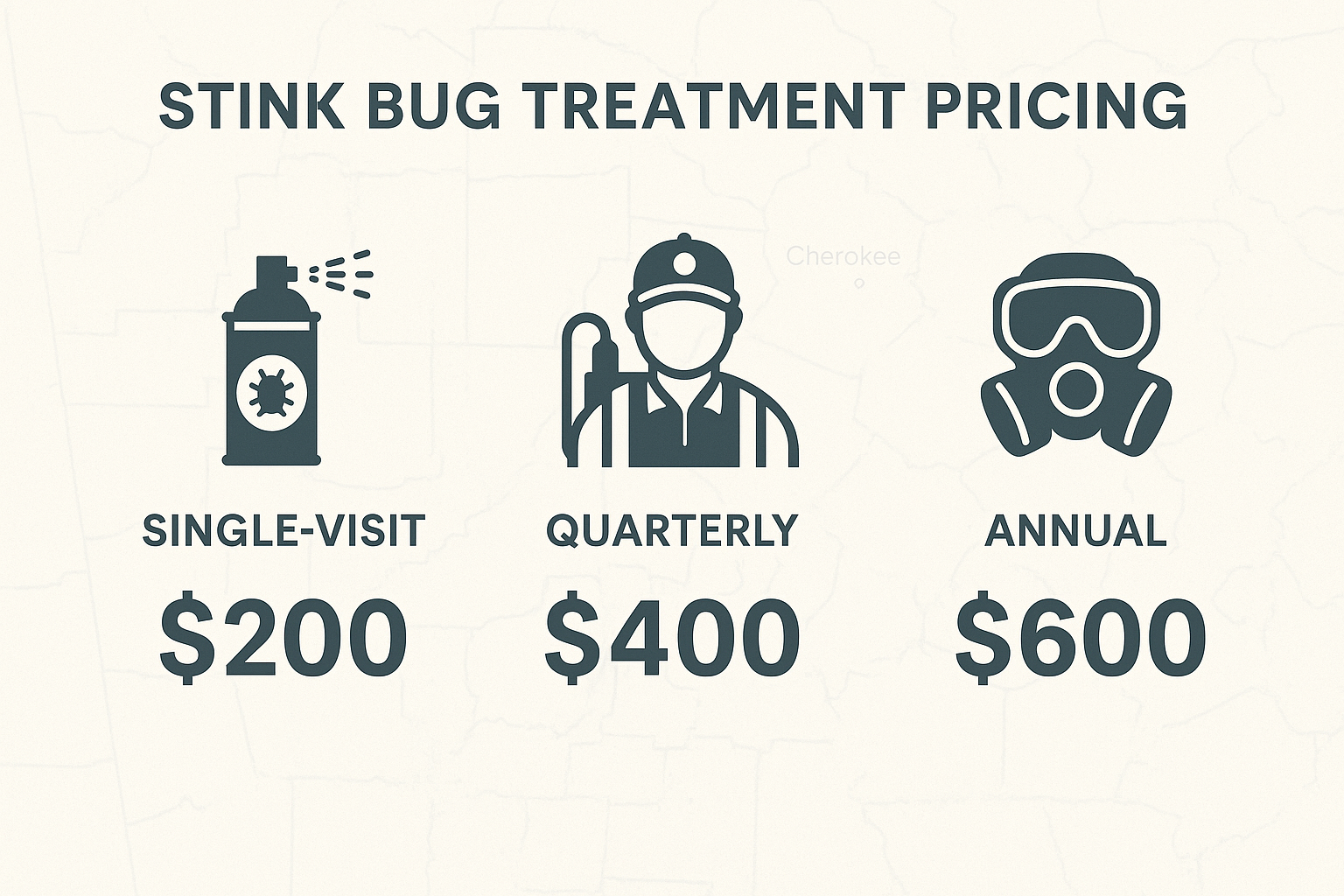
Typical Plan Structures
Homeowners in Canton, Georgia, usually choose one of the following structures:
- Single‑Visit Emergency – Ideal for sudden infestations that need an immediate fix.
- Quarterly Maintenance – Prevents bugs from returning by treating the property four times a year.
- Full‑Year Annual Protection – A comprehensive, all‑season shield that includes extra monitoring visits.
What’s Included in Each Plan
- Single‑Visit Emergency
- One thorough inspection and treatment.
- Professional‑grade residual spray targeting hiding spots.
- 30‑day guarantee on the treated area.
- Quarterly Maintenance
- Four scheduled visits (spring, summer, fall, winter).
- Combination of perimeter spray and interior crack‑and‑crevice treatment.
- 6‑month warranty covering re‑infestations.
- Full‑Year Annual Protection
- Six visits, including two extra “check‑in” appointments after heavy rain or severe weather.
- Integrated pest‑management approach with low‑toxicity products.
- 12‑month unlimited re‑treatment guarantee.
Cost Comparison
| Plan | Visits per Year | Products Used | Warranty | Price (USD) | Value Icons |
|---|---|---|---|---|---|
| Single‑Visit Emergency | 1 | Residual spray | 30‑day | $199 | 🧴👨🔧🛡️ |
| Quarterly Maintenance | 4 | Perimeter + interior spray | 6‑month | $649 | 🧴🧴🧴🧴👨🔧👨🔧🛡️ |
| Full‑Year Annual Protection | 6 | Integrated low‑toxics | 12‑month | $899 | 🧴🧴🧴🧴🧴🧴👨🔧👨🔧👨🔧🛡️🛡️ |
Factors That Influence the Price
Even within a single plan, the final cost can shift based on three key variables:
- Property size – Larger homes or estates require more product and longer technician hours.
- Infestation severity – A heavy, multi‑room invasion may need extra treatments or stronger formulations.
- Geographic location – Canton sits in Cherokee County, where the climate encourages seasonal spikes; the map background on our quote reflects localized travel and logistics costs.
Budget‑Friendly Tips
- Look for seasonal discounts offered in early spring when demand is lower.
- Bundle stink‑bug control with other services—such as mosquito or rodent management—to unlock multi‑service savings.
- Take advantage of our flexible financing plans, which spread the cost over 12 months with no interest.
Why Anthem Pest Control’s Pricing Stands Out
Anthem Pest Control prides itself on a transparent pricing model: every dollar is accounted for, and there are no surprise fees after the job is done. Our quotes list each visit, product, and warranty term up front, so you can compare plans side‑by‑side and choose the one that fits both your pest‑control needs and your budget.
Protect Your Home Today with Anthem Pest Control
Stink bugs may look harmless, but once they breach your home they multiply quickly, damage plants, and create a lingering odor. The most reliable way to keep them out is a three‑step strategy: spot them early, understand the seasonal peaks, and let a licensed professional handle the eradication. When these steps are combined, you stop an infestation before it becomes a costly, stressful problem.
Early detection gives you the upper hand. A single adult or a small cluster of nymphs is far easier to remove than a full‑blown swarm. Look for the tell‑tale shield‑shaped bugs on sunny windowsills, light fixtures, or the underside of leaves in late summer. If you notice any of these signs, a prompt inspection can prevent the bugs from seeking shelter inside your walls for the winter.
Seasonal awareness is equally crucial. In Georgia, stink bugs emerge in late spring, peak in midsummer, and begin seeking indoor refuge as temperatures dip in September. Timing your treatment to coincide with these windows—before they enter, while they are still outdoors, or just as they start to congregate—maximizes effectiveness and reduces the amount of chemicals needed.
Professional treatment brings expertise and tools you simply don’t have at home. Certified technicians can identify entry points, apply EPA‑approved products safely, and set up preventative barriers that keep bugs out year after year. DIY sprays may knock a few insects down, but they rarely address the underlying cause, and improper use can risk your family’s health.
Why Choose Anthem Pest Control?
- Nationwide service network ensures you receive the same high‑quality care whether you’re in Canton or any other U.S. city.
- All products are EPA‑approved, guaranteeing safety for children, pets, and the environment.
- Customized treatment plans are built around your home’s layout, landscaping, and the specific stink‑bug pressure you face.
Our solutions are designed to be safe, effective, and affordable. Transparent pricing is displayed in our handy infographic, so you know exactly what you’re paying for—no hidden fees, no surprise add‑ons. Whether you need a one‑time eradication or an ongoing prevention program, Anthem delivers results that fit most household budgets.
Ready to protect your home before the next wave arrives? Give us a call for a free, no‑obligation quote or schedule a same‑day inspection. Our friendly team will walk you through the process, answer any questions, and set up a treatment plan that matches your timeline and budget.
Call us today at 877-371-8196 or click Anthem Pest Control to request your free quote and get clear insight into stink bug control cost Canton homeowners can expect. We look forward to helping you enjoy a stink-bug-free home this season and beyond.