Why Knowing Ant Control Costs Matters for Norcross Homeowners
Norcross sits in a humid subtropical zone, where warm summers and mild winters create the perfect buffet for ants. The region’s abundant moisture, frequent rain, and lush landscaping give these insects year‑round access to food, water, and shelter. That’s why ant activity spikes in spring and persists through the hot months, making homeowners especially vulnerable to unnoticed colonies.
Three Ant Species You’ll Meet Most Often
- Carpenter ants – Large, black or reddish workers that excavate wood to build nests, potentially compromising structural integrity.
- Pavement ants – Small, dark brown ants that favor cracks in sidewalks, driveways, and foundations, often spilling into kitchens.
- Fire ants – Aggressive, reddish‑brown ants known for painful stings; they build mounds in lawns and can invade homes during warm spells.
Ignoring these invaders can quickly become a financial drain. Carpenter ants, for instance, may hollow out support beams, leading to costly repairs that run into thousands of dollars. Pavement ants create unsightly trails and can contaminate food, prompting the need for repeated treatments and replacement of contaminated pantry items. Fire ant stings not only cause discomfort but also increase medical expenses and may force you to replace outdoor furniture or decking damaged by their nests.
According to the National Pest Management Association, ant infestations cost U.S. homeowners an average of $1,200 annually. That figure includes damage repair, lost food, and the hidden energy cost of ants nesting in HVAC ducts, which can drive up utility bills.
The purpose of this guide is simple: to demystify ant‑control pricing so you can weigh the true cost of inaction against a transparent, affordable treatment plan. By understanding the local climate, the species you’re likely to encounter, and the hidden expenses of untreated infestations, you’ll be equipped to make confident, budget‑friendly decisions for a pest‑free home.
Identifying the Ants That Invade Norcross Homes
Carpenter Ants
Carpenter ants are among the largest ants you’ll encounter in Georgia, often measuring up to ½ inch. They don’t eat wood; instead, they hollow out moist, decayed timber to build their nests. Look for smooth, oval galleries beneath siding, in window frames, or inside crawl spaces. The presence of small, sawdust‑like frass near wooden structures is a tell‑tale sign. Because they prefer damp wood, leaky roofs or poorly ventilated basements become prime real estate for these colonies.
Pavement Ants
Pavement ants thrive in the cracks of sidewalks, driveways, and building foundations, but they’re notorious for establishing indoor foraging trails. You’ll often see a steady line of tiny, dark ants marching from exterior entry points to kitchen countertops, drawn to sugary spills, honey, or pet food. Their nests are usually shallow, located under stones, in mulch, or within the voids of concrete slabs. Unlike carpenter ants, pavement ants cause little structural damage, yet their sheer numbers can become a nuisance.
Fire Ants
Fire ants are the most aggressive of the three and deliver painful, burning stings that can cause allergic reactions in sensitive individuals. Their colonies are built in open, sunny spots—often in lawns, gardens, or under debris. When disturbed, fire ants swarm out in a cloud of workers, each ready to sting. Their mounds are dome‑shaped, about 6‑12 inches tall, and may contain a visible entrance hole that’s constantly active.
Neighborhood Hotspots
- Brookhaven: Predominantly carpenter ants due to the older, moisture‑prone homes in the area.
- Peachtree Corners: Pavement ants are common here, attracted by the extensive network of sidewalks and paved walkways.
- Historic Downtown Norcross: Fire ant mounds frequently appear in the parklands and vacant lots surrounding the historic district.
For deeper behavioral insights, the EPA indoor pest guide offers a comprehensive overview of ant activity patterns and control strategies.
What Drives the Cost of Ant Treatment?
When you request a quote for ant control, the number you see isn’t arbitrary. It reflects a blend of factors that directly affect the amount of labor, product, and expertise required to eradicate the colony and keep it from returning. Understanding these components helps you compare offers and choose the right plan for your home.
Infestation Severity
Ant problems range from a few scout trails (light) to a sprawling, multi‑room invasion (heavy). A light infestation usually needs a single visit, a modest amount of bait or spray, and minimal labor—often the lowest tier of pricing. Heavy infestations demand multiple visits, larger quantities of product, and more thorough inspection, which drives up both labor and material costs.
Treatment Types
Different methods address ants in distinct ways, and each carries its own price tag:
- Baiting: Low‑cost stations placed near entry points; effective for colony elimination over weeks.
- Liquid Sprays: Immediate knock‑down of foraging ants; requires precise application and may need retreatment.
- Barrier Applications: Creates a protective perimeter around the home’s foundation, often combined with spot treatments.
- Integrated Pest Management (IPM): A comprehensive plan that blends monitoring, targeted treatments, and preventive measures; typically the most expensive but offers the highest long‑term protection.
Square‑Footage Calculations
Service providers usually calculate costs based on the total square footage of the treated area. Larger homes or properties with extensive outdoor spaces need more product and longer application times. For example, a 2,500‑sq‑ft house may require double the barrier spray volume of a 1,200‑sq‑ft cottage, resulting in a noticeable price difference.
Seasonal Pricing Fluctuations
Ant activity peaks in the warm months, especially June through August. Demand for treatments rises, and many companies adjust rates upward during this period. Scheduling an early‑spring or late‑fall service can sometimes lock in a lower price while still addressing the problem before the peak season.
Warranty Options
Most pest control firms offer warranties ranging from 30 days to a full year. A short‑term guarantee may be included in the base price, while extended warranties—often covering additional visits or re‑treatments—add a premium to the total cost. Homeowners should weigh the added peace of mind against the extra expense.
Local Price Ranges (2025)
Based on recent Anthem Pest quotes and competitor data for Norcross, GA, typical pricing looks like this:
| Service Type | Price Range | What’s Included |
|---|---|---|
| Basic Bait Program | $80 – $120 | Initial placement of bait stations, one follow‑up visit |
| Barrier Spray | $150 – $250 | Perimeter treatment, spot spray for interior trails |
| Premium IPM Package | $300 – $450 per year | Quarterly inspections, bait + barrier, warranty coverage |
Quick Cost‑Comparison Chart
| Method | Initial Cost | Labor Hours | Long‑Term Effectiveness |
|---|---|---|---|
| Baiting | $80‑$120 | 1‑2 hrs | High (colony eradication) |
| Liquid Spray | $120‑$180 | 1‑3 hrs | Medium (quick knock‑down) |
| Barrier Application | $150‑$250 | 2‑4 hrs | High (prevents re‑entry) |
| IPM (Full Package) | $300‑$450/yr | 4‑6 hrs total | Very High (continuous monitoring) |
Choosing the Right Ant Control Method for Your Home
Baiting: Targeted Action with Low Toxicity
Ant bait stations work like a silent assassin. Workers locate the food source, carry it back to the hidden colony, and share it with the queen and other ants. Because the poison is inside the bait, exposure to humans, pets, and beneficial insects is minimal.
- Pros:
- Highly specific – attacks only the ant species that takes the bait.
- Low toxicity for non‑target organisms, making it a safe choice for families with children or pets.
- Effective against colonies that nest inside walls, under floors, or in other concealed locations.
- Cons:
- Knock‑down can be slow; it may take days or weeks for the colony to collapse.
- Requires proper placement and regular monitoring to stay effective.
- If ants find alternative food sources, they may ignore the bait.
Liquid Barrier Sprays: Immediate Kill for Perimeter Protection
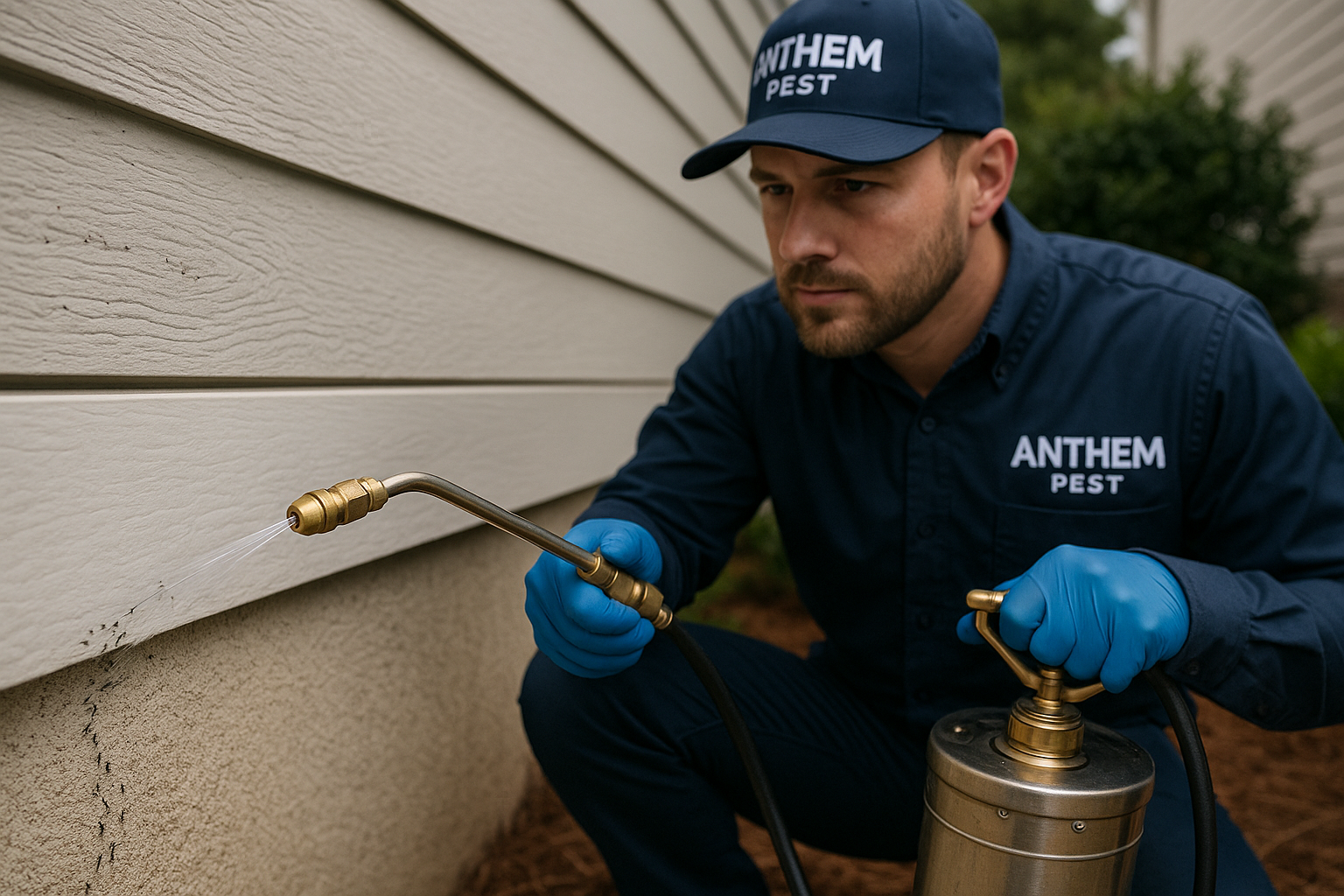
Liquid barrier treatments create a chemical wall around the home’s exterior and, when needed, inside cracks and crevices. The spray kills ants on contact and provides a short‑term shield against new invaders.
- Pros:
- Rapid results—ants are eliminated within minutes of contact.
- Ideal for sealing entry points along foundations, sidewalks, and doorways.
- Provides visible peace of mind during peak ant season.
- Cons:
- Effectiveness diminishes as rain, foot traffic, or landscaping disturb the barrier.
- Re‑application is typically required every 30‑60 days during active seasons.
- Higher exposure risk for occupants if not applied according to safety guidelines—see CDC guidance on safe pesticide use.
Integrated Pest Management (IPM): A Long‑Term, Cost‑Effective Strategy
IPM blends monitoring, prevention, and targeted treatments into a cohesive plan. A professional will inspect your property, identify ant species, locate nesting sites, and then combine baiting, barrier sprays, and habitat modification (like fixing moisture problems) to keep ants at bay.
- Pros:
- Comprehensive approach reduces the chance of re‑infestation.
- Higher upfront investment is offset by lower lifetime costs—fewer repeat visits and less reliance on expensive chemicals.
- Focuses on prevention, so you spend less time reacting to new ant trails.
- Cons:
- Initial assessment and plan development may appear pricey compared to a single DIY bait kit.
- Requires homeowner cooperation for sanitation and structural repairs.
- Results are realized over weeks to months rather than instantly.
Case Study: How Oakwood Homeowner Saved $200 with Professional IPM
When the Johnson family in Oakwood, GA, first tried over‑the‑counter ant bait kits, they spent roughly $80 on three separate products. Within a month, ant activity resurfaced, prompting another $70 purchase of a liquid barrier spray. After a second season of recurring costs, they switched to Anthem Pest Control’s IPM program. The professional service included a detailed inspection, strategic bait placement, a perimeter spray, and a moisture‑control recommendation. Over a 12‑month period, the Johnsons paid $250 for the IPM plan—$200 less than the $450 they had already spent on DIY solutions that failed to eliminate the problem. Moreover, they reported far fewer ant sightings, confirming that the integrated approach delivered both financial and peace‑of‑mind benefits.
Choosing the right method hinges on your immediate needs, tolerance for chemical exposure, and willingness to invest in long‑term prevention. Baiting works best for hidden colonies, liquid barriers provide quick knock‑down at entry points, and IPM offers a balanced, sustainable solution that can ultimately save you money—just like the Oakwood homeowner’s experience.
When to Schedule Ant Control for Best Value
Ant activity in Georgia follows a predictable seasonal pattern, with the busiest months falling between April and September. During this window, warm temperatures, higher humidity, and abundant outdoor food sources create ideal conditions for carpenter, odorous, and pavement ants to establish foraging trails and colonies around your home. During July and August, colonies often produce winged reproductives, which can lead to sudden indoor infestations if not addressed early.
Why Early‑Spring Interventions Save Money
Scheduling a treatment in early spring—ideally March—allows technicians to target ants before they reach peak foraging levels. By treating when colonies are still small, a single application often eliminates the problem, reducing the need for follow‑up visits later in the summer. Early treatment also allows the insecticide to penetrate the soil before it dries out, ensuring a longer residual barrier against future foragers. Fewer visits translate directly into lower overall costs and less disruption to your daily routine.
Seasonal Discount Example
Anthem Pest Control rewards proactive homeowners with a 10 % discount on any ant‑control package booked in March. For instance, a standard three‑visit treatment normally priced at $250 would cost only $225 when scheduled before the first of April. To claim the March discount, simply mention the “Spring Savings” code when you call or schedule online, and the reduced rate will be applied before the service date. This promotion not only cuts the bill but also guarantees treatment during the optimal window for long‑term control.
Quick Prep Checklist for Your Technician
- Clear clutter from entryways, basements, and crawl spaces where ants can hide.
- Trim vegetation and remove debris that touches the foundation.
- Store or cover food, pet dishes, and sugary drinks to eliminate attractants.
- Seal obvious cracks or gaps in exterior walls, windows, and doors.
- Provide easy access to outdoor service areas, such as the perimeter fence and garden beds.
By aligning your booking with the early‑spring window and following this simple checklist, you maximize the effectiveness of Anthem Pest’s treatment while taking advantage of the best pricing the season offers. A timely appointment today can keep ant invasions at bay throughout the hot Georgia summer.
DIY Ant Control: Savings or Hidden Expenses?
When an ant trail shows up on your kitchen counter, the first instinct is often to grab a store‑bought product and tackle the problem yourself. The upfront price looks attractive—baits for $30‑$50, traps for $15‑$25 per unit. The true cost of a DIY approach goes beyond the sticker price.
Typical DIY Product Costs
- Ant baits: $30 – $50 per package (usually 10‑12 stations).
- Ant traps/snare kits: $15 – $25 per unit.
- Sprays & dusts: $10 – $20 per canister.
Hidden Expenses You Might Not See
- Time investment: Identifying colonies, setting stations, and monitoring can easily consume 2–4 hours each week.
- Repeated applications: Most over‑the‑counter products require re‑treatment every 2–4 weeks, adding up to $100‑$150 per season.
- Incomplete eradication: If the queen remains hidden, the colony rebounds, forcing you back to the store.
- Potential property damage: Mis‑applied sprays can stain carpets, damage wood finishes, or create health risks for pets and children.
- Opportunity cost: Hours spent troubleshooting could be used for work, family, or simply enjoying a pest‑free home.
Side‑by‑Side ROI Comparison
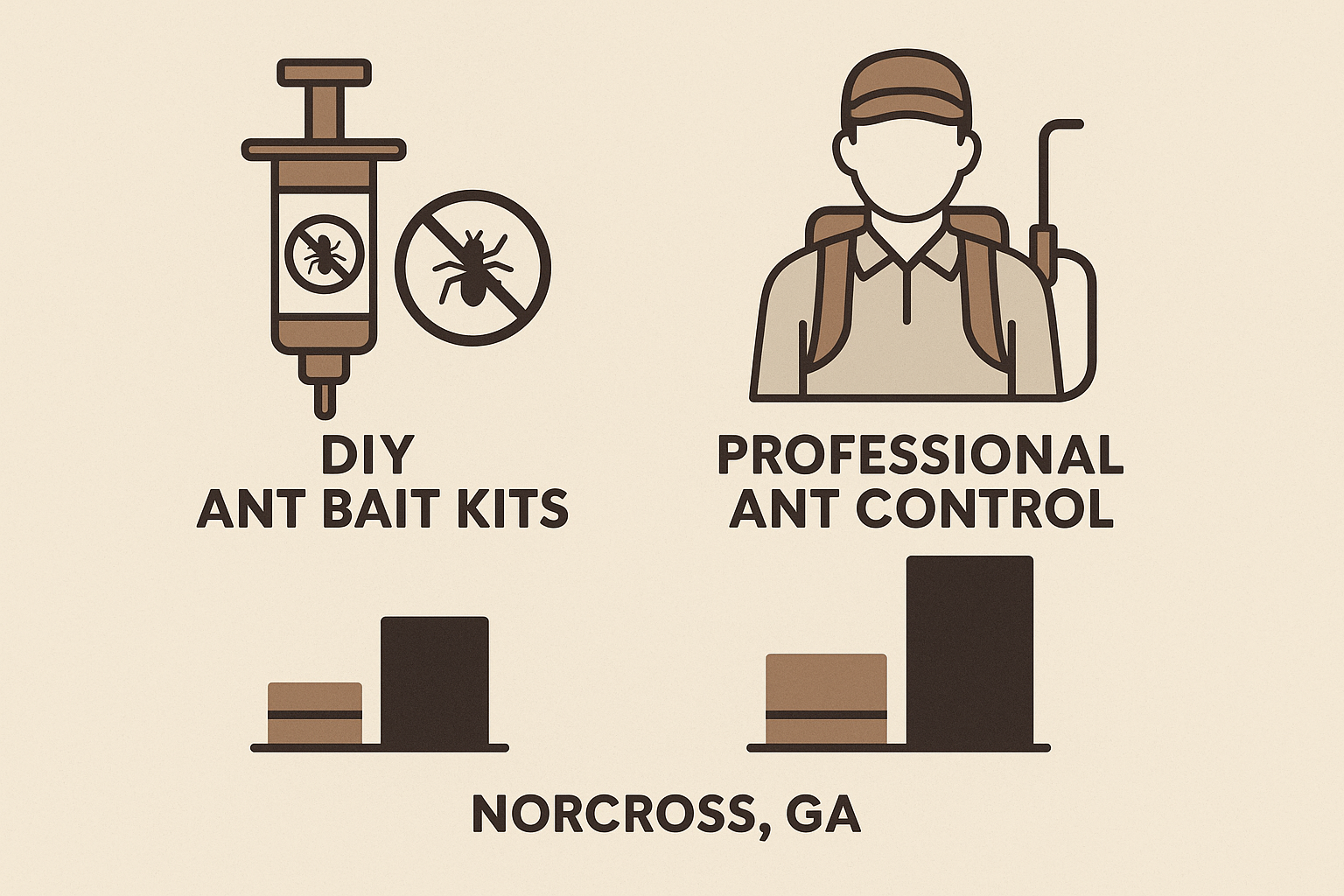
| Option | Average Upfront Cost | Estimated Total Cost (incl. hidden) | Typical ROI (Years) |
|---|---|---|---|
| DIY Ant Bait Kit | $40 | $150 – $200 (re‑treatments, time value) | 0.2 – 0.3 |
| Professional One‑Time Treatment | $180 | $180 – $210 (includes warranty, follow‑up) | 1 – 1.5 |
| Professional Annual Service Plan | $250 | $250 – $280 (covers multiple visits, monitoring) | 2 – 3 |
Numbers are drawn from the National Pest Management Association (NPMA) and a 2024 survey of Norcross homeowners. While the DIY kit appears cheaper at checkout, the hidden costs shrink its return on investment dramatically.
When DIY Might Make Sense
If you spot a single ant line in a rarely used pantry and the infestation is clearly limited, a low‑cost bait can be a reasonable short‑term fix. Just be prepared to monitor daily and replace stations as needed.
When to Call a Pro
Multiple colonies, recurring sightings, or any indication that the ants are nesting inside walls, under foundations, or near electrical wiring call for professional intervention. A licensed technician can locate the queen, apply targeted treatments, and provide a warranty that protects your home from future invasions.
In short, DIY ant control can save you a few dollars on paper, but the hidden expenses often outweigh the initial savings—especially in a humid climate like Norcross where ant activity spikes in spring and summer.
Ant Control FAQs for Norcross Homeowners
How often should treatment be applied?
Most Norcross homes benefit from a quarterly schedule—spring, summer, fall, and winter. The first visit targets the active colonies, and the follow‑up applications keep the perimeter sealed and any new foragers at bay. If you have a severe infestation, we may recommend a monthly boost during the peak summer months, then revert to the quarterly rhythm once the population is under control.
Are the chemicals safe for pets and children?
Absolutely. Our technicians use EPA‑approved products formulated for indoor and outdoor use that break down quickly and pose minimal risk when applied according to label directions. We also offer low‑odor, pet‑friendly options that can be applied in occupied spaces without requiring you to vacate the home.
What does a typical warranty cover?
Our standard warranty guarantees ant‑free protection for 30 days after each treatment. If ants return within that window, we’ll re‑treat at no extra charge. Extended warranties are available, covering up to a full year with periodic check‑ins, so you stay protected without surprise costs.
How should I prepare my home before a technician arrives?
Clear clutter from countertops, under sinks, and around baseboards—these are the places we inspect first. Secure pets and children in a safe area, and make sure entry points such as doors and windows are accessible. If you have any recent pesticide applications, let the technician know so we can adjust our approach.
Can I combine ant treatment with other pest services?
Yes. Our integrated pest‑management plans let you bundle ant control with termite inspections, mosquito barriers, or rodent exclusion. Combining services often reduces overall cost and ensures a comprehensive shield against multiple invaders.
Take Action with Anthem Pest Control Today
When it comes to ants in Norcross, the smartest move is to act with confidence. Our transparent pricing means you’ll know exactly what you’re paying for—no hidden fees, no surprise invoices. A professional assessment from a certified technician pinpoints the source of the invasion, allowing us to tailor a treatment plan that eliminates the colony and prevents future incursions.
Timing matters, too. Treating during the early spring or late summer takes advantage of the ants’ natural life cycle, delivering maximum impact when the pests are most vulnerable. By scheduling now, you stay ahead of seasonal spikes and protect your home before the problem spreads.
Ready for a Free, No‑Obligation Quote?
Give us a call at 877‑371‑8196 or visit our website to request a free, no‑obligation quote. You can also book an appointment online in just a few clicks—our calendar is open and ready to fit your schedule.
At Anthem Pest Control, we combine local expertise with safe, effective solutions that fit your budget. Our technicians are trained to protect your home and family while keeping costs clear and predictable. Whether you need a one‑time extermination or an ongoing prevention plan, we tailor every service to match the unique needs of Norcross homeowners.
Don’t let an ant problem linger. A quick call or a simple online booking puts you on the path to a pest‑free home, backed by a company that values honesty, results, and your peace of mind.
Because ant activity spikes each spring, scheduling now secures your preferred time slot and locks in current pricing before seasonal demand drives rates up. Take the first step today—your home deserves protection.