Recognizing Ant Infestations in Woodstock Homes
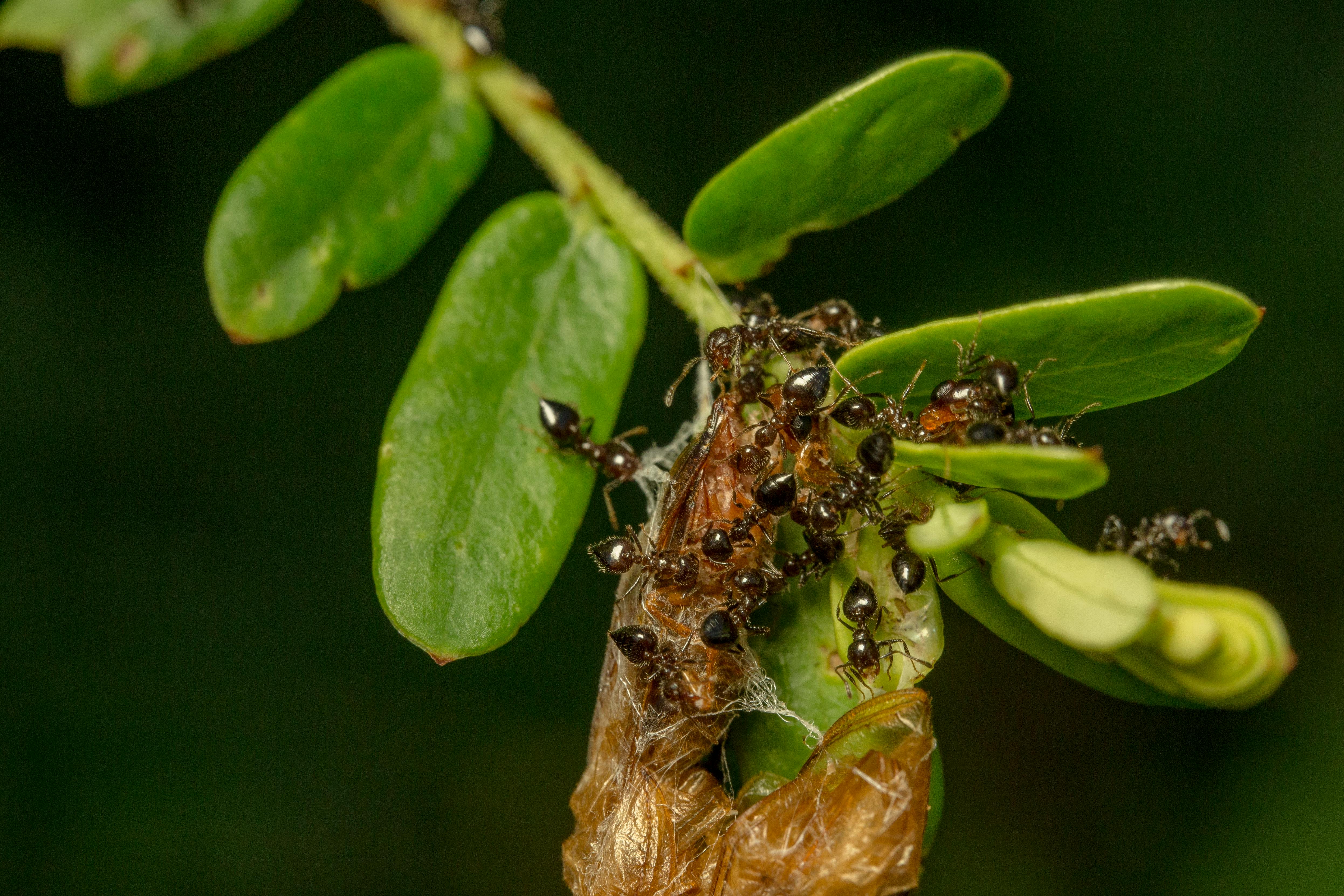
Ants rank among the most common household pests in Woodstock, Georgia, because the climate provides year‑round warmth and plenty of moisture—perfect conditions for colonies to thrive. While a single ant is harmless, a growing colony can damage wood, contaminate food, and create noisy disturbances in walls and foundations.
Most Frequently Encountered Species
- Carpenter Ants – Large (6‑12 mm), black or dark brown, often with a reddish abdomen. They prefer moist wood and are notorious for nesting inside structural timber.
- Pavement Ants – Small (2‑4 mm), dark brown to black, with a slightly shiny exoskeleton. They build nests under sidewalks, driveways, and in garden mulch.
- Odorous House Ants – Medium (2‑5 mm), dark brown to black, emitting a faint, coconut‑like smell when crushed. They favor indoor kitchens and can form extensive indoor foraging trails.
Visual Identifiers to Spot Early
Learning the visual cues of each species helps you catch an infestation before it spreads:
- Size & Color: Carpenter ants are noticeably larger and darker than pavement or odorous house ants.
- Nest Locations: Look for nests in damp wood (carpenter), beneath concrete (pavement), or inside wall voids and cabinets (odorous).
- Foraging Trails: A steady line of ants moving from a hidden nest to a food source is a classic sign. Trails are often more visible on smooth surfaces such as kitchen counters or window sills.
Early Warning Signs
Even before you see the insects, subtle clues can alert you to a developing problem:
- Small piles of soil or sand near baseboards or exterior walls – these are often the entrance holes of carpenter ants.
- Crushed winged ants (alates) near windows or light fixtures – a sign that a colony is trying to expand.
- Faint rustling or ticking noises within walls, especially after rain – moisture draws carpenter ants deeper into structural wood.
- Unexplained food debris or sugary residues along countertops – odorous house ants leave a sugary trail as they search for sweets.
Distinguishing Indoor Pests from Harmless Outdoor Ants
Not every ant you see is a threat. Outdoor pavement ants that wander onto a patio are usually harmless and will disappear once the weather cools. The key differences are:
- Location: Outdoor ants stay outside; indoor activity near food, water, or structural wood signals a problem.
- Frequency: A single ant on a porch is normal; a steady stream inside the home indicates an established colony.
- Behavior: Harmless ants rarely form long, organized trails inside walls or cabinets.
Quick Inspection Tip
Grab a flashlight and do a rapid sweep of baseboards, window sills, and the soil around outdoor plantings. A focused beam will reveal hidden trails, tiny nest openings, or the faint glint of a winged ant. If you notice any of the signs above, it’s time to call a local professional—like Anthem Pest Control—to assess the situation and prevent costly damage.
Why Ants Matter – Risks and Home Damage
When ants set up shop in your Woodstock home, the problem goes far beyond a few extra crumbs on the counter. Untreated ant infestations can erode the very structure of your house, jeopardize your family’s health, and drain your wallet faster than you’d expect.
Structural concerns: carpenter ants at work
Carpenter ants are the silent woodworkers of the pest world. Unlike termites, they don’t eat wood; they excavate it to create smooth tunnels for their colonies. Over time, these tunnels weaken support beams, joists, and deck frames. A single colony can compromise the integrity of a load‑bearing beam, leading to sagging floors or even a partial collapse if left unchecked.
Food contamination: a kitchen invasion
Ants are opportunistic foragers. They crawl across countertops, into pantry shelves, and onto stored food, leaving behind pheromone trails that attract more visitors. Their bodies carry bacteria from outdoor surfaces, and when they walk over your dishes or open packages, they can transfer pathogens that cause foodborne illness. Even a small ant trail can render a batch of flour or cereal unsafe for consumption.
Allergic reactions and bites
Not all ant species are harmless. Fire ants, for example, deliver painful stings that can trigger severe allergic reactions in sensitive individuals. While most household ants only cause minor irritation, the risk of anaphylaxis—especially in households with children or allergy‑prone adults—means a single bite can become a medical emergency.
Cost of repairs versus early intervention
Repairing wood damaged by carpenter ants often involves replacing entire sections of framing or decking, which can cost several thousand dollars. In contrast, a professional ant treatment from Anthem Pest Control typically runs a fraction of that amount and includes preventive measures to keep colonies from returning. Acting early not only saves money but also avoids the hassle of major renovation projects.
Psychological stress of a lingering pest presence
Living with ants can be mentally exhausting. The constant sight of tiny invaders, the fear of contamination, and the uncertainty of when the next swarm will appear create a background anxiety that affects sleep and overall well‑being. Homeowners who invest in prompt, professional treatment often report a noticeable lift in peace of mind.

Understanding these risks underscores why an ant problem shouldn’t be ignored. From hidden structural damage to hidden health hazards, the costs of inaction quickly outweigh the modest investment in a targeted, expert treatment.
Ant Control Costs in Woodstock – One‑Time vs. Monthly Plans
One‑Time Extermination: What You Pay for Today
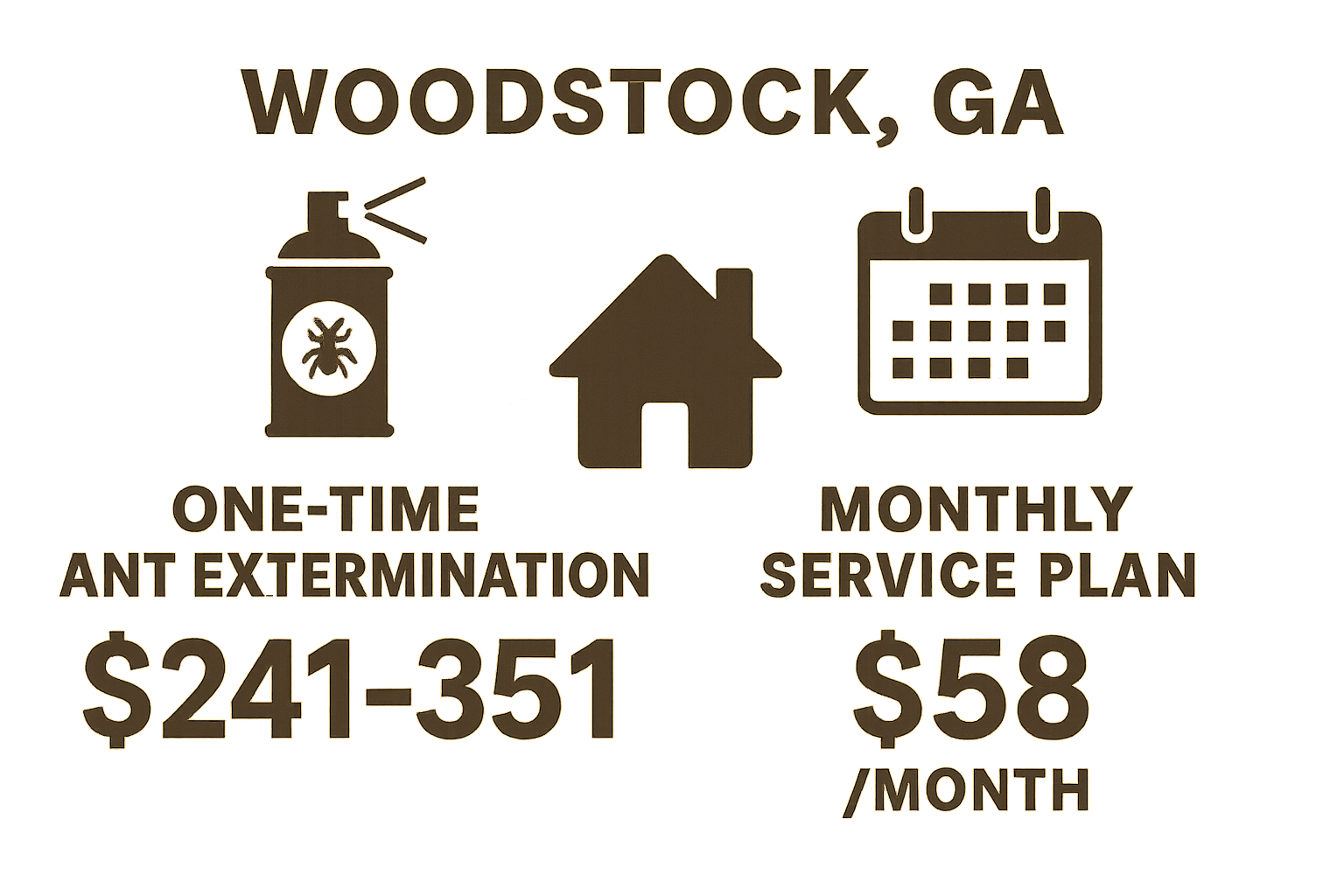
In Woodstock, a single ant‑control visit typically falls between $241 and $351 according to HomeYou. This price covers three essential steps:
- Initial inspection: A certified technician identifies the species, locates nests, and assesses entry points.
- Targeted treatment: Professional‑grade sprays, baits, or dusts are applied where ants are most active.
- Follow‑up visit: About 7‑10 days later the technician checks the results and re‑treats any lingering hotspots.
The one‑time model is ideal for homeowners who notice a sudden surge of ants and want an immediate knock‑down without a long‑term commitment.
Monthly Service Plans: Ongoing Protection for $58/month
For those who prefer a proactive approach, Anthem Pest offers a monthly plan at $58 per month. Each month you receive:
- Quarterly inspections (one per month) to catch new colonies early.
- Preventive applications around foundations, doorways, and landscaping.
- Unlimited bait stations and spot‑treatments as needed.
- A 12‑month warranty that covers re‑treatment if ants return.
This subscription spreads the cost over the year while continuously reducing the risk of re‑infestation.
Pros & Cons – One‑Time vs. Monthly
| Feature | One‑Time Extermination | Monthly Plan |
|---|---|---|
| Up‑front cost | Higher ($241‑$351) | Lower per month ($58) |
| Long‑term protection | Limited (typically 30‑60 days) | Continuous, 12‑month warranty |
| Best for | Isolated infestations, short‑term budget | Recurring problems, larger properties |
| Maintenance effort | None after treatment | Monthly visits, but hassle‑free for you |
Choosing the Right Plan for Your Home
Consider these three factors before deciding:
- Home size and layout: Larger homes or those with multiple entry points benefit more from a monthly plan that monitors each zone.
- Ant species: Carpenter ants and fire ants tend to rebuild quickly; ongoing baiting and preventive sprays keep them at bay.
- Budget preferences: If you can absorb a larger upfront payment and only need a quick fix, the one‑time service makes sense. If you prefer predictable monthly expenses and peace of mind, the subscription is the smarter choice.
Ultimately, the decision hinges on how quickly you need relief versus how much you value long‑term prevention. Either route gives you the transparent pricing and professional expertise that Anthem Pest Control promises.
Seasonal Ant Activity in Woodstock and Optimal Treatment Timing
Ant Life Cycle and Why Activity Peaks in Spring and Summer
Ant colonies follow a predictable life cycle that is tightly linked to temperature and moisture. In early spring, queens emerge from overwintering sites, lay the first batch of eggs, and the colony begins to expand. As soil temperatures rise above 60°F (15°C), worker ants become more active, foraging for food and establishing new trails. By midsummer, the colony reaches its peak size, and the increased foraging activity makes ants most visible inside homes.
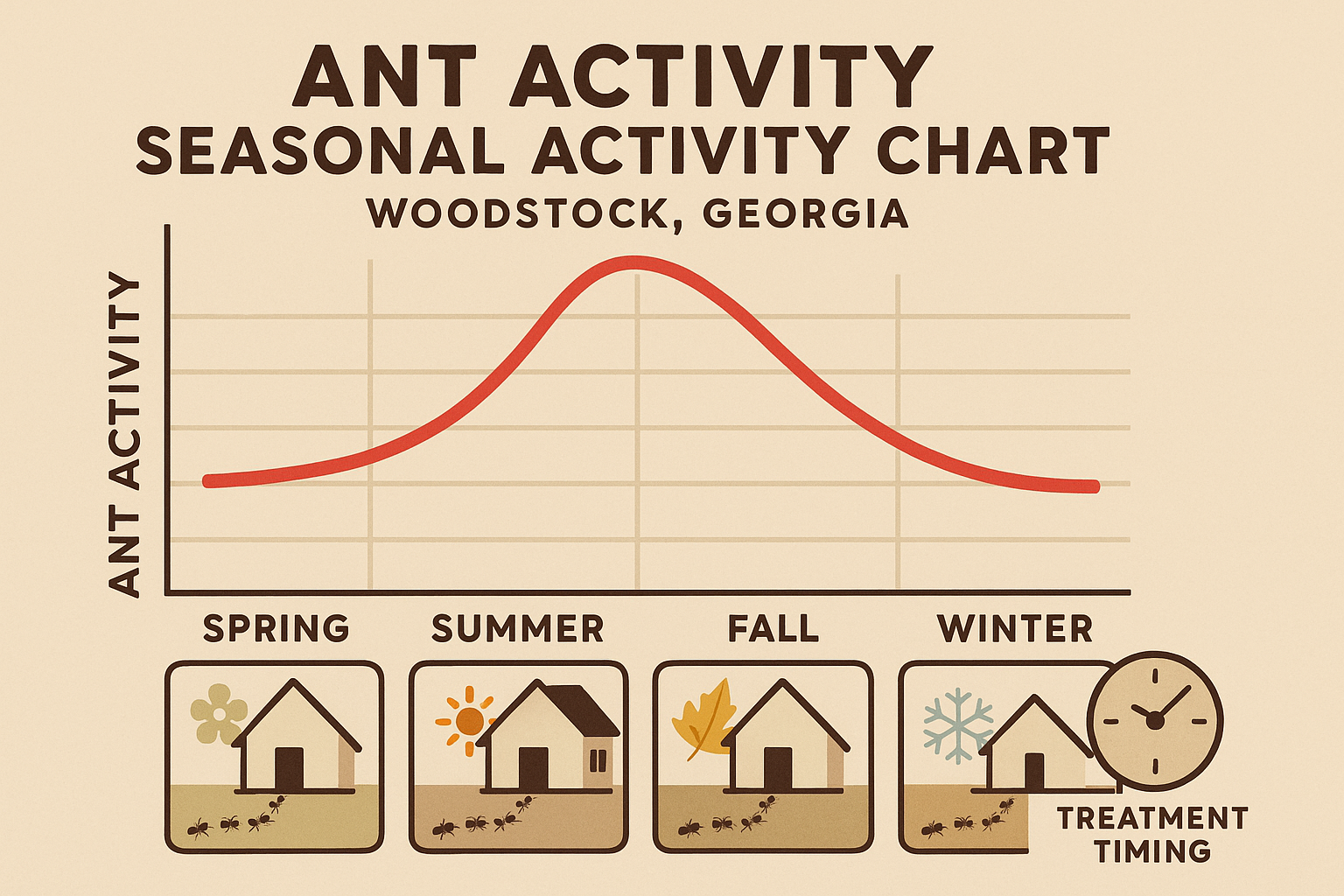
Seasonal Activity Chart Overview
The chart below visualizes typical ant activity in Woodstock throughout the year. You’ll notice a sharp rise in activity during the spring and summer months, a gradual decline in the fall, and near‑dormancy during the winter when colder temperatures suppress foraging.
Recommended Treatment Windows
Pre‑spring preventive spray (late February–early March): Applying a residual barrier before colonies become active stops queens from establishing new foraging trails and reduces the size of the first summer surge.
Early summer targeted eradication (mid‑May to early June): At this point colonies are fully active. Spot‑treating high‑traffic areas, entry points, and known nests delivers the greatest knock‑down effect.
Fall follow‑up (late September–early October): As workers begin to retreat, a second application tackles any lingering colonies that survived summer treatments, preventing them from surviving the winter and re‑emerging in spring.
Tips for Homeowners to Reduce Seasonal Attractants
- Trim vegetation and tree branches away from the house to eliminate bridge routes for ants.
- Fix leaky pipes, gutters, and roof vents to remove excess moisture that attracts foraging workers.
- Store pantry items in sealed containers and promptly clean up crumbs or spills.
- Keep firewood stacked off the ground and away from exterior walls.
- Seal cracks around windows, doors, and foundation penetrations to block entry points.
How Professional Timing Aligns with Seasonal Patterns for Lasting Results
Anthem Pest Control schedules its services to mirror the natural rhythm of ant activity in Woodstock. Our technicians begin with a pre‑spring barrier that creates a protective shield before colonies awaken. During the summer surge, we conduct focused treatments that target active foraging trails, ensuring the pesticide reaches the heart of the infestation. Finally, a fall follow‑up consolidates the work, eliminating any survivors that could repopulate next year. By syncing treatment with these seasonal windows, homeowners enjoy a more durable solution, fewer repeat visits, and a quieter home year‑round.
Protect Your Woodstock Home with Anthem Pest Control
By now you’ve learned how to spot common ant species, why they pose health and structural risks, the range of treatment costs in Woodstock, and the best times of year to act. Let’s pull those threads together so you can make a confident decision for a pest‑free home.
Quick Recap
- Identification: Carpenter ants, odorous house ants, and pavement ants each have distinct habits and damage potential.
- Risks: Ants can contaminate food, trigger allergies, and, in the case of carpenter ants, compromise wood structures.
- Cost options: One‑time treatments typically range from $100‑$250, while monthly protection plans average $30‑$50 per visit.
- Seasonal timing: Spring and early summer are prime for colonies to expand, making early intervention most effective.
Why Choose Anthem Pest Control in Woodstock?
Our technicians are locally trained, meaning they understand the specific ant species that thrive in Woodstock’s climate and neighborhoods. We combine that knowledge with EPA‑approved products that are safe for children, pets, and the environment. Transparency is built into every quote—no hidden fees, no surprise add‑ons.
Flexible Service Plans
Whether you need a single, targeted treatment after an infestation or prefer ongoing protection, we’ve got you covered. Our one‑time service eliminates the immediate problem, while our monthly plans maintain a barrier that keeps ants from returning. Both options are customizable to fit your schedule and budget.
Ready for a pest‑free home? Contact Anthem Pest Control for a free, no‑obligation quote today. Call us at 877‑371‑8196 or visit anthempest.com to schedule your service. Let our Woodstock experts handle the ants so you can enjoy a clean, comfortable space without worry.