What Are Carpet Beetles and Why Homeowners Should Care
Carpet beetles belong to the family Dermestidae, a group of small, oval‑shaped insects that thrive on natural fibers. In the United States the most common culprits are the black carpet beetle (Attagenus unicolor), the varied carpet beetle (Anthrenus verbasci), and the furniture carpet beetle (Anthrenus flavipes). Adults are typically 2–5 mm long, covered in fine hairs, and are attracted to light, often seen fluttering near windows.
Where They Hang Out
These beetles are opportunistic indoor dwellers. Adults may be spotted in attics, closets, basements, and even laundry rooms. Their larvae, the real damage agents, hide in the darkest corners—under carpets, inside pillowcases, behind baseboards, and tucked away in stored clothing or blankets. Anywhere a natural fiber exists, a carpet beetle larva can set up shop.
The Damage They Cause
Carpet beetle larvae feed on a wide range of organic materials: wool, silk, cotton, fur, feathers, and even dried food residues. Over time they create irregular holes, thinning, and a “eaten‑away” appearance on:
- Carpets and area rugs
- Upholstery and draperies
- Clothing, especially wool and cashmere
- Stored blankets, quilts, and pet bedding
- Pantry items such as dried herbs and pet food
The visual damage is obvious, but the hidden cost can be far more unsettling. Replacing damaged fabrics often runs into hundreds of dollars, and the emotional toll of discovering cherished heirloom blankets or children’s clothing ruined can be significant.
Quick Fact Box
- Up to 30 % of U.S. homes experience carpet‑beetle activity each year.
- Larvae can survive without food for several months, making eradication tricky.
- A single infestation can cause $200 – $1,500 in material loss if left untreated.
- Carpet beetles are most active in late spring and early summer, but they can be found year‑round indoors.
When an infestation goes unnoticed, the damage compounds quickly. Not only do you face replacement costs, but you also risk secondary issues such as mold growth in the debris left behind, and an increased attraction of other pests like moths or rodents that feed on the same organic matter.
Understanding the biology and habits of carpet beetles is the first step toward protecting your home. In the next section, we’ll walk you through the tell‑tale signs that indicate a beetle problem before it spirals out of control.
Spotting Carpet Beetles – Identification and Early Warning Signs
What the adult looks like
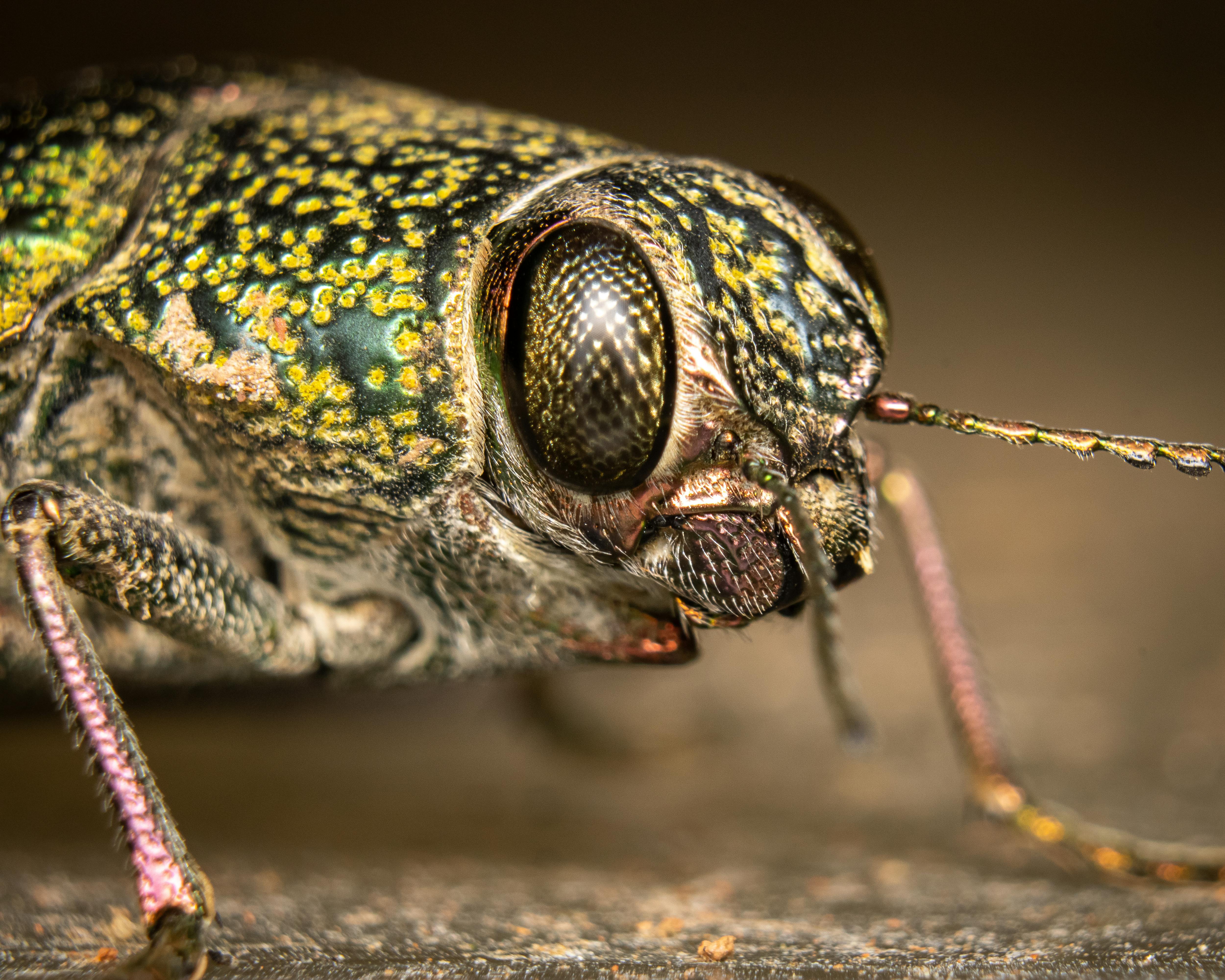
Adult carpet beetles are tiny, typically 2‑5 mm long—about the size of a grain of rice. Their bodies are oval and densely covered with fine hairs that give them a slightly fuzzy appearance. Most species sport a muted palette of brown, black, or tan, but many display a subtle metallic sheen on the wing covers that catches the light. In a macro photo you’ll notice the delicate, almost iridescent finish that distinguishes them from the matte look of most moths.
Larval stage – the real fabric destroyer
The larvae are the culprits behind the damage you see in closets and on upholstery. They are cylindrical, about 1‑4 mm thick, and covered in bristly hairs that can feel slightly prickly to the touch. Their shape is often described as “caterpillar‑like,” though they lack the bright colors of true caterpillars. You’ll usually find them hidden in dark, undisturbed spots: inside pillowcases, beneath carpet seams, in stored blankets, or tucked away in the crevices of a basement wall.
Tell‑tale signs of an infestation
- Small, irregular holes in wool, silk, or cotton fabrics—often no larger than a pinprick.
- Shed skins (exuviae) that look like translucent, papery shells left behind as the larvae molt.
- “Peppery” fecal pellets, dark and gritty, that may appear as specks on carpet fibers or under furniture.
- A faint, musty odor that intensifies as the population grows.
Room‑by‑room inspection checklist
- Bedrooms: Examine mattress seams, pillow shams, and under the bed frame for holes or shed skins.
- Closets: Pull out hanging clothes, inspect the backs of sweaters, and look inside shoe boxes for larvae or pellets.
- Basements & storage areas: Check cardboard boxes, stored blankets, and any fabric‑covered furniture for the bristly larvae.
- Living areas: Scan upholstered sofas, drapes, and area rugs for tiny perforations or shed skins.
How to tell carpet beetles apart from look‑alikes
| Feature | Carpet Beetle | Clothes Moth | Silverfish |
|---|---|---|---|
| Size | 2‑5 mm | 12‑20 mm | 12‑25 mm |
| Body shape | Oval, rounded | Long, slender | Fish‑shaped, tapered |
| Color/Sheen | Brown/tan with metallic sheen | Buff to brown, no sheen | Silvery, scales |
| Movement | Quick, erratic hops | Slow, fluttering | Rapid, wavy runs |
| Damage type | Feeds on natural fibers, hair, feathers | Prefers keratin in wool, silk | Eats starches, glue, paper |
Why knowing the signs matters for cost planning
Identifying an infestation early can dramatically reduce treatment expenses. When you catch carpet beetles before they’ve spread to multiple rooms, a targeted, localized treatment often suffices, saving you both time and money. For a realistic sense of what professional control might cost in Buford, Georgia, compare estimates from reputable sources such as HomeAdvisor, Fixr, and HomeGuide. These sites break down labor, chemicals, and follow‑up visits, giving you a clear benchmark before you call a local expert like Anthem Pest Control.
Carpet Beetle Activity in Georgia – Seasonal Peaks and Temperature Influence
Life Cycle Overview
The carpet beetle follows a classic four‑stage life cycle: egg → larva → pupa → adult. In Georgia’s warm climate, each stage speeds up as temperatures rise. Eggs hatch in as little as 5–7 days when daytime highs consistently exceed 75°F (24°C). Larvae, the stage that actually damages fabrics, mature faster when the mercury stays above 80°F, often completing development in 6–8 weeks rather than the 2–3 months seen in cooler regions. Pupation is brief—usually 10–14 days—while adults emerge ready to mate and lay the next generation of eggs.
Seasonal Activity Chart
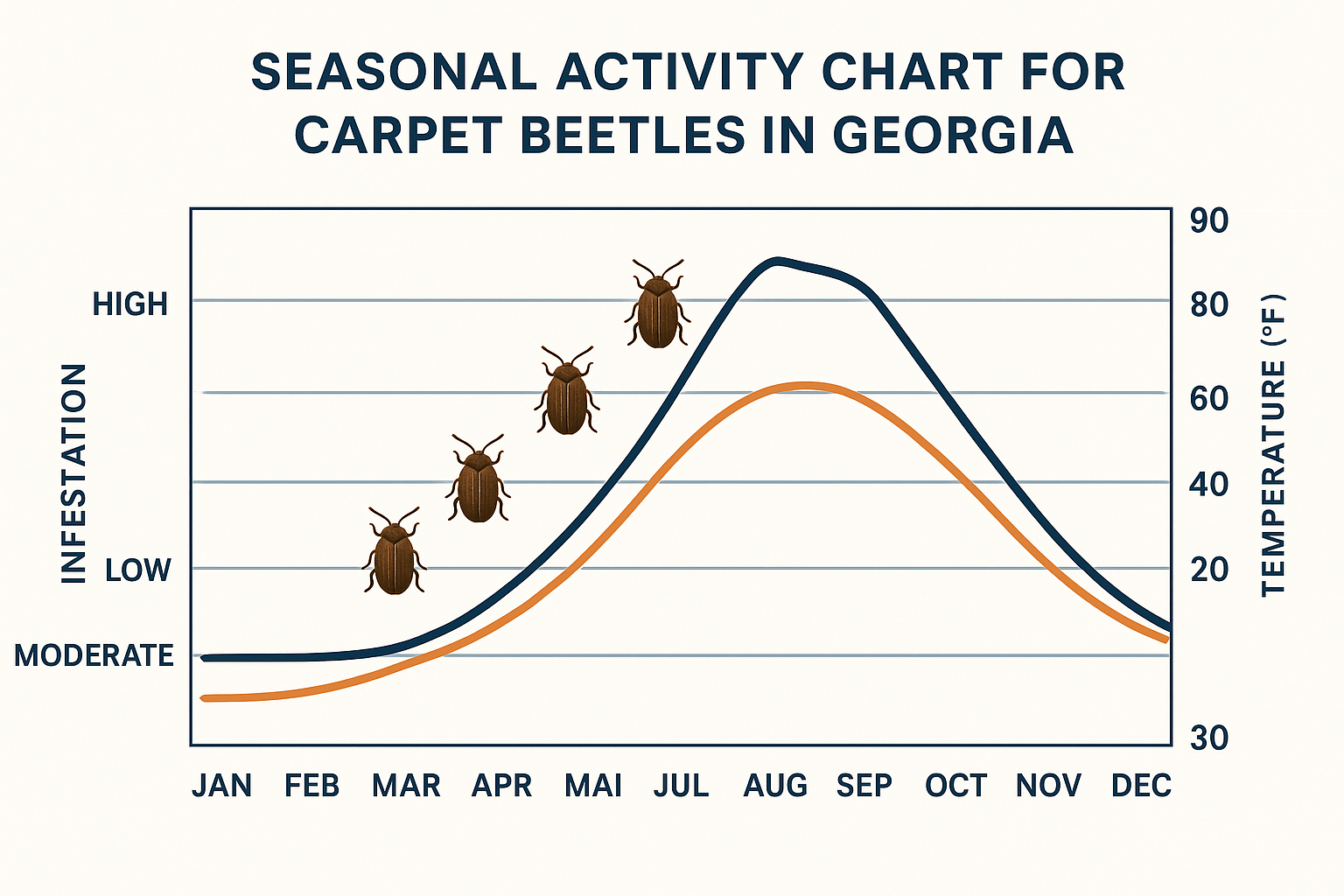
The line graph above plots monthly beetle activity against average temperature. You’ll notice a gentle climb beginning in April, a sharp rise through May and June, and the highest levels in July and August. Activity tapers off in September as temperatures dip below 70°F, and it remains low through the winter months.
Temperature‑Activity Correlation
| Month | Avg. High (°F) | Activity Level |
|---|---|---|
| April | 71 | Low‑Moderate |
| May | 78 | Moderate |
| June | 84 | High |
| July | 89 | Peak |
| August | 87 | Peak |
| September | 79 | Moderate |
| October‑March | 55‑68 | Low |
When to Inspect and Treat
Armed with this climate data, homeowners can schedule inspections at the most strategic times. Early June is ideal for a preventive treatment because larvae are actively feeding but before the population spikes. A second round in late August catches the tail‑end of the peak, reducing any survivors that might overwinter in your home. Finally, any sudden humidity surge—common after heavy summer rains—warrants an immediate follow‑up, as moisture fuels larval growth.
In addition to professional services, deep‑cleaning your carpets, upholstery, and stored fabrics during the cooler months (October‑December) deprives larvae of food sources and helps keep the next season’s infestation low.
Quick Tip – When to Call a Pro in Georgia: Early June, late August, and after any major humidity spikes.
Treatment Options and Cost Breakdown for Carpet Beetle Extermination
DIY Methods: What You Can Do Yourself
Many homeowners start with a do‑it‑yourself approach because it feels cheaper and immediate. The most common DIY steps are:
- Vacuuming: Run a high‑efficiency vacuum over carpets, rugs, and upholstery. This removes adult beetles, larvae, and eggs, but it won’t eradicate hidden infestations in wall voids or under floorboards.
- Washing: Launder removable fabrics (blankets, curtains, clothing) in hot water (≥ 130°F). Heat kills all life stages, yet items that can’t be laundered remain vulnerable.
- Insecticidal sprays: Over‑the‑counter products containing pyrethroids or neem oil can knock down surface beetles. They provide only temporary relief and may not penetrate deep cracks where larvae hide.
Pros: Low upfront cost, immediate action, and control over chemicals used. Cons: Time‑consuming, limited reach, and risk of re‑infestation if the source isn’t eliminated.
Professional Treatment Approaches
When the infestation spreads beyond visible areas, a licensed exterminator brings tools and expertise that DIY can’t match.
- Spot‑treatment: Targeted application of residual insecticides to known hotspots (e.g., closets, baseboards). Ideal for low‑level problems.
- Whole‑home fogging: A fine mist of fast‑acting chemicals is dispersed throughout the house, reaching cracks, vents, and upholstery. Best for medium to high infestations.
- Heat treatment: Professionals raise indoor temperatures to 120‑130°F for several hours, killing beetles at every life stage without chemicals. It’s effective but pricier.
- Integrated Pest Management (IPM): A holistic plan that combines inspection, sanitation, exclusion, and selective chemical use. IPM minimizes chemical exposure and provides long‑term protection.
Factors Influencing the Price
Understanding what drives the cost helps you budget wisely. Key variables include:
- Home size: Larger square footage requires more product, longer labor, and possibly multiple treatment passes.
- Infestation level: Low, medium, or high beetle populations dictate the intensity and number of applications.
- Treatment type: Simple spot‑treatment is cheaper than whole‑home fogging or heat treatment.
- Geographic location: Buford, GA, sits in a moderate‑cost region; travel fees and local market rates can affect the final quote.
Cost‑Comparison Infographic
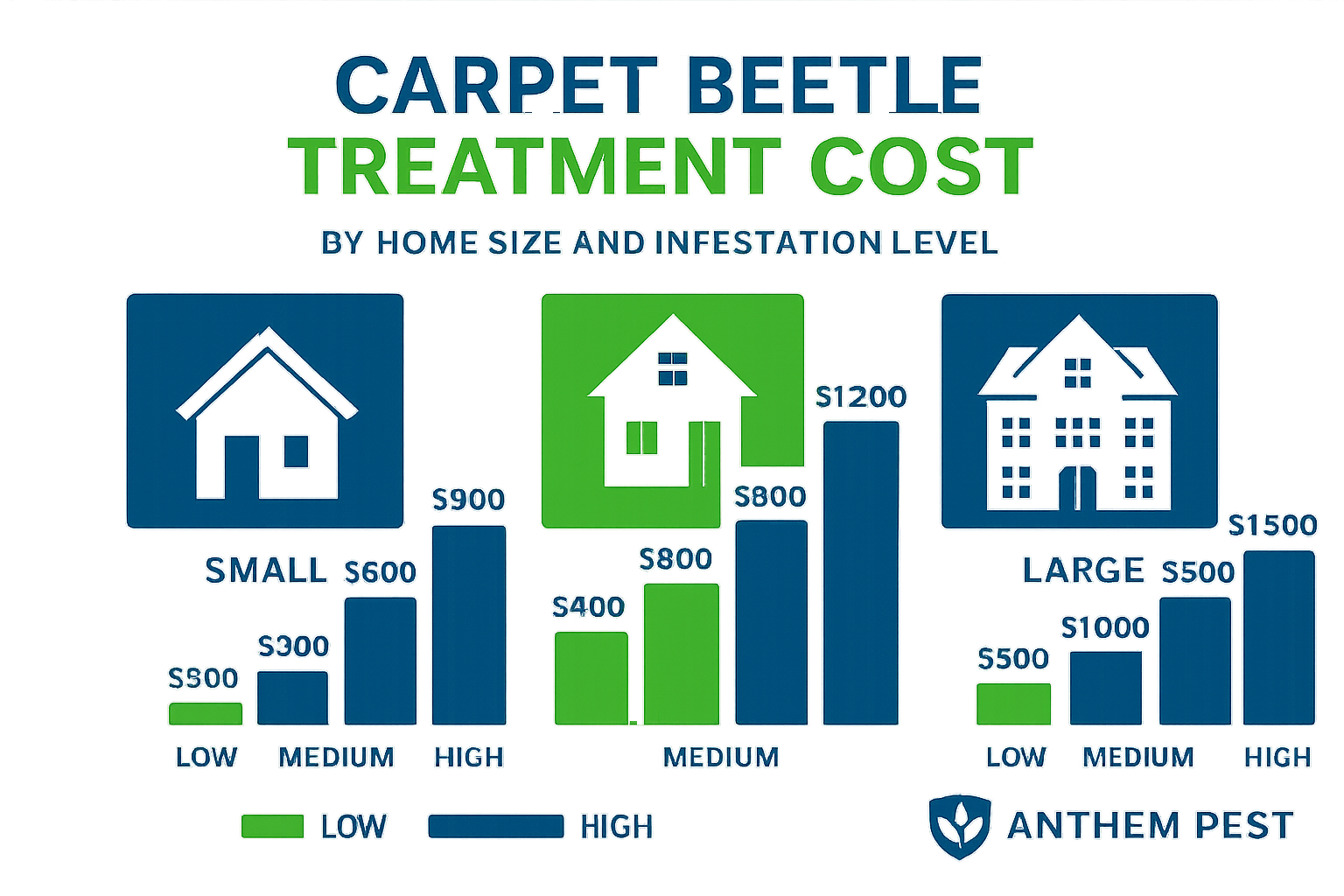
The graphic breaks down typical price ranges by home size (small, medium, large) and infestation severity (low, medium, high). For example, a small home with a low infestation may cost around $150 for a spot‑treatment, while a large home battling a high‑level infestation could exceed $1,200 for whole‑home fogging plus follow‑up visits.
Average National Price Ranges
According to recent market surveys, U.S. homeowners spend:
| Service Type | Low End | Typical | High End |
|---|---|---|---|
| DIY kits (sprays, traps) | $30 | $60 | $120 |
| Professional spot‑treatment | $120 | $180 | $250 |
| Whole‑home fogging | $250 | $450 | $800 |
| Heat treatment | $600 | $950 | $1,500 |
Source: HomeAdvisor Pest Control Cost Guide, 2023; homeadvisor.com
Decision‑Making Guide: DIY vs. Licensed Exterminator
Use this quick rule‑of‑thumb:
- DIY is sufficient when you spot only a few beetles, the infestation is confined to a single rug or closet, and you can commit to regular vacuuming and laundering.
- Hire a professional if you notice larvae in multiple rooms, discover damage to natural fibers, or have a home larger than 2,000 sq ft. Professional IPM or heat treatment will eradicate hidden colonies and prevent recurrence.
At Anthem Pest Control, we tailor each plan to your home’s size, infestation level, and budget, ensuring you pay only for the services you truly need.
Why Choose Anthem Pest Control for Carpet Beetle Solutions

By now you know how to spot carpet beetles, the best times of year to act, and the treatment routes—targeted sprays, thorough vacuuming, and professional heat or fogging. Those steps are only half the battle; the real difference comes from who you trust to execute them.
Anthem Pest’s Credentials at a Glance
- Nationwide coverage: We protect homes in every state, including Buford, GA, with the same high‑standards.
- Licensed, background‑checked technicians: Each crew member holds state‑required licenses and ongoing training on the latest beetle‑control science.
- Safe, EPA‑approved products: Our formulations eradicate beetles while keeping children, pets, and indoor air quality intact.
- Transparent pricing: No hidden fees—what you see in the estimate is what you pay.
Prevention Is Our Priority
Anthem doesn’t just eliminate the current infestation; we build a shield for the future. Our annual monitoring plans include:
- Quarterly inspections to catch early beetle activity before it spreads.
- Season‑specific treatment calendars that align with carpet beetle life cycles.
- Homeowner education kits—simple checklists, cleaning tips, and storage guidelines—to empower you to stay beetle‑free.
Ready for a Free, No‑Obligation Quote?
Give us a call today and experience our quick‑response service—most appointments are scheduled within 24 hours. We stand behind every job with a satisfaction guarantee: if beetles return, we’ll re‑treat at no extra cost.
Call now: 877‑371‑8196 or click the link below for more details and to request your free quote.