Understanding Carpet Beetles and Their Impact
Biology and Life Cycle
Carpet beetles belong to the family Dermestidae and undergo a complete metamorphosis: egg, larva, pupa, and adult—a life cycle that directly influences carpet beetle control cost Canton homeowners may face if infestations are left untreated. Adults are small, oval-shaped insects—typically 1-5 mm long—and are attracted to light, often found near windows or outdoor lights. After mating, females lay eggs in hidden crevices, where the emerging larvae begin feeding on organic fibers. The larval stage, which can last from several months to over a year, is the destructive phase, as the grub chews through natural materials before pupating and emerging as a winged adult.
Common Species in the Southeast
In the United States, the most frequently encountered carpet beetles are the Varied Carpet Beetle (Anthrenus verbasci), the Black Carpet Beetle (Attagenus unicolor), and the Furniture Carpet Beetle (Anthrenus flavipes). The Southeast, including Georgia, sees higher populations of the Varied and Black species because warm, humid conditions accelerate their development. These beetles readily infiltrate homes through cracks, vents, and even pet fur, establishing hidden colonies in closets, under carpets, and within upholstered furniture.
Why Homeowners Should Care
Carpet beetle larvae feed on keratin‑rich materials such as wool, silk, fur, and even feathered bedding. Over time, they can create unsightly holes, thinning patches, and a fine powdery residue on carpets, clothing, and upholstery. Beyond the aesthetic damage, the debris left behind can trigger allergic reactions in sensitive individuals, especially children and the elderly. For a homeowner, discovering a few tiny holes or a carpet‑beetle‑shaped speck can quickly become a costly repair or replacement issue if the infestation spreads.
Health and Indoor Air Quality
While carpet beetles are not disease vectors, their shed skins, fecal pellets, and dead bodies contribute to indoor allergens. The EPA notes that these particles can exacerbate asthma and trigger allergic rhinitis. The CDC also highlights that pest‑related allergens are a common indoor air quality concern, especially in homes with carpeting and heavy fabric furnishings. Regular cleaning alone often fails to remove the microscopic remnants that linger in carpet fibers and HVAC ducts.
Georgia’s Climate: A Beetle‑Friendly Environment
Georgia’s hot, humid summers and mild winters create an ideal breeding ground for carpet beetles. Temperatures between 70 °F and 85 °F, coupled with high relative humidity, speed up egg hatch rates and larval growth. Seasonal rains can drive beetles indoors as they seek dry shelter, while the state’s abundant wildlife—birds, rodents, and stray pets—provides additional food sources. For homeowners in Canton, the combination of climate and local fauna means that early detection and professional prevention are essential to keep beetle populations from taking hold.
Identifying Carpet Beetle Damage in Your Home
Spotting carpet beetle damage early can save you time, money, and a lot of frustration. These tiny insects work silently, chewing through natural fibers until you notice irregular holes or a fuzzy residue on your favorite rug. Knowing exactly what to look for lets you act before the infestation spreads to bedding, upholstery, or stored clothing.
Typical damage patterns on carpets, rugs, and fabric
Carpet beetles target keratin‑rich materials, so the most common sign is a series of small, round or irregular holes in the pile of a carpet or rug. The holes often appear in clusters, creating a “chewed‑out” patch that looks like a miniature Swiss cheese. In wool blankets or drapes, you may see frayed edges and thin spots where the fibers have been eaten away, leaving the fabric looking ragged and thin.
Signs of larvae – the “carpet beetle fuzz”
Larvae are the real damage‑makers. They are soft, whitish, and covered in tiny hairs that give them a fuzzy appearance, often described as “carpet beetle fuzz.” As they grow, they shed their skins, leaving behind tiny, translucent cast skins that look like microscopic shells. These skins accumulate in corners, under furniture, or inside closets, forming a fine, powdery layer that is a dead giveaway of an active infestation.
Adult beetle appearance and common hangouts
Adult carpet beetles are small—about 2‑5 mm long—with a rounded, oval shape. Their bodies are typically mottled black, brown, or tan, sometimes with a metallic sheen. Because they are attracted to light, you’ll often find them near windows, skylights, or any bright source. They may flutter briefly before landing on fabrics, so a quick glance at a sunny windowsill can reveal their presence.
Other clues to watch for
- Shedding skins or fuzz in closets, especially among wool sweaters or stored blankets.
- Visible damage to upholstery, such as tiny holes in couch cushions or chair backs.
- Chewed edges on stored items like quilts, pillows, or even taxidermy.
- Unexplained pet hair or feather loss in pet bedding, which can also be a food source for larvae.
How to differentiate carpet beetle damage from other pests
While moths, silverfish, and even rodents can cause fabric damage, each leaves a distinct signature. Moth larvae tend to create larger, irregular holes and leave silk‑like cocoons, whereas carpet beetle larvae leave a fine, hair‑covered fuzz and numerous shed skins. Silverfish prefer starchy materials and produce a silvery, fish‑shaped outline of damage, often accompanied by a musty odor. If you see the characteristic fuzzy cast skins and tiny round holes, carpet beetles are the most likely culprit.
Quick inspection checklist for homeowners
- Inspect carpets and rugs for clusters of small holes or frayed fibers.
- Look for whitish, hair‑like larvae or their shed skins in closets and under furniture.
- Check windowsills and light sources for adult beetles.
- Examine wool blankets, upholstery, and stored items for fuzz or damage.
- Compare signs with moth or silverfish damage to rule out other pests.
- Document any findings and contact a professional pest‑control service for confirmation and treatment.
Seasonal Activity and Risk in Georgia
Life Cycle Tied to Temperature and Humidity
Carpet beetles move through four stages—egg, larva, pupa, and adult—and each stage thrives under specific environmental conditions. Warm temperatures (70‑85°F) accelerate egg hatch and larval growth, while moderate humidity (45‑65%) prevents the larvae from drying out. In Georgia’s humid subtropical climate, these ideal ranges appear for much of the year, allowing the beetles to complete multiple generations annually.
When Do Beetles Peak?
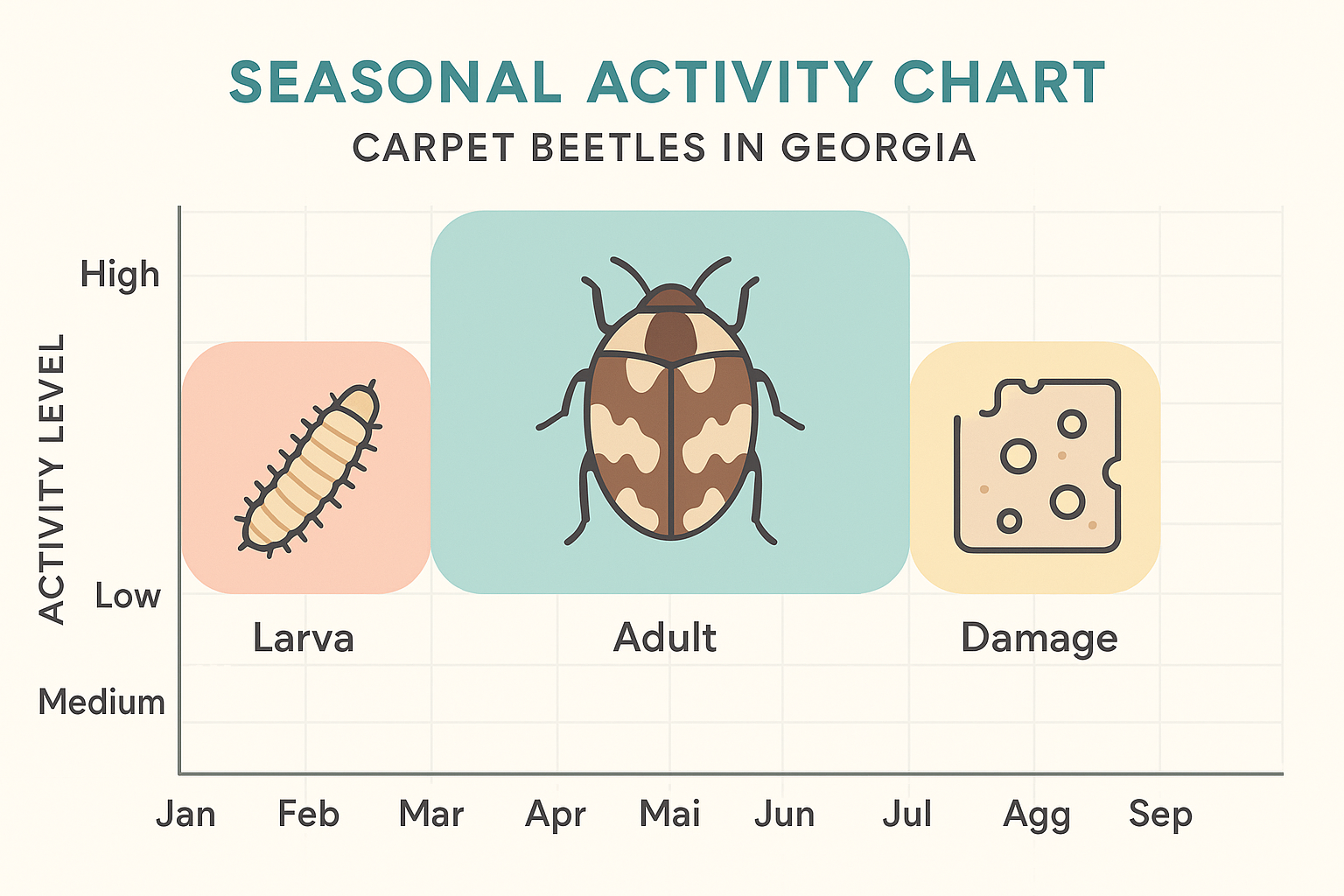
The highest adult activity typically occurs from late spring through early fall, when daytime highs consistently sit above 75°F. During this window, adults emerge from their pupal cases, mate, and lay new eggs on natural fibers. Winter brings a lull; cooler nights and lower indoor heating cause the beetles to retreat into dormant stages, reducing visible signs of infestation.
Why Canton’s Climate Favors Carpet Beetles
Canton experiences mild winters and long, humid summers—exactly the conditions carpet beetles love. Average July temperatures hover around 88°F, and relative humidity often exceeds 60%, creating a perfect breeding ground from May through September. Homes that retain heat and moisture, such as those with central heating or high‑efficiency air conditioning that doesn’t dehumidify, become hotspots for larvae feeding on wool, silk, and pet hair.
Seasonal Prevention Checklist
Timing your inspections and preventive actions with the beetles’ life cycle can keep an infestation at bay. Follow this simple, homeowner‑friendly routine each season:
- Spring: Vacuum upholstered furniture, under cushions, and along baseboards to remove any overwintering larvae.
- Early Summer: Wash or dry‑clean all stored blankets, seasonal clothing, and curtains before they go into closets.
- Mid‑Summer: Inspect pet bedding and grooming tools; replace or launder them weekly.
- Fall: Seal cracks around windows and doors, and use airtight containers for woolens that stay in storage.
- Winter: Reduce indoor humidity with a dehumidifier or proper ventilation to discourage dormant larvae from reactivating.
By aligning your cleaning schedule with the beetles’ peak months—especially May through September—you’ll catch early signs before they turn into a full‑blown infestation. If you spot beetle damage or notice shed skins, contact Anthem Pest Control promptly; early treatment is far more cost‑effective than battling an established population.
Treatment Options and Cost Breakdown for Canton, GA
Why a Professional Inspection Comes First
A certified technician can differentiate carpet beetles from harmless insects, locate hidden hotspots, and assess the severity of the infestation—an essential step in accurately determining carpet beetle control cost Canton homeowners may face. In Canton, GA, most companies charge between $80 and $150 for a thorough inspection, which often includes a detailed report and a customized treatment plan. Skipping this step can lead to missed larvae deep within carpet piles, resulting in repeated visits and higher overall costs.
Common Treatment Modalities
- Spray Applications – Quick, targeted sprays are ideal for localized outbreaks in closets or under furniture. They work fast and are easy to re‑apply, but they may not penetrate deep carpet fibers where larvae hide.
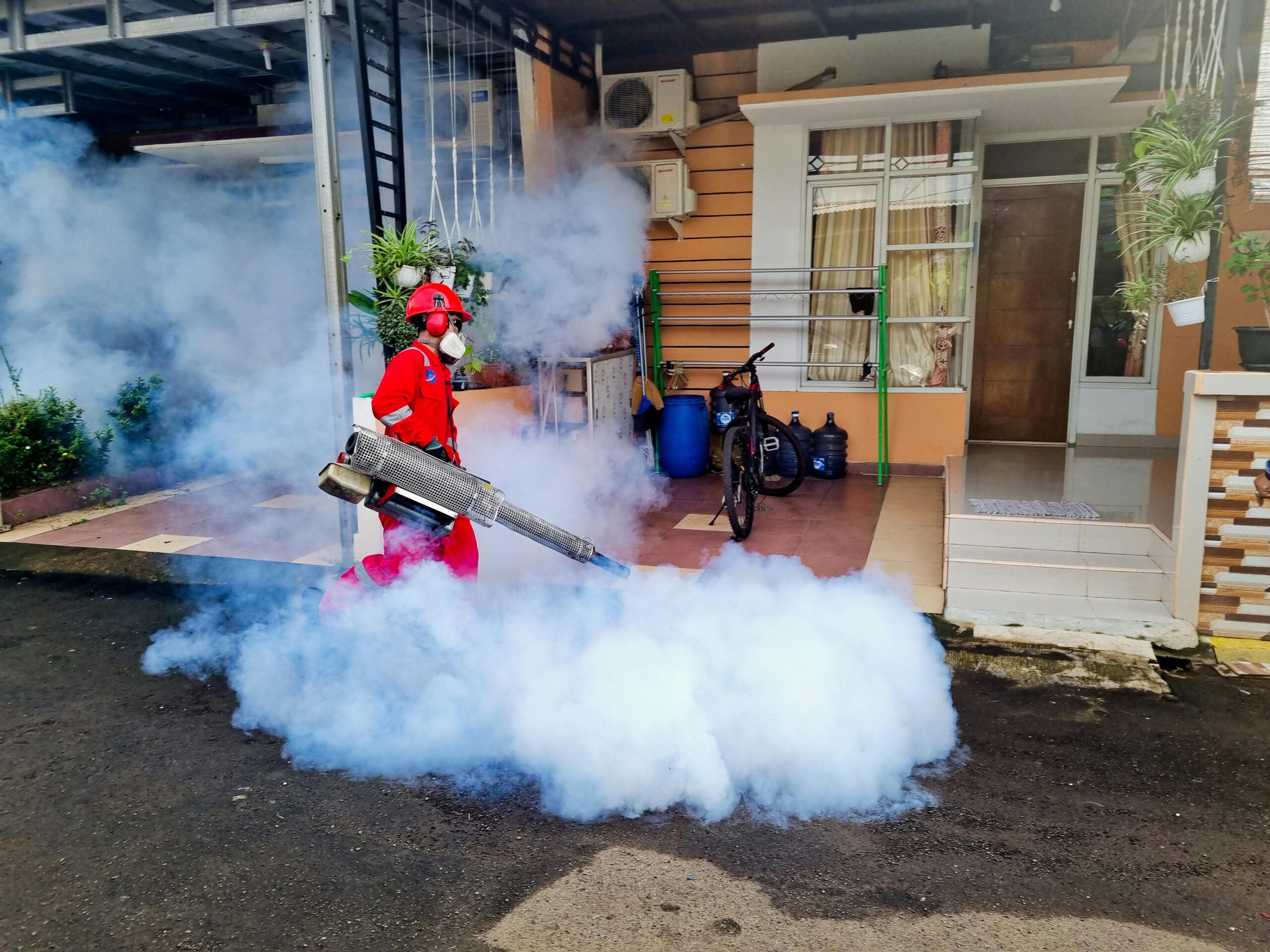
- Fogger/Thermal Fogging – This method releases a fine mist that reaches into carpet piles, cracks, and crevices. It covers larger areas in a single session, yet it requires occupants to vacate the home for a few hours and may need a follow‑up spray for stubborn spots.
- Heat Treatment – Raising indoor temperatures to 120‑130°F eradicates eggs, larvae, pupae, and adults in one go. It’s the most effective for severe infestations, but the equipment and labor drive the price higher than other options.
DIY vs. Professional Solutions
Homeowners often reach for over‑the‑counter sprays or vacuuming tricks. While DIY products can reduce surface beetles, they rarely eliminate the hidden life stages that cause recurring damage to wool, silk, and stored fabrics. Professional services guarantee thorough coverage, proper dosage, and compliance with safety regulations—especially important in homes with children or pets.
Cost Breakdown for Canton Homeowners

| Service | Typical Price Range | What’s Included |
|---|---|---|
| Professional Inspection | $80 – $150 | Detailed assessment, pest identification, treatment recommendation |
| Spray Application | $120 – $250 per treatment | Targeted spray, follow‑up visit (if needed) |
| Fogger/Thermal Fogging | $250 – $400 per session | Full‑home fog, coverage of carpet piles and hard‑to‑reach areas |
| Heat Treatment | $500 – $800 per job | Whole‑home heating, eradication of all life stages, post‑treatment inspection |
| Total Estimated Cost | $550 – $1,600 | Inspection + chosen treatment(s) for a typical 2‑bedroom home |
How Anthem Pest Control Structures Its Pricing
Anthem Pest Control prides itself on transparent, “no-surprise” pricing—an approach that helps homeowners clearly understand carpet beetle control cost Canton services before any work begins. The inspection fee is applied toward the final bill when you schedule a treatment, and each modality is quoted upfront with a clear list of deliverables. There are no hidden service charges, and the company provides a written agreement that outlines the exact work scope.
Financing and Discount Options
For homeowners on a tighter budget, Anthem offers:
- 0% financing for up to 12 months on heat‑treatment packages.
- Seasonal discounts of up to 15% for bundled services (e.g., carpet beetle control plus annual termite monitoring).
- Veteran and senior citizen rebates that further reduce out‑of‑pocket costs.
Call 877‑371‑8196 or visit Anthem Pest Control to get a personalized quote and learn which payment plan fits your needs.
Protect Your Home with Professional Help – Call Anthem Pest Control
Carpet beetles may seem harmless, but their larvae can chew through wool, silk, leather, and even stored food, leaving costly damage behind. Typical warning signs include small, irregular holes in fabrics, a powdery shed skin near closets, and a faint, sweetish odor from infested areas. These insects are most active during the warm months of late spring through early fall, when they seek indoor shelter to lay eggs. Homeowners can tackle the problem with DIY vacuuming, thorough cleaning, and targeted insecticidal sprays, but these measures often miss hidden larvae deep within walls, insulation, or under floorboards.
A professional inspection changes the game. Certified Anthem Pest Control technicians use specialized tools to locate hidden infestations, apply EPA‑approved treatments safely, and provide a warranty that guarantees lasting protection. By choosing a licensed expert, you eliminate guesswork, protect family members and pets from chemical exposure, and ensure that the solution addresses every life stage of the beetle.
If you’ve spotted any of the signs above or simply want peace of mind, our certified technicians are ready to help you protect your home and belongings. We’ll conduct a thorough assessment, recommend the most effective treatment plan, and walk you through each step so you know exactly what’s happening in your home.
For immediate assistance, call us at 877‑371‑8196. We also invite you to schedule a free, no‑obligation quote at a time that fits your busy schedule.
Ready to safeguard your carpets, clothing, and cherished items while understanding carpet beetle control cost Canton homeowners can expect? Visit Anthem Pest Control today and let our local experts put an end to carpet beetles for good.