What Makes Crickets a Household Problem
Crickets are small, usually ½‑to‑1 inch long insects with a smooth, brown‑to‑gray exoskeleton that blends easily with grass, mulch, or wooden surfaces. Their most recognizable trait is the nightly chirp—a rhythmic, high‑pitched song produced by males rubbing their wings together. Because they’re quiet during the day and hide under leaf litter, many homeowners overlook them until the sound starts echoing through the walls.
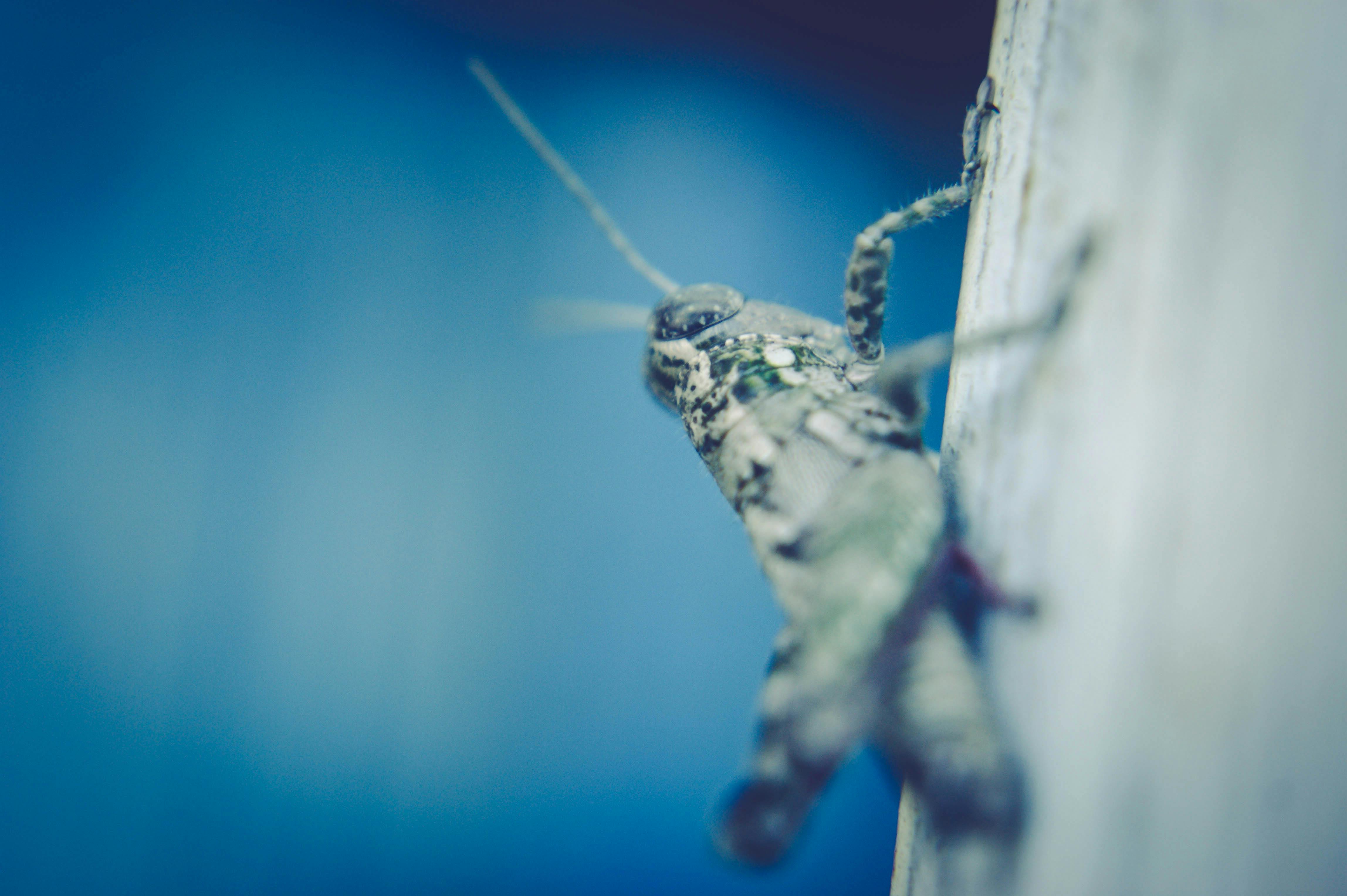
Typical Outdoor Hangouts
In Kennesaw’s warm climate, crickets thrive in moist, vegetated areas—lawns, garden beds, mulched flower pots, and even the edges of wood decks. They prefer environments that stay damp after a rainstorm because their eggs and nymphs need moisture to develop. When the temperature spikes or a sudden downpour saturates their outdoor refuge, the insects instinctively seek drier, more stable conditions, which often leads them straight into homes.
Why Crickets Slip Inside
Crickets aren’t looking for a place to set up a permanent colony; they’re simply escaping uncomfortable weather. Small cracks around windows, door frames, utility lines, and foundation gaps become easy entry points. Once inside, they gravitate toward dark, humid spots such as basements, crawl spaces, closets, and even bathroom cabinets. Food crumbs, pet kibble, or exposed pantry items provide a tempting snack, while the house’s steady temperature offers a safe haven during extreme heat or heavy rain.
Potential Issues for Homeowners
Even though crickets don’t bite or sting, their presence can create several nuisance factors that affect comfort and hygiene:
- Noise disturbances: The male’s chirping can become a constant soundtrack, especially in quiet bedrooms or home offices.
- Food contamination: Crickets may wander onto countertops, plates, or stored food, leaving droppings or shed exoskeletons behind.
- Fabric and wallpaper damage: While they don’t chew aggressively, large numbers can cause minor wear on soft fabrics, wallpaper edges, or stored textiles.
- The “creepy‑crawl” factor: For families with young children or pets, the sight of hundreds of tiny insects scurrying across floors can be unsettling and may trigger anxiety.
Because these issues compound quickly, it’s wise for homeowners to treat a cricket sighting as a warning sign rather than a harmless curiosity. Early identification and preventive measures—such as sealing entry points, reducing excess moisture, and keeping food storage airtight—can keep a small outdoor visitor from turning into an indoor nuisance.
For a deeper dive into cricket biology, habits, and control options, visit Smart Solutions Pest Control – Crickets. Understanding the pest is the first step toward effective, affordable treatment that protects your home and peace of mind.
When Crickets Are Most Active in Kennesaw, GA
Kennesaw sits in the heart of north‑central Georgia, where humid subtropical weather creates the perfect backdrop for cricket breeding. Warm days, mild nights, and a steady supply of moisture from summer thunderstorms give these insects a rapid life cycle—from egg to adult in just a few weeks. In the winter, cooler temperatures and lower humidity slow development, pushing crickets into a dormant state or causing them to seek shelter indoors.
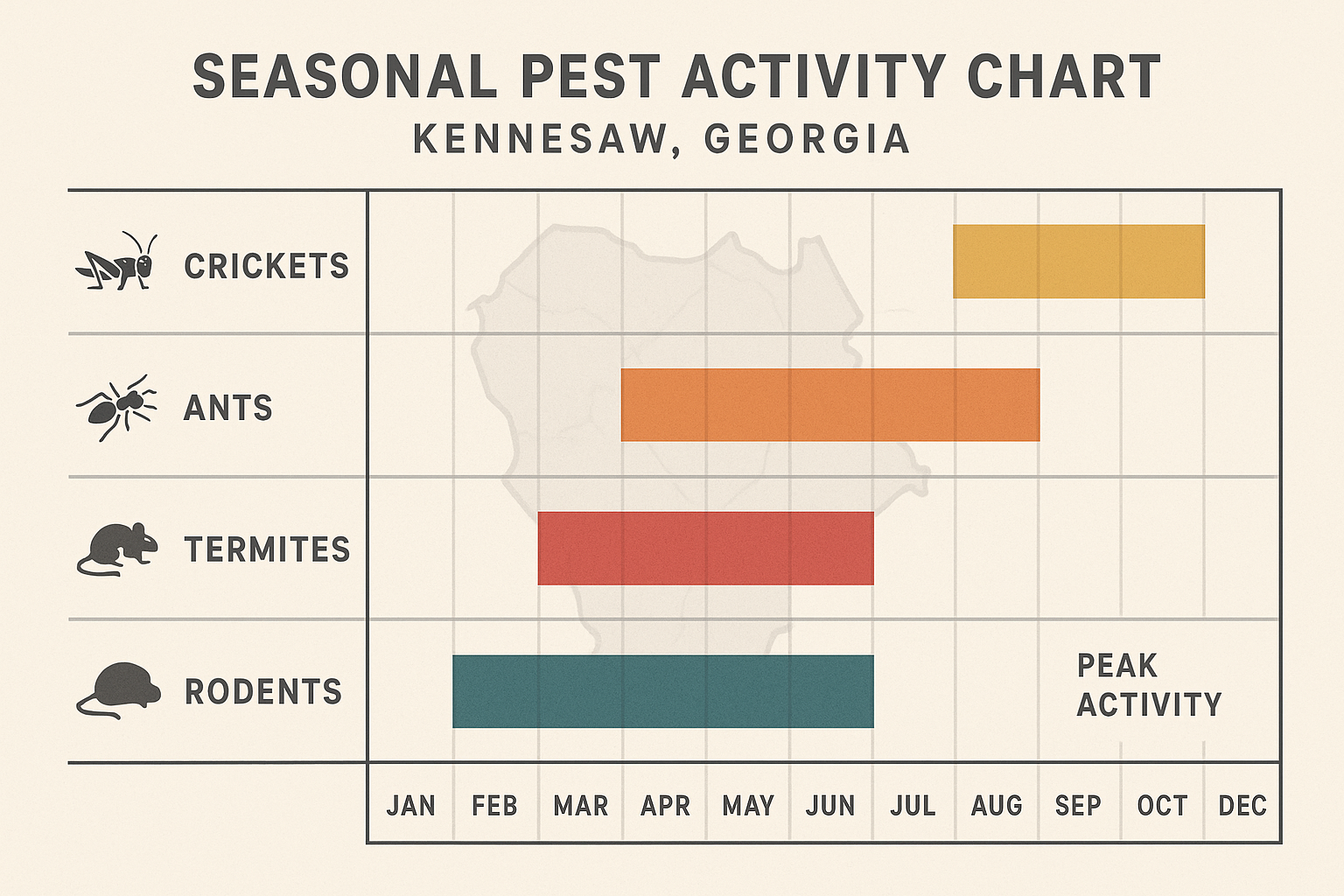
The chart above breaks the year into twelve monthly blocks, flagging the intensity of cricket activity in Kennesaw. Light shading (January‑March) signals low activity, while the deep orange band from July through October marks the peak. May and June act as a ramp‑up period, and November shows a tapering off as temperatures dip below 70 °F.
Why do July, August, and September dominate the chart? First, average high temperatures hover between 88 °F and 92 °F, ideal for egg hatching and nymph growth. Second, humidity spikes after afternoon thunderstorms, providing the moisture crickets need to stay active and reproduce. The combination of heat and moisture accelerates their life cycle, resulting in multiple overlapping generations within a single month.
Homeowners notice these trends in very tangible ways. After a heavy rain in late August, you might hear a chorus of crickets from inside the house—especially near basements, crawl spaces, or poorly sealed windows. The insects are drawn to the cooler, damp interiors as outdoor humidity soars. By early October, as nights grow cooler, you’ll see fewer indoor sightings, but the outdoor population remains high until frost finally curtails breeding.
Timing is everything when you’re trying to stay ahead of a cricket invasion. Treating too early, when the population is still low, can waste money because the barrier will wear off before the next wave of hatchlings arrives. Conversely, waiting until crickets are already swarming inside your home means you’ll need more intensive indoor applications. By aligning your service schedule with the late‑summer peak, you create a protective shield that stops the bugs before they breach your walls.
Quick Tip: Best Times to Inspect and Treat for Crickets
- May‑June: Conduct a thorough perimeter inspection. Seal cracks, repair screens, and trim vegetation that touches the foundation.
- July‑August: Apply a preventative perimeter treatment. This is the window when crickets are most vulnerable to barrier products.
- September: Perform a follow‑up inspection after the first heavy rains. Spot‑treat any indoor entry points before the insects seek shelter for winter.
Spotting the Signs of a Cricket Infestation
Crickets are quiet visitors during the day, but when they start making a home inside your Kennesaw house, they leave unmistakable clues. Knowing what to look for can save you from a full‑blown infestation and the stress of chasing the problem around the clock.
Common visual signs
- Live crickets scurrying across basements, kitchens, or bathrooms—especially near damp corners or under sinks.
- Dead crickets gathered around light fixtures or windowsills, where they’re drawn to the glow.
- Small, black specks on countertops or pantry shelves, which are actually cricket droppings.
Auditory cue
At night you may hear a rhythmic chirping that seems to come from within the walls or ceiling fixtures. Crickets produce this sound by rubbing their wings together, and a persistent chorus often signals a breeding population hidden behind drywall or in attic insulation.
Physical evidence
- Droppings: Tiny, dark specks that look like pepper grains. A quick sweep of a surface can reveal a concentration that points to a nearby nest.
- Egg sacs: Soft, oval capsules tucked into cracks, behind baseboards, or under large appliances. Each sac can hold dozens of eggs, so spotting one means more are on the way.
- Silky webs: Occasionally, crickets spin fine silk to protect their eggs. These webs are faint but become visible when light catches them.
Secondary problems you might notice
While crickets rarely cause structural damage, they can chew on wallpaper, fabric, and stored food. Look for small holes in curtains, shredded upholstery, or gnawed packaging in the pantry. These signs often appear after the population has been feeding for weeks.
When to call a professional
Consider reaching out to a pest‑control expert if you notice any of the following:
- Frequent sightings—more than a handful in a single night.
- Inability to locate the source despite thorough searching.
- Visible damage to walls, fabrics, or food supplies that’s escalating.
- Egg sacs or droppings appearing in multiple rooms.
Homeowner scenario: the document review nightmare
Imagine Jane, a Kennesaw homeowner, sitting at her kitchen table reviewing tax documents. As she leans over the paperwork, a sudden chirp erupts from the ceiling above. She glances up, sees a dead cricket near the light fixture, and notices a few black specks on the edge of her ledger. The quiet night suddenly feels invasive, and the thought of a hidden cricket nest adds a layer of anxiety to an already stressful task. Jane’s experience illustrates how cricket activity can turn routine moments into uneasy ones, especially when the source remains unseen.

By staying alert to these visual, auditory, and physical cues, you can catch a cricket problem early—before it spreads to wallpaper, fabrics, or pantry goods. When the signs multiply or become hard to trace, a professional service like Anthem Pest Control can conduct a thorough inspection, identify hidden nests, and apply safe, targeted treatments to restore peace to your home.
Treatment Options, Costs, and Choosing the Right Service
What’s on the table? Common cricket control strategies
Homeowners in Kennesaw have a handful of proven methods to keep crickets from turning their yards into noisy concert halls. The most popular approaches include:
- Chemical sprays – Fast‑acting residual insecticides applied to lawns, shrubs, and building foundations.
- Bait stations – Encased food laced with insect growth regulators that workers carry back to the nest.
- Perimeter barrier treatments – A continuous ring of low‑toxicity product around the home’s exterior to stop crickets before they cross the threshold.
- Eco‑friendly options – Materials such as diatomaceous earth, neem oil, or botanical sprays that deter crickets without synthetic chemicals.
DIY vs. professional services – the pros and cons
Choosing to tackle the problem yourself can save a few dollars up front, but it also comes with hidden trade‑offs. DIY kits often lack the potency needed for a severe infestation, and homeowners must reapply every few weeks, which adds up in time and product cost. Professional crews, on the other hand, bring calibrated equipment, licensed technicians, and a treatment plan that accounts for property size, soil type, and cricket behavior. The result is usually a faster, longer‑lasting knock‑down.
What drives the price tag?
Several variables shape the final bill for cricket control in Kennesaw:
- Property size – Larger lawns and multi‑structure homes require more product and labor.
- Infestation level – A light presence may need a single spray, while a heavy outbreak often calls for bait placement and follow‑up visits.
- Treatment frequency – Seasonal plans (spring/fall) spread costs over the year, whereas a one‑time emergency service can be pricier per visit.
- Follow‑up visits – Guarantees or warranty periods that include a complimentary retreat can increase the upfront price but lower long‑term risk.
Pricing snapshot – Anthem Pest Control vs. local competitors
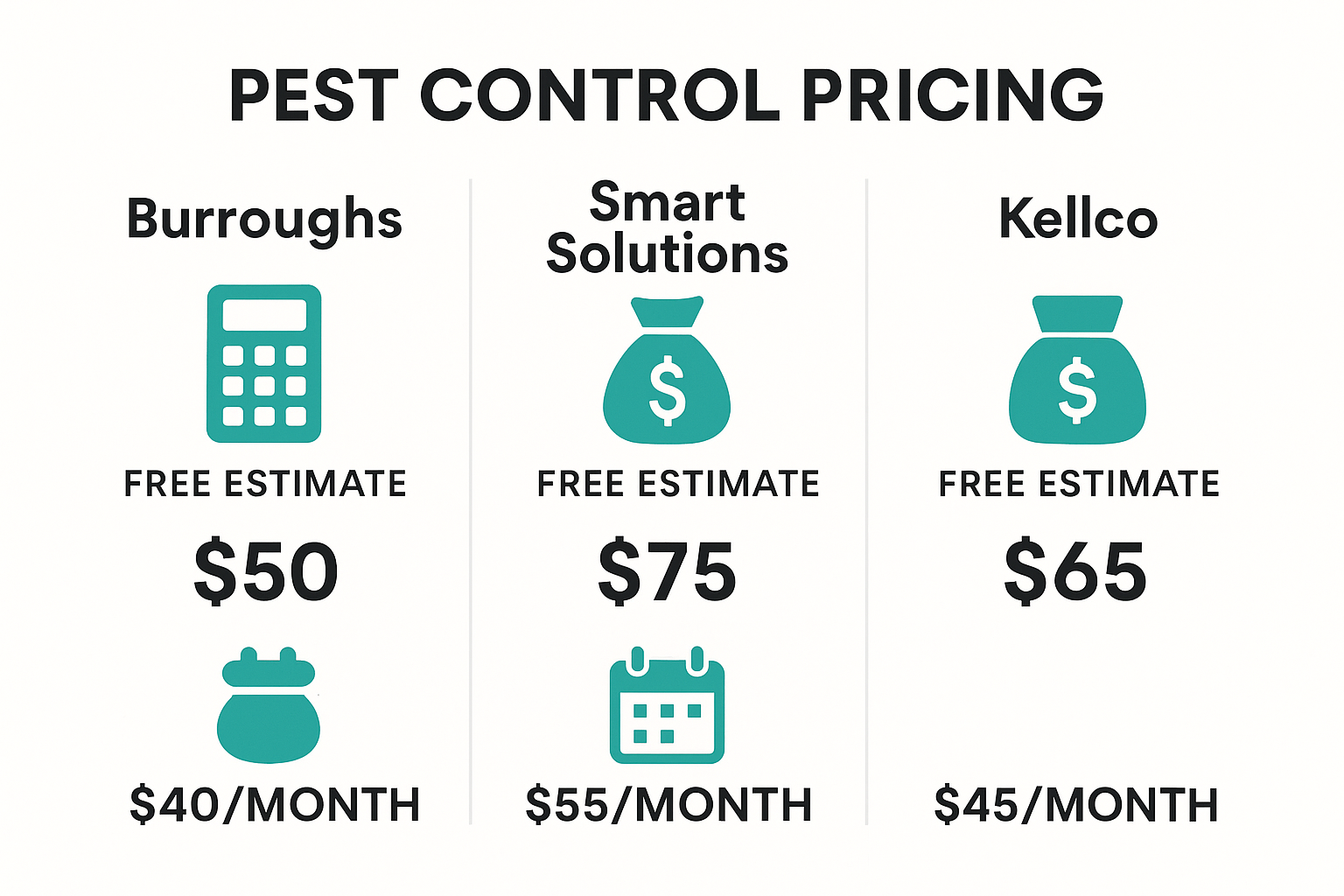
The infographic above breaks down typical costs for a 2,000‑sq‑ft yard:
- Anthem Pest Control – $149 for a comprehensive perimeter barrier plus one bait station, free on‑site estimate, and a $39/month maintenance plan that includes two seasonal visits.
- Competitor A – $179 for a single spray, no follow‑up, and a $75 “service fee” for each additional visit.
- Competitor B – $199 for a combo of spray and bait, but hidden fees for disposal of empty containers and a $50 “inspection surcharge.”
How to evaluate quotes like a pro
When a pest‑control company hands you a spreadsheet, look beyond the headline number. Keep an eye out for:
- Hidden fees – Disposal, travel, or equipment surcharges that appear after the initial quote.
- Guarantee periods – A solid provider will back their work with a 30‑day or longer guarantee, covering a free retreat if crickets return.
- Licensing and insurance – Verify the technician holds a Georgia pest‑control license; it’s a legal safeguard and a quality indicator.
- Transparent pricing structure – Fixed rates for specific services (e.g., “perimeter barrier”) are easier to compare than vague “custom packages.”
Why Anthem Pest Control stands out
Anthem combines the science of professional pest management with a homeowner‑first mindset. Our technicians are fully licensed, use EPA‑approved products that balance efficacy with safety, and provide a clear, written estimate before any work begins. The free on‑site evaluation eliminates surprise costs, while our ongoing plan keeps crickets at bay year after year for a predictable monthly fee. In short, you get a proven solution, a guarantee, and pricing you can actually understand.
Protect Your Home from Crickets Today
Crickets become a nuisance when the warm Georgia evenings draw them indoors, especially during late summer and early fall in Kennesaw. Their chirping can turn a quiet night into a noisy distraction, and a growing population may damage plants, chew on fabrics, or leave unsightly droppings. Watch for these warning signs: a sudden increase in chirping after dusk, crickets hiding in wall voids, and small, irregular holes in outdoor furniture or stored items.
Quick Treatment Reminder
Effective control starts with a two‑step approach:
- Exterior barrier treatment: A professional-grade spray applied around the home’s perimeter keeps crickets from crossing the threshold.
- Targeted indoor applications: Safe, low‑odor formulations treat cracks, baseboards, and attic spaces where crickets hide.
Our licensed technicians know the exact timing and dosage needed to protect your home while staying safe for children and pets.
Why Choose Anthem Pest Control?
If you’ve noticed crickets making themselves at home, let Anthem Pest Control handle the issue with a customized, hassle‑free plan. Our licensed technicians use safe, proven methods to keep your family and belongings protected. We combine local knowledge of Kennesaw’s seasonal peaks with transparent pricing, so you know exactly what you’re paying for—no hidden fees.
Take Action Now
Don’t let a small cricket problem turn into a full‑blown infestation. Call us today for a free estimate and enjoy the peace of mind that comes with 24/7 support. Reach us at 877‑371‑8196 or click Anthem Pest Control to schedule your service. Our team is ready to create a proactive plan that fits your schedule and budget, ensuring your home stays quiet and cricket‑free.