Earwigs in the Southeast – What Homeowners Need to Know

In the Southeast, especially throughout Georgia, earwigs thrive thanks to the region’s warm, humid climate and abundant foliage. The long, mild summers provide ideal conditions for breeding, while the frequent rainfall creates the moist micro‑habitats earwigs love. As a result, you’ll commonly find them under mulch, near compost piles, or tucked away in the cracks of siding and foundations.
Because earwigs are so prevalent, the cost of managing them can vary widely from one service provider to another. That’s why transparent pricing matters: it lets you compare options, avoid surprise fees, and plan your home‑maintenance budget with confidence. When you know exactly what you’re paying for—whether it’s a one‑time treatment, a seasonal service plan, or a follow‑up visit—you can make an informed decision that protects both your wallet and your home.
At Anthem Pest Control, we believe that clear, upfront pricing is a cornerstone of trustworthy service. Our estimates break down every step of the earwig control process, from inspection to the application of safe, targeted treatments. This level of detail helps you see where your money goes and why each action is necessary.
In the sections that follow, we’ll dive into the data that drives our pricing, explore the most effective control methods for Chamblee residents, and show you how a locally‑focused approach can keep earwigs out of your home without breaking the bank.
Earwig Biology and Home‑Entry Behaviors
Earwigs may seem harmless, but understanding their biology helps you see why they sometimes become unwelcome guests. These slender insects are easily recognized by their elongated bodies and the distinctive pair of forceps‑like pincers at the end of their abdomen.
Distinctive Anatomy
The pincers, or cerci, are not weapons for attacking humans; they are primarily used for defense, mating rituals, and navigating tight spaces. Earwigs are nocturnal, emerging after sunset to hunt for small insects, plant material, and organic debris. Their antennae are long and sensitive, allowing them to detect moisture and food sources in the dark.
Typical Outdoor Habitats
In the wild, earwigs favor moist, sheltered environments. You’ll often find them hidden beneath leaf litter, within rotting wood, or inside compost piles where humidity is high and decaying organic matter provides both shelter and nourishment. Gardens, mulch beds, and damp cracks in foundations are ideal outdoor hangouts.
Why Earwigs Seek Indoor Spaces
When the outdoors becomes too dry or when food is scarce, earwigs look for the comfort of a home. The primary drivers are:
- Moisture: Leaky pipes, damp basements, and condensation under sinks create the perfect micro‑climate.
- Food sources: Crumbs, pet food, and decaying plant material in potted plants offer a steady buffet.
- Shelter: Small cracks, gaps around windows, and the dark crevices under appliances mimic their natural hideouts.
According to the Georgia Department of Agriculture pest reports, earwig sightings increase 30% during humid summer months in Georgia. This spike aligns with higher outdoor humidity, pushing more earwigs to explore indoor refuges.
Kitchen Infestation Example
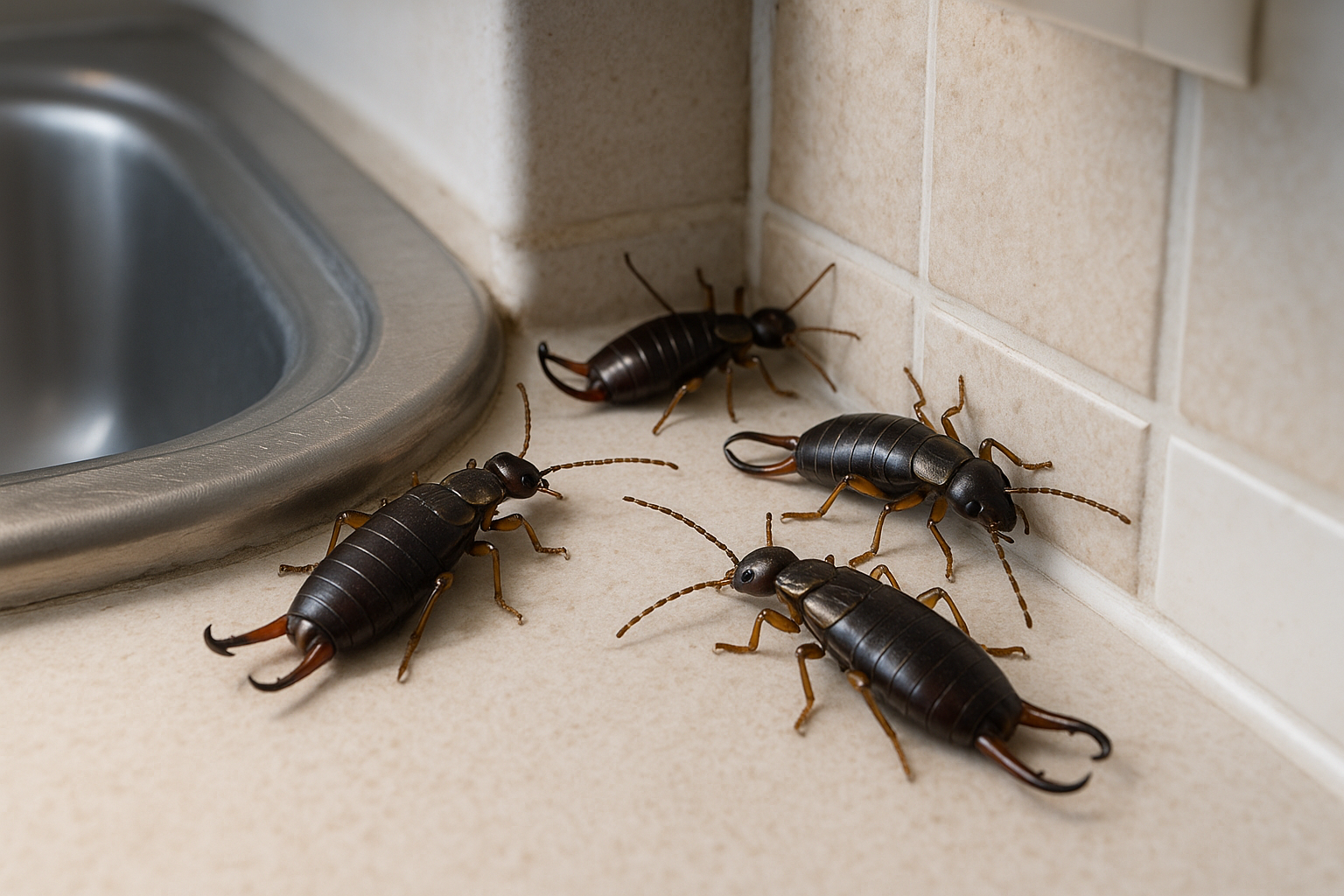
Imagine a typical Chamblee kitchen: a leaky faucet under the sink, a few leftover vegetable scraps, and a gap between the cabinet and wall. After a rainy week, a homeowner might notice tiny, fast‑moving insects scurrying across the countertop at night. Upon inspection, dozens of earwigs are found tucked into the moist area behind the sink, feeding on the organic debris and using the darkness as protection. While they won’t damage structures, their presence can be unsettling, and they may inadvertently carry bacteria from the damp environment onto food‑preparation surfaces.
Recognizing these behaviors early allows homeowners to address moisture issues, seal entry points, and, if needed, call a professional like Anthem Pest Control for targeted treatment that eliminates the problem before it spreads.
Why Earwig Control Matters in Chamblee, GA
Climate factors that invite earwigs
Chamblee sits in a humid subtropical zone, meaning warm summers and mild winters. The area receives roughly 50 inches of rain each year, creating the damp, moist environments earwigs love. Moist soil, leaf litter, and standing water near foundations give these nocturnal insects the perfect breeding ground, especially after a summer thunderstorm.
Neighborhood focus: where earwigs thrive
Most Chamblee residents live in established communities like Chamblee Village, East Chamblee, and West Chamblee. Many homes were built decades ago and feature mature landscaping—flower beds, shrubs, and wooden decks—that provide shelter and food sources for earwigs. Overgrown mulch, cracked siding, and gaps around utility lines act as highways for these pests, allowing them to slip inside kitchens, bathrooms, and crawl spaces.
Health and structural risks linked to earwig activity
While earwigs rarely bite, they can become a nuisance when they congregate in damp areas such as under sinks or behind appliances. Their presence often signals excess moisture, which can foster mold growth—a known respiratory irritant. Moreover, earwigs may feed on soft plant material, damaging ornamental shrubs and garden beds, which can reduce curb appeal and lower property values.
EPA guidance on pest‑related health risks
The EPA’s Pesticide Safety page warns that unmanaged pest infestations can increase exposure to allergens, pathogens, and chemical residues when homeowners resort to DIY sprays. Professional earwig control, performed by licensed technicians, ensures that treatments are applied safely, minimizing health risks while effectively reducing pest populations.
Understanding how Chamblee’s climate and neighborhood layout create a perfect storm for earwigs helps homeowners see why proactive control matters. By addressing moisture sources, sealing entry points, and partnering with a trusted service like Anthem Pest Control, you protect both your family’s health and the structural integrity of your home.
Key Factors That Influence Control Costs
Primary cost drivers
- Inspection fee: A qualified technician evaluates entry points and infestation level before recommending treatment. Most companies, including Anthem Pest, charge a modest flat fee for this on‑site visit.
- Treatment type: Options range from a chemical barrier around the foundation to targeted bait stations or a structural spray. Barriers are usually the cheapest; structural sprays need more product and labor.
- Property size: More square footage means a larger area to treat and a higher volume of pesticide.
- Infestation severity: Light sightings may need a single visit, while moderate or heavy infestations often require multiple applications and follow‑up monitoring.
- Seasonal discounts: Off‑peak months (late fall and winter) often bring 10‑20 % price reductions when earwig activity drops.
How Anthem Pest calculates pricing
Anthem Pest uses a transparent, item‑by‑item formula so you always know what you’re paying for:
- Per‑hour labor: Technicians are billed at a set hourly rate that covers travel, set‑up, application and clean‑up.
- Product markup: The actual pesticide cost is marked up a small percentage to cover handling, licensing and safety training.
- Travel distance: A modest mileage fee applies only to homes outside the core service radius; most Chamblee residences incur no extra charge.
Example calculation – 1,500‑sq‑ft home with moderate infestation
Below is a typical quote for a mid‑size home in Chamblee:
| Item | Cost |
|---|---|
| Inspection fee | $75 |
| Labor (2 hrs @ $85/hr) | $170 |
| Chemical barrier product | $55 |
| Product markup (15 %) | $8.25 |
| Travel distance fee | $0 |
| Total before discount | $308.25 |
| Seasonal discount (10 %) | ‑$30.83 |
| Final price | $277.42 |
This breakdown shows how each factor contributes to a clear, predictable total. Larger homes or heavier infestations simply increase the labor and product rows, while a light problem might require only one hour of work and a smaller product amount.
Understanding these variables empowers you to ask the right questions, compare quotes confidently, and choose a solution that fits both your budget and your earwig‑free goals.
Typical Pricing Breakdown for Chamblee Homes
When it comes to protecting a Chamblee home from earwig invasions, Anthem Pest Control keeps its pricing transparent and competitive. Homeowners can expect a clear, step‑by‑step cost structure that reflects the exact work performed—from the first inspection to ongoing follow‑up visits. Understanding each line item helps you budget effectively and avoid surprise charges later on.
Inspection fee: A thorough inspection sets the stage for any successful treatment plan. Anthem charges between $75 and $100 for a licensed technician to assess the property, identify entry points, and determine the severity of the earwig activity. This fee includes a detailed report and a customized recommendation, ensuring you know exactly what actions are needed before any chemicals are applied.
One‑time chemical barrier: For most standard homes in Chamblee, a single application of a perimeter chemical barrier costs between $150 and $250. This treatment creates a protective shield around the foundation, doors, and windows, deterring earwigs from crossing into living spaces. The price varies with the size of the home, the complexity of the landscaping, and any special considerations such as pet‑friendly products.
Per‑visit follow‑up treatment: After the initial barrier, follow‑up visits ensure that any lingering earwigs are eliminated and that the barrier remains effective. Each additional visit is billed at $80 to $120, depending on the scope of work required during that appointment. Most homeowners schedule a second visit within 30 days and then opt for quarterly checks during peak seasons.
Per‑square‑foot estimate: For larger properties or custom treatment plans, Anthem also offers a per‑square‑foot pricing model ranging from $0.10 to $0.15 per square foot. This method provides flexibility for homes with extensive yards, multiple structures, or unique architectural features that demand extra attention. The final amount is calculated after measuring the total square footage of the treated area.
Below is a concise table that captures these typical price ranges, making it easy to compare options at a glance. Keep in mind that actual costs may shift slightly based on factors such as home size, infestation level, and any additional services you request (e.g., integrated pest management or environmentally safe formulations). By reviewing the table, you can quickly determine which combination of services aligns with your budget and protection goals.
| Service | Typical Price Range |
|---|---|
| Inspection fee | $75 – $100 |
| One‑time chemical barrier | $150 – $250 |
| Per‑visit follow‑up treatment | $80 – $120 |
| Per‑square‑foot estimate | $0.10 – $0.15 per ft² |
How Chamblee Prices Compare to Nearby Cities
When you’re budgeting for earwig control, the numbers you see on a quote can feel abstract until you have a regional benchmark. In Georgia, the National Pest Management Association (NPMA) publishes annual cost data that lets homeowners see how their local rates stack up against neighboring markets. Let’s break down what that looks like for Chamblee, Atlanta, and Doraville.
NPMA‑based price ranges
| City | Low End | High End |
|---|---|---|
| Chamblee | $150 | $250 |
| Atlanta | $180 | $300 |
| Doraville | $140 | $260 |
The NPMA’s 2024 pest‑control cost report shows that Atlanta’s average range sits at $180‑$300 for a full‑property barrier. Larger lot sizes, higher property values, and the need for more extensive perimeter coverage push the upper end of that spectrum. Doraville, which shares a similar suburban layout to Chamblee, averages between $140‑$260, almost mirroring our local figures.
Why Chamblee stays competitive
At first glance, Chamblee’s $150‑$250 bracket may seem just a shade below Atlanta’s, but the difference is rooted in a few practical factors:
- Lot size matters. Most Chamblee residences sit on parcels under half an acre, meaning fewer treatment points and less product per visit.
- Localized service routes. Anthem Pest Control’s crews are stationed just minutes away, reducing travel time and allowing us to pass those savings directly to you.
- Community density. Higher home density in Chamblee creates efficiencies—technicians can treat multiple homes on a single route, further trimming overhead.
In contrast, Atlanta’s sprawling neighborhoods often require multiple spray lines, larger equipment, and additional labor hours, which naturally inflate the price. Doraville’s cost similarity to Chamblee reflects its comparable lot dimensions and suburban density, confirming that the Chamblee range is not an outlier but rather a market‑aligned figure.
What this means for you
Understanding these benchmarks helps you gauge whether a quote is fair. If a Chamblee provider offers a barrier treatment at $260, you’re at the high end of the local range and should ask what extra services justify the premium. Conversely, a price near $150 is well within the expected band and likely represents a standard, effective treatment plan.
By comparing Chamblee’s numbers to Atlanta and Doraville, you gain confidence that Anthem Pest Control’s transparent pricing is both competitive and grounded in industry data. For a precise estimate tailored to your property, give us a call at 877‑371‑8196 or visit our website.
Source: NPMA – Earwig Pest Guide (2024)
DIY vs. Professional Earwig Management
DIY Options
Many Chamblee homeowners start with the quick‑fix approach: a store‑bought insecticide spray or a simple glue trap. These products typically range from $20 to $40 per container and promise “instant relief.” The spray is easy to apply—just spray the cracks, crevices, and outdoor mulch where earwigs hide. Traps are placed near entry points and left for a week before disposal.
Hidden Costs of DIY
While the upfront price looks attractive, the hidden expenses quickly add up:
- Repeated applications: Earwigs are resilient; a single spray often only knocks back a fraction of the population, forcing you to re‑apply every few weeks.
- Limited efficacy: Over‑the‑counter chemicals rarely reach the soil or deep wall voids where earwigs breed, meaning the infestation can rebound.
- Potential damage: Mis‑spraying can discolor painted surfaces, stain fabrics, or, worse, expose pets and children to toxic residues.
- Time investment: Monitoring traps, cleaning up dead insects, and tracking re‑infestation consumes valuable weekend hours.
Why Go Professional?
Professional earwig management, such as the services offered by Anthem Pest Control, addresses those hidden costs head‑on. Our technicians bring an ~85% success rate because we:
- Conduct a thorough inspection to locate breeding sites, not just the visible adults.
- Apply EPA‑approved, low‑toxicity products that penetrate soil and voids while remaining safe for pets and family members.
- Provide a warranty that covers re‑treatment if earwigs return within the guarantee period.
- Follow strict safety protocols, ensuring no damage to your home’s finishes or landscaping.
The result is a quicker, more reliable knock‑down of the population and a clear return on investment—especially when you factor in the time saved and the peace of mind that comes with a professional guarantee.
Cost‑Benefit Comparison
| Approach | Typical Cost (per treatment) | Success Rate | Hidden Costs | Overall ROI* |
|---|---|---|---|---|
| DIY spray & traps | $20‑$40 | 30‑45% | Repeated purchases, potential surface damage, pet safety risks | Low |
| Professional service (Anthem Pest) | $150‑$250 (one‑time) | ~85% | None – warranty covers re‑treatment | High |
*ROI considers time saved, reduced re‑treatment, and protection of home interiors and pets.
Seasonal Timing, Discounts, and Savings
Best Treatment Windows
Earwigs are most active when the weather is warm and moist, which means the ideal windows for a professional treatment in Chamblee are early spring (mid‑March through May) and early fall (late September through October). During these periods the insects are either emerging from their winter hideouts or preparing for the cooler months, making them more vulnerable to targeted insecticide applications. Scheduling a service in these months also helps you stay ahead of the seasonal surge that typically follows the hot summer weeks.
Current Anthem Pest Promotion
For homeowners who are new to Anthem Pest Control, the company is running a seasonal promotion that offers 10 % off the first earwig treatment in Chamblee. The discount applies to the standard service package and is automatically applied when you mention the “Spring/Fall Savings” code during the free estimate call. (Check the Anthem website or call 877‑371‑8196 to confirm the promo is still active before booking.)
Neighborhood and HOA Savings
Many homeowners associations (HOAs) and neighborhood groups qualify for bulk‑service discounts when they contract Anthem Pest for an entire community. These contracts can shave an additional 5‑15 % off the per‑home price, depending on the size of the agreement and the frequency of scheduled visits. If you belong to an HOA, ask the board about a collective pest‑control plan – it often results in lower costs for everyone while ensuring a uniform treatment across the entire development.
Why Timing Matters for Cost and Effectiveness
In short, plan your earwig control for the pre‑summer or post‑summer windows, take advantage of the 10 % first‑time discount, and explore HOA bulk‑service options. The right timing not only maximizes pest kill rates but also keeps your pocketbook happy.
Frequently Asked Questions About Earwig Treatments
How long does a treatment last?
Most professional earwig treatments provide a residual effect that lasts between 3 and 6 months. The exact duration depends on the active ingredient used, the formulation (spray, granule, or dust), and how well the product is applied to cracks, crevices, and outdoor perimeters. Products with longer‑lasting residuals, such as certain synthetic pyrethroids, can keep earwigs at bay for up to half a year, while biorational options may need re‑application after three months. Seasonal factors—heat, humidity, and rainfall—also influence how quickly the treatment breaks down, so a follow‑up inspection is often recommended to ensure continued protection.
Are the chemicals safe for pets?
Yes, when applied by a licensed technician, EPA‑approved earwig control products are considered low‑toxicity for dogs, cats, and other household pets. These formulations are tested for safety when used according to label directions, which include proper placement, adequate drying time, and keeping pets away from treated areas until the product has settled. For detailed safety information, you can review the EPA pesticide safety page. Always inform your pest‑control provider about any pets or wildlife on the property so they can choose the most appropriate, pet‑friendly option.
Can earwigs re‑enter after treatment?
Earwigs can return if the environmental conditions that attracted them in the first place re‑appear. Moisture‑rich soils, decaying organic matter, and easy access points like foundation cracks or gaps around utility lines are common re‑entry pathways. While a professional treatment creates a protective barrier, ongoing maintenance is key: keep gutters clear, repair leaky pipes, trim vegetation away from the home’s foundation, and eliminate standing water. Regular monitoring—typically every 3‑4 months—helps catch any new activity early, and a supplemental spot‑treatment can reinforce the barrier before an infestation rebuilds.
Choose Anthem Pest for Reliable Earwig Control
Understanding the true cost of earwig control is only half the battle. The other half is finding a partner you can trust to deliver results without hidden fees or surprise treatments. In Chamblee, where earwigs can sneak into homes during the humid months, choosing a reputable provider protects both your wallet and your peace of mind.
Why Anthem Pest Stands Out in Chamblei
Anthem Pest brings a blend of local knowledge and nationwide resources that few competitors can match. Our Chamblee technicians are on call 24 hours a day, so a sudden earwig invasion can be addressed before it becomes a full‑blown nuisance. When you request a quote, you’ll receive transparent pricing that outlines every step—from the initial inspection to the final follow‑up—so there are no surprise charges at the end of the job.
- 24‑hour response: Immediate scheduling for urgent situations.
- Transparent pricing: Clear, itemized estimates with no hidden fees.
- Trained technicians: Certified professionals who know earwig behavior and the safest, most effective treatment methods.
Safety, Warranty, and Satisfaction Guaranteed
Every Anthem Pest treatment follows strict safety compliance guidelines, protecting your family, pets, and the environment. We use EPA‑approved products that target earwigs while leaving harmless residues on surfaces you touch daily. To back our confidence, each service includes a comprehensive warranty that covers re‑treatment if earwigs return within the guaranteed period. And if you’re not completely satisfied, our satisfaction guarantee ensures we’ll work with you until the problem is fully resolved.
Take the First Step Toward a Pest‑Free Home
Ready to stop earwigs from turning your kitchen into a nightly buffet? A quick call to Anthem Pest can set up a free, no‑obligation inspection. Our specialists will assess the extent of the infestation, explain the most cost‑effective treatment plan, and give you a clear price upfront. With Anthem Pest, you get the confidence of a professional service and the comfort of knowing your home is protected.