What Are Earwigs and Why Homeowners Care?
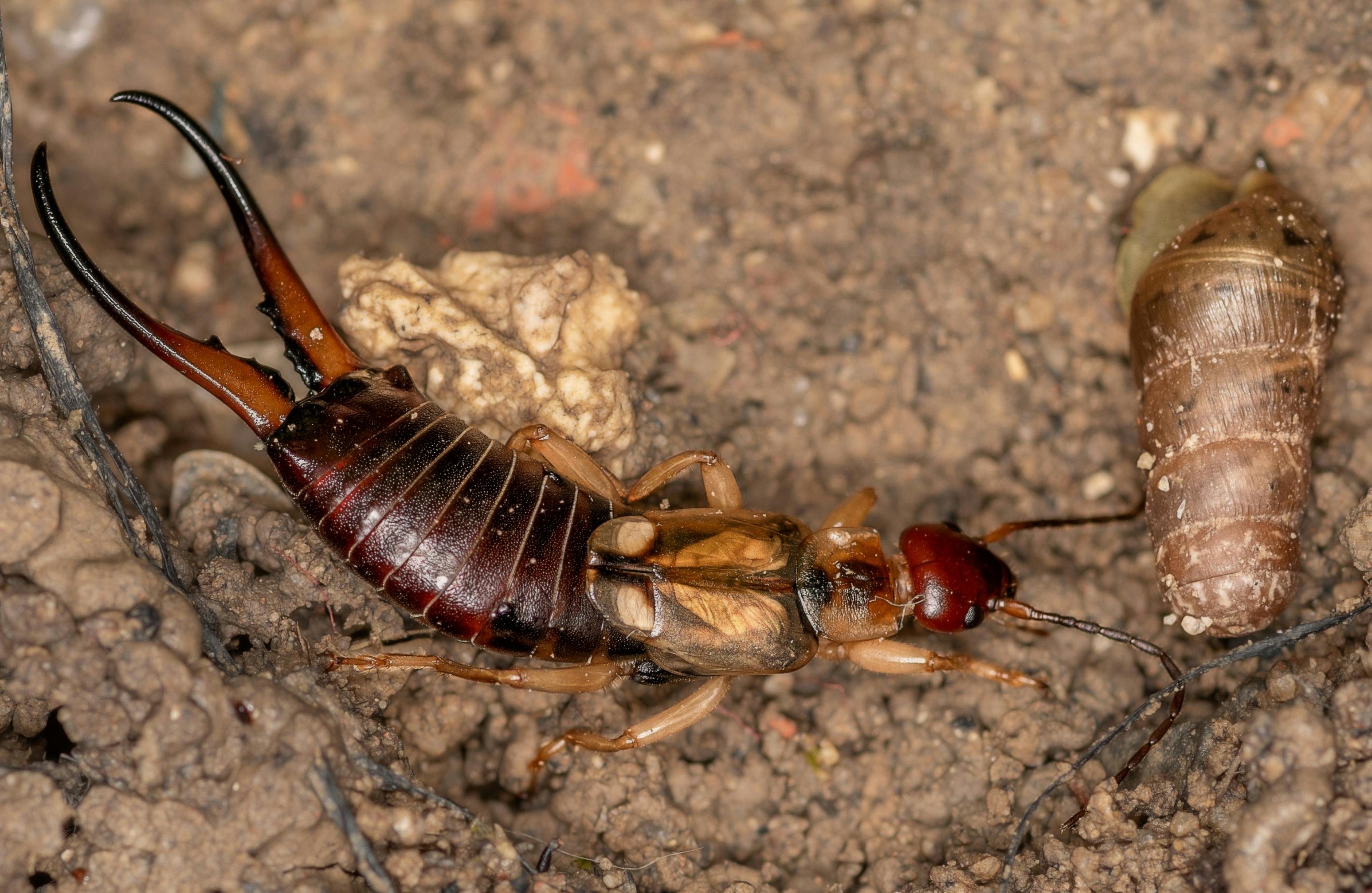
Earwigs belong to the order Dermaptera, a group of insects recognized by their elongated bodies and distinctive forceps‑like cerci at the rear. In Georgia, the most common species you’ll encounter is the European earwig (Forficula auricularia), which thrives in the warm, humid climate of Marietta and its surrounding neighborhoods.
Where They Hang Out
These nocturnal critters favor damp, sheltered spots. Typical habitats include:
- Loose soil and garden beds
- Mulch, leaf litter, and compost piles
- Moist areas around home foundations, crawl spaces, and basements
- Under rocks, firewood stacks, and debris
Because they prefer moisture, a leaky gutter or over‑watering your lawn can turn your yard into an earwig hotspot.
Common Misconceptions
Many homeowners think earwigs are either harmless allies that eat garden pests or outright villains that invade homes. The truth lies somewhere in the middle. While earwigs do prey on aphids, slugs, and other small insects—offering a modest benefit—they can also become a nuisance when they wander indoors, especially in kitchens and pantry areas.
Why You Should Pay Attention
Even though earwigs aren’t known for causing structural damage like termites, they can still create problems that matter to you:
- Plant damage: Female earwigs chew tender seedlings and foliage, which can stunt growth in vegetable gardens and ornamental beds.
- Food contamination: When they enter homes, they may crawl over stored foods, leaving behind debris, excrement, or even a faint, unpleasant odor.
- Moisture‑related concerns: Large numbers often indicate excess dampness, a condition that can also attract mold, carpenter ants, and other moisture‑loving pests.
Understanding what earwigs are, where they live, and why they matter gives you the foundation for effective monitoring and, when needed, professional control. In the next sections we’ll dive into how to identify them accurately, recognize their activity patterns, and choose the right treatment plan for a pest‑free home in Marietta.
Spotting Earwigs: Identification and Warning Signs
Earwigs are easy to miss until they’ve already made a home in yours. Knowing what they look like and where they like to hide lets you catch an infestation before it spreads to your garden or pantry.
What an Earwig Looks Like
Adult earwigs have a slender, flattened body that tapers toward the rear, typically measuring ½ to 1 ½ inches long. Their most distinctive feature is a pair of forceps‑like cerci protruding from the abdomen—these “pincers” are used for defense and mating. Color ranges from light brown to a glossy dark gray, and the wings, when present, lie flat against the back, giving the insect a smooth, almost metallic sheen.
How to Differentiate Earwigs from Look‑Alikes
- Silverfish: Silvery, fish‑shaped, and lack the characteristic cerci. Silverfish move in a rapid, wavy motion.
- Beetles: Hard, rounded elytra cover the entire back and have chewing mouthparts; they do not have the long, curved tail‑like cerci.
- Crickets: Longer antennae, jumping ability, and a distinct chirping song produced by rubbing wings, not by pinching.
Common Hiding Spots
Earwigs favor dark, moist environments. Inside the home you’ll often find them in:
- Kitchens – behind appliances, under sinks, and in pantry cracks.
- Bathrooms – around tile grout, under tubs, and in vent shafts.
- Basements and crawl spaces – especially where water leaks or high humidity persist.
Outside, they gravitate toward:
- Garden beds and mulched flower pots.
- Woodpiles, compost heaps, and leaf litter.
- Under decks, porches, and any shaded, damp structure.
Signs of Earwig Activity
Even if you haven’t seen an adult, several clues can alert you to their presence:
- Shed skins: As they molt, translucent exoskeletons accumulate in corners or along baseboards.
- Pinching sounds: A faint “click‑click” can be heard at night when they use their cerci to defend themselves.
- Feeding damage: Small, ragged holes on tender foliage, especially on lettuce, kale, or ornamental shrubs.
DIY Inspection Checklist
Run through this quick checklist each month, especially during the warm, humid months when earwigs are most active:
- Turn on a bright flashlight and scan baseboards, under appliances, and inside cabinet doors.
- Check for shed skins in corners, closets, and crawl‑space vents.
- Listen for faint pinching noises after dark—stay quiet and let the sound guide you.
- Inspect garden beds and mulch for tiny holes or live earwigs under the soil surface.
- Record any sightings in a notebook; note location, time, and number to gauge infestation growth.

When Are Earwigs Most Active in Marietta?
Life Cycle and Temperature
Earwigs in Marietta move through three distinct stages: egg, nymph, and adult. Females lay clusters of 30‑50 eggs in moist soil or under mulch during the cooler months. As temperatures rise above 55°F (13°C), the eggs hatch and nymphs emerge, molting several times before reaching adulthood. Each stage accelerates with warmth—ideal temperatures between 70°F and 80°F (21°C‑27°C) speed up development, while prolonged cold slows or halts progress.
Seasonal Activity Patterns
Local observations and trap data reveal a clear seasonal rhythm. Earwig numbers peak in early spring (March‑April) as nymphs mature, dip during the hottest summer weeks, rise again in early fall (September‑October) when adults seek shelter, and drop to near‑zero in winter when they remain buried in the soil.
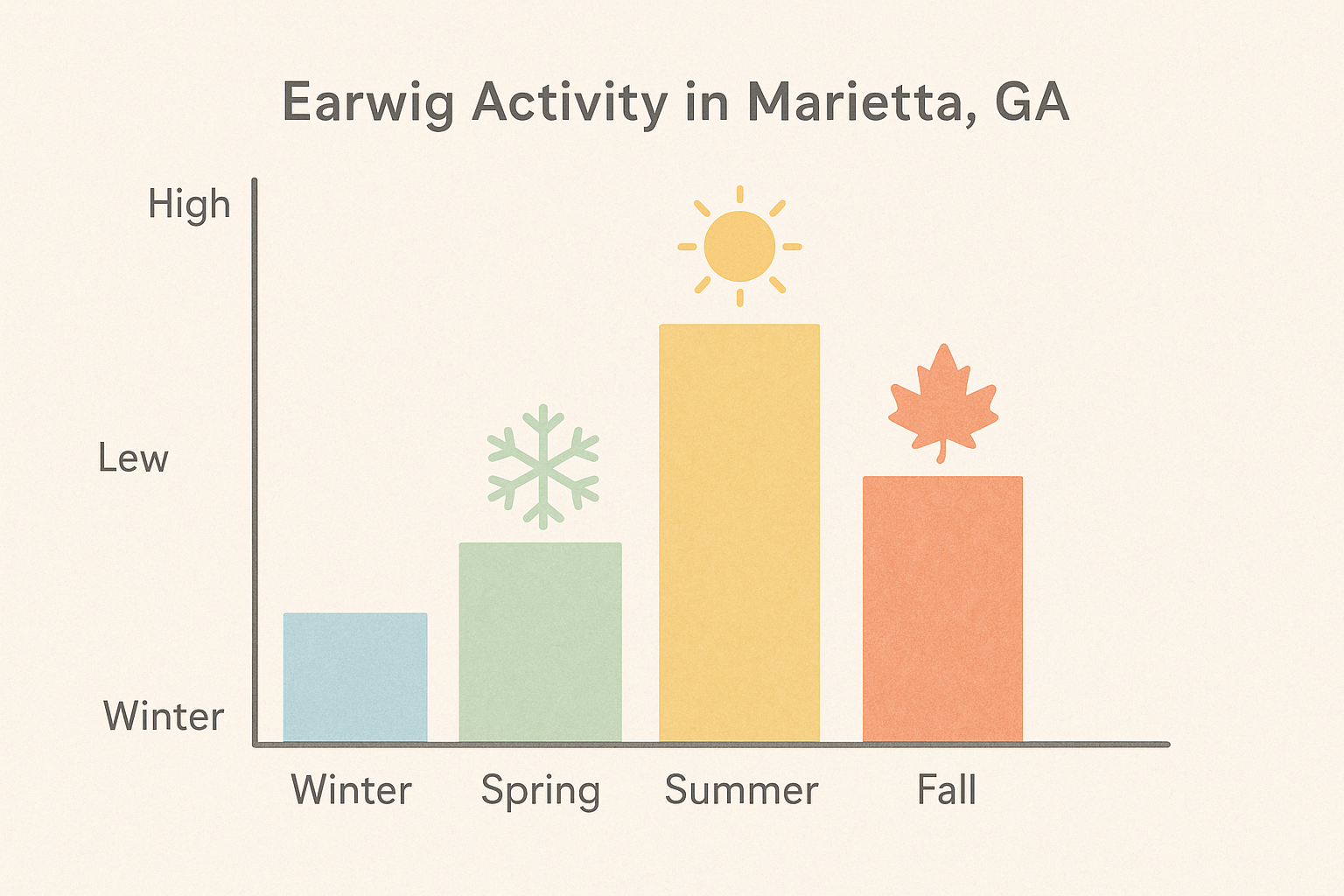
Reading the Seasonal Bar Chart
The chart visualizes monthly earwig captures from 2022‑2023. Bars for March, April, September, and October rise above the 50‑capture threshold, indicating peak outdoor activity. July and August dip below 20 captures, reflecting summer dormancy. Winter months (December‑February) sit near the baseline, confirming that earwigs remain underground until temperatures climb again.
Best Times for Inspection and Treatment
- Pre‑spring (late February‑early March): Schedule a professional inspection before nymphs emerge.
- Early spring (March‑April): Apply preventive perimeter treatments to keep emerging earwigs out of the home.
- Late summer (August): Conduct a follow‑up check; earwigs are less active, making it easier to target hidden nests.
- Early fall (September‑October): Perform a second round of treatment as adults seek indoor shelter for winter.
Linking Activity to Weather and Garden Schedules
Marietta’s average high temperatures reach 85°F (29°C) in July, prompting earwigs to retreat to cooler, moist microhabitats—often mulch beds or garden debris. Homeowners planting late‑season vegetables in August should reduce mulch depth and remove excess leaf litter to eliminate ideal hiding spots. Conversely, early‑spring planting aligns with the first earwig surge; a brief soil‑drying period after irrigation can discourage nymphs from establishing near vegetable rows.
How Professionals Inspect and Assess Earwig Problems
When you call Anthem Pest Control about earwigs, the first interaction is a phone consultation that sets the stage for a transparent, thorough inspection. Our technician will ask about recent sightings, the time of year you first noticed activity, and any indoor moisture issues such as leaky pipes or damp basements. Knowing the layout of your home, recent landscaping changes, and any previous pest treatments helps us tailor the on‑site visit to your specific situation.
On‑site visual inspection
Our technician begins outside, walking the perimeter of the property while checking for common earwig harborage sites. We examine mulch depth—excessive, moist mulch can become a breeding ground—and look for cracks in the foundation or gaps around doors and windows where earwigs can slip inside. Inside, we focus on moisture‑prone areas such as kitchens, bathrooms, and basements, because earwigs are attracted to damp environments.
Tools of the trade
To locate hidden populations, we bring a small arsenal of specialized tools. A high‑intensity flashlight reveals earwigs hiding in dark crevices, while a calibrated moisture meter pinpoints damp spots that may be invisible to the naked eye. Sticky traps are strategically placed in suspected travel routes; the traps capture nocturnal wanderers, giving us a clear picture of activity levels without disturbing the home’s layout.
Assessment criteria
After gathering visual and instrument data, we evaluate three key factors:
- Infestation severity: The number of earwigs captured in traps and the density of sightings determine whether we’re dealing with a light nuisance or a moderate infestation.
- Property size: Larger homes or properties with extensive landscaping may require more extensive treatment zones.
- Risk factors: Presence of moisture sources, abundant organic debris, and structural gaps increase the likelihood of recurring problems.
Inspection report presentation
Transparency is a cornerstone of Anthem Pest’s service. Within 24 hours of the visit, we deliver a detailed inspection report that includes:
- High‑resolution photos of problem areas, such as foundation cracks or overly wet mulch beds.
- A written summary of findings, outlining the severity rating and the specific risk factors identified.
- Clear, step‑by‑step recommended actions—ranging from simple moisture control measures to professional earwig treatment plans.
The report is emailed in a PDF format, making it easy to review, share with family members, or reference for future maintenance. Our technicians are also available to walk you through the findings over the phone, answering any questions you may have about the proposed solutions or the timeline for implementation.
Why thoroughness matters
Earwigs may seem harmless, but unchecked populations can lead to unwanted damage to garden plants, wooden structures, and even indoor fabrics. By conducting a meticulous inspection—combining homeowner input, visual checks, precise tools, and a clear assessment framework—Anthem Pest ensures that you receive a solution that addresses the root cause, not just the visible insects.
Treatment Options and How They Work
When earwigs start invading your Marietta home, the key to lasting relief is choosing the right treatment method and applying it correctly. Below we break down the most effective chemical and non‑chemical options, compare professional services with DIY approaches, and outline how often you’ll need to repeat treatments to stay ahead of seasonal spikes.
Chemical Treatments
Professional-grade insecticides remain the fastest way to knock back a heavy earwig population. The two most common application styles are:
- Perimeter sprays: A fine mist is applied around the exterior foundation, doors, windows, and any cracks where earwigs can enter. The spray creates a protective barrier that kills insects on contact and discourages new entrants.
- Indoor residuals: Targeted sprays are placed in crawl spaces, basements, and other indoor hiding spots. These products cling to surfaces for weeks, delivering a slow‑acting dose that eliminates earwigs that wander through treated zones.
Typical active ingredients include pyrethroids such as bifenthrin, lambda‑cyhalothrin, and permethrin. They work by disrupting the insect’s nervous system, leading to rapid paralysis and death. Modern formulations are designed to break down after a few weeks, minimizing long‑term residues.
Safety precautions are essential. Always ensure that:
- Children and pets are kept out of treated areas for at least 2–4 hours.
- Ventilation is adequate when indoor residuals are applied.
- All label directions are followed, especially regarding re‑entry intervals and protective gear for the applicator.
When performed by Anthem Pest Control, these chemicals are applied by licensed technicians who follow Georgia’s strict pesticide regulations, giving you peace of mind that the treatment is both effective and compliant.
Non‑Chemical Approaches
For homeowners who prefer a low‑toxicity route, several non‑chemical tactics can keep earwigs at bay when used consistently.
- Diatomaceous earth (DE): Sprinkling food‑grade DE in cracks, under siding, and around garden beds creates a desiccating barrier. The microscopic silica particles abrade the earwig’s exoskeleton, causing it to lose moisture and die.
- Trap‑and‑release: Simple pitfall traps—plastic containers filled with a shallow layer of moist soil and a light source—attract earwigs at night. Once captured, they can be released far from the home or disposed of.
- Habitat modification: Earwigs thrive in damp, sheltered environments. Reducing moisture by fixing leaky pipes, improving drainage, and using dehumidifiers in basements removes their preferred habitat. Clearing leaf litter, wood piles, and debris around the foundation also eliminates hiding spots.
These methods are safe for pets and children, but they require diligent maintenance and may take longer to see a noticeable drop in activity.
Professional vs. DIY: Pros and Cons
| Aspect | Professional Service | DIY Approach |
|---|---|---|
| Effectiveness | 90‑95% reduction in 1‑2 weeks | Variable; often 50‑70% with consistent effort |
| Safety | Licensed applicator follows label safety protocols | Homeowner must read and follow labels; higher risk of misuse |
| Time Investment | One‑time appointment, minimal homeowner involvement | Ongoing application and monitoring |
| Warranty | Typically 30‑60‑day guarantee; re‑treatment if needed | None |
| Cost | Flat rate (often $80‑$150 for a standard home) | Materials cost $10‑$30; labor is your time |
Professional services, like those offered by Anthem Pest Control, combine chemical potency with expert placement, delivering faster results and a warranty that protects your investment. DIY solutions can be cost‑effective for low‑level infestations but usually lack the comprehensive coverage and guarantee of a licensed treatment.
Frequency of Re‑Treatments
Earwig activity peaks in the warm, humid months of late spring through early fall (see Part 3 for detailed seasonal trends). As a rule of thumb:
- Perimeter sprays: Reapply every 8‑12 weeks during peak season.
- Indoor residuals: Re‑treat every 6‑8 weeks if you notice continued indoor sightings.
- Non‑chemical barriers: Refresh DE after heavy rain or cleaning, and repeat habitat‑modification steps each season.
Homeowners who combine a professional initial treatment with regular non‑chemical maintenance often need only one or two follow‑up visits per year.
Post‑Treatment Recommendations for Homeowners
Even after a successful treatment, maintaining a low‑earwig environment is crucial. Follow these steps:
- Keep exterior drainage flowing away from the foundation; install gutters and downspouts if needed.
- Eliminate standing water in flower pots, birdbaths, and pet dishes by emptying them nightly.
- Seal cracks around windows, doors, and utility penetrations with caulk or weather‑stripping.
- Remove wood piles, leaf litter, and compost heaps that are within 3 feet of the house.
- Inspect indoor basements and crawl spaces for moisture; use a dehumidifier set to 50 % relative humidity.
- Schedule a yearly check‑up with Anthem Pest Control to verify that the protective barrier remains intact.
By pairing professional expertise with diligent home upkeep, you’ll keep earwigs from returning and protect your Marietta home from the nuisance and minor damage they can cause.
Understanding Earwig Control Costs in Marietta, GA
When you call a pest‑control professional in Marietta, the first question on most homeowners’ minds is the price tag. In this market, a one‑time earwig treatment typically falls between $120 and $180 for an average‑sized home. Ongoing service plans spread the expense out and often include follow‑up visits:
- Monthly plan: $90 – $110 per month
- Quarterly plan: $250 – $320 per quarter
- Semi‑annual plan: $460 – $540 every six months
These ranges assume a standard inspection fee (usually $0 – $30) and a typical residential footprint of 1,500 sq ft. Prices can shift up or down based on the variables outlined below.
Key Factors That Influence Your Quote
- Home size: Larger square footage means more treatment zones and higher product usage.
- Infestation severity: A light, occasional presence costs less than a heavy, multi‑room infestation that may require multiple applications.
- Inspection fee: Some companies waive this fee with a service contract; others charge a nominal amount to cover the technician’s travel time.
- Treatment type: Traditional spray, bait stations, or eco‑friendly formulations each carry distinct material costs.
Cost Infographic – Quick Takeaways
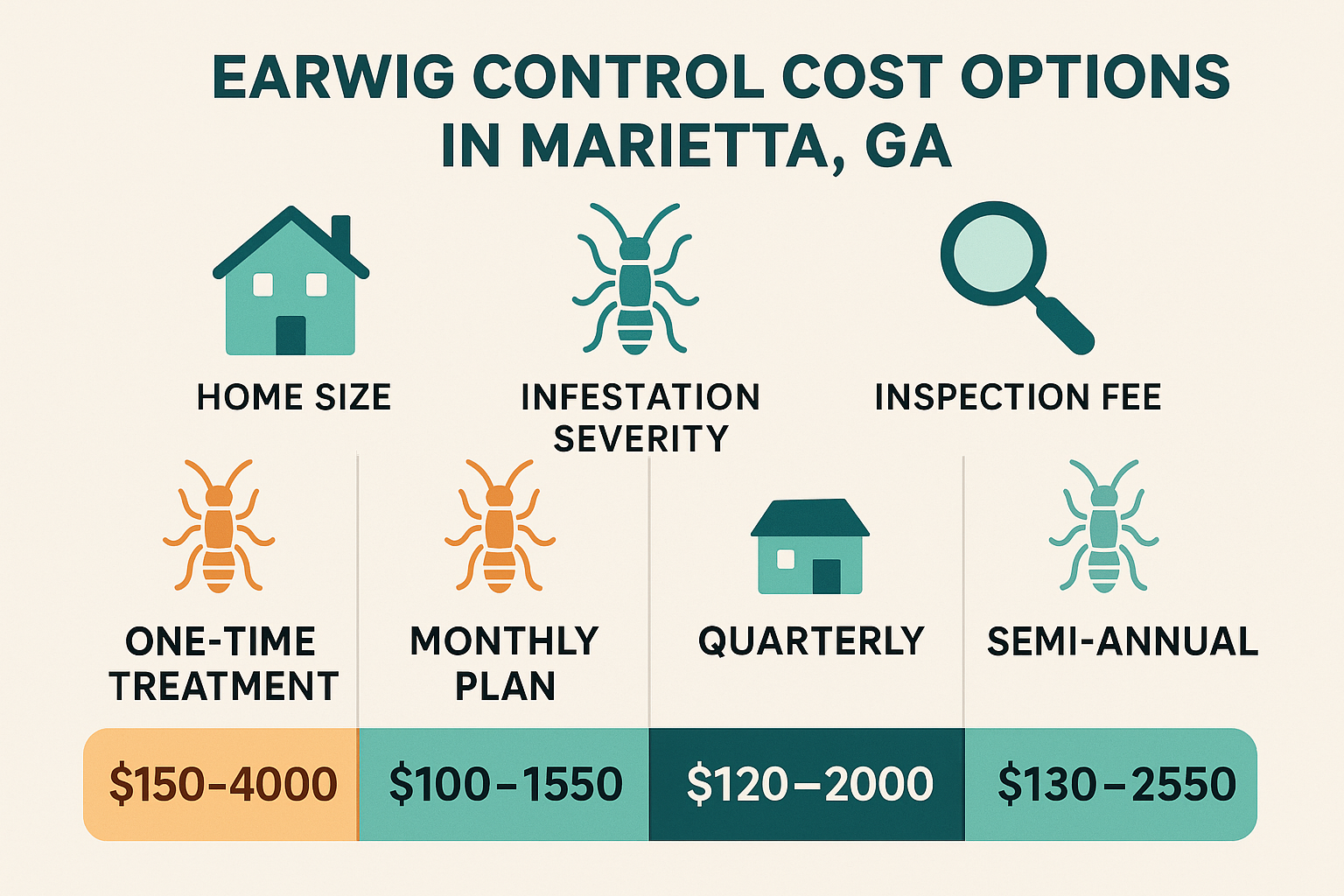
The chart breaks down the same pricing tiers shown above, adding a visual cue for the “average savings” when you switch from a one‑time treatment to a semi‑annual plan. Notice the steep drop‑off after the first year—most homeowners save roughly 20 % by committing to a recurring schedule, thanks to bundled inspection fees and reduced product waste.
Example Scenarios
Scenario 1 – Small townhouse, light infestation: A 1,200‑sq‑ft townhouse with a few earwigs spotted in the kitchen pantry would likely need a single spot‑treatment. The total cost, including a waived inspection fee, lands around $130. Adding a quarterly maintenance plan would bring the annual expense to about $300, effectively covering two follow‑up visits.
Scenario 2 – Large family home, heavy infestation: A 2,800‑sq‑ft home with earwigs nesting in basements, crawl spaces, and multiple outdoor structures requires a full‑property spray plus bait stations. Initial treatment can run $185 – $210, plus a $30 inspection fee. Opting for a semi‑annual plan spreads the cost to roughly $520 per year, delivering two comprehensive visits and ongoing monitoring.
How Anthem Pest Control’s Pricing Stacks Up
Anthem Pest Control aligns its rates with the local market data published by the Georgia Department of Agriculture and independent consumer surveys (source). Their one‑time service sits at $135 for a standard home, while the semi‑annual plan is priced at $495 per year—right in the middle of the regional range. This transparency means you won’t encounter surprise fees, and you benefit from Anthem’s reputation for safe, EPA‑approved products and licensed technicians.
Choose the Right Plan & Get Help from Anthem Pest Control
Quick Decision‑Making Matrix
Use this simple matrix to match your earwig infestation level with the service frequency that delivers the best results without over‑paying.
| Infestation Level | Preferred Service Frequency |
|---|---|
| Low (occasional sightings) | Quarterly inspections & treatments |
| Medium (regular activity in multiple rooms) | Bi‑monthly inspections & treatments |
| High (persistent colonies, damage to plants or structures) | Monthly inspections & treatments |
Why Work with a Licensed Professional?
Hiring a certified pest‑control technician brings three core advantages that DIY methods simply can’t match:
- Safety first: Trained applicators use EPA‑approved products in the correct dosages, protecting children, pets, and the environment.
- Guaranteed results: Professional treatments are backed by service warranties, so you won’t be left with a lingering earwig problem.
- Ongoing monitoring: Regular visits let us track population trends, adjust dosages, and prevent re‑infestation before it becomes visible.
Anthem Pest Control’s Tailored Plans for Marietta Homeowners
We understand that every Marietta property is unique. That’s why Anthem creates a custom quote based on your home’s size, construction type, and the specific earwig pressure you’re facing. Our transparent pricing model breaks down every cost—no hidden fees, no surprise add‑ons. Whether you need a one‑time eradication or a year‑long protection program, we’ll recommend the exact mix of treatments, inspections, and follow‑up visits that fit your budget and lifestyle.
Get Your Free, No‑Obligation Quote Today
Ready to take the guesswork out of earwig control? Call us at 877‑371‑8196 or click the link below for a free, no‑obligation quote. Our friendly Marietta team will walk you through the options, answer any questions, and schedule a same‑day inspection if you prefer. Let Anthem Pest Control give you peace of mind—so you can enjoy your yard and home without the constant buzz of earwig activity.