Why Fleas Are a Growing Concern for Holly Springs Homeowners
The Flea’s Life Cycle
The most common pest you’ll encounter on a dog or cat in Holly Springs is the cat‑and‑dog flea (Ctenocephalides felis). An adult flea lives only a few weeks, but in that time it can lay up to 50 eggs each day. Those eggs drop into carpet fibers, bedding, or cracks in the floor, hatch into larvae within 2‑5 days, and then spin a cocoon to become pupae. Under the right temperature and humidity—typically 70‑85°F with 50‑70% relative humidity—the pupae can emerge as adults in just a few days, starting the cycle over again. This rapid, hidden development means a handful of fleas on a pet can quickly become a full‑blown infestation throughout the house.
From Pets to Your Home (and Back)
Fleas are master hitchhikers. They jump onto a dog or cat during a walk, in the yard, or even from wildlife such as raccoons and opossums that frequent Holly Springs neighborhoods. Once on a pet, they move to the animal’s skin to feed, then fall off onto bedding, sofas, or floorboards. The eggs they leave behind are invisible to the naked eye, and the larvae feed on organic debris—think dead skin cells and pet dander—so every room where your pet sleeps becomes a potential nursery. Conversely, a home already harboring fleas can re‑infest a newly adopted pet, creating a vicious loop that’s hard to break without professional help.
Health Risks You Can’t Ignore
Fleas do more than bite; they pose several health concerns for both pets and people:
- Itching and skin irritation: Flea bites trigger a red, itchy welt that can lead to constant scratching.
- Allergic dermatitis: Some pets develop a hypersensitivity to flea saliva, resulting in severe hair loss and hot spots.
- Anemia: Heavy infestations can cause blood loss, especially in kittens, puppies, or small breeds, leading to weakness and, in extreme cases, death.
- Disease transmission: Fleas can carry Rickettsia (causing spotted fever), Bartonella (cat‑scratch disease), and tapeworms that humans may ingest accidentally.
These risks make early detection and swift treatment essential for protecting the health of your family and four‑legged companions.
Holly Springs Climate: A Flea‑Friendly Zone
Holly Springs enjoys warm, humid summers and relatively mild winters—exactly the conditions fleas love. Temperatures regularly hover above 75°F from May through September, while humidity often stays above 60%. Those numbers keep flea eggs, larvae, and pupae thriving in indoor environments year‑round. Even during cooler months, indoor heating creates micro‑climates that sustain the life cycle, meaning you can’t simply “wait out” the season. Understanding this local climate helps homeowners realize why a proactive, year‑long prevention plan is smarter than a one‑time spray.
What’s Coming Next in This Guide
Now that you know what a flea is, how it spreads, and why it matters in Holly Springs, the rest of the article will walk you through:
- How to identify a flea problem early, using visual cues and pet behavior.
- Seasonal trends that dictate the best times to treat and prevent.
- Effective treatment options—from DIY sprays to professional integrated pest management.
- Cost considerations, including typical pricing for Holly Springs homeowners.
- Next steps you can take today to safeguard your home.
Armed with this knowledge, you’ll be better prepared to keep fleas at bay and protect the comfort of your home.
Spotting Fleas on Your Pets and Inside Your Home
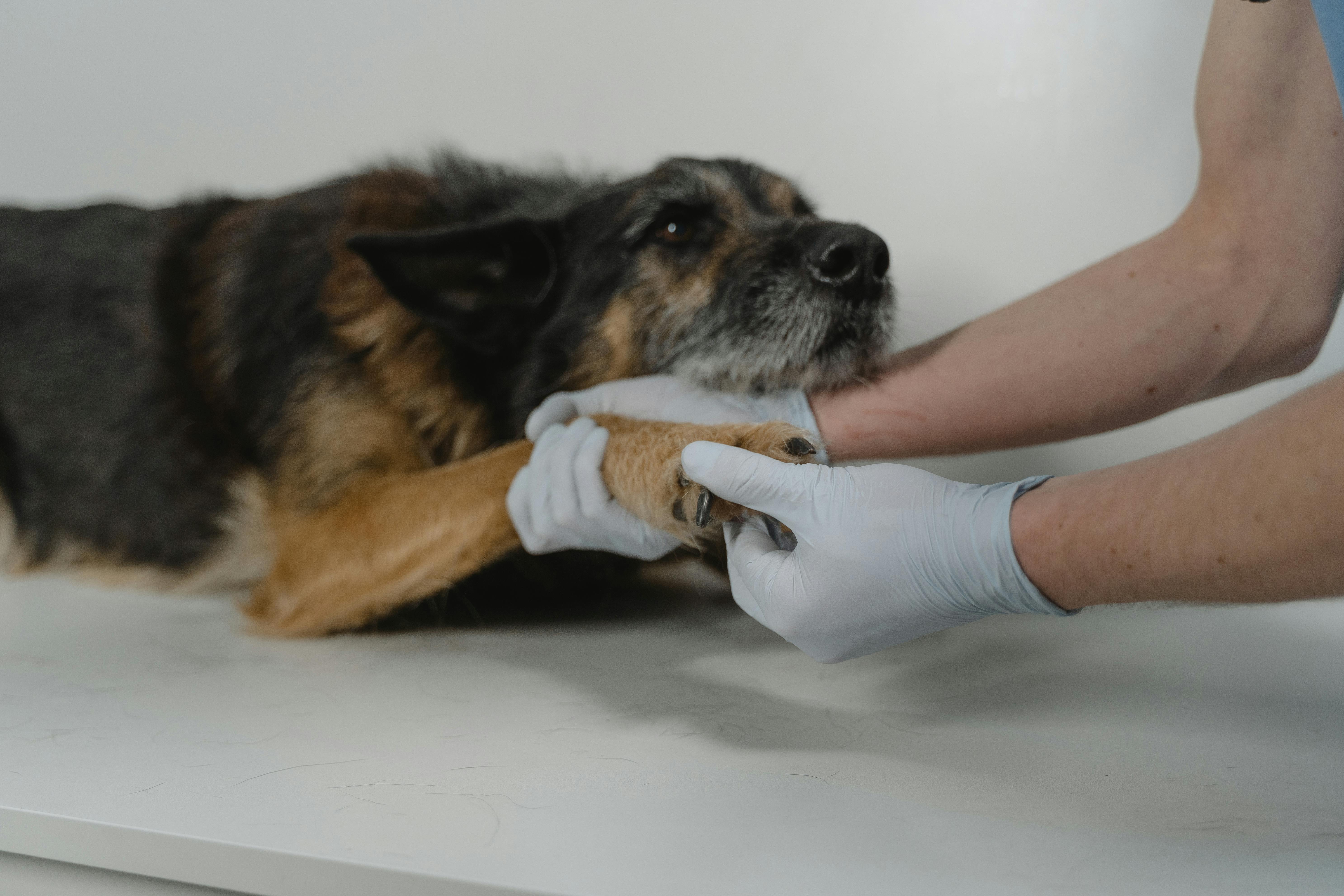
Fleas are tiny, but the damage they cause can be huge. Catching an infestation early saves you from costly treatments and keeps your family’s comfort intact. Below is a practical, step‑by‑step guide that lets you become the first line of defense—right from your living room and your pet’s grooming table.
Step‑by‑step visual inspection of a dog’s coat
Start with a calm, well‑behaved dog. Lay the animal on a clean surface and gently part the fur with your fingers. Focus on three hotspot zones:
- Neck and collar line – Fleas love the warm skin hidden beneath the collar.
- Base of the tail – This area is often missed during casual brushing.
- Under the belly – The belly’s soft skin provides a perfect hiding spot.
Run a fine‑toothed flea comb through each zone, moving from the skin outward. If you see tiny black specks, pause. Those are likely flea “dirt” (digested blood) and a strong indicator of an active infestation.
What to look for: live fleas, flea dirt, and excessive scratching
A live flea is a quick, jumping speck about the size of a sesame seed. If you spot one, place a white towel over the combed area and give it a gentle shake—fleas will fall onto the bright background, making them easier to see.
Flea dirt appears as small, pepper‑like black dots. To confirm, place a few specks on a damp paper towel; they will turn reddish-brown as the blood stains dissolve.
Excessive scratching, biting, or a “coconut‑shaped” rash on the skin also signals trouble. While itching can stem from other causes, combined with the visual clues it’s a red flag you shouldn’t ignore.
Inspecting cats and other small animals
The same three zones apply to cats, though they tend to hide fleas under the fur near the tail base and around the ears. Use a flea comb designed for finer hair and be gentle to avoid stressing the cat.
Small mammals—rabbits, ferrets, even indoor hamsters—can host fleas too. For these pets, a soft brush works better than a metal comb. Look for the same black specks and any tiny moving insects on the brush after each pass.
Indoor signs: dark specks, “sand‑like” feces, and hidden hotspots
Flea dirt isn’t limited to pets. Check bedding, carpet seams, and the underside of furniture for tiny dark specks. A quick way to spot them is to shine a flashlight across the surface; the specks will glint like tiny stars.
Flea feces resemble fine sand and often accumulate in the folds of pet blankets, pet carriers, and even in the crevices of sofas. If you run a white towel over these areas and see a faint reddish smear after a few minutes, you’ve likely found flea waste.
Simple DIY tools: flea comb, white towel test, and sticky tape traps
All three tools are inexpensive and can be used repeatedly:
- Flea comb – A fine‑toothed metal comb catches adult fleas and dirt in one swipe.
- White towel test – Lay a white towel on the floor, walk your pet across it, then inspect the fabric for specks.
- Sticky tape traps – Place a piece of clear adhesive tape, sticky side up, in corners where pets rest. Fleas that hop onto the tape become visible within minutes.
These methods give you a clear picture of the infestation level without opening a chemical can of worms.
When to move from DIY detection to professional assessment
If you find:
- More than a handful of live fleas in a single combing session,
- Flea dirt scattered across multiple rooms, or
- Persistent itching despite regular grooming,
it’s time to call a licensed pest‑control specialist. Professionals have access to indoor and outdoor treatments that break the flea life cycle, ensuring the problem doesn’t return.
Spotting fleas early is the cheapest and most effective defense. By following these visual checks and using simple tools, you’ll know exactly when a professional call‑out is necessary—protecting both your home and your beloved pets.
Georgia’s Seasonal Flea Activity Calendar
Fleas thrive when temperature and humidity create a comfortable environment for each stage of their life cycle. In Georgia, warm, moist summers accelerate egg hatch and larval development, while cooler, drier winters slow the cycle dramatically. Understanding this relationship lets you anticipate when fleas are most likely to appear in your yard and inside your home, so you can schedule inspections and treatments before an infestation takes hold.
Flea life cycle and the Georgia climate
An adult flea lives only a few weeks, but its eggs, larvae, pupae, and emerging adults can persist for months. Eggs hatch best at 70‑85°F with 70%‑80% relative humidity. Larvae feed on organic debris and adult flea feces, then spin cocoons that remain dormant until conditions improve. When a warm spell follows a cool period, those cocoons burst, releasing a wave of new adults. In Georgia, the June‑September window typically provides the ideal combination of heat and moisture for rapid population growth.
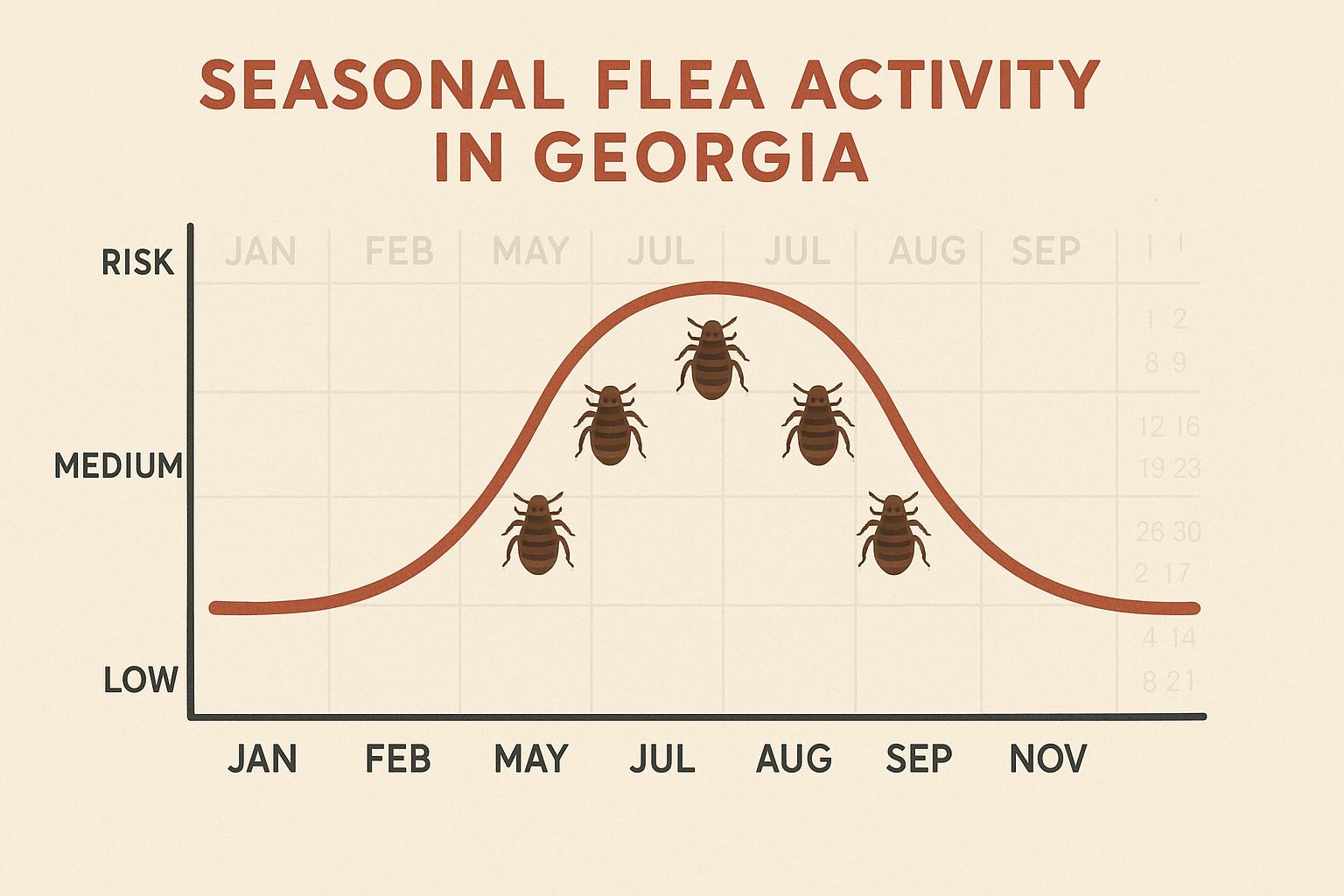
Reading the seasonal activity chart
The chart below visualizes risk levels across the year. From May through September, risk is classified as high, meaning flea populations can explode within weeks of a single missed treatment. October and early November drop to medium as temperatures begin to dip, while December through April are considered low risk, with only occasional indoor activity driven by heated homes.
Regional nuances: Holly Springs vs. coast and mountains
Holly Springs sits in the Piedmont, where summer humidity averages 65%–75% and nighttime lows rarely fall below 60°F. Coastal counties experience higher humidity (80%+), extending the high‑risk period into early October. Mountain communities, by contrast, see cooler evenings and lower humidity, often shortening the high‑risk window by a month. For Holly Springs homeowners, the May‑September high‑risk period is a reliable rule of thumb, but keep an eye on local forecasts that may push the tail end into late October.
Inspection frequency by risk level
- High risk (May‑September): Conduct a thorough visual inspection of pets, bedding, and outdoor resting spots at least once a month. Look for tiny black specks (flea dirt) and the occasional adult flea jumping from fur.
- Medium risk (October‑November): Reduce inspections to once every six weeks. Focus on indoor carpet edges and pet sleeping areas where lingering fleas may hide.
- Low risk (December‑April): A quarterly check is sufficient. Verify that indoor treatments from the previous season remain effective and that pet grooming habits stay consistent.
When weather throws a curveball
Unseasonably warm winters—think daytime highs in the 60s—can reactivate dormant pupae, creating a surprise surge of fleas in January or February. Similarly, a sudden summer heatwave in March can jump‑start the life cycle earlier than usual. When you notice an early rise in flea activity, treat it as a “high‑risk” month regardless of the calendar, and increase inspection frequency accordingly.
Quick tip – “What to do this month”
1. Inspect pet bedding and vacuum carpets thoroughly.
2. Wash all pet blankets in hot water (≥130°F).
3. Apply a preventive flea spray to your yard’s shaded areas.
4. Schedule a professional spot treatment if you spot more than two fleas on a pet.
5. Keep a log of temperature and humidity to spot patterns for next year.
Effective Flea Treatment Options for Homeowners

1. Treatment Categories at a Glance
Fleas thrive in two worlds – on your pets and in the environment. To break the cycle you need a combination of pet‑focused products and area treatments. The most common categories are:
- Topical spot‑on treatments (e.g., fipronil, imidacloprid)
- Oral chewables (e.g., nitenpyram, spinosad)
- Flea collars (continuous release of insect growth regulators)
- Environmental sprays (professional‑grade residual insecticides)
- Foggers/ “boom boxes” (quick‑kill aerosol for large indoor spaces)
- Indoor/outdoor larvicides (targeting eggs and larvae in soil, mulch, and cracks)
2. Pros and Cons of Each Method
| Method | Speed of Kill | Coverage | Toxicity Risk | Resistance Potential |
|---|---|---|---|---|
| Topical spot‑on | Fast (within hours) | Pet only | Low to moderate (depends on active ingredient) | Low – rotates actives |
| Oral chewables | Very fast (minutes) | Pet only | Low (vet‑approved) | Low – new classes emerging |
| Flea collars | Gradual (days) | Pet only, limited area | Low | Medium – some strains develop tolerance |
| Environmental spray | Immediate (seconds‑minutes) | Whole yard or interior | Moderate – proper PPE required | Medium – rotate products yearly |
| Foggers | Instant | Large indoor rooms | High – aerosol can settle on surfaces | High – often over‑used |
| Larvicides | Delayed (days‑weeks) | Soil, mulch, cracks | Low to moderate | Low – targets immature stages |
3. DIY vs. Professional: What’s the Real Difference?
Do‑it‑yourself kits are tempting because of the upfront price, but they often lack the residual power and thoroughness of a licensed technician’s application. Professionals bring EPA‑registered products, calibrated equipment, and the knowledge to treat hidden hotspots—like under decks or inside wall voids—where DIY sprays simply miss.
For homeowners who prefer a hands‑on approach, combine a high‑quality topical or oral pet product with a targeted backyard spray. If you’re dealing with a heavy infestation, especially one that’s spread to indoor carpet and pet bedding, schedule a professional visit. The cost difference is usually offset by the reduced need for repeat treatments.
4. Step‑by‑Step: Applying a Professional‑Grade Spray in Your Backyard
- Pre‑treatment preparation: Remove toys, garden tools, and any pet food bowls from the treatment zone. Mow the grass to a uniform height (about 2‑3 inches) and water the area lightly 24 hours before spraying to reduce dust.
- Choose the right product: Look for a spray containing an adulticide (e.g., permethrin or bifenthrin) plus an insect growth regulator (IGR) such as methoprene. This combo kills crawling fleas and stops eggs from hatching.
- Equipment setup: Use a low‑pressure pump‑sprayer with a fine‑mist nozzle. Fill according to the label’s dilution rate—typically 1 ounce of concentrate per 5 gallons of water for a backyard of 1,000 sq ft.
- Coverage technique: Apply the mist in a sweeping “W” pattern, overlapping each pass by 10 %. Pay special attention to the perimeter of the yard, shaded areas, and the base of shrubs where adult fleas rest.
- Target hidden refuges: Direct a light stream into cracks, gaps under siding, and the underside of decks. These micro‑habitats harbor larvae and pupae that are otherwise missed.
- Post‑treatment safety: Keep children and pets out of the treated zone for at least 2 hours, or longer if the product label advises. Open windows and use fans to improve ventilation. Rinse any equipment with water and store it securely.
5. Don’t Forget the Indoor Hotspots
Even the best backyard spray won’t eradicate fleas if you ignore the places they love inside the home. Treat pet bedding, carpets, and upholstered furniture with a residual indoor spray or a powder formulation that can reach deep fibers. Vacuum thoroughly before applying chemicals, then vacuum again 24 hours later to pull up dead insects and eggs.
Cracks and crevices around baseboards, under appliances, and behind radiators act as miniature breeding chambers. A quick dusting of an IGR powder followed by a light mist of an adulticide will keep those hidden populations from re‑infesting your living spaces.
6. Integrated Pest Management (IPM) – The Smart Way to Stay Flea‑Free
IPM blends chemical, mechanical, and cultural tactics to create a long‑lasting barrier:
- Mechanical: Regular vacuuming, washing pet bedding at 130 °F, and using flea combs to physically remove adults.
- Cultural: Keep grass trimmed, reduce outdoor clutter, and limit wildlife access to your yard.
- Chemical: Apply spot‑on or oral pet products in tandem with a calibrated backyard spray and occasional indoor IGR treatment.
When each element supports the others, you dramatically lower the flea population without relying on a single high‑dose chemical.
7. Safety Reminders for Families with Children and Pets
Flea products are powerful tools, but they must be used responsibly:
- Read the label label—never exceed the recommended concentration.
- Wear protective gloves, long sleeves, and eye protection when spraying.
- Ventilate indoor spaces for at least 30 minutes after treatment.
- Store all pesticides out of reach of children and pets, preferably in a locked cabinet.
- Choose pet‑safe formulations (e.g., those labeled “for use around dogs and cats”) when treating areas where animals roam.
By following these guidelines, you protect the people and pets you love while delivering a decisive blow to the flea life cycle.
How Much Does Flea Control Cost in Holly Springs?
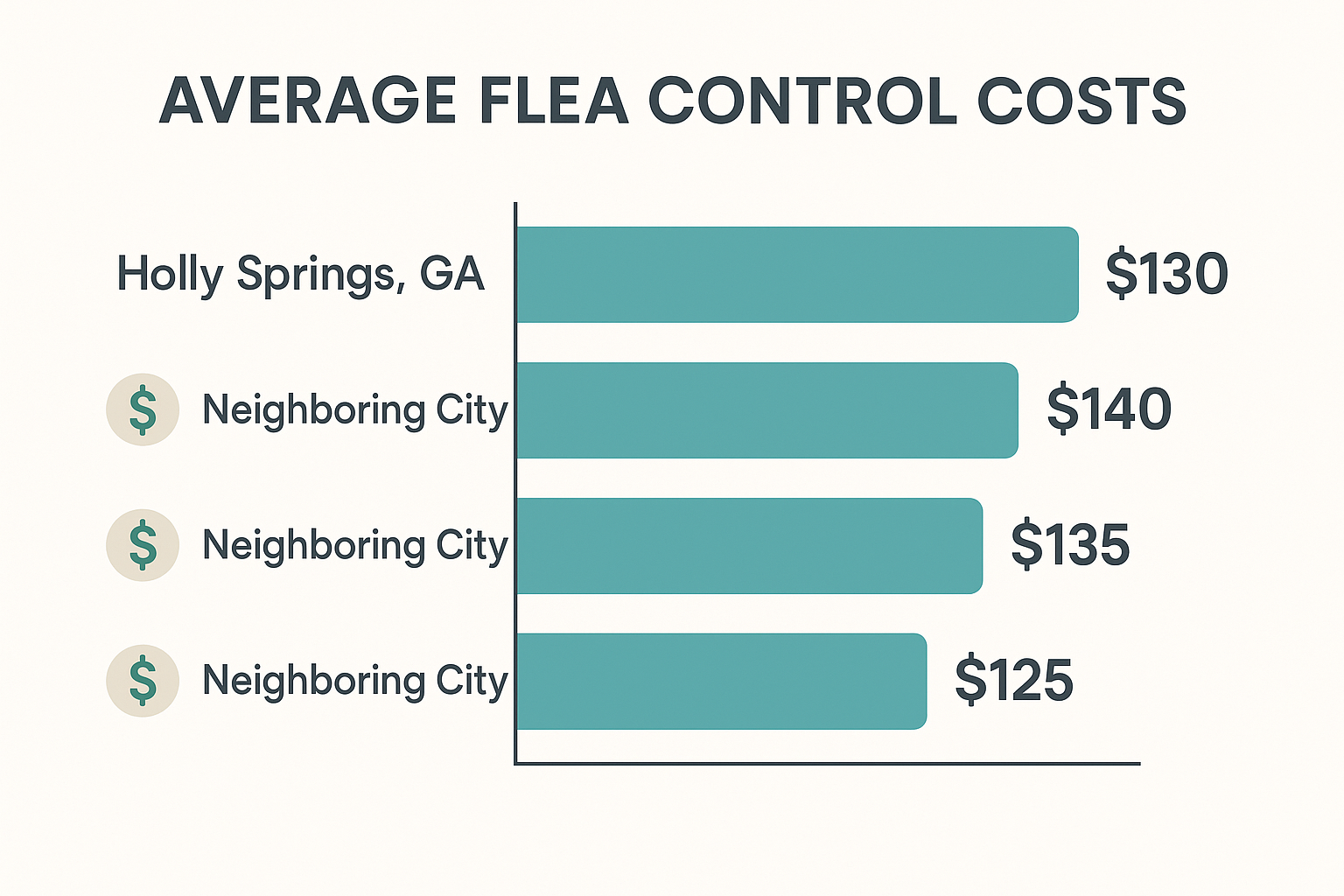
Understanding the price of flea control helps you avoid surprise fees and choose a service that actually protects your family and pets. Below you’ll find a clear breakdown of what homeowners in Holly Springs typically pay, how those numbers compare to nearby towns, and the factors that push a quote up or down.
What the infographic shows
The graphic above summarizes three key pricing tiers:
- Average per‑visit price: $120 – $150 for a standard indoor treatment.
- Package discounts: 10 % off when you bundle two visits, 20 % off for a quarterly maintenance plan.
- Seasonal promotions: Many local operators run “Spring‑Kickoff” specials that shave $30–$50 off the first service.
Compared with neighboring cities—McDonough averages $135 per visit, and Jackson sees $160—Holly Springs sits comfortably in the mid‑range, reflecting a competitive market without sacrificing quality.
Price drivers you need to know
Every quote is built on a handful of variables. Knowing them lets you gauge whether a number is realistic:
- Property size: Larger square footage means more spray zones and longer labor time.
- Infestation severity: A light, early‑stage problem may need only a single treatment, while a heavy, multi‑room outbreak can require multiple applications.
- Treatment type: Conventional insecticide, pet‑safe organics, or a combination “home + pet” package each carry different material costs.
- Frequency of service: One‑off visits are pricier per treatment than recurring plans, which spread the cost over four or more appointments.
National benchmark data
The National Pest Management Association’s 2023 price survey (source) reports an average national cost of $138 per flea‑control visit. Holly Springs’ $120‑$150 range is right on target, confirming that local providers are neither overcharging nor undercutting the industry standard.
Sample pricing scenarios
| Service | What’s included | Typical cost |
|---|---|---|
| Single‑visit treatment | One indoor spray, focus on high‑traffic rooms | $130 |
| Quarterly maintenance plan | Four visits per year, indoor + perimeter, follow‑up inspection | $440 (≈$110 per visit) |
| Full‑home + pet bundle | Indoor spray, yard perimeter, pet‑safe spot‑on treatment for up to two animals | $190 (first visit, then $150 for each quarterly follow‑up) |
How to get an accurate quote
When you call a pest‑control company, be ready with these details:
- Exact square footage of the home and any attached garage or shed.
- Number of pets, their species, and any special sensitivities.
- History of previous flea treatments—dates, products used, and outcomes.
- Observed severity (e.g., “a few fleas in the bedroom” vs. “fleas throughout the house”).
Providing this information up front lets the technician calculate labor time, product needs, and any necessary safety precautions, resulting in a transparent, itemized estimate.
When a low‑price quote may hide hidden costs
Beware of offers that sound too good to be true. Extremely low rates (under $80 per visit) often omit essential steps such as:
- Follow‑up inspections.
- Pet‑safe formulations.
- Warranty or re‑treatment guarantees.
Some companies advertise a cheap “base price” only to add fees for travel, disposal of treated debris, or “environmental surcharge” after the work begins. Always ask for a written breakdown that lists every line item before you sign a contract.
By comparing the local average, understanding what drives the price, and requesting a detailed, customized quote, you can budget confidently for a flea‑free home without sacrificing safety or effectiveness.
Secure a Flea‑Free Home with Anthem Pest Control
Early detection, timing the treatment to the flea life cycle, and using the right products are the three pillars of lasting flea control. Spotting the first signs—tiny black specks, irritated pets, or a sudden increase in scratching—gives you a head start before an infestation spreads. Treating at the optimal seasonal window, usually early spring or late summer, hits fleas when they’re most vulnerable. And applying a proven, thorough treatment eliminates eggs, larvae, and adults in one coordinated effort.
Anthem Pest Control follows the best‑practice roadmap
When you call Anthem, you’re working with licensed technicians who understand the science behind each step. They use EPA‑approved products that target fleas at every stage while protecting your family and pets. Because no two homes are identical, Anthem creates a customized plan that matches your property’s size, pet presence, and specific risk factors. This tailored approach means you get the right amount of product, the correct application method, and a schedule that aligns with your local climate.
Safe, effective, and affordable solutions
Anthem’s commitment to safety means you’ll never see harsh chemicals left uncovered or lingering in living spaces. Their treatments are designed to be effective yet gentle, passing rigorous safety standards before they reach your doorstep. Transparency is built into every quote: you’ll see exactly what’s included, how many visits are required, and the total cost up front. This upfront pricing eliminates surprise fees and lets you budget confidently for a pest‑free home.
Free, no‑obligation quote—just for you
Ready to protect your home without guesswork? Anthem offers a complimentary, no‑obligation quote that’s tailored to your unique situation. A technician will assess your property, discuss any pet or family sensitivities, and outline a step‑by‑step plan. Call today at 877‑371‑8196 or visit Anthem Pest Control to schedule your free evaluation. The process is quick, the advice is expert, and the peace of mind is priceless.
Take the first step toward a flea‑free home now. By acting early, you stop fleas before they multiply, safeguard your pets, and avoid costly emergency treatments later. A short call or click today puts you on the fast track to a comfortable, itch‑free household.
Visit Anthem Pest Control for a flea‑free future.