Why Gnat Control Matters in Grayson
Even the tiniest insects can turn a peaceful home into a constant source of irritation. In Grayson, where humid summers encourage gnat populations, proactive control isn’t a luxury—it’s a necessity for health, comfort, and peace of mind. Understanding why gnats matter sets the foundation for any cost discussion that follows.
Health risks
Gnats may seem harmless, but their bites can trigger allergic reactions ranging from mild itching to painful welts. In outdoor kitchens, gnats often congregate around food, increasing the chance of contamination. For families with sensitive skin or young children, repeated bites can lead to secondary infections from scratching, turning a simple nuisance into a medical concern.
Outdoor comfort
Grayson homeowners love their backyards, patios, and the nearby Lake Lanier for evening gatherings and poolside relaxation. A swarm of gnats can quickly ruin a dinner party, force guests to retreat indoors, or make a swim feel uncomfortable. Maintaining a bite‑free outdoor space preserves the quality of life that many residents cherish.
Guidance from health authorities
The Centers for Disease Control and Prevention (CDC) emphasizes the importance of managing nuisance insects, noting that even non‑vector species can exacerbate allergic conditions and reduce overall well‑being. While gnats are not primary carriers of serious diseases, the CDC’s broader advice on vector‑borne threats reinforces the need for diligent control measures.
Local example: Lake Lanier homeowner
Before treatment, a Lake Lanier resident reported nightly swarms that forced the family to keep windows shut and cancel weekend barbecues. After a professional gnat‑control program from Anthem Pest Control, the same household enjoyed a gnat‑free patio, resumed outdoor meals, and saw a noticeable drop in bite‑related skin irritation. This turnaround illustrates how targeted treatment can restore normal backyard enjoyment.

Our article takes a data‑driven approach, using local service records and regional climate data to estimate realistic gnat‑control costs for Grayson homeowners. By focusing on the specific challenges faced in this community, we aim to provide transparent pricing that reflects both the health stakes and the lifestyle value of a gnat‑free home.
Gnat Biology and Seasonal Peaks in North Georgia
Understanding the little pests that buzz around your yard is the first step to keeping them out of your home. In North Georgia two gnat groups dominate the scene: fungus gnats, which live in the soil, and biting midges (often called “no‑see‑ums”), which fly outdoors and can leave itchy bites.
Common species you’ll encounter
- Fungus gnats (Family Sciaridae) – tiny, dark‑winged insects that hover near houseplants and garden beds. Their larvae thrive in moist, organic media.
- Biting midges (Family Ceratopogonidae) – minute, blood‑feeding flyers that are most active at dusk and dawn, especially near standing water.
Life cycle basics and breeding hotspots
Both species share a rapid, four‑stage life cycle: egg, larva, pupa, and adult. Under warm, humid conditions the entire cycle can complete in as little as two weeks, allowing populations to explode quickly.
Key breeding sites include:
- Wet soil in flower beds, especially where mulch sits soggy.
- Over‑watered indoor potted plants – a favorite for fungus gnat larvae.
- Stagnant water in birdbaths, rain barrels, or low‑lying garden depressions, which attract biting midges for egg‑laying.

Seasonal peaks in North Georgia
Data from the 2023 Georgia Cooperative Extension report show that gnat activity spikes from July through September, coinciding with the region’s hottest and most humid weeks. Reported bite incidents rose by roughly 12 % during this window, making late summer the critical period for treatment.
Targeting control measures just before the peak—late June or early July—can dramatically reduce the numbers that reach adulthood, saving homeowners both discomfort and future pesticide costs.
Quick Fact Box
- Egg stage: 1–3 days, laid in moist substrates.
- Larval stage: 5–14 days, feeds on fungi, decaying roots, or organic matter.
- Pupal stage: 2–4 days, usually in the upper soil layer.
- Adult stage: 3–7 days, focused on mating and, for midges, blood meals.
- Preferred habitats: Damp soil, mulched beds, over‑watered pots, and any standing water.
By recognizing the species present, their life‑cycle timing, and the seasonal surge highlighted by the Georgia Extension, homeowners can schedule preventative treatments with Anthem Pest Control at the optimal moment—before gnats turn a summer evening into an itchy nightmare.
Georgia Cooperative Extension, 2023 Gnat Activity Report
National vs. Regional Pricing Overview
Across the United States, most homeowners see a single‑treatment price range of $150 – $300 for gnat control. Those figures come from recent surveys on HomeGuide and Angi, which aggregate quotes from licensed pest‑management firms in both urban and rural markets.
While the national range provides a useful benchmark, the Southeast—particularly Georgia’s Gwinnett County—often experiences higher pricing for three main reasons:
- Humidity and heat: Moist, warm air creates ideal breeding conditions, so technicians must apply larger volumes of residual spray to keep gnats at bay.
- Expanded outdoor zones: Many homes in the region feature sizable yards, decks, and irrigation systems that require thorough coverage, adding labor and product costs.
- Longer treatment windows: The gnat season can stretch from early spring through late fall, prompting providers to schedule multiple visits or extended maintenance plans to guarantee lasting control.
Below is a side‑by‑side comparison of the most common pricing structures you’ll encounter nationwide versus what you can expect in the Southeast, including Grayson.
| Plan Type | National Avg. | Southeast Avg. | Key Details |
|---|---|---|---|
| Single Treatment | $180 | $210 | One‑time spray, covers up to 1,500 sq ft. |
| Multiple‑Visit Package (2 visits) | $260 | $350 | Two applications spaced 2‑3 weeks apart; ideal for larger yards. |
| Ongoing Maintenance (Quarterly) | $480 per year | $620 per year | Four treatments annually; includes perimeter and foliage coverage. |
To illustrate how these numbers translate for a typical homeowner, consider a 2,000‑sq ft residence in Gwinnett County. Using the Southeast average for a two‑visit package, the calculation looks like this:
- Base price per visit: $175 × 2 = $350
- Additional service fee (large yard surcharge): $0 (included in the package price)
- Total estimated cost: $350
Both HomeGuide and Angi have updated their 2024‑2025 cost databases to reflect the same regional premium, confirming that the $350 figure aligns with current market rates. As a homeowner, you can use this benchmark to negotiate transparent pricing, verify that any quoted quote includes the necessary outdoor coverage, and ensure you’re not paying for unnecessary add‑ons.
Grayson‑Specific Cost Factors
When you ask how much gnat control costs in Grayson, Georgia, the answer isn’t a single number. Local conditions shape every quote, so understanding those variables helps you compare plans with confidence.
Local variables that affect pricing
- Home size: Larger square footage means more treatment zones and higher material costs.
- Proximity to wetlands: Properties bordering the Chattahoochee River or nearby marshes experience higher gnat pressure, prompting more frequent applications.
- Neighborhood: Historic Downtown homes often have older foundations and dense vegetation, while Grayson West and Lake Lanier communities may have newer builds but increased moisture from lake breezes.
- Access challenges: Attics, crawl spaces, or homes with limited yard access require extra labor to reach hidden breeding sites.
Typical price brackets from Grayson providers (2025 rates)
- Expest
- Silver – $250‑$400 per year for basic pest control (ants, roaches, etc.).
- Gold – $350‑$500 per year adds mosquito protection, which often includes overlapping gnat treatment.
- Platinum – $500‑$700 per year layers termite monitoring on top of the Gold package, providing the most comprehensive coverage.
- Mosquito Joe
- First‑time mosquito treatment – $49 (often bundled with a light gnat spray).
- Optional outdoor spray add‑on – $120‑$180 per visit. The service can be scheduled quarterly and includes gnats when requested.
Why gnat‑specific quotes are hard to find
Anthem Pest’s website lists a robust menu of mosquito, termite, and general pest services, but it does not yet publish a standalone gnat‑control price. The company prefers to tailor each estimate after a free on‑site inspection, ensuring the treatment plan matches the unique moisture levels and vegetation density of your property.
“I spent a summer buying $30 DIY traps that barely caught anything. After switching to a quarterly service from a local provider, I’m paying about $120 each quarter, and the gnats are gone. The peace of mind is worth every dollar.” — Emily R., Grayson homeowner
If you’re ready to replace DIY solutions with a professional program, request Anthem Pest’s free inspection today. A technician will evaluate your home’s size, wetland proximity, and any access hurdles, then deliver a clear, written quote that reflects the 2025 pricing trends shown above.
Treatment Options and Cost Implications
DIY Traps – $5‑$50
For homeowners who notice just a handful of gnats hovering near lights or around potted plants, a simple trap can keep the nuisance at bay without calling a pro. Here’s a quick, low‑cost recipe that fits into most kitchen cabinets:
- Materials: 1 liter of apple‑cider vinegar, a few drops of dish soap, a piece of ripe fruit (optional), and a clear plastic bottle.
- Step 1: Cut the bottle in half and invert the top half into the bottom half, creating a funnel.
- Step 2: Fill the base with 250 ml of vinegar. Add the fruit slice if you want extra attraction.
- Step 3: Add 2‑3 drops of dish soap – this breaks the surface tension so gnats can’t escape.
- Step 4: Place the trap in the area where gnats are most active. Replace the solution every 3‑4 days.
This method works best for minor infestations and can be set up in under ten minutes. Expect to spend no more than $5‑$15 on supplies, and you’ll avoid the $150‑$250 price tag of professional spot treatments.
Chemical Spot Treatments – $150‑$250 per visit
When gnats have colonized drains, mulch beds, or compost piles, a targeted chemical approach is often necessary. A licensed technician will apply a residual insecticide directly to breeding zones, creating a barrier that kills adult gnats and disrupts the life cycle. The cost covers:
- Travel and inspection
- Application of EPA‑approved products
- Follow‑up advice on reducing moisture sources
These treatments typically last 2‑3 weeks, after which a second visit may be recommended if the population persists.
Outdoor Sprays – $250‑$400 per application
For larger yards or properties with multiple gnat hotspots—such as patios, garden beds, and standing water—a perimeter spray offers broader protection. Professionals use a fine mist to coat foliage, soil, and water features, delivering a quick knock‑down effect. Benefits include:
- Coverage of up to 2,000 sq ft per application
- Residual activity for up to four weeks
- Reduced need for repeated DIY traps
This option balances effectiveness with convenience, especially for homeowners who lack the time or equipment for frequent spot treatments.
Integrated Pest Management (IPM) – $400‑$900 annual plan
IPM is a holistic strategy that blends monitoring, prevention, and targeted interventions. Anthem Pest Control’s IPM package typically includes:
- Quarterly inspections and population assessments
- Installation of professional‑grade traps in high‑risk zones
- Strategic chemical applications only where data shows a need
- Education on habitat modification—like fixing leaky irrigation or improving drainage
While the upfront cost is higher, the annual plan often prevents severe outbreaks, saving homeowners from emergency calls that can exceed $1,000 in a single season.
Decision Matrix: Matching Severity, Cost, and Effort
| Infestation Severity | Approx. Cost | Effort Level | Best Treatment |
|---|---|---|---|
| Minor (occasional gnats near lights) | $5‑$50 | Low – DIY setup | DIY Traps |
| Moderate (gnats in drains, mulch) | $150‑$250 | Medium – Professional visit | Chemical Spot Treatments |
| Severe (multiple breeding sites, outdoor activity) | $250‑$400 | Medium‑High – One‑time spray | Outdoor Sprays |
| Extreme (persistent, seasonal spikes) | $400‑$900 | High – Ongoing management | Integrated Pest Management (IPM) |
Budgeting Scenarios for Gnat Control
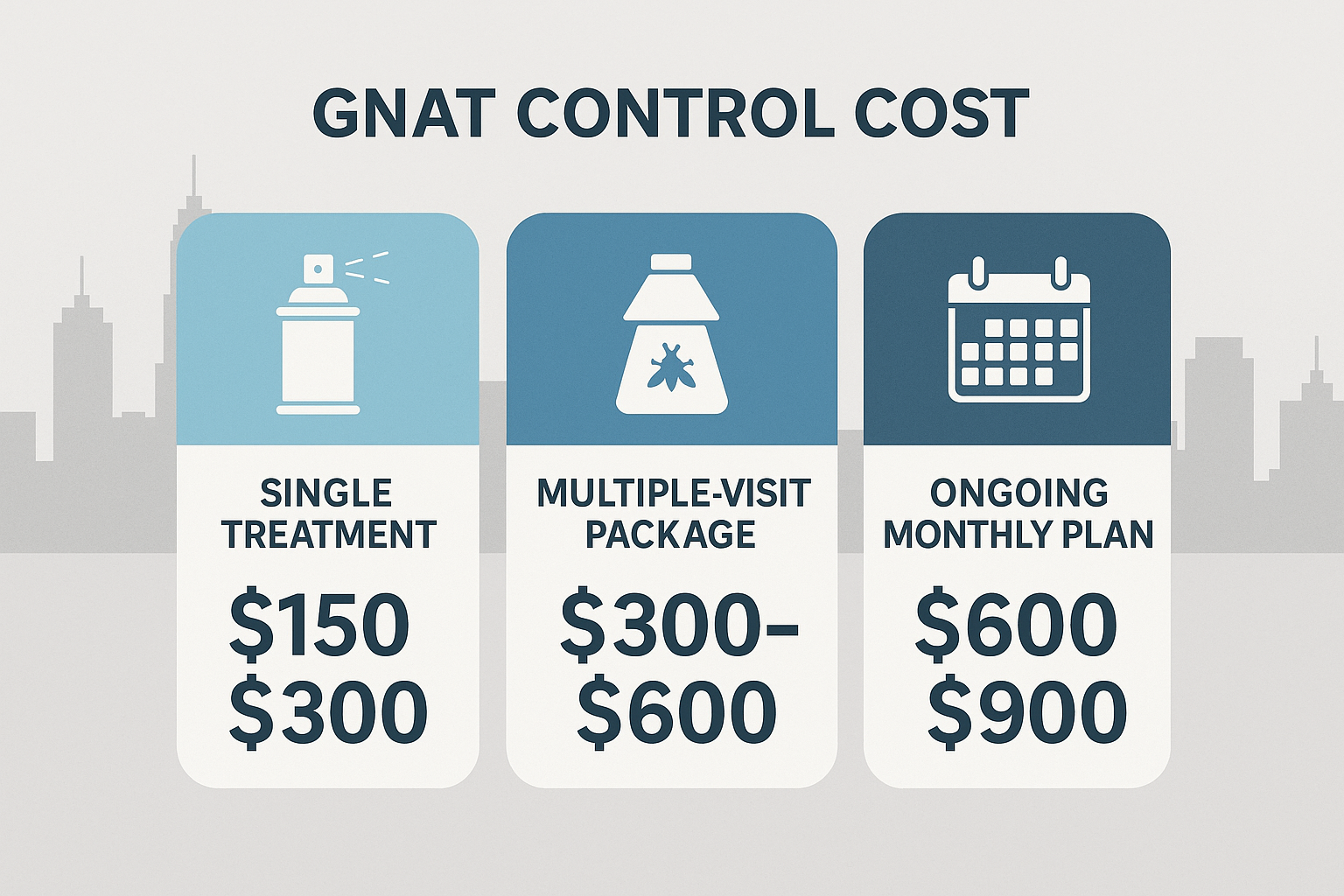
Understanding how gnat control costs break down helps you avoid surprise invoices and match your budget to the level of infestation you’re facing. Below are three realistic homeowner scenarios that illustrate how size, severity, and treatment method influence the total expense.
Scenario A – 1,200‑sq ft Cottage, Minor Gnats
For a modest cottage with a light gnat presence, many homeowners find a DIY approach sufficient. A combination of homemade traps (such as vinegar‑filled bowls) and a single spot treatment with a targeted insecticide spray typically resolves the problem. Assuming you purchase a bulk trap kit and a one‑time professional spray, the total out‑of‑pocket cost hovers around $120. This option keeps labor costs low while still delivering effective control for minor infestations.
Scenario B – 2,500‑sq ft Family Home Near Lake Lanier, Moderate Gnats
A larger family home adjacent to water sources often experiences moderate gnat activity, especially during humid evenings. A two‑visit chemical plan—first applying a residual barrier around the perimeter and then a follow‑up interior treatment—provides comprehensive coverage. Professional labor, travel time, and the higher‑volume chemicals bring the estimate to roughly $350. This tier balances thoroughness with affordability for medium‑sized properties.
Scenario C – 3,000‑sq ft Home with Extensive Landscaping, Severe Gnats
When gnats proliferate across a sprawling yard, ornamental ponds, and dense foliage, a more aggressive Integrated Pest Management (IPM) strategy is warranted. Quarterly visits that combine chemical barriers, biological controls (like beneficial nematodes), and regular landscape maintenance keep the population in check year‑round. Because the service includes multiple visits, detailed assessments, and ongoing monitoring, the annual cost reaches about $900. Though the highest of the three, this plan prevents the gnats from overwhelming indoor and outdoor living spaces.
Choosing the right tier isn’t just about the price tag; it’s about aligning treatment intensity with the actual risk level. A DIY fix may save money now but could lead to repeated infestations and higher long‑term costs. Conversely, a full‑service IPM program may feel pricey upfront but often eliminates the need for emergency interventions later. By matching your home’s size and gnat severity to one of these scenarios, you can keep your budget in check while protecting your comfort.
Quick Cost Calculator
| Home Size (sq ft) | Treatment Frequency | Estimated Cost |
|---|---|---|
| 1,200 | DIY traps + 1 spot treatment | $120 |
| 2,500 | Two‑visit chemical plan | $350 |
| 3,000 | Quarterly IPM service | $900 |
| Your home size | Choose a tier that matches gnat severity | Use the above figures as a baseline |
Getting Accurate Quotes in Grayson
When it comes to gnat control, the price you see on a flyer often hides hidden fees or limited services. By following a simple, repeatable process you can compare apples‑to‑apples estimates from reputable companies and avoid surprise costs later on.
- Step 1 – Prepare detailed home information. Write down the total square footage of your house, the specific rooms or outdoor zones where gnats have been spotted, and any recent changes that might affect pest activity (new landscaping, standing water, recent renovations). Note the neighborhood or subdivision, because local climate patterns and neighboring properties can influence treatment recommendations.
- Step 2 – Contact at least three providers. In Grayson, reliable options include Expest, Mosquito Joe, and PestNation. Call or email each company and request a written estimate that breaks down inspection fees, treatment costs, and any recurring service plans. Ask them to reference the home details you gathered so every quote is based on the same information.
- Step 3 – Inquire about guarantees, follow‑up visits, and seasonal promotions. A trustworthy pest‑control firm will stand behind its work with a satisfaction guarantee or a free re‑treatment window. Ask whether the estimate includes routine follow‑up visits, what the schedule looks like, and if there are any discounts for early‑season bookings or bundled services.
For a no‑obligation, free inspection, you can also reach out to Anthem Pest. Call 877‑371‑8196 or visit anthempest.com. Their contact details are verified as current, and the company will send a technician to assess your gnat situation before any work begins, giving you an additional benchmark for pricing.
Finally, place each written quote side by side in a simple spreadsheet: list the total cost, what’s covered, the guarantee length, and any promotional discounts. The lowest price isn’t always the best value—look for the most comprehensive coverage that fits your budget and timeline.
Frequently Asked Questions
Are gnat treatments safe for pets?
Yes. At Anthem Pest Control we only use EPA‑registered products that are labeled for use around animals. These formulations are tested for low toxicity when applied according to the label directions. As long as the treated area is allowed to dry and pets are kept off the surface for the short waiting period indicated on the label, there is no risk to dogs, cats, or other household companions. We also suggest keeping pets indoors until the spray dries—about 30 minutes—and ventilating any indoor treated area. See the EPA pesticide safety guidelines.
How long does an outdoor spray remain effective?
Our standard outdoor gnat spray creates a residual barrier that typically lasts 2 to 4 weeks, depending on weather conditions. Heavy rain, intense sun, or strong winds can shorten that window, so we recommend a re‑application before the barrier drops below the effective threshold. We apply in the early evening when gnats are active, letting the product set before night humidity rises. Most homeowners find a follow‑up treatment every three weeks keeps the yard and surrounding landscaping comfortably gnat‑free throughout the peak season.
Can gnats return after a single treatment?
Unfortunately, a one‑time spray does not guarantee permanent eradication. Gnats have a rapid life cycle—eggs hatch into larvae within a few days, and adults can emerge in as little as a week. If any eggs or larvae survive the initial application, a new generation can appear quickly. That’s why we advise a maintenance plan or scheduled follow‑ups to interrupt the cycle and prevent a rebound infestation. Our maintenance plan adds a quarterly check and light touch‑up to keep the barrier strong and stop late‑season hatches.
Making an Informed Decision – Conclusion & CTA
By now you should see how Grayson’s humid climate fuels gnat activity, why national averages don’t reflect local labor and material costs, and which regional factors—such as proximity to wetlands and typical landscaping choices—shape pricing. You’ve also learned to match those variables with the three treatment tiers we outlined, ensuring you pick a solution that fits both your infestation level and your budget.
Act before July to lock in savings
The gnat season in Grayson peaks in late summer, and demand for professional control spikes in July. Scheduling an inspection now not only secures the lower off‑peak rates we discussed, it also gives our technicians time to apply preventive measures before the insects multiply. Early action helps you avoid the price surge that comes with emergency, same‑day calls during peak weeks.
Ready for a personalized assessment? If you’d like a free, no‑obligation quote, give Anthem Pest Control a call at 877‑371‑8196. Our local experts will walk you through the best plan for your home and budget. Visit Anthem Pest Control to schedule your inspection today.