What Are Gnats and How They Enter Your Home
When you notice tiny, buzzing insects hovering around your kitchen lights or perched on windowsills, you’re most likely dealing with one of three common household gnats: fungus gnats, fruit flies, or drain flies. Though they belong to different families, they share a size of about 1‑3 mm and a love for damp, organic material. Fungus gnats thrive in over‑watered houseplants, fruit flies are attracted to ripening or rotting produce, and drain flies lay their eggs in the slimy film that builds up inside sinks, showers, and floor drains.
These insects become a nuisance quickly because they reproduce fast and are drawn to the same places you use daily. A single female fungus gnat can deposit 50‑100 eggs in the top inch of potting soil, and those eggs hatch in just a few days. Fruit flies can complete their life cycle in under a week when temperatures are warm, while drain flies can lay dozens of eggs each night in a clogged pipe. The result? Swarms of delicate flies that seem to appear out of nowhere, especially around indoor lights where they instinctively navigate.
Typical Signs of a Gnat Infestation
Recognizing gnats early saves you from a full‑blown invasion. Look for these tell‑tale signs:
- Swarming or hovering near ceiling lights, especially in the evening.
- Small, speck‑like flies gathering on windows, doors, or kitchen countertops.
- Visible larvae in the top layer of potting soil or in the organic debris of a sink drain.
- Unexplained “buzzing” sounds when you’re in a quiet room.
How Gnats Find Their Way Inside
Gnats are expert hunters of moisture and organic matter. In a typical home, they locate food and breeding sites by following scent trails of fermenting sugars, decaying fruit, and damp soil. A leaky faucet or a slow‑draining shower provides the perfect humid micro‑environment for drain flies, while over‑watered houseplants create a moist skin where fungus gnats lay eggs. Open windows and doors act as highways, allowing adult gnats to drift in from the yard or nearby vegetation where they originated.
Once inside, gnats are drawn to indoor lighting because it mimics the natural glow of the sky, guiding them toward potential food sources. Their tiny size lets them slip through the smallest cracks around window frames, utility openings, or gaps under doors, making it easy for a few stray insects to establish a hidden colony.
Quick Checklist: Early Warning Signs Homeowners Should Watch For
- Frequent sightings of tiny flies near lights or windows.
- Sticky traps catching small, dark insects.
- Moist, dark soil in houseplants that feels “soggy” to the touch.
- Slow‑draining or foul‑smelling sinks, tubs, and floor drains.
- Visible larvae or pupae in soil, trash cans, or drain covers.
Spotting any of these clues early gives you a head start on prevention. The next steps involve eliminating excess moisture, cleaning breeding sites, and, if needed, calling a local professional like Anthem Pest Control to apply targeted, safe treatments that keep your home gnat‑free.
Seasonal Gnat Activity in Marietta, Georgia
Marietta’s subtropical climate creates the perfect breeding ground for gnats. Average spring temperatures climb into the high 60s °F, while humidity often exceeds 70 %. Summer brings warm nights above 80 °F and frequent afternoon thunderstorms that leave standing water in gardens, flower beds, and low‑lying lawns. Even in fall, night‑time lows stay mild enough for larvae to develop, and the occasional rain‑shower adds moisture that gnats love. In short, temperature, humidity, and rainfall work together to push gnat numbers up or down throughout the year.
When the Numbers Spike
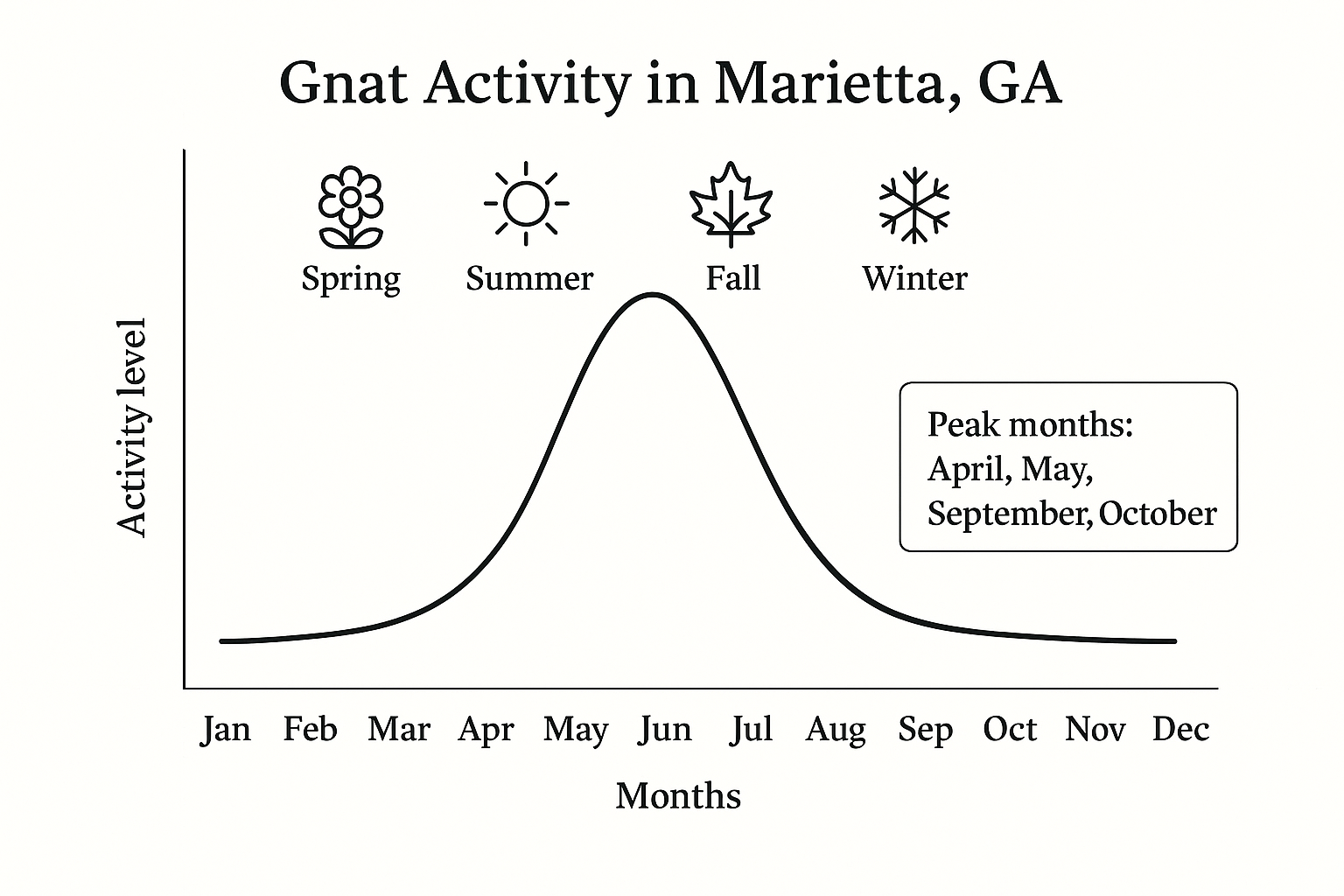
The seasonal chart for Marietta shows a clear peak in gnat activity from late May through early September. May’s warming trend initiates the first surge, but it’s the June‑July window—when daytime highs regularly top 85 °F and rainfall is most abundant—that produces the highest adult counts. August remains hot, but the gradual decline in rain begins to taper the population. By October, cooler evenings and reduced moisture bring the numbers down to a manageable level, and winter months see only a few stray adults.
Timing Your Treatments
To stay ahead of the infestation, schedule a preventative treatment in early May, just before the first rise in temperature. This pre‑emptive spray targets larvae in the soil and reduces the adult emergence that fuels the summer spike. If you notice a sudden influx of gnats after a heavy rainstorm—especially in June or July—call for an emergency intervention within 48 hours; a quick, targeted application can stop a localized outbreak before it spreads to indoor spaces. As the season winds down in September, a final “wrap‑up” treatment helps eliminate any lingering larvae, keeping your yard gnat‑free through the cooler months.
For a visual overview of the monthly trends, refer to the seasonal chart below. The graphic illustrates temperature, humidity, and rainfall patterns alongside gnat activity levels, making it easy to plan inspections and treatments.
Need a quick reference? View the seasonal gnat activity chart and mark your calendar for the optimal treatment windows.
Standing Water Hotspots That Attract Gnats
Gnats need just one thing to thrive: a reliable supply of moisture where they can lay eggs and the larvae can develop. Stagnant water creates a perfect micro‑environment—warm, low‑oxygen, and rich in organic matter—that accelerates their life cycle from egg to adult in as little as a week. When that moisture sits undisturbed, gnats multiply, and the next time you turn on a light they’re already buzzing around your home.
Common Indoor Water Sources
- Leaking kitchen faucets or pipe drips – A slow drip may seem harmless, but over weeks it forms a tiny pool that becomes a gnat nursery.
- Over‑filled pet bowls – Water that spills onto the floor creates a damp pad that gnats love.
- Indoor plant saucers – Excess water that sits in saucers after watering provides a constant source of moisture.
- Clogged or slow drains – Food particles and standing water in sink or bathtub drains are a buffet for gnat larvae.

Typical Outdoor Water Sources
- Bird baths and pet water dishes – If the water isn’t refreshed daily, it becomes a breeding hotspot.
- Clogged gutters – Leaves and debris trap rainwater, creating stagnant pools along the roofline.
- Mulch and garden beds – Over‑watering or heavy rain can leave mulch soggy, perfect for gnats.
- Improper irrigation schedules – Sprinklers that run too long or at night leave wet soil for hours, inviting gnats to lay eggs.
Practical Steps to Dry Out or Treat Each Source
- Repair leaks promptly – Tighten faucet washers, replace worn O‑rings, and check under‑sink connections to stop drips.
- Use sand or gravel in plant saucers – A layer of coarse sand absorbs excess water and prevents it from pooling.
- Clean drains regularly – Pour a mixture of boiling water and baking soda down sinks weekly; follow with a vinegar rinse to break down buildup.
- Refresh pet bowls daily – Empty, rinse, and refill water dishes each morning to eliminate standing water.
- Maintain bird baths – Change the water every 24‑48 hours and scrub the basin to remove organic film.
- Clear gutters and downspouts – Remove leaves, twigs, and debris at least twice a year; consider installing gutter guards.
- Adjust irrigation timing – Water early in the morning so soil dries by evening; use a moisture sensor to avoid over‑watering.
- Replace soggy mulch – Turn mulch regularly to improve drainage, or switch to a coarser, better‑draining material.
By systematically locating and eliminating these moisture hotspots, you cut the gnat life cycle at its source. A dry home is the most effective, long‑lasting defense—paired with professional monitoring from Anthem Pest Control, you’ll keep those tiny flyers at bay without breaking the bank.
Professional Gnat Treatment Methods
When gnats turn your backyard into a buzzing nuisance, a DIY spray rarely delivers lasting relief. Licensed pest‑control technicians bring a toolbox of proven methods that work together to eliminate both adult gnats and their hidden larvae. At Anthem Pest Control, we start each job with a thorough property assessment, then tailor a treatment plan that fits your landscape, family’s safety needs, and local regulations.
Overview of Treatment Options
- Soil drenches – A liquid formulation of insecticide is applied to the soil around plants and standing water. It targets the larval stage before gnats can emerge.
- Adulticide foggers – Fine mist generators disperse a rapid‑acting spray that knocks down flying adults in a wide area, ideal for patios, decks, and garden paths.
- UV light traps – These electric devices attract gnats with ultraviolet light and capture them on a sticky surface, providing ongoing monitoring and reduction.
- Biological controls – Products containing Bacillus thuringiensis israelensis (Bti) introduce a naturally occurring bacterium that kills larvae without harming beneficial insects, pets, or humans.
How a Technician Chooses the Right Mix
Our technicians begin by inspecting moisture sources, plant health, and drainage patterns. If standing water is the primary culprit, a soil drench combined with Bti will suppress larvae at the source. For heavily infested patios, an adulticide fogger followed by strategically placed UV traps offers immediate relief and ongoing capture. The assessment also considers homeowner preferences—some families prefer exclusively biological options, while others opt for a blended approach to speed up results.

Safety Considerations for Families, Pets, and the Environment
All products we use are EPA‑registered and applied at label‑specified rates to minimize residual risk. Soil drenches are injected directly into the ground, keeping surface contact low. Foggers are applied when occupants can vacate the treated area for a short period, and we provide clear re‑entry timelines. Biological controls like Bti are non‑toxic to mammals, birds, and beneficial insects, making them an excellent choice for households with children or pets.
Why Professional Treatment Beats DIY
Professional services deliver three key advantages over home‑grown attempts:
- Comprehensive coverage – Technicians map out all breeding hotspots, ensuring no hidden reservoir is missed.
- Follow‑up and warranty – We schedule a post‑treatment inspection and offer a guarantee that covers re‑infestation within the agreed period.
- Expert formulation – Our team knows the exact mix ratios, application pressures, and timing needed for each product to work at peak efficacy.
Choosing Anthem Pest Control means you get a customized, science‑backed plan that protects your home, your loved ones, and the surrounding ecosystem. The result? A gnat‑free yard you can enjoy all summer long without the endless cycle of over‑the‑counter sprays.
Gnat Control Service Packages and Pricing
When you’re budgeting for gnat control in Marietta, Georgia, most homeowners see a tiered pricing model that balances frequency of service with the depth of treatment. According to the Pest‑Control Pricing Guide, residential gnat programs typically range from $120 for a single‑visit plan up to $480 for comprehensive, year‑round protection. Understanding what each price tier includes helps you avoid surprise fees and choose the level of coverage that matches your yard’s exposure to gnats.
Package Breakdown
| Feature | Basic | Standard | Premium |
|---|---|---|---|
| Annual Visits | 2 (spring & fall) | 4 (quarterly) | 6 (bimonthly + peak‑season boost) |
| Treatment Type | Surface spray & trap placement | Surface spray, trap placement, & larvicide barrier | All Standard treatments + adulticidal fogging & indoor residual spray |
| Guarantee | 30‑day re‑treat if gnats persist | 60‑day re‑treat + satisfaction guarantee | Full‑season guarantee with free follow‑up inspections |
| Additional Perks | Basic service report | Seasonal monitoring report & priority scheduling | Year‑round pest‑health checklist, discounts on other pest services, and a complimentary mosquito barrier |
| Typical Price (Marietta) | $149 – $179 | $269 – $309 | $429 – $489 |
All three packages start with a thorough inspection, followed by a targeted application that tackles adult gnats and their breeding sites. The Basic plan is ideal for homeowners who experience a short, seasonal flare‑up, while the Standard tier adds a larvicide barrier that keeps new generations from emerging. The Premium option is designed for high‑traffic yards, outdoor entertaining spaces, or properties adjacent to wetlands where gnats can linger year‑round.
Evaluating Value vs. Budget
Choosing the right tier hinges on two questions: How severe is the gnat activity, and how much protection do you need throughout the year? If gnats appear only after heavy rains, the Basic plan may suffice, especially when paired with DIY source‑reduction (removing standing water, trimming dense vegetation). However, if you host frequent outdoor gatherings or have a garden that attracts moisture, upgrading to Standard or Premium delivers peace of mind and reduces the need for ad‑hoc treatments.
Another cost‑saving strategy is to bundle gnat control with other pest services—Anthem Pest offers a “Full‑Home Protection” bundle that combines gnat, mosquito, and ant treatments at a reduced overall rate. This approach spreads the expense across multiple pest concerns while ensuring consistent seasonal monitoring.
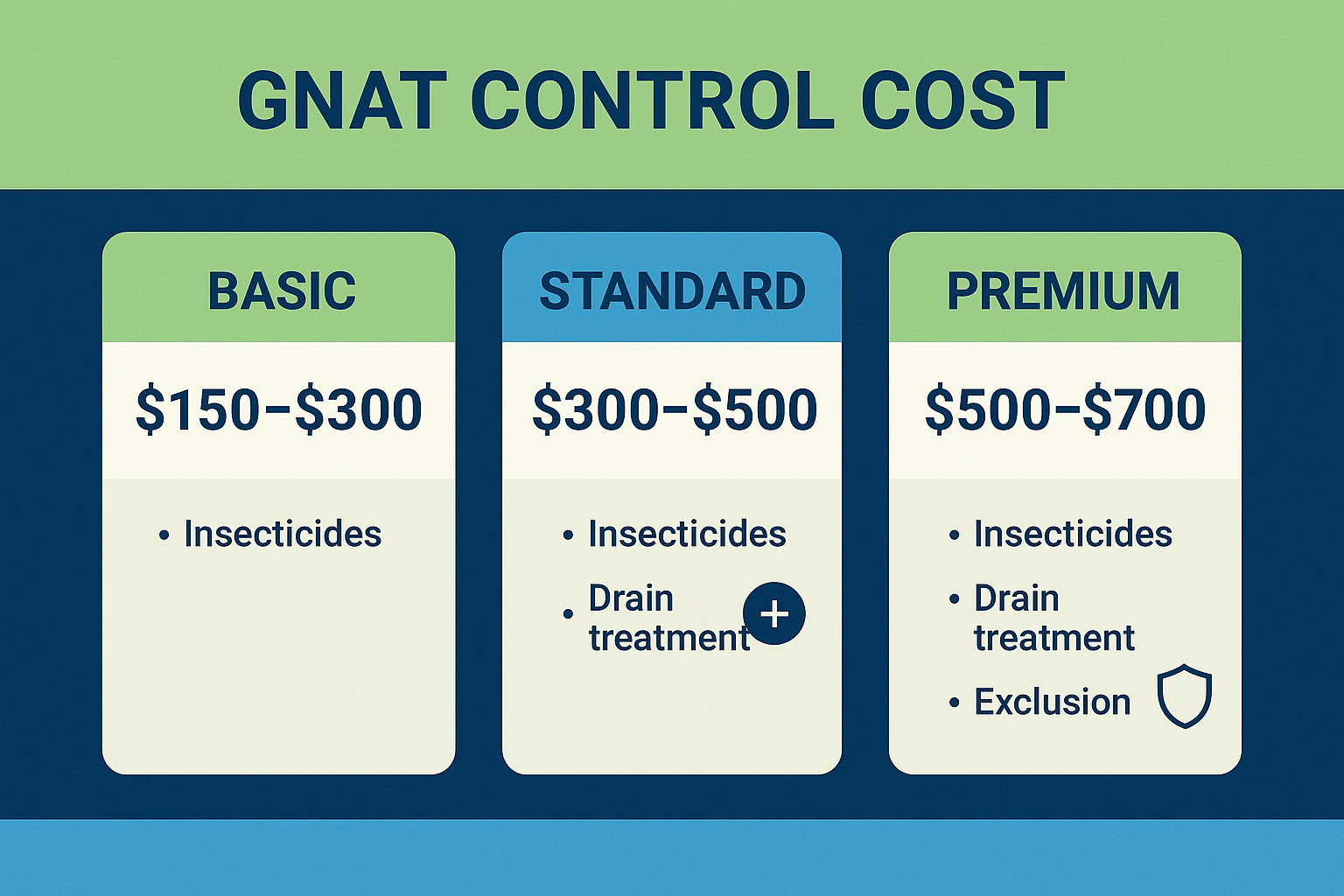
Refer to the infographic above for a quick visual snapshot of each package’s benefits. Whichever tier you select, Anthem Pest’s transparent pricing and guaranteed results keep your yard gnat‑free without hidden surprises.
Secure Your Home with Anthem Pest Control
Understanding how gnats behave, when they peak, and where they find water is the first line of defense against those relentless swarms. Knowing that gnats thrive in damp, shaded areas and that their activity spikes in early summer and after heavy rains helps you spot trouble before it becomes a nuisance. Pair that knowledge with professional options, and you have a solid strategy for keeping your yard and home bite‑free.
Anthem Pest Control brings more than a decade of experience serving homeowners across the United States, and we apply that expertise to every Marietta property we protect. Our technicians are trained to identify the exact species of gnat you’re dealing with, then select a safe, effective treatment that targets the source without jeopardizing your family or pets. We pride ourselves on solutions that are both affordable and environmentally responsible.
Transparency is at the heart of our pricing model. When you request a free quote, you’ll receive a clear, itemized estimate that outlines every step of the process—no hidden fees, no surprise add‑ons. Because we know Marietta’s climate can shift quickly, we tailor our plans to local conditions, ensuring treatments are timed for maximum impact during seasonal peaks. And if you’re not completely satisfied, our satisfaction guarantee means we’ll come back to make it right.
Ready to take the next step? A quick, no‑obligation inspection is all it takes to lock down a customized gnat‑control plan for your home. Our friendly team will walk you through the findings, answer any questions, and provide a free, written quote on the spot. Whether you need a one‑time treatment or an ongoing prevention program, we’ll match the solution to your budget and your schedule.
Give us a call today at 877‑371‑8196 to schedule your free inspection, or visit Anthem Pest Control to request a quote online. Let us put our nationwide expertise and local knowledge to work for you—so you can enjoy a gnat‑free yard without the guesswork.