Why House Flies Matter in Canton, GA

The House Fly in Suburban Settings
The common house fly (Musca domestica) is more than a nuisance; it thrives in the very environments many Canton homeowners cherish—spacious yards, outdoor grills, and well‑kept gardens. These insects are attracted to organic waste, pet droppings, and even the sweet scent of ripe fruit on a porch table. In a typical suburban neighborhood, a single female can lay up to 500 eggs in just a few days, leading to rapid population spikes if left unchecked.
How Often Do Flies Show Up in Canton?
CDC’s 2022 Integrated Pest Management Survey reports that Georgia averages roughly 12 fly complaints per 1,000 households each year. Canton, however, consistently registers about 18 complaints per 1,000 households—a striking 50 % increase over the state average. The discrepancy aligns with Canton’s higher density of residential properties bordering wooded areas and the presence of multiple community parks, which collectively create ideal breeding grounds for flies.
Health Risks You Can’t Ignore
House flies are mechanical vectors, meaning they pick up bacteria, viruses, and allergens on their bodies and transfer them to surfaces we touch or eat from. Studies have linked flies to the spread of Salmonella, E. coli, and Staphylococcus aureus. In a kitchen setting, a single fly can contaminate a slice of bread, a bowl of salad, or a child’s snack within seconds. Beyond foodborne illness, fly droppings can trigger allergic reactions and exacerbate asthma symptoms, especially in households with young children or seniors.
Weather Drives Fly Activity
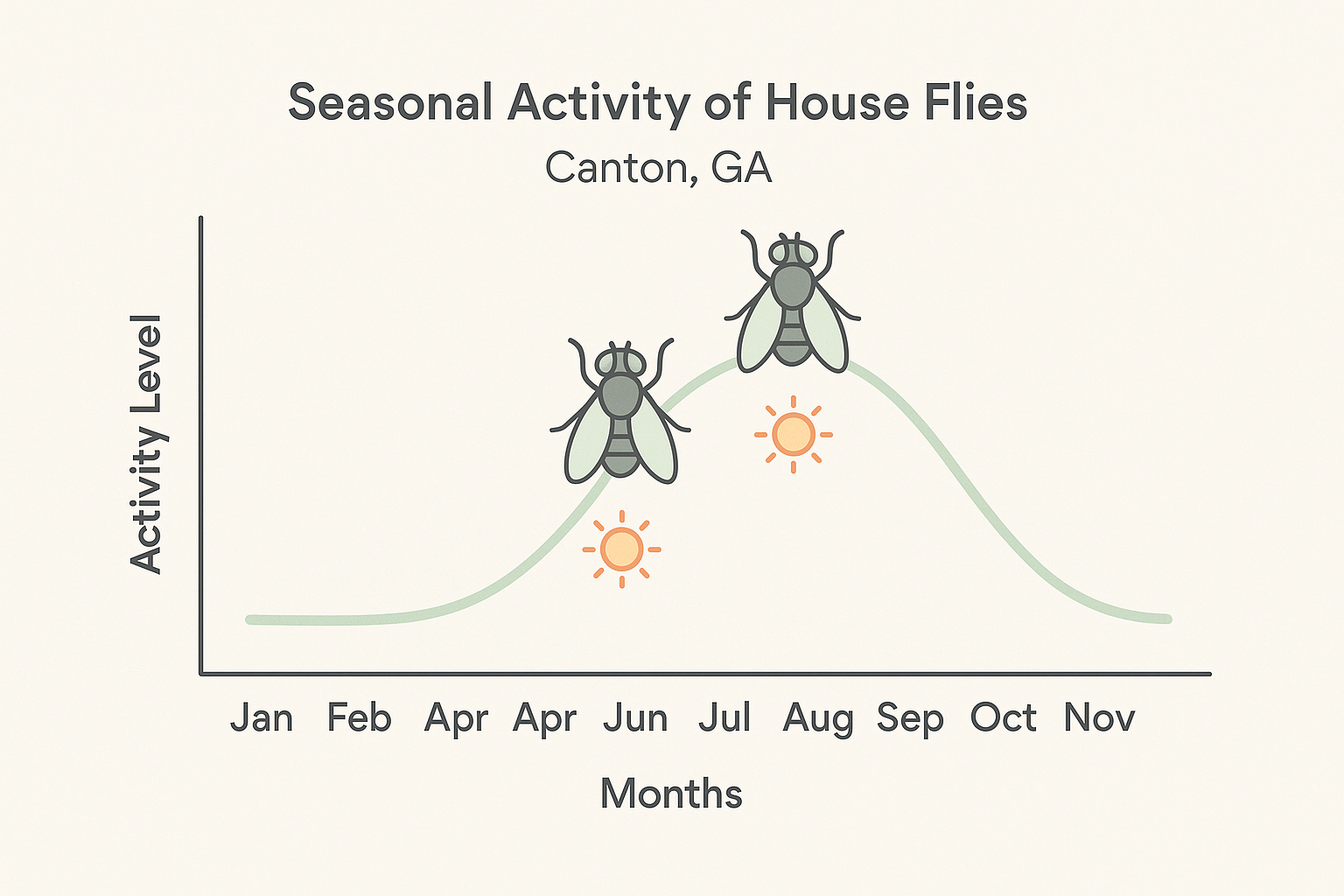
The Southeast’s warm, humid climate is a perfect recipe for fly proliferation. Temperatures above 70 °F (21 °C) combined with humidity levels exceeding 60 % accelerate the life cycle of Musca domestica. In Canton, the peak fly season stretches from late April through early October, with a noticeable surge after summer thunderstorms when standing water and organic debris multiply. Understanding these seasonal patterns helps homeowners anticipate infestations before they become visible.
Local Expertise from Anthem Pest Control
Identifying the early signs of a fly problem—such as increased activity around trash bins, a sudden rise in indoor sightings, or a faint, sweet odor near outdoor dining areas—requires a trained eye. Anthem Pest Control’s technicians specialize in Canton’s unique micro‑climates and know exactly where flies tend to hide, from concealed gutter debris to under‑deck planters. By partnering with a local expert, homeowners gain access to targeted treatments, preventive measures, and ongoing monitoring that keep fly populations under control year‑round.
Identifying House Flies and Their Warning Signs
Physical characteristics you can spot at a glance
House flies are modest in size, typically measuring 6–7 mm from head to tail. Their thorax carries a distinctive gray‑black coloration, while the abdomen is marked by four dark longitudinal stripes. The wings are clear, yet you’ll notice a characteristic vein pattern that resembles a tiny, delicate fan. These traits set them apart from many other indoor insects and make a quick visual ID possible.
Where they love to hang out inside your home
Flies aren’t random wanderers; they gravitate toward the areas that promise food and moisture. Common indoor hotspots include:
- Kitchen counters and prep surfaces – crumbs, spills, and exposed food are irresistible.
- Garbage areas – especially when bags are overfilled or lids are left ajar.
- Pet feeding stations – leftover kibble and wet food provide a steady buffet.
- Open doors and windows – these act as highways for flies entering from the yard.
Behavioral cues that scream “fly activity”
House flies are most active during daylight, and several behaviors give them away:
- They swarm near lights, especially in the evening when indoor lighting outshines the fading natural light.
- They land directly on food, often leaving a faint, oily residue.
- They breed rapidly around decaying organic matter – think rotting fruit, damp compost, or pet waste.
Early warning signs before an infestation takes hold
Spotting a few tell‑tale signs early can save you a lot of hassle later. Keep an eye out for:
- Sudden spikes in fly numbers after rain – moisture drives breeding sites outdoors, and flies rush indoors seeking shelter.
- Maggots in trash cans – these tiny, white larvae are the next generation of flies and indicate that eggs have already hatched.
- Fly larvae in pet waste – if you notice wriggling maggots in litter boxes or near outdoor pet stations, it’s a clear red flag.
How to tell house flies apart from look‑alikes
Not every small, buzzing insect is a house fly. Here’s a quick cheat sheet:
| Feature | House Fly (Musca domestica) | Fruit Fly (Drosophila spp.) | Blow Fly (Calliphoridae) |
|---|---|---|---|
| Size | 6–7 mm | 2–4 mm | 8–12 mm |
| Body Color | Gray‑black with four dark stripes | Tan or brown, often with a reddish eye | Metallic blue‑green or black |
| Preferred Habitat | Human dwellings, kitchens, waste | Ripening fruit, fermenting liquids | Decaying animal matter, carrion |
| Wing Vein Pattern | Distinct fan‑shaped veins | Simple, fewer veins | More robust, often with a dark spot on the wing |
Where to learn more
For a deeper dive into the biology, life cycle, and health risks associated with house flies, the Centers for Disease Control and Prevention offers an excellent resource: CDC – House Flies. Understanding these basics empowers you to catch an issue early and call in Anthem Pest Control before the problem escalates.
Seasonal Fly Activity in Canton, GA
Canton’s climate is the perfect backdrop for house flies to thrive. Summers are hot and humid, with daytime highs often climbing above 90°F (32°C) and nighttime humidity lingering around 70 %. Winters, by contrast, are mild—average lows rarely dip below 40°F (4°C). This swing between a scorching, moist summer and a gentle winter creates a predictable rhythm for fly populations.
Fly Life Cycle and Temperature
The house fly (Musca domestica) follows a four‑stage life cycle: egg → larva (maggot) → pupa → adult. Under ideal conditions—temperatures between 80°F and 95°F (27‑35°C) and ample organic material—the entire cycle can be completed in as little as seven days. Cooler temperatures slow development dramatically; a drop to 60°F (16°C) can stretch the cycle to three weeks or more. In Canton, the summer heat accelerates breeding, while the cooler shoulder seasons naturally curb it.
Monthly Activity Breakdown
Understanding when flies are most active helps you plan proactive treatments. Below is a concise view of typical fly activity throughout the year in Canton.
| Month | Average Temp (°F) | Humidity % (avg) | Activity Level |
|---|---|---|---|
| January | 45 | 65 | Low |
| February | 48 | 66 | Low |
| March | 58 | 68 | Moderate |
| April | 68 | 70 | Moderate |
| May | 78 | 72 | High |
| June | 86 | 74 | Peak |
| July | 89 | 75 | Peak |
| August | 87 | 73 | Peak |
| September | 78 | 71 | High |
| October | 66 | 69 | Moderate |
| November | 55 | 67 | Low |
| December | 48 | 65 | Low |
The chart makes it clear: June, July, and August are the danger months. During this window, adult flies lay up to 150 eggs each day, and the warm, wet environment lets larvae mature in under a week. By the time you notice the first nuisance, a full generation may already be buzzing inside your home.
Why Timing Matters
Treating before the summer surge gives you a head start. A pre‑emptive inspection in late May lets technicians identify breeding hotspots—like compost piles, pet waste, or clogged gutters—and apply targeted residual sprays or baits. This early action reduces the initial adult population, making any subsequent treatments more effective and often less costly.
Practical tip: Schedule a professional fly inspection and treatment with Anthem Pest Control by the first week of May. Acting before the June‑August peak helps keep fly numbers low, protects your family’s comfort, and can prevent the need for extra visits later in the season.
Effective Treatment Options for House Flies

DIY Approaches: Clean Up and Simple Barriers
Before reaching for any product, start with the basics that deny flies a reason to linger. Proper sanitation—wiping down countertops, removing food scraps, and keeping garbage bins sealed—cuts off their primary food source. Good waste management means taking out trash daily, using compost bins that are tightly covered, and cleaning pet waste promptly.
- Fly traps: Commercial sticky strips or homemade sugar‑vinegar traps attract and capture adult flies without chemicals.
- Natural repellents: Essential oils such as eucalyptus, peppermint, or citronella, diluted in water and sprayed around entry points, create an olfactory barrier that flies dislike.
- Exclusion techniques: Install fine‑mesh screens on windows and doors, and seal cracks around vents and utility openings.
Chemical Controls: When and How to Use Them Safely
For moderate to heavy fly activity, targeted chemical treatments become necessary. Choose EPA‑registered products to protect family members and pets. Here are the most reliable options:
- Residual insecticide sprays: Apply along baseboards, under sinks, and around door frames. These sprays cling to surfaces for weeks, killing flies that land on treated areas.
- Bait stations: Place tamper‑proof stations in hidden corners. The bait combines attractant and insecticide, drawing flies in and delivering a lethal dose.
- ULV (ultra‑low volume) foggers: Ideal for indoor spaces with high fly densities. A fine mist disperses quickly, reaching crevices that sprays miss. Follow label directions closely—ventilate the area afterward and keep children and pets out for the recommended re‑entry time.
Always read the label, wear protective gloves, and store products out of reach of children. If you’re unsure about dosage or placement, a quick call to Anthem Pest Control can prevent misuse.
Professional Fumigation: Heavy‑Duty Smoke Machine Treatment
When a colony explodes—think dozens of flies buzzing around every room—homeowners often need a professional touch. Anthem Pest Control offers a smoke‑machine fumigation that fills the entire structure with a fine, insecticidal aerosol. The treatment covers up to 2,500 sq ft in a single pass, ensuring even the most hidden breeding sites receive exposure.
Fumigation works because the smoke particles are small enough to penetrate wall voids, under floorboards, and ceiling cavities where larvae develop. After the fog clears, residual chemicals remain on surfaces, providing weeks of protection. This method is especially effective after a severe infestation or when flies have become resistant to over‑the‑counter sprays.
Integrated Pest Management (IPM): The Smart, Sustainable Strategy
Relying on a single tactic rarely yields lasting results. IPM blends sanitation, exclusion, and targeted treatments into a cohesive plan. Begin with daily cleaning, seal entry points, and monitor fly activity with sticky traps. If numbers climb, introduce a low‑risk chemical or bait station. For persistent hotspots, schedule a professional fumigation. By rotating methods, you reduce the chance of resistance and keep your home safe for kids and pets.
Safety First: Protecting Families and Pets
All products used by Anthem Pest Control are EPA‑registered, meaning they meet strict safety standards for residential use. Technicians apply treatments during a brief window, then advise a re‑entry period that typically ranges from 30 minutes to a few hours, depending on the product. Pets should be kept in a separate, well‑ventilated room until the area is cleared.
Homeowners can also boost safety by:
- Storing all pesticides in locked cabinets.
- Keeping children and pets away from treated zones until the label‑specified re‑entry time has passed.
- Using non‑chemical options first—cleanliness and exclusion often solve minor problems without any exposure.
When in doubt, reach out to Anthem Pest Control at 877‑371‑8196 or visit our website. Our certified technicians will tailor an IPM plan that fits your budget, your home layout, and your peace of mind.
Comparing House Fly Treatment Pricing in Canton
Anthem’s pricing philosophy is built on transparency—what you see on the quote is what you pay. We never add surprise fees for travel, equipment, or follow‑up visits. For Canton homeowners, this means you can plan your budget with confidence, knowing the cost covers the full scope of the service you select.
Service Tier Breakdown
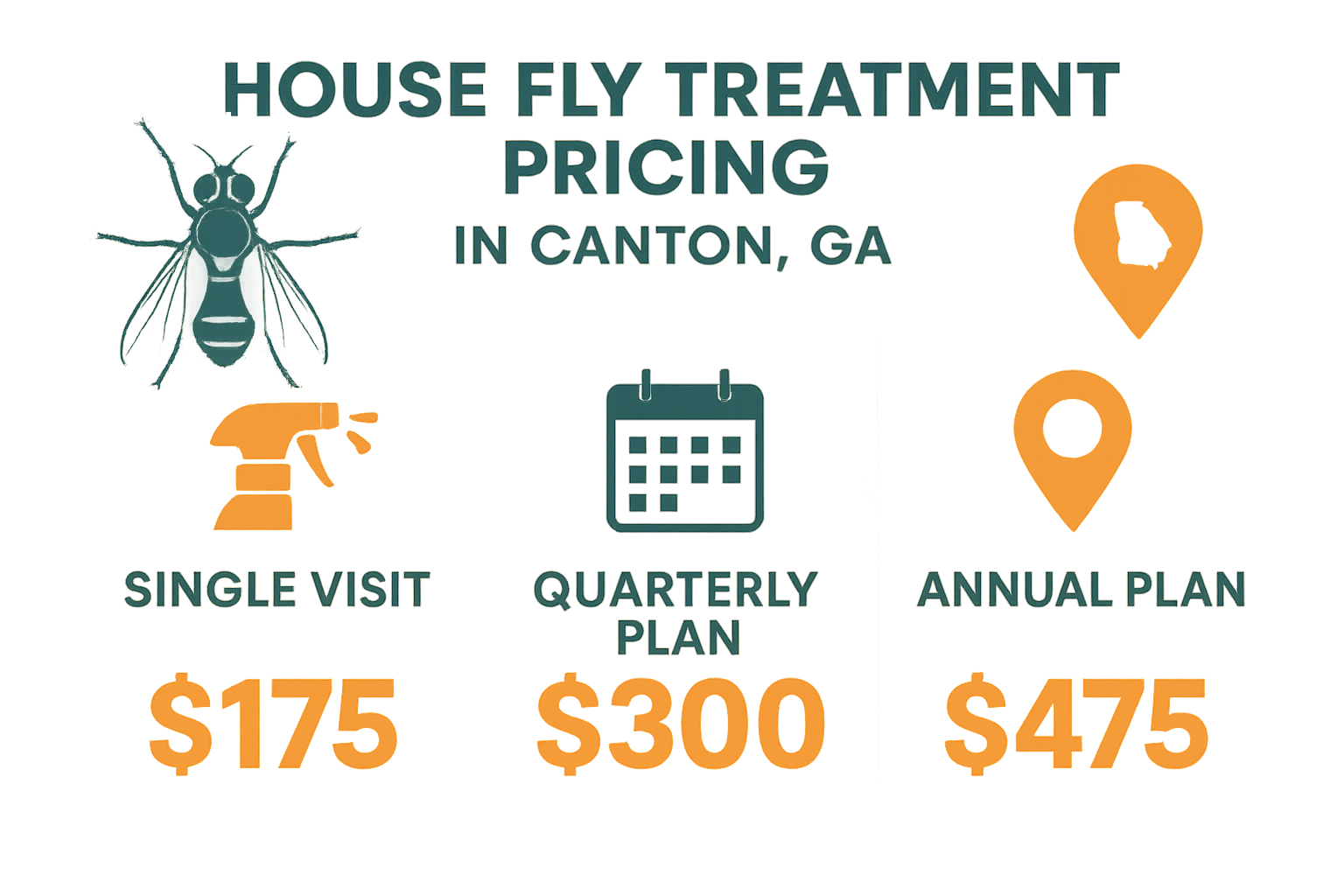
We offer three clear tiers that match different needs and budgets. Below is a typical price range you’ll encounter in the Canton area:
- Single‑Visit Knock‑Down: $120 – $180 per treatment. Ideal for an immediate, one‑time solution when flies have already become a nuisance.
- Quarterly Prevention Plan: $350 – $460 per year (four visits). Provides seasonal protection and includes a follow‑up inspection after each visit.
- Annual Comprehensive Plan: $620 – $770 per year (twelve visits). Covers every high‑risk month, adds monitoring devices, and offers a priority “emergency” slot if flies surge unexpectedly.
Benefits of Each Tier
One‑time emergency knock‑down gives you rapid relief. Our technicians target the breeding sites, apply a fast‑acting residual spray, and leave your home fly‑free for a few weeks—perfect for sudden outbreaks.
The quarterly plan shifts the focus from reaction to prevention. By treating before the summer peak, we break the life cycle early, reducing the number of flies that can enter your home. The quarterly schedule also includes a visual inspection, so any new entry points are sealed before they become problems.
Choosing the annual plan maximizes cost‑effectiveness, especially during Canton’s hot summer months when fly populations explode. With twelve visits, you receive continuous residual protection, early‑season monitoring, and a guaranteed same‑day response if an unexpected surge occurs. The per‑visit cost drops dramatically compared to booking multiple single visits, saving you up to 30 % in the long run.
Why the Annual Plan Saves Money in High‑Risk Periods
Summer in Canton brings warm nights, abundant waste, and outdoor gatherings—all perfect conditions for house flies to thrive. An annual plan spreads the expense over twelve treatments, locking in today’s rates before seasonal price spikes. It also eliminates the need for emergency calls that can cost $150 – $200 each, turning a predictable annual fee into a smarter investment.
Protect Your Home Today with Anthem Pest Control
House flies may seem harmless, but in Canton’s hot, humid summer they become a serious health and comfort concern. They carry bacteria from waste to food surfaces, can trigger allergic reactions, and their constant buzzing disrupts family gatherings and quiet evenings. When fly populations spike, it’s often a sign that food sources, waste management, or structural gaps are inviting them inside. Ignoring the problem only lets the infestation grow, making treatment more invasive and costly.
Why a Professional Inspection Matters
Effective fly control starts with a thorough, professional inspection. Our certified technicians will:
- Identify hidden breeding sites such as garbage cans, pet areas, and drainage problems.
- Assess structural entry points—cracks, screens, and vent openings—that let flies slip indoors.
- Evaluate surrounding landscaping and outdoor lighting that attract adult flies.
- Develop a customized treatment plan that blends safe chemicals, exclusion methods, and preventive maintenance.
Because every home is different, a one‑size‑fits‑all approach rarely works. Anthem Pest Control tailors each solution to your specific situation, ensuring you get the most effective, affordable protection without unnecessary chemicals.
Take the First Step—No Obligation, No Pressure
We understand that inviting a pest‑control professional into your home is a big decision. That’s why we offer a free, no‑obligation quote. Our friendly staff will walk you through the proposed plan, explain the costs up front, and answer any safety questions you may have. There’s no hidden fee, and you’re free to decide whether to move forward.
Ready to enjoy a fly‑free home this summer? Call Anthem Pest Control at 877‑371‑8196 for a free quote and let our certified technicians create a customized plan that fits your budget and schedule. Visit Anthem Pest Control today.