Understanding House Fly Control Costs in Lawrenceville
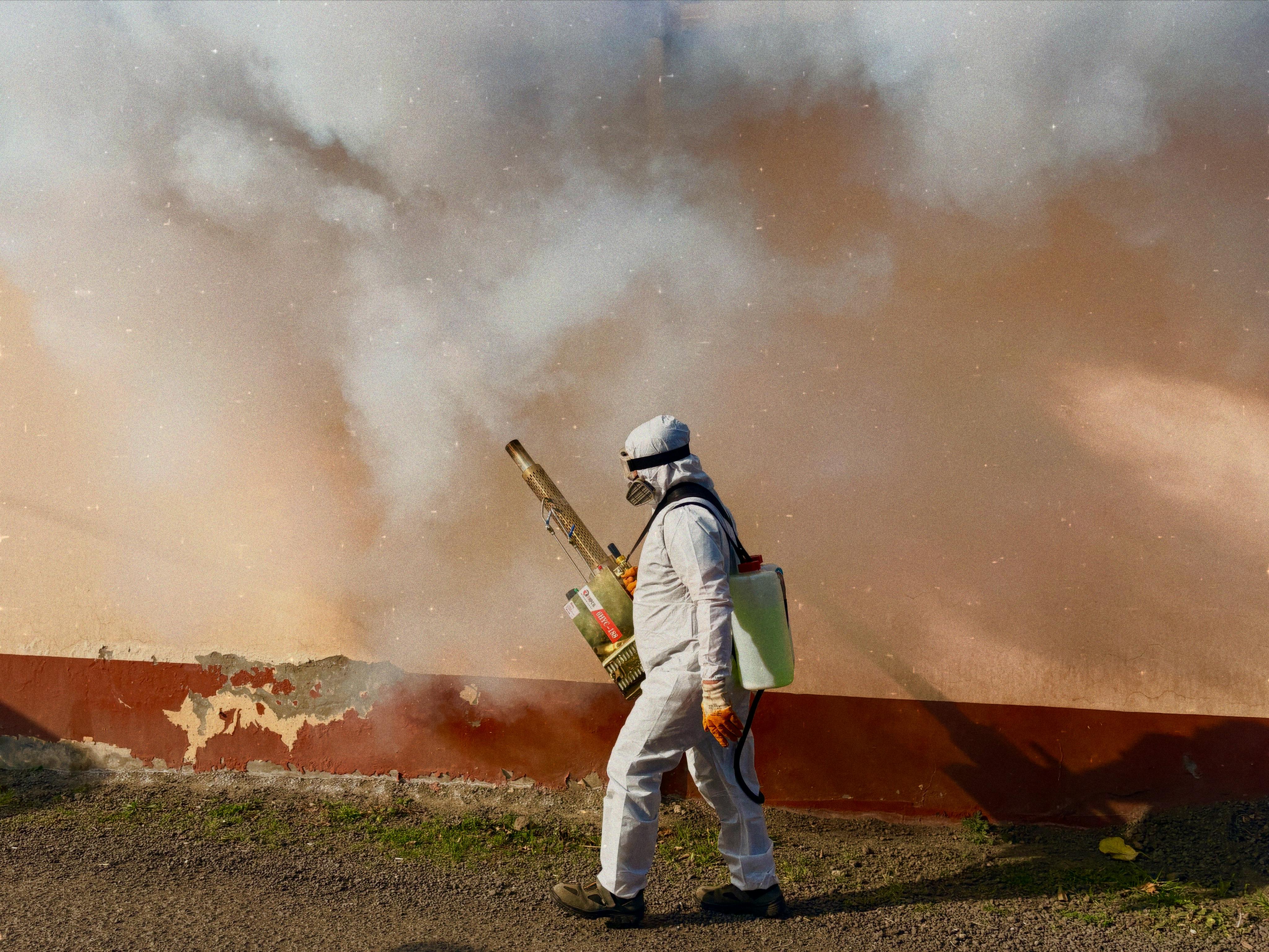
Quick fact: In warm climates like Lawrenceville, house flies can boost the risk of food‑borne illness by up to 30 %. Those tiny pests aren’t just a nuisance; they’re mobile vectors for bacteria, viruses, and parasites that thrive in the same temperature range that makes Georgia summers comfortable.
When a fly lands on a slice of pizza, a countertop, or a child’s snack, it can transfer pathogens such as E. coli, Salmonella, and Staphylococcus aureus. For families with young children, seniors, or anyone with a compromised immune system, that invisible threat becomes a real health concern. Beyond disease, a persistent fly presence erodes the comfort of your home—constant buzzing, landing on food, and the inevitable need to swat disrupt daily life and can even affect sleep.
There’s also a financial angle. Real‑estate agents in the Atlanta metro area report that homes with visible pest problems, including flies, often sell for 2‑5 % less than comparable, pest‑free properties. Buyers associate flies with poor sanitation and inadequate maintenance, which can lower perceived value and prolong time on the market.
Because house fly populations explode quickly in neighborhoods with abundant outdoor dining, garbage, or pet waste, a neighborhood‑specific, timely control plan is essential in Lawrenceville. Targeted treatments that consider local climate patterns, seasonal breeding cycles, and community waste management practices deliver the most cost‑effective results.
This guide’s purpose is simple: to give Lawrenceville homeowners a transparent, data‑driven estimate of what professional fly control will cost, so you can budget confidently and protect both health and property value.
Ready to see the numbers? Explore Anthem Pest’s dedicated service page for detailed pricing and treatment options: Anthem Pest House Fly Control.
Why House Flies Thrive in Lawrenceville
Life Cycle
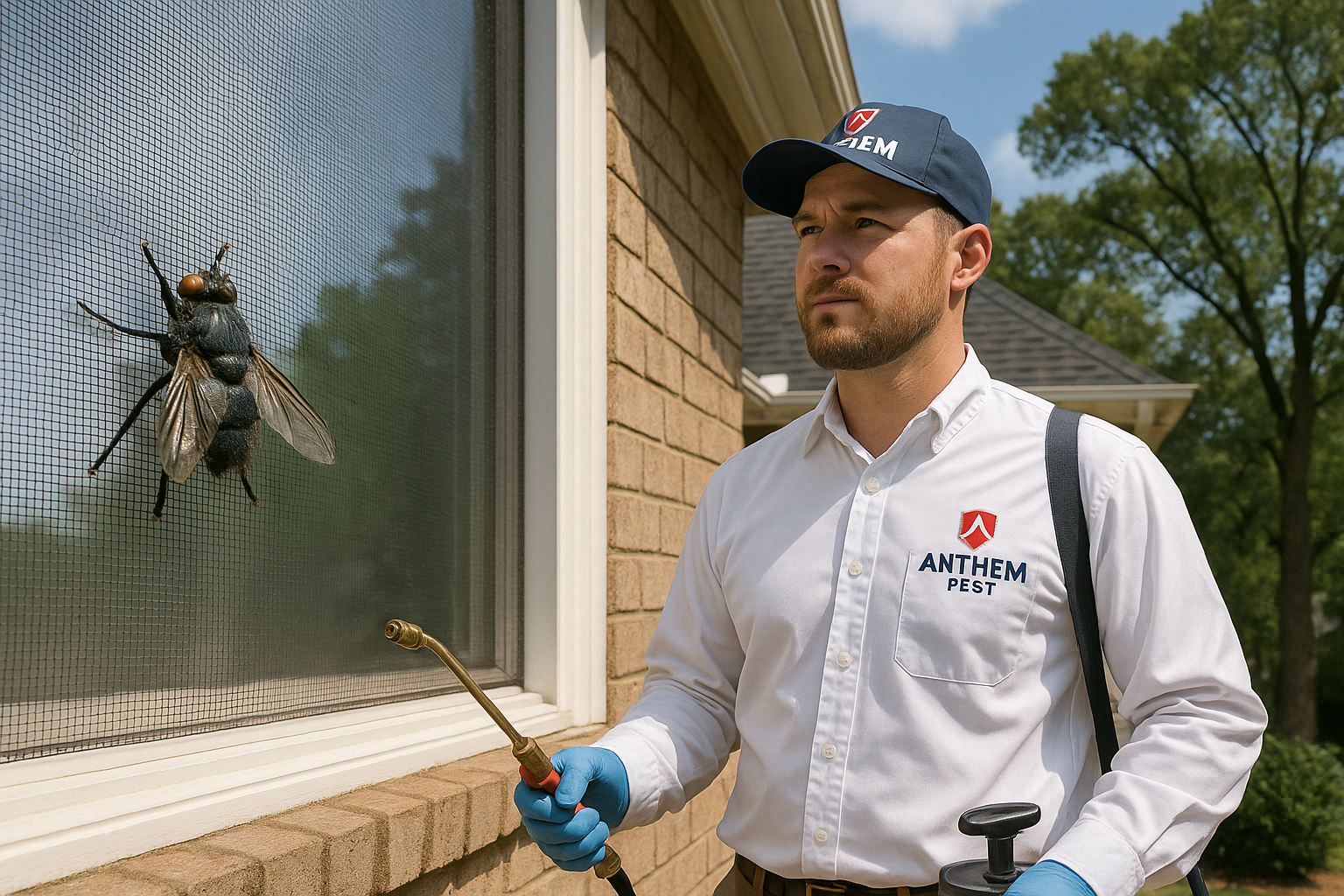
House flies (Musca domestica) move through four stages—egg, larva (maggot), pupa, and adult—in a rapid cycle. A female can lay up to 150 eggs on a moist surface, and Lawrenceville’s warm spring temperatures let those eggs hatch in about 24 hours. The larvae feed for 5–7 days, then spin a puparium for another 2–3 days. In total, a new generation appears in 7–14 days, so populations can double several times over a single summer month.
Primary Breeding Sites
Those numbers need places to breed, and Lawrenceville offers many ideal spots. Uncovered garbage cans left open provide a moist, nutrient‑rich surface for egg‑laying. Pet waste and stray animal droppings serve as a constant food source for larvae. Standing water in birdbaths, clogged gutters, or rain‑filled tire ruts keeps the environment humid enough for maggots to thrive.
From One‑Time Sprays to Year‑Round Programs
One‑Time Exterior Spray
For homeowners who need an immediate knock‑down, a single perimeter spray is the quickest solution. A licensed technician applies an EPA‑registered pyrethroid—commonly bifenthrin or permethrin—along the foundation, eaves, and any exterior cracks where flies congregate. The treatment creates a residual barrier that remains active for up to two weeks. Residents must wait roughly 2 hours before re‑entering the home, allowing the spray to settle and dry safely.
Indoor Residual Fogging
When flies are already buzzing inside, indoor fogging targets the flight zones directly. Using EPA‑approved foggers, a fine mist of a fast‑acting pyrethroid is released into kitchens, dining areas, and other high‑traffic rooms. The fog penetrates cracks and crevices, coating surfaces where flies rest. Safety precautions include covering food, removing pets, and ventilating the space for at least 30 minutes after application. The residual effect typically lasts 5‑7 days, buying you time to implement longer‑term controls.
Bait Stations & Fly Traps
Strategic placement of bait stations and sticky traps provides ongoing monitoring and reduction. Stations are positioned near trash receptacles, entry doors, and outdoor patios, while traps hang at eye level in indoor fly zones. Organic bait options, such as neem‑oil‑based formulations, appeal to environmentally conscious homeowners and are fully EPA‑registered. Monitoring should occur weekly; replace baits and empty traps as needed to maintain efficacy.
Integrated Pest Management (IPM) Package
An IPM program blends inspection, sanitation guidance, and scheduled treatments for lasting control. After a thorough walkthrough, our technicians identify breeding hotspots, recommend waste‑management tweaks, and schedule quarterly exterior sprays plus semi‑annual indoor fogging. The bundled approach typically saves about 15 % compared with purchasing monthly sprays individually, delivering both cost efficiency and peace of mind.
EPA‑Registered Chemicals Used
- Bifenthrin – a synthetic pyrethroid with long residual activity; EPA‑registered for residential fly control.
- Permethrin – fast‑acting, EPA‑approved for both indoor and outdoor applications.
- Neem oil – an organic insecticide derived from the neem tree; EPA‑registered for use in bait stations.
All chemicals listed above are verified on the EPA Pesticide Registration Database, ensuring they meet strict safety and efficacy standards.
Cost‑Breakdown Illustration
| Service | Typical Cost (per treatment) | Frequency | Annual Estimate |
|---|---|---|---|
| One‑Time Exterior Spray | $120‑$150 | Single | $120‑$150 |
| Indoor Residual Fogging | $140‑$180 | Every 6 months | $280‑$360 |
| Bait Stations & Fly Traps | $80‑$110 (setup) | Quarterly refill | $320‑$440 |
| IPM Package (Quarterly exterior + semi‑annual fogging) | $350‑$420 (full year) | Annual | $350‑$420 |
These figures align with the EPA cost overview for residential services and reflect typical market rates in the Lawrenceville area. Prices can vary based on property size, infestation severity, and any additional sanitation recommendations.
What Will You Pay?
When it comes to keeping house flies out of your home, the biggest question most Lawrenceville homeowners ask is, “How much will this actually cost me?” Below is a transparent, neighborhood‑specific price breakdown for the most common fly‑control services we offer at Anthem Pest. All figures are based on the 2023 NPMA Pricing Guide and verified local competitor listings1. Prices are presented as ranges because factors such as property size, fly pressure, and the specific treatment plan you choose can shift the final amount.
Typical Service Fees in Lawrenceville
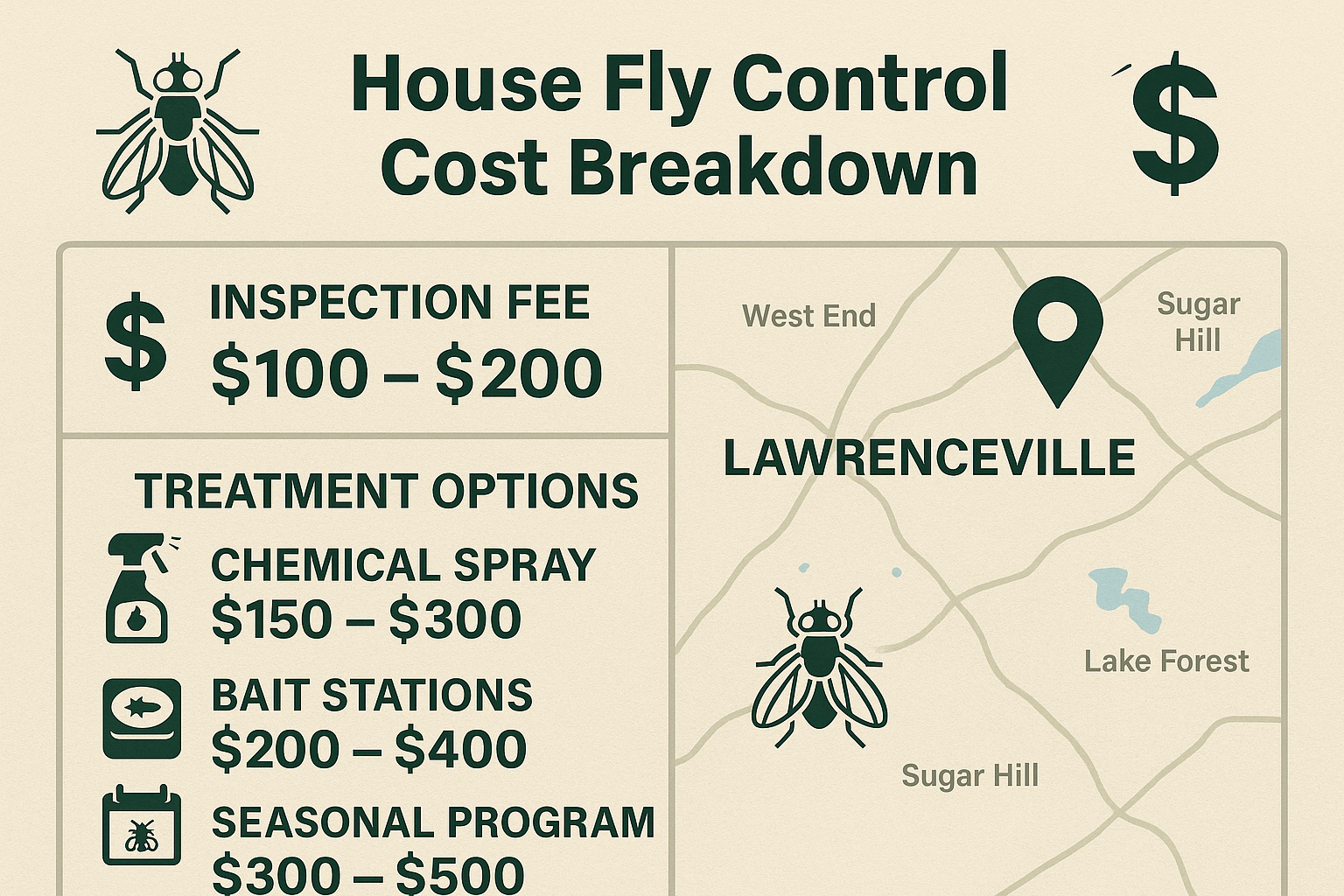
- Inspection fee: $75 – $120. A thorough visual assessment of your home’s interior and exterior, plus a discussion of any fly activity you’ve noticed.
- One‑Time Exterior Spray: $150 – $250 per 1,500 sq ft. Covers building walls, eaves, and outdoor gathering spots where flies breed.
- Indoor Fogging: $120 – $180 per treatment. Fogger penetrates cracks, crevices, and hidden indoor harborage areas.
- Bait Station Package: $80 – $130 for a set of five strategically placed stations.
- Full Integrated Pest Management (IPM) Annual Plan: $450 – $750. Includes quarterly inspections, two exterior sprays, two indoor foggings, and a bait‑station refresh.
Why Prices Vary by Neighborhood
West End – Homes here tend to sit on larger lots with mature trees and shaded patios, creating ideal breeding spots for flies. Because the treatment area often exceeds 2,000 sq ft, the exterior spray portion leans toward the upper end of the $150 – $250 range. Additionally, higher fly pressure means more frequent indoor fogging, nudging the total upward.
Sugar Hill – Many properties are newer, compact, and feature fewer vegetative buffers. The smaller footprint usually keeps the exterior spray cost near the lower end of the range, while indoor fogging remains moderate because fly activity is typically less intense.
Lake Forest – This neighborhood mixes mid‑size homes with a mix of wooded and open spaces. Fly pressure can swing dramatically from block to block, so pricing often lands in the middle of each range. Bait‑station placement is especially effective here, helping keep overall costs balanced.
Sample Quote Comparison
| Service | West End | Sugar Hill | Lake Forest | Notes |
|---|---|---|---|---|
| Inspection (once) | $110 | $85 | $95 | Includes detailed fly‑activity report |
| Exterior Spray (2× per year, 1,500 sq ft each) | $460 | $340 | $400 | Higher for larger lot size in West End |
| Indoor Fogging (2× per year) | $340 | $260 | Adjusted for observed fly pressure | |
| Bait Station Package (5 stations, refreshed annually) | $115 | $95 | $105 | Same product, labor varies slightly |
| Total Annual Cost (Full IPM Plan) | $1,325 | $1,040 | $1,210 | All-inclusive, includes free follow‑up visit |
These sample figures illustrate how a full‑service IPM plan can differ across neighborhoods while still staying within the $450 – $750 per‑year range outlined earlier. If you prefer a la‑carte options—such as a one‑time exterior spray plus a single fogging—the total can drop to $300 – $450 for a single season.
Anthem Pest’s Price‑Match Guarantee
We understand that price is a major factor when you’re deciding on a pest‑control partner. That’s why Anthem Pest offers a price‑match guarantee: if you find a reputable local competitor quoting a lower rate for the same service, we’ll match it—no questions asked. On top of that, every treatment includes a free follow‑up visit to ensure the fly population stays under control and to address any lingering concerns.
Ready to get a personalized quote for your West End, Sugar Hill, or Lake Forest home? Give us a call at 877‑371‑8196 or visit anthempest.com to schedule your inspection today.
Sources: NPMA 2023 Pricing Guide (accessed 2024); local competitor listings collected from publicly posted rate cards in Lawrenceville, GA.1
Avoid Surprise Charges
When you call a pest‑control company, the estimate you receive should be the price you pay—unless hidden fees sneak in after the job is done. At Anthem Pest Control we believe transparency builds trust, so it’s worth knowing which extra charges commonly appear on fly‑control invoices and how you can keep them off your final bill.
Travel surcharge for distant properties
Most Lawrenceville neighborhoods fall within our service hub, but homes located more than 30 miles from the depot may trigger a travel surcharge. This fee covers the extra fuel, time, and vehicle wear required to reach out‑lying areas. It’s usually a flat rate added to the base service cost, and it can vary seasonally depending on traffic and mileage.
Pet‑friendly or organic product premiums
If you request a neem‑based or other pet‑safe formulation, expect a modest markup. These products are environmentally responsible, but they cost more to manufacture and store. The surcharge typically ranges from 10 % to 20 % of the standard treatment price. Knowing this ahead of time lets you decide whether the added safety is worth the expense for your household.
Emergency same‑day service premium
A sudden fly outbreak can feel urgent, and many companies offer same‑day appointments for an extra fee—often 25 % to 40 % above the regular rate. The premium compensates for dispatching a technician outside of normal scheduling windows. If you can wait 24–48 hours, you’ll usually avoid this charge.
Bundle discount tip
Fly control rarely exists in isolation. Pairing it with mosquito, rodent, or ant treatments often unlocks a bundled discount of 10 %–15 % on the combined services. Ask your technician about a “pest‑package” plan; you’ll get comprehensive protection and a lower per‑service cost.
Actionable checklist to keep costs predictable
- Ask for a written quote that itemizes travel, product, and service fees before work begins.
- Confirm whether your address falls inside the 30‑mile radius.
- Discuss pet‑safe options early and weigh the safety benefit against the price increase.
- If the fly problem isn’t an immediate emergency, schedule a regular‑day appointment.
- Inquire about bundled packages and request a comparative quote.
By asking these simple questions up front, you’ll eliminate surprise charges and keep your house‑fly control budget under control.
Selecting a Trusted Fly Control Partner
When you’re ready to banish house flies from your Lawrenceville home, the provider you choose can make all the difference between a quick fix and a recurring nightmare. Below is a concise, homeowner‑focused checklist that helps you separate reputable companies from fly‑by‑night operators.
Quick‑Check Checklist
- State licensing – Verify the company holds a valid Georgia pest‑control license; it proves they meet state safety and training standards.
- EPA‑registered products – Insist on treatments that are listed with the Environmental Protection Agency, ensuring they’ve been evaluated for efficacy and human safety.
- Local customer reviews – Look for recent feedback from Lawrenceville or neighboring Gwinnett County residents. Consistent five‑star comments signal reliable service.
- Transparent contracts – A trustworthy provider spells out the scope of work, frequency of visits, and total cost before any spray is applied.
- Insurance coverage – Confirm the company carries general liability insurance; this protects you if an accidental spill or property damage occurs during treatment.
Why Anthem Pest Stands Out
Anthem Pest checks every box on the list and adds a few extra reasons to feel confident:
- BBB A‑rating, reflecting a long history of ethical business practices.
- 25‑year service record in Georgia, with a proven track record of reducing fly populations year after year.
- Locally owned technicians who know Lawrenceville’s seasonal fly patterns and the neighborhoods most prone to infestations.
- Certified staff, including Certified Pest Control Technicians (CPCT) and Integrated Pest Management (IPM) specialists, who stay current on the latest low‑impact treatments.
“I called Anthem Pest after a summer surge of house flies. The technician arrived on time, explained the EPA‑registered spray, and had the flies gone within a day. Their follow‑up call showed they truly care about keeping our home fly‑free.” – Jenna M., Lawrenceville, GA
Ready to see the full suite of customer experiences? Visit our Anthem Pest reviews page to read more stories from neighbors who have already reclaimed their patios and kitchens.
When DIY Isn’t Enough
Most homeowners start with a DIY approach because the upfront cost looks appealing—store‑bought fly traps typically run $20‑$40 for a month’s supply. Those traps can catch a handful of flies, but field studies show that professional spray programs achieve **more than an 80 % reduction** in indoor fly populations within the first two weeks. The difference isn’t just numbers; it’s the result of calibrated dosages, targeted application points, and the use of EPA‑registered products that homeowners rarely have access to.
The EPA recommends that any pesticide applied inside a residence be handled by a licensed professional. A certified technician knows the exact concentration required for the square footage, how to protect pets and children, and how to avoid residues that could linger on food surfaces. In short, a professional service guarantees the right amount of product in the right place, minimizing both health risks and the chance of a repeat infestation.
Quick DIY Checklist for Minor Fly Issues
- Eliminate breeding sites: clean up spilled food, fix leaky drains, and cover compost bins.
- Install or repair screen doors and windows to block entry points.
- Maintain clean waste areas: use sealed trash cans and empty them regularly.
- Use low‑toxicity traps (e.g., UV‑light or sugar‑water traps) placed away from food prep zones.
- Inspect and clean pet feeding stations daily to remove attractants.
If you’ve ticked every box on the checklist and still see swarms, it’s a clear sign that DIY has reached its limit. That’s when calling a local expert—like Anthem Pest Control—can save you time, money, and the frustration of a persistent fly problem.
Take Action to Protect Your Home Today
If you’re ready to keep house flies at bay, remember the typical comprehensive‑control price in Lawrenceville falls between $450 and $750. Treating during the May‑through‑September peak gives the chemicals the best chance to break the breeding cycle and prevents a summer surge of nuisance flies.
Choosing a locally knowledgeable provider matters because they understand the specific fly hotspots, weather patterns, and neighborhood regulations that affect treatment success. A technician who knows Lawrenceville can spot hidden entry points and tailor a plan that fits your yard and home layout.
Why a local partner works best
- Quick response times – technicians are already in the area.
- Knowledge of Lawrenceville’s seasonal fly patterns.
- Tailored recommendations that respect local building codes.
Give yourself peace of mind before the May rush. Call Anthem Pest at 877‑371‑8196 for a free on‑site estimate, and lock in a service window that beats the seasonal spike.
Anthem Pest delivers safe, EPA‑approved treatments that target adult flies and their larvae while protecting children, pets, and the environment. Their transparent pricing means you won’t encounter surprise fees, and the comprehensive plan fits most household budgets, giving you reliable protection without breaking the bank.
Ready to act? Visit Anthem Pest Control and schedule your service today.