Why House Flies Matter to Woodstock Homeowners
When you hear the familiar buzz of a house fly hovering near your kitchen window, it’s easy to dismiss it as a harmless nuisance. In Woodstock, Georgia, however, that tiny insect can quickly become a bigger problem—especially if you’re not aware of its life cycle, how quickly it multiplies, and the health risks it brings into your home.

Brief overview of house flies (Musca domestica) and their life cycle
The common house fly, Musca domestica, spends most of its adult life searching for food, moisture, and suitable places to lay eggs. A female can lay up to 150 eggs in a single batch, and under optimal conditions—warmth, humidity, and abundant organic matter—those eggs hatch in as little as 24 hours. The larvae (maggots) develop in just a few days, pupate, and emerge as adult flies within a week. This rapid turnover means that a small, unnoticed infestation can balloon into a full‑blown swarm in less than a month.
Statistics on fly prevalence in Woodstock neighborhoods
Local data from the Fulton County Health Department shows that Woodstock experiences an average of 3,200 reported fly sightings per 1,000 households during the peak summer months of June through August. Neighborhoods with higher densities of single‑family homes and abundant outdoor trash receptacles report up to 40 % more fly activity than the county average. These numbers illustrate that flies are not just occasional visitors; they’re a seasonal reality for many Woodstock residents.
Health risks: disease transmission, food contamination, and allergic reactions
House flies are mechanical vectors for more than 100 pathogens, including Salmonella, E. coli, and Shigella. When a fly lands on a piece of rotting fruit or a garbage can, it picks up bacteria on its legs and mouthparts. A subsequent landing on your countertop, cutting board, or open food container can transfer those microbes directly onto what you eat. In addition, the proteins in fly saliva can trigger allergic reactions in sensitive individuals, leading to skin irritation, sneezing, or even asthma attacks during heavy infestations.
Common “red‑flag” signs that indicate a fly infestation
- Clusters of flies gathering around indoor trash cans, especially on warm days.
- Increased fly activity near doors, windows, or screen openings—often following the sun’s path.
- Visible fly larvae (tiny white maggots) in decaying organic matter such as compost bins or pet waste.
- Persistent buzzing near food preparation areas, even after cleaning surfaces.
Spotting any of these signs early can prevent a minor annoyance from turning into a health hazard.
How seasonal weather in Woodstock fuels fly populations
Woodstock’s climate—characterized by hot, humid summers and mild winters—creates an ideal breeding ground for house flies. Temperatures consistently above 75 °F (24 °C) accelerate egg development, while humidity levels above 60 % keep larvae from drying out. Rainfall in late spring often washes organic debris into gutters and yard waste, providing fresh feeding sites for emerging flies. As a result, the fly population typically spikes from May through September, then declines as cooler, drier air sets in.
Local authority for pest‑control insights
For a deeper dive into Woodstock‑specific fly trends and proven control strategies, consult the expertise of Community Pest Solutions. Their regional data and tailored recommendations can help you decide when to act and what treatment options are most effective for your property.
Spotting House Flies and Their Warning Signals

Physical characteristics you can count on
House flies (Musca domestica) are the most recognizable indoor pest. They typically measure 6‑9 mm in length—about the size of a small paperclip. Their bodies are a uniform gray‑black with faint, faintly striped thoraxes, and their wings are transparent with a single vein running down the middle. Notice their rapid, erratic flight pattern: they dart, pause, then zip away when disturbed. These traits set them apart from their smaller, tan‑colored cousins.
How they differ from fruit flies and other nuisances
Fruit flies (Drosophila melanogaster) are half the size of house flies, sport a reddish‑brown hue, and are attracted to fermenting fruit or sugary spills. They hover close to surfaces and rarely land on walls. Drain flies, on the other hand, have fuzzy bodies and linger near sinks and drains. Recognizing these differences helps you target the right treatment—house flies need broader source control, while fruit flies often disappear once you eliminate rotting produce.
Indoor hotspots you shouldn’t ignore
In Woodstock homes, house flies gravitate toward food and moisture. The kitchen is the epicenter: uncovered food, crumbs on countertops, and sticky spills create a banquet. Pet feeding stations, especially if bowls sit out for hours, become secondary buffets. Finally, trash cans without tight‑fitting lids act as a nightly dump site, drawing flies in after dinner. A quick sweep of these areas each evening can dramatically reduce fly activity.
Outdoor hotspots unique to Woodstock
Even if your indoor spaces look spotless, flies can infiltrate from outside. Curbside garbage bins that are opened for collection become a breeding ground for eggs. Compost piles, common in suburban yards, retain warmth and moisture—perfect for larvae. Shaded patios, especially those with outdoor dining sets, trap moisture and provide a cool refuge during Georgia’s hot afternoons. Managing these external sources is essential for long‑term control.
Conducting a quick visual inspection
Grab a clipboard, a pen, and run through this simple checklist during your weekly housekeeping routine:
- Check all food surfaces for crumbs or spills.
- Inspect trash cans for open lids or odor leaks.
- Look at pet feeding areas—are bowls cleaned after each meal?
- Examine outdoor bins and compost for uncovered material.
- Observe patio furniture for damp cushions or standing water.
If you tick more than two items, you’re likely dealing with an early infestation that needs prompt attention.
When DIY stops working
Do-it‑yourself traps, fly ribbons, and homemade sprays can knock down a few stragglers, but they won’t solve a problem that’s already breeding. Look for these red flags:
- Consistent fly sightings despite regular cleaning.
- Flies breeding in hidden spots like ceiling cracks or behind appliances.
- Multiple family members complaining of bites or nuisance.
- Visible larvae or maggots in trash or compost.
When any of these appear, it’s time to call a professional. A licensed technician can locate hidden breeding sites, apply targeted residual treatments, and set up a preventive plan that protects your home year‑round.
Expert guidance for Woodstock homeowners
For a local, trusted perspective, visit Dixie Pest’s Woodstock page. Their region‑specific advice complements the proactive steps outlined here and can help you decide whether a professional visit is the next logical move.
Seasonal Fly Activity and the Best Time to Treat
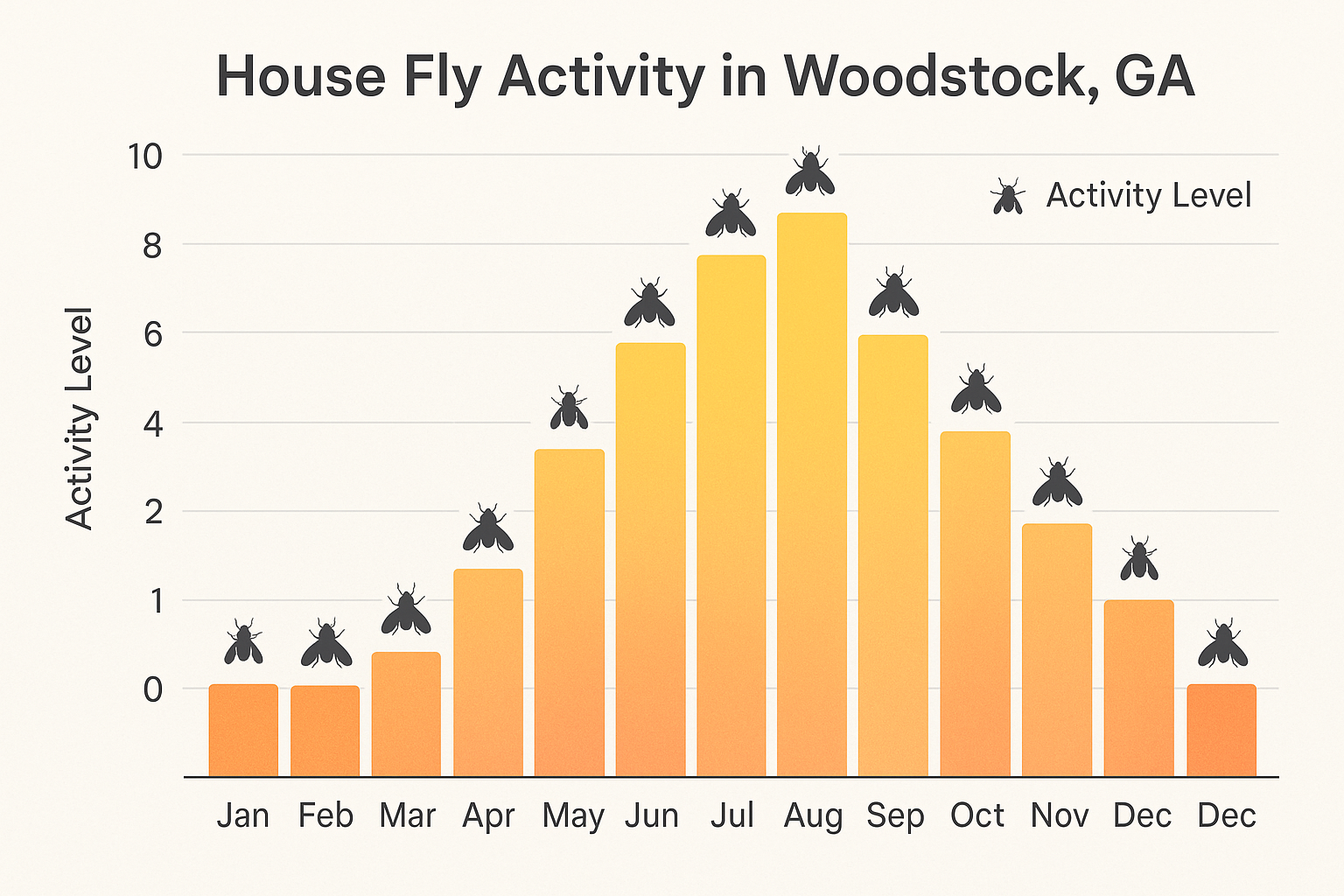
In Woodstock, Georgia, house flies follow a predictable rhythm that mirrors the local climate. A simple bar chart—shown below—captures the ebb and flow of fly numbers month‑by‑month, with a pronounced peak in July and August. Understanding this pattern lets you schedule treatments when they’ll be most effective and, ultimately, most affordable.
Why Temperature and Humidity Drive Fly Populations
Flies are ectothermic insects; their metabolism speeds up as temperatures rise. When daytime highs consistently sit between 80 °F and 95 °F, adult flies reproduce faster, and larvae develop in just a week. Woodstock’s summer also brings higher humidity, which keeps organic waste moist—perfect breeding grounds for maggots. Conversely, cooler fall evenings and lower humidity slow development, causing numbers to dip.
Early‑Season (Spring) Preventive Measures
By late March, the first wave of adult flies begins to emerge. Intervening early can keep the population from exploding later in the season. Here’s what homeowners should do:
- Eliminate standing water. Empty birdbaths, pet dishes, and clogged gutters weekly.
- Secure trash containers. Use tight‑fitting lids and keep bins away from house walls.
- Seal entry points. Install screen doors, repair torn window screens, and caulk cracks around foundations.
- Apply a pre‑emptive perimeter spray. A low‑toxicity adulticide applied around the home’s exterior creates a “fly‑free zone” before numbers rise.
These steps align with the chart’s low‑activity phase, allowing you to spend less on chemicals while still staying ahead of the curve.
Mid‑Season (Summer) Intensive Treatment Options
July and August are the critical months shown in the chart’s highest bars. If you notice swarms inside the kitchen or around outdoor patios, it’s time for a more aggressive approach:
- Targeted bait stations. Place sugar‑based baits near garbage areas; flies feed and carry the toxin back to breeding sites.
- Professional residual sprays. Anthem Pest’s EPA‑approved formulations can remain active for up to four weeks, reducing the need for repeat visits.
- Larval control. Treat compost piles and animal shelters with larvicides that interrupt the maggot stage.
Because the population spike is short‑lived, a well‑timed summer treatment can dramatically lower the total number of flies you’ll have to manage, translating into lower overall costs.
Late‑Season (Fall) Maintenance to Prevent Overwintering
As temperatures dip in September and October, adult activity wanes, but larvae can still survive in insulated sites such as wall voids or deep mulch. Fall maintenance focuses on denying flies a place to overwinter:
- Remove decaying organic matter. Clear fallen leaves, rotting fruit, and compost that sits too close to the house.
- Inspect and treat crawl spaces. A light mist of a residual insecticide helps keep any lingering larvae from maturing when winter returns.
- Schedule a post‑season inspection. A professional walkthrough ensures no hidden hotspots are missed before the next spring.
Aligning Your Treatment Schedule with the Seasonal Chart
Think of the bar chart as a roadmap. Start with a spring “pre‑emptive” spray—typically a one‑time service costing less than a full‑scale summer treatment. Follow up with a mid‑summer intensive application when the chart peaks, and finish with a fall maintenance visit. By matching each service to the corresponding activity level, you avoid over‑treating during low‑fly periods and under‑treating when infestations are at their worst.
Regional climate data from the National Weather Service confirms Woodstock’s average summer high of 89 °F and a relative humidity of 70 %. Combining this data with the best practices outlined by HomeYou’s Woodstock pest‑control cost guide helps you budget confidently: early‑season prevention typically runs $80‑$120, summer intensive treatments range $150‑$250, and fall maintenance falls back to $90‑$130.
When you synchronize your pest‑management plan with the natural fly cycle, you protect your home, your family’s comfort, and your wallet—all while relying on Anthem Pest Control’s safe, transparent, and locally‑focused expertise.
Pricing Options for House Fly Control in Woodstock
At Anthem Pest Control we believe that a clear price tag is the first step toward peace of mind. Whether you’re battling a sudden fly invasion or looking to keep your home fly‑free year‑round, our pricing philosophy stays the same: transparent, affordable, and tailored to your needs. No hidden fees, no surprise add‑ons—just straightforward costs that let you decide what works best for your budget.
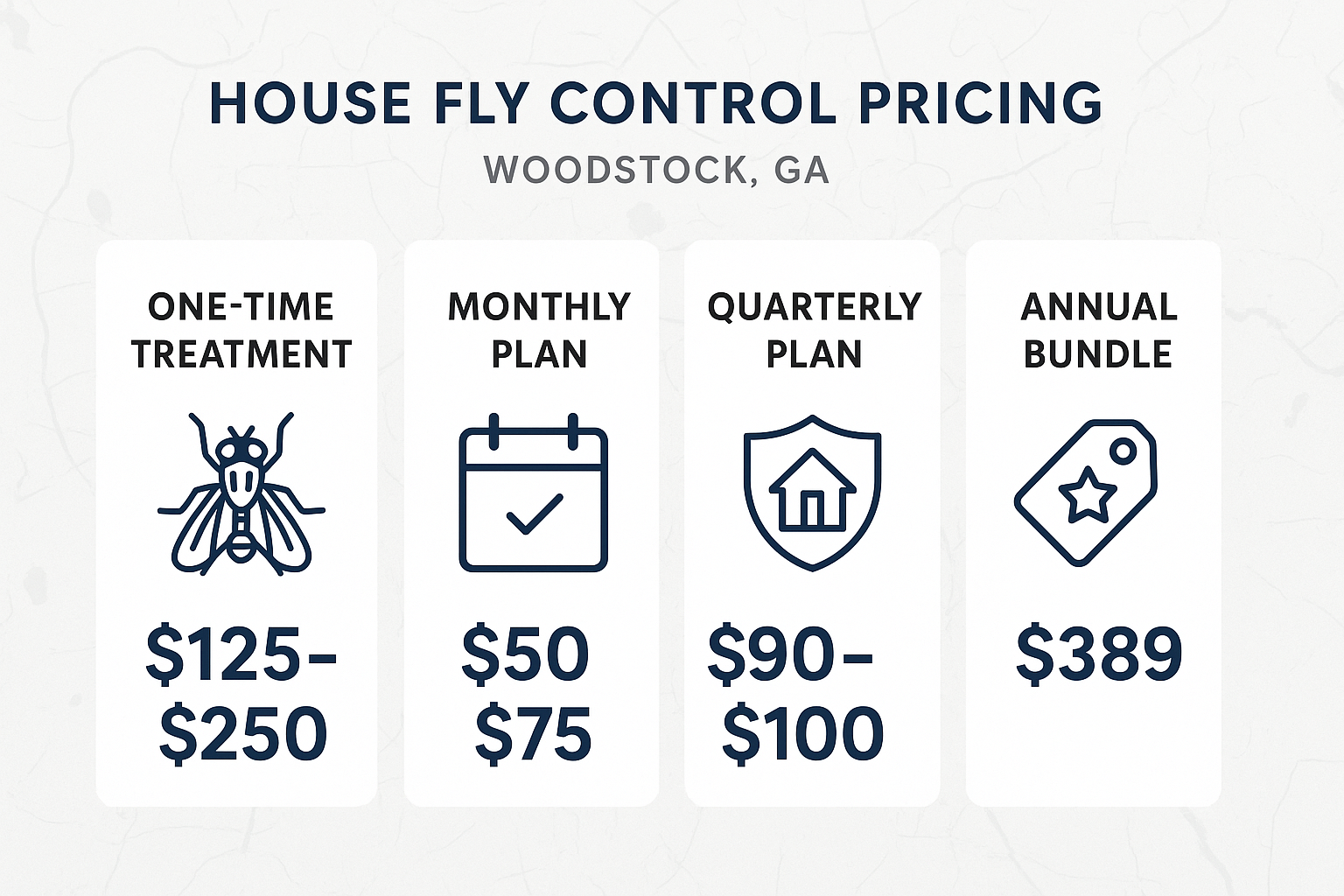
Four Service Plans at a Glance
Our infographic breaks down the four most popular house‑fly solutions we offer to Woodstock homeowners. Below is a quick snapshot of each plan’s price range and what you get for your money.
- One‑time treatment: $125‑$250
- Monthly plan: $50‑$75 per visit
- Quarterly plan: $90‑$100 per visit
- Annual bundle: $389 for year‑round protection
What’s Included in Every Plan
Regardless of the package you choose, each service comes with the same core components:
- Comprehensive inspection: Our certified technicians assess fly hotspots, entry points, and any underlying conditions that could attract pests.
- Targeted treatment: We apply EPA‑approved, low‑odor insecticides that attack adult flies and disrupt their breeding cycle.
- Follow‑up visit: Depending on the plan, you’ll receive a post‑treatment check to ensure the problem is fully resolved.
Cost‑Benefit Analysis: One‑Time vs. Subscription
A one‑time treatment is ideal when you face a sudden, isolated fly problem—perhaps after a backyard barbecue or a recent renovation that opened new entry points. The upfront cost (typically $125‑$250) covers a thorough inspection, a full‑dose treatment, and a single follow‑up visit. If the infestation is limited and you’ve taken steps to seal doors and windows, this option often resolves the issue without ongoing expense.
On the other hand, a subscription plan—monthly, quarterly, or annual—pays off when flies keep returning or when you prefer a hands‑off approach. Regular visits keep the chemical barrier fresh, dramatically reducing the chance of re‑infestation. The monthly plan, at $50‑$75 per visit, spreads the cost across the year and includes seasonal adjustments for peak fly activity. The quarterly plan offers a middle ground, while the annual bundle locks in a flat $389 rate, delivering up to twelve visits and guaranteeing year‑round protection at a predictable price.
Plan Comparison Table
| Plan | Price (per visit or total) | Frequency | Includes Inspection | Follow‑up Visits | Best For |
|---|---|---|---|---|---|
| One‑time Treatment | $125‑$250 | Single | Yes | One post‑treatment check | Isolated outbreaks |
| Monthly Plan | $50‑$75 per visit | 12 × year | Yes (each visit) | Every month | High‑traffic homes, continuous protection |
| Quarterly Plan | $90‑$100 per visit | 4 × year | Yes (each visit) | Every quarter | Seasonal hotspots, moderate risk |
| Annual Bundle | $389 total | Up to 12 visits | Yes (each visit) | Monthly or as needed | Maximum convenience, budget certainty |
Getting a Personalized Quote
Every home is unique, so we tailor our estimate to your square footage, property layout, and current infestation level. Simply give us a call at 877‑371‑8196 or fill out the quick request form on our website. Our team will ask a few key questions—such as the size of your yard, the number of doors and windows, and any recent fly sightings—to calculate a precise quote that reflects the exact work required.
Ready to Learn More?
For full details on each service, customer testimonials, and to schedule your first inspection, visit Anthem Pest Control. Our transparent pricing and local expertise make it easy to protect your Woodstock home without breaking the bank.
Protect Your Woodstock Home – Get Professional Fly Control Today
House flies may seem harmless, but in Woodstock they bring more than just annoyance. These buzzing intruders can carry bacteria from waste to food, spreading illnesses such as salmonella, dysentery, and even eye infections. Their constant presence also disrupts outdoor gatherings, patio meals, and indoor comfort, turning a pleasant summer evening into a battle against swatting and cleaning. Recognizing the health and quality‑of‑life risks is the first step toward a fly‑free home.
We’ve already covered the best times to act: early spring, when flies first emerge, and the peak summer months when populations explode. Pricing is transparent and flexible— a one‑time interior treatment starts around $99, while comprehensive seasonal packages that include exterior barriers and follow‑up visits range from $199 to $349, depending on square footage and specific needs. These options let you choose a solution that fits both your budget and the severity of the infestation.
Anthem Pest Control brings more than a price tag. Our technicians are certified, locally trained, and familiar with the unique micro‑climates of Woodstock’s neighborhoods. We prioritize safety by using EPA‑approved products that protect your family, pets, and the environment while delivering rapid knock‑down results. Our integrated approach combines thorough inspections, targeted applications, and preventive measures—so you’re not just treating today’s flies but stopping tomorrow’s horde.
If you’ve spotted any of the warning signs—persistent buzzing near doors, fly larvae in garbage areas, or an uptick in indoor activity—our friendly team is ready to help you stay ahead of the summer surge.
Give us a call at 877‑371‑8196 for a free, no‑obligation quote. Our specialists will answer your questions, explain the treatment steps, and confirm the best schedule for your home.
We encourage you to book an on‑site inspection. During the visit we’ll assess entry points, identify breeding hotspots, and design a customized plan that matches your property’s layout and your personal comfort goals.
Choosing a local partner means you benefit from fast response times and a deep understanding of Woodstock’s seasonal fly patterns. Our service includes a post‑treatment check‑in, so we can verify that the fly population stays suppressed and adjust the plan if needed—giving you peace of mind all year long.
Ready to reclaim your yard and kitchen? Visit Anthem Pest Control online to learn more and schedule your service today.