
What Millipedes Are and Why They Matter in Georgia
Millipedes are elongated, many‑legged arthropods that belong to the class Diplopoda. In Georgia you’ll most often encounter the Eastern Flat‑Back Millipede (Narceus americanus) and the Southern Giant Millipede (Arboricola spp.). Both species are harmless to humans but can become a noticeable nuisance when they gather in large numbers.
Biology and Diet
These creatures are detritivores, meaning they thrive on decaying organic matter—leaf litter, rotting wood, and even compost. By breaking down this material, millipedes accelerate nutrient cycling and improve soil structure, a service that benefits gardens and natural ecosystems alike.
How Millipedes Differ From Look‑Alikes
- Centipedes: Faster movers with one pair of legs per body segment, and they are predatory, often hunting insects.
- Woodlice (pill bugs): Belong to the crustacean family, have a flatter, segmented exoskeleton, and lack the numerous legs that define millipedes.
- Millipedes: Slow‑moving, with two pairs of legs per segment, and primarily feed on dead plant material.
Why Homeowners Should Pay Attention
Under normal circumstances millipedes stay outdoors, but Georgia’s humid subtropical climate can trigger mass migrations. Warm, moist springs and early summers create ideal conditions for them to seek shelter, and they often end up in basements, crawl spaces, or even kitchen cabinets. When thousands of individuals enter a home, they can:
- Clog drains and gutters, leading to water‑related issues.
- Leave a silvery‑gray trail of mucus that stains walls and flooring.
- Damage delicate landscaping by feeding on young seedlings or ornamental foliage, especially after heavy rains.
- Contribute to moisture buildup around foundations, indirectly encouraging wood rot or mold growth.
Kennesaw’s Local Climate and Millipede Activity
Kennesaw sits in the foothills of the North Georgia plateau, where average summer temperatures hover around 85 °F and rainfall exceeds 50 inches annually. This combination of heat and humidity fuels rapid decomposition of leaf litter, providing an abundant food source for millipedes. When the soil becomes saturated after a storm, the insects are forced upward, often spilling onto sidewalks, driveways, and into open doors.
Because the metro area includes both densely wooded neighborhoods and newer suburban developments, the likelihood of encountering millipedes varies by property type. Homes surrounded by mature trees and mulch beds tend to see higher populations, while well‑drained, minimally vegetated yards may experience fewer intrusions.
Understanding these basics helps you recognize when a harmless detritivore becomes a potential pest. If you notice frequent indoor sightings or damage to your garden, it’s time to consider a professional assessment. Anthem Pest Control can identify the species, evaluate the source of entry, and recommend targeted treatments that protect your home without disrupting the beneficial role millipedes play in the wider ecosystem.
Seasonal Activity of Millipedes Across the Year
Life Cycle Basics
Millipedes in Georgia follow a three‑stage life cycle: egg, juvenile (often called a “nymph”), and adult. Females lay clusters of tiny, white eggs in moist soil or leaf litter during the warmer months. Those eggs hatch into juveniles that look like miniature adults but lack fully developed segments. Over several molts—sometimes up to a dozen—the juveniles grow, add body rings, and eventually become reproductive adults ready to lay the next generation of eggs.
Temperature & Moisture: The Driving Forces
Two environmental cues dictate when millipedes emerge from the soil: temperature and moisture. When soil temperatures rise above about 55°F (13°C) and the ground stays damp, the insects become active, searching for food and mates. Conversely, a dry, cold winter forces them deeper into the earth where they remain dormant. A sudden rain after a dry spell can also trigger a burst of movement as they seek shelter from the wet surface.
Month‑by‑Month Activity in Georgia
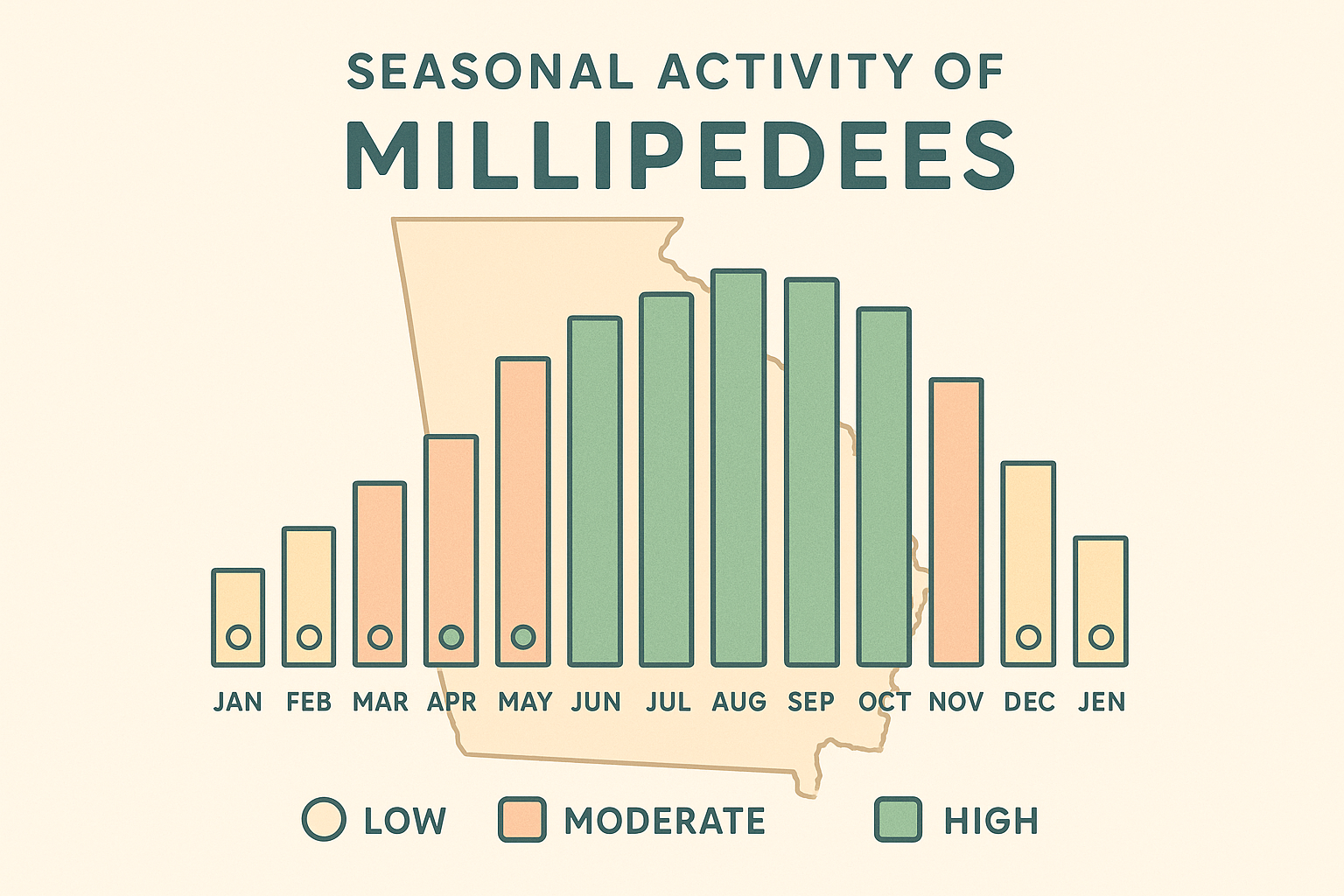
- January – February: Low activity. Millipedes stay deep underground; indoor sightings are rare.
- March – April: Moderate activity. Soil warms and spring rains create ideal conditions for juveniles to surface.
- May – June: Increasing activity. Adults emerge in larger numbers, especially after nightly showers.
- July – August: High activity. Summer heat combined with frequent thunderstorms drives the greatest movement, often pushing millipedes toward home foundations seeking cooler, moist refuge.
- September – October: Moderate activity. Temperatures begin to drop, but lingering humidity still supports noticeable outdoor activity.
- November – December: Low activity. Cooler, drier conditions send most millipedes back into the soil for winter dormancy.
Why Those Peaks Matter for Your Home
During the high‑activity summer months, millipedes are most likely to wander onto sidewalks, crawl under siding, and slip through cracks in foundations. Their moisture‑loving nature makes a damp basement or crawl space especially attractive. In spring and fall, you may notice occasional indoor sightings after heavy rain, but infestations are less common. Understanding these patterns lets you schedule inspections before the summer surge, reducing the chance of a surprise indoor invasion.
Warning Signs of a Millipede Infestation
Visual clues you can’t ignore
One of the first things a homeowner notices is a cluster of dead millipedes gathering near doors, windows, or foundation cracks. These tiny, dark‑brown bodies often appear in groups because the insects seek shelter together before they die off. Look for slimy, gelatinous trails on concrete walkways or siding – millipedes secrete a defensive slime when they feel threatened. Finally, keep an eye out for shed exoskeletons; the molted shells are translucent and usually found near entry points or in mulch beds.
Physical signs around the yard
Millipedes love moist, organic material, so a sudden change in your landscaping can be a red flag. If you notice wood mulch becoming compacted, displaced, or unusually damp, it may be a sign that thousands of millipedes are burrowing through it. Over‑wet mulch can also lead to a buildup of moisture against your home’s foundation, creating a perfect breeding ground. In severe cases, you might see small depressions or “pockets” where the soil has been pushed aside by their movement.
Indoor indicators
During humid periods, especially after a rainstorm, millipedes often wander indoors seeking dry refuge. Check basements, crawl spaces, and any low‑lying areas where moisture lingers. They tend to congregate near windows, vents, or utility openings. Finding a few live millipedes on your basement floor, along a window sill, or in a garage is a clear sign that they have found a pathway into your home.
Health considerations
For most people, millipedes are harmless—they do not bite, sting, or carry disease. However, the slime they leave behind can cause skin irritation for sensitive individuals, and the sheer number of insects may trigger allergic reactions such as sneezing or watery eyes. If you or a family member experiences unexplained allergies after a rainstorm, it’s worth checking for a millipede presence.
DIY inspection checklist
- Walk the perimeter of your home and note any dead millipedes or slime trails.
- Inspect mulch beds, flower borders, and wood chips for compacted, damp material or shed exoskeletons.
- Check foundation cracks, door thresholds, and window screens for tiny openings.
- Examine basements, crawl spaces, and garages for live millipedes, especially after rain.
- Feel for excess moisture on foundation walls; a damp feel may indicate hidden activity.
- Document any allergic symptoms that coincide with increased millipede sightings.
Spotting these warning signs early can save you time, money, and the headache of a full‑blown infestation. If the checklist reveals multiple red flags, it’s a good idea to call a local professional—like Anthem Pest Control—to assess the situation and recommend a targeted treatment plan.
Treatment Options and Cost Comparison for Millipede Control
Overview of Treatment Methods
Homeowners in Kennesaw have four primary ways to tackle millipedes:
- Perimeter sprays – a professional‑grade insecticide applied around the foundation and entry points.
- Soil drenches – a liquid treatment mixed into the top few inches of soil where millipedes hide.
- Bait stations – slow‑acting poison placed in low‑traffic zones; millipedes carry the bait back to the nest.
- Habitat modification – removing excess mulch, clearing leaf litter, and fixing drainage problems to make the yard less inviting.
Pros and Cons of Each Method
Choosing the right approach depends on safety, environmental impact, and how quickly you need results.
- Perimeter sprays
- Pros: Immediate knock‑down, covers large areas, works well for heavy infestations.
- Cons: Requires re‑application after heavy rain, potential exposure to pets if not timed correctly.
- Soil drenches
- Pros: Targets millipedes where they live, less visible to children and pets.
- Cons: Effectiveness can diminish if soil is heavily compacted or overly dry.
- Bait stations
- Pros: Low environmental footprint, safe for humans when placed correctly.
- Cons: Slower to see results; requires monitoring and occasional replacement.
- Habitat modification
- Pros: Long‑term prevention, no chemicals involved.
- Cons: Requires homeowner effort and ongoing yard maintenance.
Detailed Cost Breakdown
Anthem Pest Control offers transparent pricing that reflects the size of your property, infestation level, and the frequency of service.
| Service Type | Price Range | Per 1,000 sq ft Fee | Frequency |
|---|---|---|---|
| Single‑visit (perimeter spray or soil drench) | $100 – $300 | $0.10 – $0.30 | One‑time |
| Monthly maintenance plan (includes bait stations + habitat check) | $45 – $70 per month | $0.05 – $0.07 | 12‑month contract |
Factors that can push a quote higher include:
- Large homes or extensive landscaping (over 3,000 sq ft).
- Severe infestations that demand multiple visits.
- Specialized treatments for pet‑friendly or eco‑sensitive neighborhoods.
How to Calculate the Best Value for Your Property
1. Measure your square footage – include the house footprint and any adjacent hard‑scaped areas where millipedes may gather.
2. Determine infestation severity – a light presence may only need a single spray; heavy clusters usually benefit from a monthly plan.
3. Apply the per‑1,000 sq ft fee from the table above. For example, a 2,500 sq ft yard with moderate activity would cost roughly:
- Single‑visit: 2.5 × $0.20 (mid‑range) ≈ $50
- Monthly plan: 2.5 × $0.06 (mid‑range) ≈ $150 per year
When you compare the annual cost of a plan versus a one‑time treatment, the plan often saves money if you expect recurring millipede activity, especially after the first year when the habitat has been improved.
Local Pricing Verification
“In the Atlanta metro area, including Kennesaw, homeowners typically see single‑visit millipede treatments priced between $120 and $280, while monthly maintenance packages range from $45 to $70 per month depending on property size.” – Anthem Pest Control, local pricing guide

Secure Your Home with Professional Millipede Management

Millipedes may seem harmless, but when they swarm into your yard or crawl inside your home, they become a genuine nuisance. Their sudden appearance usually signals excess moisture, decaying organic matter, or cracks that let them slip into living spaces. Ignoring the problem lets the infestation grow, increasing cleanup time, potential damage to landscaping, and the likelihood of other pests taking advantage of the same entry points. Prompt, professional treatment stops the cycle before the next seasonal peak.
Why Choose a Licensed, Experienced Provider?
- Accurate Identification: Trained technicians distinguish millipedes from look‑alike insects, ensuring you receive the right solution.
- Safe, EPA‑approved Chemicals: Professionals apply treatments that target millipedes while protecting your family, pets, and beneficial insects.
- Guaranteed Results: Service contracts often include follow‑up visits and satisfaction guarantees, giving you peace of mind.
- Ongoing Monitoring: Regular inspections catch re‑infestations early, keeping your home protected year‑round.
Anthem Pest Control: Your Georgia Millipede Specialists
At Anthem Pest Control, we combine local knowledge with a proven, transparent approach. Our technicians know the Kennesaw climate, soil conditions, and typical millipede hotspots, allowing us to craft a treatment plan that fits your property’s unique needs. You’ll receive:
- Clear, upfront pricing—no hidden fees.
- Custom‑tailored applications that focus on entry points, moisture control, and perimeter barriers.
- Education on simple homeowner steps—like fixing drainage issues—to prevent future invasions.
We stand behind every job with a satisfaction guarantee and a schedule for post‑treatment monitoring. Our goal is simple: keep your home comfortable and millipede‑free without breaking the bank.
Take the First Step Toward a Millipede‑Free Home
Ready to protect your property before the next surge? Contact us for a free, no‑obligation quote and let our experts design a proactive plan that fits your budget.
Call Anthem Pest Control today at 877-371-8196 for a free quote, or visit Anthem Pest Control to learn more about our services and transparent pricing.