Why Knowing Moth Control Costs Matters in Lilburn

Lilburn homeowners have noticed a sharp rise in moth activity over the past year, mirroring a broader spike across suburban Gwinnett County. Neighborhood reports from Brookhaven and East Lilburn describe carpet moths leaving tell‑tale holes in rugs, upholstery, and even stored clothing. These insects thrive in the humid, temperate climate and are drawn to the abundant fabric sources found in typical family homes.
When a moth infestation goes unchecked, the financial fallout can be surprising. Replacing a damaged area rug or a set of drapes often costs between $200 and $800, while extensive damage to wall hangings or built‑in upholstery may require $1,500‑$3,000 in repairs. Beyond the obvious material costs, untreated moths can weaken structural components such as insulation or wooden frames, leading to even higher renovation expenses down the line.
Understanding these potential outlays gives homeowners a clear reason to budget for professional moth control before damage escalates. A proactive approach—such as scheduling an early‑season inspection and treatment—typically costs a fraction of the replacement price, and it provides peace of mind knowing the problem is being handled by certified technicians. Transparent pricing from a trusted provider like Anthem Pest Control lets you compare treatment options side‑by‑side with the true cost of doing nothing.
For a broader perspective on pest‑management expenses nationwide, the EPA pest‑management cost data maintains a detailed database that breaks down average costs by species and treatment type. Reviewing that data alongside local trends helps you set realistic expectations and negotiate a plan that fits your budget.
Lilburn’s unique blend of older homes and newer developments means the risk profile varies block‑by‑block, but the common denominator is the presence of fabric‑rich interiors. By mapping recent sightings and aligning them with your household’s most vulnerable items, you can prioritize treatment zones and avoid surprise expenses later in the season.
The Moths You’ll Encounter in Lilburn
Indian Meal Moth (Plodia interpunctella)
This tiny pantry invader measures about ½ inch from wing tip to tip. Adults display a distinctive two‑tone wing pattern—golden‑brown forewings speckled with tiny white spots and a contrasting pink‑orange hindwing that flashes when the moth is disturbed. The life cycle is rapid: eggs hatch in 3–5 days, larvae feed for 2–6 weeks, then spin silk cocoons where they pupate for another 1–2 weeks before emerging as adults.
Because the larvae thrive on dry, stored foods, you’ll most often find them nesting in grain bins, cereal boxes, flour, nuts, dried fruit, and even pet food. Look for silky webbing or clusters of tiny, creamy‑white caterpillars near the tops of pantry shelves. Early detection—spotting the web or the adult’s fluttering—lets you seal food containers and prevent a full‑blown infestation.
Carpet Moth (Trichophaga tapetzella)
Also called the tapestry moth, the carpet moth is slightly larger than the pantry species, with a wingspan of ¾ – 1 inch. Its forewings are a muted brown or gray, mottled with faint darker speckles that help it blend into woven fibers. The moth’s life cycle mirrors that of the pantry moth but is tuned to fabrics: eggs are deposited on natural fibers, larvae burrow into wool, silk, cashmere, or even felted carpet fibers, and feed for 3–5 weeks before spinning a cocoon within the material.
Carpet moth larvae create irregular, irregularly shaped holes and leave behind fine, silvery frass (droppings) that looks like tiny threads. The damage is most noticeable in high‑traffic carpet zones, under furniture, and along baseboards where natural fibers accumulate dust. Spotting the larvae or the characteristic “cobweb” silken tunnels early can save you costly fabric repairs.
National prevalence: The 2024 EPA pest report estimates that 12 % of U.S. homes report moth activity annually. While the figure covers all moth species, the two outlined above account for the majority of household complaints in the Southeast.
For a deeper dive into regional moth biology, the Georgia Cooperative Extension – Moth Biology provides state‑specific data and identification keys that align with Lilburn’s climate.
Remember, visual identification is your first line of defense. Recognizing the adult’s wing pattern, the larvae’s feeding signs, or the tell‑tale silk webs empowers homeowners to act quickly—whether that means tightening food storage, vacuuming carpet fibers, or calling a professional for targeted treatment.
When Moths Are Most Active in Lilburn
Lilburn’s location in Gwinnett County means humid summers and mild winters—conditions that let moths thrive almost year‑round. Warm nights, occasional rain, and abundant vegetation accelerate the life cycle of pantry, carpet and other household moths. Because temperatures rarely fall below 40 °F, eggs laid in early spring can hatch quickly, producing several overlapping generations.
| Month | Typical Activity Level | Key Notes |
|---|---|---|
| January | Low | Adults scarce; indoor heating. |
| February | Low | First eggs may appear. |
| March | Moderate | Warm nights trigger emergence. |
| April | Moderate | Pantry buildup fuels growth. |
| May | High | Multiple generations overlap. |
| June | High | Humidity peaks; larvae fast. |
| July | Very High | Peak breeding; festival lights. |
| August | Very High | Continued high activity. |
| September | High | Temps drop; lights still lure. |
| October | Moderate | Adults seek indoor shelter. |
| November | Low | Cooler nights reduce flight. |
| December | Low | Indoor heating sustains few. |
Local events can magnify these natural patterns. The Lilburn Summer Festival, held each July, lines streets and parking lots with bright, white floodlights that act like beacons for nocturnal moths. Those lights not only draw adults but also encourage them to lay eggs near homes that remain lit after dark.
Homeowner Tips for Peak Months
- Swap outdoor bulbs for amber‑tinted or low‑intensity LEDs from May through August.
- Store pantry items in airtight containers to deny larvae a food source.
- Screen basement and attic vents; moths love warm, undisturbed spaces.
- Schedule a professional inspection before the July festival to catch early infestations.
By syncing your prevention steps with Lilburn’s climate calendar and community happenings, you can keep moth populations at bay. For a deeper dive into the science behind these trends, see the Georgia Cooperative Extension – Moth Biology report.
Spotting the Signs Before the Infestation Grows
Early detection is the most cost‑effective way to keep moths from turning your wardrobe and pantry into a feeding ground. The good news is that moth activity leaves unmistakable clues that any attentive homeowner can spot with a quick visual sweep.
Common early‑stage signs
- Webbing in closets or drawers – fine, silky strands draped across clothing, especially near seams and corners.
- Silken tubes on fabrics – caterpillars spin protective tubes that look like tiny white ribbons on sweaters, scarves, or blankets.
- Pantry debris – clusters of fine, powdery frass (insect droppings) or small, irregularly shaped crumbs near grain containers.
- Irregular holes in clothing – ragged, uneven openings near seams, cuffs, or underarms, often accompanied by a faint, musty odor.
According to the 2023 NPMA homeowner survey, 68% of homeowners notice damage only after severe loss. That lag can turn a manageable problem into a costly replacement nightmare.
Quick‑scan checklist
- Open closet doors and run a flashlight along the back of each rod – look for any silken webbing.
- Inspect seams, folds, and tags of stored garments for silken tubes or tiny larvae.
- Check pantry shelves, especially around grain, cereal, and flour packages, for powdery debris or webbing.
- Feel fabric for tiny holes or a “chewed” texture, especially on wool and cotton items.
- Listen for a faint rustling sound when you move clothing – it may indicate active larvae.
For a deeper dive into detection methods and preventive steps, consult the NPMA Moth Control Best Practices guide.
From DIY Sprays to Professional Extermination
Over‑the‑counter pheromone traps
OTC pheromone traps lure adult moths with a synthetic scent that mimics the female’s sex pheromone. Once inside, the insects become stuck on a coated surface, interrupting the breeding cycle. Prices typically range from $15 to $45 per unit, depending on brand and trap capacity.
- Pros: Easy to set up, no chemicals, safe around pets and children, and useful for early detection.
- Cons: Traps capture only flying adults; they do not eradicate larvae hidden in closets, carpets, or insulation. Effectiveness drops dramatically in heavy infestations, and multiple units are often needed to see a noticeable decline.
Home‑applied residual insecticides
Residual insecticides create a lasting barrier on surfaces where moths travel. When applied correctly, the chemical remains active for weeks, killing insects that contact treated areas. Key to success is choosing an EPA‑registered product that is labeled for indoor moth control.
Application tips:
- Wear disposable gloves and a mask to avoid skin and respiratory exposure.
- Apply a thin, even coat to baseboards, under furniture, and inside closets—areas where moths hide.
- Ventilate the space for at least 30 minutes after spraying, then keep the area off‑limits to children and pets until the label’s re‑entry time has elapsed.
Cost for a DIY kit averages $30–$70, covering enough product for a 1,500‑sq‑ft home. While many homeowners see a reduction in adult moth sightings, residual sprays rarely achieve total eradication, especially when larvae are deep within fabrics.
Certified professional treatments
Professional services combine heat, fogging, and integrated pest management (IPM) to attack moths at every life stage. Heat treatment raises indoor temperatures to > 120°F for several hours, killing eggs, larvae, and adults in place. Fogging disperses a fine aerosol of EPA‑registered insecticide, reaching cracks and voids that DIY sprayers miss.
According to an NPMA case study, professional heat treatment delivers a 92% success rate after a single application, while comprehensive IPM programs report overall control rates above 95% when follow‑up monitoring is included.
- Pros: High efficacy, minimal chemical residue, rapid results, and a guarantee that the entire structure is treated.
- Cons: Higher upfront cost—typically $250–$500 for a standard home—but the long‑term savings from avoiding repeated DIY attempts often justify the expense.
Safety considerations for pets and children
Regardless of the method, always read label directions and follow safety precautions. For chemical treatments, keep children and pets out of treated rooms until the re‑entry interval expires. Heat treatments pose a burn risk, so ensure all occupants, especially small children, are removed before the process begins.
For detailed guidance on indoor pesticide safety, consult the CDC Guidelines on Indoor Pesticide Safety. Following these best practices helps protect your family while you eliminate moths for good.
How Much Does Professional Moth Control Really Cost?
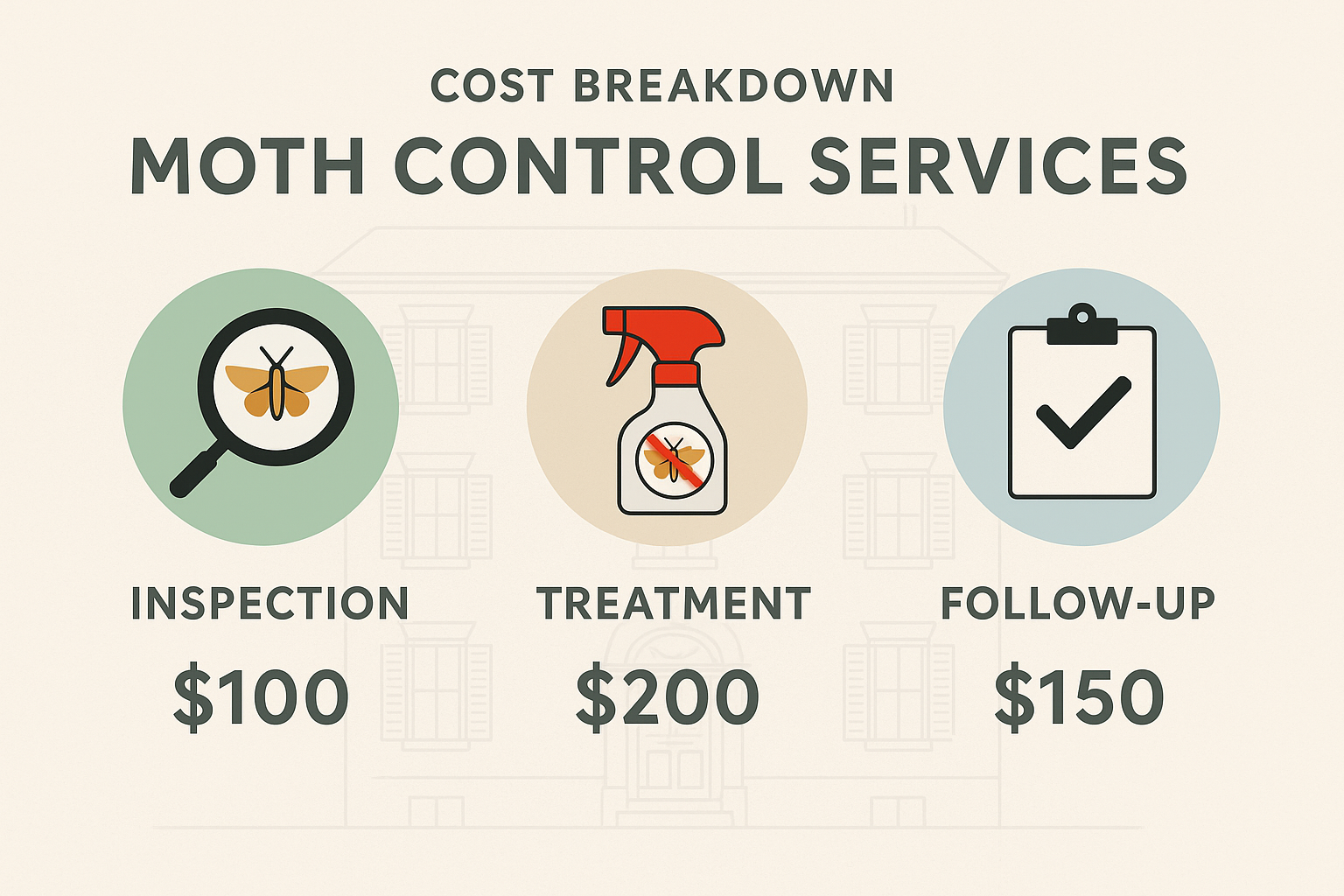
When a moth infestation starts to show up in your closets or pantry, the first question on most homeowners’ minds is the price tag attached to a professional fix. In Lilburn, Georgia, the cost can vary based on the depth of the problem, the treatment method, and the level of follow‑up you request. Below is a transparent, line‑by‑line breakdown of what Anthem Pest typically charges, so you can compare options without any hidden surprises.
Inspection fee
An on‑site inspection is the foundation of any effective moth‑control plan. Anthem Pest charges between $75 and $120 for a thorough walk‑through, during which a certified technician identifies the species, pinpoints breeding sites, and evaluates the extent of damage. This fee is usually applied toward the total cost of any treatment you decide to move forward with, making it a low‑risk first step.
Basic treatment package (single visit, residual spray)
If the infestation is limited to a few areas—say, a couple of closets or a pantry shelf—a single‑visit residual spray can often eradicate the problem. The basic package runs from $180 to $260, covering the application of EPA‑approved insecticides that continue to work for weeks after the technician leaves. Homeowners receive a detailed treatment report and simple after‑care instructions to keep moths at bay.
Comprehensive package (inspection, treatment, 3‑month follow‑up)
For larger homes or more entrenched infestations, a comprehensive approach is advisable. This bundle includes the initial inspection, a full‑home treatment, and two scheduled follow‑up visits over three months to ensure the population stays eliminated. Prices fall between $350 and $480, reflecting the added labor, additional product usage, and the peace of mind that comes with ongoing monitoring.
Additional services (heat treatment, fabric protection)
Some situations call for specialized interventions. Heat treatment—raising room temperature to a level that kills larvae and eggs—costs roughly $120 to $250 per session**. Fabric protection, which involves applying a moth‑repellent coating to stored clothing and upholstery, falls in the same price corridor. These add‑ons are optional but can be a smart investment for valuable textiles or historic homes.
| Service | Price Range (USD) |
|---|---|
| Inspection fee | $75 – $120 |
| Basic treatment (single visit, residual spray) | $180 – $260 |
| Comprehensive package (inspection, treatment, 3‑month follow‑up) | $350 – $480 |
| Additional services (heat treatment, fabric protection) | $120 – $250 per session |
For a precise, no‑obligation quote, contact Anthem Pest for a free on‑site estimate in Lilburn. Their technicians will tailor the plan to your home’s size, construction type, and the severity of the moth activity.
Nationally, the Environmental Protection Agency (EPA) reports that average pest‑management costs hover around $200‑$400 per household, depending on the species and treatment complexity. Our Lilburn figures align closely with that benchmark, confirming that you’re paying a fair market rate for a solution that’s both safe and effective. Read the EPA’s cost data for broader context.
Is DIY Worth the Savings?
When moths infest wardrobes, many homeowners reach for a do‑it‑yourself kit, hoping to cut costs. At first glance, buying a few traps or a bottle of insecticide seems cheaper than hiring a professional. However, the true expense of DIY quickly adds up once you factor in hidden costs and the risk of incomplete eradication.
Hidden DIY Costs
- Repeated product purchases: A single trap or spray often lasts only a few weeks. Most Lilburn residents end up buying new supplies every month, which can total $150‑$250 over a season.
- Potential treatment failure: Without a thorough inspection, you may miss larvae hidden deep in seams or in seldom‑used storage. Failed treatments mean you’ll have to start over, doubling your chemical and labor expenses.
- Fabric replacement: If moths continue to damage clothing, the cost of replacing ruined garments can range from $1,200 to $2,500, especially for families with extensive wardrobes.
Real‑World Lilburn Homeowner Example
John Miller, a homeowner in Lilburn, tried a DIY approach for two consecutive summers. He spent $320 on traps, sprays, and replacement mothballs, yet his closet still showed signs of damage. After consulting Anthem Pest Control, he chose a professional moth‑control plan priced at $720. The treatment eliminated the infestation in one visit, and John avoided an estimated $1,200 in clothing losses. In total, he saved roughly $400 compared with continuing the DIY route.
Long‑Term Financial & Peace‑of‑Mind Advantages
Professional services bundle inspection, targeted treatment, and a warranty that protects against reinfestation. This comprehensive approach eliminates the need for recurring product purchases and reduces the risk of costly garment replacement. Moreover, homeowners gain confidence knowing a certified technician has addressed the problem at its source, freeing them from the stress of constant monitoring.
In the end, while DIY may appear inexpensive upfront, the hidden expenses and uncertainty often outweigh the perceived savings. Investing in a professional moth‑control plan delivers a clearer bottom line and lasting peace of mind.
What Lilburn Residents Are Paying Today
At Anthem Pest, we believe that a homeowner should never guess how much a moth‑control service will cost. That’s why we publish the actual figures we’ve collected from recent quotes across Lilburn’s neighborhoods. By showing real numbers, we give you the confidence to budget wisely and choose a provider that backs its pricing with local knowledge. We break down each component—inspection, treatment, and follow‑up—so you know exactly where your dollars are going, and we never charge for travel within Lilburn’s city limits.
In the Brookhaven area, the average cost for a complete moth‑control package – which includes an initial inspection, a full‑home treatment, and a six‑month follow‑up – sits at roughly $380. Homeowners in East Lilburn, where lot sizes tend to be larger and treatment zones more extensive, see an average of $410 for the same comprehensive service.
These averages come directly from Anthem Pest’s 2024 Lilburn quote sheet, a compilation of over 120 individual quotes received between January and March. Each quote reflects the specific square‑footage, property layout, and any additional preventative measures requested by the client, ensuring the figures are not generic estimates but true reflections of what residents are paying right now.
To make professional moth control even more accessible, Anthem Pest offers a suite of discount programs that are automatically applied at checkout. These savings are designed to reward the community members who need them most.
- Senior Discount: 15 % off for homeowners aged 65 and older.
- Military Discount: 10 % off for active‑duty service members and veterans.
- Bundle Savings: 12 % off when you combine moth control with any other Anthem Pest service, such as termite monitoring or mosquito treatment.
- First‑Time Homeowner Credit: $25 off the initial service for owners who have purchased their home within the past two years.
When you see a clear line‑item price—$380 in Brookhaven, $410 in East Lilburn—and know exactly which discounts apply, you can compare options without hidden fees or surprise add‑ons. Anthem Pest’s local technicians have been servicing the Lilburn area for over a decade, so the pricing reflects both market rates and the company’s commitment to effective, low‑impact moth eradication. Whether you’re dealing with a fresh infestation or simply want to prevent future moth damage, the pricing data gives you a realistic baseline for budgeting your pest‑management plan for the year ahead.
Moth Control FAQs for Lilburn Homeowners
How soon after treatment can I re‑enter my home?
Most professional moth treatments are applied as a low‑volume spray or dust that dries within 30‑60 minutes. The Centers for Disease Control and Prevention (CDC) recommends waiting at least one hour before walking through treated rooms and 2–4 hours before resuming normal activities such as cooking or sleeping. If a fogger or aerosol is used, keep windows closed for the full exposure period (usually 30 minutes) and ventilate the space for an additional 30 minutes before re‑entry. These guidelines help ensure any residual chemicals have settled and reduce inhalation risk.
Are treatments safe for pets and children?
Anthem Pest uses EPA‑registered products that have been evaluated for human and animal safety when applied according to label directions. Most indoor moth control agents contain reduced‑risk active ingredients such as pyrethrins or silica‑based dusts, which are non‑toxic after they dry. Nonetheless, keep pets and children out of treated areas until the recommended re‑entry time has passed and the surface feels dry to the touch. If you have a particularly sensitive animal or child, ask the technician for a product‑specific safety data sheet.
How often should I schedule follow‑up visits?
Integrated pest management (IPM) best practices, as outlined by the National Pest Management Association (NPMA), suggest a follow‑up inspection 2–4 weeks after the initial treatment. This visit confirms that the moth population is suppressed and allows the technician to address any missed hotspots. For severe infestations, a quarterly service plan is often recommended, while routine preventive treatments can be spaced every 6–12 months depending on seasonal activity and storage practices in your home.
Protect Your Home Today with Transparent Pricing
Knowing how much moth control costs in Lilburn isn’t just about budgeting—it’s the first step toward protecting the fabrics, stored foods, and wooden structures that moths love to invade. Whether you’re dealing with the destructive carpet moth, the pantry‑invading Indian meal moth, or the wood‑eating carpenter moth, understanding the price range helps you act before damage becomes irreversible.
Professional treatment matters because it combines accurate species identification with targeted, safe interventions that homeowners can’t reliably achieve on their own. A qualified technician can assess the infestation level, choose the right product, and apply it in a way that minimizes risk to family and pets while delivering lasting results.
Anthem Pest brings years of local experience to Lilburn homeowners, offering clear, upfront pricing with no hidden fees. Our technicians perform a free on‑site estimate, walk you through the recommended plan, and explain exactly what you’ll pay before any work begins.
Ready to safeguard your home without surprise costs? Call us today at 877‑371‑8196 for a complimentary quote, or visit Anthem Pest Control to schedule your free estimate. Let’s keep your home moth‑free, together.