
Recognizing Mouse Infestations in Buford, GA
In Georgia’s suburbs, the house mouse (Mus musculus) and the deer mouse (Peromyscus maniculatus) are the two species you’ll most likely encounter inside a home. Both are small, adaptable, and thrive wherever food, water, and shelter are available. Understanding which critter you’re dealing with helps you choose the right prevention steps.
How Mice Slip Inside Suburban Homes
Typical entry points are often unnoticeable to the casual homeowner. Tiny cracks around foundation walls, gaps around utility penetrations, and even pet doors left ajar can serve as highways for rodents. Because a mouse can squeeze through openings as small as a quarter‑inch, sealing every potential gap is essential before the problem escalates.
Visual Warning Signs You Can’t Ignore
- Droppings: Dark, rice‑shaped pellets near food packages, cabinets, or along baseboards.
- Gnaw marks: Fresh, clean cuts on wood, plastic, or wiring—often found near suspected entry points.
- Nesting material: Clumps of shredded paper, fabric, or insulation tucked into wall voids and attic corners.
- Audible sounds: Scratching or scurrying noises, especially at night when mice are most active.
Health Risks Tied to Rodent Activity
The CDC warns that rodents can spread more than a dozen diseases, including Hantavirus, salmonellosis, and leptospirosis. These pathogens travel through droppings, urine, and even contaminated food sources. For a family with children or pets, a hidden mouse problem isn’t just a nuisance—it’s a genuine health concern. Learn more at the CDC.
Why Buford’s Climate Fuels Seasonal Mouse Problems
Buford experiences mild winters and warm, humid summers, creating an ideal environment for mice to reproduce year‑round. However, the peak activity usually aligns with cooler months when rodents seek the warmth of heated homes. The region’s older housing stock, with its mix of brick, wood, and concrete foundations, often contains hidden gaps that become inviting entryways during temperature swings.
Quick Self‑Check Checklist
Use this short checklist to gauge the severity of a potential infestation. Mark “Yes” for any items you observe, then contact a professional if you see three or more positives.
- Do you notice droppings in the kitchen, pantry, or garage?
- Are there fresh gnaw marks on furniture, wiring, or exterior siding?
- Is there a faint, persistent scratching sound at night?
- Do you find shredded paper, fabric, or insulation in hidden corners?
- Have you seen live mice or evidence of recent activity (e.g., tracks in dust)?

Spotting these signs early gives you a head start on control measures. At Anthem Pest Control, we combine thorough inspections with targeted treatments that protect your home while keeping family safety front‑and‑center. If your checklist raises concerns, a professional assessment can confirm the infestation level and outline a cost‑effective plan to restore a mouse‑free environment.
Seasonal Mouse Activity and Prevention Strategies
In Georgia, mouse behavior follows a predictable four‑season rhythm. Understanding when these critters are most active lets you act before they turn your home into a winter nest. Below is a quick rundown of what to expect each season and the steps you can take right now to keep them out.
Spring: Breeding Surge
As temperatures rise, mice emerge from winter hideaways and begin a rapid breeding cycle. A single pair can produce up to five litters before summer, so populations explode quickly. Homeowners should focus on sealing any new vegetation that touches the house—think low‑lying shrubs, vines, and garden beds. Trim back overgrown plants and remove yard debris such as fallen leaves, twigs, and compost piles that provide shelter and food sources.
Summer: Foraging Frenzy
Summer is the peak foraging period. Mice are constantly on the move, searching for water and food to sustain their growing families. Store pet food, birdseed, and garden harvests in airtight containers. Keep trash cans tightly sealed and place them away from the house’s foundation. Regularly clean outdoor grills and picnic areas to eliminate crumbs that act like a buffet for rodents.
Fall: Hunt for Warmth
When the evenings grow cool, mice start scouting for warm places to settle in for the colder months. This is the time to weather‑proof your home’s exterior. Inspect and repair gaps around the foundation, crawl spaces, and utility openings. Install door sweeps and use steel wool or caulk to seal cracks around HVAC vents, dryer exhausts, and pipe penetrations. A well‑sealed envelope makes it much harder for mice to slip inside.
Winter: Indoor Nesting
During winter, mice are most likely to be found nesting inside walls, attics, and even closets. Check insulation in the attic and around pipes for signs of gnawing or nesting material. Ensure chimney caps are in place to block entry points, and keep indoor clutter—especially cardboard boxes and piles of laundry—tidied away. Reducing indoor shelter options forces mice to look elsewhere for a home.
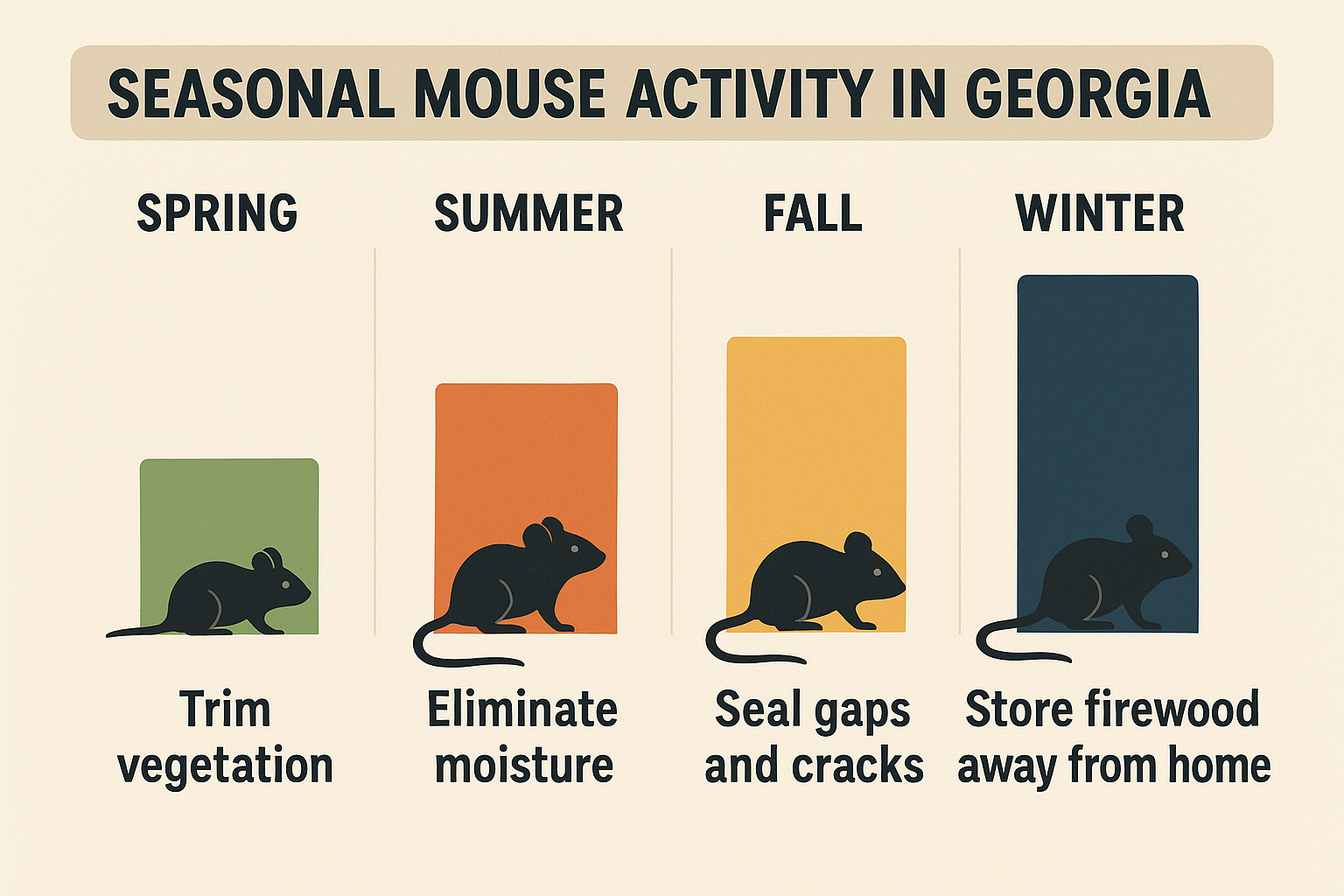
| Season | Activity Level | Top Prevention Tip |
|---|---|---|
| Spring | High (breeding) | Seal vegetation and clear yard debris |
| Summer | Very High (foraging) | Store food securely and manage trash |
| Fall | Medium (seeking warmth) | Weather‑proof foundation and vents |
| Winter | Medium‑High (indoor nesting) | Inspect insulation, chimney caps, and reduce clutter |
Taking these season‑specific steps early not only keeps mice out but also cuts down on expensive emergency treatments later. A little proactive maintenance in spring or fall can save you from a full‑scale infestation that often requires professional extermination and repeated follow‑up visits.
Effective Mouse Control Methods for Homeowners

Rodents are crafty, but you don’t have to be. By applying Integrated Pest Management (IPM) principles, you can tackle mouse problems with a balanced mix of prevention, monitoring, and control. IPM starts with a thorough inspection, follows with targeted actions, and ends with ongoing maintenance to keep the critters out for good.
DIY Options: What Works and What to Watch For
Many homeowners prefer a hands‑on approach. Below are the most common DIY tools, their strengths, drawbacks, and safety tips.
- Snap Traps
- Pros: Immediate kill, inexpensive, reusable.
- Cons: Requires careful placement, can be unsettling to set.
- Safety tip: Wear gloves, place traps away from children and pets, and dispose of dead mice in sealed bags.
- Electronic Traps
- Pros: Quick, humane (instant death), easy to monitor via indicator light.
- Cons: Higher upfront cost, needs batteries.
- Safety tip: Keep the unit on a stable surface and follow the manufacturer’s wiring instructions.
- Bait Stations
- Pros: Effective for hidden mice, reduces need for multiple traps.
- Cons: Contains poison—risk to kids, pets, and non‑target wildlife.
- Safety tip: Use tamper‑resistant stations, place them behind appliances or in wall voids, and follow label directions.
- Glue Boards
- Pros: Simple to set, good for monitoring.
- Cons: Inhumane, can trap non‑target insects, messy cleanup.
- Safety tip: Position boards out of reach of children and pets; wear gloves when disposing.
Exclusion Tactics: Seal the Entry Points
Even the best traps won’t help if new mice can slip in nightly. Focus on these exclusion steps:
- Inspect the foundation and seal gaps larger than ¼ inch with steel wool and caulk.
- Install door sweeps on exterior doors to block the gap under the threshold.
- Repair or replace damaged window screens, ensuring a tight weave.
- Cover vent openings with mesh that is small enough to keep rodents out but still allows airflow.
Sanitation Measures: Remove the All‑You‑Can‑Eat Buffet
Mice are opportunistic feeders. Deny them easy meals by:
- Storing pantry items in airtight containers.
- Cleaning crumbs and spills promptly, especially in the kitchen and dining areas.
- Using covered trash cans and taking out garbage regularly.
- Decluttering basements, attics, and garages—clutter provides hiding places.
When to Call a Professional
DIY can handle occasional sightings, but certain scenarios demand expert intervention:
- Large infestations where traps become overwhelmed.
- Inaccessible entry points such as hidden cracks behind drywall.
- Health‑hazard concerns like droppings in food‑prep areas or potential disease exposure.
Professional services bring tools and expertise that go beyond what a homeowner can safely achieve.
Professional Fumigation and Baiting: What to Expect
Licensed technicians typically start with a thorough inspection to map activity hotspots. They then choose one or more of the following treatments:
- EPA‑approved baiting—tamper‑resistant stations loaded with rodenticide that target mice but minimize risk to humans and pets.
- Fumigation or gas‑based treatments—used in severe cases; technicians wear respirators, protective suits, and seal the home to contain the gas.
- Rodent‑proofing—application of steel‑wool or copper mesh in voids, plus installation of door sweeps and vent covers.
All products used must be registered with the EPA, and technicians follow strict safety protocols, including ventilation periods and post‑treatment monitoring. The result is a comprehensive, long‑lasting solution that reduces the chance of a re‑infestation.
Local Cost Insight for Buford Homeowners
Understanding pricing helps you budget the right approach. According to HomeYou, typical mouse control services in Buford range from $150 to $300 for a basic treatment, while more extensive exclusion or fumigation projects can climb to $500–$800. ProMatcher reports a similar price band, noting that additional visits for monitoring and follow‑up baiting may add $75–$125 per visit.
By pairing these cost benchmarks with the DIY methods outlined above, you can decide whether a single trap set, a modest exclusion upgrade, or a full professional service best fits your budget and infestation level.
Mouse Control Pricing in Buford, GA

Typical Service Packages
Homeowners in Buford can usually choose from three distinct mouse‑control options. The first is an inspection and trap‑set service, where a technician evaluates the property, identifies entry points, and places a set number of traps. The second is a one‑time extermination, designed to eliminate an active infestation in a single visit. The third is an ongoing monitoring plan that combines regular inspections with trap maintenance to keep mice from returning.
Local Price Ranges
Below is a quick reference for the price ranges you’ll typically see from licensed providers in Buford.
| Package | Price Range (USD) | Typical Visits |
|---|---|---|
| Inspection & Trap Set | $140 – $190 | 1 inspection + 1 follow‑up |
| One‑Time Extermination | $243 – $353 | 1 comprehensive treatment |
These figures are quoted per residence, not per square foot, and they typically include all necessary materials and labor. If you have pets or special cleaning requirements, some providers may add a modest surcharge, so always ask for a complete breakdown.
What’s Included in Each Package
Each package comes with a clear set of deliverables, so you know exactly what you’re paying for.
- Inspection & trap set: includes up to 12 traps, a detailed inspection report, and one follow‑up visit within 14 days.
- One‑time extermination: includes a thorough interior and exterior treatment, placement of 15‑20 traps, and a 30‑day guarantee.
- Ongoing monitoring: includes quarterly inspections, trap replenishment, and a 12‑month warranty on mouse‑free results.
Factors That Can Influence the Final Cost
While the ranges above give a solid baseline, several variables can push the final bill up or down.
- Property size (larger homes need more traps and longer inspection times)
- Infestation severity (heavy activity may require multiple treatment rounds)
- Access difficulty (tight crawl spaces or multi‑level homes add labor)
- Seasonal demand (peak summer months can raise prices)
Tips for Getting the Best Value
Getting the most bang for your buck doesn’t have to be a guessing game.
- Ask about bundled seasonal plans – many companies combine mouse control with ant or spider services for a discount.
- Inquire about warranty coverage – a solid guarantee can save you a repeat visit.
- Look for promotional codes or new‑customer specials – these are often advertised on the provider’s website or social media.
- Request a detailed written estimate that breaks down labor, materials, and any tax or disposal fees.
Why Comparing Quotes Matters
Finally, remember that the cheapest quote isn’t always the smartest choice.
A licensed, insured provider protects you from liability and ensures the treatment follows state‑approved safety standards. When you compare at least three quotes, you can spot hidden fees, evaluate warranty terms, and confirm that the company uses EPA‑approved rodenticides. Taking a few minutes to vet your options now can prevent surprise costs later and give you confidence that your home will stay mouse‑free.
Protect Your Home with Professional Help
In Buford, the changing seasons bring new opportunities for mice to slip into your home. Catching the problem early—before a single gnaw marks your insulation or pantry—saves you time, money, and stress. A quick visual check for droppings, gnaw marks, or fresh nests, combined with seasonal prevention steps like sealing entry points and proper food storage, gives you the upper hand.
Why a Professional Treatment Beats DIY
- Thorough Inspection: Licensed technicians know where mice love to hide—behind walls, in attics, and even inside HVAC ducts. They’ll uncover hidden activity that most homeowners miss.
- EPA‑Approved Products: Professionals use rodent control solutions that are both effective and safe for children, pets, and the environment.
- Guaranteed Results: A reputable company stands behind its work, offering follow‑up visits and a satisfaction guarantee that DIY traps simply can’t match.
- Transparent Pricing: You’ll receive a clear, itemized quote with no hidden fees, so you know exactly what you’re paying for.
Anthem Pest Control: Your Local Rodent Experts
Anthem Pest Control has spent years fine‑tuning rodent‑management strategies for homes across Georgia. Our team understands the unique challenges Buford homeowners face—from older homes with hidden crawl spaces to newer builds with tight construction gaps. We combine meticulous inspections with customized treatment plans that target the exact entry points and nesting sites in your property.
Take the Next Step—No Pressure, Just Protection
Ready to safeguard your family’s health and your home’s integrity? Schedule a complimentary inspection with Anthem Pest Control. Our experts will walk you through the findings, recommend a personalized treatment plan, and explain how our transparent pricing works—so you can make an informed decision without any surprise costs.
Give us a call today at 877‑371‑8196 or click the link below to request your free quote. Let’s keep the mice out where they belong—outside.
Get your free mouse‑control quote from Anthem Pest Control now