
Understanding Mouse Infestations in Holly Springs

The common house mouse (Mus musculus) is a small, gray‑brown rodent that has learned to live side‑by‑side with humans. Its compact size, rapid breeding cycle, and ability to squeeze through gaps as thin as a quarter inch make it exceptionally adaptable to suburban homes in Holly Springs. While a single mouse might seem harmless, a breeding pair can produce dozens of offspring in just a few months, turning a quiet attic into a bustling colony.
Why mice thrive in Holly Springs neighborhoods
Our town’s mix of older homes, mature landscaping, and seasonal temperature swings creates an ideal backdrop for mouse activity. Recent community surveys indicate that roughly one in three households in Holly Springs reports spotting mouse droppings or gnaw marks each year. Neighbors often share stories of hearing nocturnal scurrying in basements or finding shredded insulation in crawl spaces—clear signs that mice are exploiting the same shelter and food sources that we do.
What you’re likely seeing around the house
Typical signs include small, dark droppings near food storage areas, greasy smudge marks along walls, and the unmistakable “chew” damage on wiring, wooden beams, or pantry packaging. Mice also leave behind a faint, musky odor that becomes noticeable when an infestation grows. These clues may appear in kitchens, garages, and even outdoor sheds where food debris and shelter are plentiful.
Health and safety risks
Beyond the nuisance factor, mice pose real health threats. They can carry pathogens such as Hantavirus, Salmonella, and Leptospirosis, which may be transferred to humans via contaminated surfaces or food. Their urine and dander are potent allergens that can exacerbate asthma and trigger allergic reactions, especially in children. Moreover, their constant gnawing of electrical wires raises the risk of short circuits and potential fire hazards.
How rodents set the stage for other pests
Mouse infestations rarely exist in isolation. Their nests provide a warm refuge for insects like beetles, cockroaches, and pantry moths. Food spillage from mouse foraging also attracts ants and flies, creating a cascading pest problem that can quickly overwhelm a homeowner’s DIY efforts. Addressing the rodent issue early helps prevent this domino effect and protects both the home’s structural integrity and the family’s well‑being.
For comprehensive guidance on rodent hazards and best‑practice prevention, consult the EPA’s rodent information page.
Spotting the Signs and Seasonal Patterns of Mice
Detecting a mouse problem early can save you time, money, and stress. The clues are often tiny, but once you know what to look for, you’ll spot them before the infestation spreads.
Visual clues to watch for
- Droppings: Small, dark, rice‑shaped pellets about ¼ inch long. Find them along baseboards, behind appliances, and in cabinets.
- Gnaw marks: Fresh, clean cuts on wood, plastic, or wiring. Mice gnaw at anything they can chew to keep their teeth from overgrowing.
- Nesting material: Shredded paper, fabric, or insulation tucked into wall voids, under sinks, or inside attics.
- Audible scurrying: Light, rapid footfalls in walls or ceilings, especially at night when mice are most active.
Inspecting common entry points
Mouse entry is rarely a mystery. Focus on the places they love to slip through:
- Foundations and crawl spaces: Look for gaps larger than ¼ inch around the perimeter of your home.
- Vent openings: Ensure vent covers are intact and have fine mesh screens.
- Utility gaps: Pipes, cables, and HVAC ducts often leave tiny holes. Seal with steel wool and caulk.

Seasonal activity in Georgia
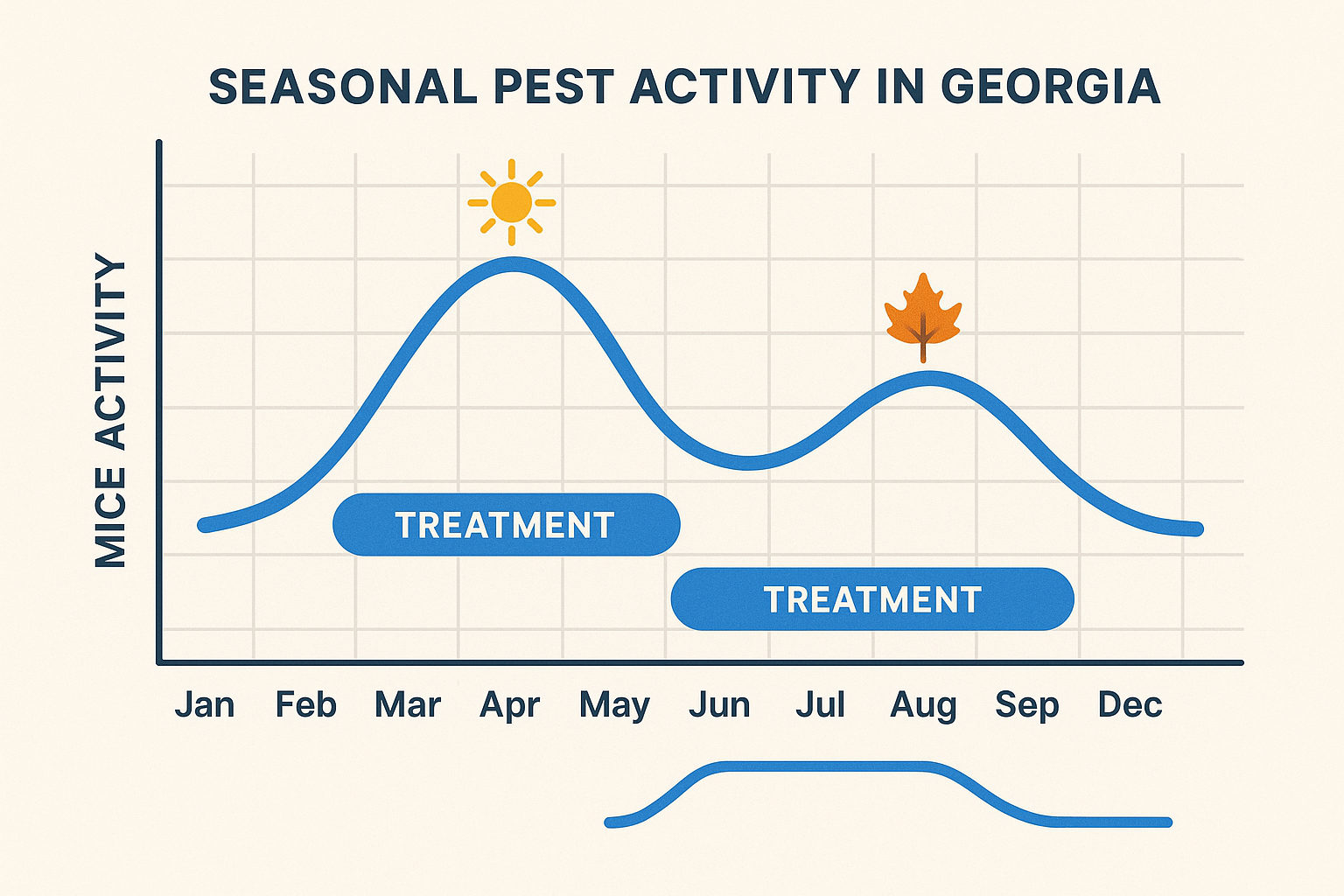
Mice are opportunistic; temperature and food availability drive their movements. In Georgia, you’ll see two clear peaks:
| Month | Activity Level | Why it peaks |
|---|---|---|
| January – February | Low | Cold weather keeps them in deeper burrows. |
| March – May | High | Warmer temps and breeding season drive indoor foraging. |
| June – August | Moderate | Heat pushes some outdoors, but food sources remain. |
| September – November | High | Cooling temperatures trigger another wave of indoor activity. |
| December | Low | Cold again, many retreat to exterior nests. |
DIY inspection checklist
Before you call a professional, run through this quick walk‑through. It takes about 15 minutes and can give you a clear picture of what’s happening.
- Turn on a bright flashlight and examine all baseboards for droppings or gnaw marks.
- Open cabinets and pantry doors; look for shredded packaging or tiny nests.
- Check under appliances (stove, fridge) for hidden droppings.
- Feel for gaps around pipes, vents, and the foundation; measure any openings.
- Listen for faint scratching at night; a simple cardboard box with a piece of peanut butter can confirm presence.
If you spot multiple signs or discover entry points you can’t seal yourself, it’s time to reach out to Anthem Pest Control. Our local expertise in Holly Springs means we know exactly when to act and how to protect your home without breaking the bank.
Professional Treatment Options and What to Expect
What the Inspection Looks Like
When a certified Anthem Pest technician arrives, the first step is a thorough, room‑by‑room inspection. The expert checks for mouse droppings, gnaw marks, and signs of nesting while mapping out potential entry points such as gaps around pipes, vents, and doors. Using a flashlight and a small mirror, the technician can see into hidden spaces that most homeowners miss. This detailed walkthrough creates a clear picture of the infestation’s size and helps determine the most effective treatment strategy.
Common Treatment Modalities
- Snap traps – Quick, humane devices placed along walls and travel paths; ideal for immediate reduction.
- Electronic traps – Battery‑powered units that deliver a lethal shock; they’re reusable and provide a clean, odor‑free solution.
- Bait stations – Enclosed containers with EPA‑registered rodenticide; positioned in concealed locations to target active foragers while keeping children and pets safe.
- Rodent‑proofing – Sealing cracks, gaps, and utility openings with steel wool, caulk, or metal mesh to block future entry.
One‑Time vs. Ongoing Programs
A single‑visit treatment can eradicate a low‑level mouse problem, especially when the infestation is isolated to one area. However, many Holly Springs homes benefit from a quarterly follow‑up program. Ongoing visits include re‑inspection, trap maintenance, and additional rodent‑proofing as the season changes. The recurring schedule not only prevents re‑infestation but also spreads the cost over several months, making it a budget‑friendly option for families who want long‑term peace of mind.
Safety First: Child‑ and Pet‑Friendly Practices
Anthem Pest only uses products that are EPA‑registered and approved for residential use. Bait stations are tamper‑resistant, and all chemicals are applied at the lowest effective concentration. When traps are placed, technicians position them out of reach of children and pets, often mounting them behind baseboards or in utility closets. If a home has especially sensitive occupants, we can substitute low‑toxicity bait formulations or rely more heavily on mechanical traps and sealing work.
Tailoring a Plan to Your Home
Every Holly Springs residence is unique, so our technicians customize the control plan based on floor plan, construction type, and the level of mouse activity observed during the inspection. In a multi‑level house, we might install electronic traps on each floor and focus rodent‑proofing on attic access points. For homes with extensive landscaping, we extend the perimeter seal to cover garden sheds and crawl‑space vents. This personalized approach ensures that treatment addresses both the current infestation and the pathways that mice use to enter your living space.
Breaking Down Mouse Control Costs in Holly Springs
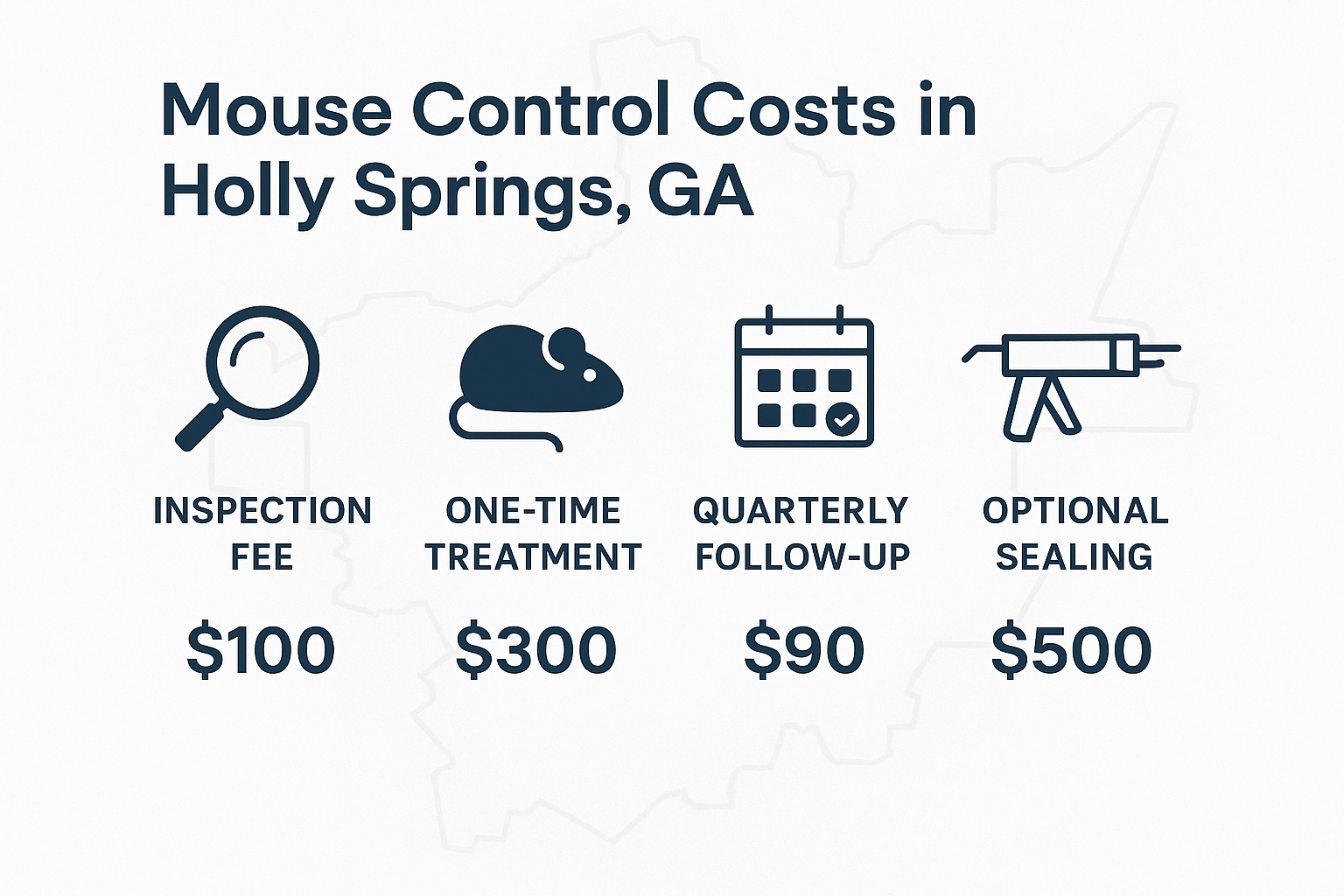
Understanding the price tags behind mouse control helps you budget confidently and avoid surprise invoices. In Holly Springs, GA, most homeowners see a clear line‑item structure that separates the initial inspection from the treatment and any follow‑up work.
Itemized Cost Components
- Inspection fee: A one‑time visit where a technician identifies entry points, assesses infestation size, and recommends a plan.
- One‑time treatment: The application of baits, traps, or rodenticides that target the current mouse population.
- Quarterly follow‑up visits: Scheduled checks every three months to ensure no new activity and to reset traps or replace baits.
- Optional sealing services: Professional caulking and weather‑stripping to block future entry points.
Average Price Ranges in Holly Springs
| Service | Price Range (USD) |
|---|---|
| Inspection fee | $60 – $90 |
| One‑time treatment | $120 – $180 |
| Quarterly follow‑up (per visit) | $70 – $100 |
| Sealing services (per hour) | $80 – $110 |
Bundled Packages vs. À la Carte Services
Most local companies, including Anthem Pest Control, offer a bundled “Mouse Management Package” that combines inspection, initial treatment, and three quarterly follow‑ups for a flat fee of $350 – $420. Purchasing services à la carte can add up quickly—four separate follow‑up visits alone may exceed $300, not counting sealing work.
Bundling not only locks in a lower per‑visit price but also guarantees that a technician revisits your home regularly, catching any new entry points before they become a full‑blown problem.
Anthem Pest Control’s Transparent Pricing
Anthem Pest Control lists every component up front, matching or beating the regional averages. Their inspection fee sits at $75, the one‑time treatment at $150, and each quarterly follow‑up at $85. For homeowners who opt for sealing, Anthem charges $95 per hour—slightly below the high end of the market.
When you compare Anthem’s bundled package ($395) to the industry average of $440 – $480, the savings are clear, and the transparent breakdown eliminates hidden fees.
Year‑Round Prevention Strategies for a Mouse‑Free Home
Seasonal Prevention Checklist
Use the mouse‑activity chart as a calendar. In spring, inspect the foundation for fresh cracks and clear debris that could hide nests. Summer calls for trimming overgrown shrubs and sealing any openings near exterior doors. During fall, store firewood away from the house and reinforce attic vents. In winter, check for gnaw‑marks on insulation and verify that weather‑stripping remains intact.
Home Maintenance Tips
- Seal every entry point. Apply steel‑wool or caulk to gaps around pipes, vents, and utility lines; mice can squeeze through openings the size of a dime.
- Store food properly. Keep pantry items in airtight containers, clean crumbs from countertops nightly, and empty pet‑food bowls after each meal.
- Landscape with pests in mind. Keep mulch at least six inches away from the foundation, prune low‑hanging branches, and eliminate standing water that attracts insects—mice’s primary food source.
Regular Inspections & Monitoring Devices
Schedule a professional walkthrough at the start of each season. A trained technician can spot hidden gnaw‑marks, droppings, or burrows that the naked eye often misses. Pair inspections with monitoring stations—simple snap‑traps or electronic sensors placed along walls. These devices give you real‑time data, so you know exactly when activity spikes.
Leveraging the Activity Chart
The chart isn’t just a visual aid; it’s a timing tool. By aligning your checklist with the months of peak movement, you pre‑empt the most vulnerable periods. For example, if the chart shows a surge in May, double‑check exterior doors and reinforce garden borders before the first warm night. This proactive scheduling reduces the chance of an infestation taking hold.
Long‑Term Savings of Proactive Measures
Every ounce of prevention saves dollars later. A single mouse can chew through electrical wiring, leading to costly repairs, while an undetected nest can multiply into a full‑blown infestation that requires multiple pesticide applications. Investing a few hours each season—and perhaps a modest inspection fee—keeps your home safe and your wallet intact.
Protect Your Home with Anthem Pest Control
Mice may seem harmless, but a small infestation can quickly turn into a costly problem. These tiny rodents chew through insulation, wiring, and even structural wood, raising the risk of fire hazards and water damage. They also carry bacteria and allergens that threaten the health of your family. Catching a mouse problem early—before they multiply and spread—saves you money, stress, and sleepless nights.
What Anthem Pest Control Offers
- Thorough Inspection: Certified technicians locate entry points, nesting sites, and activity trails using proven detection methods.
- Targeted Treatment: We apply safe, EPA‑approved baits and traps that eliminate rodents without endangering pets or children.
- Sealing & Prevention: Gaps, vents, and utility openings are professionally sealed to block future invasions.
- Seasonal Follow‑Up: Regular check‑ins keep your home mouse‑free year after year, especially during peak breeding seasons.
At Anthem, safety, effectiveness, and affordability are non‑negotiable. Our transparent pricing means you’ll know exactly what each step costs before any work begins—no hidden fees, no surprise invoices. We prioritize low‑toxicity solutions that protect your loved ones while delivering lasting results. Whether you need a one‑time eradication or a comprehensive prevention plan, our team tailors the approach to fit your budget and your home’s unique layout.
If you’re ready to stop mice from turning your sanctuary into a hazard, simply reach out for a free, no‑obligation quote. Our friendly staff will schedule a convenient inspection, walk you through the process, and answer any questions you may have.
Call us today at 877‑371‑8196 or visit Anthem Pest Control to protect your home with confidence.