What Are Silverfish and Why They Matter
Biological Overview
Silverfish belong to the order Zygentoma, a group of primitive, wingless insects that have survived for millions of years. They are small—typically ½ to 1 inch long—with a silvery, fish‑like sheen and a distinctive teardrop shape. Despite their name, they are not fish at all; they are insects that thrive in cool, damp environments. A silverfish can live anywhere from two to eight years, shedding its exoskeleton several times as it grows. Their diet is opportunistic: they feed on carbohydrates and proteins found in starches, sugars, glue, and even the dead skin cells we shed.
Common Habitats in Homes
Because silverfish love moisture, you’ll often find them in bathrooms, kitchens, and basements—anywhere water accumulates. They also seek shelter in the cracks and crevices of wall voids, under flooring, and behind baseboards. Paper stacks, old books, and cardboard boxes provide both food and hiding places, making attics and home offices prime real estate for these nocturnal wanderers.
Potential Damage
While silverfish don’t bite or transmit disease, their feeding habits can cause costly damage. They chew through natural fibers, leaving holes in clothing, curtains, and upholstery. Paper products—books, magazines, important documents—can become riddled with tiny perforations, turning cherished collections into unreadable fragments. Even wallpaper and certain adhesives can be compromised, leading to unsightly peeling and the need for premature replacement. In kitchens, silverfish may contaminate stored grains, cereals, or flour, prompting waste and the risk of off‑flavors in meals.
Why Early Detection Matters
Spotting silverfish early saves you money and protects your home’s integrity. An infestation can expand quickly; a few insects hidden in a bathroom can spread to the entire house within months. Early intervention prevents the gradual deterioration of fabrics, books, and structural finishes, which would otherwise require professional restoration or replacement. Moreover, silverfish often coexist with other pests such as cockroaches or mealybugs, so catching them early can act as a warning sign of broader hygiene or moisture issues that need addressing.
Silverfish in the Bigger Pest Picture
Although silverfish might seem like a minor nuisance, they are part of a larger ecosystem of household pests. Their presence often indicates excess humidity—a condition that also attracts cockroaches, mold, and dust mites. By tackling silverfish, homeowners are simultaneously improving conditions that deter these more harmful pests. At Anthem Pest Control, we view silverfish control as the first step in a comprehensive, preventive pest‑management plan that safeguards your health, property, and wallet.
Spotting Silverfish – Signs and Identification
Physical description
Silverfish are tiny, wingless insects that measure roughly ½‑¾ inch (1.3‑1.9 cm) in length. Their bodies are elongated and fish‑shaped, covered in silvery‑gray scales that give them a shimmering appearance. The most distinctive feature is the trio of long, tail‑like bristles (cerci) extending from the rear end, which sway as the bug darts about.
Typical movement patterns
These pests are exceptionally fast for their size. They move in a rapid, wavelike motion, often darting across walls, floors, and bookshelves. Silverfish are primarily nocturnal, preferring the dark, humid corners of a home. If you notice a sudden, quick scuttle during the night, you’re likely looking at a silverfish rather than a slower beetle.
Key warning signs
Even if you don’t catch the insect itself, several tell‑tale clues point to a silverfish infestation:
- Shed skins: Tiny, translucent exoskeletons left behind as they molt.
- Fecal pellets: Small, pepper‑like specks that may appear near baseboards or pantry shelves.
- Yellowish stains: A faint, oily residue often found on books, paper, or fabric.
- Damage to paper or fabric: Irregular, chewed edges on books, magazines, clothing, or stored linens.
Comparison with look‑alike pests
Silverfish are sometimes confused with firebrats or carpet beetles. Firebrats share the silvery sheen but prefer hotter, dryer environments and have a slightly longer, more cylindrical body. Carpet beetles, on the other hand, are rounder, covered in tiny hairs, and lack the characteristic three bristles. Noticing the bristles and the rapid, fish‑like motion is the quickest way to tell silverfish apart.
Simple DIY inspection checklist
Use this quick room‑by‑room scan to catch early activity before it spreads:
- Kitchen & pantry: Look under appliances, inside cabinets, and around stored grains for shed skins or fecal pellets.
- Bathrooms: Check behind toilets, under sinks, and in tile grout where moisture accumulates.
- Bedrooms & closets: Examine the tops of wardrobes, under mattresses, and inside shoe boxes for yellow stains or paper damage.
- Basement & laundry: Inspect utility rooms, dryer vents, and stored linens for the tell‑tale signs.
- Attic: Scan insulation, stored boxes, and roof vents, especially in humid months.
Mark any findings on a notepad and note the location. If you discover multiple signs, it’s time to call a local expert—like Anthem Pest Control—to assess the extent and recommend a targeted treatment plan.
How Much Does Silverfish Treatment Cost?
When you call a professional like Anthem Pest Control, the first question on most homeowners’ minds is the price tag. Nationwide, silverfish treatments typically fall between $150 and $300 per visit — a range reported in the Anthem Pest Pricing Guide. That figure gives you a baseline, but the final bill can shift based on several key factors.
One‑Time vs. Ongoing Service Plans
A single, one‑time treatment is ideal for a sudden silverfish flare‑up. You pay for the inspection, the labor to apply the product, and any immediate follow‑up. Ongoing plans, on the other hand, spread the cost across multiple visits—usually quarterly or bi‑annually—providing continuous protection and often a discounted per‑visit rate. Many homeowners choose a subscription because it eliminates surprise fees and keeps the infestation from returning.
Typical Cost Components
- Inspection fee: $40 – $80. Technicians assess the extent of the problem, identify entry points, and recommend the best treatment method.
- Labor: $80 – $150. This covers the time spent applying insecticides, setting traps, and sealing cracks.
- Materials: $30 – $70. Includes the actual pesticide, baits, and any specialized equipment.
- Follow‑up visits: $30 – $60 per visit, often bundled into a service contract.
How Home Size Influences Price
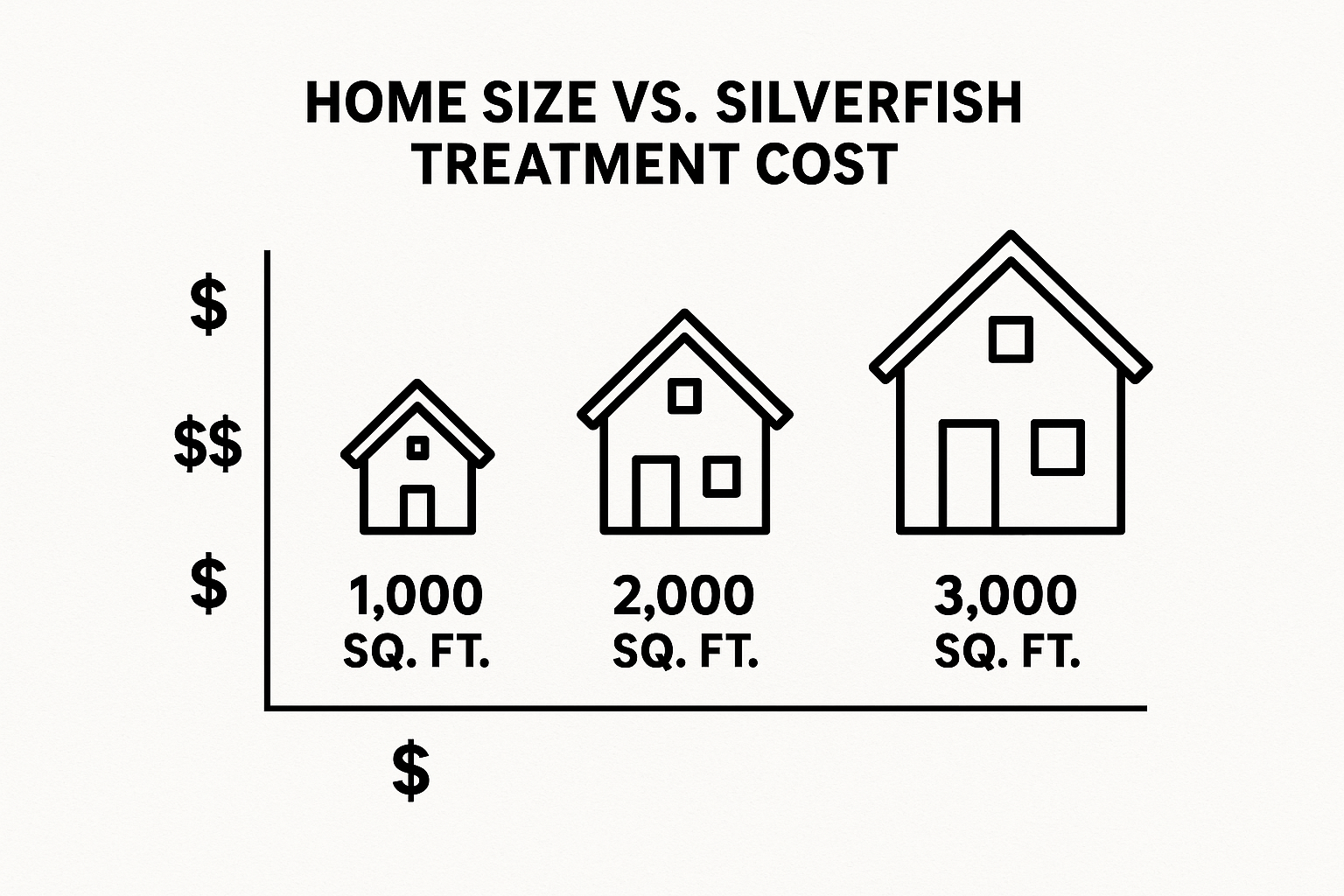
Silverfish thrive in damp, dark corners, so larger homes generally require more product and more time to treat. Here’s a quick rule of thumb: each additional 1,000 sq ft adds roughly $50 – $80 to the base price. Small apartments (under 1,000 sq ft) may stay near the low end of the national range, while sprawling 3,000 sq ft houses can approach $400 per treatment.
Example Cost Scenarios
| Home Size | Inspection Fee | Labor & Materials | Total Approx. Cost |
|---|---|---|---|
| 1,000 sq ft (apartment) | $50 | $120 | $170 |
| 2,000 sq ft (average house) | $60 | $180 | $240 |
| 3,000 sq ft (large home) | $70 | $250 | $320 |
These numbers are illustrative; the exact quote will depend on the severity of the infestation, the number of treatment zones, and any additional services you request (such as moisture control or structural sealing). At Anthem Pest Control, we pride ourselves on transparent pricing—no hidden fees, just a clear breakdown so you know exactly what you’re paying for.
Whether you opt for a single knock‑out or a year‑long protection plan, understanding the cost structure helps you budget confidently and keep those silverfish out of your pantry, bathroom, and closets.
Comparing Silverfish Treatment Methods
When silverfish start showing up in kitchens, bathrooms, or closets, homeowners in Marietta face three primary ways to get rid of them. Each technique has its own strengths, drawbacks, and price tag. Below is a quick rundown so you can match the right solution to your infestation level, budget, and comfort with chemicals.
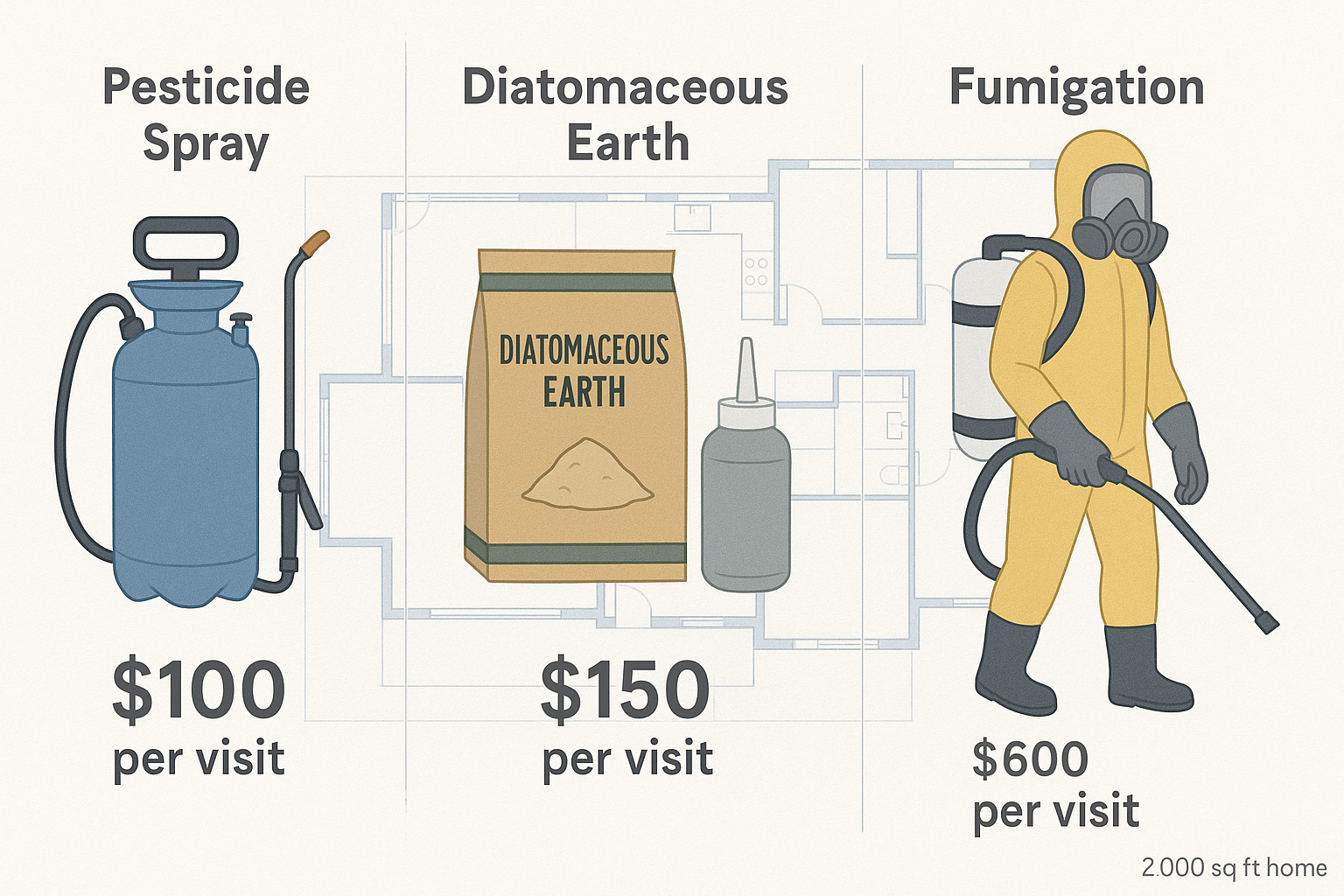
Chemical Pesticide Spray
Professional technicians apply a targeted pesticide spray directly to cracks, baseboards, and other hiding spots. The chemicals act fast, delivering a quick knock‑down of active silverfish within minutes.
- Pros: Immediate results, effective for moderate infestations, easy to schedule as a single visit.
- Cons: Leaves a chemical residue that some homeowners find concerning, may require repeat visits if the source isn’t sealed, and can be off‑limits to pets or children until the area dries.
- Typical cost: $100 – $150 per visit, depending on square footage and severity.
Diatomaceous Earth (DE)
Diatomaceous earth is a fine, powdery substance made from fossilized algae. It works mechanically: tiny, razor‑sharp particles damage the silverfish exoskeleton, causing them to dehydrate and die.
- Pros: Non‑toxic, safe around pets and kids, leaves no chemical residue, and can be applied as a preventative barrier in hard‑to‑reach areas.
- Cons: The effect is slower—usually a few days to a week—so it’s less satisfying for urgent situations. It also needs proper placement to stay effective, which can be a bit messy.
- Typical cost: $80 – $120 per application, covering the material and labor for thorough placement.
Fumigation / Heat Treatment
For severe, multi‑room infestations, a whole‑home fumigation or heat treatment may be the only way to reach every hidden silverfish. Heat raises interior temperatures to a level that insects cannot survive, while fumigation introduces a gas that penetrates cracks and voids.
- Pros: Comprehensive—treats every nook, crevice, and wall cavity, eliminating both visible and hidden populations. No chemical residues remain after the job.
- Cons: Higher upfront cost, requires you to vacate the home for several hours (or a full day), and may involve prep work such as moving furniture.
- Typical cost: $300 – $500 per treatment, reflecting the equipment, labor, and safety protocols.
Decision‑Making Guide
Choosing the right method hinges on three factors: infestation level, budget, and personal preferences regarding chemicals.
- Light to moderate sightings (a few silverfish in the kitchen or bathroom): start with DE. It’s affordable, pet‑friendly, and works well as a preventive measure.
- Urgent knock‑down needed (silverfish are rapidly multiplying or damaging fabrics): opt for a chemical spray. You’ll see results within hours, and the cost stays modest.
- Severe, multi‑room infestations (silverfish in closets, basements, and attic): invest in fumigation or heat treatment. Though pricier, it eradicates the problem at its source and reduces the need for repeat visits.
- Budget constraints: combine methods. A professional DE application followed by a targeted chemical spray can keep costs under $200 while still delivering solid control.
- Health or pet concerns: prioritize non‑chemical options like DE or heat treatment, and discuss any residue‑free guarantees with Anthem Pest Control before scheduling.
Anthem Pest Control tailors each plan to the unique layout of your Marietta home. By weighing the pros, cons, and costs outlined above, you can make an informed choice that stops silverfish in their tracks without breaking the bank.
Factors That Influence Your Treatment Price
When you call Anthem Pest Control for silverfish control in Marietta, the quote you receive reflects more than just a flat service fee. Understanding the key variables that shape that price helps you make informed decisions and avoid surprises.
Severity of infestation
Silverfish populations are typically categorized as light, moderate, or heavy. A light infestation may require a single spot‑treatment, while a moderate problem often calls for multiple applications to break the breeding cycle. Heavy infestations demand extensive coverage, possibly including structural treatments and follow‑up visits, which naturally increase labor and material costs.
Accessibility of affected areas
Silverfish love tight crawl spaces, wall voids, and behind baseboards. If technicians must navigate cramped or hard‑to‑reach locations, they may need specialized equipment or extra time to set up bait stations and sprays. Limited access therefore adds to labor expenses, especially when safety precautions are required.
Type of treatment selected
Homeowners can choose between chemical options—such as residual sprays or dusts—and non‑chemical alternatives like heat treatment or diatomaceous earth. Chemical treatments are often quicker and may be less expensive per application, but some clients prefer non‑chemical methods for safety or environmental reasons, which can raise the overall price due to longer application times or specialized products.
Frequency of service
A single, one‑time visit is priced differently from a recurring plan. Quarterly or semi‑annual maintenance contracts spread the cost of materials over several visits and usually include a discount compared to multiple standalone appointments. Consistent service also reduces the likelihood of a severe re‑infestation, ultimately saving money in the long run.
Geographic location and local market rates
Even within the same metropolitan area, neighborhoods can have varying labor rates, transportation costs, and local taxes. Marietta’s proximity to Atlanta means some providers factor in higher overhead, which can affect the baseline price you see on an estimate.
Additional services bundled
Many homeowners combine silverfish control with other pest‑management needs, such as rodent exclusion or a termite inspection. Bundling services often results in a package discount, but the added scope of work can also raise the total invoice if extensive additional treatment is required.
Tips for homeowners to reduce costs
- Perform a thorough pre‑treatment cleaning to eliminate food sources.
- Seal cracks, gaps, and entry points before the technician arrives.
- Remove clutter in basements and attics to improve access.
- Schedule treatments during off‑peak seasons when rates may be lower.
- Ask about multi‑year plans that lock in current pricing.
Preventing Silverfish Infestations Year‑Round
Control Moisture at the Source
Silverfish thrive in damp environments, so the first line of defense is moisture management. Fix any leaky pipes, roof seams, or bathroom fixtures promptly. In areas prone to humidity—basements, bathrooms, and kitchens—run a dehumidifier or install a small exhaust fan to keep the air dry. Proper ventilation not only discourages silverfish but also improves overall indoor air quality.
Store Food Properly
Even tiny crumbs can attract silverfish. Keep pantry items in airtight containers made of glass or heavy‑wall plastic. Wipe down shelves and countertops after each meal, and sweep or vacuum crumbs from cabinets regularly. This simple habit removes a major food source and makes your home less inviting to these nocturnal insects.
Declutter to Eliminate Hiding Spots
Silverfish love to nest in paper stacks, cardboard boxes, and old fabrics. Reduce clutter by recycling outdated magazines, storing seasonal items in sealed plastic bins, and discarding worn clothing that isn’t needed. A tidy home leaves fewer dark, undisturbed corners for silverfish to multiply.
Seal Cracks and Crevices
Gaps around baseboards, windows, and door frames act as entryways. Use a quality silicone caulk to seal larger openings, and fill narrow cracks with steel wool before caulking. This creates a physical barrier that blocks silverfish from slipping into walls and floor cavities.
Schedule Monthly Inspections
Set aside 10–15 minutes each month for a quick visual sweep. Look for tell‑tale signs: silvery fish‑shaped scales, tiny fecal specks, or a musty paper‑like odor. Early detection lets you address a minor issue before it becomes a full‑blown infestation, saving time and money.
Natural Deterrents and Their Effectiveness
Household scents such as cinnamon, cedar, and lavender can repel silverfish. Place cinnamon sticks in pantry corners, cedar blocks in closets, or lavender sachets in drawers. While these options are inexpensive, they work best when combined with the other preventive steps listed above.
When to Call a Professional
If you notice repeated sightings despite diligent DIY measures, it’s time to enlist a pest‑control expert. A professional can apply targeted, low‑toxicity treatments that penetrate hidden cracks and voids, providing long‑term protection. Anthem Pest Control offers affordable preventive packages tailored to Marietta homes, ensuring silverfish stay out of your living space year‑round.
Get Professional Help and a Free Quote Today
Spotting silverfish early isn’t just about keeping your pantry tidy—it can save you a lot of money and stress down the road. When an infestation is caught in its first stages, treatment requires fewer chemicals, less labor, and a shorter timeline, which translates directly into lower bills and a quicker return to peace of mind.
At Anthem Pest Control, our certified technicians specialize in silverfish identification and eradication, and we bring that same expertise to every pest we handle—from termites to bed bugs. We combine years of field experience with the latest, EPA‑approved treatment options to create a plan that fits the size of your home and the severity of the problem.
What sets us apart is our commitment to transparency. Before any work begins, you’ll receive a clear, itemized quote that outlines every step of the process—no hidden fees, no surprise charges. Our methods prioritize safety for your family and pets, using low‑toxicity products that are proven effective against silverfish while protecting indoor air quality.
Because we serve homeowners across the United States, you can count on consistent, reliable service no matter where you live. Whether you’re in a historic Marietta bungalow or a modern suburb, our nationwide network ensures the same high‑standard treatment every time.
Ready to protect your home without the guesswork? Call us today at 877‑371‑8196 for a free, no‑obligation inspection and personalized quote. One of our friendly representatives will walk you through the recommended approach, answer any questions, and schedule a convenient appointment.
Visit Anthem Pest Control online to learn more about our safe, affordable solutions and to request your free quote in just a few clicks.