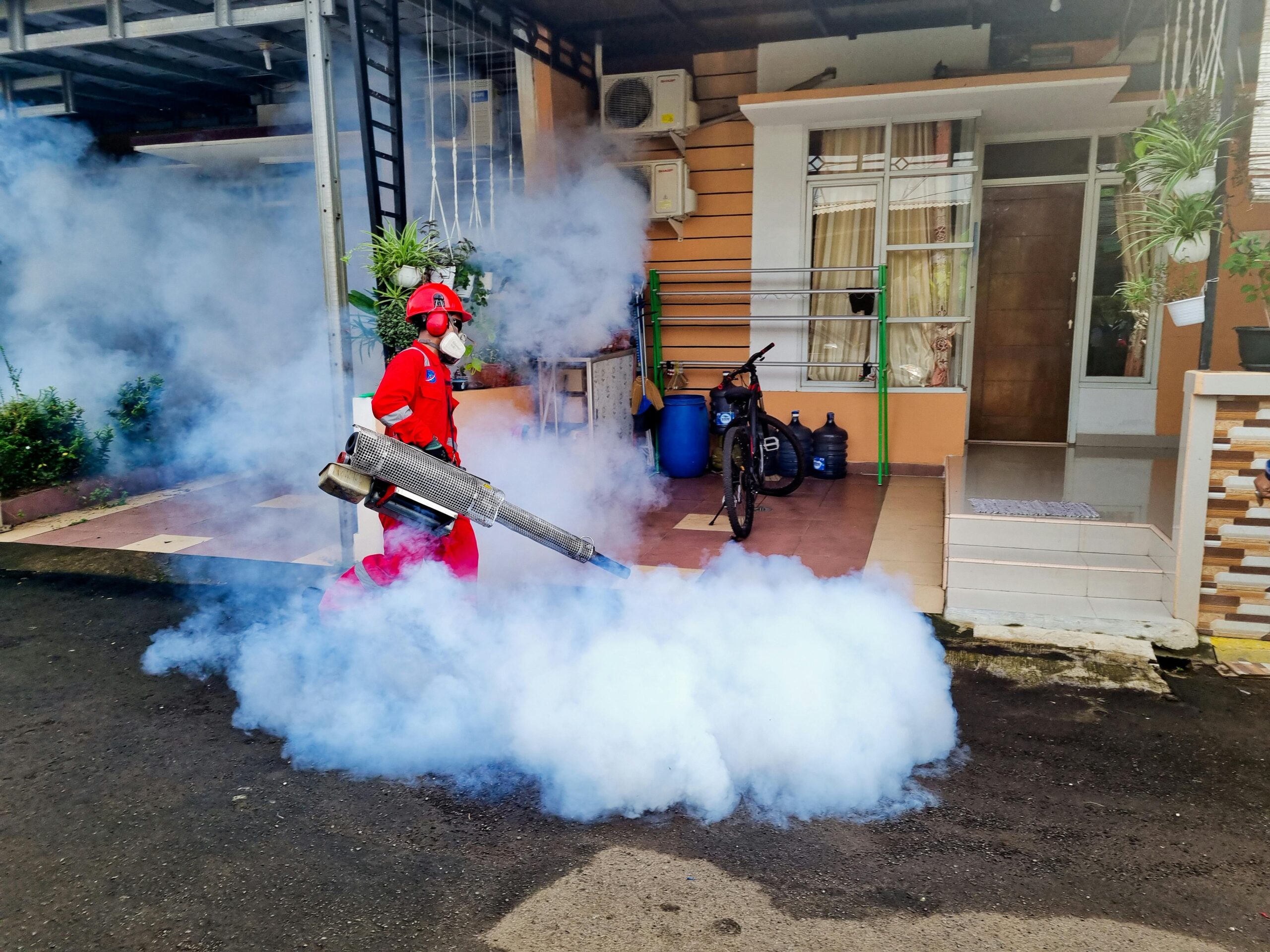
Why Professional Spider Inspections Matter

Georgia homes share their walls with a surprising variety of eight-legged guests. The common house spider, the black widow, and the brown recluse are the three species most homeowners notice, but dozens of harmless relatives also wander in. Even the innocuous ones can create problems—painful bites, unsightly webs that collect dust, and, in rare cases, webs that infiltrate vents or crawl spaces, creating moisture-related concerns for the structure and prompting homeowners to research spider control cost Canton residents may face when infestations go untreated.
Spiders are masters of stealth. They hide in dark corners, behind baseboards, and inside stored boxes, often going unnoticed until a visible web appears or a bite is reported. By the time you see a dense network of silk, the colony has usually multiplied, making control more difficult and expensive. Early detection stops the escalation before the spiders claim new territory.
A certified pest inspector brings the training and tools needed to spot those hidden hotspots. Using flashlights, moisture meters, and a keen eye for spider‑specific signs, the inspector can differentiate a harmless garden spider from a potentially dangerous black widow nest. The assessment also includes evaluating entry points, humidity levels, and surrounding landscaping that may attract prey insects, all of which influence spider activity.
Choosing a proactive inspection translates into tangible benefits. Identifying a problem early often means a single, targeted treatment rather than multiple, broad‑spectrum applications, saving you money. It also reduces the risk of medically significant bites, protecting family health and peace of mind. Moreover, a documented inspection report gives you a clear action plan and a baseline for future monitoring.
When you schedule a professional spider inspection, you gain several concrete advantages:
- Cost savings: Spotting a few spiders early avoids large‑scale treatments later.
- Health protection: Identifying venomous species reduces the chance of painful bites.
- Structural preservation: Preventing web buildup in vents and crawl spaces helps maintain airflow and reduces moisture damage.
- Targeted chemical use: Treatments are applied only where needed, minimizing exposure for pets and children.
- Peace of mind: A documented report lets you track progress and plan future prevention.
These benefits combine to protect both your wallet and your family’s well‑being.
Anthem Pest Control’s inspection process is built around these principles. Our technicians arrive in uniform, conduct a thorough walkthrough of interior and exterior zones, and use a standardized checklist to log spider activity. Within 24 hours, you receive a detailed report highlighting hot spots, risk levels, and a customized treatment recommendation that balances effectiveness with safety. With Anthem’s local expertise and transparent pricing, you gain confidence that your home is protected before spiders become a costly nuisance.
Recognizing Spider Habitats in Suburban Settings
Spiders aren’t picky about where they set up shop, but they do favor spots that offer shelter, moisture, and easy access to prey. As a homeowner in Canton, you’ll find that many of these prime real‑estate locations sit right under your nose. Knowing where spiders love to hide lets you spot them early and gives our technicians a clear map for targeted treatment.
Common Indoor Hide‑aways
Inside a typical suburban home, spiders gravitate toward areas that stay cool, dark, and slightly damp. The most frequent indoor hotspots include:
- Basements and crawl spaces – low light, occasional water seepage, and piles of stored boxes create a perfect refuge.
- Attics – insulation, exposed beams, and occasional condensation attract web‑weavers looking for a quiet perch.
- Closets and storage rooms – shoes, clothing, and folded linens provide both shelter and a steady supply of insects.
- Bathrooms – tile grout, shower curtains, and the constant humidity make these rooms a magnet for cellar and house spiders.
Typical Outdoor Habitats in Suburban Neighborhoods
Outside, spiders exploit the structures and landscaping that define a suburban yard. Look for them in:
- Garden beds and mulch – the organic material holds moisture and insects, inviting ground‑dwelling species.
- Wood piles or firewood stacks – the gaps between logs are ideal for funnel‑web and wolf spiders.
- Eaves and soffits – these overhangs protect webs from rain while offering a direct route to interior cracks.
- Garage doors and entryways – the seam between the door and frame often gathers dust and small prey, perfect for house spiders.

Quick Visual Sweep Checklist
Use this short checklist during your monthly walk‑through to catch spider‑friendly zones before they become a problem:
- Check basement corners for cobwebs or dust clusters.
- Inspect attic rafters and insulation for loose silk strands.
- Open closet doors and pull back stored items to reveal hidden webs.
- Examine bathroom corners, especially behind toilet tanks and under sinks.
- Look at garden mulch and the base of plants for fine, sheet‑like webs.
- Turn over wood piles; shake them gently to dislodge any concealed spiders.
- Slide a flashlight along eaves, soffits, and the garage door frame for tiny, glistening threads.
- Observe sidewalk cracks, fence gaps, and outdoor lighting fixtures for spider activity after dusk.
Why Habitat Knowledge Shapes Treatment Plans
Understanding where spiders congregate allows Anthem Pest Control to customize a treatment that targets the source, not just the symptoms. If most activity is indoor, we focus on perimeter sprays, crack‑and‑crevice sealing, and dehumidification. When outdoor zones dominate, we apply perimeter barriers around foundations, treat mulch and wood piles, and adjust exterior lighting to reduce insect attraction. By aligning the service plan with the specific habitats you’ve identified, we achieve faster knock‑down, longer protection, and a lower overall cost.
Seasonal Spider Activity in Canton, GA
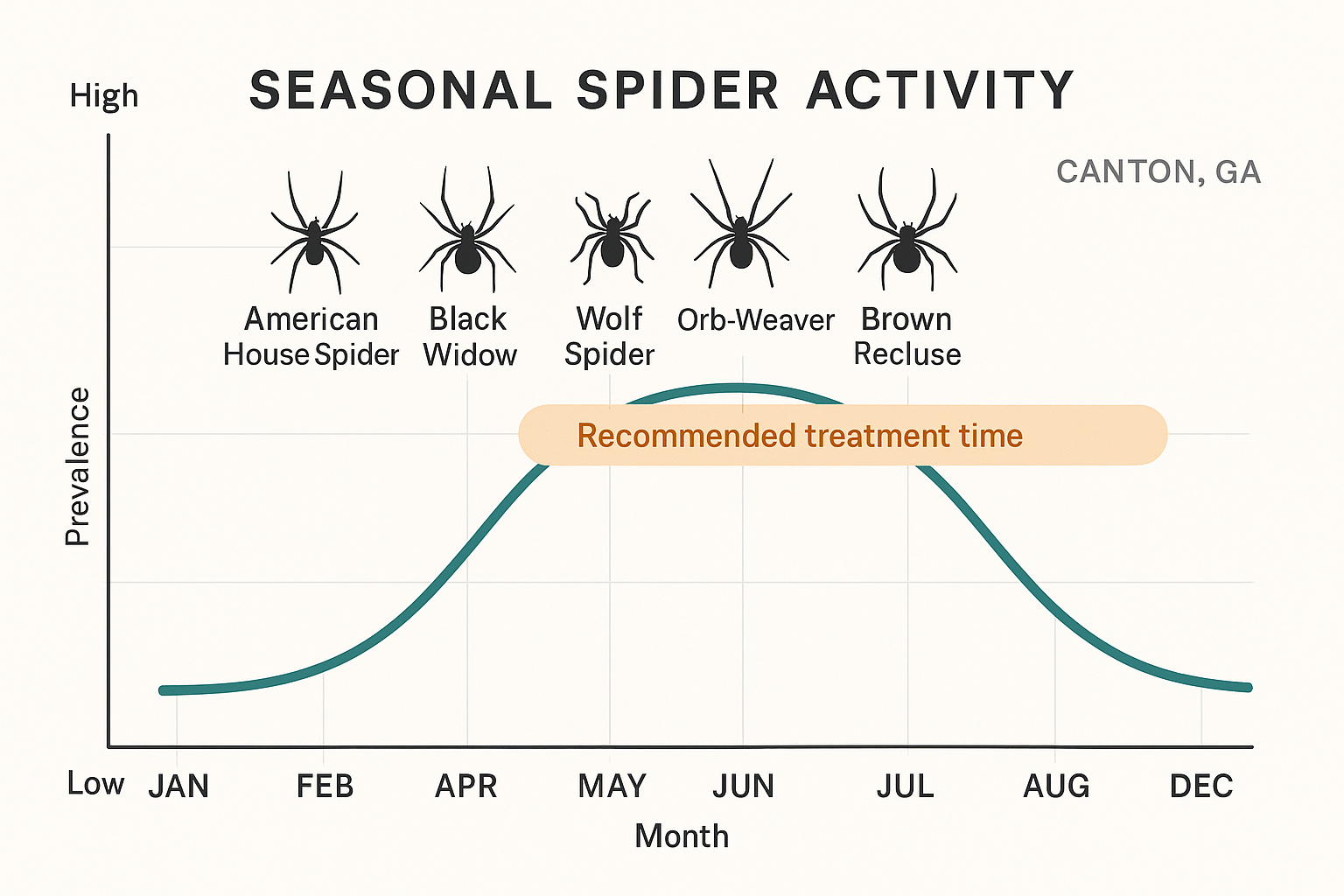
When you glance at the seasonal activity chart for Canton, you’ll notice two clear peaks. The brown recluse typically spikes from late July through September, taking advantage of the warm, humid evenings to lay egg sacs. In contrast, the common house spider (often Parasteatoda tepidariorum) shows a surge in March and April, when indoor heating draws them inside and outdoor insects are most abundant.
These patterns aren’t random; they’re driven by three environmental factors:
- Temperature: Spiders are ectothermic, meaning their metabolism speeds up as outdoor temperatures rise. Warm nights in late summer accelerate breeding cycles, especially for species like the brown recluse.
- Humidity: High humidity prevents spider egg sacs from desiccating, creating ideal conditions for hatching. Canton’s summer months often hover around 70‑80% relative humidity, which aligns with the peak in recluse activity.
- Indoor heating: When homes are heated in early spring, the temperature differential draws spiders seeking shelter. This is why you’ll notice more house spiders crawling along walls and ceilings as soon as the thermostat clicks on.
| Month | Primary Species | Activity Level |
|---|---|---|
| January‑February | House spider | Low (mostly indoor) |
| March‑April | House spider | High (spring surge) |
| May‑June | Various orb weavers | Moderate |
| July‑September | Brown recluse | Peak |
| October‑December | House spider, cellar spiders | Declining |
Optimal treatment windows follow these trends. Early spring (late March to early May) is the best time for a preventive treatment that seals entry points and applies a low‑toxicity barrier inside the home. This stops house spiders from establishing indoor colonies before they multiply. Late summer, especially August, is the critical window for targeting active brown recluse populations. A targeted spray or dust treatment applied to crawl spaces, garages, and outdoor vegetation can interrupt their breeding cycle before the eggs hatch.
For evidence‑based best practices, the EPA spider control guide recommends timing applications to match peak activity and using integrated pest management (IPM) strategies that minimize chemical exposure.
While professionals handle the heavy lifting, homeowners can reduce indoor attractants during high‑activity periods with a few simple steps:
- Seal cracks around windows, doors, and foundations to block entry.
- Keep basements and crawl spaces dry; use dehumidifiers if humidity stays above 60%.
- Remove clutter such as cardboard boxes, old clothes, and wood piles where spiders can hide.
- Limit outdoor lighting that attracts insects, which in turn lure spiders.
- Vacuum corners and ceilings regularly, especially after the spring surge.
Understanding Spider Control Pricing Options
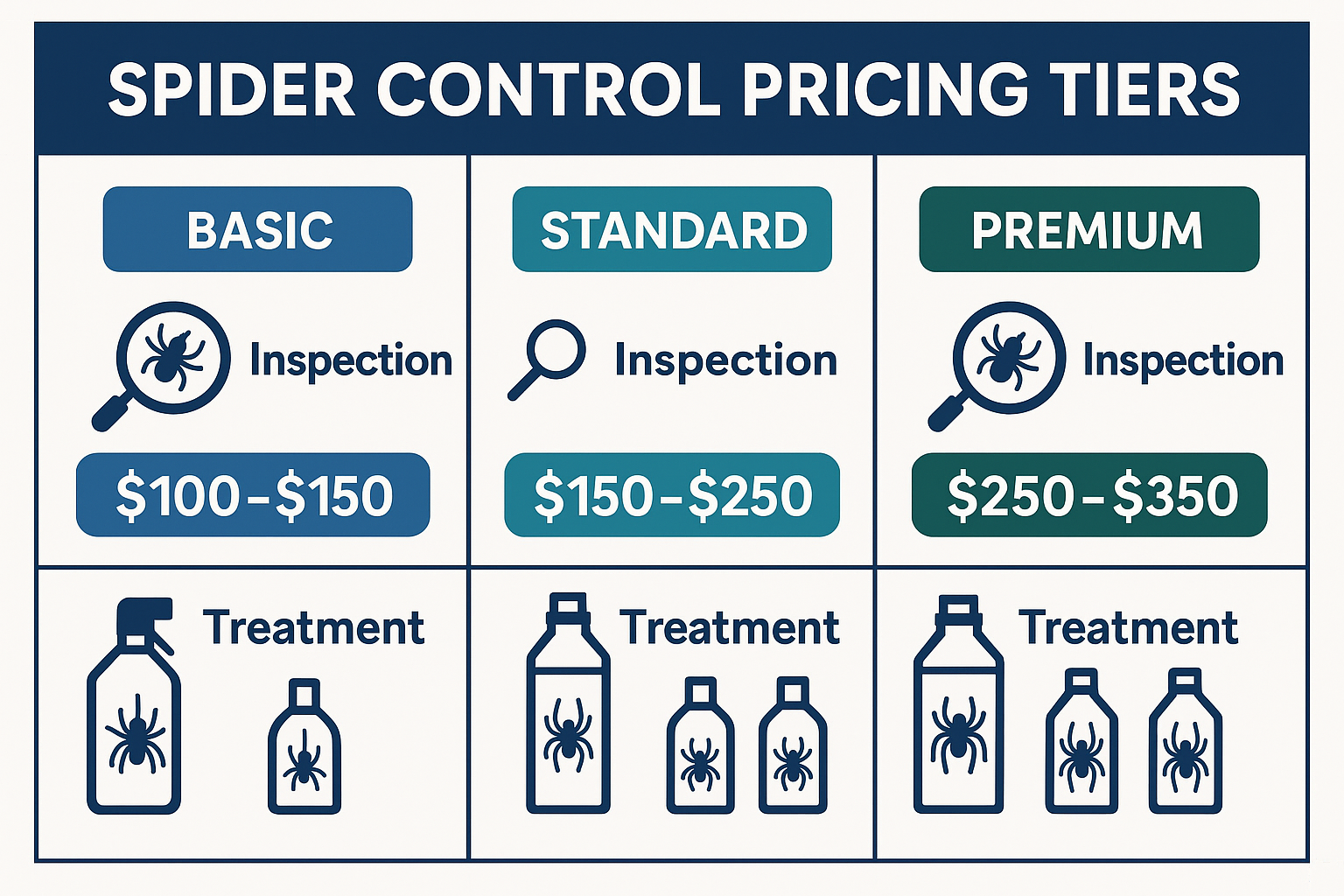
When you call a pest-control pro, the quote you receive isn’t a mystery—it’s broken down into clear, comparable parts so homeowners can better understand spider control cost Canton services typically involve. At Anthem Pest Control, we organize our spider-control plans into three tiers: Basic, Standard, and Premium. Each tier bundles the same thorough inspection with a treatment package that matches the severity of the problem and the homeowner’s long-term goals.
The visual below shows exactly what you get at each level—inspection, treatment type, follow‑up visits, and warranty length—so you can compare side by side.
Basic Tier – “Essential Protection”
Our entry‑level option is designed for homeowners who have spotted a few spiders or notice occasional webs in low‑traffic areas. It includes a one‑time interior spray using a low‑residue, pet‑safe insecticide, a single follow‑up visit within 30 days, and a 30‑day satisfaction guarantee.
- Comprehensive visual inspection
- Interior low‑residue spray
- One follow‑up visit (30 days)
- 30‑day warranty
Standard Tier – “Balanced Defense”
The most popular choice, the Standard plan tackles moderate infestations and larger floor plans. It adds perimeter treatment to the interior spray, a second follow‑up at 60 days, and extends the warranty to 90 days. This tier also includes a one‑hour preventive consultation on sealing entry points.
- Full interior and perimeter treatment
- Two follow‑up visits (30 & 60 days)
- 90‑day warranty
- One‑hour preventive consultation
Premium Tier – “All‑In‑One Shield”
For homes with severe spider activity, high‑traffic outdoor spaces, or a desire for the utmost peace of mind, the Premium package delivers full‑home treatment. It combines interior and exterior applications, uses a longer‑acting residual formula, provides quarterly follow‑ups for a year, and backs everything with a 12‑month warranty and a complimentary termite barrier.
- Interior + exterior applications
- Long‑acting residual insecticide
- Quarterly follow‑ups for 12 months
- 12‑month warranty + termite barrier
Typical Cost Ranges in Canton, GA
Based on recent service calls in Canton, spider control cost Canton homeowners typically see for the Basic tier falls between $120 and $180, the Standard tier ranges from $190 to $260, and the Premium tier sits between $300 and $420. Prices can shift upward if your property exceeds 2,500 sq ft, if you request eco-friendly products, or if the infestation is classified as severe.
All three plans include a written warranty that covers any re‑infestation within the specified period. The Basic tier’s 30‑day guarantee means we’ll return at no extra charge if spiders reappear within a month. The Standard tier extends that protection to three months, and the Premium tier offers a full year, which often offsets the higher upfront cost by preventing repeat visits.
Factors That Influence Your Quote
Three main variables determine the final number you see on the invoice:
- Infestation level – a few isolated spiders versus a colony spread across walls and basements.
- Property size and layout – larger homes or multi‑unit buildings require more product and labor.
- Treatment method – standard chemical sprays are less expensive than eco‑friendly or heat‑based options.
DIY Alternatives vs. Professional Plans
Many homeowners reach for over‑the‑counter sprays, glue traps, or home‑made essential‑oil mixes. While the upfront cost can be as low as $15, these solutions often miss hidden entry points, require frequent re‑application, and can pose health risks to pets and children.
A professional plan, even at the Basic level, eliminates guesswork. Our licensed technicians map the infestation, apply a formulation that persists for weeks, and schedule follow‑ups to ensure the spiders stay gone. Over a year, the total investment often saves you money compared with buying multiple DIY kits that add up to $200‑$300.
Match Your Needs to the Right Tier
Use the infographic as a quick decision aid: if you’ve only seen a handful of house spiders, the Basic tier gives you fast relief at the lowest price. If you own a 2,000‑sq‑ft home with occasional outdoor activity, the Standard tier balances cost and coverage. For large properties, frequent garden parties, or a history of recurring spider problems, the Premium tier locks in long‑term protection and eliminates surprise re‑treatments.
Protect Your Home with Expert Spider Management
Early detection, habitat awareness, and timing are the three pillars of successful spider control in Canton, GA. Spotting a web or a spider before it multiplies, knowing which corners of your home—like dark basements, cluttered garages, or outdoor sheds—provide ideal shelter, and scheduling treatment when spiders are most active (late summer and early fall) give you a decisive edge.
Why Anthem Pest Control is the Smart Choice
- Licensed inspectors who can identify species, assess risk, and recommend the right approach.
- Customized treatment plans that target entry points, breeding sites, and outdoor perimeters.
- Transparent pricing with no hidden fees, so you know exactly what you’re paying for.
- Satisfaction guarantee that backs every service with a follow‑up visit if you’re not completely spider‑free.
Safety, Affordability, and Local Expertise
All products we apply are EPA‑approved, meaning they’re effective against spiders while posing minimal risk to children, pets, and the environment. Our rates are competitive because we understand the Canton market and tailor solutions to the specific pests that thrive here. Whether you need a one‑time eradication or an ongoing prevention program, we keep costs predictable and manageable.
Our technicians conduct a thorough inspection of both interior and exterior zones, mapping out potential entry points and sealing them where possible. After the initial treatment, we schedule follow‑up visits to monitor activity and adjust the plan, ensuring spiders stay out year after year.
Take the First Step Today
Ready to protect your home before the next spider season kicks in? Request a free, no‑obligation quote and let our Canton specialists design a plan that fits your budget and lifestyle. Simply call us at 877‑371‑8196 or click the link below to start the conversation.
At Anthem Pest Control, we treat every home like it’s our own—thorough, safe, and backed by expertise you can trust. Let us handle the spiders so you can enjoy a bite‑free, worry‑free space.
Because we’re locally based in Canton, we understand the climate patterns that drive spider activity, from humid summers to cooler evenings. Our neighborhood‑focused approach means faster response times and service that’s tailored to the unique quirks of your street.
Visit Anthem Pest Control today for your free quote and a clear breakdown of spider control cost Canton homeowners can expect.