Why Spiders Become a Concern for Holly Springs Homeowners
Holly Springs sits in the heart of Georgia’s humid subtropical zone, where warm summers, mild winters, and plentiful rainfall create a perfect backdrop for insects—and the spiders that prey on them. The town’s abundant oak‑and‑pine canopy, combined with lush gardens and outdoor living spaces, provides countless hiding spots and a steady supply of prey. As a result, common household spiders such as the Southern House Spider, Grass Spider, and even occasional Brown Recluse find the local climate inviting year‑round.

Homeowners usually notice a spider problem long before the insects themselves become a nuisance. Typical warning signs include:
- Silky, irregular webs tucked into ceiling corners, behind baseboards, or in closets.
- Frequent sightings of wandering spiders on windowsills, light fixtures, or outdoor decks.
- Reports of unexplained bites, especially in areas where children or pets play.
Beyond the visual annoyance, spiders can affect health and comfort in three key ways. First, some people experience allergic reactions to spider bites or even to the protein in spider silk. Second, the fear of spiders—arachnophobia—is a genuine source of stress for many homeowners, turning a quiet evening into a tense experience. Finally, while most species are harmless, venomous spiders like the Brown Recluse or Black Widow can deliver bites that require medical attention, especially for children, the elderly, or immunocompromised individuals.
When the problem escalates, homeowners face a choice: tackle it themselves with over‑the‑counter sprays or call a professional service. DIY methods often provide a temporary fix but can miss hidden nests, leading to recurring infestations. Professional pest control, on the other hand, brings targeted treatments, thorough inspections, and follow‑up monitoring—all backed by EPA‑registered products that meet safety standards. This distinction becomes especially important when weighing the long‑term cost of repeated DIY attempts against a single, comprehensive service.
Understanding the economics helps put the decision into perspective. The EPA’s latest pesticide‑use cost analysis shows that the average household spends $120–$150 per year on DIY insect sprays, while a professional spider‑control program typically ranges from $180 to $250 for a full‑season service, including a guarantee against re‑infestation.
| Control Type | Average Annual Cost | Typical Coverage | Guarantee |
|---|---|---|---|
| DIY Sprays & Traps | $120–$150 | Spot‑treatment, limited indoor areas | No |
| Professional Service (Anthem Pest) | $180–$250 | Whole‑home inspection, interior & exterior treatment | Yes, up to 90 days |
By recognizing how Holly Springs’ climate fuels spider populations, spotting the early signs, and weighing health concerns against cost, homeowners can make an informed decision—whether that means a quick DIY fix or a trusted professional partnership with Anthem Pest Control for lasting peace of mind.
Identifying Common Household Spiders in Holly Springs
The brown house spider (often mistaken for a harmless cellar spider) is one of the most frequently spotted arachnids in Holly Springs homes. Adults measure ½ to ¾ inch (12‑19 mm) when the legs are fully extended, and they sport a mottled tan‑brown abdomen with faint, darker markings. Their webs are irregular, sheet‑like structures tucked into corners of basements, closets, and behind furniture. Because they prefer undisturbed indoor spaces, you’ll often find them in dimly lit rooms where they silently hunt small insects.
Sharing the same indoor niche is the southern house spider. Slightly larger—up to 1 inch (25 mm) across the leg span—this species displays a glossy, dark brown to black body with a subtle, hourglass‑shaped pattern on the abdomen. Their webs are more organized, resembling a classic “orb” shape, and they favor sunny windowsills, attic corners, and the undersides of ceiling fans. Their presence is generally benign, but their larger size can startle homeowners.
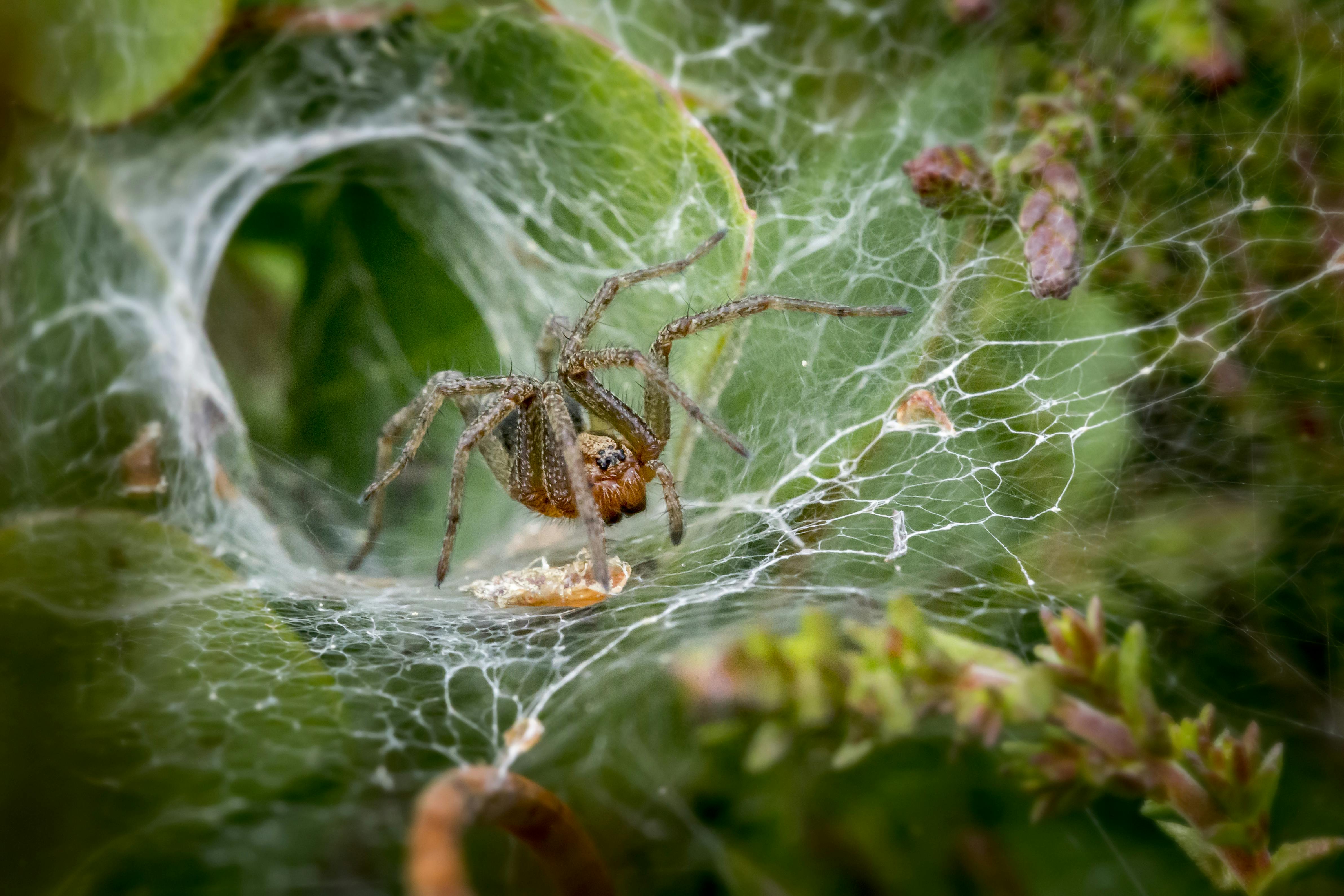
The funnel‑web spider (family Agelenidae) is another common indoor visitor. These spiders build a flat, sheet‑like web that leads into a narrow, cone‑shaped funnel where the spider hides. Adults are about ½ inch (13 mm) long, with a light‑tan cephalothorax and a darker, sometimes striped abdomen. You’ll often encounter them in basements, garages, or along the edges of walls where the funnel can be tucked against a surface. Their quick retreat into the funnel makes them appear “shy,” but they can bite if provoked.
In contrast, the black widow (Latrodectus mactans) is the only medically significant spider on our list. Females are easily recognized by their shiny black, hourglass‑shaped abdomen marked with a bright red or orange hourglass. They measure about ½ inch (12 mm) in body length, with long, slender legs. Black widows construct irregular, tangled webs in dark, secluded spots such as woodpiles, sheds, and rarely, indoor corners of garages or basements. Their venom is potent, and bites can cause severe muscle cramps, nausea, and sweating.
| Spider Species | Typical Size (leg span) | Venom Potency | Bite Symptoms |
|---|---|---|---|
| Brown House Spider | ½ – ¾ in (12‑19 mm) | Low (non‑medically significant) | Mild redness, occasional itching |
| Southern House Spider | ≈ 1 in (25 mm) | Low | Minor irritation, localized swelling |
| Funnel‑Web Spider | ≈ ½ in (13 mm) | Moderate (generally harmless to humans) | Transient pain, mild redness |
| Black Widow | ≈ ½ in (12 mm) (female) | High (neurotoxic) | Severe muscle cramps, nausea, sweating, possible fever |
Not every spider sighting requires a professional visit, but you should call a licensed pest‑control technician when you notice any of the following: the spider displays aggressive behavior (charging or striking), you’ve been bitten and experience escalating symptoms, or the spider matches the description of a black widow or another venomous species. Persistent webs in high‑traffic areas, especially in basements or attics, also merit professional assessment to prevent infestations from growing.
When handling an infestation, it’s crucial to follow safe pesticide practices. The U.S. Environmental Protection Agency provides comprehensive guidelines on selecting and applying pest‑control products responsibly. For more information, visit the EPA’s pesticide safety page.
Seasonal Spider Activity Trends in Holly Springs
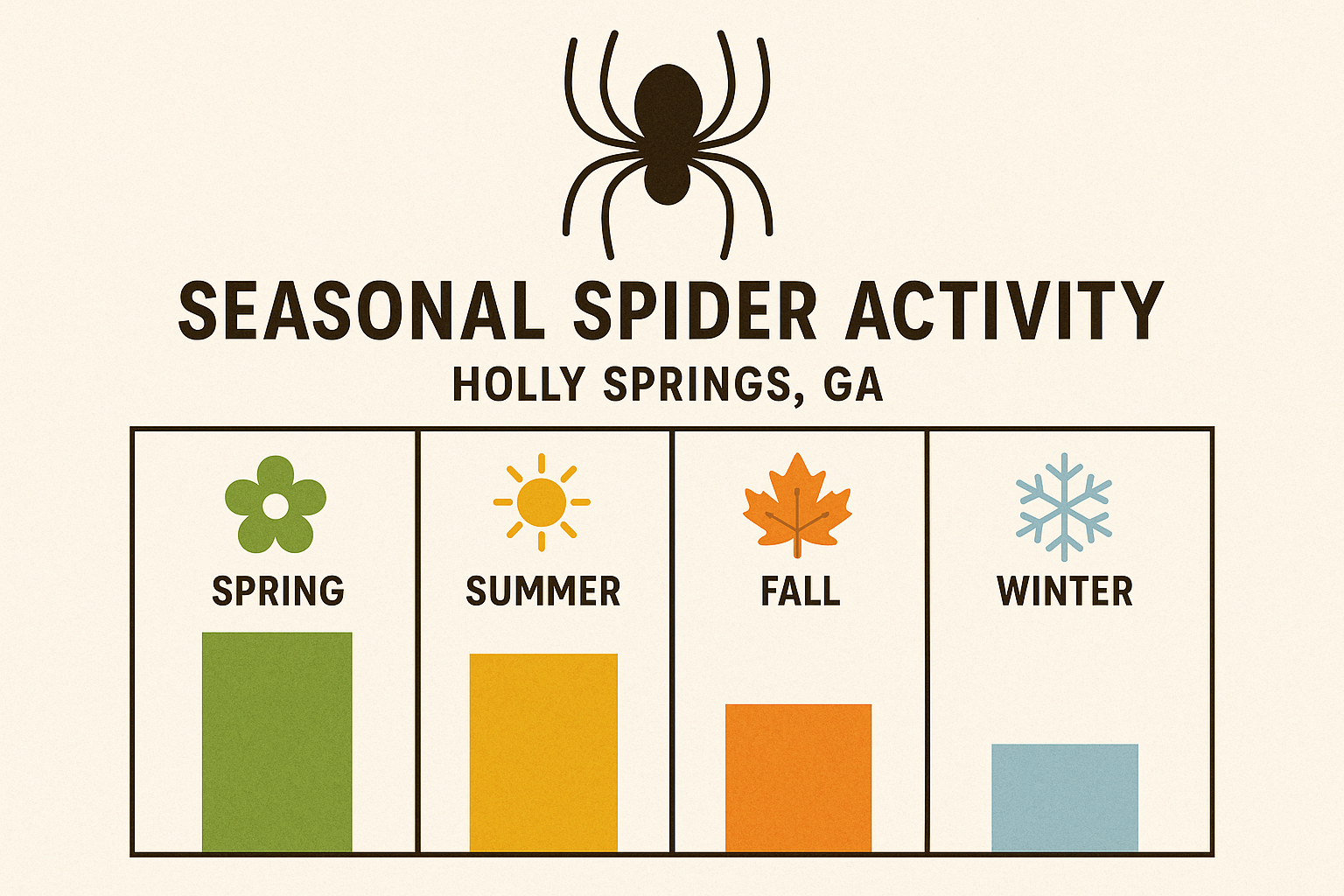
Spiders in Holly Springs follow a predictable four‑season rhythm that directly influences when you’ll see them inside your home. In spring, emerging adults and newly hatched spiderlings flood yards as temperatures rise above 60 °F. Summer brings the peak—warm nights and abundant insects create a buffet, so spider numbers swell dramatically. Come fall, cooler evenings and shorter days cue many species to finish breeding and retreat, leading to a noticeable decline. Finally, winter forces most spiders into dormancy or deep crevices, keeping indoor sightings to a minimum.
What drives these seasonal swings?
The primary drivers are temperature, humidity, and artificial lighting. Spiders are ectothermic; they become active when the ambient temperature consistently stays in the 60‑80 °F range. Humidity supports the insects they prey on—higher moisture in spring and summer fuels larger prey populations, which in turn attract more spiders. Outdoor lighting is a hidden catalyst: porch lights, security LEDs, and garden lanterns draw flying insects, and the insects bring spiders that set up webs nearby. When nights grow cooler and darker in fall, both the prey base and the spider activity shrink.
Homeowner tips for a spider‑free interior during high‑activity months
- Seal entry points: Inspect foundations, window frames, and door thresholds for cracks larger than ¼ in.; caulk or weather‑strip them.
- Manage outdoor lighting: Switch to amber‑tinted bulbs, install motion sensors, or direct lights away from walls to reduce insect draws.
- Reduce outdoor clutter: Remove piles of firewood, leaf litter, and dense shrubbery that serve as daytime hideouts.
- Control indoor humidity: Use dehumidifiers in basements and bathrooms; dry environments are less inviting to both insects and spiders.
- Regular cleaning: Vacuum corners, ceiling fans, and rarely used rooms weekly to eliminate webs before they establish.
Best timing for professional spider control
According to the activity chart, the most strategic windows for treatment are early spring (late March–April) and late summer (early September). A spring application targets the first wave of spiderlings before they mature, while a fall follow‑up catches any late‑season survivors that may seek shelter indoors as temperatures dip. Scheduling a professional treatment during these periods maximizes the impact of your investment, reduces indoor sightings, and keeps your home comfortable year‑round.
Effective Spider Control Methods and Pricing in Holly Springs
Common Control Methods
Homeowners in Holly Springs typically choose from four proven spider‑control techniques:
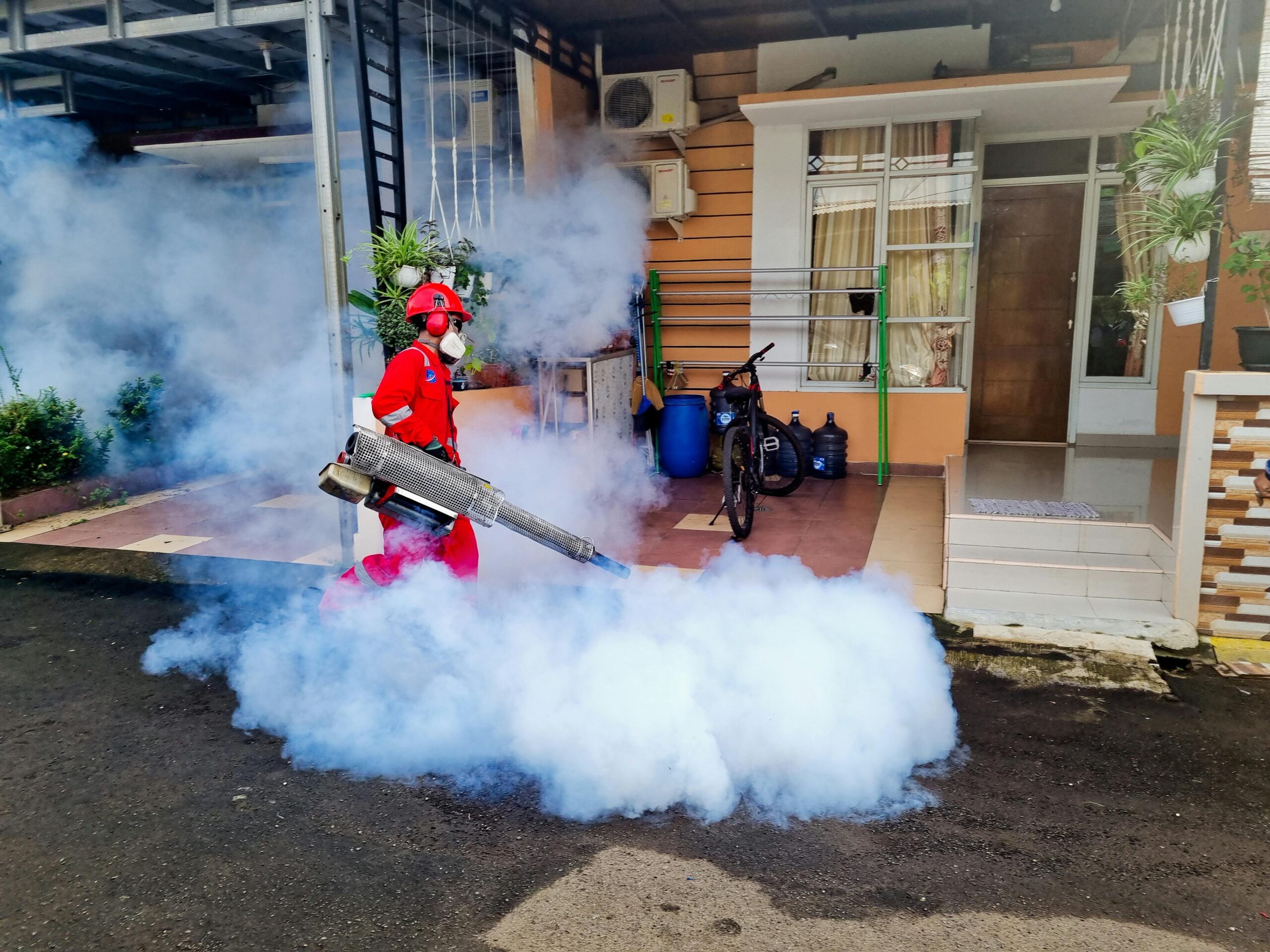
- Perimeter fogging – a low‑lying mist applied around the home’s exterior to create a barrier that deters wandering spiders.
- Interior crack‑and‑crevice sprays – targeted applications in baseboards, window frames, and other entry points where spiders hide.
- Bait stations – discreet containers that release a slow‑acting insecticide, attracting and eliminating spider prey, which in turn reduces spider populations.
- Eco‑friendly granular treatments – biodegradable granules spread around the yard; they release natural repellents that are safe for pets and children.
Pros and Cons (Safety First)
| Method | Pros | Cons | Pet/Child Safety |
|---|---|---|---|
| Perimeter fogging | Quick coverage; creates a long‑lasting barrier | May require re‑application after heavy rain | Low when using EPA‑approved formulas |
| Crack‑and‑crevice spray | Directly targets hidden nests; fast‑acting | Requires thorough inspection to reach all cracks | Moderate – technicians use low‑toxicity sprays |
| Bait stations | Passive; reduces spider food sources over weeks | Effectiveness depends on pest activity | High – stations are sealed and child‑proof |
| Eco‑friendly granules | Environmentally safe; minimal odor | Works best on well‑drained soil | Very high – made from natural ingredients |
Typical Professional Treatment Cycle
- Inspection – A certified technician walks the property, identifies spider hot spots, and notes any structural vulnerabilities.
- Application – Based on the inspection, the appropriate method (or combination) is applied. For most Holly Springs homes, we start with a perimeter fog followed by interior crack‑and‑crevice sprays.
- Follow‑up – One week later, the technician returns to assess results, retreat any missed areas, and place bait stations or granular treatments if needed.
- Maintenance – Ongoing visits—quarterly or annually—keep the barrier intact and address new entry points before spiders re‑establish.
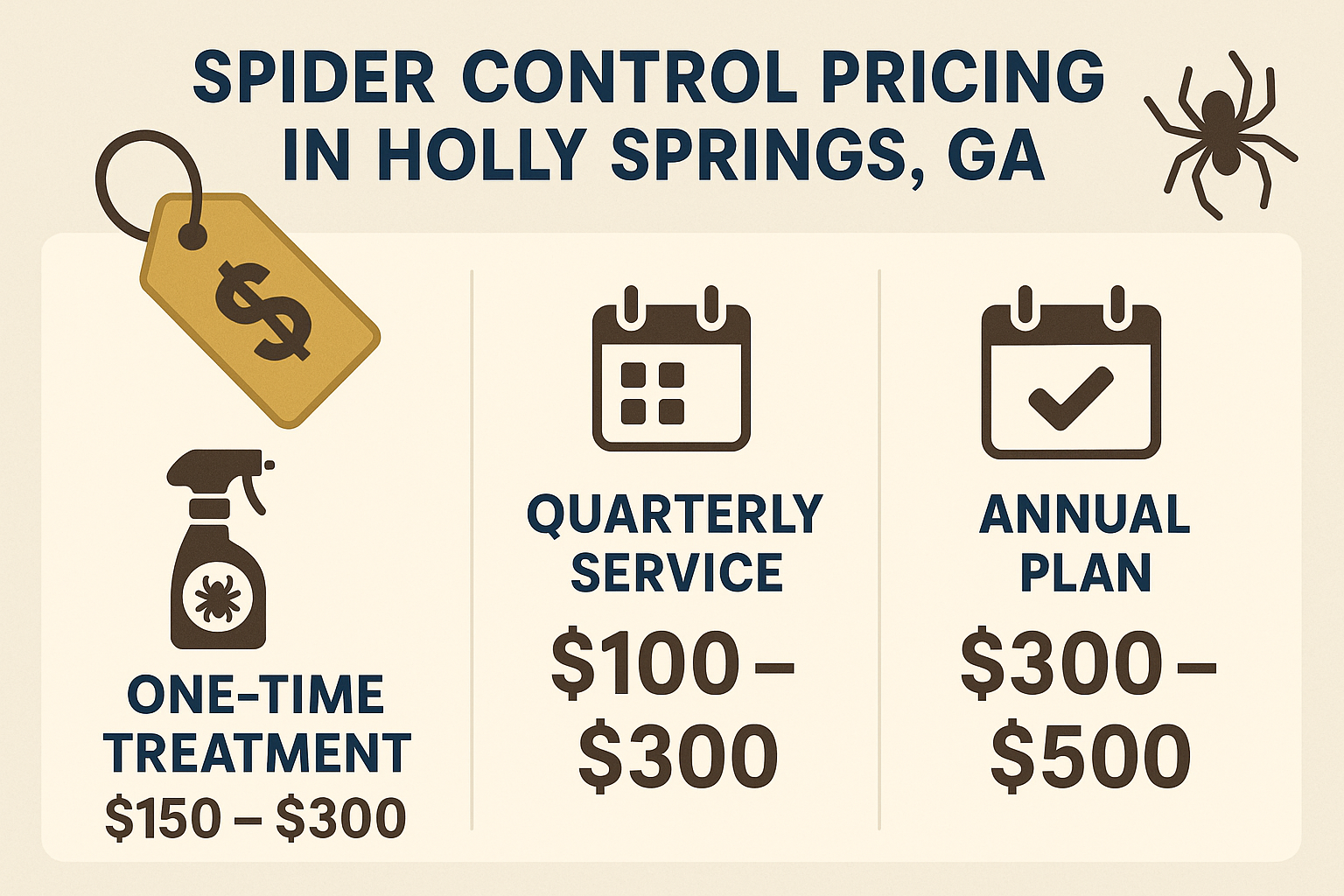
Pricing Infographic
Choosing the Right Plan
Not every home needs the same level of service. Use these quick guidelines to match a plan to your situation:
- Home size – Smaller homes (under 1,500 sq ft) often find the One‑Time treatment sufficient for a seasonal spike. Larger properties benefit from Quarterly or Annual tiers to keep the perimeter sealed.
- Infestation level – If you’ve spotted webs in multiple rooms, a Quarterly plan adds interior sprays and bait stations every three months, dramatically cutting the population.
- Budget – The one‑time option is the most affordable upfront, but the annual plan delivers the best value per visit and reduces the chance of repeat calls.
Anthem Pest Control tailors each package to your unique needs, ensuring you never pay for unnecessary treatments.
Why Anthem Pest Control Stands Out
Our Holly Springs team combines local knowledge with industry‑leading safety standards. Every technician is trained to:
- Apply the lowest‑toxicity products that meet EPA guidelines.
- Communicate clearly about where and why each product is used.
- Provide a written estimate before any work begins—no hidden fees.
When you choose Anthem, you’re investing in a partner that values your family’s health as much as a spider‑free home. Ready to protect your property? Call us at 877‑371‑8196 or visit anthempest.com for a personalized quote.
Protect Your Home with Professional Spider Management
In Holly Springs, knowing which spider you’re dealing with, understanding the seasonal peaks, and applying the right treatment are the three pillars of effective control. Correct identification prevents wasted effort on harmless house spiders, while seasonal awareness lets you act before the summer surge of web‑builders or the fall influx of ground‑hunting species. Proper treatment—whether a targeted spot‑service or a whole‑home barrier—ensures lasting protection and keeps your family safe from bites and unwanted webs.
Why Identification, Timing, and Treatment Matter
Every spider species reacts differently to chemicals and environmental cues. For example, the common house spider thrives indoors year‑round, whereas the southern black widow prefers warm, outdoor hiding spots that become active in late spring. By pinpointing the species and timing your service to its life cycle, you eliminate the problem at its source rather than merely cleaning up after it.
Anthem’s Local Edge
Anthem Pest Control brings Holly Springs‑specific expertise to every job. Our technicians know the local habitats, typical entry points, and the most effective products for Georgia’s climate. We pride ourselves on transparent pricing—no hidden fees, just a clear quote that matches the scope of work. All treatments follow EPA‑approved safety protocols, protecting children, pets, and the environment while delivering reliable results.
Free, No‑Obligation Inspection
Ready to see how a professional assessment can safeguard your home? Schedule a complimentary, no‑obligation inspection today. Our team will evaluate your property, discuss the specific spider concerns you face, and outline a customized plan that fits your budget and timeline.
Call us now at 877-371-8196 for a quick response. We typically book inspections within 24‑48 hours, so you won’t be waiting long to start your spider‑free journey.
Whether you need a one‑time treatment or an ongoing prevention program, Anthem Pest Control is here to provide a personalized quote that reflects your unique situation. Our friendly specialists will walk you through every step, ensuring you feel confident and informed.
Visit Anthem Pest Control to learn more and secure your home against unwanted spiders.